Korean onion production — concentrated in South Gyeongsang Province (Changnyeong-gun, Hapcheon-gun, Miryang) and extending to some Gangwon highland sites — is the third major allium crop in Korea after garlic and spring onion. Annual Korean onion production exceeds 900,000 tonnes, with Gyeongnam producing approximately 60% of the national total. Stone management for Korean onion has a unique characteristic that separates it from garlic and potato: the onion bulb develops at very shallow depth (5–12 cm), meaning the stone sensitivity is not primarily about bulb contact during development but about the mechanical harvest undercutter bar that must pass cleanly below the bulb zone.
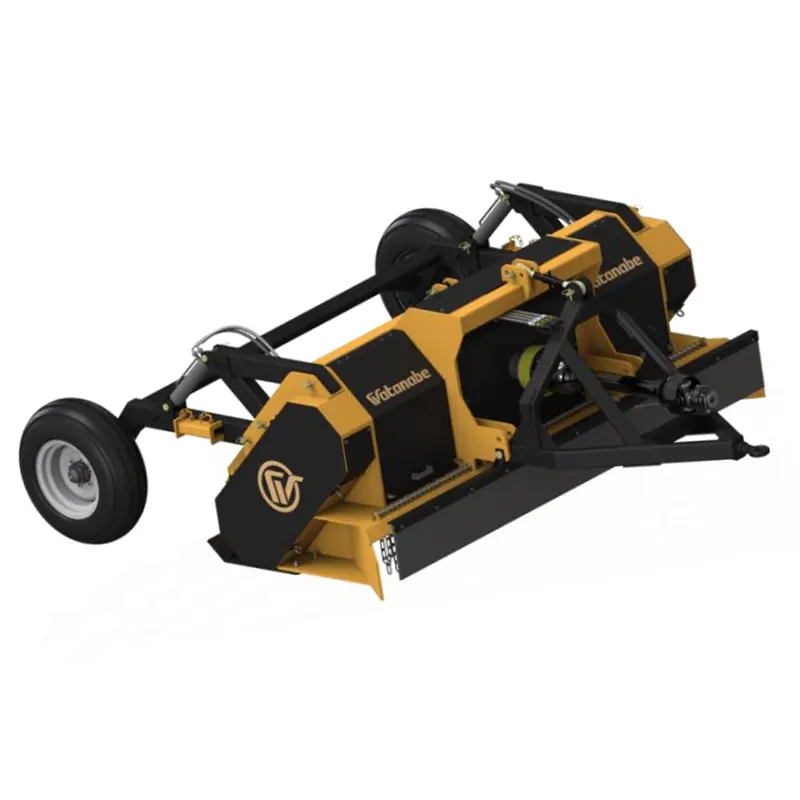
This distinction produces a genuine machine decision that does not exist for potato or garlic — on established Korean onion fields where the stone population consists primarily of surface and near-surface frost-heave re-emergents, the EP-EW-4000 rock rake can often handle the stone management requirement without THOR 2.4 deployment. This article defines exactly when each machine is the correct choice, covers the Korean onion variety calendar and its stone management integration, explains the undercutter bar stone sensitivity mechanism, and presents the garlic-onion-potato mixed farm utilisation case for the THOR 2.4 investment.
Onion Bulb Development and Stone Sensitivity — Shallower But Not Simpler
Korean onion bulbs (both yellow and white types) develop primarily from a thickened basal plate at 5–12 cm below the soil surface. The wrapper leaf layers form from the outside as the bulb expands laterally — the largest diameter of a mature Korean onion bulb is typically 7–10 cm, meaning the bulb occupies the soil volume from approximately 3 cm below surface to 12 cm below surface at full maturity. This shallow development zone creates a specific pattern of stone sensitivity:
Low direct bulb-stone contact risk during development
Because Korean onion bulbs develop primarily in the upper 12 cm of the soil profile — expanding laterally in the fine-tilth zone rather than deepening — they are less likely to encounter deep-seated stones that a THOR 2.4 would fragment below 15 cm depth. The lateral bulb expansion happens in the same surface zone that annual frost-heave maintenance with the EP-EW-4000 addresses. For this reason, an onion field that has had good EP-EW-4000 surface clearance has lower direct bulb-stone contact risk than an equivalent potato field would have without THOR clearance.
High undercutter bar sensitivity at harvest — the critical stone risk
Korean onion mechanical harvest uses an undercutter bar (a horizontal blade that passes horizontally below the bulbs at 5–8 cm depth) to sever the roots and lift the bulb string clear of the soil. This undercutter bar must travel cleanly through the top 8–10 cm of soil in a continuous horizontal plane. A stone at 6–8 cm depth in the bar’s path deflects the bar upward — either causing the bar to contact and bruise the base of bulbs above the deflection point, or causing the bar to ride up and miss bulbs entirely, leaving them in the ground. Stone sensitivity for onion harvest is therefore most critical in the 5–12 cm depth zone — the undercutter operating depth — not the full 20–25 cm profile that potato and garlic require.
The Machine Decision — When THOR 2.4 Is Needed and When EP-EW-4000 Is Sufficient
This decision is the unique analytical contribution of this article — for no other crop in the Watanabe system does the EP-EW-4000 have a genuine case as the primary stone management machine rather than a supplementary final-sweep tool. The decision is based on the depth distribution of the stone population:
| Field condition | Correct machine | Reasoning |
|---|---|---|
| Established cleared field — only annual frost-heave re-emergents on surface (0–15 cm) | EP-EW-4000 | Surface collection sufficient — no deep stone population remains from prior THOR clearance. EP-EW-4000 collects all stones above the 40 Kg threshold from the 0–8 cm zone. Undercutter bar path is clear. |
| Established field — light frost heave but confirmed stones at 10–15 cm from soil probe | Evaluate: EP-EW-4000 + hand clear, or shallow THOR | EP-EW-4000 handles surface; THOR at 15 cm depth handles the undercutter zone stones. Walk the field and count stones in the 5–12 cm zone by hand probing before deciding. |
| Previously un-cleared field or new land — stones at all depths including 5–15 cm undercutter zone | THOR 2.4 (15–18 cm depth) | Subsurface stone population in the undercutter zone cannot be addressed by EP-EW-4000 alone. THOR 2.4 at 15–18 cm fragments stones in the critical harvest depth zone. CT-2100 collects output. |
| New land — heavy stone population at all depths | THOR 2.4 (two-pass, 18 cm) | Same two-pass new land protocol as potato, but 18 cm depth maximum (onion bulb zone only). New land brings high stone density to the undercutter zone that requires full THOR fragmentation protocol. |
The field probe test — 15 minutes that determines the machine choice
Walk the field in August–September (before autumn onion preparation) carrying a steel probe rod. Push the rod to 15 cm depth at 20-point grid across the field. Count the number of probe positions where resistance is encountered between 5 cm and 12 cm depth — stones in this zone are in the undercutter bar path. If more than 4 of 20 probe positions show resistance in the 5–12 cm range: deploy THOR 2.4 at 15–18 cm depth. If fewer than 4 of 20: EP-EW-4000 surface clearance is sufficient. This test takes approximately 15 minutes across a 1 ha field and prevents the most common Korean onion stone management error — using EP-EW-4000 on a field that still has significant subsurface stone presence in the undercutter zone.
Korean Onion Varieties and Growing Calendar — Stone Management Timing
Korean onion production uses two main planting systems — autumn planting (overwinter) and spring transplanting — with significantly different stone management timing implications for each:
Changnyeong Yellow Onion (Gyeongnam dominant)
Autumn seedling transplant — primary type
- ▸Nursery: August–September
- ▸Field transplant: late October–November
- ▸Overwintering: November–February (mild Gyeongnam)
- ▸Harvest: late May–June
- ▸Bulb depth at harvest: 5–10 cm
- ▸Stone management window: Sept–Oct
Jindo and Andong Types (mild climate variants)
Similar pattern, slight regional timing differences
- ▸Field transplant: October–November
- ▸Harvest: June–early July
- ▸Bulb depth at harvest: 6–12 cm
- ▸Stone management window: Sept–Oct
Stone management timing alignment — Gyeongnam onion vs Gangwon potato
Korean onion in Gyeongnam is prepared in September–October — the same window as garlic preparation. This confirms the garlic-onion-potato mixed farm’s seasonal THOR 2.4 utilisation calendar: September–October THOR and EP-EW-4000 deploy on garlic and onion blocks together, freeing the machine for the March–April potato block preparation. Farms in Gyeongnam that also have highland potato acreage in Gangwon-do can achieve exceptional THOR 2.4 annual utilisation across three crop systems in two separate preparation windows.
The Undercutter Bar Stone Damage Mechanism — How Stones at 6–8 cm Ruin Onion Harvest
The undercutter bar’s sensitivity to stones in the 5–12 cm zone is the defining stone management challenge for Korean onion — and understanding the exact mechanism helps explain why the 15 cm THOR depth (rather than a deeper cut) is both necessary and sufficient for established onion fields:
A stone at 7 cm depth that is too large for the undercutter bar to push through the soil contacts the leading edge of the bar, which has limited side force capacity. The bar deflects upward over the stone — lifting its forward trajectory to 5 cm depth or less. The bulbs immediately above the stone are now below the bar path — they are not cut loose and remain in the ground after the bar passes. On a 100 m row with 3 stones at 7 cm depth, approximately 2–4% of bulbs in the stone zones are left in the ground.
If the stone deflects the bar into the bulb development zone (rather than passing above or below), direct bar contact with the basal plate of the bulb produces a bruise on the base — the same bruise location that post-harvest graders inspect first when assessing Korean onion quality. Basal bruising is a Grade 1 disqualifier for premium fresh market onion and is the characteristic damage pattern that onion buyers associate with stone-impacted mechanical harvest on un-cleared fields.
On THOR 2.4-cleared or EP-EW-4000-maintained fields where no stones above 3 cm remain in the 5–12 cm zone, the undercutter bar travels horizontally at its set depth throughout the row — cutting all bulb roots at consistent depth and producing complete, undamaged extraction. The bar’s designed depth and speed produce the clean separation that fresh market onion requires. The entire field’s harvest consistency is determined by whether the undercutter zone was cleared at preparation.
THOR 2.4 Shallow Depth Protocol for Onion — Operating at 15–18 cm
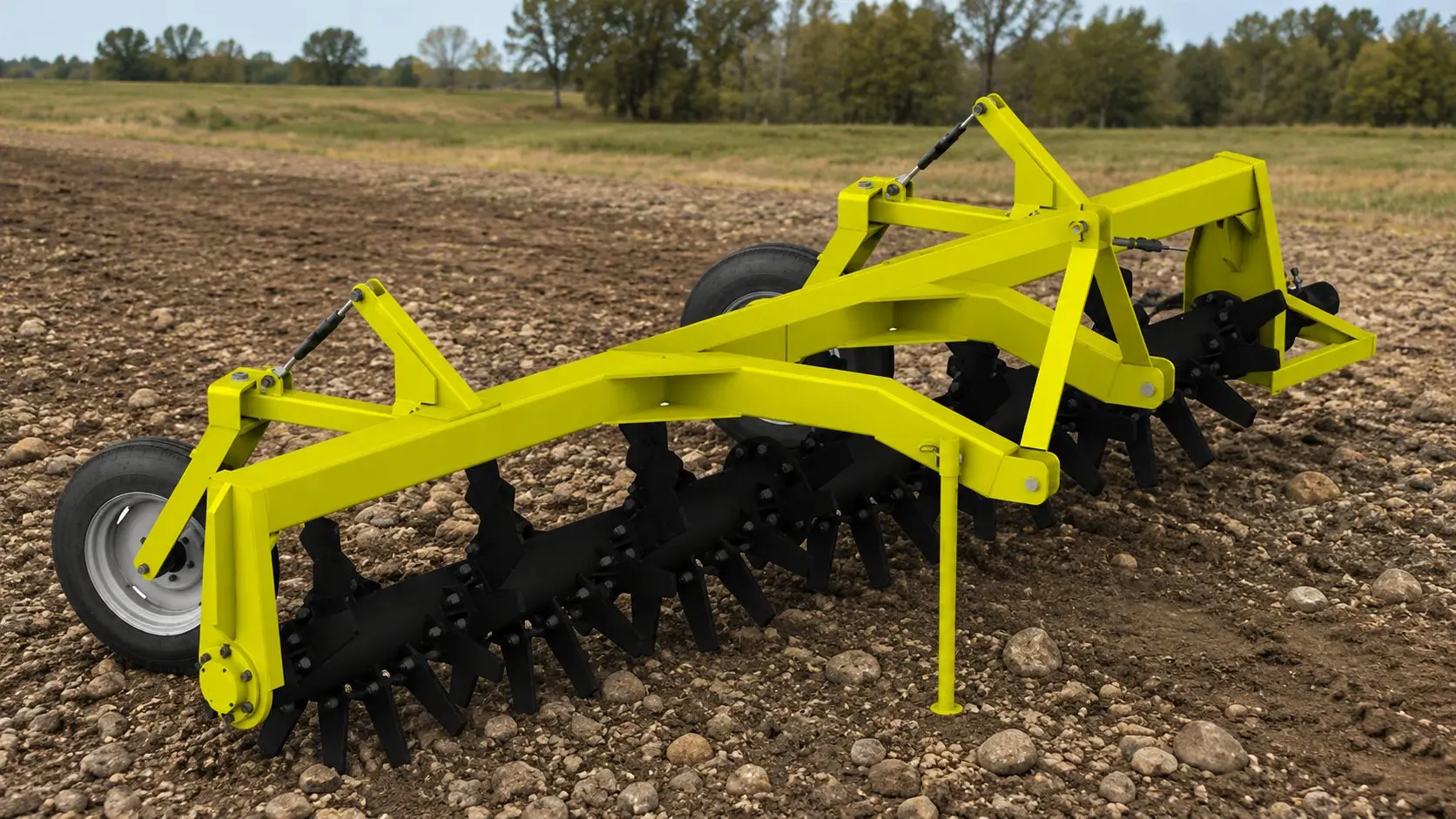
When the field probe test confirms that THOR 2.4 deployment is needed for Korean onion preparation, the operating parameters differ from the potato and garlic protocols in one key way: the depth is significantly shallower. Operating the THOR 2.4 at 15–18 cm for onion rather than 25–30 cm for potato produces important operational differences:
At 15–18 cm depth, the THOR 2.4 encounters fewer stones per unit area (most large stones are below this depth on partially cleared fields) and lifts less total soil volume per pass. Forward speed can typically be 0.3–0.5 km/h higher than at 25 cm depth on equivalent stone density — meaning the onion preparation THOR pass covers more area per day than the equivalent potato or garlic preparation pass. At equivalent stone density, an onion field day at 18 cm depth covers approximately 15–20% more area than a potato field day at 28 cm depth.
Shallower operating depth means the THOR 2.4 rotor contacts fewer and generally smaller stones per pass — the larger stones in Korean granite highland soils tend to be embedded deeper, with the frost-heave re-emergents being the smaller fragments that appear in the upper 15 cm. Operating the THOR at 15–18 cm for onion produces lower per-hour tooth wear than at 25–30 cm for potato, extending tooth life. On mixed-farm operations that use the same THOR for both onion (15–18 cm) and potato (25–30 cm), the onion passes contribute less to total tooth wear than equivalent potato passes at the same speed.
For onion preparation, the THOR 2.4 rear hood can be opened slightly more than the potato zero-tolerance setting — because the onion’s stone sensitivity is specifically in the 5–12 cm undercutter zone, fragments above 3–4 cm are the concern. At 15–18 cm depth with hood slightly open, the output fragments are in the 2–5 cm range — acceptable for the onion harvest undercutter bar’s tolerance, and the larger fragments make CT-2100 collection slightly faster (larger items picked up more efficiently per collection pass). Do not fully open the hood — fragments above 6–8 cm still present undercutter bar deflection risk.
Allium Rotation — Managing White Rot and Soil Health on Onion-Garlic Fields
Korean onion and garlic are both Allium crops — they share the same devastating soil-borne pathogen (white rot, Sclerotium cepivorum) and must be managed in the same rotation framework that was described in the garlic guide. The rotation consequence for stone management is significant: because onion and garlic cannot follow each other in the same field for 3 years, the stone management machine must serve different field areas in each season rather than the same blocks year after year:
Onion must not follow garlic (or any other Allium) in the same field for a minimum 3-year interval. On a Korean Gyeongnam farm with both onion and garlic blocks, the rotation should alternate: garlic year → non-allium crop (cereal, legume) → non-allium → onion year → return to non-allium. This 4+ year interval prevents white rot sclerotia accumulation to commercially significant levels.
Because the onion and garlic blocks are on different fields in any given year (to enforce the rotation), the THOR 2.4 preparation in September–October can address different blocks each year — garlic blocks in odd years and onion blocks in even years, for example. This alternation means that both the garlic block and the onion block receive THOR 2.4 clearance on the year they need it for their respective crop, without machine scheduling conflict between the two crops’ preparation windows.
Garlic-Onion-Potato Mixed Farm THOR 2.4 Utilisation — The Full Year Case
The Korean farm that produces garlic (Gyeongnam), onion (Gyeongnam), and highland potato (Gangwon-do) on separate field areas achieves the highest THOR 2.4 annual utilisation of any farm type in the Korean agricultural system:
Annual THOR 2.4 operating hours — three-crop mixed farm (representative 12 ha total):
Frequently Asked Questions
Does Korean spring onion (pa, green onion) have the same stone requirements as bulb onion?
Spring onion (green onion, pa) is harvested differently from bulb onion — it is pulled by hand or lifted from shallow depth (3–8 cm) and the quality criteria do not involve bulb wrapper integrity. Spring onion stone sensitivity is primarily operational (stones impede pulling and accumulate at the base of harvested bundles, adding weight and creating handling problems) rather than product-quality related. EP-EW-4000 surface clearance is typically sufficient for spring onion production fields — THOR 2.4 deployment for spring onion is rarely economically justified. The exception is spring onion on new land where the full stone population needs THOR fragmentation for any subsequent crop in the rotation, not specifically for the spring onion itself.
Can the EP-EW-4000 collect stones from established onion fields faster than the THOR 2.4 + CT-2100?
Yes — on established cleared fields where the stone population is limited to frost-heave surface re-emergents (above-ground or in the top 5 cm), the EP-EW-4000 can cover 8–12 ha/day at a significantly lower fuel and machine cost than the THOR 2.4 + CT-2100 system, which covers 2.5–3.5 ha/day. For onion field annual maintenance on established cleared fields, the EP-EW-4000’s coverage rate and cost per hectare are both substantially better than the THOR system — confirming that the EP-EW-4000 is the correct primary machine for onion annual maintenance passes. The THOR 2.4 is only appropriate (and more cost-effective per achieved outcome) when the subsurface stone population in the undercutter zone cannot be reached by the EP-EW-4000.
Does Korean onion production qualify for the same agricultural machinery subsidies as potato and garlic?
Yes — the THOR 2.4 rock crusher, CT-2100 rock picker, and EP-EW-4000 rock rake all qualify under the farmland improvement machinery category of the Korean agricultural machinery purchase support program for onion field applications. Korea Watanabe prepares subsidy documentation for onion field applications. For Gyeongnam onion farms applying for the THOR 2.4, the South Gyeongsang Province agricultural machinery subsidy allocation may have different timing and budget from the Gangwon-do program — confirm the application window and county-specific allocation with the county RDA office in your area, as the Gyeongnam program calendar may differ from the Gangwon calendar described in other articles in this series.
How does the onion harvest timing interact with garlic harvest on a mixed allium farm?
On a Korean Gyeongnam mixed garlic-onion farm, the harvest windows partially overlap but are not identical: garlic harvest (Namdo variety) is typically late May–early June; onion harvest (Changnyeong autumn-planted) is June–early July. This creates a 2–4 week sequential harvest window where garlic is finished before onion peak harvest — allowing the same operators, tractors, and collection logistics to shift from garlic to onion harvest without major scheduling conflict. The overlap period (early June) when both crops are ready simultaneously is the most labour-intensive management challenge — prioritise harvesting the garlic first (earlier maturity, higher unit value per kilogram, lower field holding tolerance after maturity) and proceed to onion harvest as the garlic blocks complete. Korea Watanabe advisors familiar with Gyeongnam allium farming can assist with the integrated harvest logistics planning for mixed-farm clients.
Can the stone cleared from onion fields at 15–18 cm depth be used for farm road surfacing?
Yes — CT-2100 collected stone output from the THOR 2.4’s 15–18 cm onion field pass makes suitable material for farm access track surfacing, with slightly different characteristics from potato field output. Because the onion pass operates at shallower depth, the average fragment size in the collected material is smaller than from the 25–30 cm potato preparation pass — predominantly 2–5 cm fragments rather than the 2–8 cm range from potato preparation. This smaller-average fragment size produces a finer, more closely compacted road surface that is good for pedestrian and light vehicle access but may require a coarser base layer for heavy tractor or truck access. The practical recommendation: use garlic and onion field clearance aggregate for secondary access tracks and headland approaches; use potato field clearance aggregate (coarser average fragment) for primary tractor road surfaces where load-bearing capacity is required.
Korean Onion Stone Clearing — THOR 2.4 or EP-EW-4000 Decision for Your Field
Field probe test result (stones in 5–12 cm zone) + existing crop system + farm area → THOR 2.4 or EP-EW-4000 recommendation with September preparation calendar. Korea Watanabe, Ansan-si, Gyeonggi-do.
Editor: Cxm