
EP-PAI / EP-PANTHER Potato Planter – 2–4 Row | Seeds+Fertilizer+Spray
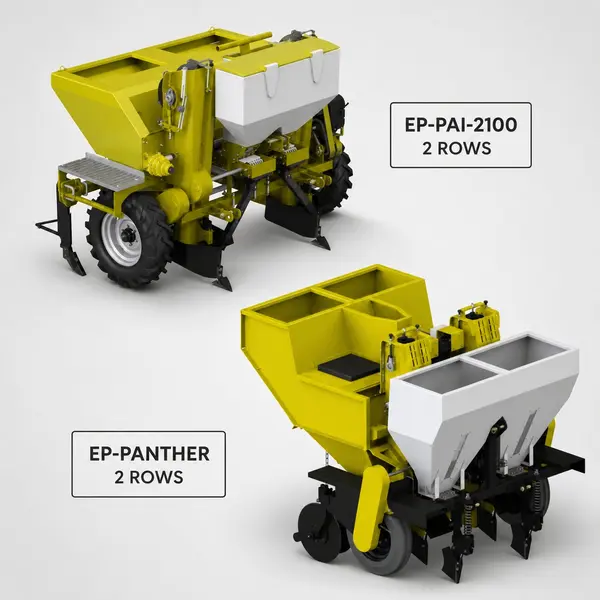
Seeds, fertilizer, and insecticide placed in a single tractor pass — the EP-PAI-2100 and EP-PANTHER planters turn a three-operation planting week into one. A 16-combination gearbox precisely controls seed spacing for any Korean commercial variety.
Available in 2, 3, and 4 rows, from 75 HP. For large-scale operations, the EP-PAI-480-AR carries up to 4,000 Kg of seed potatoes per fill.
Seeds, Fertilizer, and Insecticide — All in One Pass
Planting is the operation where the entire season's yield potential is set. The Watanabe potato planter range — covering the EP-PAI-2100, the EP-PANTHER series, and the large-scale EP-PAI-480-AR — places seed potatoes at a precisely controlled depth and spacing, applies starter fertilizer beside the seed zone, and optionally sprays soil insecticide, all simultaneously. What used to require separate planting, fertilizing, and spraying passes is consolidated into a single operation, performed once per field at 3–5 km/h.
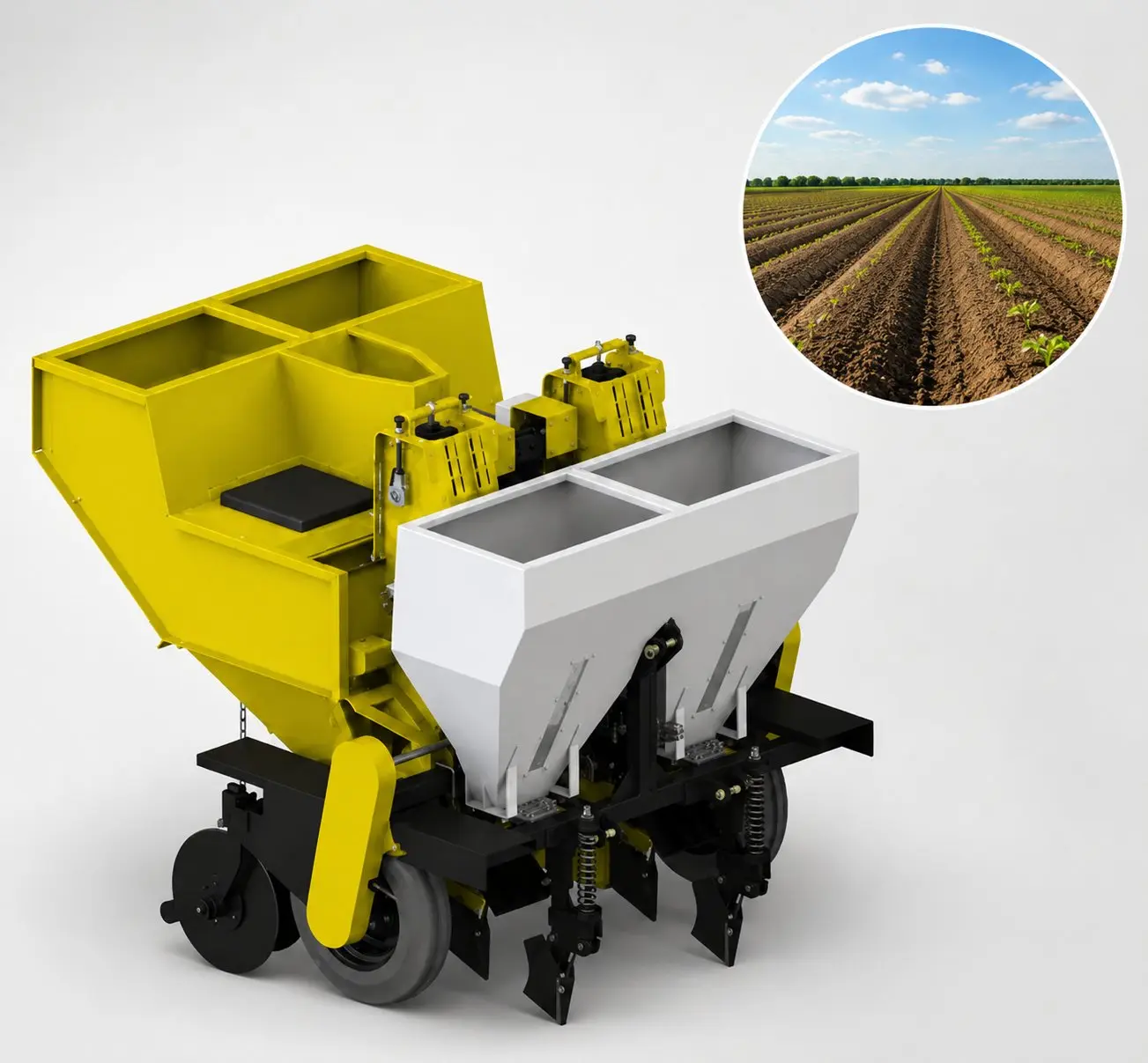
The range spans three distinct tiers designed for different farm sizes and production scales:
▶ EP-PAI-2100 — Entry 2-Row
The most accessible model in the lineup. 860 Kg, starts at 75 cv, seed bunker 350 Kg, fertilizer bunker 200 Kg. Designed for small to medium Korean family potato farms and plots with limited tractor power. Category 2 hitch, 3–5 km/h.
▶ EP-PANTHER Series — Commercial 2, 3 & 4-Row
The main commercial production range. Available in 2-row (85 cv, 700 Kg seed), 3-row (100 cv, 750 Kg seed + 600 Kg fertilizer), and 4-row (125 cv, 1,200 Kg seed) configurations. The PANTHER series scales with your farm from medium to large commercial acreage. Category 2 hitch, 3–5 km/h.
▶ EP-PAI-480-AR — Large-Scale 4-Row
The high-capacity option for large commercial farms, cooperatives, and contractors. 4,000 Kg seed capacity, dual fertilizer bunkers totalling 2,500 Kg, drawbar-mounted for a 140 cv tractor. Working speed 4–8 km/h. Designed to minimize refill stops across large planting areas.
The central capability across all models is the 16-combination gearbox for seed distribution — a mechanical transmission that offers sixteen distinct gear ratios controlling the seed cup belt speed relative to forward travel, giving the operator precise control over in-row seed spacing regardless of which tractor speed and gear is used. This flexibility allows the same machine to be set accurately for different potato varieties with different recommended in-row spacing requirements, without relying on a fixed single-ratio drive that locks the operator into one speed combination.
The Watanabe brochure describes the result plainly: "All in one operation after the soil preparation." After the furrowing and fertilizer passes are completed, the planting pass with an EP-PAI or EP-PANTHER closes the pre-emergence sequence — seeds placed, starter fertilizer delivered beside the seed zone, and optional soil insecticide applied, all in one run through the field. As part of the Watanabe potato machinery system, this is Step 5 — the point where everything the previous four steps built is put to use.
Technical Specifications — Full EP Potato Planter Range
The planter range is presented in two tables: the standard Cat.2 hitch models (EP-PAI-2100 and EP-PANTHER series), and the large-scale EP-PAI-480-AR which uses a different mounting configuration. All data is sourced from the Watanabe official product brochure.
Table 1 — EP-PAI-2100 & EP-PANTHER Series
| TECHNICAL DATA | EP-PAI-2100 | EP-PANTHER 2-Row |
EP-PANTHER 3-Row |
EP-PANTHER 4-Row |
|---|---|---|---|---|
| Weight & Linkage | ||||
| Empty Weight | 860 Kg | 1,325 Kg | 1,500 Kg | 1,450 Kg |
| Bottom Linkage Cat. | 2 | 2 | 2 | 2 |
| Number of Rows | 2 | 2 | 3 | 4 |
| Tractor Requirements | ||||
| Engine Power (min.) | 75 cv | 85 cv | 100 cv | 125 cv |
| Bunker Capacities | ||||
| Seed Bunker | 350 Kg | 700 Kg | 750 Kg | 1,200 Kg |
| Fertilizer Bunker | 200 Kg | 680 Kg | 600 Kg | — |
| Tank Insecticide (Option) | 200 or 300 L | 200 or 300 L | 300 L | 300 L |
| Working Speed | 3–5 Km/h | 3–5 Km/h | 3–5 Km/h | 3–5 Km/h |
Table 2 — EP-PAI-480-AR (Large-Scale)
| TECHNICAL DATA | EP-PAI-480-AR |
|---|---|
| Empty Weight | 2,300 Kg |
| Mounting Type | Drawbar-mounted (no Cat.2 linkage) |
| Number of Rows | 4 |
| Engine Power (min.) | 140 cv |
| Seed Bunker Capacity | 4,000 Kg |
| Fertilizer Bunker (1) | 2,000 Kg |
| Fertilizer Bunker (2) | 500 Kg |
| Insecticide Tank (Option) | 300 L or 600 L |
| Working Speed | 4–8 Km/h |
ⓘ cv = metric horsepower. The EP-PAI-480-AR is not a three-point hitch implement. With 2,300 Kg empty weight and up to 6,500 Kg when fully loaded, it is designed as a drawbar-pulled machine for tractors of 140 cv and above. Confirm tractor drawbar capacity and hydraulic supply before ordering. All data from Watanabe official product brochure.
How the EP Potato Planter Works
The 16-Combination Gearbox — Precision Seed Spacing
The seed distribution system is driven through a gearbox offering sixteen gear combination settings. Each combination produces a different ratio between the implement's forward travel speed and the seed cup belt speed, which directly controls how frequently a seed cup deposits a seed piece into the furrow. The result of selecting a specific gear combination is a particular in-row seed spacing — the distance between adjacent seed pieces along the row.
Sixteen combinations give the operator a practical range of in-row spacing options to match different potato variety requirements and target plant populations. Korean commercial potato varieties vary in their recommended in-row spacing: Atlantic (for chip processing) is typically planted at 25–30 cm; Haryoung (하령) at 20–25 cm; larger varieties at wider spacings. A single gear change sets the spacing for the entire field — no need to modify drive ratios or change sprockets for different crops. This flexibility is particularly valuable for farms that grow multiple varieties in the same season, or for contract planters who work on different clients' fields in the same planting week.
The gearbox drive is ground-wheel based — the implement's own wheels drive the gearbox as the tractor moves forward. This means the seed spacing remains consistent regardless of tractor ground speed, as long as the wheels are rolling at the actual field surface speed. Slippage on soft wet soil can affect accuracy, which is one reason proper seedbed preparation before planting is important for placement consistency.
Seed Placement and Furrow Closing
Each row unit includes a furrow opener that parts the soil at the target planting depth, a seed delivery chute that drops the seed piece from the cup belt into the furrow at the correct position, and a furrow closer that covers the seed immediately after placement. The sequence happens continuously as the tractor moves: furrow opens → seed drops → furrow closes, repeat for every seed piece at the set spacing.
Planting depth is set by the working units and controlled by the operator to match the variety's recommended planting depth — commonly 8–12 cm for Korean commercial potato production. Consistent depth across the row is the key placement quality metric: depth variation leads to uneven emergence timing, which creates uneven canopy development and ultimately variable tuber sizing at harvest. The EP-PAI and EP-PANTHER working units maintain a consistent depth reference across the full working width at the 3–5 km/h operating speed.
Simultaneous Fertilizer and Insecticide Application
While the seed placement system operates, the fertilizer delivery system simultaneously places granular starter fertilizer beside the seed furrow — positioned close enough to the developing root system to be available for early uptake, but not in direct contact with the seed piece where high fertilizer concentration can cause injury to the emerging sprout. The fertilizer delivery operates at the same forward speed as the seed system, with application rate set by the metering adjustment at the time of calibration.
Where the optional insecticide tank is fitted, liquid soil insecticide or nematicide is applied into the seed furrow at the same time, providing early-season soil pest protection from the moment of planting. The tank volume — 200–600 L depending on model and configuration — is sized to run the same fill duration as the seed and fertilizer bunkers under standard application rates, reducing the need for the operator to stop the machine to service one system while the others still have capacity remaining.
Key Advantages of the EP Potato Planter Range
■ 16 Gear Combinations
Sixteen gearbox settings give the operator a practical range of in-row seed spacing options with a single gear change — no sprocket swaps, no implement modifications. This covers the full spectrum of Korean commercial variety spacing requirements from compact 20 cm up to wider 35 cm spacings used in seed potato production.
■ Three Operations in One Pass
Seed placement, starter fertilizer delivery, and optional soil insecticide application in a single pass reduces total field traffic during the planting window. Eliminating two separate follow-up passes frees tractor time for other seasonal work and reduces soil compaction from additional field traffic at a sensitive crop establishment stage.
■ Scale from 75 HP to 140 HP
The EP-PAI-2100 starts at 75 cv, accessible to compact Korean tractors on smaller family holdings. The EP-PANTHER series scales through 85, 100, and 125 cv. The EP-PAI-480-AR addresses large commercial operations from 140 cv upward. The same product family covers the full Korean farm size range from 2 hectares to 500+ hectares.
■ 4,000 Kg Seed Capacity (480-AR)
At a Korean commercial seed rate of approximately 2,000–2,500 Kg per hectare, the EP-PAI-480-AR's 4,000 Kg seed bunker covers 1.6–2.0 hectares per fill. Combined with the dual fertilizer bunkers (2,500 Kg total), a contract planting operation can work for extended periods without refilling — the critical efficiency factor that determines daily output on large commercial planting schedules.
■ Insecticide Option Saves a Separate Pass
Soil pest management — wireworm, potato cyst nematode, and other soil-borne pests — typically requires a dedicated spray or granule application at or around planting. The EP-PAI and EP-PANTHER insecticide tanks place the treatment product directly in the seed furrow at planting, at the lowest possible application rate relative to target pest zone, without a separate field operation.
Where the EP Potato Planter Gets Used
🌿 Commercial Potato Production — Spring and Autumn Seasons
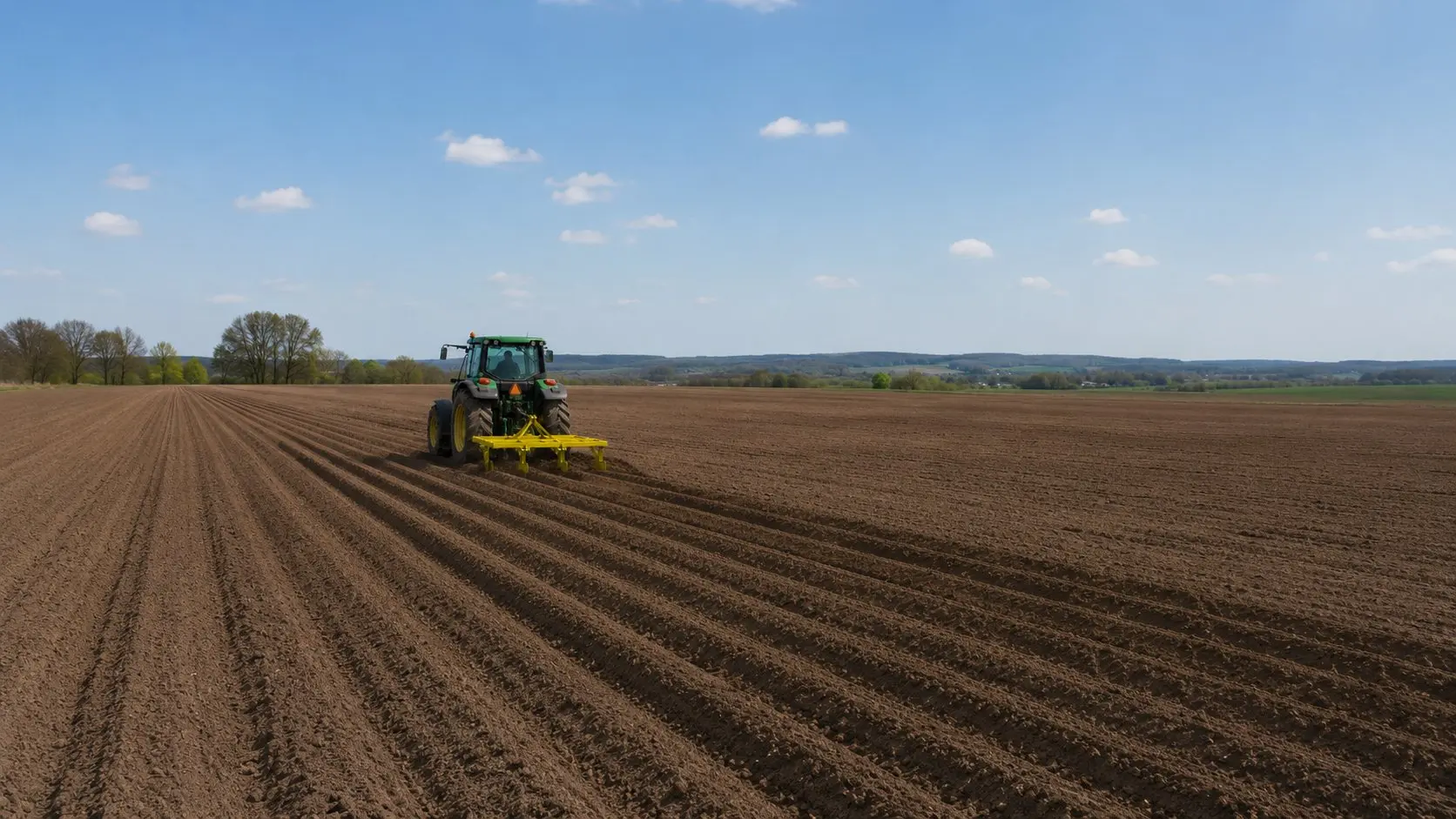
Korean commercial potato production follows two main seasonal planting windows: spring (March–April in mainland regions) and, for Jeju Island, a winter-spring cycle that runs from December to January. The spring planting window in Gangwon-do in particular is tight — a few weeks between the end of winter soil conditions and the point where planting should be complete to reach harvest before the summer monsoon rains reduce tuber quality. The EP-PAI and EP-PANTHER planters are sized to complete a farm's planting area within this window, with the EP-PANTHER 3-Row and 4-Row giving larger operations the throughput to stay comfortably ahead of the weather schedule.
Commercial varieties such as Atlantic (for the chip processing market, grown under contract to confectionery manufacturers), Superior (fresh market), and Dejima (early-season fresh market) each have specific recommended planting spacings and depths. The 16-combination gearbox allows the operator to set the correct spacing for each variety with a simple gear change between varieties, making the machine practical for farms growing multiple varieties in rotation across different fields in the same season.
🌻 Certified Seed Potato Production
Certified seed potato (씨감자) production in Korean highland zones — primarily in Pyeongchang-gun and Inje-gun in Gangwon-do — operates under stricter row spacing and plant isolation requirements than commercial production. Seed potato plots require wider in-row spacing than commercial production to facilitate inspection access and to reduce the risk of spread of certified-status-disqualifying diseases between plants. The 16-combination gearbox provides the spacing flexibility to accommodate wider seed potato production spacings without plant population compromise.
The EP-PAI-2100 (2-row, 75 cv) is frequently the right scale for seed potato operations — the plots tend to be smaller and more precisely managed than commercial fields, and the lighter machine weight reduces soil compaction on the highland soils where seed certification zones are located. The smaller fertilizer bunker (200 Kg) is also appropriate for seed production fertilizer programs, which typically apply at lower rates than commercial production to control vegetative growth in favor of seed piece quality.
🏗 Large-Scale Commercial and Cooperative Planting — EP-PAI-480-AR
The EP-PAI-480-AR occupies a distinct niche: operations where the scale of planting area makes the refill stop frequency of standard 3-point hitch planters the primary bottleneck to daily output. Agricultural machinery cooperatives (농업기계 임작업조합) in Gangwon-do handling contracts across multiple farms, large single-owner operations of 30 hectares and above, and contract planting services that move between clients across a planting week are the natural users of this machine.
The drawbar mounting configuration — rather than the Category 2 three-point hitch used on all other models — means the EP-PAI-480-AR requires different tractor setup than the rest of the potato machinery line. At 2,300 Kg empty and potentially 6,500 Kg when fully loaded, it pulls behind the tractor on a drawbar connection. Verify your tractor's drawbar rating and PTO power delivery capacity before ordering this model.
Which EP Potato Planter Fits Your Operation
Use the model summary below as a quick reference. The key decision axes are: annual potato area, tractor power available, whether you need integrated fertilizer capability, and whether the drawbar-mounted EP-PAI-480-AR's scale is justified by your operational volume.
| Model | Rows | Min. HP | Seed Cap. | Fertilizer | Best For |
|---|---|---|---|---|---|
| EP-PAI-2100 | 2 | 75 cv | 350 Kg | 200 Kg | Small family farm, compact tractor, seed potato plots |
| EP-PANTHER 2-Row | 2 | 85 cv | 700 Kg | 680 Kg | Medium farm, higher capacity 2-row, full seed+fert setup |
| EP-PANTHER 3-Row | 3 | 100 cv | 750 Kg | 600 Kg | Commercial farm, matches 3-row furrower line |
| EP-PANTHER 4-Row | 4 | 125 cv | 1,200 Kg | — | Large commercial, dedicated planting (separate fertilizer pass) |
| EP-PAI-480-AR | 4 | 140 cv | 4,000 Kg | 2,500 Kg | Cooperative / contractor / 30+ ha operation |
⚠ Always match planter row count to your furrower and cultivator
For a seamless full-season operation, the planter's row count should match the potato furrower and the EP-ERA rotary cultivator. A 3-row planter running into furrows opened by a 5-row furrower leaves two furrows unfilled per pass. Match all three machines to the same row count and all field passes align perfectly, pass after pass, season after season. Confirm your full potato machinery row count configuration with us before ordering any model.
Step 5 — The Planting Operation in the Full Watanabe System
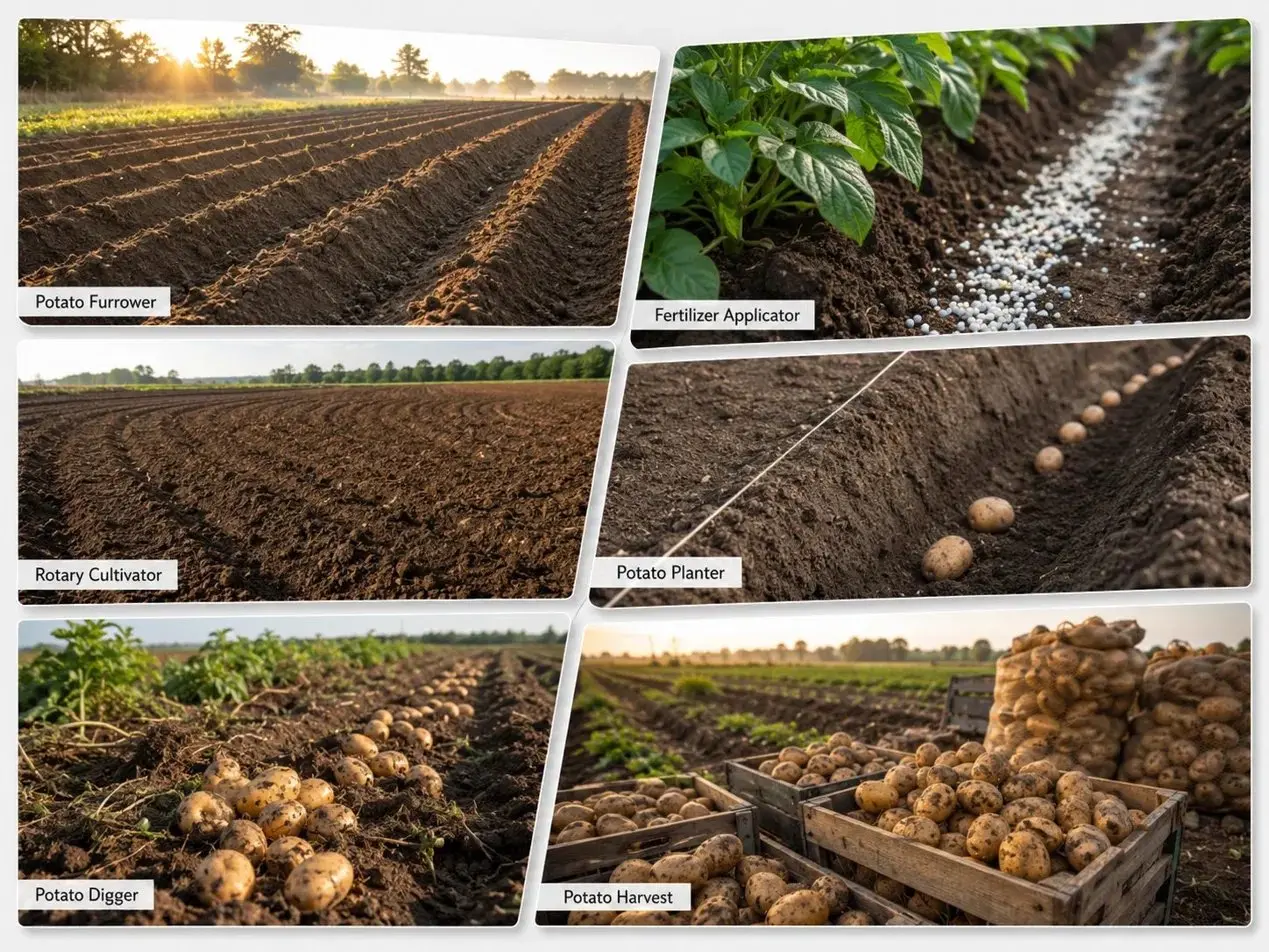
The potato planter sits at Step 5 — the culmination of four preparatory steps, and the point where the crop season officially starts. Here is the full seven-step sequence with the planting step in context:
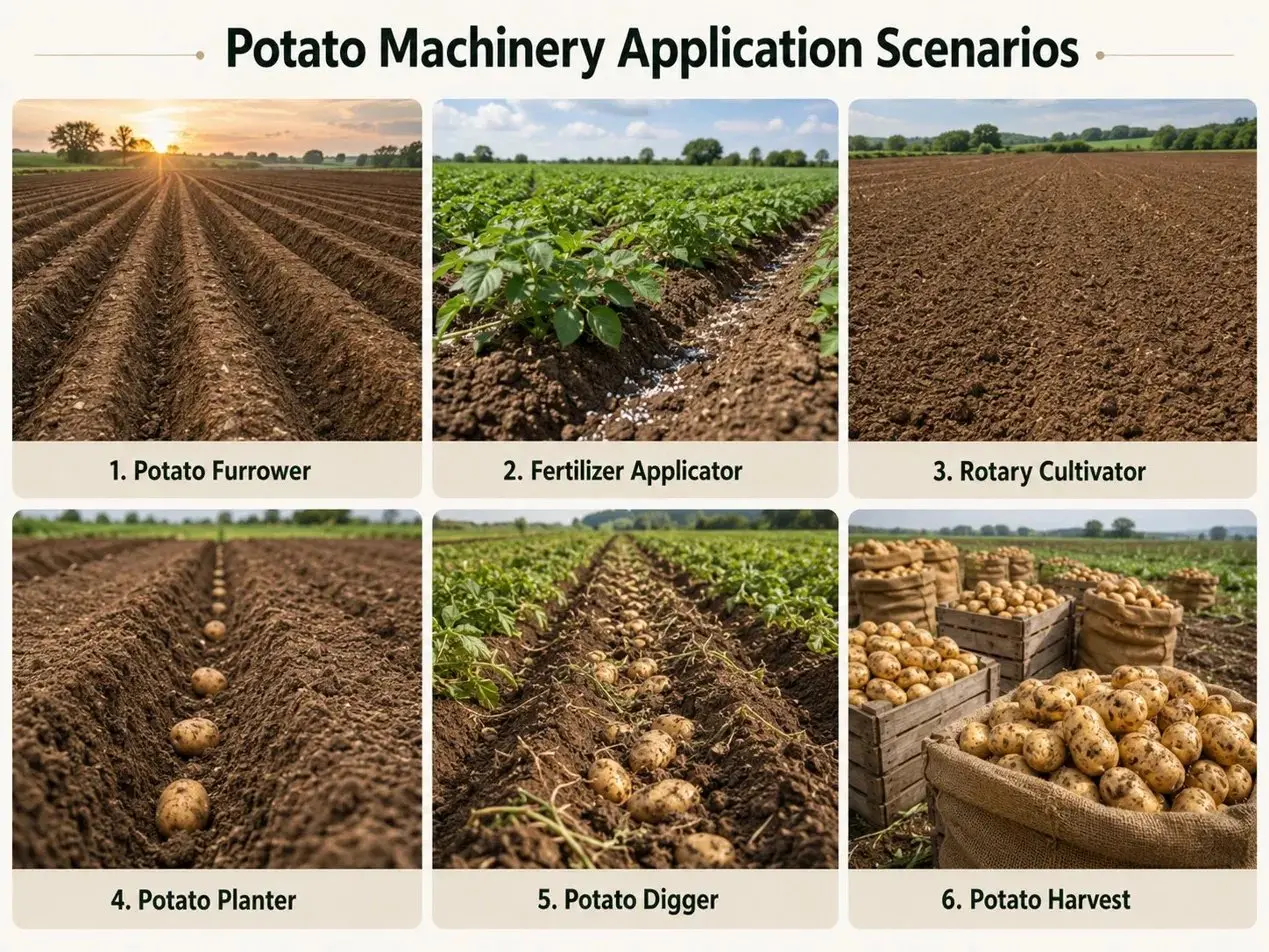
Stone Clearance — EP-EW-4000 Rock Rake
3.6 m width, from 75 HP
Primary Tillage — PSW-3200 Rotavator
3.0–3.6 m, 140 HP
Furrow Opening — EP-R-380 / EP-R-580
3 or 5 rows, from 75 HP
Base Fertilization — EP-ADB-380 / EP-ADB-480
350 Kg/row, 8–10 km/h
Planting — EP-PAI-2100 / EP-PANTHER / EP-PAI-480-AR YOU ARE HERE
Seeds + starter fertilizer + insecticide. 2–4 rows, from 75 HP, 3–8 km/h.
Mid-Season — EP-ERA Rotary Cultivator
Hill-up + fertilizer + weed control. Repeats 2–3×/season.
Harvest — EP-AWB-1600 Potato Digger
2-row, PTO-driven, low-damage. Page coming soon.
Contact Korea Watanabe Rock Crusher Tractor Co., Ltd. to discuss a complete matched potato machinery package. We can configure a full seven-step system — from stone clearance through to harvest — with all row spacings and working widths matched across the entire implement line for your specific farm scale and tractor fleet.
Watanabe Quality — Korea Local Support
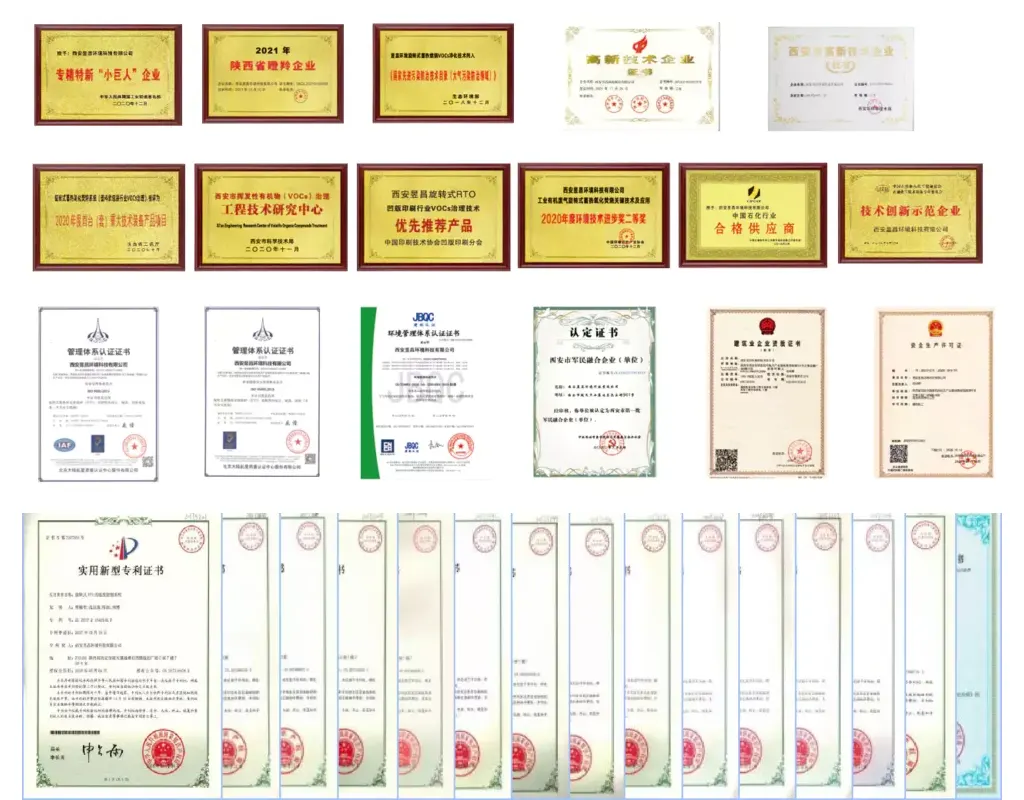
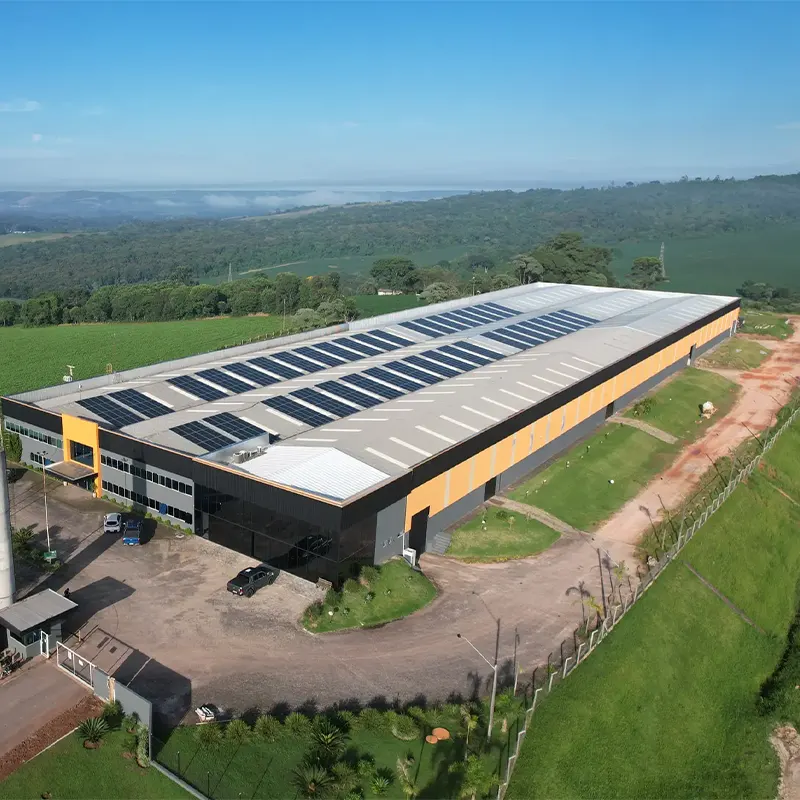
Watanabe has manufactured potato planting machinery in Brazil since 1970, developing the product range alongside the Brazilian commercial potato sector — which operates at similar scale, speed, and seasonal pressure to Korean commercial production. The EP-PAI and EP-PANTHER planter lines are the current iteration of a design history built through decades of real-world production use.
The seed cup system is the most precision-critical component on any potato planter — cup sizing, belt drive consistency, and cup fill rate at operating speed all directly affect planting uniformity. Watanabe specifies seed cup dimensions and belt materials to the requirements of the seed sizes used in Brazilian and Korean commercial potato production, and the 16-combination gearbox is manufactured to a tolerance that maintains consistent seed spacing across the full gear range.
✓ Row Spacing and Seed Cup Size
Seed cup size must match your seed potato grade. We confirm the correct cup configuration for your variety and typical seed piece size at the pre-sale stage — the planter arrives sized to your crop, not to a generic average.
✓ Wear Parts Stocked Locally
Seed cups, belt segments, and furrow opener tips are the primary wear items on any potato planter. Common wear parts for the EP-PAI and EP-PANTHER series are stocked locally in Ansan-si for prompt domestic dispatch.
✓ Pre-Season Setup Guidance
We provide gearbox setting guidance for your target in-row spacing, fertilizer calibration support, and planting depth setup advice before your first season use. Proper pre-season setup is the most important factor in planting uniformity results.
Frequently Asked Questions – EP Potato Planter Series
What does the "16 combinations gearbox" actually mean for planting accuracy?
The gearbox provides sixteen distinct gear ratios between the ground wheel drive and the seed cup belt. Each ratio produces a specific cup belt speed relative to forward travel — which translates directly into a specific in-row seed spacing. Selecting a different combination changes the spacing precisely and repeatably, without adjusting any sprockets or chains. In practice, this means you can switch between, for example, 25 cm spacing for Atlantic and 20 cm spacing for Haryoung with a single gear change between fields or between seasons, maintaining accurate placement at both settings.
What is the difference between the EP-PAI-2100 and the EP-PANTHER 2-Row?
Both are 2-row planters that plant seed potatoes, apply fertilizer, and accommodate an optional insecticide tank. The key differences are capacity and tractor requirement: EP-PAI-2100 carries 350 Kg seed and 200 Kg fertilizer, requires 75 cv. EP-PANTHER 2-Row carries 700 Kg seed and 680 Kg fertilizer — double the capacity — but requires 85 cv minimum. For farms with sufficient tractor power, the PANTHER 2-Row's doubled capacity means fewer refill stops per field, which has real scheduling value during a tight planting window. For smaller farms or lighter tractors, the EP-PAI-2100 is the practical choice.
The PANTHER 4-Row shows no fertilizer bunker — is that correct?
Yes, that is exactly as stated in the Watanabe official product brochure. The PANTHER 4-Row lists fertilizer bunker capacity as "—", meaning it is not equipped with an in-row fertilizer delivery system in this configuration. For operations using the PANTHER 4-Row, base fertilizer application should be completed as a separate pass using the EP-ADB-480 fertilizer applicator before planting. Alternatively, the PANTHER 3-Row (which does include a 600 Kg fertilizer bunker) may be the more practical choice if integrated in-row fertilizer delivery is required.
What is the EP-PAI-480-AR and when does it make sense to choose it over the PANTHER 4-Row?
The EP-PAI-480-AR is a large-scale drawbar-mounted planter with 4,000 Kg seed capacity, two fertilizer bunkers (2,000 Kg + 500 Kg), an optional 300–600 L insecticide tank, and a higher working speed of 4–8 km/h. Unlike all PANTHER models which mount on a Category 2 three-point hitch, the PAI-480-AR uses a drawbar connection — appropriate for its 2,300 Kg empty weight and the substantially greater loaded weight. Choose the PAI-480-AR when annual planting volume is large enough that the PANTHER 4-Row's 1,200 Kg seed capacity creates too many refill stops per day, or when the higher working speed is needed to complete a large planting area within a narrow weather window.
Is the insecticide tank standard or an optional add-on?
The insecticide tank is listed as an option across all EP-PAI and EP-PANTHER models. It is not included as standard equipment. If soil pest management at planting time is part of your agronomic program, confirm at the time of ordering that the insecticide tank option is included. Specify the tank size required (200 L, 300 L, or 600 L depending on model) based on your application rate and expected field coverage per fill. Consult your local agricultural extension service for approved insecticide or nematicide products for in-furrow application in Korean potato production.
Does the potato planter require a PTO connection?
The seed distribution drive on the EP-PAI and EP-PANTHER planters is ground-wheel based — the implement's own wheels drive the seed metering gearbox as the tractor moves forward. No PTO connection is required for the seed planting function. The fertilizer metering system is also ground-wheel driven on these models. Note that the EP-PAI-480-AR may use a different drive arrangement — confirm at the pre-sale stage for this specific model.
How is planting depth controlled?
Planting depth on the EP-PAI and EP-PANTHER is set by the furrow opener unit depth adjustment on each row, controlled by the depth wheel and working unit height setting. The target depth should match your variety's recommended planting depth — typically 8–12 cm for Korean commercial varieties, though some seed potato production programs specify different depths. Set the depth on a firm section of the field before starting the main planting run, and check seed placement depth at the beginning of each field pass by stopping the machine and checking the first few placements manually.
What preparation does the field need before the planting pass?
The full pre-planting sequence for the best planting results: stone clearance (EP-EW-4000) → primary tillage (PSW-3200 rotavator) → furrow opening (EP-R-380/EP-R-580) → base fertilizer (EP-ADB-380/EP-ADB-480) → planting (this machine). Attempting to plant into poorly tilled, stony, or un-furrowed soil produces inconsistent seed placement depth, poor furrow closure, and increased mechanical stress on the planter's working units. The Watanabe brochure states "all in one operation after the soil preparation" — the soil preparation prerequisite is not incidental.
What seed potato sizes does the planter accommodate?
Seed cup size should match the predominant seed piece size in your seed potato supply. Korean commercial seed potato is typically graded to 30–60 g or 60–80 g per piece depending on the variety and buyer specification. The seed cup size on the planter must be selected to match this grade — cups that are too small will not pick up full-size seed pieces reliably; cups too large will allow multiple pieces or skip placements. We confirm the correct cup size for your typical seed grade at the pre-sale stage. If your seed grade varies significantly from season to season, discuss the full range of cup size options at the time of ordering.
What Our Customers Say
Jeon Byeong-ho — Commercial Potato Farm, Jeongseon-gun, Gangwon-do (spring 2025)
★★★★★
"Running the EP-PANTHER 3-Row on 18 hectares of Atlantic. The 16-combination gearbox was the specific reason I chose this machine over a Korean-made alternative — I grow two varieties with different spacings and the gear change takes about 30 seconds rather than a sprocket swap that used to cost an hour. The 750 Kg seed bunker and 600 Kg fertilizer bunker mean I refill twice for the whole day's planting area. Seed placement consistency is visibly better than the old machine — emergence across the field has been more uniform every season since switching."
Oh Sung-mi — Mixed Potato and Sweet Potato Farm, Icheon, Gyeonggi-do (2024)
★★★★★
"We use the EP-PAI-2100 for our 4-hectare potato area. The 75 HP entry point was the deciding factor — our Daedong 78 HP handles it without being pushed. The machine combines planting and fertilizer delivery in one pass, which saved us two half-day operations compared to our previous method. We do not use the insecticide tank option because our soil management program is organic-certified. The planter without the insecticide option runs cleanly and the Korea team had no issue configuring it that way."
Yoo Tae-jun — Certified Seed Potato Farm, Pyeongchang-gun, Gangwon-do (2024 and 2025)
★★★★★
"Seed potato certification requires consistent spacing and depth. The 16-combination gearbox gives us the wider 30 cm spacing that our seed production protocol calls for, which was difficult to achieve accurately on the older machine we ran before. Two seasons with the EP-PAI-2100 and the certification inspector has not flagged spacing or depth inconsistency in either inspection. The smaller 350 Kg seed bunker is appropriate for our plot sizes. Pre-sale support from the Korea team covered cup sizing for our seed grade — good experience overall."
Im Ji-na — Potato Cooperative Member, Boeun-gun, North Chungcheong (spring 2025)
★★★★★
"Our cooperative operates the EP-PANTHER 4-Row as shared equipment for four member farms, roughly 22 hectares total. We use the EP-ADB-480 for base fertilizer before planting, then the PANTHER 4-Row for planting and insecticide — the fertilizer-not-included configuration was not an issue for our setup since we already had the ADB. The 1,200 Kg seed bunker means the machine plants about 0.5 hectares between seed refills at our target rate, which means maybe 8 stops per day — manageable. Good throughput for cooperative shared use."
Kwon Min-seok — Agricultural Machinery Contractor, Wonju, Gangwon-do (spring 2025)
★★★★★
"Running contract planting services with the EP-PANTHER 2-Row on 12 different potato farms across the Wonju and Hoengseong area, total contract area about 30 hectares per spring season. The PANTHER 2-Row's 700 Kg seed bunker means I can plant an entire small farm's potato area on one fill, which keeps the daily schedule predictable for the farm owners waiting on my visit. The 16-combination gearbox means I can adjust from one client's spacing requirement to the next between fields in a few minutes. Two seasons without any mechanical issues."
An Hyun-ji — Small Family Farm, Hongseong-gun, South Chungcheong (2024)
★★★★★
"First potato planter I have ever owned — previously hired a contractor. The EP-PAI-2100 was the right size for our 2.5 hectares. At 75 HP it works fine with our 80 HP LS tractor. The combined planting and fertilizer delivery in one pass was the main reason to buy rather than keep hiring — we now control the planting day ourselves, which means we plant on the day the soil conditions are ideal rather than whenever the contractor can come. Setup guidance from the Korea team before first use was thorough. Very happy."
Ready to Plant with Precision?
Tell us your tractor model, annual potato area, row count, typical seed grade, and target in-row spacing — we will confirm the right model, gearbox setting, and seed cup configuration within one business day.
Already running other Watanabe potato machinery? Ask about a complete matched package — furrower, fertilizer applicator, planter, cultivator, and digger — all configured to the same row spacing for seamless seasonal operation.
Related products
-
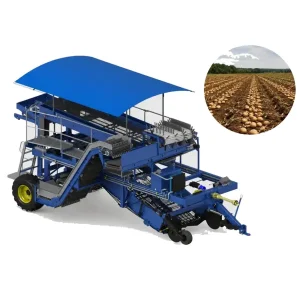
EP-CWB-2L Potato Harvester – Big Bag, 2-Row, On-Field Sorting
-
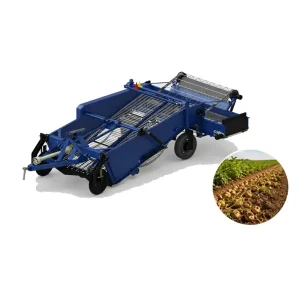
EP-AWB-1600 Trailed Potato Digger – 2 & 4 Row, up to 10 km/h
-
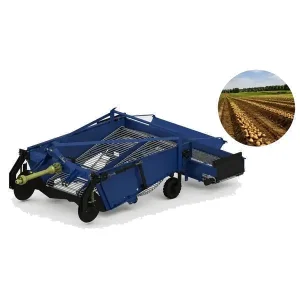
EP-AWB-1600 Potato Digger – 2-Row, Compact & Low Damage
-
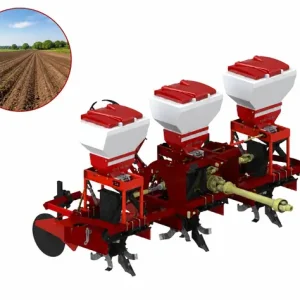
EP-ERA Rotary Cultivator – 2, 3 & 5 Row | 3-in-1 Potato Machine
-
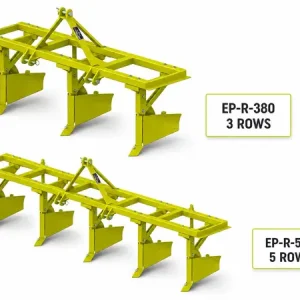
EP-R-380 / EP-R-580 Potato Furrower – 3 & 5 Row, from 75 HP
-
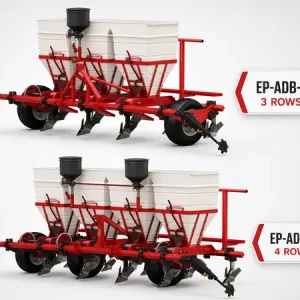
EP-ADB-380 / EP-ADB-480 Fertilizer Applicator – 3 & 4 Row