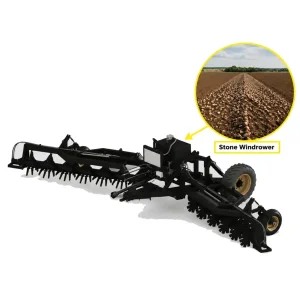
EP-EW-4000 Rock Rake for Tractor – 3.6 m, from 75 HP
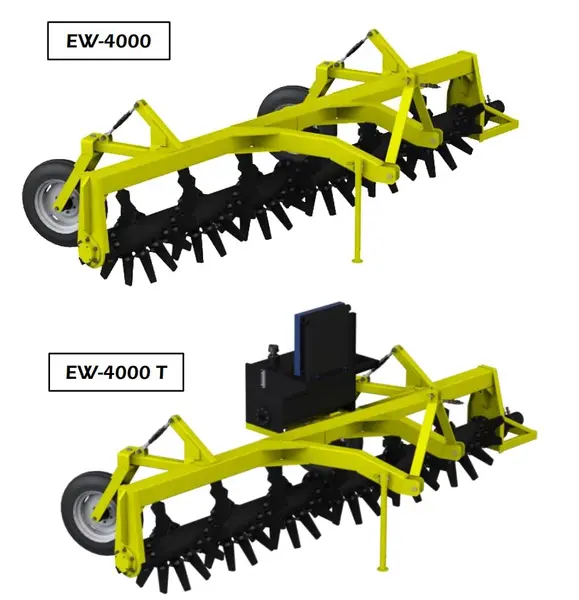
Clears a full 3.6-meter strip of surface stones in a single tractor pass at 3–5 km/h — removing the rocks that destroy rotavator blades and jam seeder openers before you ever reach the tillage stage.
The EP-EW-4000 T version asks just 75 HP and zero external hydraulics, making it one of the lowest-barrier entry points into professional land clearing for any Korean tractor owner.
The Rock Rake That Clears What Crushers Leave Behind
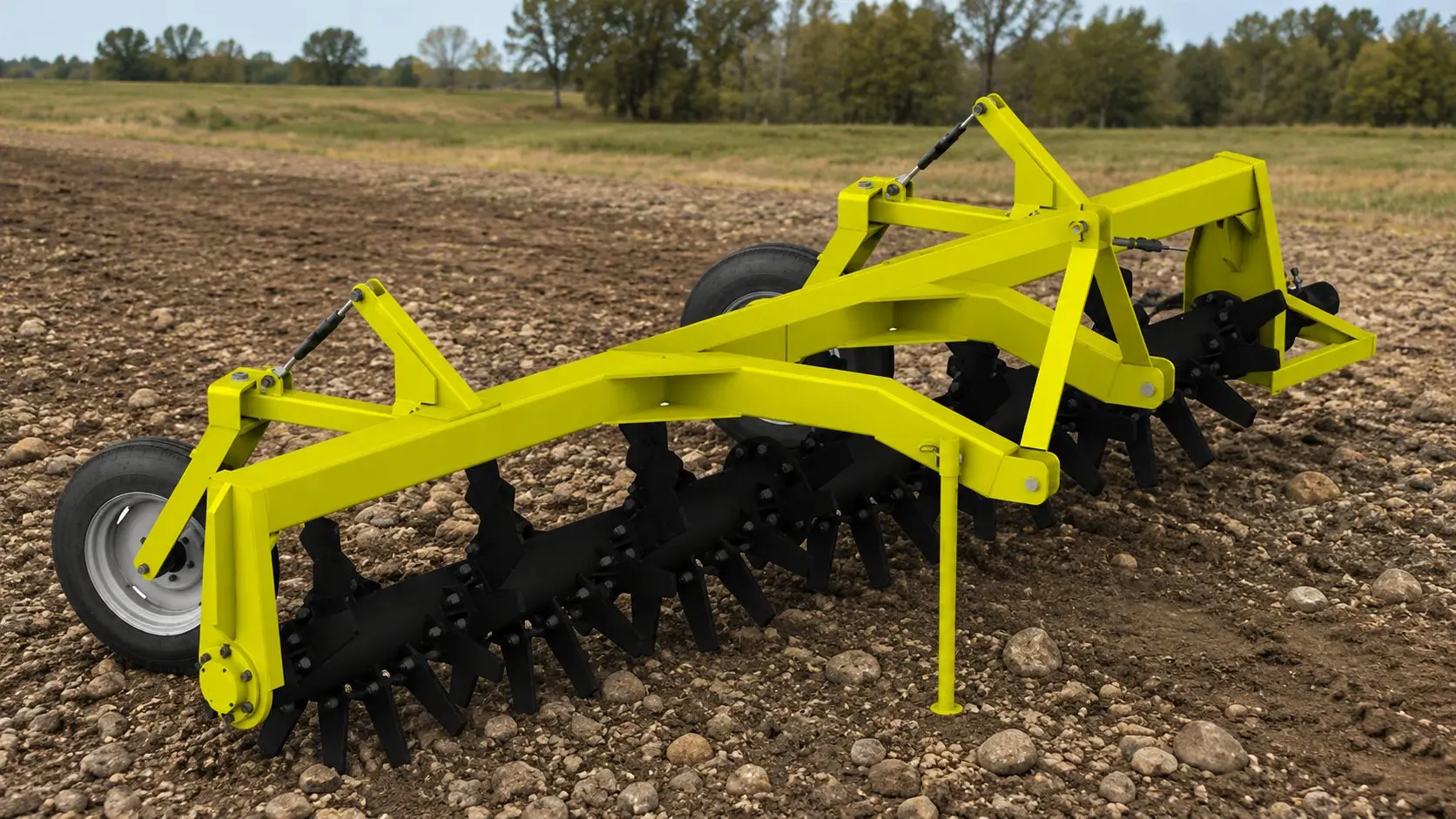
The Watanabe EP-EW-4000 rock rake for tractor is the implement you reach for before rotavating, seeding, or replanting — the machine that removes surface stones from fields too rocky to work safely with conventional tillage tools. Unlike a rock crusher for tractor that grinds embedded boulders into aggregate, the tractor rock rake targets stones at or near the soil surface, gathers them into a windrow at the field edge, and leaves the topsoil structure largely undisturbed for the next cultivation step.
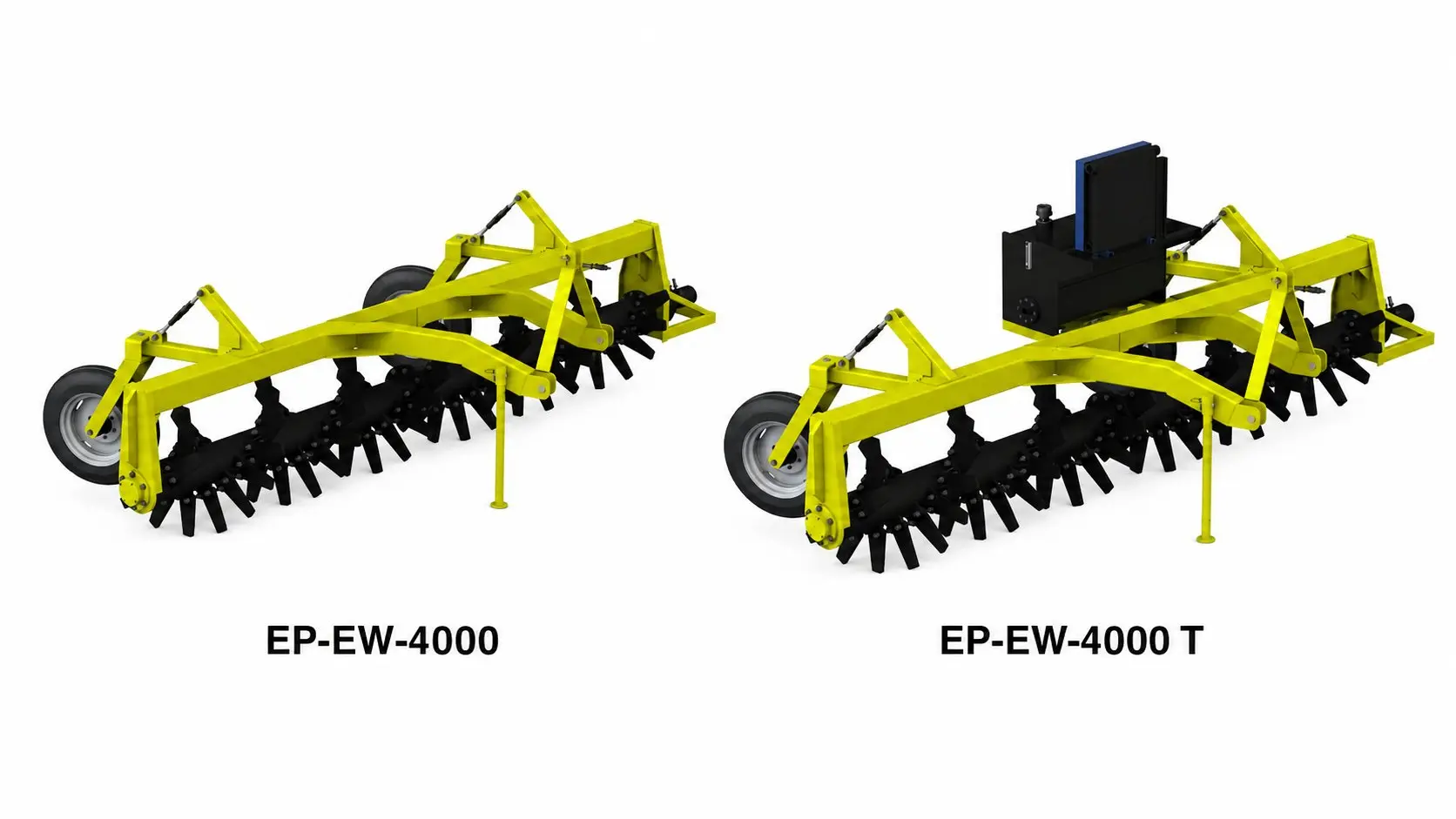
The EP-EW-4000 range offers two configurations — same 3.6-meter working width, different drive systems. Choosing between them is the one real decision most buyers need to make:
▶ EP-EW-4000 — Hydraulic Active
Powered tine system driven by the tractor's external hydraulic circuit. Requires 100 cv minimum and 60 L/min oil flow. Best for heavier, clay-type soils and high-density stone concentrations.
▶ EP-EW-4000 T — Tractor Drive (No Hydraulics)
Category 2 three-point hitch only — no external hydraulic supply needed. Starts at 75 cv. Ideal for smaller Korean farm tractors (LS, Daedong, TYM 65–85 HP range) working loamy or volcanic soils.
Watanabe has manufactured agricultural machinery since 1970. The EP-EW-4000 series is part of a product range built for the conditions real producers deal with every season — uneven Korean terrain, variable stone density from Jeju volcanic basalt to Gangwon granite hillside plots, and tractors that range from compact family-farm models to large commercial machines. Anywhere that surface stones are the obstacle rather than the target, a professional field rock rake at 3–5 km/h is the right first step before any other implement follows.
Technical Specifications – EP-EW-4000 & EP-EW-4000 T
The table below covers both versions in full. The single most important row for purchasing decisions is Oil Flow — the EP-EW-4000 requires 60 L/min from the tractor's external hydraulic remote circuit; the EP-EW-4000 T leaves that row blank, needing nothing beyond a standard Cat. 2 rear hitch. All data is sourced directly from the Watanabe official product brochure.
| TECHNICAL DATA | EP-EW-4000 | EP-EW-4000 T |
|---|---|---|
| Dimensions | ||
| Length (mm) | 4550 | 4550 |
| Width – transport (mm) | 2400 | 2400 |
| Height (mm) | 1380 | 1960 |
| Weight | 1800 Kg | 1900 Kg |
| Bottom Linkage Category | 2 | 2 |
| Working Width | 3.6 m | 3.6 m |
| Tractor Requirements | ||
| Engine Power (min.) | 100 cv | 75 cv |
| Oil Flow (min.) | 60 L/min. | — |
| Working Speed | 3–5 Km/h | 3–5 Km/h |
| Required Control Valves | 2 | 2 |
ⓘ cv = metric horsepower (PS). 100 cv ≈ 98.6 HP; 75 cv ≈ 73.9 HP. All data sourced from the official Watanabe product brochure.
Note on transport vs working width: The 3.6 m working width is the actual stone-clearing path. Transport width is 2,400 mm — tines fold to this dimension when the hitch is raised. The 580 mm height difference between versions (1,380 mm vs 1,960 mm) is also worth checking against shed clearances before ordering.
How the EP-EW-4000 Rock Rake Works
The Raking Mechanism
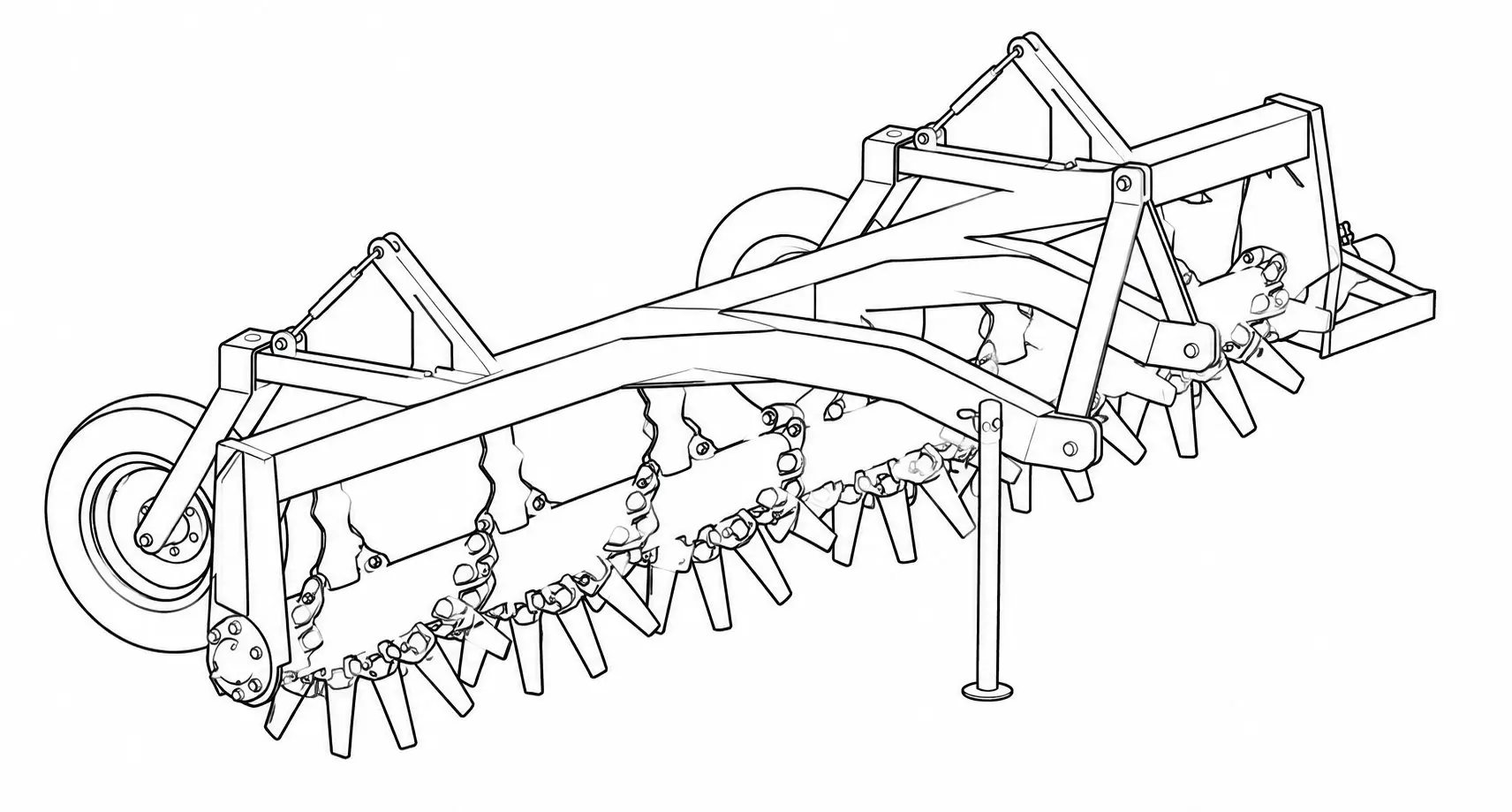
The EP-EW-4000 uses a row of hardened steel tines arranged across the full 3.6-meter working width. As the tractor advances at 3–5 km/h, the tines penetrate the upper soil layer at a forward-curving angle designed to lift stones rather than push them deeper. Stones caught on the tine bodies travel along the implement frame and accumulate into a growing windrow ahead of the machine. Smaller particles and loose soil fall back through the tine gaps, leaving the seedbed profile largely undisturbed below — a key difference from blade-clearing or bucket scraping, which disturbs the entire surface horizon.
Stone Collection and Windrow Formation
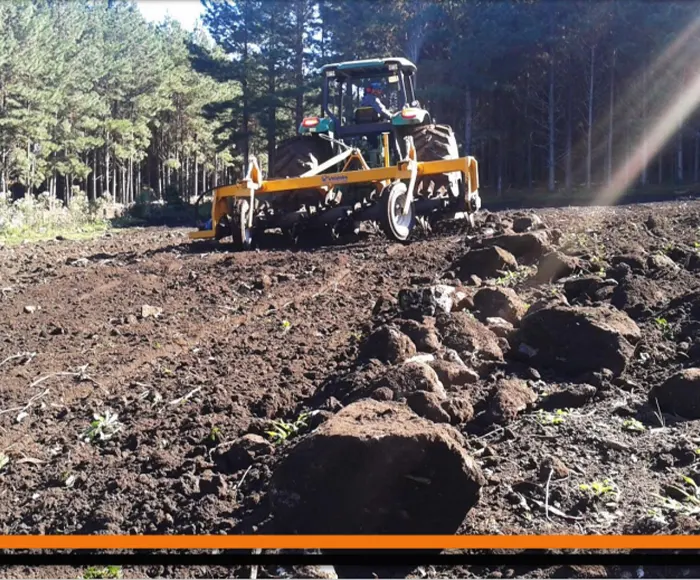
Collected stones build into a windrow that the tractor pushes steadily across the field. When the operator reaches the field edge — or a chosen drop-off point — raising the three-point hitch releases the accumulated load in a controlled pile. Windrow placement is entirely at the operator's discretion: full-perimeter collection, centre-row drops for later loader pickup, or a combination. A productive operator can clear a 1-hectare rectangular field in roughly two to three hours depending on stone density and working speed.
After raking, the windrow can be left for manual loading, picked up with a front-end loader, or handled efficiently with a purpose-built rock picker for zero manual stone contact during the entire clearance operation.
EP-EW-4000 Hydraulic vs EP-EW-4000 T — Functional Difference
The EP-EW-4000 has an active hydraulically driven tine system. The powered tine mechanism engages stones more aggressively in compacted or clay-heavy ground, and the operator can adjust tine working pressure via the tractor's remote hydraulic valve during operation — useful when soil conditions shift across the field, as they often do on Korean hillside plots with mixed soil horizons.
The EP-EW-4000 T operates purely through the three-point hitch: tines are fixed in working position, and stone engagement depends on implement weight, forward speed, and hitch depth setting. On loamy, sandy, or volcanic-origin soils — the type common on Jeju and many Gyeonggi alluvial plains — the T version captures stones just as reliably as the hydraulic model. The trade-off only becomes apparent in heavy, sticky clay where the active drive's additional force makes a meaningful difference in per-pass capture rate.
Why Korean Farmers Choose the EP-EW-4000 Rock Rake
■ 3.6 m One-Pass Coverage
A full 3.6-meter strip cleared per pass means fewer headland turns and faster field coverage. At 5 km/h the EP-EW-4000 can cover upwards of 1.5 hectares per hour under good conditions — genuinely meaningful throughput for medium and large holdings.
■ Two Drive Options, One Width
Hydraulic active drive or passive tine — choose what your tractor already delivers, not what requires a retrofit. Same 3.6-meter clearing path, same Category 2 hitch, different drive configurations to match real-world tractor populations on Korean farms.
■ Starts from 75 HP
The EP-EW-4000 T's 75 cv threshold puts a professional-grade land clearing rake within reach of the compact and mid-range tractors common on Korean family holdings — no need to hire a larger machine or upgrade just to run one seasonal implement.
■ Topsoil Structure Preserved
Tines engage the surface layer to collect stones while fine soil particles fall back through the gaps. The seedbed below stays intact — critical when the rock-raking pass directly precedes a rotavating or direct-seeding operation scheduled the same week.
■ Category 2 — Universal Fit
Category 2 rear three-point hitch is the standard across virtually all tractors 60 HP and above manufactured after 1990. No proprietary coupling, no brand-specific adapter required. Mount it, set depth, work — same process as any standard rear implement.
Typical Application Scenarios for the Tractor Rock Rake
🌿 Rocky Farmland Preparation Before Planting
This is the core use case. Fields previously used as rough pasture, scrub land, or long-fallow plots often carry a high density of surface stones — pushed up by frost heave over winter, brought to the surface by earlier cultivation, or simply always there waiting to be found by the first seeder that crosses the field. A single rock rake pass before primary tillage removes the bulk of this load. The rotavator or disc that follows works cleanly through a cleared profile: less implement wear, more uniform tillage depth, and a seedbed without buried rocks creating dry spots and germination gaps.
In practice, Korean farmers who add a rock-raking pass before planting consistently report fewer broken seeder teeth per season. In many cases, one season's avoided repair cost covers a significant portion of the implement's purchase price.
🌳 Orchard Row Renovation and Replanting
Old orchard conversion is a growing application across Chungbuk, North Gyeongsang, and Jeju. When aging apple, pear, or persimmon trees are removed, the land needs remediation before new rootstock can go in. Removed trees leave root zones with fractured rock, soil disturbance, and debris that creates a hazardous environment for any transplanter or seeder sent in immediately afterward.
The EP-EW-4000's 3.6-meter working width clears standard orchard row spacing in two passes. Tines collect dislodged stones without going deep enough to disturb the soil structure that decades of root activity have built. For orchards with rows of 4 meters or tighter, the EP-EW-4000 T's 1,380 mm transport height and lighter weight reduce the risk of contact with any remaining orchard infrastructure.
🌻 Pasture Renovation and Reseeding Prep
Paddocks being converted from grazing to improved grass production, or renovated for hay species, face a surface stone problem that a conventional mower or roller cannot address. Stones harmless to grazing animals will destroy a precision disc seeder. Raking before reseeding clears the hazard and leaves a windrow at the field edge easily handled with a front bucket once seeding is done.
Many Korean beef and dairy farms in Gyeonggi-do and Gangwon-do have added a hydraulic rock rake specifically for this annual task. The cost of one avoided seeder repair typically justifies several years of seasonal operating costs for the implement.
🏗 Land Development and Site Preparation
Land developers and infrastructure contractors working on smaller parcels regularly need surface stone removal before earthworks begin. A bulldozer clears vegetation efficiently, but pushing surface stones into the subsoil creates long-term compaction and stability issues. A tractor-mounted field rock rake removes the stones without disturbing the underlying grade — keeping the cleared surface workable for the next machinery stage without soil structure loss. The EP-EW-4000 T's 75 cv threshold is a practical asset here, since site preparation contractors typically work with mid-range agricultural tractors rather than large earthmoving equipment on smaller parcels.
EP-EW-4000 or EP-EW-4000 T — How to Choose
Both models cover the same 3.6-meter working width and mount on the same Category 2 hitch. The decision comes down to three factors: your tractor's hydraulic output, the soil texture you work, and how much active control you need while operating. The comparison below maps those factors to each version:
| Selection Factor | EP-EW-4000 (Hydraulic) | EP-EW-4000 T (Passive) |
|---|---|---|
| External hydraulic supply | Required (60 L/min) | Not required |
| Minimum engine power | 100 cv | 75 cv |
| Suited soil type | Clay-heavy, compacted | Loamy, sandy, volcanic |
| Stone embedment depth | Partially embedded | Mainly surface-lying |
| Transport height | 1380 mm | 1960 mm |
| Operator control preference | Adjustable on the move | Simple, fewer connections |
The simplest pre-purchase check: inspect the rear of your tractor for remote hydraulic couplers. If it has at least two free remote ports and the pump delivers 60 L/min or above at rated revs, the EP-EW-4000 is compatible. If the tractor has no remote ports at all — or only one — the EP-EW-4000 T is the straightforward choice.
Korean tractor models commonly paired with the EP-EW-4000 T include:
- Daedong CK5030 / CK6030 (approx. 50–60 HP range)
- LS XR4140 / XR4150 (approx. 41–50 HP range — note: verify actual CV rating for your specific model)
- TYM T473 / T503 (approx. 47–50 HP range)
- Older Kumsung 65 and 80 series
For tractors in the 100+ HP class (John Deere 5M / 6M, New Holland T5 / T6, Kubota M7), both versions are viable. The EP-EW-4000 hydraulic model is typically preferred for heavier seasonal workloads on these larger machines. There is no performance penalty to choosing the EP-EW-4000 T in appropriate soil conditions — on light-to-medium textured land the stone capture rate between the two versions is closely comparable.
Built Since 1970 — Quality You Can Trace Back Decades
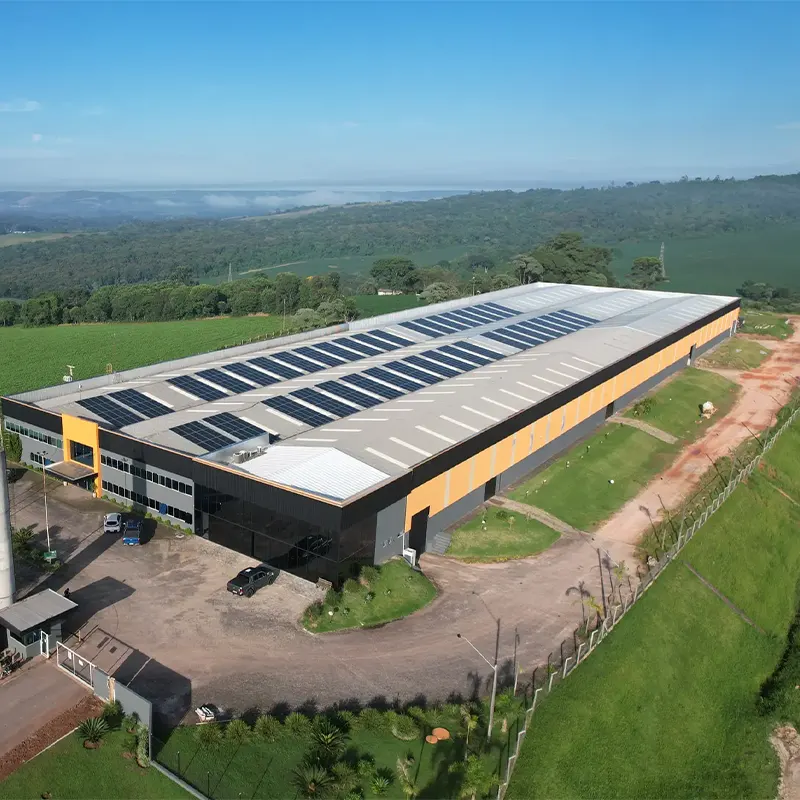
Watanabe Indústria e Comércio de Máquinas Ltda. has manufactured agricultural equipment from Castro, Paraná, Brazil since 1970. Over 50 years of continuous production in the same facility means the engineering decisions behind each implement — steel tine specification, hitch geometry, frame weld process — have been validated across generations of actual field use, not just controlled testing.
The EP-EW-4000 rock rake carries that background forward. Structural welds are performed to controlled procedures with post-weld inspection. Tine material hardness is specified to balance wear resistance against the risk of brittle fracture — a trade-off that lower-cost implements often get wrong, producing tines that either wear too fast or snap under load rather than flex.
✓ Local Korea Stock
Korea Watanabe Rock Crusher Tractor Co., Ltd. maintains local inventory of common wear parts including replacement tines — no international lead time for routine servicing.
✓ Pre-Sale Tractor Check
Before ordering, we verify hydraulic output (for EP-EW-4000) or confirm Category 2 compatibility (for EP-EW-4000 T) against your specific tractor model. No guesswork on compatibility.
✓ Technical Documentation
Post-sale support includes installation guidance, depth-setting advice for your soil conditions, and access to Watanabe Brazil technical documentation for deeper troubleshooting when needed.
Complete Your Land Preparation Setup
The rock rake handles surface stone removal. Effective land preparation usually involves two or three implement stages. These are the Watanabe machines that work most naturally alongside the EP-EW-4000 in a Korean field preparation sequence:
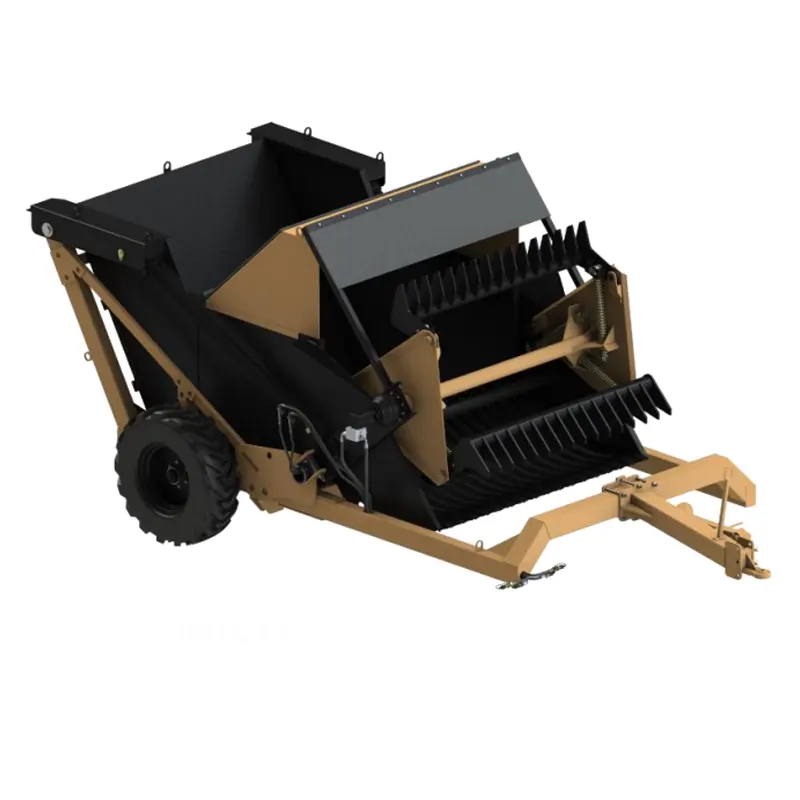
CT-2100 Rock Picker
After the rock rake has windrows at the field edge, the CT-2100 collects and bunkers them — 2.5 m³ capacity, 110 HP, 1.95 m working width. Used together, the two machines handle complete stone clearance with no manual lifting.
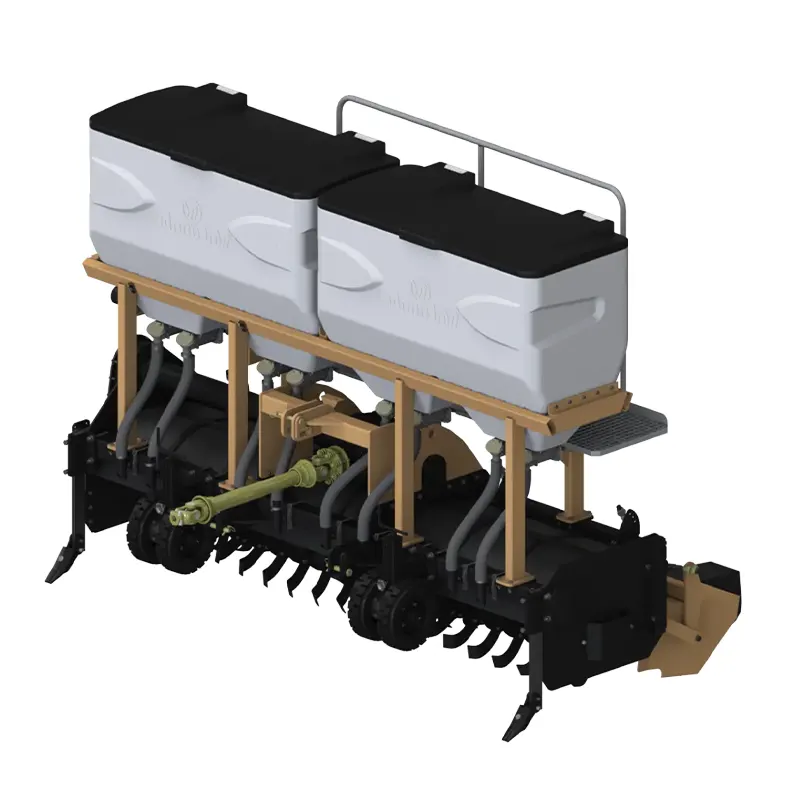
PSW-3200 Rotavator
The natural next step after rock raking — a 3.2-meter rotavator that works the cleared seedbed. Available in standard, fertilizer, and combined fertilizer-plus-seeder configurations (PSW-3200 B).
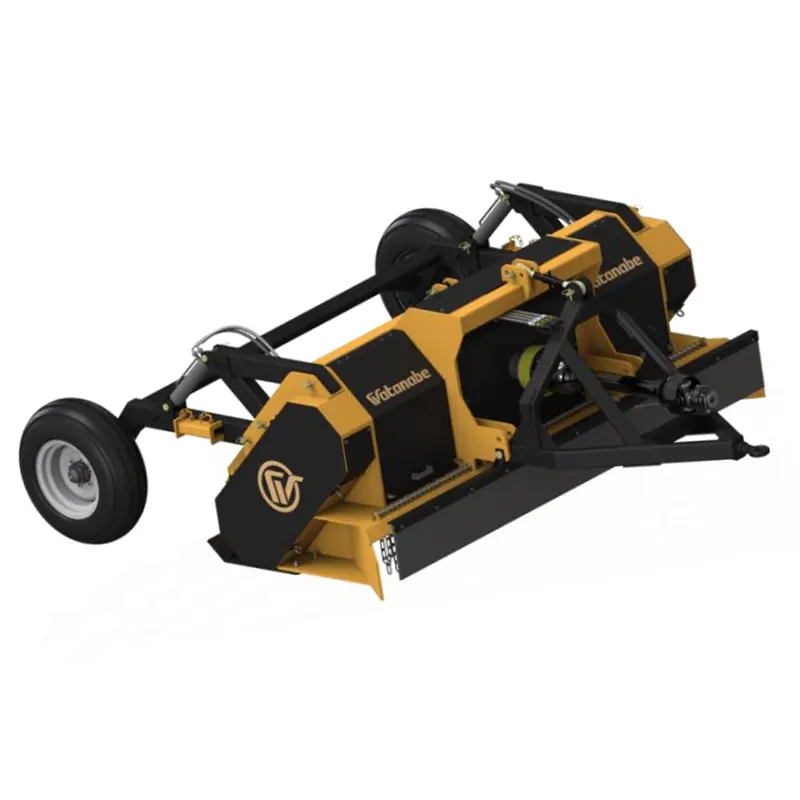
THOR 2.4 Rock Crusher
When the field has large embedded boulders rather than surface stones, a stone crusher mulcher is the right tool — grinds rocks up to 30 cm into aggregate in one pass. 180 HP, 2.4 m working width, Kit Drawbar included.
Frequently Asked Questions – EP-EW-4000 Rock Rake
What is the actual difference between the EP-EW-4000 and EP-EW-4000 T?
The EP-EW-4000 has an active hydraulically driven tine system requiring 60 L/min external hydraulic supply and a minimum of 100 cv. The EP-EW-4000 T uses a passive tine setup — no external hydraulics, Category 2 hitch only, starts at 75 cv. Both versions share the same 3.6-meter working width and frame dimensions. On lighter soils the performance gap is small. In heavy clay or compacted ground, the hydraulic version engages stones more effectively.
What size surface stones does the EP-EW-4000 handle?
The tine design targets surface stones of moderate size — those large enough to damage seeder openers or rotavator blades, but not deeply embedded boulders. Very small gravel passes back through the tine gaps by design. Stones substantially larger than about 20–25 cm that are partially embedded are better addressed by a rock crusher or removed manually before raking. The EP-EW-4000 is optimized for the mid-range surface stone category responsible for most tillage implement damage in standard farming operations.
Can the rock rake be used on wet or clay-heavy soil?
Wet conditions reduce the effectiveness of any tine-based implement — wet clay clogs tine gaps and reduces stone capture. The EP-EW-4000 hydraulic version handles heavier soils better than the T version, but neither performs well in waterlogged conditions. Wait until soil moisture drops below field capacity (the tractor should not be leaving deep ruts) before working. Upland rocky plots in Korean spring conditions are usually workable considerably earlier than the lower paddy margins.
How does the rock rake differ from the CT-2100 rock picker?
The rock rake gathers surface stones into a windrow at the field edge — it does not collect them in a bunker. The CT-2100 rock picker picks up that windrow and stores stones in a 2.5 m³ bunker for transport to a disposal point. The two machines complement each other: rock rake first for fast area coverage, rock picker second for contained collection and removal. For small fields or operators comfortable loading the windrow with a front bucket, the rock rake alone is sufficient.
Does the EP-EW-4000 T work on tractors with no remote hydraulic valves?
Yes. The EP-EW-4000 T requires only a Category 2 three-point rear hitch — no remote hydraulic outlets needed at all. The implement raises and lowers via the standard hitch lift, and tine depth is set by the hitch position lever or draft control. This makes the EP-EW-4000 T suitable for older tractors or basic utility models that were never factory-equipped with external hydraulic circuits.
What is the recommended working speed and how does it affect output?
The specified range is 3–5 km/h. At the lower end, stone capture per pass is higher but area coverage drops. At 5 km/h, daily throughput improves but capture rate decreases on denser stone surfaces. For a first pass over high stone density, start at 3–3.5 km/h. Most operators settle around 4 km/h as the practical balance point. Working speed is one of the few variables you control on the day — adjust it to the conditions, not to a fixed habit.
How do I maintain the tines and how long do they last?
Tine service life depends on soil abrasiveness and stone density. Volcanic substrate (common on Jeju) wears tines faster than loamy mainland soil. Inspect tines every 20–30 operating hours for tip wear, bending, or cracking. Bent tines can be repositioned if the bend is minor; cracked tines should be replaced promptly to avoid bracket and frame damage. Replacement tines for the EP-EW-4000 series are stocked locally through our Korea operation — typical dispatch is 1–3 business days from inquiry.
Is the 3.6-meter working width the same as the transport width?
No. Transport width is 2,400 mm — tines retract to this dimension when the hitch is raised for road travel or headland turns. The 3.6-meter working width is achieved when the implement is lowered to working position. Always verify applicable road transport regulations and lane widths before moving between fields on public roads. For the EP-EW-4000 T at 1,960 mm transport height, also check bridge and underpass clearances on narrow rural routes.
Can the EP-EW-4000 T be used on sloping hillside land?
The implement is designed for slopes typical of Korean hillside orchards and terraced plots. On steeper grades, the rear-mounted weight adds to rear-axle load (improving traction) but also raises the tractor's overall centre of gravity. Always work up-and-down slope rather than across a steep face to minimise lateral stability risk. On terrain above approximately 25% gradient, contact us before ordering to discuss whether the drawbar configuration or a different Watanabe implement is more appropriate for your specific field layout.
What Our Customers Say
Kim Jae-won — Apple Orchard Manager, Chungcheongbuk-do (autumn 2024)
★★★★★
"We converted 3 hectares of old orchard to row crops last year. The EP-EW-4000 T was the machine that made the soil preparation realistic on our schedule. The old trees had left roots and fractured stone throughout the top layer, and the first rotavator pass the previous season cost us two broken blades. Two passes with the rock rake before going back in with the rotavator cut that problem to zero for the rest of the season. We run a 78 HP LS tractor — the T version fits without any hydraulic modification. Would order again without hesitation."
Park Seong-hee — Grain and Vegetable Farm, Gangwon-do (spring 2025)
★★★★★
"Running a 110 HP Daedong with the EP-EW-4000 hydraulic version. Our hillside fields have a lot of embedded fist-size granite — the hydraulic drive handles it noticeably better than the passive-tine machine I borrowed from a neighbour two seasons ago. The 3.6-meter width means fewer passes per field, which really matters when you are trying to get planting-ready before the late-April weather window closes. Setup from delivery to first use was under 30 minutes. Two full seasons in, no issues."
Lee Dong-hyun — Land Development Contractor, Gyeonggi-do (mid 2024)
★★★★★
"We use the EP-EW-4000 T for site preparation on smaller agricultural development parcels — fields that need surface clearing before earthwork starts. Most of our site prep tractors are in the 80–90 HP range, so the 75 cv minimum on the T version is a direct practical advantage. On a recent 5-hectare parcel we cleared the surface stone load in a day and a half. The local Korea support team confirmed parts availability before we even placed the order — that transparency was honestly what closed the decision for us over a cheaper alternative."
Choi Yong-sik — Beef Cattle Farm, North Gyeongsang (late 2024)
★★★★★
"Renovating a paddock for Italian ryegrass and the field had too many surface stones for the disc seeder. Rented a rock rake for one season, bought the EP-EW-4000 T the following year. The machine's 1,900 kg weight helps on our slightly uneven ground — the tines maintain consistent depth without constant hitch adjustment. Two full seasons of use, tine wear has been reasonable, and replacement tines arrived from the Korea team within two days of my call. Good service."
Jeong Min-su — Ginseng Cultivation Manager, South Chungcheong (early 2025)
★★★★★
"Ginseng bed preparation needs a clean surface — stones in the top layer cause root deformity and lower harvest grading quality. We use the EP-EW-4000 T for two pre-season preparation passes on each bed and the surface stone reduction has been measurable. What I value most is the shallow working depth: the structure of the ginseng beds stays intact between cleaning passes, which matters over the multi-year growing cycle. No surprises after two seasons of use."
Han Bo-ra — Mixed Vegetable Farm, Jeju Island (spring 2025)
★★★★★
"Jeju basalt pushes new stones up every time you work the soil, especially after a hard winter. The EP-EW-4000 T is now part of our standard spring prep routine before every main planting. The tines do wear a bit faster on volcanic material than on the mainland, but the Korea team was transparent about this before I bought — replacement cost is manageable. Shipping to Jeju was handled without any problem. Exactly the machine this soil type needs."
Ready to Clear Your Fields?
Tell us your tractor model, approximate field size, and soil type — we will confirm the right version and current delivery timeline within one business day.
Additional information
| Editor | Cxm |
|---|