
EP-ADB-380 / EP-ADB-480 Fertilizer Applicator – 3 & 4 Row
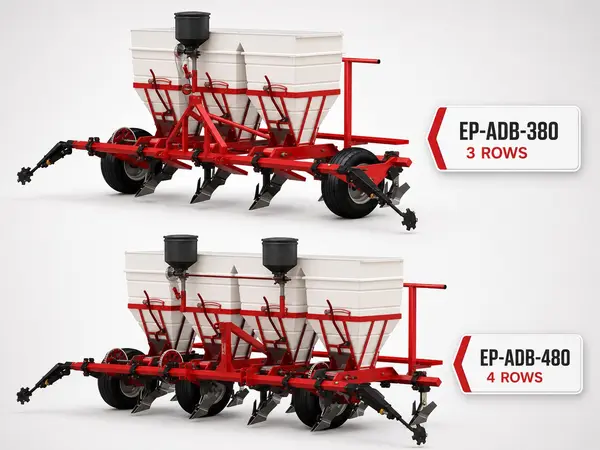
Places fertilizer precisely in the root zone at 8–10 km/h — the fastest implement in the Watanabe potato lineup. Each row hopper holds 350 Kg, giving up to 1,400 Kg total capacity on the EP-ADB-480.
3 or 4 rows simultaneously, from 75 HP. No PTO connection required. Precision in-furrow delivery reduces fertilizer waste compared to surface broadcasting.
Put Nutrients Exactly Where the Roots Will Be
The Watanabe EP-ADB-380 and EP-ADB-480 fertilizer applicators are built for one purpose: placing granular fertilizer directly in the potato furrow zone before planting, at the precise position where developing root systems will encounter it first. Unlike a broadcast spreader that distributes fertilizer across the entire soil surface — where much of it sits far from any root, vulnerable to leaching and runoff — these implements deliver nutrients to the location where they will actually be taken up.
The two models cover the most common commercial production scales in Korea:
▶ EP-ADB-380 — 3-Row
Weight 600 Kg, minimum 75 cv. Three rows per pass, 350 Kg per row bunker — 1,050 Kg total capacity. Suited to small and medium operations where manageable machine weight and a 75 HP tractor threshold matter.
▶ EP-ADB-480 — 4-Row
Weight 700 Kg, minimum 85 cv. Four rows per pass, 350 Kg per row bunker — 1,400 Kg total capacity. For commercial farms where daily fertilizer coverage needs to match the pace of a larger planting operation.
The headline performance figure is the working speed: 8–10 km/h. This makes the EP-ADB the fastest implement in the Watanabe potato machinery line — faster than the potato furrower, faster than the planter, faster than the rotary cultivator, and much faster than the digger. The implication for field scheduling is significant: the fertilizer pass rarely becomes the bottleneck in a planting-week operation.
The 350 Kg per row bunker capacity is the other number that distinguishes these machines from smaller, lighter implements. On a Korean commercial potato field applying compound fertilizer at a typical base application rate of 400–600 Kg per hectare, the EP-ADB-380 covers roughly 1.7–2.6 hectares between refills, and the EP-ADB-480 extends that to approximately 2.3–3.5 hectares. For many farms, that means completing the entire fertilizer pass for a day's planting schedule with one or two fills rather than stopping every few passes.
As part of the Watanabe potato machinery system, the EP-ADB sits between the furrowing pass and planting, preparing the furrow zone nutritionally so the seed piece emerges into a well-fed root environment from the first week of growth.
Technical Specifications – EP-ADB-380 & EP-ADB-480
All data in the table below is sourced directly from the Watanabe official product brochure. Pay particular attention to the bunker capacity row: the 350 Kg figure is per row, not per machine. Multiplied across the row count, the total hopper capacity figures are among the largest in the Watanabe potato machinery line.
| TECHNICAL DATA | EP-ADB-380 | EP-ADB-480 |
|---|---|---|
| Weight & Linkage | ||
| Empty Weight | 600 Kg | 700 Kg |
| Bottom Linkage Category | 2 | 2 |
| Number of Rows | 3 | 4 |
| Tractor Requirements | ||
| Engine Power (min.) | 75 cv | 85 cv |
| Capacity & Performance | ||
| Bunker Capacity (per row) | 350 Kg | 350 Kg |
| Total Bunker Capacity | 1,050 Kg | 1,400 Kg |
| Working Speed | 8–10 Km/h | 8–10 Km/h |
ⓘ cv = metric horsepower. 75 cv ≈ 73.9 HP; 85 cv ≈ 83.8 HP. Total bunker capacity calculated from brochure spec (350 Kg × number of rows). Field coverage per fill depends on your target application rate — consult your fertilizer supplier and agronomist for the appropriate rate for your variety and soil analysis results.
On the working speed advantage: At 8–10 km/h, the EP-ADB operates roughly twice as fast as most other potato machinery in the Watanabe lineup. A tractor working at 9 km/h with the EP-ADB-480 covers approximately 3.6 hectares per hour of field travel time (excluding fills and turns), making this one of the highest-throughput operations in the full potato production calendar.
How the In-Furrow Fertilizer Applicator Works
In-Furrow Placement vs Surface Broadcasting — Why Position Matters
Broadcasting fertilizer across the soil surface before tillage is the simplest approach, and it works well enough when the entire soil surface will be worked by a rotavator or disc and the fertilizer gets incorporated uniformly. But in row-crop potato production, where the planting position is precisely defined by the furrow, broadcasting after furrowing puts much of the nutrient charge in the inter-row zone — a location the potato's root system rarely reaches densely enough to fully exploit in the first critical weeks of growth.
In-furrow fertilizer application changes this fundamentally. By delivering the fertilizer directly into the furrow zone — or at a defined depth adjacent to the planting position — the nutrients are positioned in the exact soil volume where root density will be highest. Early root contact with available phosphorus and potassium accelerates establishment and early tuber initiation, effects that are well-documented across potato production research in both Brazilian and Korean growing conditions. The EP-ADB-380 and EP-ADB-480 exist to make this precision placement practical at commercial scale and commercial speed.
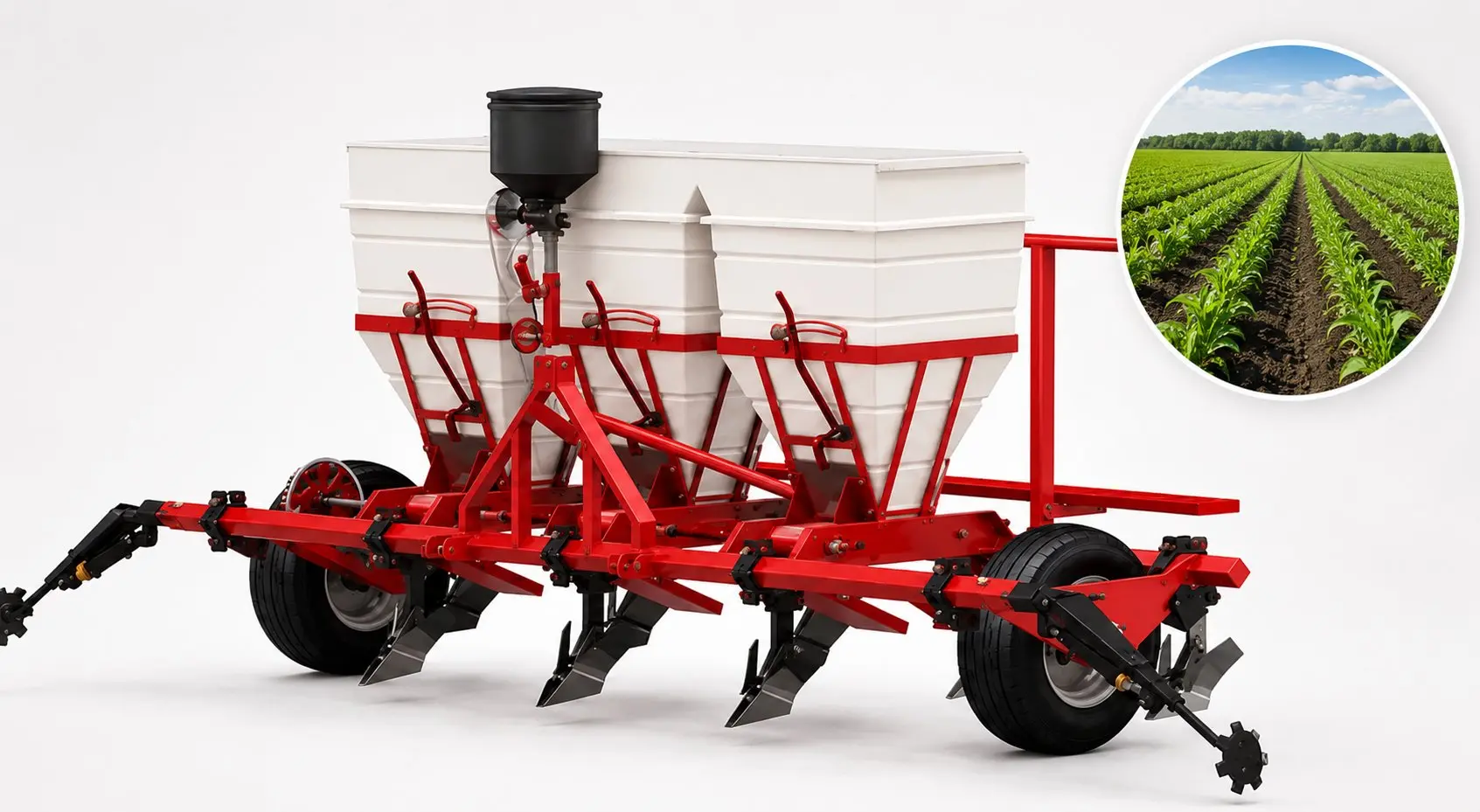
Metering and Delivery System
Each row has its own independent hopper carrying up to 350 Kg of granular fertilizer. A metering mechanism at the base of each hopper controls the flow of granules into the delivery tube that guides the fertilizer to the furrow placement point. The metering system is calibrated to deliver a consistent application rate per unit of ground covered — the rate adjusts proportionally with forward speed, so the amount placed per metre of row remains constant whether the tractor runs at 8 km/h or 10 km/h.
The delivery tubes direct the fertilizer to the intended furrow position at or near soil level, avoiding the fertilizer scatter that open-drop or aerial broadcast causes. On a windy spring day — a common condition during Korean April planting schedules in the Gangwon highlands — the difference between a properly placed subsurface delivery and a broadcast spreader is immediately visible. No wind drift, no surface concentration, no uneven coverage.
Application Rate Adjustment and Pre-Season Calibration
The target application rate varies by crop stage, soil analysis result, and fertilizer formulation. Compound fertilizers (복합비료) used in Korean potato production typically contain nitrogen, phosphorus, and potassium in ratios suited to the base application stage — common formulations run at 200–500 Kg per hectare for the furrow application, depending on soil fertility. The EP-ADB metering settings should be calibrated before the season start to confirm actual delivery rate against target rate.
Calibration procedure is straightforward: run the machine over a measured distance on a hard surface, collect the material discharged from one or more rows, weigh the collected material, and calculate actual delivery per hectare. Adjust the metering setting up or down and repeat until the actual rate matches the agronomist's recommendation. This pre-season step takes about 30 minutes and is the most important quality-control measure for the fertilizer pass.
Contact us or your Korean fertilizer agronomist if you need guidance on recommended application rates for specific varieties such as Atlantic (for chip processing), Superior, or Haryoung (하령) under Gangwon-do or Jeju growing conditions.
Why the EP-ADB Outperforms Conventional Fertilizer Methods
■ 350 Kg Per Row — Fewer Refill Stops
At 350 Kg per individual row hopper, the EP-ADB carries far more fertilizer per fill than most compact row-crop applicators. The EP-ADB-480 holds 1,400 Kg total — enough to cover 2.3–3.5 hectares at typical Korean potato base application rates before needing to stop and refill. Fewer stops means higher daily output and a planting schedule that runs closer to plan.
■ Fastest Pass in the Potato Line
8–10 km/h makes the EP-ADB the fastest-running implement in the Watanabe potato machinery system — roughly twice the speed of the furrower and planter. At 9 km/h with the EP-ADB-480 covering 4 rows, you can complete the fertilizer pass for a full day's planting schedule well before midday, keeping the overall operation running to plan.
■ Precision Placement, Less Waste
Fertilizer delivered directly into the planting furrow is positioned where the potato's root system will develop — not spread across the full soil surface where inter-row placement goes largely unexploited in the early season. This targeted delivery improves nutrient uptake efficiency and can reduce total fertilizer input needed for equivalent early-season plant nutrition.
■ No PTO Connection Needed
Like the potato furrower, the EP-ADB connects via Category 2 three-point hitch only — no drive shaft or PTO coupling required. Simple hookup, no PTO shaft to align or secure, and compatible with any tractor that meets the minimum horsepower threshold regardless of PTO configuration. Setup time is measured in minutes.
■ Independent Row Hoppers
Each row has its own separate hopper and metering unit. This design means that one row running empty or a blockage in one delivery line does not affect the other rows — delivery continues uninterrupted on the functioning rows. It also simplifies calibration: each row can be checked and set individually to confirm even distribution across the full working width.
Where the EP-ADB Fertilizer Applicator Gets Used
🌿 Potato Base Fertilization Before Planting
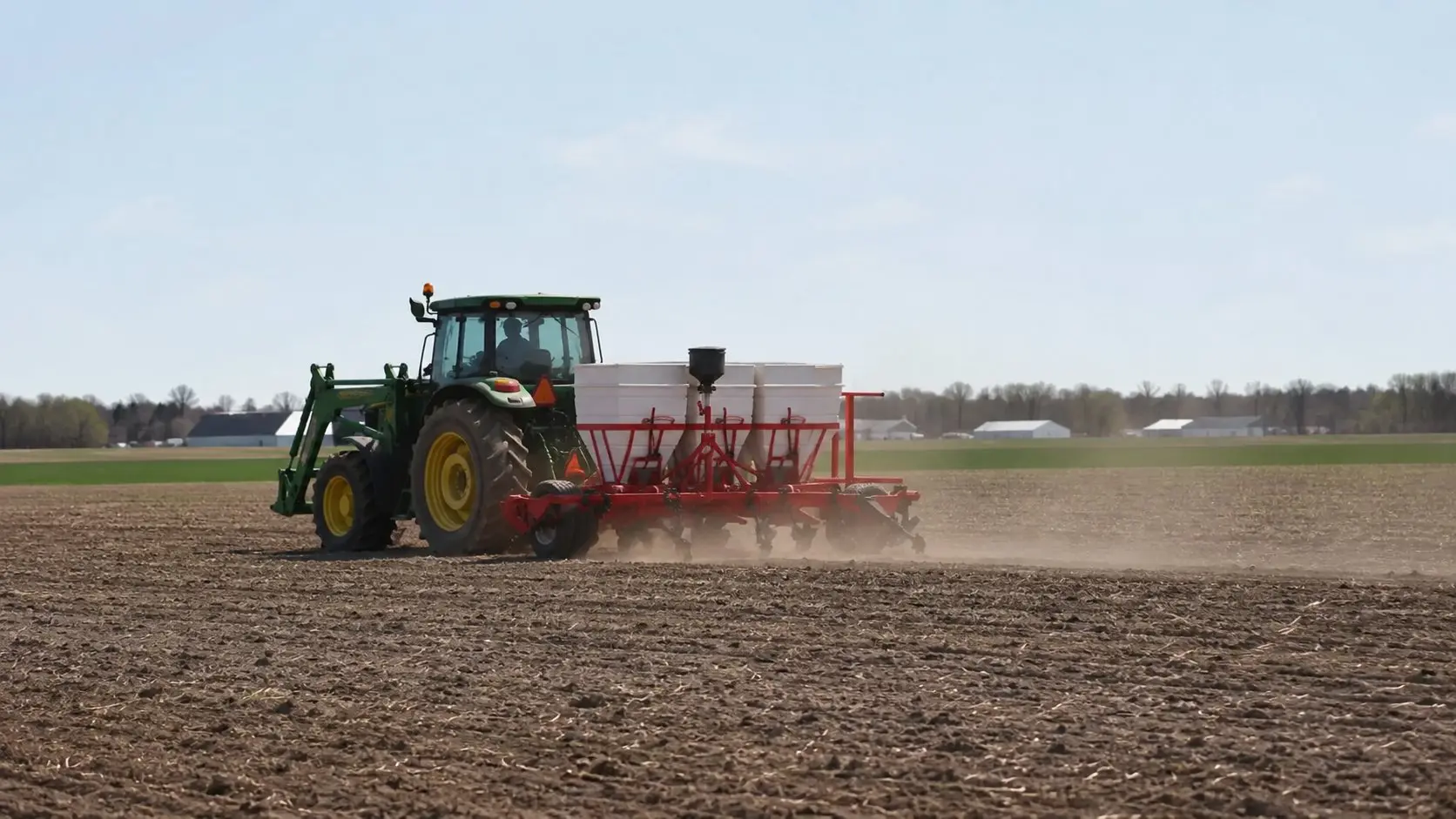
The primary application is base fertilizer (기비) application in the planting furrow immediately before seed potato placement. In Korean commercial potato production, base fertilization typically accounts for 60–80% of the total seasonal fertilizer input — the largest single nutrient application in the whole crop cycle. Getting this pass right in terms of placement, rate, and timing has more effect on final yield than almost any other agronomic input decision in the season.
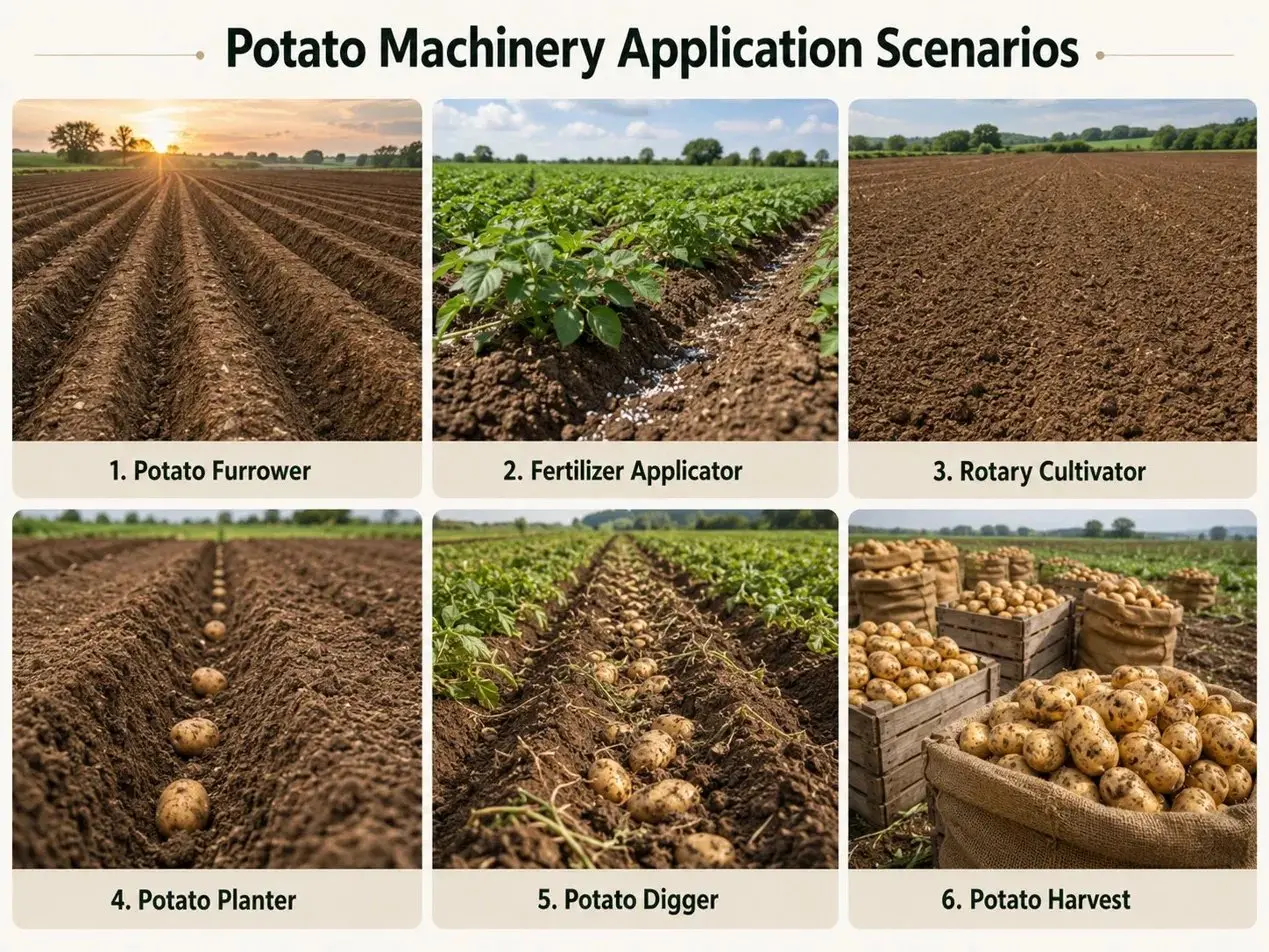
The standard sequence when using the EP-ADB in a potato production operation is: furrowing pass (EP-R-380 / EP-R-580) → fertilizer pass (EP-ADB-380 / EP-ADB-480) → planting pass (EP-PAI-2100 / EP-PANTHER). These three operations can run on the same day for small-to-medium fields, with the fast 8–10 km/h fertilizer pass completing the middle step quickly enough not to hold up the planter. For large commercial operations using the EP-ADB-480, the fertilizer pass can cover a full day's planting area in a morning session.
🌻 Vegetable Row Crop Fertilization
Any row crop that benefits from in-furrow base fertilization can use the EP-ADB-380 or EP-ADB-480 effectively. Sweet potato (고구마) growing on ridges, onion (양파) transplanting operations, garlic (마늘) planting — all use a furrow-based production system in Korean commercial growing, and all benefit from targeted pre-planting fertilizer placement rather than surface broadcast followed by incorporation.
For multi-crop farms that grow both potatoes and other vegetables in rotation or on different fields in the same season, the EP-ADB doubles as the fertilizer applicator for the full row-crop rotation — a significant efficiency gain over purchasing separate applicators for each crop type. The row spacing configuration should match the crop, so confirm this requirement at the time of ordering for any non-potato crops you plan to use the machine on.
🏪 Large-Scale and Contract Farming Operations
Agricultural machinery contracting (농기계 임작업) is a growing sector in Korean potato production, particularly in Gangwon-do where individual family farms often subcontract the mechanical operations to specialist operators running larger, more efficient equipment. The EP-ADB-480's 1,400 Kg total hopper capacity and 8–10 km/h working speed make it well-suited to contract operations covering multiple farms in a tight planting-week schedule.
At 9 km/h with 4-row coverage and 60 cm row spacing, the EP-ADB-480 can apply fertilizer to approximately 2.2 hectares per hour of productive field time. Over an eight-hour working day (accounting for fills and field turns), a contract operator can realistically cover 10–14 hectares — enough to service several medium-sized potato farms in a single day's work. This throughput profile is what makes the EP-ADB-480's larger investment cost justifiable for operations at this scale.
EP-ADB-380 or EP-ADB-480 — Selecting the Right Model
Both models deliver the same 350 Kg per row bunker and work at the same 8–10 km/h. The decision comes down to your potato area, how many rows your planting and furrowing equipment covers, and your available tractor power. Use the table below as a quick reference:
| Selection Factor | EP-ADB-380 (3-Row) | EP-ADB-480 (4-Row) |
|---|---|---|
| Empty weight | 600 Kg | 700 Kg |
| Minimum engine power | 75 cv | 85 cv |
| Total hopper capacity | 1,050 Kg | 1,400 Kg |
| Rows per pass | 3 | 4 |
| Recommended annual potato area | Up to ~15 ha | 15 ha and above |
| Best matched furrower | EP-R-380 (3-row) | EP-R-580 (5-row) or custom |
| Suited operation type | Family farm / small commercial | Commercial farm / contractor |
⚠ Match the row count to your furrower
For the smoothest operation, the fertilizer applicator's row count should ideally be a multiple of — or equal to — the furrower's row count. Running a 3-row EP-ADB-380 behind a 3-row EP-R-380 furrower means every furrow opened in one pass gets fertilized in one pass. Running a 4-row EP-ADB-480 behind a 5-row furrower requires a half-width overlap pass to cover all rows. Confirm your furrower configuration before ordering the EP-ADB to ensure the two machines work together efficiently without coverage gaps.
Step 4 in the Complete Watanabe Potato Machinery System
The EP-ADB fertilizer applicator occupies Step 4 in the full Watanabe potato production sequence — directly after furrowing and before planting. Here is how all six steps fit together:
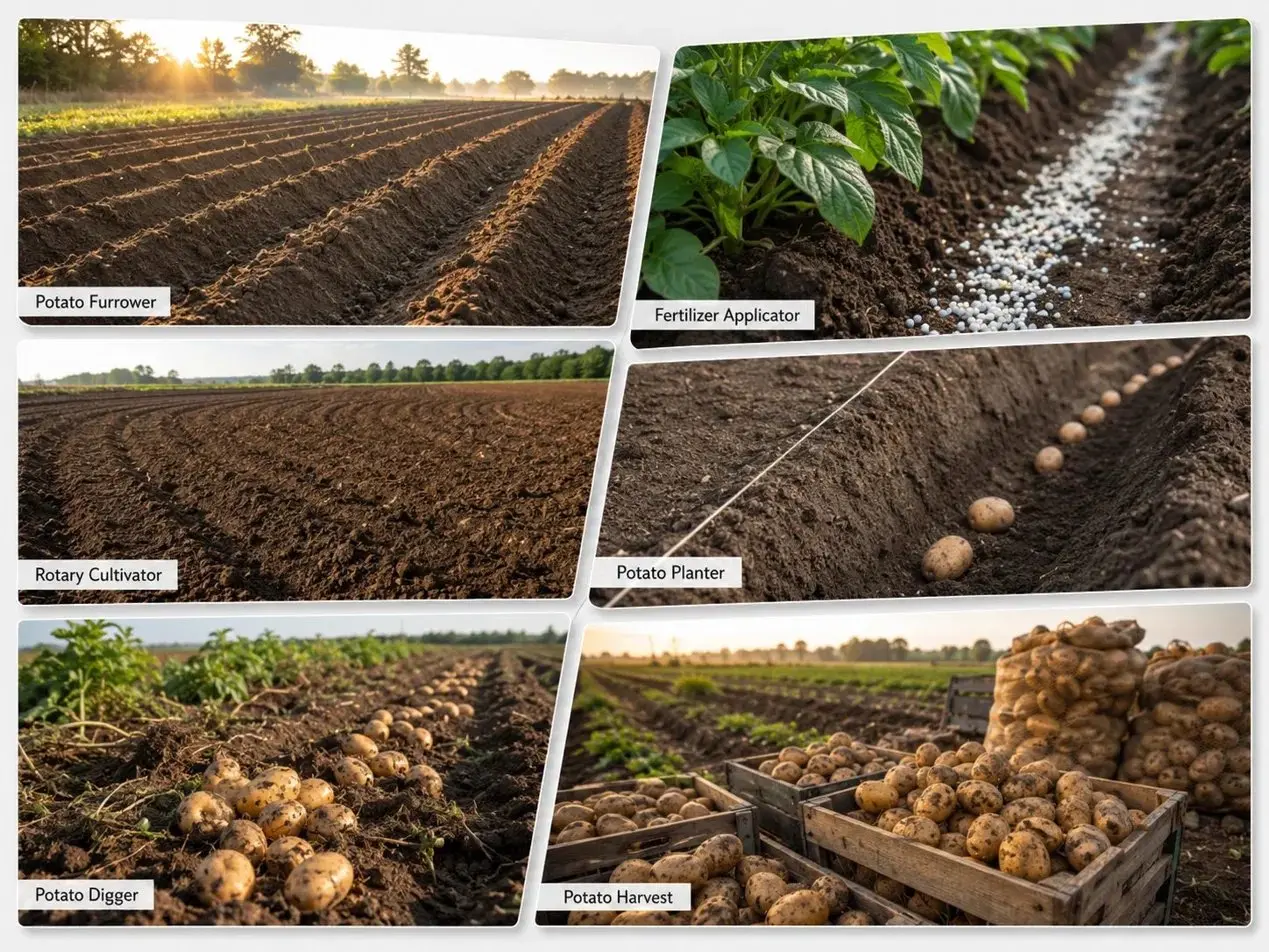
Stone Clearance — EP-EW-4000 Rock Rake
Surface stone removal before tillage. 3.6 m width, from 75 HP.
Primary Tillage — PSW-3200 Rotavator
Seedbed preparation. 3.0–3.6 m width, 140 HP.
Furrow Opening — EP-R-380 / EP-R-580 Potato Furrower
Ridge-and-furrow profile for planting. 3 or 5 rows, from 75 HP, 5–8 km/h.
Base Fertilization — EP-ADB-380 / EP-ADB-480 YOU ARE HERE
In-furrow fertilizer placement. 3 or 4 rows, 350 Kg/row, 8–10 km/h.
Planting — EP-PAI-2100 / EP-PANTHER Potato Planter
Seed + fertilizer + optional insecticide. 2–4 rows. Page coming soon.
Mid-Season Cultivation — EP-ERA Rotary Cultivator
Hill-up, inter-row cultivation and top-dressing. 2–5 rows, PTO-driven. Page coming soon.
Harvest — EP-AWB-1600 Potato Digger
2-row PTO-driven digger, compact and low-damage. Page coming soon.
Contact Korea Watanabe Rock Crusher Tractor Co., Ltd. to discuss building a complete matched potato machinery package — furrower, fertilizer applicator, planter, cultivator, and digger — sized for your farm and tractor fleet.
Watanabe Engineering Since 1970 — Korea Local Service
Watanabe has manufactured potato machinery in Castro, Paraná, Brazil since 1970. Brazil is one of the world's top ten potato producers, with major growing zones in the Paraná highlands and Minas Gerais plateau that operate under comparable temperature ranges, soil conditions, and seasonal planting pressures to Korean highland potato zones. The EP-ADB-380 and EP-ADB-480 are products of that production environment — designed for volume, reliability, and the kind of season-long durability that commercial potato producers in any country need from their equipment.
Hopper material specification and metering component durability are the quality-critical parameters on a fertilizer applicator. Fertilizer — particularly nitrogen-containing compound fertilizer — is chemically aggressive on metal components, and hoppers that are not properly sealed or coated will show corrosion damage within a few seasons of use. Watanabe specifies materials for the hopper interior and metering components that are suited to the chemical environment of the fertilizers commonly used in commercial potato production.
✓ Pre-Season Calibration Support
We provide calibration guidance specific to Korean compound fertilizer formulations commonly used in commercial potato production. Contact us before your first season use to confirm correct metering settings for your target application rate.
✓ Wear Parts Available Locally
Metering components and delivery tube wear parts stocked locally in Ansan-si, Gyeonggi-do. Routine wear items can typically be dispatched within 1–3 business days of inquiry — no international wait for standard service parts.
✓ Row Spacing Confirmed at Order
Row spacing on the EP-ADB must match your furrower configuration and variety requirements. We confirm the correct row spacing setting at the pre-sale stage — the machine arrives ready to run in your field without modification.
Frequently Asked Questions – EP-ADB-380 / EP-ADB-480
What is the difference between the EP-ADB-380 and EP-ADB-480?
The EP-ADB-380 covers 3 rows per pass and weighs 600 Kg, with a minimum tractor requirement of 75 cv. Total hopper capacity is 1,050 Kg (3 × 350 Kg). The EP-ADB-480 covers 4 rows per pass, weighs 700 Kg, and requires 85 cv minimum — total capacity of 1,400 Kg (4 × 350 Kg). Both versions work at 8–10 km/h with Category 2 three-point hitch mounting. The choice is determined primarily by your total potato area and whether you want to match 3-row or 4-row coverage with your furrower and planter.
What types of fertilizer can the EP-ADB handle?
The EP-ADB is designed for free-flowing granular fertilizer — the standard form of compound fertilizer (복합비료) used in Korean commercial potato production. Coated or prilled granules of consistent size flow well through the metering system. Powdery or very fine-particle fertilizers may not flow consistently and should be discussed with us before use. Damp or clumped fertilizer should not be used as it will block the metering and delivery system — always store fertilizer in dry conditions and break up any lumps before loading.
How is the application rate adjusted?
The metering setting on each row controls the amount of fertilizer delivered per unit of ground covered. To set the correct application rate for your target, calibrate the machine before the season by collecting the output from a measured run, weighing it, and calculating the actual rate per hectare. Adjust the metering setting up or down until the measured rate matches your agronomist's recommendation. Always calibrate with the actual fertilizer product you will be using in the field — different formulations have different bulk densities and flow characteristics that affect the metered delivery.
Is a PTO connection required?
No. The EP-ADB-380 and EP-ADB-480 connect via Category 2 three-point hitch only and do not require a PTO drive shaft. This simplifies hookup significantly compared to PTO-driven implements like the ERA rotary cultivator or rotavator, and means the machine is compatible with any tractor that meets the minimum horsepower threshold regardless of PTO availability or configuration.
How far can the EP-ADB-480 travel on a single fill at typical potato fertilizer rates?
At a typical Korean potato base fertilizer rate of around 400–600 Kg per hectare, the EP-ADB-480's 1,400 Kg total capacity covers approximately 2.3–3.5 hectares of field area per fill. These are approximate figures — your actual coverage depends on your specific target rate as determined by soil analysis and variety requirements. At 500 Kg/ha the EP-ADB-480 covers about 2.8 hectares per fill; the EP-ADB-380 covers about 2.1 hectares. These estimates assume uniform application at the calibrated rate.
Should the row count of the fertilizer applicator match my furrower exactly?
Ideally yes — matching row counts between the furrower, fertilizer applicator, and planter simplifies field coverage planning and eliminates the need for partial-width passes to cover unfertilized rows. A 3-row furrower (EP-R-380) naturally pairs with a 3-row applicator (EP-ADB-380); a 4-row applicator (EP-ADB-480) works cleanly with a 4-row planter. When the row counts don't perfectly match, the operator needs to plan field passes carefully to ensure full coverage — talk to us at the pre-sale stage to ensure your three machines (furrower, applicator, planter) work as a coherent matched set.
How should I clean the hoppers between uses and at end of season?
Empty the hoppers completely after each use — never leave fertilizer in the hoppers overnight or between working days. Fertilizer absorbs moisture and can set solid in the hopper, blocking the metering system and potentially causing corrosion. At end of season, empty all hoppers, run the machine briefly with clean dry sand or rice husks to flush out any remaining fertilizer residue, then blow or brush out any dust. Inspect the hopper interior for rust or coating damage and treat any bare metal areas before storage. Store the machine in a dry, sheltered location with hopper lids closed.
Can the fertilizer applicator run at the same time as the potato furrower?
No — these are separate rear-mounted implements that each occupy the tractor's Category 2 three-point hitch. They are designed to run as sequential passes: furrowing first, fertilizer pass second, planting third. Some potato planters (like the EP-PAI-2100 and EP-PANTHER series) include an integrated fertilizer bunker, allowing planting and fertilizing to be combined in a single pass if desired — ask about integrated options when planning your full potato machinery package.
Is in-furrow fertilizer placement better than incorporating fertilizer before furrowing?
Both approaches have their place, and many Korean commercial operations use both: broadcast or rotavator-incorporated fertilizer for part of the base application, then in-furrow placement for the targeted placement component. In-furrow placement positions nutrients at the depth and location where early root development occurs, improving early uptake efficiency. Pre-furrowing incorporation distributes nutrients more uniformly through the tillage layer. For phosphorus in particular, which moves very slowly through soil, in-furrow placement in the root zone produces consistently better early-season uptake results than surface broadcast — a well-documented agronomic principle in potato research across multiple growing environments.
What Our Customers Say
Jeong Seong-il — Commercial Potato Farm, Hoengseong-gun, Gangwon-do (spring 2025)
★★★★★
"We grow about 12 hectares of Atlantic for a chip factory. Previously applied fertilizer by broadcast before the rotavator, but since switching to the EP-ADB-480 for in-furrow placement two seasons ago, early vine emergence has been visibly more uniform. The 1,400 Kg total capacity means I refill twice for the whole planting area rather than five or six times, which made a real difference to our planting-week schedule. At 9–10 km/h it finishes the fertilizer pass for the day's planting area before 10am."
Kim Mi-rae — Vegetable and Potato Farm, Cheongju, North Chungcheong (2024)
★★★★★
"I use the EP-ADB-380 for both our potato area and the spring onion (양파) transplanting field — it covers both crops with the same machine, just different seasons. Works well on our 80 HP tractor with no issues. The 350 Kg per row bunkers are generous for a family-scale operation — I rarely need to refill more than once for our potato field, which is about 3.5 hectares. Easy to clean after use, which matters because I'm sometimes switching between different fertilizer products for different crops."
Park Jae-bum — Agricultural Machinery Contractor, Icheon, Gyeonggi-do (spring 2025)
★★★★★
"Running contract fertilizer application services for 8–10 potato farms in the area using the EP-ADB-480. The 8–10 km/h speed is what makes this commercially viable for contract work — I can cover three or four client farms in a day during the planting window. Calibration took about 40 minutes on first setup; after that it's consistent season to season. The Korea service team confirmed parts availability before I bought, and that assurance has held up — replacement metering parts arrived within 2 days the one time I needed them."
Choi Hee-sun — Mixed Crop Farm, Andong, North Gyeongsang (autumn 2024)
★★★★★
"We do autumn potato (추작) and also sweet potato (고구마) in summer. The EP-ADB-380 handles both with a different row spacing configuration for each. What impressed me most was that the Korea team confirmed the correct spacing and application rate guidance before shipping — it arrived set up for our potato crop correctly from day one. The 3-row machine at 600 Kg is easy to move around and store in our machine shed, which has limited space. No complaints after two seasons."
Ryu Dong-won — Large Commercial Potato Farm Manager, Pyeongchang-gun, Gangwon-do (spring 2025)
★★★★★
"We operate at about 25 hectares of Atlantic and Superior combined. Running the EP-ADB-480 on a 95 HP New Holland T5. Three seasons in, the hopper interiors show no corrosion — which was a specific concern given our compound fertilizer contains a high nitrogen fraction. The calibration has stayed stable season to season once set up correctly. The 1,400 Kg capacity means we complete the fertilizer pass for each 3-hectare block on one fill, keeping the planting team working without interruption. Very satisfied."
Seo Ji-yeon — Small Family Farm, Yesan-gun, South Chungcheong (2024)
★★★★★
"First time using a proper row-crop fertilizer applicator after years of broadcast spreading by hand on our 2-hectare potato area. The difference in how the crop emerges was noticeable — more even, faster establishment. The EP-ADB-380 connects to our 78 HP Daedong without any trouble, and the no-PTO setup meant we could figure out the hookup ourselves in about 10 minutes. For the size of our farm, the 350 Kg per row bunker means we fill once for the whole field and we are done. Simple machine, good results."
Ready to Upgrade Your Fertilizer Pass?
Tell us your potato area, row spacing, tractor model, and whether you need the 3-row or 4-row version — we will confirm configuration, calibration guidance, and availability within one business day.
Already have a furrower or planter from the Watanabe lineup? Ask about the full EP matched package for a coordinated row-spacing quote across all three machines.
Related products
-
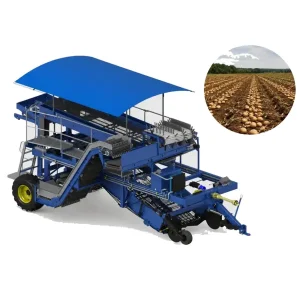
EP-CWB-2L Potato Harvester – Big Bag, 2-Row, On-Field Sorting
-
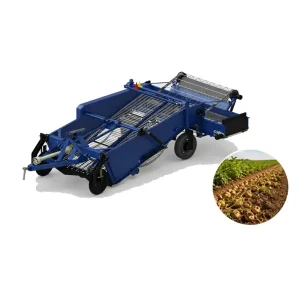
EP-AWB-1600 Trailed Potato Digger – 2 & 4 Row, up to 10 km/h
-
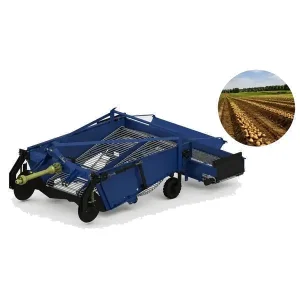
EP-AWB-1600 Potato Digger – 2-Row, Compact & Low Damage
-
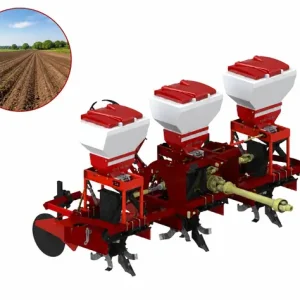
EP-ERA Rotary Cultivator – 2, 3 & 5 Row | 3-in-1 Potato Machine
-
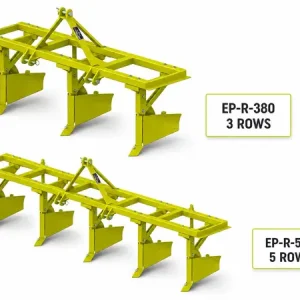
EP-R-380 / EP-R-580 Potato Furrower – 3 & 5 Row, from 75 HP
-
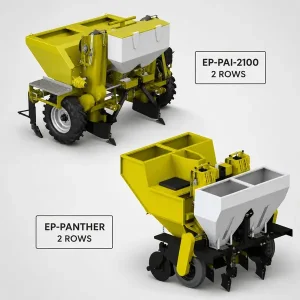
EP-PAI / EP-PANTHER Potato Planter – 2–4 Row | Seeds+Fertilizer+Spray