EP-R-380 / EP-R-580 Potato Furrower – 3 & 5 Row, from 75 HP
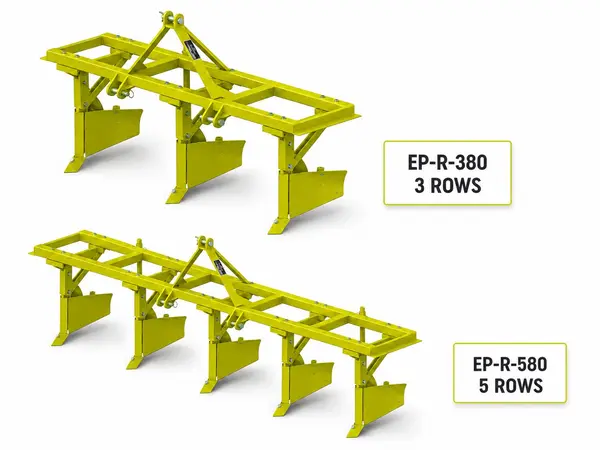
Opens 3 or 5 potato furrows simultaneously at 5–8 km/h — turning prepared soil into a ready-to-plant seedbed in a single tractor pass.
Starts from just 75 HP. No PTO drive required — Category 2 hitch only. Fits virtually any mid-range Korean tractor straight out of the box.
The First Step in Every Successful Potato Season
Before a single seed piece goes into the ground, the soil needs to be shaped. The Watanabe EP-R-380 and EP-R-580 potato furrowers do exactly that — opening 3 or 5 furrows per pass in one continuous tractor run, forming the ridge-and-furrow profile that all subsequent potato operations depend on. From precise planting depth and uniform seed coverage through to mechanical harvest at season end, furrow quality is the foundation. These implements are where that foundation gets built.
Both models mount on the tractor's Category 2 rear three-point hitch and require no PTO connection. Working speed is 5–8 km/h — faster than most other implements in the Watanabe potato machinery line — which means the furrowing pass is rarely the bottleneck in a planting schedule. A single operator on a mid-range tractor can prepare a large field for planting in a working day, leaving the rest of the operation ready to follow.
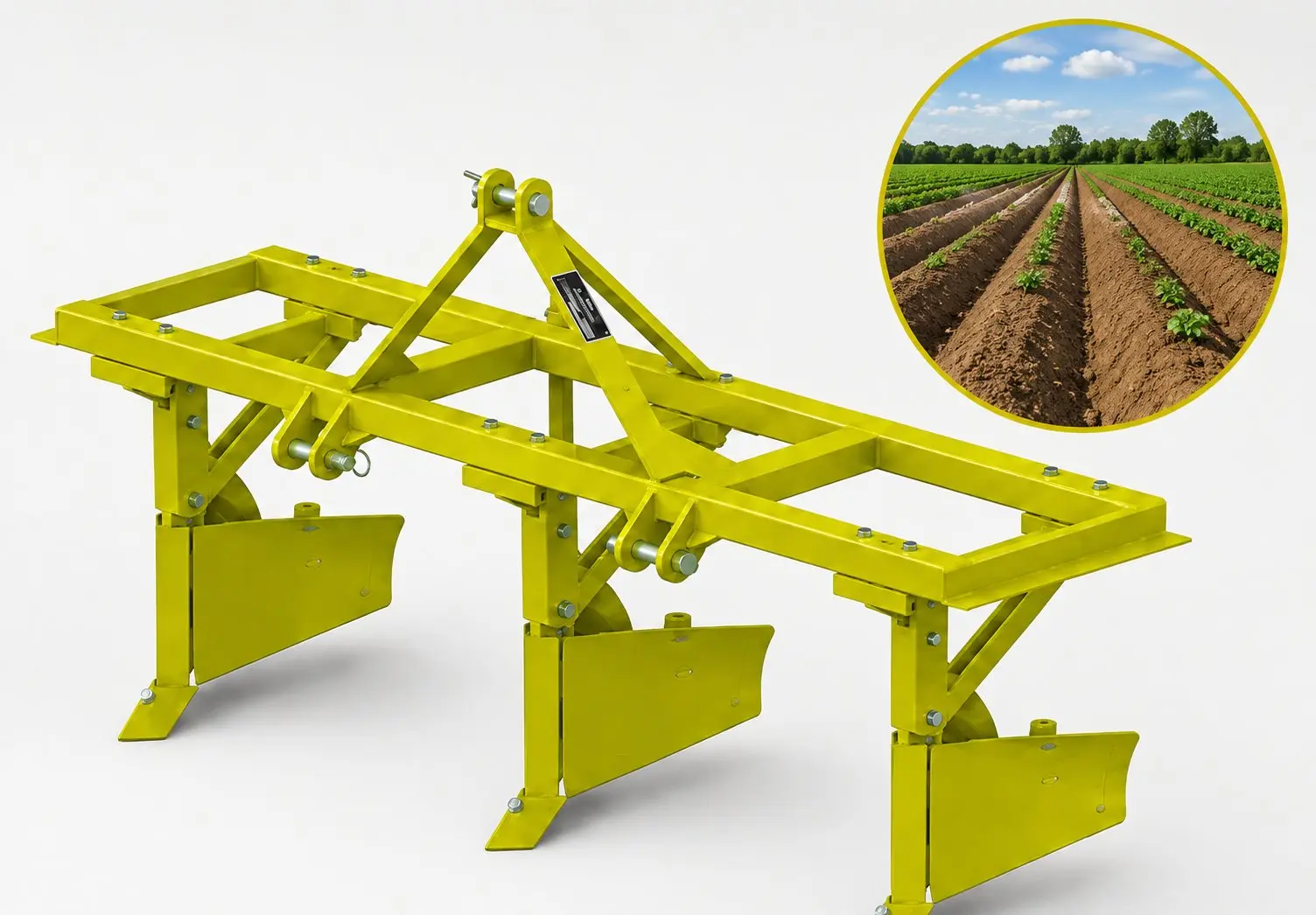
The two models are sized for different scales of production:
▶ EP-R-380 — 3-Row
Weight 500 Kg, minimum 75 cv. Three furrower bodies in a single pass. Best suited to small and medium family holdings, mountain terraced plots, and fields with limited tractor power. The lightest and most maneuverable option in the EP potato furrower range.
▶ EP-R-580 — 5-Row
Weight 620 Kg, minimum 85 cv. Five furrower bodies per pass for higher daily output. Suited to commercial potato operations, agricultural cooperatives, and farms aiming to complete furrowing in fewer total passes per field.
Korea's potato production is concentrated across Gangwon-do (spring and summer crop), Jeju Island (winter and spring crop), and parts of South Gyeongsang and Gyeonggi provinces. Commercial varieties such as Atlantic (for chip processing), Superior, Dejima, and Haryoung (하령) each carry specific planting requirements — row spacing, planting depth, ridge height — that a well-formed furrow directly supports. The EP-R-380 and EP-R-580 are designed to deliver that consistency at practical working speeds, season after season.
As part of the broader Watanabe potato machinery system, the EP-R-380 and EP-R-580 furrowers slot in as the third step in the production sequence — after soil preparation and primary tillage, and directly before mechanical planting. Getting this step right determines how well every operation that follows can perform.
Technical Specifications – EP-R-380 & EP-R-580
The table below reflects the full published specification for both models, sourced directly from the Watanabe official product brochure. The critical columns to compare are the number of furrowers and minimum engine power — these two figures determine which model matches your field scale and tractor capability.
| TECHNICAL DATA | EP-R-380 | EP-R-580 |
|---|---|---|
| Weight | ||
| Empty Weight | 500 Kg | 620 Kg |
| Bottom Linkage Category | 2 | 2 |
| Number of Furrowers | 3 | 5 |
| Tractor Requirements | ||
| Engine Power (min.) | 75 cv | 85 cv |
| Working Speed | 5–8 Km/h | 5–8 Km/h |
ⓘ cv = metric horsepower (PS). 75 cv ≈ 73.9 HP; 85 cv ≈ 83.8 HP. Data sourced from the official Watanabe product brochure. Row spacing and working depth depend on furrower body configuration and hitch draft control settings — contact us to confirm specifications for your variety and field requirements.
A note on working speed: the 5–8 km/h range for both models is notably faster than most other implements in the potato production line. Planters, rotary cultivators, and diggers typically run at 3–5 km/h. The furrowing pass is therefore the least time-consuming operation in the full potato production cycle on a per-hectare basis, which gives operators flexibility to schedule it efficiently around other work.
How the Potato Furrower Works
Furrow Formation — What the Furrower Body Does
Each furrower body is a shaped steel implement that cuts through previously tilled soil and displaces it outward to both sides, creating a channel (the furrow) and raising the displaced soil into a ridge on either side. As the tractor advances, the bodies do this work simultaneously across the full span of the implement — three bodies on the EP-R-380, five on the EP-R-580 — producing a series of parallel furrows in a single pass.
The number of furrow bodies directly determines field productivity. The EP-R-380's three bodies create three furrows per pass; with the EP-R-580's five bodies, the same tractor and driver cover the same field in roughly 60% of the passes required by the smaller model. For large commercial operations where total planting days are limited by weather windows, this throughput difference has real operational value.
The shape and angle of each furrower body determines the furrow profile: channel depth, ridge height, and the slope of the ridge sides. These parameters are important for drainage (a poorly shaped ridge retains water in the furrow zone and risks rotting seed pieces in wet spring conditions), for the accuracy of mechanical planting (the seed drop point needs to reference a consistent furrow floor), and for the performance of the mid-season hill-up operation that follows planting.
No PTO Required — How a Passive Implement Works
The potato furrower is a passive draft implement: it has no powered rotating parts and draws its working force entirely from the tractor's forward motion transmitted through the three-point hitch. Unlike PTO-driven implements such as rotavators or rotary cultivators, there is no drive shaft to attach, no gearbox to engage, and no PTO speed to match. The hitch carries the implement weight and transfers the pulling force to the furrower bodies as the tractor moves forward.
This simplicity has practical advantages beyond the obvious reduction in setup time. A passive implement can run on any tractor that meets the minimum weight and power threshold — regardless of whether the PTO is functional, what shaft speed it runs, or whether there is a spare PTO outlet available. For older tractors or tractors already running a PTO-driven implement on another output, this matters. The potato furrower for tractor simply hooks up, lowers, and works.
Working depth is controlled through the tractor's hitch draft control and, where fitted, depth wheels on the implement frame itself. The operator sets the target depth according to the variety's planting requirements and the field's soil conditions, and the hitch maintains that setting across changes in ground resistance as the soil texture varies across the field.
Ridge Shape and Its Effect on the Potato Crop
The ridge formed by the furrower bodies is not just a physical feature — it is a managed micro-environment for the potato crop. A well-formed ridge with the correct height and slope provides adequate soil depth above the seed piece for early tuber initiation, supports good aeration around the developing root system, and channels drainage away from the planting zone during wet periods. In Korean potato cultivation, where spring planting often coincides with significant rainfall in May and June in the Gangwon-do and Gyeonggi highland zones, ridge drainage performance is a real yield factor.
The ridge profile established by the furrower is also the reference geometry for the rotary cultivator (배토기) that follows during mid-season hill-up operations. If the initial furrow and ridge are not consistent in height and spacing, the cultivator cannot maintain correct depth and placement across the field, and the hill-up effect — adding soil over the developing tubers to prevent greening and increase the tuber zone volume — is reduced. Getting the furrow right at the start cascades positively through every subsequent operation in the season.
Key Advantages of the EP-R-380 / EP-R-580 Potato Furrower
■ Multi-Row in One Pass
Three or five furrows opened simultaneously means fewer total passes per field. The EP-R-580's five-row configuration completes the same furrowing area in 40% fewer passes than a single-row implement, directly reducing both time and tractor fuel consumption per hectare.
■ Fastest Pass in the Potato Line
At 5–8 km/h, the EP-R-380 and EP-R-580 run faster than any other implement in the Watanabe potato machinery lineup. Planters, rotary cultivators, and diggers all operate at 3–5 km/h. The furrowing step adds minimal time to the total production schedule.
■ Zero PTO Connections
No drive shaft, no gearbox, no PTO speed matching. The potato furrower connects via Category 2 three-point hitch only, which means setup takes minutes and the implement runs on any tractor that meets the minimum horsepower threshold — regardless of PTO configuration or availability.
■ Low Power Entry Point
The EP-R-380 starts at just 75 cv — within range of compact tractors common on smaller Korean family holdings. Even the larger EP-R-580 requires only 85 cv, keeping both models accessible to the mid-range tractor population that handles most potato production in Gangwon-do and Gyeonggi-do.
■ Light and Maneuverable
At 500 Kg the EP-R-380 is the lightest potato implement in the Watanabe lineup by a wide margin. This makes it practical for hillside plots, irregular field shapes, and smaller sheds — the kind of operating environment that describes much of Korean highland potato production in Gangwon-do and North Chungcheong.
Where the EP Potato Furrower Gets Used
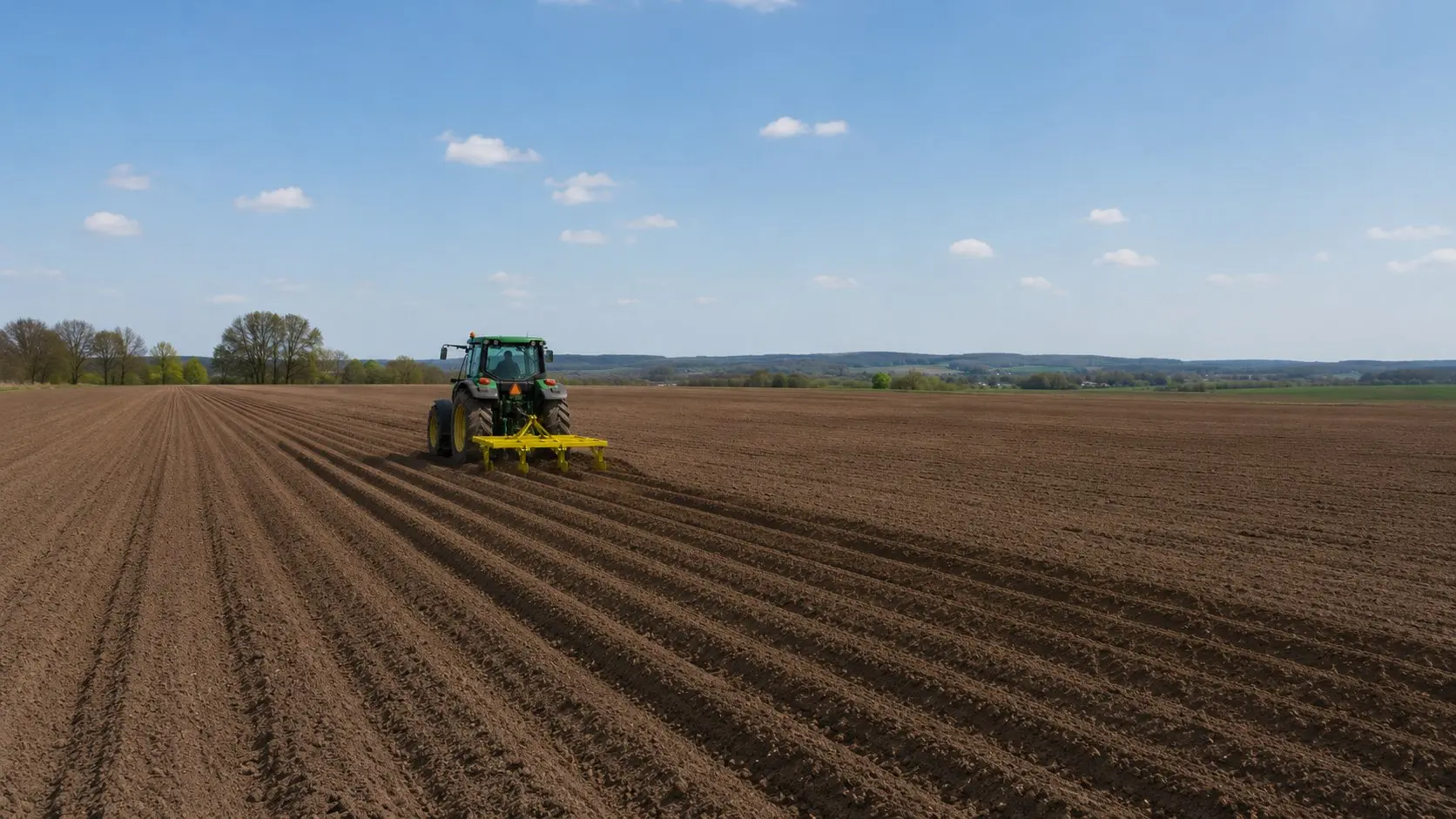
🌿 Commercial Potato Bed Preparation — Spring and Autumn Seasons
The primary application is straightforward: preparing fields for potato planting. In Korea this happens twice for most production regions — spring planting in March to April for the summer harvest, and in some areas an autumn planting in August to September for a late-season crop. The furrower runs on well-tilled, stone-free soil after the rotavator pass, forming the ridges and furrows that the mechanical planter will follow immediately after.
On commercial potato farms in Gangwon-do running Atlantic or Superior varieties for the processing market, consistent furrow spacing and depth across the entire planting area is not a cosmetic preference — it is an operational requirement. Mechanical planters set seed spacing and depth relative to the furrow geometry; if the furrow is irregular, seed placement becomes variable, emergence is uneven, and the potato digger at harvest cannot maintain the correct blade depth relative to the ridge, increasing tuber damage rates. The EP-R-380 and EP-R-580 establish the consistent base geometry that the whole season depends on.
🌻 Vegetable Row Crop Preparation
While designed and marketed as potato furrowers, these implements serve any row crop that benefits from a ridge-and-furrow seedbed — sweet potato (고구마), certain vegetable plantings, and some specialty root crops. The principle is the same in each case: the implement opens planting channels in tilled soil at a consistent depth and spacing, and the crop goes into or alongside the formed furrow.
For sweet potato (고구마) production, which also follows a ridge culture system with transplanting into ridges rather than furrows, the EP-R-380 is commonly used on the smaller-scale mixed vegetable farms in Gyeonggi-do and South Chungnam that grow both potatoes and sweet potatoes in rotation. Using the same furrower for both crops simplifies the implement roster and reduces investment in single-purpose equipment.
🍋 Seed Potato Production Plots
Seed potato (씨감자) production in Korea — particularly in the highland certified seed potato zones of Gangwon-do — operates under stricter spacing and isolation requirements than commercial production. Rows are often spaced wider to reduce disease transmission risk and allow easier individual plant inspection. The furrower's row spacing configuration is set at order time to match these production requirements.
Seed potato plots are typically smaller in total area than commercial production, which is an additional reason the EP-R-380 three-row model is common in this segment — the smaller implement is more practical in the narrower, more precisely managed plots typical of certified seed production systems. The lighter weight is also a practical advantage on the highland soils of Gangwon-do, where soil structure preservation is a priority.
EP-R-380 or EP-R-580 — Choosing the Right Furrower
The decision between the two models comes down to three practical factors: your total potato area per season, the horsepower of the tractor you'll pair with it, and whether you need to work in tighter or more irregular field configurations. The table below maps those factors clearly:
| Selection Factor | EP-R-380 (3-Row) | EP-R-580 (5-Row) |
|---|---|---|
| Empty weight | 500 Kg | 620 Kg |
| Minimum engine power | 75 cv | 85 cv |
| Rows per pass | 3 | 5 |
| Suited farm scale | Small–medium family farm | Medium–large commercial farm |
| Field shape suitability | Narrow, irregular, sloped plots | Wide, open flat-to-gentle terrain |
| Relative throughput | Standard | ~67% more rows per pass |
Korean tractor models commonly paired with the EP-R-380 include the Daedong CK5030 / CK6030, LS XR4140 / XR4150, TYM T473 / T503, and similar models in the 65–80 HP class. For the EP-R-580, tractors in the 85–110 HP range — including the Daedong CK8010, LS MT7 series, or equivalent John Deere 5E models — are the typical working partners.
If you are unsure which model is right for your operation, the most useful starting point is to calculate how many planting days you have available per season and divide your total potato area by that number. If furrowing is the time constraint — meaning you need to complete a large area quickly — the EP-R-580's higher throughput justifies the modest additional investment. If your fields are smaller, more irregular, or your tractor is in the 75–80 HP range, the EP-R-380 gives you everything you need without the extra weight or power requirement.
The EP-R-380 / EP-R-580 in the Full Watanabe Potato Machinery System
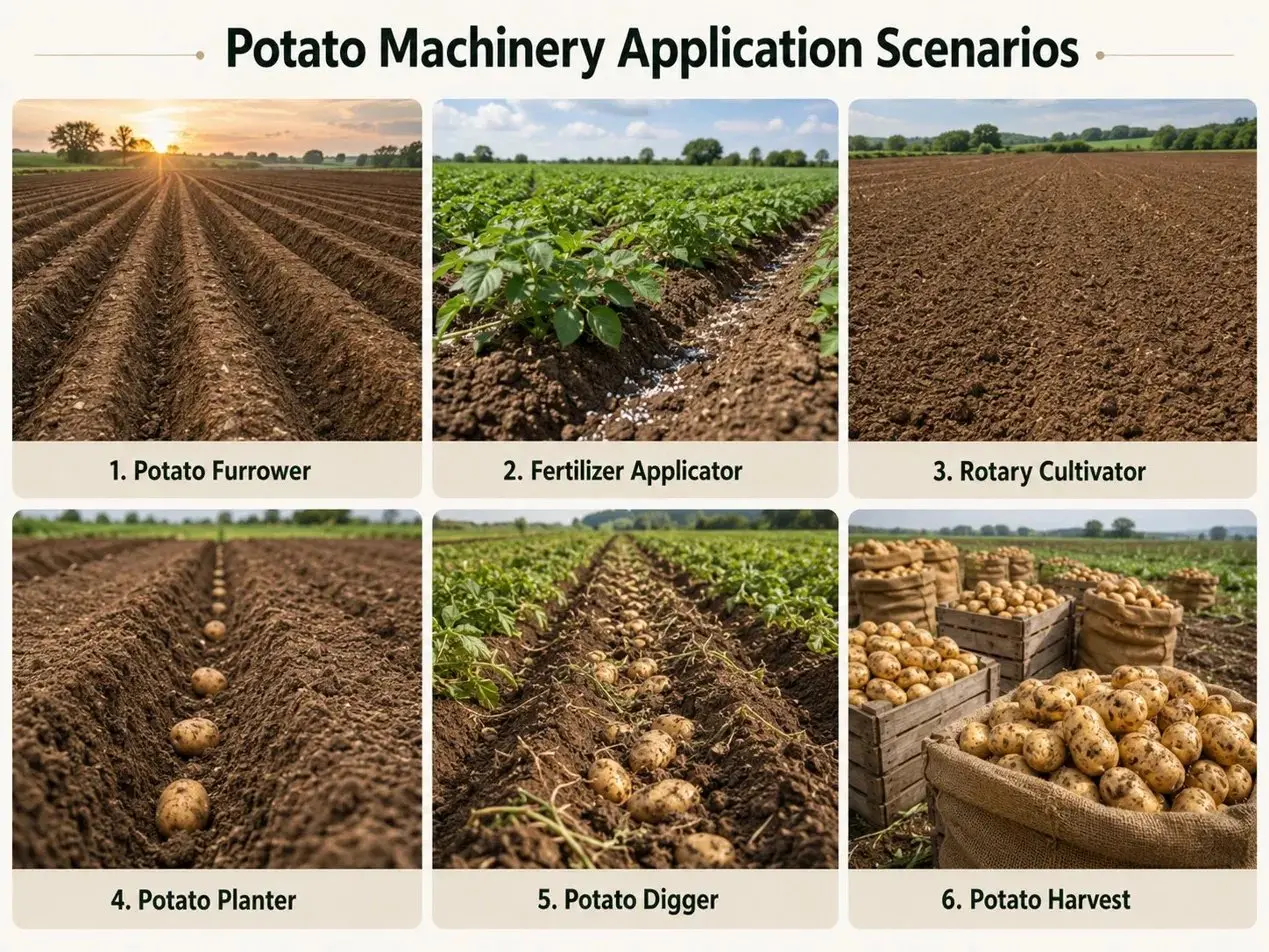
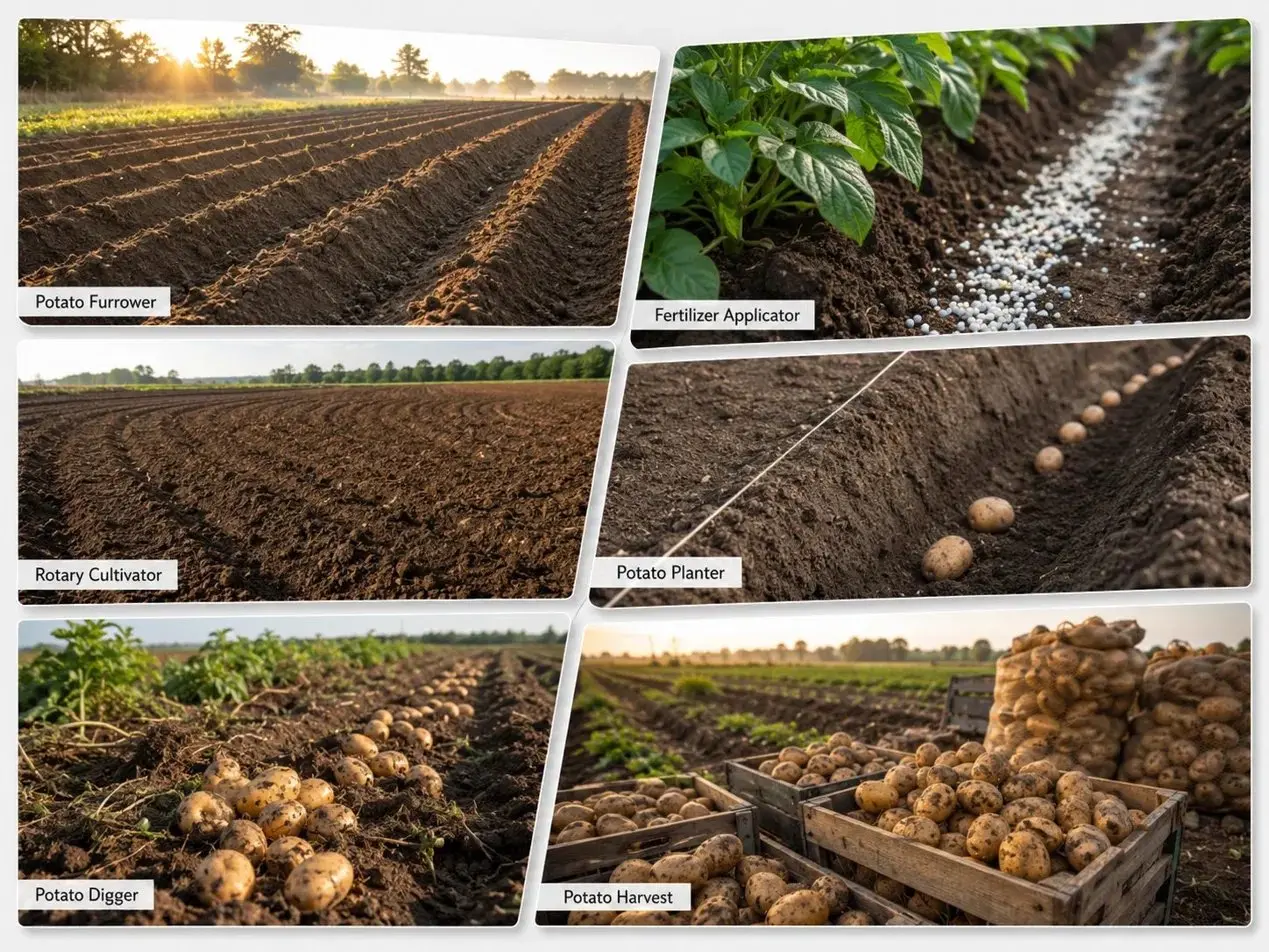
The potato furrower occupies step three in the Watanabe potato machinery production sequence. Understanding where it fits helps when planning your implement investment and working out what additional machines you need to complete the full production cycle:
Stone Clearance — EP-EW-4000 Rock Rake
Removes surface stones that would damage planters and diggers. 3.6 m working width, from 75 HP.
Primary Tillage — PSW-3200 Rotavator
Breaks up and prepares the soil profile for planting. 3.0–3.6 m working width, 140 HP.
Furrow Opening — EP-R-380 / EP-R-580 Potato Furrower YOU ARE HERE
Forms the ridge-and-furrow profile for planting. 3 or 5 rows, from 75 HP, 5–8 km/h.
Planting + Fertilizing — EP-PAI-2100 / EP-PANTHER Potato Planter
Seeds + fertilizer + optional insecticide in one pass. 2–4 rows. Page coming soon.
Mid-Season Cultivation — EP-ERA Rotary Cultivator
Hill-up, inter-row cultivation, and fertilizer application. 2–5 rows, PTO-driven. Page coming soon.
Harvest — EP-AWB-1600 Potato Digger
Compact, robust 2-row digger. PTO-driven, 75–95 HP, low damage rate. Page coming soon.
Contact us at Korea Watanabe Rock Crusher Tractor Co., Ltd. to discuss a complete potato machinery package — from stone clearance through to harvest — matched to your farm size and available tractor power.
Watanabe Quality Since 1970 — Local Korea Support
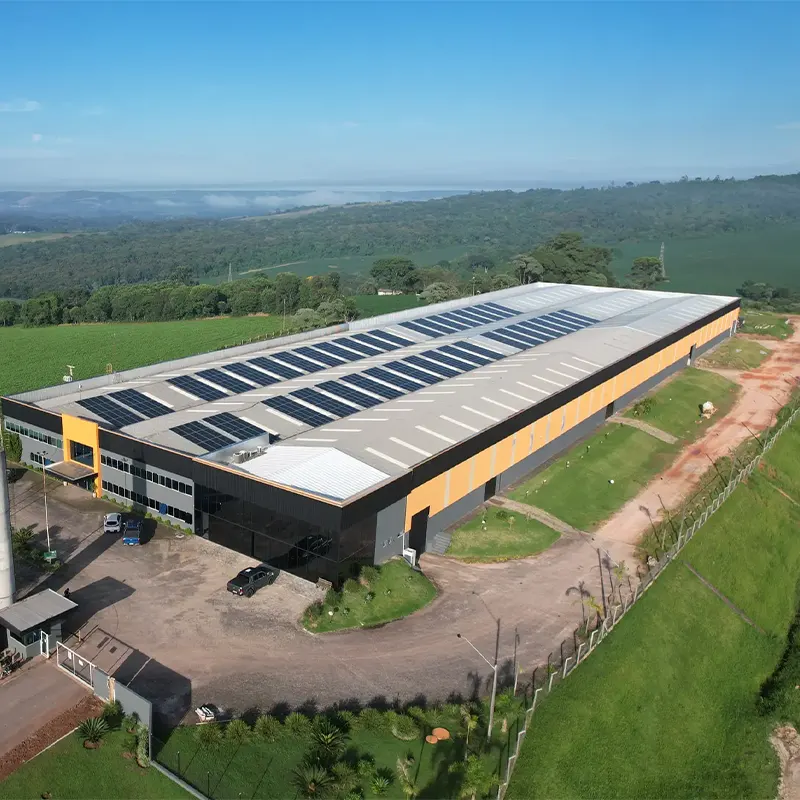
Watanabe Indústria e Comércio de Máquinas Ltda. has produced agricultural implements from Castro, Paraná, Brazil since 1970. The potato machinery line — including the EP-R-380 and EP-R-580 furrowers — is part of a comprehensive potato cultivation equipment range that Watanabe has refined over decades of working with Brazilian potato producers in regions that share many of the same seasonal, soil, and mechanical challenges as Korean potato production zones.
Furrower body quality is the key wear and performance parameter on these implements. Watanabe specifies furrower body steel for the working conditions of high-density production use: hardness specification balances wear life against the brittleness that makes cheaper steel fail under impact in stony ground conditions. For Korean farms running the furrower in the same fields as stone-picker and rotavator passes, this distinction matters practically.
✓ Korea Local Stock
Both models available locally through Korea Watanabe Rock Crusher Tractor Co., Ltd. in Ansan-si, Gyeonggi-do. Wear parts including furrower bodies stocked for prompt domestic dispatch.
✓ Pre-Sale Configuration Check
Row spacing and furrower body configuration should be confirmed against your variety's planting requirements before ordering. We verify this at the pre-sale stage so the machine arrives ready to work for your specific crop.
✓ Full System Compatibility
The EP-R-380 and EP-R-580 are part of the complete Watanabe potato machinery line. All implements are designed to work in sequence, with row spacing and ridge geometry matched across the furrower, planter, cultivator, and digger for consistent results through the full production cycle.
Frequently Asked Questions – EP-R-380 / EP-R-580 Potato Furrower
What is the difference between the EP-R-380 and EP-R-580?
The EP-R-380 opens three furrows per pass and weighs 500 Kg, with a minimum requirement of 75 cv. The EP-R-580 opens five furrows per pass, weighs 620 Kg, and requires 85 cv minimum. Both work at the same 5–8 km/h speed and use Category 2 rear hitch mounting with no PTO connection. The choice comes down to your potato area per season, tractor power, and whether you need the higher throughput of the five-row version.
Does the potato furrower require a PTO connection?
No. Both the EP-R-380 and EP-R-580 are passive draft implements — they connect via Category 2 three-point hitch only, with no drive shaft or PTO coupling. The working force comes entirely from the tractor's forward motion and the implement's weight bearing down on the furrower bodies through the hitch. This means they are compatible with any tractor that meets the minimum horsepower threshold, regardless of PTO configuration.
Can the row spacing be adjusted to match my potato variety's requirements?
Row spacing on these furrowers corresponds to the spacing between the furrower bodies on the implement frame. Please provide your required row spacing when placing an order — we will confirm the available configuration options for your specific variety requirements. Standard Korean commercial potato row spacing ranges from 60 to 75 cm depending on the variety and market; confirm your target spacing with us at the pre-sale stage so the implement arrives correctly configured.
What soil preparation is required before running the furrower?
The tractor potato furrower should always run on previously tilled soil. The recommended sequence is: stone clearance (if the field has surface stones) → primary tillage with a rotavator → furrowing pass. Running a furrower on untilled or stony ground produces irregular furrow profiles and risks damaging the furrower bodies. Soil should be reasonably dry — furrowing in overly wet conditions produces a smeared, poorly drained ridge profile rather than a clean, well-drained one.
How is working depth controlled?
Working depth is controlled through the tractor's hitch draft control system, which adjusts the hitch height to maintain a set resistance level as soil conditions vary across the field. Where the implement includes depth wheels, these provide an additional mechanical depth reference. The target depth should match your variety's recommended planting depth — consult your variety supplier for the correct specification before setting up.
Can I use these furrowers for crops other than potatoes?
Yes. Both models are suitable for any row crop that uses a ridge-and-furrow seedbed. Sweet potato (고구마), some vegetable transplanting crops, and certain root vegetables can all benefit from a furrow-formed seedbed. The row spacing configuration is the key variable — confirm your target spacing for the specific crop before ordering to ensure the implement arrives correctly set up for your planting system.
Does the EP-R-380 work on sloped hillside fields?
The EP-R-380's 500 Kg light weight and compact frame make it more practical on sloped terrain than heavier implements. On moderate slopes typical of Gangwon-do highland plots, the EP-R-380 handles the terrain well when working up-and-down slope. Furrowing across a slope (contour furrowing) is also possible for drainage management purposes, though this requires more careful depth control on the downhill side. On steeper gradients, contact us to discuss tractor ballasting and hitch configuration recommendations for your specific field conditions.
What maintenance does the potato furrower require?
As a passive implement with no powered components, maintenance requirements are minimal. The key service items are: furrower body inspection for wear and damage (check tip sharpness and body shape after each season), hitch attachment point lubrication, and bolt torque verification after initial use and annually thereafter. Worn furrower bodies should be replaced before they become so dull that they smear rather than cut the soil — smearing compacts the furrow wall and reduces drainage in the root zone. Replacement bodies are available through our Korea local stock.
How does furrow quality affect potato yield and harvest efficiency?
Furrow quality has a direct and traceable effect at both ends of the production cycle. At planting, consistent furrow depth allows the mechanical planter to place seed pieces at a uniform depth — uneven depth leads to uneven emergence, variable vine development, and ultimately uneven tuber sizing at harvest. At harvest, the mechanical digger's blade runs at a depth referenced to the ridge geometry established at furrowing; if the ridge was inconsistent, the digger cannot maintain correct depth, and tuber damage rates increase. Getting the furrowing pass right is one of the highest-leverage decisions in the entire season.
What Our Customers Say
Yun Gi-tae — Commercial Potato Farm Manager, Pyeongchang-gun, Gangwon-do (spring 2025)
★★★★★
"We grow about 18 hectares of Atlantic for a chip factory buyer and have been using the EP-R-580 for two planting seasons. The five-row pass means we finish furrowing in about a third of the time the old single-row implement took, which matters a lot in April when the planting window and the rotavator schedule are both fighting for the same days. Ridge profile is consistent — the mechanical planter follows it cleanly without depth variation issues we used to get. Good build quality, no repairs needed so far."
Bae Sun-young — Mixed Vegetable and Potato Farm, North Chungcheong (autumn 2024)
★★★★★
"The EP-R-380 is the right size for our operation — about 4 hectares in potatoes and another 3 in sweet potatoes (고구마). We use the same furrower for both crops, just different season schedules. At 500 kg it hooks up and unhooks quickly, and our 78 HP Daedong handles it without any problem. I was a bit worried about whether a 3-row would be fast enough for the spring schedule but it's absolutely fine — at 7 km/h we cover the potato area in half a day."
Kang Do-hyeon — Agricultural Machinery Contractor, South Gyeongsang (early 2025)
★★★★★
"Running contract furrowing services for about 12 potato farms in the area using the EP-R-580 on a 95 HP John Deere 5M. The machine has now done three full spring seasons plus some autumn work without any furrower body replacements — they're still in good working shape. Customers tell me the furrow profile is consistent enough that their mechanical planters don't need manual depth adjustment mid-field, which saves real time. Parts availability through the Korea team hasn't been a problem when I've had questions."
Oh Jeong-min — Organic Potato Farm, Jeju Island (spring 2025)
★★★★★
"We do organic Haryoung (하령) on about 3 hectares in Jeju. The basalt soil here is stony and the fields are not perfectly flat, but the EP-R-380 handles both without problems. Weight is light enough that the tractor doesn't struggle on any of our plots. One thing I particularly appreciated: the pre-sale team here confirmed the row spacing was right for our variety before we bought, so there was no guesswork. We've been planting at the right depth and spacing from the first pass."
Jang Hyun-soo — Certified Seed Potato Producer, Inje-gun, Gangwon-do (2024)
★★★★★
"Seed potato production needs very consistent spacing and depth — the certification requirements don't allow for the kind of variation that commercial production tolerates. The EP-R-380 with the correct row spacing configuration gives us the furrow consistency we need. We run it on smaller, precisely managed plots in highland fields, and the light weight of 500 kg means we can work on plots that a heavier machine would compact badly. Two seasons in and no complaints on the furrow quality front from the certification inspector either."
Sim Eun-ji — Family Potato and Vegetable Farm, Yangpyeong-gun, Gyeonggi-do (spring 2025)
★★★★★
"First season with the EP-R-380. Our farm is about 2 hectares in potatoes and we also do some sweet potato (고구마). The machine hooks up to our 80 HP tractor without any fuss — no PTO connections to worry about, just hitch and go. At that scale the three-row speed is more than enough. The furrow shape is clean and the ridges hold their form well even through the heavy rain we had in May. Happy with the purchase and happy with the service from the Korea team."
Ready to Prepare Your Potato Fields?
Tell us your tractor model, total potato area, target row spacing, and variety — we will confirm the right model configuration and current availability within one business day.
Interested in the complete Watanabe potato machinery lineup? Ask about the full EP system — furrower, planter, cultivator, and digger — for a matched package quote.
Additional information
| Editor | Cxm |
|---|
Related products
-
EP-CWB-2L Potato Harvester – Big Bag, 2-Row, On-Field Sorting
-
EP-AWB-1600 Trailed Potato Digger – 2 & 4 Row, up to 10 km/h
-
EP-AWB-1600 Potato Digger – 2-Row, Compact & Low Damage
-
EP-ERA Rotary Cultivator – 2, 3 & 5 Row | 3-in-1 Potato Machine
-
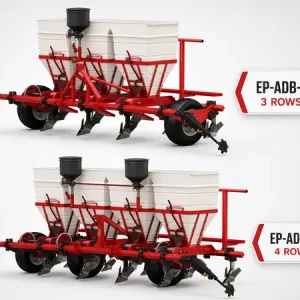
EP-ADB-380 / EP-ADB-480 Fertilizer Applicator – 3 & 4 Row
-
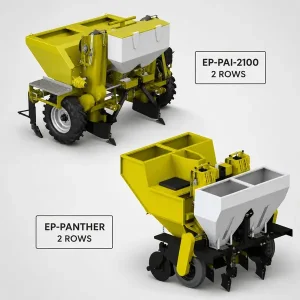
EP-PAI / EP-PANTHER Potato Planter – 2–4 Row | Seeds+Fertilizer+Spray