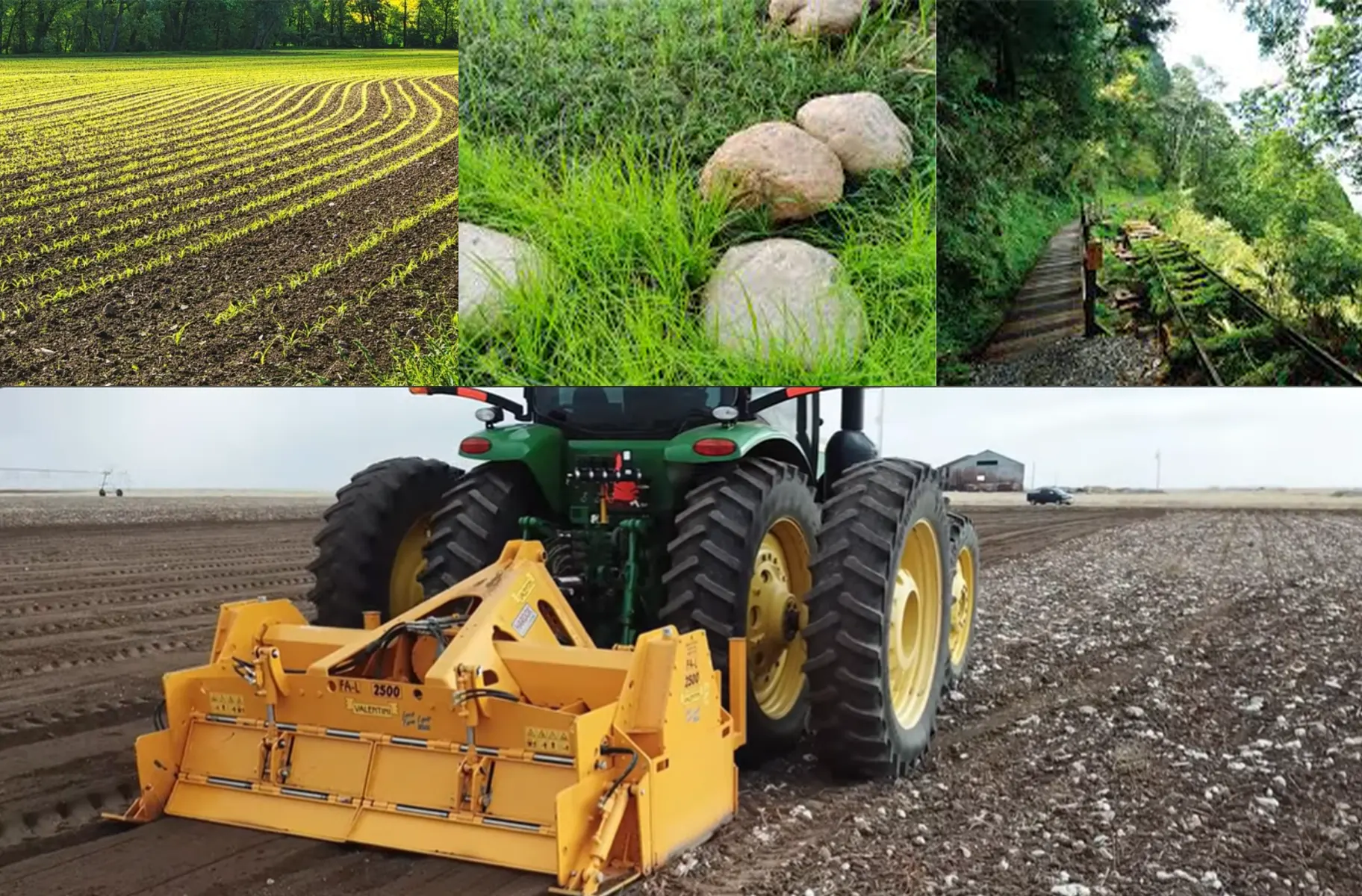
Korean agricultural land is under structural pressure. Farmland prices in active highland agricultural zones — Gangwon-do, North Gyeongsang, South Chungcheong — have risen significantly as Korean population movement urbanises the workforce and reduces the number of active farm families. At the same time, areas of marginal, abandoned, or forest-margin land — land that was once farmed or is capable of farming but has not been in active production — remain available at significantly lower prices than established farmland. Converting this marginal land to productive agricultural use is a route to farm expansion that Korean agricultural policy has historically supported through various land improvement and farmland restoration programs.
Stone clearance is the central engineering challenge of Korean marginal land conversion. The same geological conditions that make Korean highland soils productive for potato and ginseng — granite-derived minerals, good drainage, cool temperatures — also mean that marginal and abandoned land in these zones contains embedded stones of a scale and density that no tillage machinery can handle without prior stone crushing. Understanding the three-phase clearance sequence, the machinery required at each phase, and how this connects to Korean farmland law and development support programs is the starting point for any Korean land development project.
Types of Korean Marginal Land — What You Are Dealing With
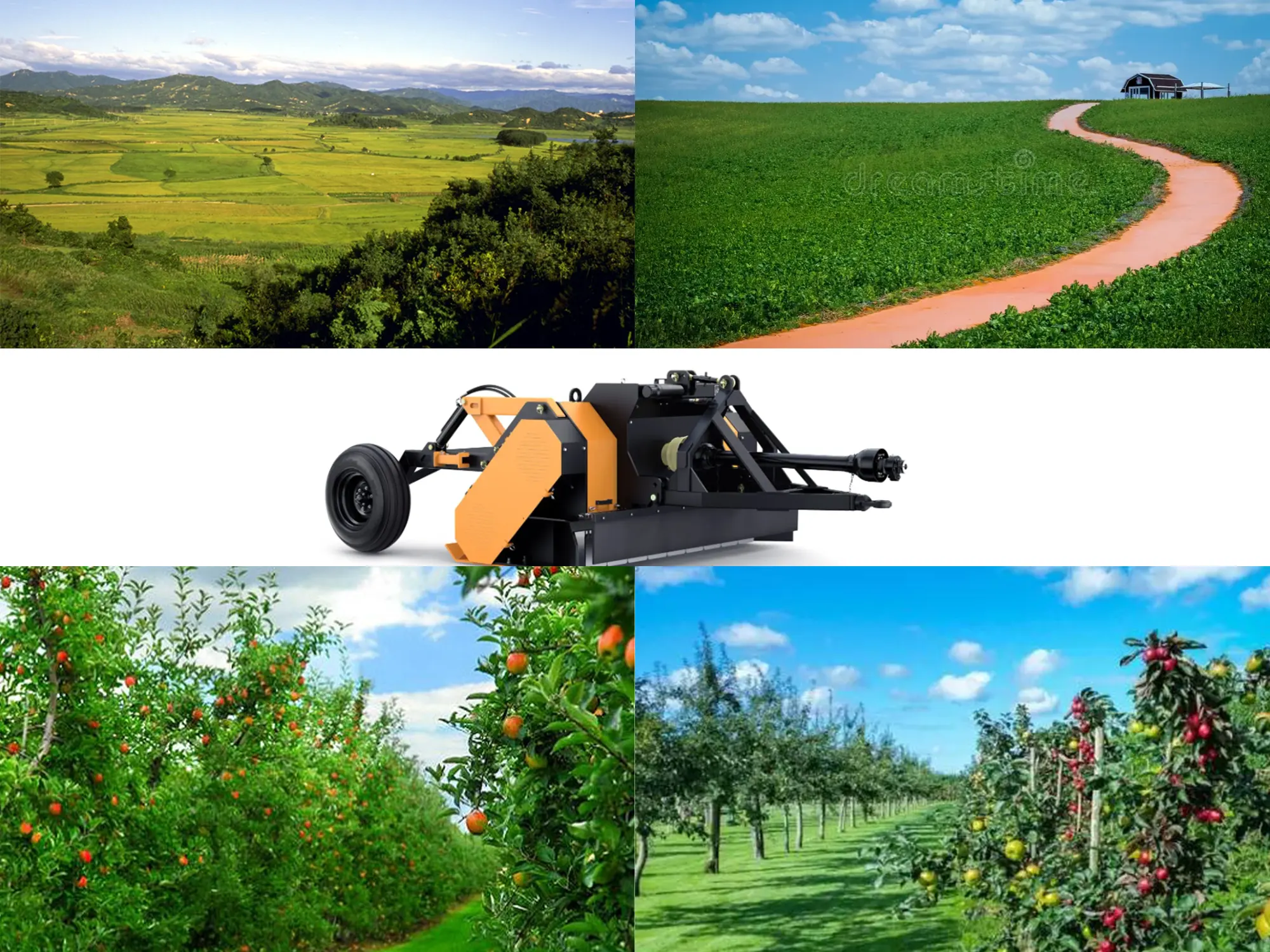
Type A — Abandoned Highland Farmland (폐경지)
Formerly cultivated fields that have been abandoned for 5–20+ years. Vegetation: grass, shrubs, and early-succession scrub. Stone condition: surface stones have re-emerged from frost-heave since last clearing; embedded stones from the original clearing period remain below the surface. The original agricultural topsoil structure remains largely intact beneath the vegetation layer.
Stone clearance requirement: Medium. Vegetation mulching + stone crushing to 30 cm, CT-2100 collection. THOR 2.4 appropriate for most abandoned highland plots. Typical initial clearance: 3–5 days per hectare including crusher, picker, and initial rotavator pass.
Type B — Forest Margin and Secondary Scrub (산림 가장자리)
Land at the interface between existing farmland and forested mountain zones — often areas that were cleared in the past but have been invaded by forest vegetation from the adjacent tree margin. Contains small trees (below 10–15 cm trunk diameter), woody scrub, root networks, and surface/embedded stone. This is the most challenging category for standard stone crushers.
Stone clearance requirement: Heavy. If stump density is low (scrub only), the THOR 2.4 handles vegetation mulching + stone crushing. If significant stumps (above 15 cm diameter) are present, the THOR FLM (CVT, forestry rotor) is required before the agricultural THOR pass. CT-2100 collection after crushing. Typical clearance: 5–10 days per hectare for dense scrub/mixed stone conditions.
Type C — New Highland Terrace Development (신규 개간지)
Land that has never been cultivated — typically lower-elevation sections of mountain terrain being converted from rocky open land or light scrubland for the first time. Contains large embedded boulders (frequently above 40 cm diameter), surface rock of all sizes, and no established topsoil profile. This is the heaviest initial clearance requirement.
Stone clearance requirement: Maximum. The THOR 3.0 rock crusher (230 HP, 40 cm max stone) is preferred for initial clearance where stone sizes above 30 cm are common — the THOR 2.4’s 30 cm limit will be exceeded regularly on Type C land. CT-2100 collection. Initial clearance takes the most time and represents the highest machine-hour cost per hectare in the entire product range application scope.
The Three-Phase Clearance Sequence — Initial, Secondary, and Annual Maintenance
Phase 1 — Initial Clearance (Year 1)
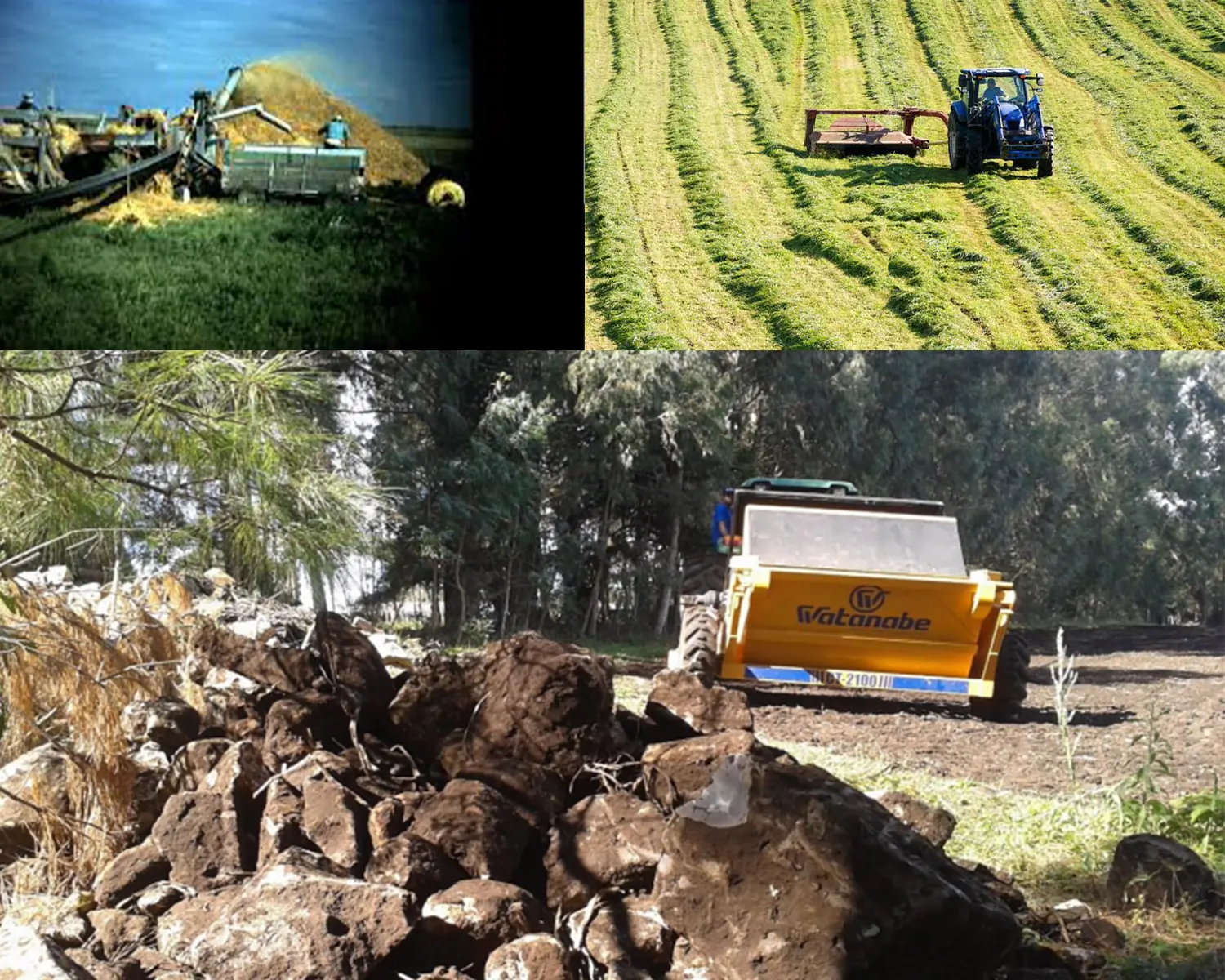
The initial clearance is the most intensive and most expensive phase of the land development process. Its objective is to reduce all surface and near-surface stone to a size manageable by the CT-2100 rock picker (below 80 Kg per piece), remove all large vegetation material, and collect the crushed stone from the field surface. Phase 1 may require multiple crusher passes — a first pass at the coarsest setting to fracture large boulders, followed by a second pass at a finer setting to process the large crushed fragments further, followed by a CT-2100 collection pass.
Phase 1 Machinery:
- ▸THOR 2.4 (180 HP, for land with stones up to 30 cm) or THOR 3.0 (230 HP, for land with stones up to 40 cm) — at coarsest hood setting for maximum stone fracture per pass
- ▸THOR FLM (CVT, if stumps above 15 cm are present from scrub vegetation) — as a pre-treatment pass before the agricultural THOR
- ▸CT-2100 rock picker (110 HP, 2.5 m³ bunker) — collection pass after each crusher pass
Phase 1 on Type C new development land typically requires 2–3 THOR passes and 1–2 CT-2100 collection passes per hectare before the surface stone density is reduced to the level at which initial tillage machinery can operate safely. The stone volume removed from Type C land per hectare is substantial — plan truck logistics for stone disposal from the first day of Phase 1.
Phase 2 — Secondary Clearance After Initial Tillage (Year 1–2)
After Phase 1 clearance and initial PSW-3200 rotavator tillage, a secondary clearance pass is typically needed in the second season. The initial tillage pass brings previously-buried sub-surface stones to the surface — stones that were below the THOR’s working depth during Phase 1, but are now exposed by the rotavator’s deeper 25–30 cm tillage action. These secondary stones are typically smaller than the original surface stones (the largest embedded boulders were addressed in Phase 1) and are handled efficiently by the rake-and-pick sequence rather than requiring the full THOR crusher pass again.
If secondary stones below 40 Kg
EP-EW-4000 rake → CT-2100 collection. Efficient and lower operating cost than redeploying the THOR crusher for stones the rake can handle.
If secondary stones above 40 Kg still present
THOR 2.4 crusher → EP-EW-4000 rake → CT-2100 collection. Typically the final THOR crusher deployment before the field transitions to annual maintenance-only clearance.
Phase 3 — Annual Maintenance Clearance (Year 3 Onward)
After Phase 1 and Phase 2 clearance, the field has been cleared of all major embedded stone down to the tillage depth. From Year 3 onward, annual maintenance clearing manages only the frost-heave stones that emerge each winter — a significantly lighter task than the initial clearance. The annual maintenance sequence for an established converted field is:
EP-EW-4000 rock rake (annual spring pass, 75 HP, after soil thaw) → CT-2100 rock picker (collection). THOR crusher deployed only in years where frost-heave has brought stones above 40 Kg to the surface — perhaps every 3–5 years on typical Korean granite, annually on more active frost-heave sites. This Phase 3 maintenance cost is the ongoing annual stone management cost of the converted field — comparable to the annual maintenance cost of established highland potato or vegetable fields that have been managed for many years.
Korean Farmland Law (농지법) — What Developers Must Know Before Starting
Important disclaimer: Legal requirements change
Korean farmland law (농지법), agricultural land use regulations, and land development permit requirements change as Korean agricultural and land management policy is updated. This section describes the general regulatory framework as of the guide’s preparation — confirm current requirements with your county agricultural office (군 농업기술센터) or a Korean agricultural law specialist before commencing any land conversion project.
Korean farmland conversion and development is regulated under the 농지법 (Farmland Act) and related regulations. Key regulatory considerations for land development projects:
①
농지 개간 신고/허가 (Farmland reclamation notification/permit): Converting non-agricultural land (임야, 황무지, 잡종지) to agricultural use requires either notification or permit depending on the size and nature of the conversion. Small-scale reclamation below specified thresholds may require only county-level notification; larger conversions require formal 농지전용허가 (farmland conversion permit). Confirm the threshold for your project scale with the county agricultural office (군청 농지과).
②
산지전용 (Forest land conversion): Converting land classified as 산지 (forest land) to agricultural use requires a separate 산지전용허가 (forest land conversion permit) from the regional Korea Forest Service (지방산림청) or provincial forest management office, regardless of the actual vegetation condition of the land. Land classified as forest land on official maps may be grassland or scrub in practice — the official land classification, not the actual vegetation, determines which permit is required.
③
농업진흥지역 / 농업보호구역 (Agricultural promotion/protection zone): Land within designated agricultural promotion zones (농업진흥지역) has specific land use restrictions that limit non-agricultural development. Converting land within these zones to agricultural use is generally supported; converting it away from agricultural use faces significant restrictions. Confirm the zone designation of your target land before purchase.
④
Stone disposal requirements: Large-volume stone removal from clearance operations (particularly Phase 1 clearance of Type B or Type C land) may require compliance with construction waste management regulations (건설폐기물 처리 기준) if the stone volume is classified as construction waste rather than agricultural soil management. Confirm disposal requirements with the county environmental office before Phase 1 clearance on projects with significant expected stone volume.
Cost Estimation Framework — What Land Development Stone Clearance Actually Costs
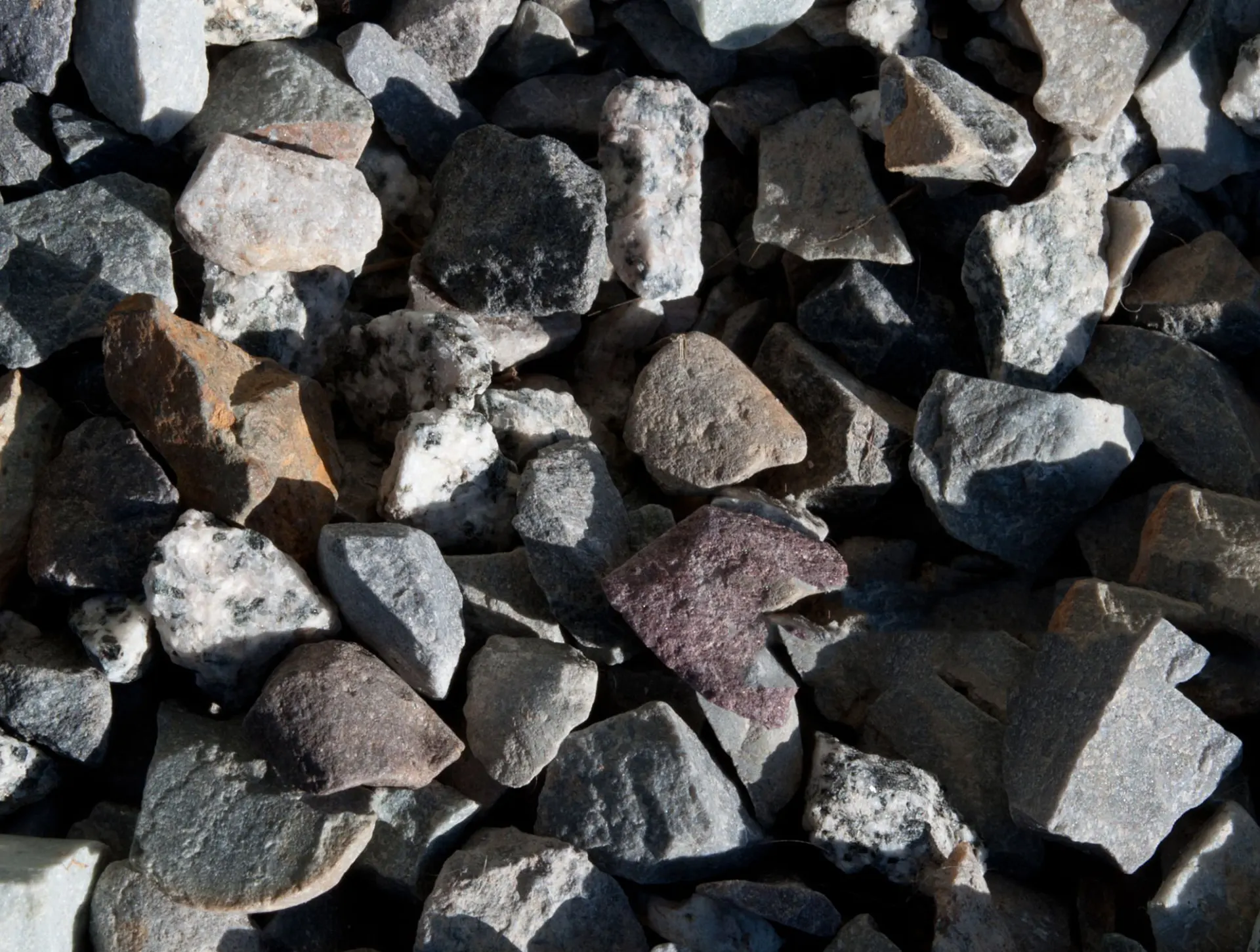
Land development stone clearance costs are dominated by machine operating hours and truck logistics. A framework for estimating Phase 1 clearance cost:
| Cost Item | Driver | Notes |
|---|---|---|
| THOR crusher day rate (hire) | Contractor day rate or owned machine depreciation + fuel | Varies by contractor; quoted per day or per hectare |
| CT-2100 picker day rate | Same basis as crusher | Often hired as a package with the THOR from same contractor |
| Truck hire for stone disposal | Tonnes removed × distance to dump site × per-trip rate | Often the largest single Phase 1 cost item on heavy stone land |
| Dump site fees | Tonnes deposited × disposal rate | On-farm deposition (field margins) avoids this cost where permitted |
| PSW-3200 rotavator pass | Tractor + machine day rate | Initial tillage after Phase 1 clearance is complete |
| Soil testing and soil amendment | Lab testing + lime/fertilizer | Newly cleared land typically requires pH correction; confirm from soil test before first crop |
The Break-Even Question
The economic case for Korean marginal land development turns on one calculation: is the cleared and developed farmland value (and the income from subsequent crop production) greater than the sum of land acquisition cost + Phase 1+2 clearance cost + annual maintenance cost? For Korean highland land development projects targeting potato, ginseng, or vegetable production, this calculation has historically been positive — cleared and productive highland farmland commands significantly higher market value and rental rate than un-cleared marginal land, and crop income over a 10–20 year production horizon substantially exceeds development cost when quality crops are produced.
The calculation is most favourable when: stone clearance cost is minimised through machine ownership or cooperative access; Phase 1 stone from clearance has on-farm or low-cost disposal options; the converted land has characteristics (altitude, soil type, water access) suited to high-value crops (ginseng, seed potato, highland vegetable) rather than commodity crops; and Korean agricultural machinery subsidy programs offset the equipment purchase cost for land development machines.
Korean Government Support Programs for Land Development
Several Korean government programs provide support specifically for farmland development and land improvement — distinct from the general agricultural machinery subsidy programs discussed elsewhere on this site:
Farmland Reclamation Support Project
MAFRA farmland reclamation support program — provides loans and/or grants for conversion of marginal or abandoned land to agricultural production. Eligible activities include stone clearance, land grading, drainage improvement, and initial soil amendment. Confirm current program availability and eligibility thresholds with the county agricultural office before commencing land purchase for development.
Farmland Improvement Project
Korea Rural Community Corporation (한국농어촌공사) farmland consolidation programs in some regions support land clearing, drainage, and access road development as part of agricultural zone improvement projects. For large-scale land development (above 5–10 ha), the Corporation may co-fund clearance work within designated improvement zones. Contact the regional Korea Rural Community Corporation office for eligibility assessment.
Startup Support for Young Farmers
Young farmer establishment programs (청년 농업인 창업지원사업) for farmers under 40 establishing new agricultural operations include higher subsidy rates for both land development costs and machinery purchases. Young farmers developing new highland vegetable or ginseng land may be eligible for enhanced support rates for stone clearance equipment compared to established farmer program rates.
Frequently Asked Questions
How many THOR passes are typically needed for Phase 1 clearance on Type C new development land?
For Type C land (never cultivated, large embedded boulders common), Phase 1 typically requires 2–4 THOR crusher passes and 2–3 CT-2100 picker passes per hectare to reduce stone density to the level at which tillage machinery can safely operate. The first crusher pass fractures the largest boulders; the second pass at a finer setting processes the large fragments from the first pass; the picker collects after each pass. On land with extreme stone density (above 50 Kg of stone per m² surface layer), occasionally a third crusher pass is needed before the picker can achieve effective collection. Walk the land and estimate average stone weight per m² before beginning Phase 1 — this estimate determines the expected number of passes and total machine hours, which directly drives your Phase 1 cost estimate.
What soil testing should I do before the first crop on newly developed land?
Submit soil samples to your regional agricultural technology center (농업기술센터) from at least 5 locations across the development site at 15–20 cm depth (after Phase 1 clearance, before initial tillage). Key tests for newly developed Korean highland land: pH (granite-derived soils are typically acidic; pH 5.5–6.5 is target for most highland crops — lime application is frequently needed); exchangeable cation analysis (K, Ca, Mg — cleared scrubland soils often have low K and Ca that need amendment before first crop); organic matter content (newly cleared land is typically low — green manure cropping in the first year before commercial production is recommended for Type B and C land); and available phosphorus. The agricultural technology center provides fertilizer application recommendations based on the soil test results for your target crop.
Can I use the THOR stone crusher for Phase 1 clearance and then use it for annual farm stone management afterward — or is it too heavy for the latter use?
Yes — the THOR 2.4 is used for both Phase 1 initial development clearance and annual maintenance clearing, and it performs both roles effectively. The THOR’s design is not size-compromised by occasional heavy-use (Phase 1) or regular light-use (annual maintenance) — it handles both. After Phase 1 clears the development land, the same THOR 2.4 transitions immediately to annual frost-heave maintenance clearing on the same field. For operations that also grow established highland potato or ginseng on other fields, the THOR serves the annual clearance requirement on those fields in the same spring season. One machine investment serves both the development phase and the long-term annual maintenance phase of the entire farm stone management program.
Planning a Land Development Project? Tell Us What You Have.
Land type (Type A/B/C) + area (ha) + approximate stone density + target crop + tractor HP → Phase 1 machine recommendation with pass count estimate and cost framework. Korea local stock, Ansan-si, Gyeonggi-do.
Editor: Cxm