EP-THOR ST grondstabilisatiemachine – Wegverharding, 200 mm diepte
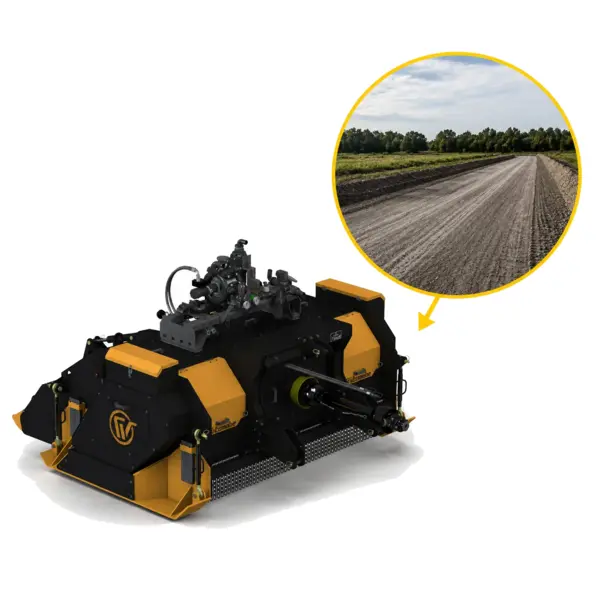
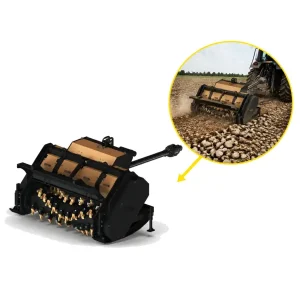
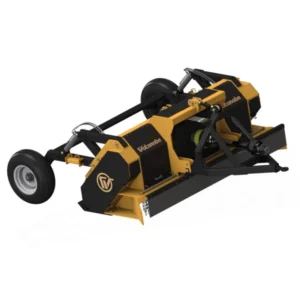
PTO-aangedreven grondstabilisator voor de rehabilitatie van landelijke wegen — maalt en mengt bestaand wegmateriaal tot 200 mm diepte, waarbij water wordt geïnjecteerd vanuit een aangesloten watertruck. 92 Kennametal RK4-bits. Een CVT-trekker is verplicht. Minimaal 250 CV.
0,5–1,5 km/u · 1000 tpm · 5300 kg · Transportafmetingen: 2960 × 2745 × 2615 mm · Lokaal op voorraad in Korea.
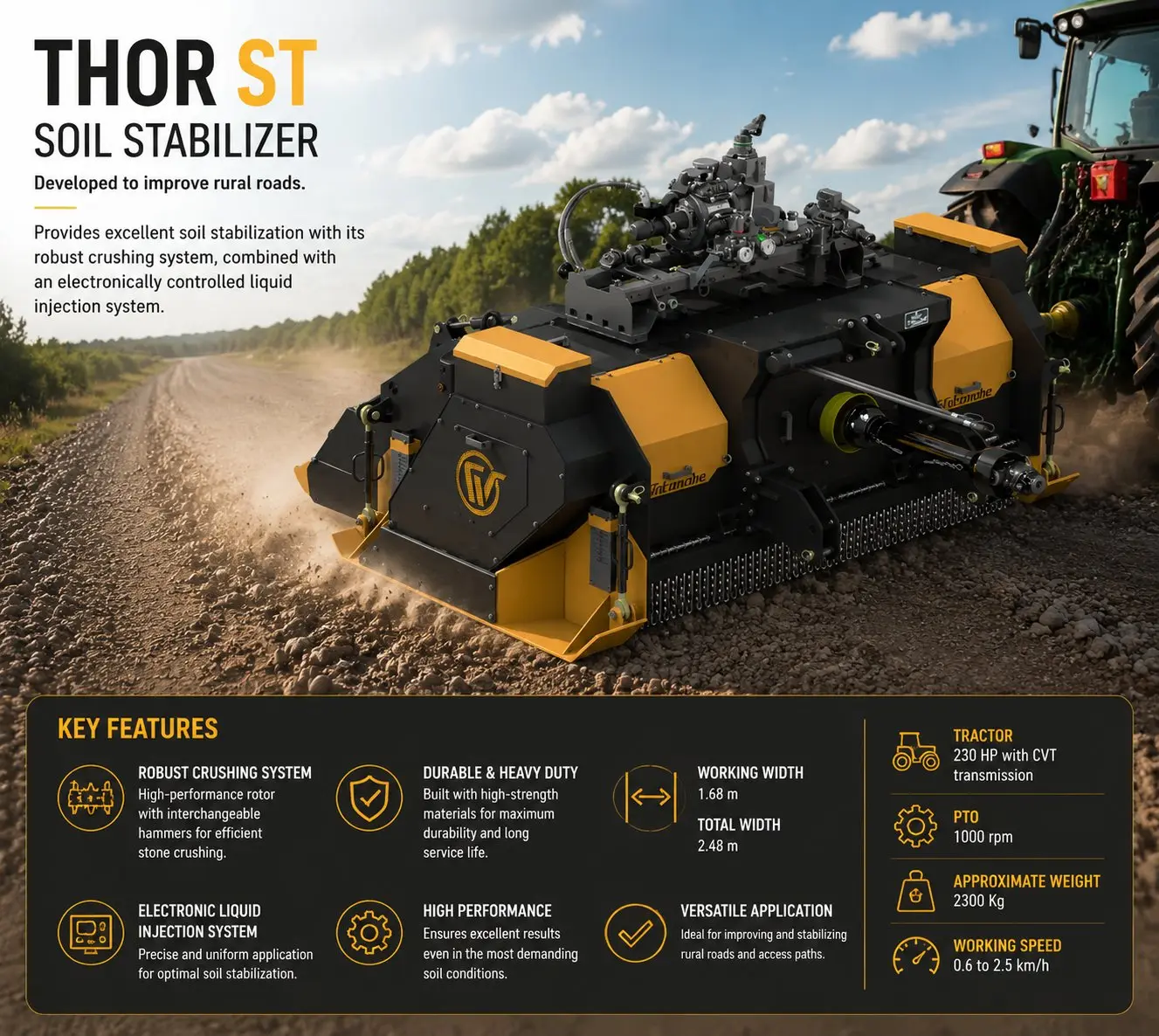
THOR ST — Ontworpen voor de verbetering van landelijke wegen
De Watanabe THOR ST is een aftakas-aangedreven grondstabilisator die speciaal is ontworpen voor de aanleg, renovatie en recycling van landwegen. De THOR ST is via een verdeelslang aangesloten op een watertruck en freest bestaand wegdekmateriaal tot een diepte van 200 mm. Dit materiaal wordt vervolgens gelijkmatig gemengd met water en chemische stabilisatoren, waardoor in één doorgang het aangetaste wegdekmateriaal wordt omgezet in een structureel verbeterde, gestabiliseerde funderingslaag. Het resultaat: een betere doorstroming voor zwaarbeladen vrachtwagens, minder onderhoud aan het wagenpark en aanzienlijk lagere bouwkosten in vergelijking met conventionele wegrenovatie.
De THOR ST rijdt met een snelheid van 0,5–1,5 km/u bij een minimaal aftakasvermogen van 250 pk. Een tractor met CVT (Continu Variabele Transmissie) is verplicht. — Dit is het enige type tractortransmissie dat de vereiste lage werksnelheden kan handhaven met een vol vermogen van 1000 tpm bij de aftakas. Een tractor met een conventionele transmissie kan deze bedrijfsomstandigheden niet nabootsen, ongeacht de gekozen versnelling.
Voor projecten waarbij aanzienlijke hoeveelheden oppervlaktegesteente bewerkt moeten worden voordat de bodem gestabiliseerd kan worden, THOR 2.4 steenbreker Het voorbewerken van oppervlaktekeien tot aggregaatgrootte vindt plaats in de bewerking voorafgaand aan de THOR ST. Voor de stap van het verdelen van kalk of cementbindmiddel die voorafgaat aan de THOR ST-freesbewerking, DCW 2.2 bindmiddelspreider De frontmontage is mogelijk op dezelfde CVT-tractor als de THOR ST-achtermontage, waardoor gecombineerd strooien van bindmiddel en grondfrezen in één werkgang mogelijk is.
Complete technische specificaties — THOR ST
Alle gegevens zijn afkomstig uit de officiële productdocumentatie van Watanabe (februari 2026).
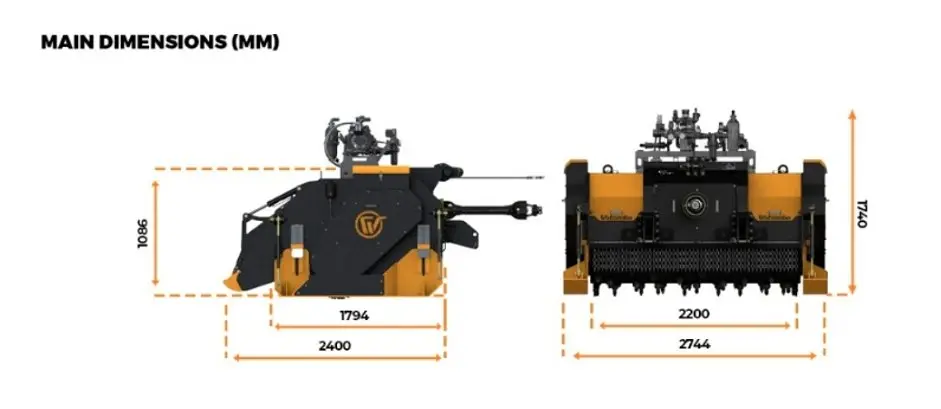
TRANSPORTAFMETINGEN
| Lengte | 2.960 mm |
| Breedte | 2.745 mm |
| Hoogte | 2.615 mm |
MACHINEAFMETINGEN (WERKING)
| Lichaamslengte | 1.794 mm |
| Totale lengte (incl. aanbindpunten) | 2400 mm |
| Lichaamslengte | 1.086 mm |
| Totale hoogte | 1.740 mm |
| Rotortrommelbreedte | 2200 mm |
| Totale breedte (incl. zijpanelen) | 2.744 mm |
VERPLICHTE TRACTORVEREISTEN
| Minimaal vermogen | 250 pk |
| Transmissietype | CVT — VERPLICHT |
| Bedrijfssnelheid | 0,5–1,5 km/u |
| PTO-ingang | 1.3/8" — 21 splines |
| PTO-snelheid | 1000 toeren per minuut |
MACHINEGEGEVENS
| Freesdieptebereik | 0–200 mm |
| Aantal bits | 92 |
| Bittype | Kennametal RK4 |
| Bedrijfsgewicht (ongeveer) | 5300 kg |
ⓘ 250 CV = 250 pk (cavalo-vapor). Een CVT-tractor is een niet-onderhandelbare hardwarevereiste — controleer dit vóór bestelling. Alle specificaties zijn afkomstig uit de officiële productdocumentatie van Watanabe, februari 2026.
Onderdelen van de machine — 7 geïntegreerde systemen
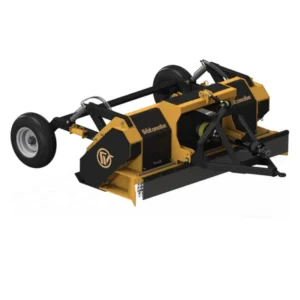
De bodemstabilisatiecapaciteit van de THOR ST is te danken aan de integratie van 7 functionele componenten die tijdens de voorwaartse beweging gecoördineerd samenwerken. Inzicht in elk van deze componenten verklaart hoe de machine tegelijkertijd grondfreeswerk, waterinjectie en materiaalmenging mogelijk maakt.
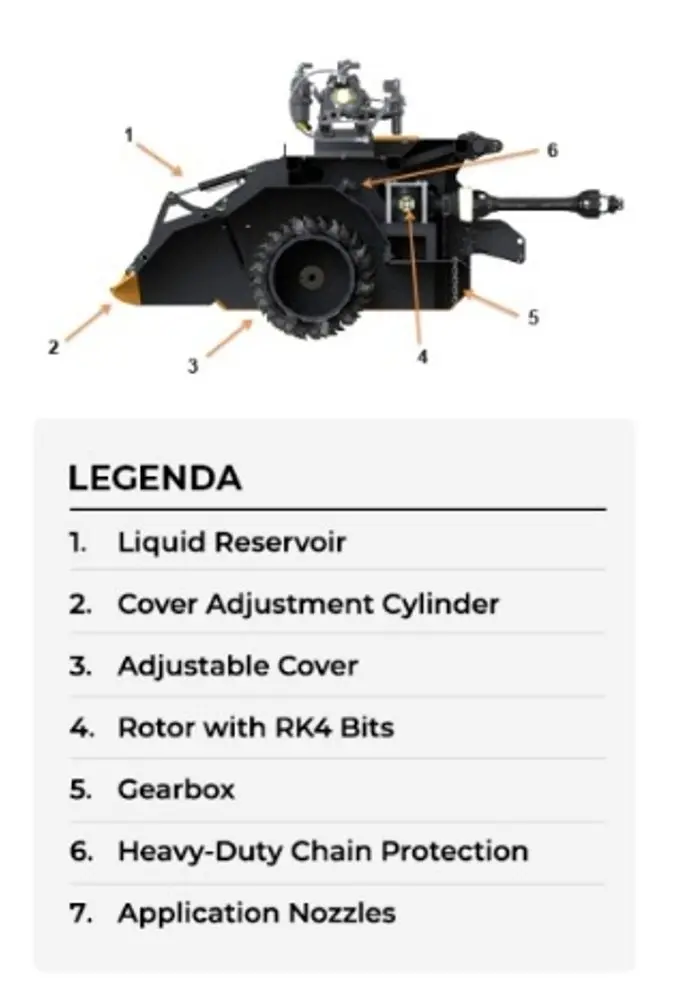
Vloeistofreservoir
Bevat de watervoorraad voor het mengproces van de bodemstabilisator. Via een verdeelslang is het reservoir verbonden met de watertruck die naast de machine rijdt. Het reservoir fungeert als buffer tussen de wateraanvoer van de truck en de vraag naar water voor de continue sproeier, waardoor eventuele variaties in de wateraanvoer vanuit de truck worden afgevlakt.
Afdekkapje afstelcilinder
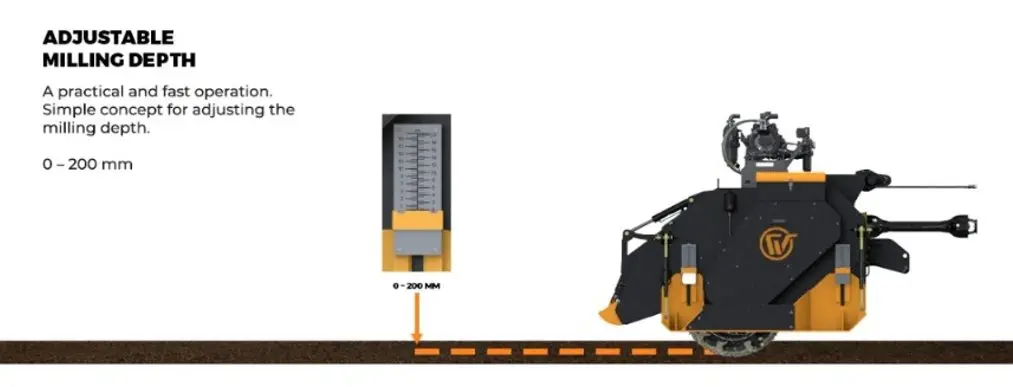
De hydraulische cilinder die de positie van de verstelbare afdekking (component 3) regelt, bepaalt op zijn beurt de freesdiepte. De verstelling van 0 tot 200 mm is een "praktische en snelle handeling" — de bestuurder stelt de gewenste diepte in via de tractorbediening vóór de werkgang en de cilinder houdt de afdekking gedurende de hele bewerking nauwkeurig in positie.
Verstelbare hoes
De achterste afdekplaat van de freeskamer wordt door de afdekverstelcilinder (onderdeel 2) gepositioneerd om de freesdiepte in te stellen. Wanneer de afdekplaat omhoog wordt gebracht (van de grond af), neemt de effectieve indringdiepte van de rotor toe. Het laten zakken van de afdekplaat vermindert de effectieve snijdiepte. Dit is het primaire diepteregelmechanisme: eenvoudig, mechanisch robuust en in het veld instelbaar zonder speciaal gereedschap.
Rotor met RK4-bits
Het centrale werkende onderdeel. Het draagt 92 Kennametal RK4-type freesbits over de volledige 2200 mm rotorbreedte. Aangedreven met 1000 tpm door de CVT-aftakas van de tractor via de versnellingsbak (onderdeel 5) en kettingbescherming (onderdeel 6), verpulvert en verpulvert de rotor het wegdekmateriaal tot de ingestelde diepte. Ontworpen voor freeswerkzaamheden in diverse grondsoorten: granulaat, klei, lateriet en een mengsel van gerecycled asfalt en aggregaat voor wegwerkzaamheden.
Versnellingsbak
Brengt de kracht over van de aftakas (1 3/8" - 21 spiebanen) naar de rotoraandrijving. Gedimensioneerd voor de continue ingangsbelasting van 250 pk die de THOR ST nodig heeft tijdens langdurig frezen. De versnellingsbak is in het midden van de machine geplaatst om de aandrijfkracht symmetrisch te verdelen over de volledige rotorbreedte van 2200 mm. Ontworpen voor eenvoudig onderhoud en lage bedrijfskosten – een van de belangrijkste ontwerpcriteria voor het Kennametal RK4 rotorsysteem van de THOR ST.
Zware kettingbescherming
De aandrijfketting tussen de versnellingsbak en de rotoras is ingesloten in een robuuste beschermbehuizing, die de ketting beschermt tegen steenfragmenten, schurend stof en de chemische invloed van de kalk of het cementstabilisatiemiddel in de maalkamer. Inspectie en smering van de kettingbescherming zijn mogelijk zonder ingrijpende demontage, wat bijdraagt aan het ontwerpdoel van de THOR ST: lage bedrijfskosten en eenvoudig onderhoud in het veld.
Toepassingsmondstukken
Spuit water uit het vloeistofreservoir (component 1) in de maalkamer tijdens de rotorpassage. De sproeiers zijn zo geplaatst dat het water gelijkmatig over de volledige rotorbreedte wordt verdeeld, zodat elk deel van de gemalen grondkolom het vocht krijgt dat nodig is voor de chemische stabilisatiereactie. De toevoersnelheid wordt geregeld in verhouding tot de rijsnelheid om het gewenste vochtgehalte in het gestabiliseerde eindproduct te behouden.
Kennametal RK4 Rotorsysteem — Fixatieblok + BIT-RK4
De THOR ST-rotor maakt gebruik van het Kennametal RK4-bitsysteem – dezelfde bitserie die internationaal wordt gebruikt in professionele machines voor wegenaanleg, koudfrezen en bodemstabilisatie. Het RK4-systeem bestaat uit twee componenten:
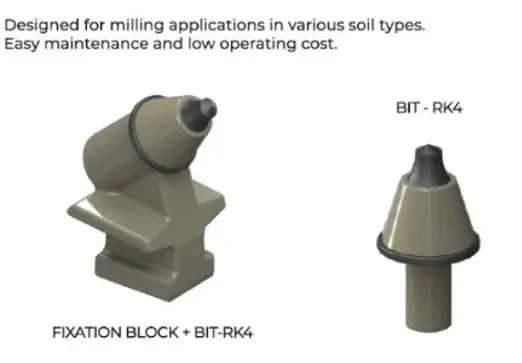
FIXATIEBLOK
De stalen houder, gelast aan de rotortrommel, ontvangt en vergrendelt de individuele BIT-RK4. Dankzij het ontwerp van het bevestigingsblok kan elke boor tijdens gebruik vrij roteren in de houder. Deze rotatievrijheid zorgt voor een gelijkmatige slijtageverdeling over de omtrek van de boor, waardoor de levensduur van de boor wordt verlengd in vergelijking met systemen met een vaste boorpositie. Wanneer de boor versleten is, hoeft alleen de boor zelf te worden vervangen; het bevestigingsblok blijft op de rotor zitten. Het is niet nodig de rotor te verwijderen voor het vervangen van een individuele boor.
BIT-RK4
De individuele, door Kennametal vervaardigde frees met een hardmetalen punt en een cilindrische schacht past in het bevestigingsblok. De RK4-freesgeometrie is geoptimaliseerd voor freeswerkzaamheden in korrelige funderingsmaterialen, verdichte grond en wegconstructies van gemengd materiaal. 92 frezen bestrijken de volledige rotorbreedte van 2200 mm van de THOR ST. De frezen zijn individueel vervangbaar in het veld – een cruciaal operationeel voordeel voor afgelegen Koreaanse plattelandswegenprojecten, ver van werkplaatsen.
Instelbare freesdiepte — 0 tot 200 mm
De freesdiepte van de THOR ST wordt ingesteld door de afstelcilinder van de afdekking (component 2), die de verstelbare afdekking (component 3) bedient. De ontwerpomschrijving van Watanabe luidt als volgt: "Een praktische en snelle bediening — een eenvoudig concept voor het instellen van de freesdiepte. — 0 tot 200 mm." De diepte wordt ingesteld voordat de werkgang begint en wordt gedurende de hele gang door de hydraulische cilinder aangehouden zonder dat de operator hoeft in te grijpen.
De juiste freesdiepte kiezen voor Koreaanse wegenbouwprojecten
De freesdiepte voor een specifiek projectgedeelte wordt bepaald door de toestand van de bestaande wegconstructie, die wordt beoordeeld door middel van visuele inspectie en proefboringen vóór de stabilisatiewerkzaamheden:
| Wegomstandigheden | Aanbevolen diepte | Motivering |
|---|---|---|
| Alleen oppervlakkige spoorvorming, solide fundering | 80–120 mm | Behandelt alleen de slijtlaag — behoudt de bestaande basislaag. |
| Matige basisverslechtering | 120–160 mm | Omvat een deel van de aangetaste basislaag |
| Ernstige basisstoring | 160–200 mm | Volledige structurele reconstructie tot op funderingsniveau. |
| Dunne asfaltlaag over een beschadigde fundering | 150–200 mm | Verwerkt asfalt en fundering samen tot gerecycled materiaal. |
ⓘ De dieptekeuze is een beslissing van de projectingenieur. Deze bereiken zijn slechts indicatieve richtlijnen — raadpleeg een geotechnisch ingenieur voor projectspecifieke dieptespecificaties in formele wegcontracten.
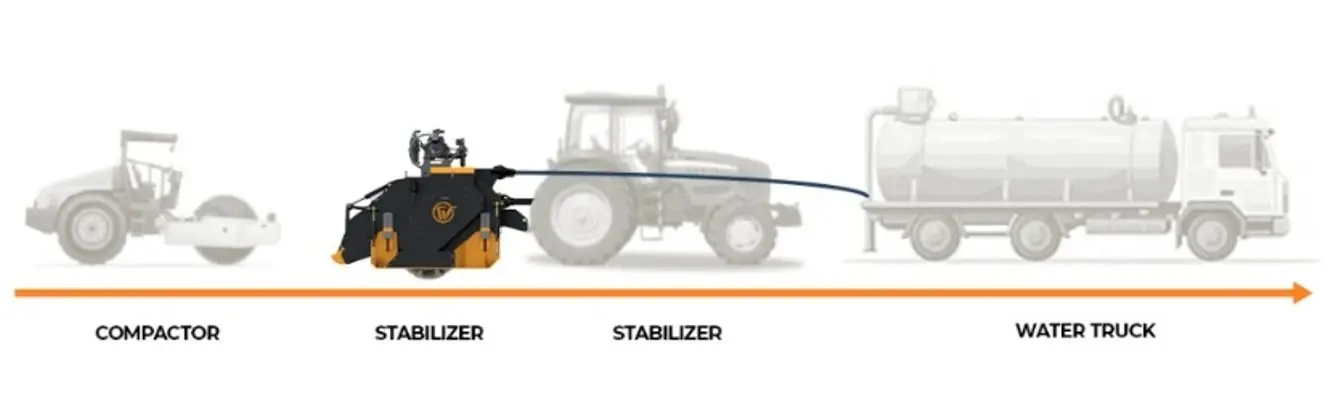
Het complete bodemstabilisatiesysteem
De THOR ST is de centrale freesmachine in een gecoördineerd proces met vier machines voor bodemstabilisatie. Het systeem zoals weergegeven in de officiële Watanabe-documentatie:
Toepassingen — Deze machine is ontworpen voor
Uit de officiële productdocumentatie van Watanabe voor de THOR ST:
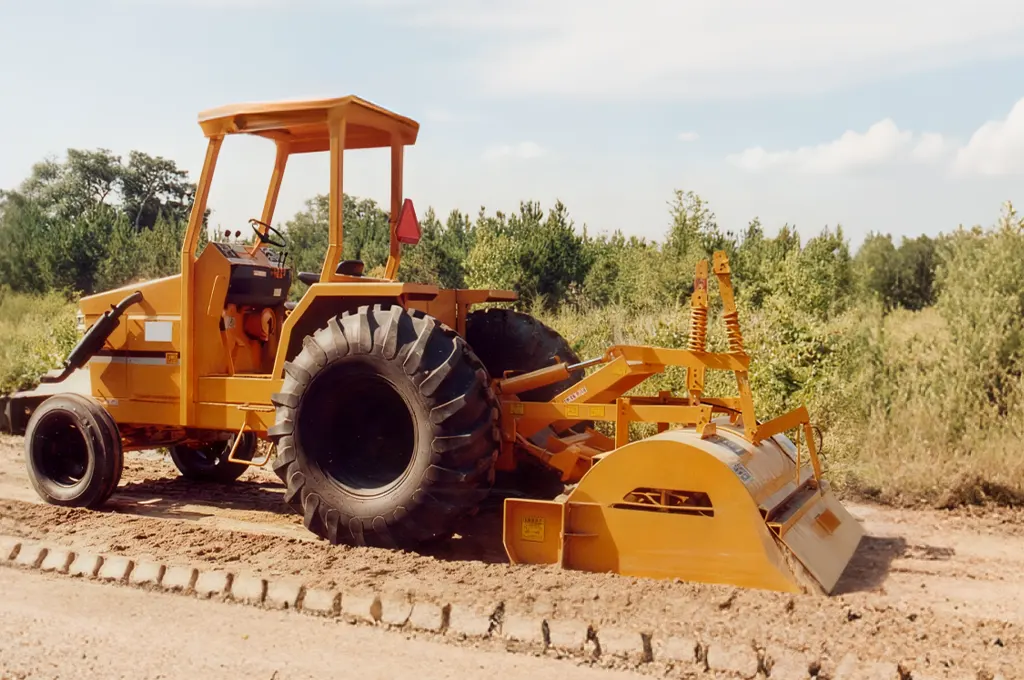
Aanleg, renovatie en hergebruik van landelijke wegen — met als doel de verkeersdoorstroming te verbeteren, met name voor zwaarbeladen vrachtwagens. De freesdiepte van 200 mm van de THOR ST maakt een complete structurele behandeling van aangetaste funderingslagen van landwegen mogelijk, en niet alleen het opruwen van het oppervlak.
Verminderde onderhoudsvereisten voor het wagenpark — Een chemisch gestabiliseerde wegfundering vermindert spoorvorming, de ontwikkeling van gaten en de slijtage van het wegdek onder zware belasting door landbouw- en bedrijfsvoertuigen. Minder frequent onderhoud aan de wegen betekent lagere totale infrastructuurkosten voor provinciale overheden en landbouwcoöperaties die verantwoordelijk zijn voor het wegennet op het platteland.
Stofreductie, wat de bedrijfsveiligheid verbetert. — Gestabiliseerde wegdekken genereren aanzienlijk minder stof onder voertuigverkeer dan onverharde wegen van verdichte grond. Voor Koreaanse landbouwgebieden waar wegen langs ginsengvelden, groentebedrijven en boomgaarden lopen, is stofbestrijding een direct operationeel voordeel voor de boeren die langs de behandelde weg wonen.
Aanzienlijke vermindering van transporttijd en operationele kosten tussen veld en fabriek. — Toegangswegen die onder alle weersomstandigheden begaanbaar blijven, ook na regen en vorst, zijn een directe voorwaarde voor betrouwbare logistiek in de toeleveringsketen voor Koreaanse landbouwproducenten die afhankelijk zijn van tijdige levering van het veld naar het pakstation, de verwerker of de coöperatie.
Koreaanse toepassingsgebieden
De belangrijkste toepassingsgebieden voor de THOR ST in Korea zijn onder andere: 농어촌도로 (Landbouwwegen op het platteland) rehabilitatieprogramma's beheerd door districtsbesturen; verbetering van toegangswegen naar bergboerderijen in Gangwon-do, Noord- en Zuid-Gyeongsang en Noord-Chungcheong; verbetering van wegen van het bosbouwbureau voor houttransport in hooglandgebieden; interne wegennetwerken van plantages in Zuid-Jeolla, Zuid-Chungcheong en Gyeonggi-do; en aanleg van verbindingswegen tussen dorpen in hooglandlandbouwgemeenschappen waar de conventionele aanvoer van aggregaten duur is vanwege de afstand.
Stabilisatie ter plaatse versus conventionele wegreconstructie
Bodemstabilisatie met de THOR ST biedt meerdere voordelen ten opzichte van conventionele wegenreconstructie – zoals blijkt uit de officiële productdocumentatie van Watanabe: "Minder onderhoud aan voertuigen, kortere bouwtijden, geoptimaliseerd gebruik van grondstoffen en lagere CO₂-uitstoot."
| Factor | Stabilisatie ter plaatse (THOR ST) | Conventionele reconstructie |
|---|---|---|
| Materiaalimport vereist? | Nee, de bestaande weg is het basismateriaal. | Ja — gebroken grind, asfalt |
| Verwijdering van oud materiaal? | Nee — gefreesd en ter plaatse hergebruikt. | Ja — uitgraven, transport, afvoer |
| Bouwtijdlijn | Kort — dagen tot weken | Verlengd — weken tot maanden |
| CO₂-uitstoot | Aanzienlijk lager | Hoger (transport + productie) |
| Typische projectkosten | 40–60% lager (typisch bereik) | Basislijn (100%) |
| Voorwaarde | Het bodemtype moet geschikt zijn voor chemische behandeling. | Geen — werkt onder alle omstandigheden. |
ⓘ De kostenvergelijking is een algemene schatting uit de literatuur over wegrenovatie. Een locatiegebonden technische beoordeling bepaalt de werkelijke kosten-batenverhouding voor elk project.
Watanabe — Wegstabilisatieapparatuur sinds 1970
Waarom de ervaring met Braziliaanse plattelandswegen relevant is voor Korea
De omstandigheden op het Braziliaanse plattelandswegennet – met name in de hooggelegen landbouwstaten Paraná, Santa Catarina en Minas Gerais – vertonen grote overeenkomsten met de omstandigheden in Korea: verweerd graniet en laterietklei als funderingsmateriaal, zware ladingen landbouwvrachtwagens, extreme weersomstandigheden en een beperkte beschikbaarheid van aggregaat op grote afstand van de belangrijkste steengroeven. De specificaties van de THOR ST voor deze Braziliaanse omstandigheden maken het direct toepasbaar op Koreaanse projecten voor de rehabilitatie van plattelandswegen, zonder dat er materiaal hoeft te worden aangepast.
Koreaanse lokale voorraad en service
Korea Watanabe heeft de THOR ST en DCW 2.2 op voorraad in Ansan-si, Gyeonggi-do. Technische ondersteuning in het Koreaans omvat onder andere de configuratie van de CVT-tractor, instructies voor het instellen van de freesdiepte, de selectie van het bindmiddeltype voor de Koreaanse bodemomstandigheden, de levering van RK4-frezen en het oplossen van operationele problemen. Kennametal RK4-frezen en bevestigingsblokken zijn lokaal op voorraad en kunnen binnen 24 uur worden verzonden. De garantievoorwaarden worden bij aankoop bevestigd.
Veelgestelde vragen — THOR ST
Waarom is CVT verplicht? Kan ik ook een conventionele tractor gebruiken?
De THOR ST vereist een werksnelheid van 0,5–1,5 km/u met behoud van het volledige aftakasvermogen van 1000 tpm. Geen enkele tractor met conventionele transmissie kan snelheden onder de circa 2–3 km/u bereiken bij het motortoerental dat nodig is voor het volledige aftakasvermogen – de laagste versnellingsverhoudingen van conventionele tractoren kunnen simpelweg niet de vereiste kruipsnelheid leveren. CVT-tractoren ontkoppelen de rijsnelheid van het motortoerental, waardoor elke snelheid vanaf 0 km/u mogelijk is met volledig aftakasvermogen. Er is geen alternatief – CVT is een hardwarevereiste. Controleer de CVT-specificaties van uw tractor voordat u bestelt.
Hoe worden individuele RK4-bits in het veld vervangen?
Elke BIT-RK4 wordt in het bevestigingsblok op de rotortrommel geplaatst. Het verwijderen van de bit gebeurt met een standaard beitel en hamer of met een speciaal gereedschap voor het verwijderen van bits – de bit wordt vanaf de zijkant losgeslagen uit het bevestigingsblok. Een nieuwe bit wordt in het blok gedreven totdat deze vastzit. Het is niet nodig om de rotor te verwijderen, te lassen of speciale werkplaatsapparatuur te gebruiken. De mogelijkheid om de bits ter plaatse te vervangen is een belangrijk operationeel voordeel voor afgelegen wegenbouwprojecten in Korea. Neem tijdens meerdaagse projecten een set reservebits mee naar de locatie om stilstand door onderdelenlevering te voorkomen.
Kan de THOR ST bestaande asfaltoppervlakken frezen?
Ja. Het Kennametal RK4-freessysteem is geschikt voor het frezen van asfalt, gerecycled asfalt, verdicht aggregaat en grond. Voor Koreaanse plattelandswegen met dunne bestaande asfaltlagen over een verslechterde funderingslaag – een veelvoorkomend probleem bij wegen die in het verleden zijn vernieuwd – verwerkt de THOR ST beide lagen gelijktijdig op de ingestelde diepte. Het resulterende mengsel van gerecycled asfalt en korrelig funderingsmateriaal is geschikt voor kalk- of cementstabilisatie in dezelfde bewerking.
Welke CVT-tractormodellen zijn compatibel?
De THOR ST vereist een CVT-tractor van minimaal 250 pk met een 1.3/8" - 21-spline aftakas met 1000 tpm. Compatibele CVT-tractoren in de 250 pk-klasse en hoger: Fendt 700 Vario (720–724), Fendt 800 Vario; CLAAS AXION 800-serie; Case IH Optum CVX; New Holland T7 AutoCommand; John Deere 6R/7R met DirectDrive of IVT. De meeste Koreaanse tractormerken bieden momenteel geen CVT aan in de 250 pk-klasse — de meeste Koreaanse THOR ST-gebruikers gebruiken Europese CVT-tractoren. Controleer de CVT-specificaties en het aantal splines van de aftakas voordat u bestelt.
Werkt de THOR ST zelfstandig of alleen in combinatie met de DCW 2.2?
De THOR ST functioneert als een op zichzelf staande frees- en mengunit wanneer bindmiddel op een andere manier is aangebracht (aparte passage, strooiwagen), of voor wegverpulveringsprojecten zonder chemische stabilisatie. De volledige efficiëntie van het systeem wordt bereikt wanneer de DCW 2.2 bindmiddelstrooier aan de voorzijde van dezelfde CVT-trekker is gemonteerd, waardoor gecombineerde bindmiddelverdeling en grondvermaling in één passage mogelijk is. Of beide samen of alleen de THOR ST worden gebruikt, hangt af van de projectspecificaties en de beschikbare machineconfiguratie.
Wat is de realistische dagelijkse projectdekking?
Bij een werksnelheid van 1,0 km/u en een rotorbreedte van 2200 mm bedraagt de productieve oppervlakte ongeveer 2200 m² per uur actieve rotorwerking. Rekening houdend met stops voor het bijvullen van water met de watertruck, inspecties van de freesbits en dagelijkse controles van de apparatuur, wordt op een realistische productieve dag 400-700 strekkende meter weg bewerkt (bij een standaard Koreaanse landwegbreedte van 3-4 m effectieve bewerkingsbreedte per doorgang). De logistiek van de watertrucks – vulinterval, afstand tot de waterbron – vormt vaak de praktische beperking voor de dagelijkse bewerking, in plaats van de freescapaciteit van de THOR ST.
Hoe lang duurt het voordat de gestabiliseerde weg weer geschikt is voor verkeer?
Na de THOR ST-freesgang wordt het wegvak op dezelfde dag geëgaliseerd en verdicht. Licht verkeer (personenauto's, lichte vrachtwagens) kan doorgaans binnen 24-48 uur na verdichting gebruikmaken van een met kalk gestabiliseerd wegvak. Met cement gestabiliseerde wegvakken ontwikkelen een hogere vroege sterkte en kunnen doorgaans binnen 24 uur licht verkeer dragen. De volledige structurele sterkte (gebruikt voor het wegdekontwerp) ontwikkelt zich in 7-28 dagen, afhankelijk van het bindmiddeltype, de aanbrengsnelheid en de uithardingsomstandigheden. Zwaar agrarisch vrachtverkeer moet minimaal 7 dagen worden uitgesteld op met cement gestabiliseerde wegvakken en langer op met kalk gestabiliseerde wegvakken – de projectleider bepaalt de criteria voor de verkeersafwikkeling.
Zijn de contracten van het Koreaanse overheidsprogramma 농어촌도로 geschikt voor deze methode?
In-situ bodemstabilisatie is een erkende methode voor wegrenovatie in de Koreaanse ingenieurspraktijk en komt in aanmerking voor beoordeling in programma's voor de verbetering van plattelandswegen (농어촌도로 정비사업, 농촌마을 기반시설 개선사업). Of een specifiek projectcontract in-situ stabilisatie als alternatief voor conventionele reconstructie toestaat, hangt af van de contractspecificaties en de beoordeling van de bodemgesteldheid door de toezichthoudende constructie-ingenieur. Wij adviseren om te overleggen met het regionale wegenbureau of de provinciale wegenbouwkundige voordat u zich verbindt aan stabilisatie in het kader van door de overheid gefinancierde contracten. Wij leveren technische specificatiedocumentatie en projectreferentiemateriaal ter ondersteuning van het goedkeuringsproces.
Klantenrecensies
Yoo Sung-jin — Aannemer van plattelandswegen, Jecheon, Noord-Chungcheong (2025)
★★★★★
"THOR ST + DCW 2.2 op een 4,2 km lang project voor de rehabilitatie van een landbouwweg in Noord-Chungcheong. Het diepte-instelsysteem met afdekcilinder is echt eenvoudig te gebruiken: één aanpassing vóór de doorgang en de diepte blijft perfect constant. Het project was in 9 werkdagen afgerond. De provinciale wegenautoriteit keurde het werk na de eerste inspectie goed en heeft een offerte aangevraagd voor twee extra trajecten. De vereisten voor de CVT-tractor werden door Korea Watanabe duidelijk uitgelegd voordat we de overeenkomst aangingen – geen verrassingen."
Kim Hyeon-taek — Wegenbouwer, Wonju, Gangwon-do (2024–2025)
★★★★★
"Rehabilitatie van een toegangsweg naar de bergen in Gangwon-do — fundering van verweerd graniet, cementstabilisatie op een diepte van 160 mm. De 92 Kennametal RK4-frezen hebben zich goed bewezen in de granietomstandigheden. Ik heb altijd 20 reservefrezen bij me op de bouwplaats en heb er in twee seizoenen werk misschien 8 gebruikt — zeer beheersbaar. De snelheid van 0,5–1,5 km/u met de CVT-tractor is de juiste snelheid voor een grondige menging van dit materiaal. Drie projecten goedgekeurd na eerste inspectie."
Choi Wan-su - Aannemer voor civiele techniek, Naju, Zuid-Jeolla (2025)
★★★★★
"Kalkstabilisatie van zware kleiwegen in South Jeolla met behulp van het THOR ST + DCW 2.2-systeem. Korea Watanabe bevestigde dat kalk het juiste bindmiddel was voor het kleigrondtype ter plaatse voordat we de bestelling plaatsten, en de bodemonderzoeksresultaten van de voltooide wegvakken bevestigen dat de stabilisatie naar behoren heeft gewerkt. De kosten ten opzichte van een conventionele aggregaatlaag waren 471 ton lager op een van onze projectgedeelten – een aanzienlijke besparing voor de opdrachtgever, de county."
Park Dong-su — Aannemer van boswegen, Hamyang-gun, Zuid-Gyeongsang (2025)
★★★★★
"In opdracht van het bosbouwbureau voor houttransportwegen in Hamyang heeft de THOR ST met een diepte van 180 mm en cementstabilisatie een weg aangelegd die nu al twee volledige seizoenen met zware houtkap heeft doorstaan zonder enig onderhoud aan het wegdek. De watertruckaansluiting werkt goed en de gelijkmatige waterinjectie over de volledige rotorbreedte van 2200 mm is zichtbaar consistent in het gemengde materiaal. De zevencomponentenopbouw van de machine maakt onderhoud in het veld eenvoudig – alles is toegankelijk."
Lee Sang-bum — Plantagemanager, Yeongam-gun, Zuid-Jeolla (2024)
★★★★★
"Stabilisatie van interne wegen op de plantage - 11 km aan landbouwwegen. De door THOR ST gestabiliseerde gedeelten zijn al 14 maanden onderhoudsvrij. Vóór de stabilisatie moesten we deze wegen drie keer per jaar egaliseren en was stofoverlast een constante klacht van de naburige citrusplantage. Beide problemen zijn nu opgelost. De besparing op de operationele kosten door het niet meer jaarlijks egaliseren van de gestabiliseerde gedeelten is aanzienlijk."
Jeong Hyun-jo — Ingenieur van het provinciale wegenbureau, Boryeong-si, Zuid-Chungcheong (2025)
★★★★★
"Vanuit het perspectief van een leidinggevend ingenieur: het 7-componentensysteem van de THOR ST is goed doordacht vanuit het oogpunt van onderhoud en gebruik in het veld. Het RK4-fixatieblok + bitsysteem, waarbij de rotor niet verwijderd hoeft te worden voor het vervangen van de bit, is het juiste ontwerp voor gebruik op landelijke wegen waar geen werkplaats beschikbaar is. Het diepteverstelsysteem is eenvoudig en betrouwbaar. Project goedgekeurd door onze kwaliteitscontrole bij de eerste indiening van de documentatie."
Bespreek uw project voor de verbetering van landelijke wegen
Vertel ons de lengte en breedte van uw weg, het type grond, de huidige staat van het wegdek en het beschikbare CVT-tractormodel. Wij geven u dan technisch advies over de geschiktheid van de stabilisatie en de complete systeemconfiguratie. De THOR ST en DCW 2.2 bindmiddelstrooier zijn verkrijgbaar bij... steenbreker-tractor.com, Ansan-si, Gyeonggi-do.
Aanvullende informatie
| Editor | Cxm |
|---|