GAP CERTIFICATION
D-SERIES CAPSTONE

Korean Highland GAP Certification: Stone Clearing Guide

GAP certification is the market access credential that converts Korean highland farm investment into the highest price tier — premium supermarket supply contracts, export orders, and HMR ingredient channels. Stone clearing is not merely recommended by GAP: it is documented as evidence of good soil management practice in the NAAS inspection framework.

GAP Readiness Consultation

Korean Good Agricultural Practice (GAP) certification — administered through the National Academy of Agricultural Science (NAAS) inspection programme — is the credential that formally validates a Korean highland farm’s soil management, crop production, and post-harvest handling practices against the government’s food safety standard. GAP-certified Korean highland produce commands a 20–60% price premium over equivalent non-certified produce in premium domestic retail channels and is the mandatory entry requirement for export to Japan, Southeast Asia, and Western markets.

The relationship between Korean highland GAP certification and stone clearing runs in both directions. First, stone clearing improves the measurable quality indicators that GAP inspectors evaluate — soil pH documentation, pesticide management records, and crop quality consistency. Second, the stone management programme itself generates the field-level documentation (machine operating logs, soil test records, yield grade records) that satisfies several NAAS inspection requirements without additional administrative effort. This guide covers the 12-month application timeline, the specific NAAS inspection items that stone clearing addresses, and the commercial case for pursuing GAP certification as the logical conclusion of the Korean highland farm investment programme.

What Korean GAP Certification Actually Requires — Beyond the Brochure
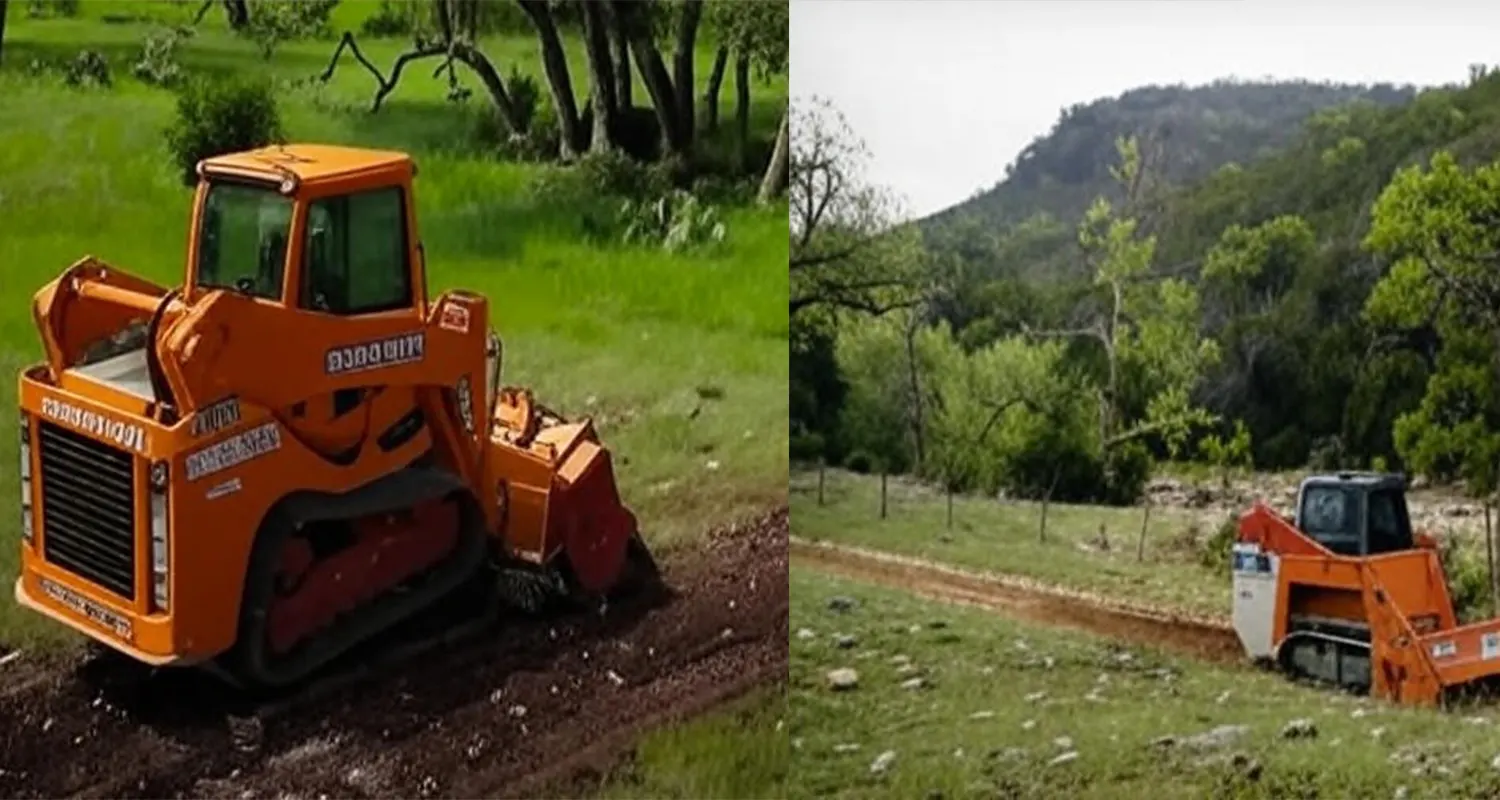
THOR 2.4 stone crusher in Korean highland field — the THOR 2.4 operating log, combined with CT-2100 collection records, soil pH tests, and grade-out records, constitutes the field management documentation that the NAAS GAP inspection's soil and physical contamination management sections require

Korean GAP certification is often misrepresented as primarily a chemical residue and pesticide management programme. While pesticide records are indeed central to NAAS inspection, the full GAP standard covers five evaluation domains that together determine a farm’s certification eligibility. Stone clearing contributes documented evidence to three of these five domains.

Soil and field management — documented pH management history (DCW 2.2 lime application records, annual soil test results), physical contaminant management (stone clearing machine operating logs, CT-2100 collection records), erosion prevention measures. STONE CLEARING DIRECTLY ADDRESSES THIS DOMAIN
Pesticide and input management — pesticide application records (dates, products, dosages, pre-harvest intervals), fertiliser application records, water source documentation. NAAS inspectors verify that registered pesticides only were used within label dosages and that records are complete for the current and previous season.
Crop quality and food safety — grade-out records from the previous and current season, harvest handling records, evidence that physical contamination (stones, soil, foreign matter) is managed at harvest. Stone-cleared fields produce grade-out records with high Grade 1 proportions and minimal physical-contamination rejections — both are evidence of adequate crop quality management. STONE CLEARING DIRECTLY ADDRESSES THIS DOMAIN
Water and irrigation management — irrigation water source testing records (twice per season), irrigation method documentation, drainage management evidence. Drip-irrigated, stone-cleared fields demonstrate superior water management documentation than flood-irrigated un-cleared fields. STONE CLEARING INDIRECTLY ADDRESSES THIS DOMAIN
Post-harvest handling and storage — harvesting equipment cleanliness records, storage facility hygiene records, temperature log for cold storage facilities. Farms using the EP-AWB harvester with documented cleaning and calibration records satisfy this domain more easily than farms using manual or substandard harvesting equipment.

The 12-Month GAP Application Timeline — When to Start and What to Do Each Month
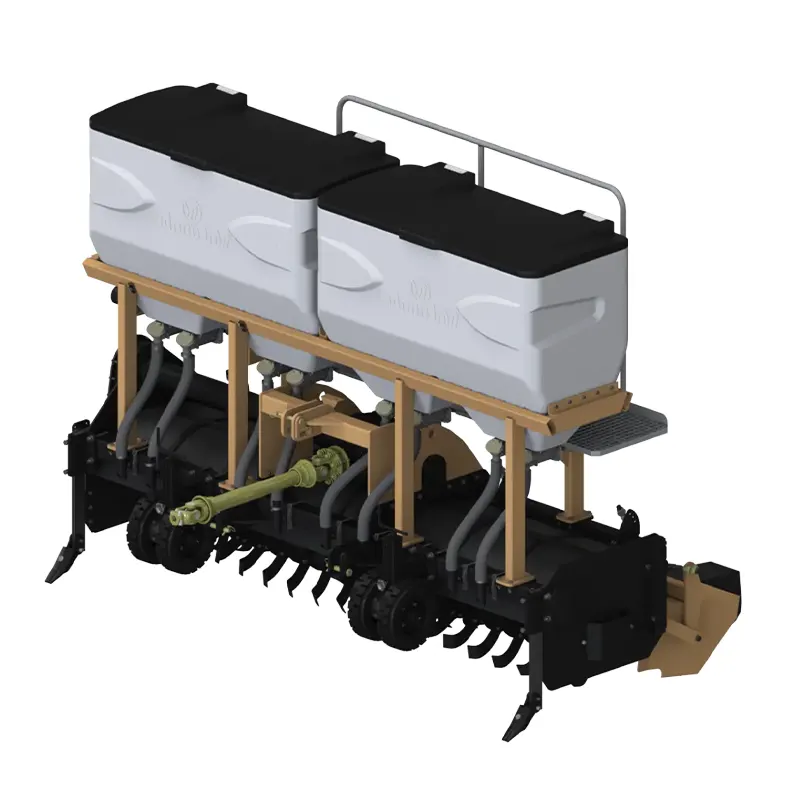
PSW-3200 rotavator on Korean highland field in spring — the April-May spring field preparation period coincides with the NAAS GAP application window; the PSW-3200 operation log from this period contributes to the soil management documentation that GAP inspectors evaluate in the autumn

Korean Highland Farm GAP Certification — 12-Month Application Calendar

JAN–MAR
PREPARE
Submit GAP application to NAAS county office (January is the standard window for the following autumn inspection). Gather prior season documentation: soil test records, pesticide application ledger, grade-out receipts, machine operating logs. Confirm inspection date (typically September–October). Order soil test kit for spring results.

APR–MAY
RECORD
Begin the season’s documentation record. Log THOR 2.4 clearing dates, field IDs, CT-2100 collection hours, DCW 2.2 lime application dates and quantities, soil test pH results, and PSW-3200 tillage passes. Each entry needs date, operator name, field ID, and quantity. This log becomes the soil management evidence for Domain 1 of the NAAS inspection. Use a fixed-format ledger, not loose notes — the inspector verifies format consistency, not just content.

JUN–JUL
MAINTAIN
Record all in-season operations: EP-ERA hilling dates and pass counts, drip irrigation system activation and irrigation hours, pesticide applications (product name, registration number, application date, rate, PHI from label). Water source test results from irrigation system intake (one test per 2-month period). All pesticide records must be on the standardised NAAS-approved form — download from the official NAAS portal before the season begins.

AUG–SEP
HARVEST RECORD
Document harvest operations: EP-AWB harvester cleaning record before and after harvest (date, operator, cleaning method), grade-out records from buyer intake or cooperative weighing station (Grade 1/2/3 proportions, total tonnes per field ID). The harvest grade-out record is the primary evidence for Domain 3 — crop quality and physical contamination management. Stone-cleared fields with 88–93% Grade 1 rates provide strong evidence; un-cleared fields at 55–65% Grade 1 typically fail this domain.

OCT–NOV
INSPECTION
NAAS inspection visit. Inspector reviews: documentation ledgers, cold storage facility (temperature log, cleanliness), machinery (cleaning records, calibration logs), field (residual contamination check — stones, foreign matter at ridge). Interview component: inspector asks 15–25 questions about farm practices — stone clearing, pest management, and irrigation protocols are common topic areas. Certification decision issued within 20 working days of inspection. 2-year certification upon passing.

NAAS Inspection Checklist — The Field Management Items Stone Clearing Addresses
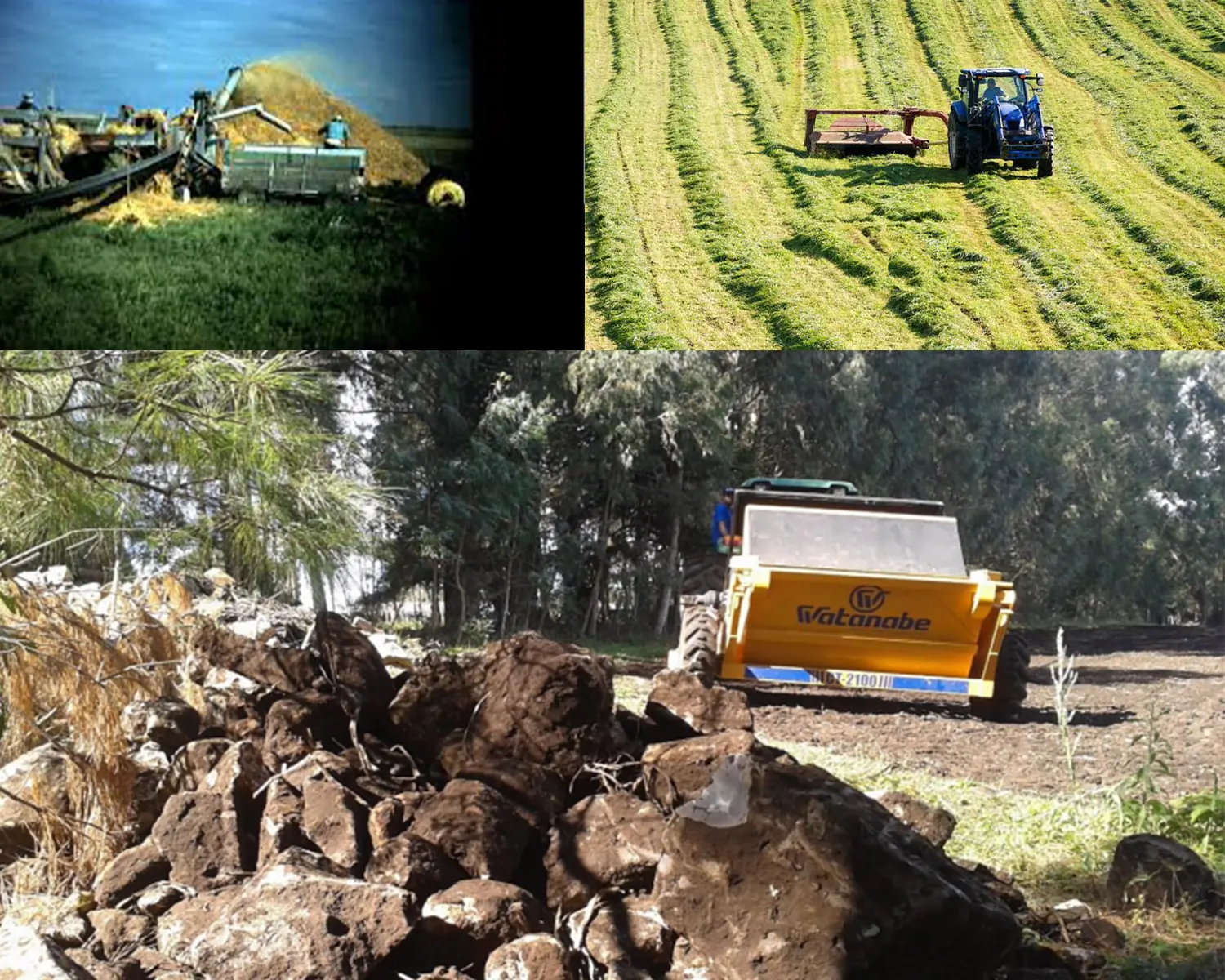
CT-2100 rock picker completing stone collection — the CT-2100 collection date and tonnage removed from each field is logged as the 'physical contaminant management' record that NAAS GAP inspectors verify under the soil and field management evaluation domain; this single record addresses one of the most commonly cited inspection deficiencies on Korean highland farms

NAAS Field Management Inspection Items — Stone and Soil Management Section (Representative)

Physical contamination management record. Inspector asks: “How do you manage stones and other physical contaminants in your production fields?” Required evidence: machine operating log showing THOR 2.4 or equivalent clearing dates, field IDs, and CT-2100 collection dates with approximate tonnage removed. Farms without this record typically receive a corrective action requirement in this item. This is the most commonly failed item for Korean highland potato farms at first GAP inspection attempt.

Soil pH management evidence. Inspector reviews: soil test records from current and previous season, lime application records (quantity applied, field ID, application date, lime product type). Target pH range confirmed against the specific crop’s standard. DCW 2.2 operating logs satisfy this requirement when the lime quantity and field reference match the soil test pH deficit identified in the pre-application test.

Field mapping and traceability. Inspector requires: field map with field IDs, field areas (ha), and the crop grown on each field in the current and previous season. The same field IDs used in machine operating logs, pesticide records, and grade-out records must match — traceability requires that any unit of produce can be traced back to its specific field and that field’s complete management record. Stone clearing logs that use consistent field IDs from the start of the season build this traceable record automatically.

Harvest equipment hygiene record. Inspector inspects: the EP-AWB harvester (or equivalent), asking for the most recent cleaning record. Required: date of last cleaning before harvest season, cleaning method (high-pressure wash, drying), inspector signature if available. Farms that cannot produce this record receive a corrective action. The record must be retained for 2 years — a single-page log per machine kept in the farm office satisfies this requirement.

Grade-out proportion documentation. Inspector asks for: buyer intake records or cooperative weigh-in receipts showing Grade 1/2/3 proportions for the previous season. A Grade 1 proportion below 75% triggers an additional inquiry into field management practices — the inspector asks what corrective measures were or are being taken. A Grade 1 proportion consistently above 85% is accepted without additional inquiry. Stone-cleared Dubaek potato at 88–93% Grade 1 passes this item without comment; un-cleared field production at 55–68% Grade 1 triggers the corrective action inquiry cycle.

The Three-Certification Revenue Stack — GAP, Origin, and Organic
Korean highland farm landscape — the three-certification premium stack (GAP certification, regional origin certification, organic certification) unlocks successive revenue premium tiers on Korean highland potato and other crops; stone clearing is the foundation that makes all three certifications achievable

The Three-Certification Revenue Stack — Korean Highland Potato (Dubaek, per Kg)

Level 3 — Maximum Premium
GAP + Certified Origin + Organic
Premium supermarket, export (Japan/SE Asia), HMR ingredient channels
3,500–6,000
KRW/Kg

Level 2
GAP + Certified Origin (e.g. Gangwon-do highlands)
Premium supermarket direct supply, domestic food-service premium channel
2,500–4,500
KRW/Kg

Level 1
GAP Certified Only
Supermarket certified supplier, cooperative premium tier, cold storage premium
1,800–3,000
KRW/Kg

Baseline
Non-certified cooperative channel
600–1,400
KRW/Kg

Foundation of all three premium tiers: Stone-cleared field → Grade 1 consistency → GAP inspection passed → market access unlocked. Without stone clearing, Grade 1 proportion falls below the GAP inspection threshold, blocking Level 1 entry and making Levels 2 and 3 inaccessible.

Documentation Requirements — What Each Korea Watanabe Machine Contributes
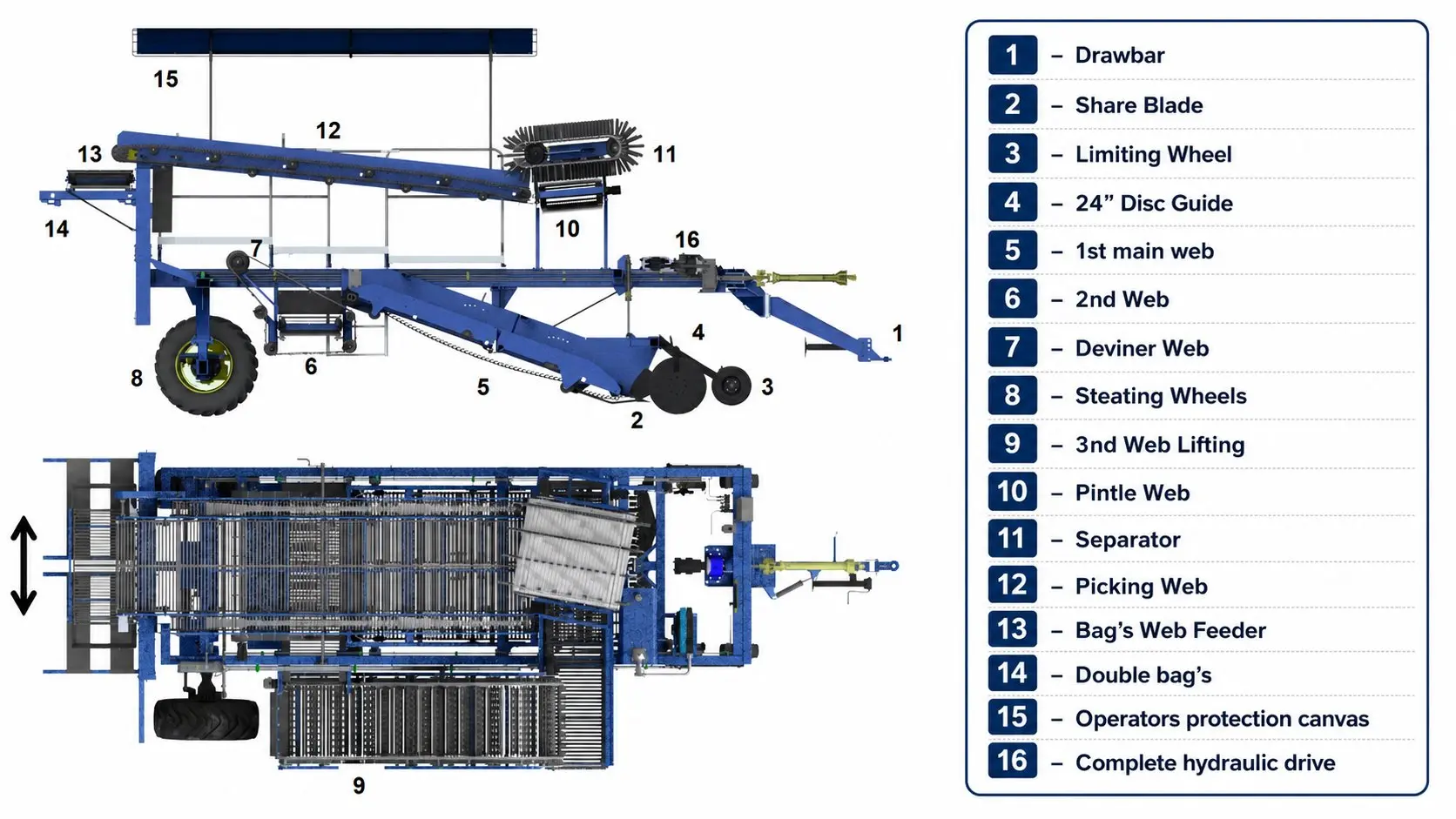
Korean highland potato growing on cleared, pH-managed field — the combined documentation from THOR 2.4 stone clearing, CT-2100 collection, DCW 2.2 lime application, PSW-3200 tillage, EP-ERA hilling, drip irrigation, and EP-AWB harvest operations provides the full NAAS GAP inspection documentation package

Machine / activity Log entry required GAP domain addressed
THOR 2.4 clearing Date / field ID / operating hours / depth setting / operator Domain 1: Physical contaminant management
CT-2100 collection Date / field ID / approximate collection volume (bunker loads) / disposal location Domain 1: Physical contaminant management (completion evidence)
DCW 2.2 lime Date / field ID / lime product name + registration / quantity (Kg or t) / method Domain 1: Soil pH management evidence
PSW-3200 + soil test Tillage date / soil test date / lab result (pH, NPK) / field ID Domain 1: Soil preparation and nutrient management
EP-ERA hilling Pass number / date / growth stage at time of pass / depth setting Domain 3: Crop management (weed control, soil coverage)
Irrigation (drip) Water source test results (twice/season) / irrigation hours per field ID Domain 4: Water management
EP-AWB harvest + grade-out Harvest date / machine cleaning record / buyer grade-out receipt (Grade 1/2/3 %) Domain 5: Post-harvest / Domain 3: Quality evidence
Practical record-keeping system: A single A4 farm operations ledger with one page per field per season satisfies all of the above requirements. Divide each page into sections: Soil Preparation, Planting, In-Season Operations, Harvest. Record each machine operation as a one-line entry with date, operator, and quantity. Keep original supplier receipts clipped to the relevant field page. The ledger plus receipts and soil test reports constitute the complete GAP documentation package — no special software or management system is required for farms up to 20 ha.

System Readiness Assessment — What You Need Before Applying

The most common reason Korean highland farms delay their GAP application is uncertainty about which requirements they already meet and which require additional investment. This readiness checklist — designed for Korean highland potato farms — identifies the minimum conditions for a realistic first-inspection pass.

GAP System Readiness Checklist — Korean Highland Potato Farm

Stone management in place: THOR 2.4 (own or contractor) has cleared or is clearing all production fields. CT-2100 collection completed. Operating logs in use this season. Without this, the most commonly failed inspection item cannot be satisfied.

Soil test conducted in the current or previous season: Results on file with pH and basic nutrient data for each production field. County RDA soil testing service: typically 15,000–30,000 KRW per sample. One sample per 1 ha is the GAP standard for Korean highland production fields.

Grade 1 proportion above 80% in the previous season: Buyer intake receipts or cooperative grade-out records showing Grade 1 proportion. Below 80% triggers additional inquiry; 85%+ passes without comment. This is the most direct evidence that field management is producing quality outcomes — stone clearing is the primary driver of this metric on Korean highland granite soil.

Pesticide ledger maintained for current season: NAAS-format records of all pesticide applications. Obtain the current NAAS-approved form from the county agricultural office — unofficial formats are not accepted at inspection.

Harvest equipment cleaning record for the current season: Single-page log per machine. Dated, signed. Can be prepared retrospectively at the start of the current season if the previous season’s record was not kept — but the current season’s record must be current at inspection time.

Irrigation water test results (if irrigated): Water source test for E. coli and heavy metals, performed by a county-accredited laboratory. Required twice per irrigation season. Drip-irrigated farms using a filtered municipal or reservoir source typically pass without issue; farms using direct stream intake may need additional filtration evidence.

Cost-Benefit Summary — The Full Investment Chain From Stone Clearing to GAP Premium
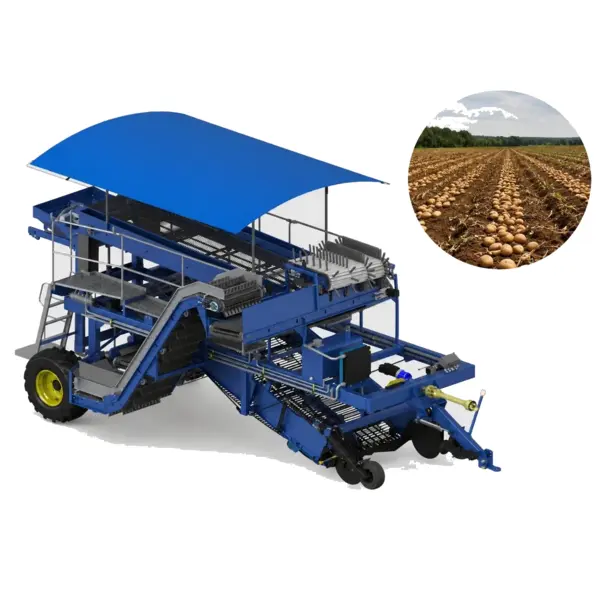
Korean highland potato harvest — the complete value chain from THOR 2.4 stone clearing through GAP certification to premium cold storage channels represents the highest achievable return on Korean highland farm investment; every step in the chain builds on the previous one, with stone clearing as the irreplaceable foundation

10 ha Korean Highland Dubaek Farm — 5-Year System Investment and Revenue Progression
Phase / Year Investment added Grade 1 % Market channel Annual net revenue
Year 0 — Baseline No clearing, flood irrigation 55–65% Cooperative bulk ~80M–110M KRW
Year 1 — Stone clearing THOR 2.4 + CT-2100 (~24M KRW net) 82–88% Coop. premium tier ~135M–165M KRW
Year 2 — Full system PSW-3200 + DCW 2.2 + drip irrigation 88–93% Coop. premium + direct cold ~170M–205M KRW
Year 3 — GAP certified GAP application fee ~300K KRW 90–94% Supermarket direct + export inquiry ~200M–250M KRW
Year 5 — GAP + origin Origin certification + cold storage 90–95% Premium retail + January cold ~240M–320M KRW

10 ha, 27 t/ha Dubaek, January cold storage premium channel at Year 5. Representative figures — Korea Watanabe confirms current market prices and system costs for specific farm parameters.

Frequently Asked Questions

Korean highland GAP certification guide — is stone clearing a formal requirement of Korean GAP, or just recommended?

Stone clearing is not listed as an explicit named requirement in the Korean GAP standard text. However, the NAAS inspection framework evaluates “physical contamination management” under Domain 1 (Soil and Field Management), and stone presence in production fields is the primary physical contamination risk for Korean highland potato. NAAS inspectors who find stone populations in the production fields during the inspection visit typically identify it as a deficiency under the physical contamination management item — requiring the farm to demonstrate a remediation plan before recertification. In practical terms, Korean highland potato farms with un-cleared granite soil consistently fail or receive corrective actions in the physical contamination management domain, while farms with documented stone clearing history consistently pass this domain. The distinction between “formally required” and “practically necessary for inspection pass” is academic — the evidence across Korea Watanabe’s customer farm network is that stone clearing is necessary for reliable Korean highland GAP certification.

How much does Korean GAP certification cost, and what is the application process?

Korean GAP certification involves two types of cost. The application fee is relatively modest — typically 200,000–500,000 KRW per farm operation (not per hectare), payable to the certifying body at application. The more significant cost is the time investment in documentation preparation and system establishment in the year before first inspection — estimated at 3–5 days of administrative work spread across the season for a farm that is already maintaining machine operating logs and grade-out records. Once the documentation system is established, the annual maintenance cost drops to approximately 1–2 days per season. The application process: (1) Submit application to the NAAS county office in January; (2) Receive confirmation and inspection date (typically September–October); (3) Prepare documentation throughout the growing season; (4) Inspection visit — typically 2–4 hours; (5) Certification decision within 20 working days. Renewal is every 2 years with an annual compliance report in the intervening year. Korea Watanabe advises customers on the documentation preparation process and can provide template record-keeping forms as part of the farm system planning service.

Can a Korean highland farm pursue GAP certification in the same year it begins stone clearing?

Yes, but it requires careful planning of the documentation timeline. If the THOR 2.4 stone clearing begins in April and the NAAS inspection is in October, the farm will have 6 months of stone management operating logs available at inspection — which is generally sufficient to demonstrate the stone management programme is in place. The inspector evaluates whether a system exists and is being maintained, not whether it has been running for a specific number of years. The more challenging element for first-year applicants is the previous season’s grade-out record — the inspection requires crop quality evidence from the current and previous season. A first-year clearing farm’s previous season record will show the pre-clearing Grade 1 proportion (typically 55–68%). Some inspectors accept this as the baseline from which the improvement is being documented; others require evidence of improvement within the inspection window. Korea Watanabe recommends that first-year clearing farms apply for GAP certification in Year 2 (when the first post-clearing season’s grade-out record is available) rather than Year 1, unless the first year’s documentation is exceptionally complete and the Grade 1 improvement is already visible in the partial-season harvest data.

What is the revenue difference between GAP-certified and non-certified Korean highland potato at the premium supermarket channel?

Premium Korean supermarket chains (Lotte Mart’s own-brand, Emart’s premium tier, SSG’s highland specialty channel) apply a 30–60% price premium over cooperative wholesale for GAP-certified Korean highland Dubaek potato. At peak demand periods (January–February, when cold storage premium channel pricing applies), the GAP + certified origin combination can produce net prices of 2,500–4,500 KRW/Kg vs 800–1,400 KRW/Kg at cooperative. Over 10 ha at 27 t/ha, the revenue difference between cooperative channel and premium supermarket channel (at January pricing) represents 40M–80M KRW additional revenue per season — substantially more than the certification and stone management combined cost. The practical barrier for most Korean highland farms is not the certification cost but meeting the supply volume, quality consistency, and logistical requirements that premium supermarket procurement teams specify. Stone clearing is the quality management practice that enables the Grade 1 consistency those procurement specifications require.

Does the complete Korea Watanabe stone management system — THOR 2.4, CT-2100, PSW-3200, DCW 2.2 — provide all the GAP documentation evidence a Korean highland potato farm needs?

The Korea Watanabe stone management and soil preparation system — specifically the THOR 2.4 rock crusher, CT-2100 rock picker, PSW-3200, and DCW 2.2 — when operated with proper record-keeping, generates documentation evidence that addresses Domains 1, 3, and 4 of the NAAS GAP inspection framework. This covers the most commonly failed inspection items for Korean highland farms. The two domains not directly addressed by the Korea Watanabe machines are Domain 2 (pesticide management — this requires separate pesticide application records maintained by the farm) and Domain 5 (post-harvest storage — requiring the EP-AWB harvester cleaning log and cold storage temperature records if applicable). A Korean highland potato farm that operates the complete Korea Watanabe system with proper record-keeping and maintains pesticide application records in the NAAS-approved format has all the evidence needed for a first-inspection pass. Korea Watanabe provides the record-keeping template forms and a GAP documentation preparation consultation as part of the complete system purchase — contact Korea Watanabe for the complete GAP readiness package for your farm.

The Complete Korean Highland Farm Investment System

From the first THOR 2.4 clearing pass in April to the January cold storage premium channel five years later, Korea Watanabe has guided hundreds of Korean highland farms through every step of this progression. The path from un-cleared granite soil to GAP-certified premium supply is documented, repeatable, and financially well-characterised.

Begin Your System Planning

Editor: Cxm

TAGs: