Korean rural roads — agricultural access roads, highland farm tracks, and the 4-metre-wide agricultural roads connecting farming communities — deteriorate through a predictable failure mechanism: surface load over weak or saturated base material produces rutting, base pumping, and eventually complete pavement collapse. The conventional rehabilitation response is excavation and replacement — expensive, disruptive, and requiring material import. Full-Depth Reclamation (FDR) with the THOR ST soil stabilizer is the alternative: the existing failed base material is milled to full treatment depth, blended with a structural binder, and recompacted as a homogeneous stabilised layer, eliminating both the excavation cost and the imported aggregate requirement.
This guide covers the THOR ST machine specification, the FDR operation sequence, binder selection for Korean road conditions, depth settings for different base failure scenarios, and how the THOR ST differs from both the agricultural THOR 2.4 stone crusher and conventional road base replacement methods.
THOR ST Confirmed Specifications — From the Official Watanabe Brochure
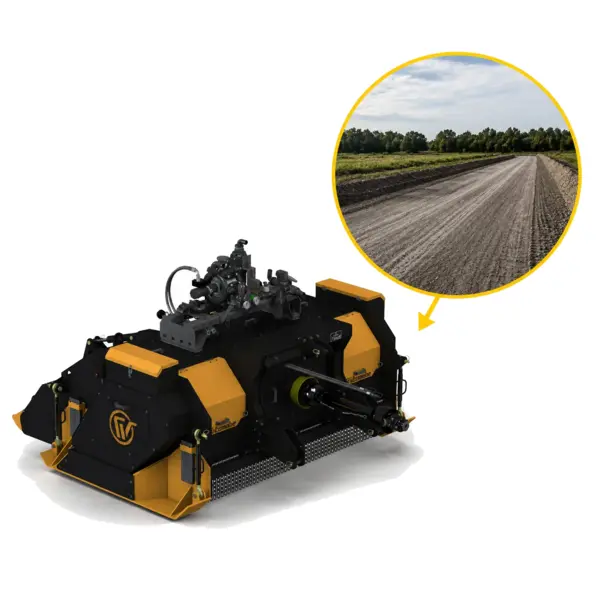
All specifications from the Watanabe official product brochure.
Transport dimensions (from official brochure):
Length: 2,960 mm — Width: 2,745 mm — Height: 2,615 mm. These transport dimensions are critical for Korean road access planning — the THOR ST at 2,745 mm transport width requires road clearance confirmation before mobilising to narrow Korean rural road sections.
How the THOR ST Differs from the Agricultural THOR 2.4 — A Fundamental Distinction
The THOR ST and the THOR 2.4 share the Watanabe name and a rotor-based working mechanism, but they are fundamentally different machines designed for fundamentally different applications. Conflating them — or attempting to substitute one for the other — produces either poor results or machine damage:
| Feature | THOR ST (Soil Stabilizer) | THOR 2.4 (Stone Crusher) |
|---|---|---|
| Primary function | Mill road base to 200mm, mix with binder to produce stabilised layer | Fragment embedded stones to below 5 cm in agricultural fields |
| Cutting tool | 92 Kennametal RK4 tungsten carbide bits (road milling grade, high impact) | 90 + 6 tungsten carbide teeth (agricultural grade) |
| Cutting action | Downcut milling — bits rotate downward into pavement material, producing uniform fine particles for binder mixing | Impact fracture — teeth hit stones at high velocity to fracture them |
| Working speed | 0.5–1.5 km/h — slow, precise depth control | 1.0–3.0 km/h — faster, coverage-focused |
| Power requirement | 250 CV, CVT mandatory (sustained high torque at low speed) | 180 HP minimum, standard gearbox |
| Output material | Fine mixed layer (existing base + binder) ready for compaction — stays in place | Crushed stone fragments — requires CT-2100 collection and removal |
| Use on agricultural fields? | No — road milling/stabilisation only. Agricultural field use wastes the machine’s capability and produces the wrong output for seedbed preparation. | Yes — primary agricultural application |
The FDR Process — How THOR ST + DCW 2.2 Rebuild a Failed Korean Road Base
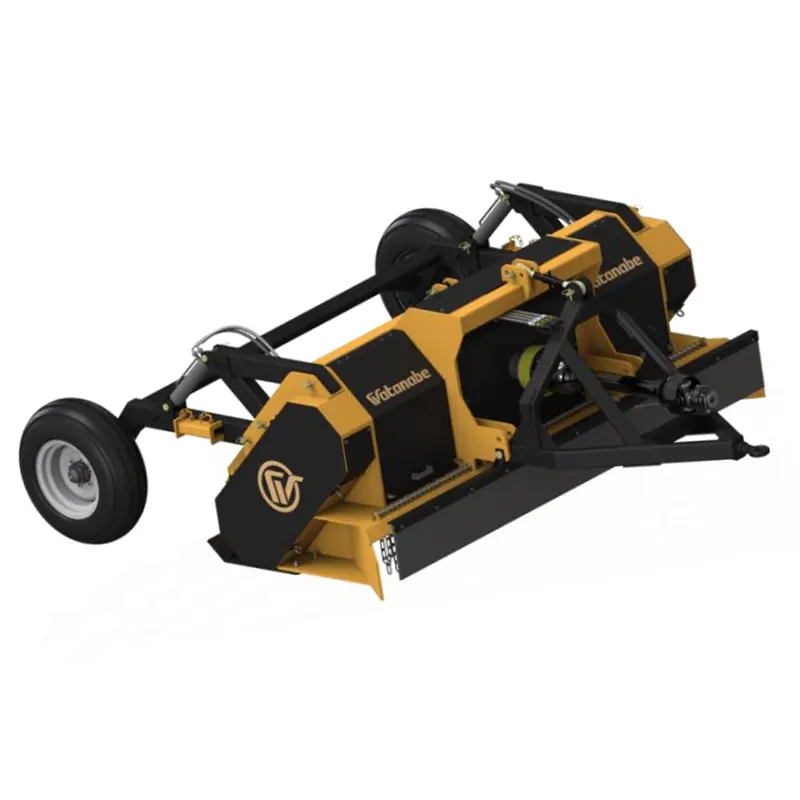
Full-Depth Reclamation with the THOR ST is a multi-machine, sequential process. Each step must be completed correctly before the next begins — incorrect sequencing produces a stabilised layer with non-uniform binder distribution, reducing the structural improvement from what the FDR investment should deliver:
The 92 Kennametal RK4 Bits — Why Bit Specification Matters for Korean Road Material
The THOR ST’s 92 Kennametal RK4 cutting bits are not generic tungsten carbide tips — Kennametal is a globally recognised precision tooling manufacturer, and the RK4 specification designates a road milling bit designed for high-impact cutting through both compacted granular base material and stabilised or asphalt pavement material. The RK4 bit geometry combines:
Conical tip geometry
The conical tip concentrates cutting force at the point of contact rather than distributing it across a flat impact face (as in agricultural THOR teeth). This concentration is essential for penetrating compacted road base material and partially consolidated asphalt without requiring the explosive impact action of the agricultural stone crusher tooth — the THOR ST produces a grinding/milling action rather than a fracture impact action.
360° rotation capability
RK4 bits are held in rotating holders that allow the bit to rotate around its axis during cutting — distributing wear evenly around the full tip circumference rather than concentrating wear on one face. This rotation capability gives RK4 bits 3–5 times the service life of fixed-position bits in road milling applications — a critical factor for the economics of Korean road FDR projects where bit replacement mid-project adds significant cost.
Grade-specification carbide
Korean rural road base material contains granite aggregate from the same geological sources that challenge the THOR 2.4 agricultural teeth. The RK4’s carbide grade is optimised for sustained cutting of this hard aggregate material at road milling speeds — combining the hardness to resist granite abrasion with the toughness to resist the impact loading from irregular base material composition.
Binder Selection for Korean Rural Roads — Cement, Lime, and Fly Ash
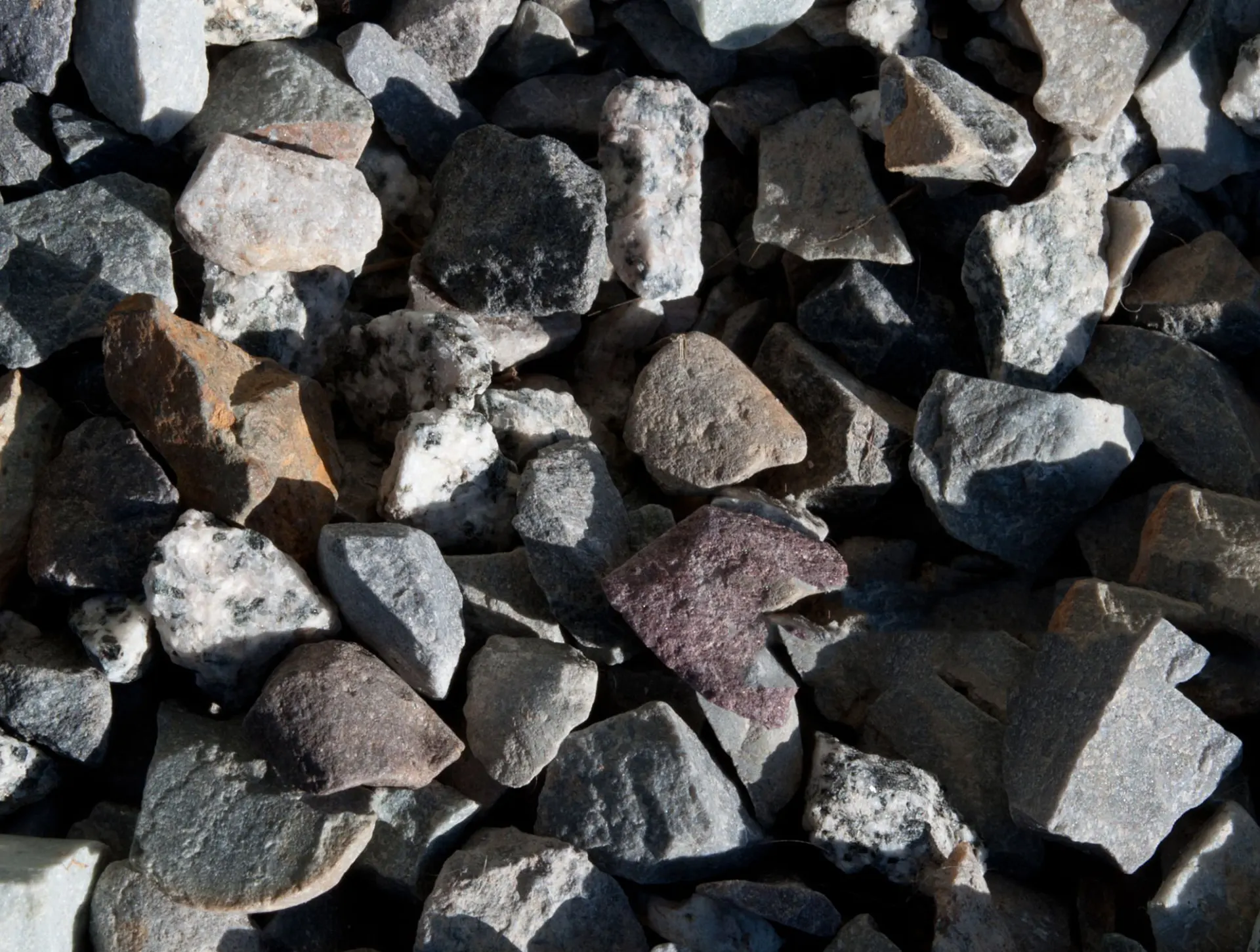
Binder selection for Korean road FDR is determined by the existing base material type, the moisture condition at treatment, and the required bearing capacity improvement. Three binder types are used in Korean FDR applications:
Portland Cement — Highest Strength, Fast Setting
Cement-stabilised FDR layers achieve the highest early and long-term bearing capacity of the three binder types — suitable for Korean agricultural roads carrying heavy harvest truck loads (15–25 tonne loaded GVW). Application rate: typically 3–6% by dry weight of treated material, confirmed by laboratory mix design for the specific base material. Cement FDR requires completion of compaction within 2–3 hours of mixing — the shortest workable window of the three binders. Korean highland roads with access to ready-mixed cement or bagged cement delivery are candidates for cement FDR.
Working window: 2–3 hours. 7-day traffic restriction. Best for: high-traffic agricultural roads.
Quicklime — Best for Wet or Plastic Base Material
Quicklime (calcium oxide) reacts with moisture in the base material — drying the soil and modifying the clay minerals. This makes quicklime FDR the preferred choice when the existing base is wet (above optimum moisture content), plastic (soft under load), or when the base material contains significant clay or silt fractions that prevent effective cement stabilisation. The lime reaction takes 24–72 hours before the soil modifies sufficiently for compaction — a longer workable window than cement, but also a longer wait before final compaction can begin.
Working window: 24–72 hours. 14-day traffic restriction. Best for: wet or clay-rich base material.
Fly Ash — Supplement Binder for Modified Soil Condition
Class C fly ash (from coal-fired power stations) is a pozzolanic material — it reacts with calcium from lime or cement to form cementitious products. Used as a supplement to cement or lime (not typically as a sole binder), fly ash improves workability and extends the working window while reducing the total binder cost. For Korean rural road FDR projects near coal power plant ash disposal sites (North Gyeongsang and South Chungcheong provinces), fly ash availability can reduce binder material cost significantly.
Typically used as 20–40% supplement to cement or lime — not as standalone binder. Confirm pozzolanic activity grade for the specific ash source.
Korean Rural Road Categories — Where FDR Applies and Where It Does Not
Not every Korean rural road failure is appropriate for FDR with the THOR ST. Understanding which road categories and failure modes FDR addresses — and which require different solutions — prevents deployment on projects where the investment will not deliver the expected structural improvement:
FDR is appropriate:
- ✓Base failure with adequate existing base depth (150mm+)
- ✓Rutting and cracking from base saturation or weak subgrade
- ✓Agricultural roads carrying 15–25t harvest trucks
- ✓Highland road sections with documented base failure history
FDR is not appropriate:
- ✗Surface stone accumulation only (use EP-EW-4000 or THOR 2.4)
- ✗Active subgrade drainage failure (fix drainage first)
- ✗Existing base depth below 100mm (insufficient for FDR treatment)
- ✗Road sections with buried utilities at treatment depth
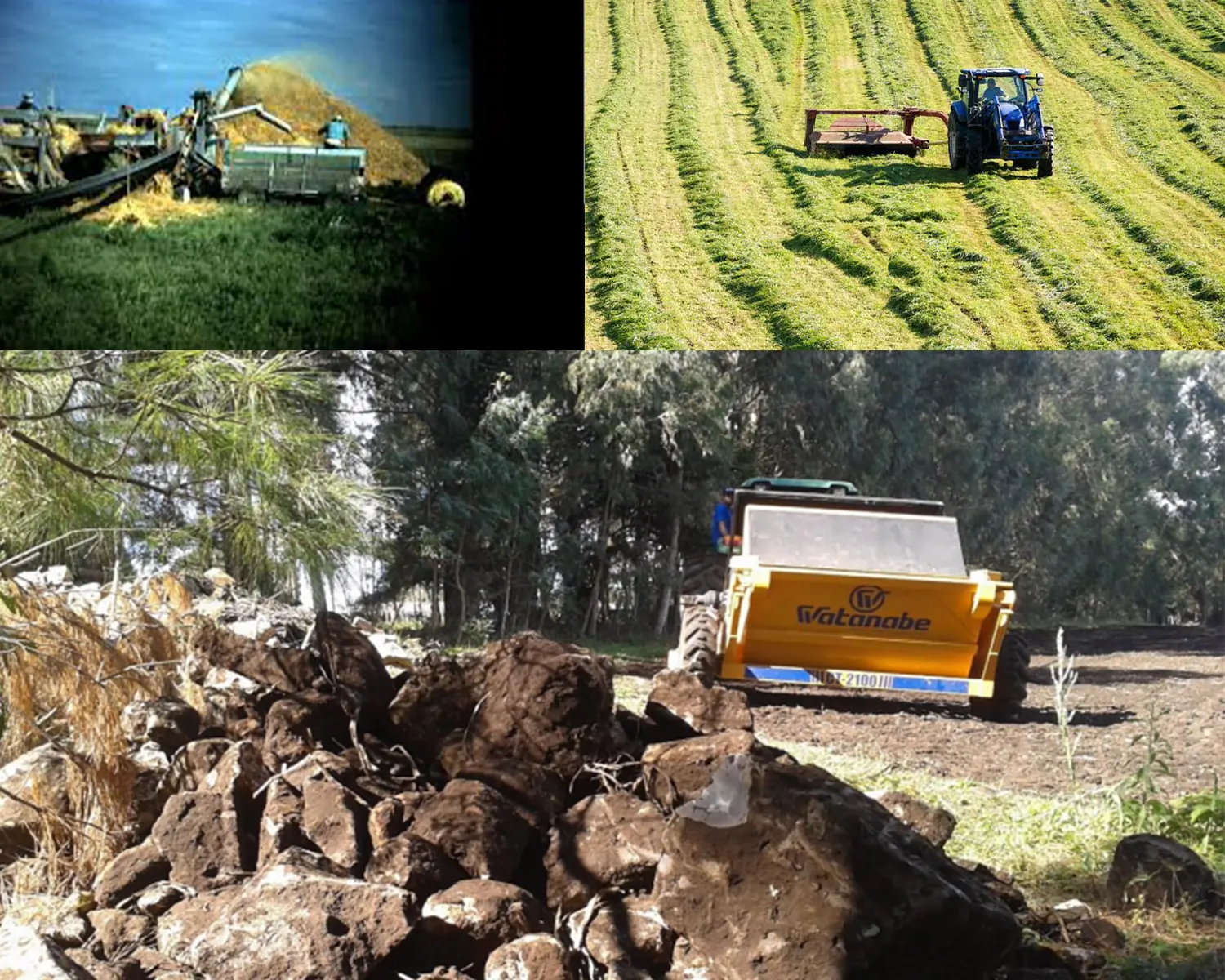
THOR ST + DCW 2.2 — Korea Watanabe Korean local stock and subsidy documentation
Both the THOR ST soil stabilizer and DCW 2.2 binder spreader are available through Korea Watanabe with full Korean agricultural machinery certification for subsidy eligibility. The complete FDR system — THOR ST, DCW 2.2, and the supporting THOR 2.4 rock crusher for agricultural field clearing on the same farm — can be included in a coordinated subsidy application prepared by Korea Watanabe within 2–3 business days of enquiry at no charge to the buyer.
Frequently Asked Questions
How does THOR ST FDR compare in cost to conventional excavate-and-replace road base repair?
FDR with the THOR ST typically costs 30–50% less than conventional excavate-and-replace on Korean rural roads of equivalent area and depth, because: no excavated material requires disposal (the existing base material becomes the treated base); no imported aggregate is needed (the existing material is reused); the time to complete the structural rehabilitation is 1–3 days for a 100m road section versus 5–10 days for conventional methods; and the single-machine combined milling-mixing operation reduces the number of machine mobilisations required. The economic advantage is largest on remote Korean highland road sections where imported aggregate delivery cost is high — eliminating the aggregate requirement saves the most money precisely where highland road rehabilitation is most expensive by conventional methods.
What CVT tractor specification is required to operate the THOR ST at rated performance?
The THOR ST requires a 250 CV CVT tractor — specifically a full-power CVT (Continuously Variable Transmission) that maintains constant engine power output across the full speed range, not a hydraulic shuttle or powershift transmission. European tractor models with confirmed CVT capability for THOR ST operation include the Fendt Vario series (724–939 range), John Deere IVT series (7R and 8R range), and equivalent CVT-equipped models from New Holland (T7 and T8 with AutoCommand), and CNH. Confirm 1000 RPM rear PTO capability on the specific tractor model before purchase — some European tractor variants sold in Korea have 540/540E but not 1000 RPM PTO. Korea Watanabe advises on CVT tractor specification confirmation for THOR ST purchasers.
How frequently do the 92 Kennametal RK4 bits need replacing on Korean granite aggregate road base?
Kennametal RK4 bit life on Korean granite aggregate road base depends on the proportion of free granite aggregate in the treatment zone and the treatment depth. On Korean highland roads built from local granite quarry aggregate (the most common base material in Gangwon-do and North Gyeongsang highland roads), RK4 bit life at 150–200 mm milling depth is approximately 3,000–5,000 linear metres of road per bit set under normal treatment conditions. This translates to approximately 0.45–0.75 km per bit replacement at 4.0 m road width — meaning a 5 km road rehabilitation project may require 1–2 bit set replacements during the project. Korea Watanabe maintains Kennametal RK4 bit replacement stocks and confirms current availability at time of project enquiry. Bit replacement on the THOR ST is an operator-performed procedure with the correct tooling — not a workshop operation requiring machine transport.
Is Korean government funding available for FDR road rehabilitation on agricultural roads?
Yes — Korean agricultural road rehabilitation funding is available through two programs: (1) the agricultural infrastructure improvement program (nongop giban siseol gaenyangsa-eop) administered by the Korea Rural Community Corporation (KRCC), which covers rehabilitation of designated agricultural access roads (nongdo) including structural base rehabilitation; (2) county-level agricultural road maintenance budgets (gun nongdo yuji-gwan-li yessan) which fund annual maintenance and periodic rehabilitation of classified agricultural roads. FDR qualifies as structural rehabilitation under both programs. The THOR ST purchase itself is eligible for the agricultural machinery subsidy program in the road maintenance machinery category — Korea Watanabe provides certification documentation for subsidy applications. Contact Korea Watanabe for documentation support for both the machine purchase subsidy and the road project funding program applications relevant to your specific road classification and location.
Can the THOR ST operate in cold winter conditions typical of Korean highland zones?
Cement and lime binder FDR should not be performed when ground or air temperature is below 5°C — chemical stabilisation reactions require adequate temperature for the binder hydration and pozzolanisation reactions to develop design-strength gain. In Korean highland zones (Gangwon-do above 400 m), this restricts THOR ST FDR operations to approximately April through October — with the most productive period being June through September when ground temperatures are reliably above the minimum threshold. Spring operations (April–May) must monitor overnight ground temperatures — if the newly stabilised layer experiences freezing before the initial binder set has developed adequate strength, the frost can disrupt the set structure. Korean highland FDR project scheduling should build in a minimum 7-day frost-free period after binder treatment before the first significant traffic loading is applied.
THOR ST Road Stabilization — Site Assessment and FDR Design
Road section length (m) + failure description + existing base depth estimate + traffic type → FDR feasibility assessment with binder selection recommendation, THOR ST + DCW 2.2 configuration, and subsidy program guidance. Korea Watanabe, Ansan-si, Gyeonggi-do.
Editor: Cxm