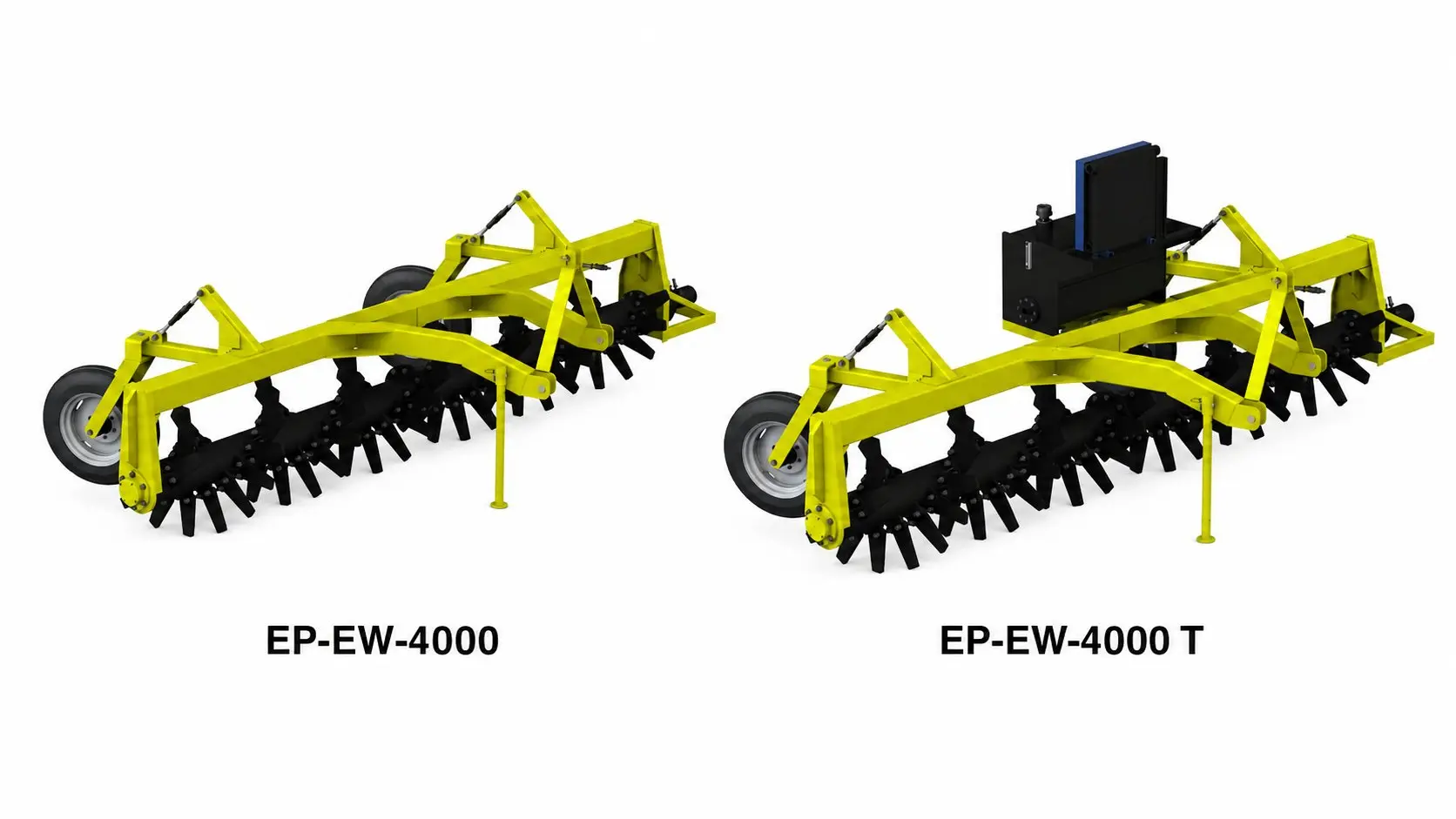
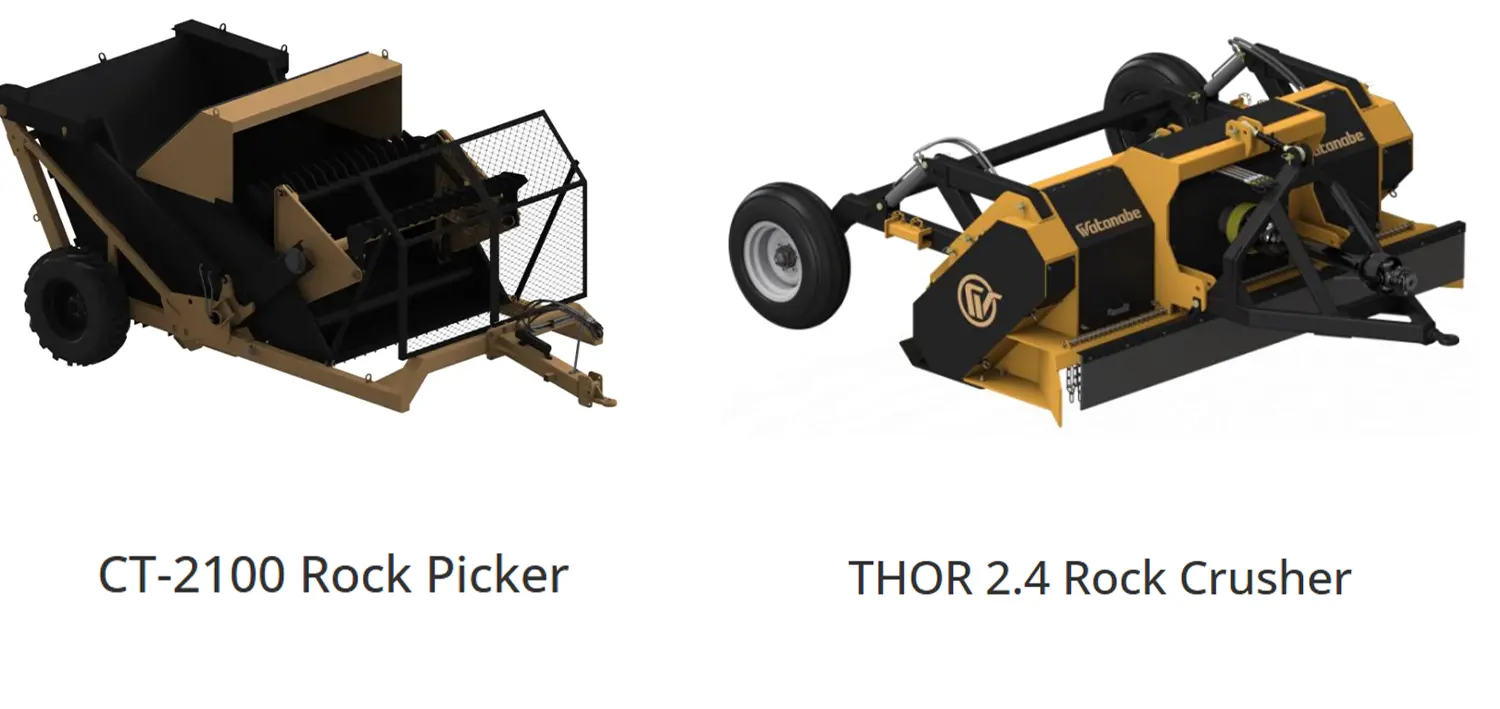
The stone clearing equipment range from Korea Watanabe covers two distinct mechanical approaches to the same field problem: stone crushers fracture rock in-place, leaving crushed aggregate on the surface; the rock rake gathers whole surface stones into windrows for CT-2100 collection, without fracturing them. These two approaches are not interchangeable — they address different stone sizes, different field conditions, and different downstream requirements. Understanding when the EP-EW-4000 rock rake is the correct choice — and when the THOR 2.4 stone crusher is necessary instead — is the starting point for efficient Korean highland stone management.
EP-EW-4000 Rock Rake — Confirmed Specifications
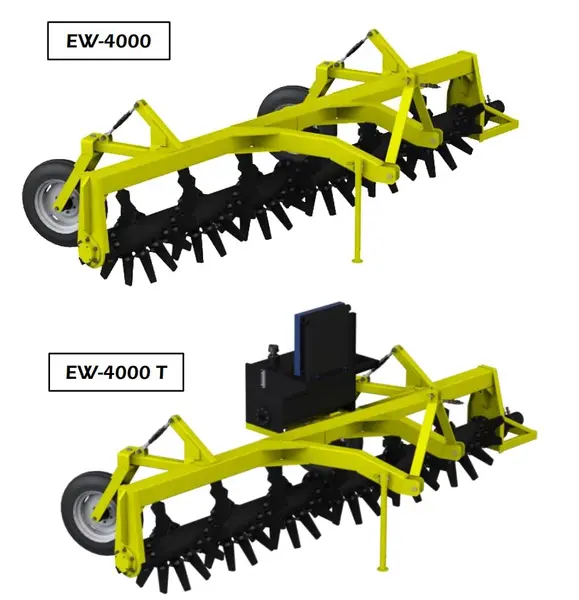
All specifications from the Watanabe official product brochure.
How the EP-EW-4000 Works — The Raking Mechanism
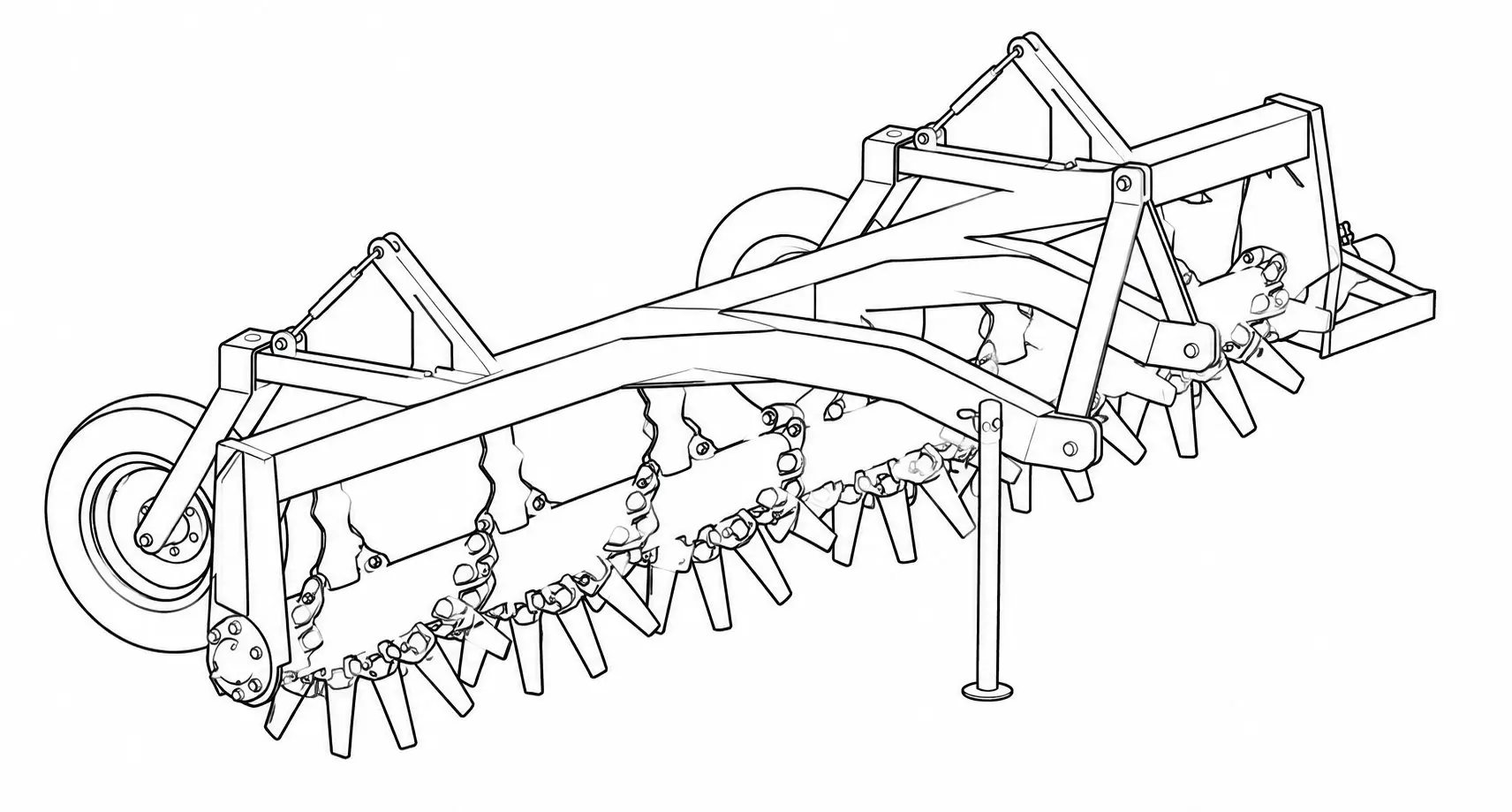
The EP-EW-4000 operates on a fundamentally different principle from the stone crusher. Rather than fracturing rock with high-speed impact, the rake uses a rotating drum fitted with hardened steel tines that sweep through the upper 5–8 cm of the field surface as the tractor advances. The rotating motion of the tine drum carries surface stones rearward and deposits them into a windrow along one side of the machine’s working path.
Eight Korean Farm Applications Where the Rake Is the Right Tool
When the Rake Is NOT the Right Tool — Use the THOR Crusher Instead
Large embedded stones above 40–60 Kg. The rake’s tine mechanism cannot move large embedded stones. Attempting to rake a field where stones above 40–60 Kg are present results in tine deflection, reduced effectiveness on those stones, and potential tine damage. Large embedded stones require the THOR crusher.
Road building applications. Road base construction requires angular crushed aggregate — the crushed product of the THOR. The rake only gathers and moves stones; it does not fracture them into road base aggregate. The rake is not a road construction tool.
First-time clearance of heavily stoned land. Land conversion from forest, scrubland, or long-fallow to agricultural production typically has heavy embedded stone concentrations with individual boulder weights of 100–500+ Kg. The rake cannot address this stone population — the THOR crusher is required for initial clearance, with the rake deployed for subsequent annual maintenance after the initial clearance reduces stone size to within the rake’s operating range.
Silviculture and stump processing. The rake’s tine mechanism does not process stumps or woody root systems. Forestry and silviculture clearing applications require the THOR FLM stone crusher, not the agricultural rake.
Rake vs Crusher — Simple Decision Guide for Korean Farmers
Answer these three questions:
Yes → Rake is viable. No (stones above 50 Kg present) → THOR crusher required first.
Sitting on surface → Rake handles them. Embedded (frost-heave emerging) → check size. Deeply embedded (original geological position) → THOR crusher required to fracture before rake can gather.
Yes → THOR crusher only. No (collecting for removal or windrow) → Rake is appropriate.
Productivity and Seasonal Planning — Getting the Most from the EP-EW-4000
The EP-EW-4000’s 4–6 km/h working speed and 3.6 m working width make it one of the fastest stone clearing machines per working hour of any machine in the Watanabe range. This speed advantage is the rake’s primary operational strength: it can survey and clear a field quickly, allowing rapid identification of which zones require the THOR crusher follow-up and which are adequately cleared by the rake alone.
Integrating the Rake into the Korean Highland Spring Calendar
The optimal position of the EP-EW-4000 rake in the Korean highland potato spring preparation calendar is immediately after soil thaw confirmation and before the PSW-3200 rotavator tillage. The sequence:
This sequence uses the rake’s speed advantage (covering the full field in Day 1 to identify zones) while deploying the THOR crusher efficiently — only on zones that actually need it. Operations that skip the rake assessment pass and apply the THOR across the full field pay for THOR operating hours on light-stone zones that the rake alone could handle at 75 HP rather than 180 HP.
Tine Maintenance — What to Check and When
The EP-EW-4000’s picking tines are the primary wear component. Unlike the THOR’s carbide teeth (which require careful monitoring and individual replacement at defined wear thresholds), the rake’s tines have a more gradual wear profile — they wear progressively and the machine continues to function until wear is significant enough to reduce picking effectiveness.
Start of season inspection
Visually inspect all tines for: tip shortening (worn tip shorter than a new tine by 15mm+); bent tine body (impact with large boulder during previous season); cracked or chipped hardened steel tips. Replace individual tines as needed. Confirm all tine mounting bolts are torqued to specification before the first operational pass.
In-season monitoring
Check tine condition every 30–40 operating hours during peak season use. A useful field test: park the machine on flat ground, rotate the drum by hand, and visually check tine tip height consistency — worn tines will be noticeably shorter than new tines in the same drum section. Uneven tip heights produce uneven stone capture efficiency across the drum width.
Replacement tines for the EP-EW-4000 are stocked by Korea Watanabe in Ansan-si, Gyeonggi-do, with next-day domestic dispatch available during the operating season. Stock 5–10% spare tines on site for each full field operation — having spare tines eliminates the wait for delivery if tine damage is discovered mid-operation.
EP-EW-4000 vs BlackBird — Single Rake or Tandem System?
The EP-EW-4000 (3.6 m, 75 HP) and the BlackBird (9.5 m, 300 HP minimum) address very different scale requirements. The EP-EW-4000 is a standard-tractor single-machine solution for individual farm operations up to 20–30 ha requiring efficient stone windrowing. The BlackBird is a large-scale system combining multiple rake sections into a 9.5 m working width, designed for large farms and land clearing contractors covering 50+ ha in a season. For most Korean highland farm-scale operations (2–30 ha), the EP-EW-4000 is the appropriate and cost-efficient choice. For operations at commercial contract clearing scale, the BlackBird’s throughput advantages justify its 300 HP requirement and higher machine cost. Contact Korea Watanabe to confirm which configuration fits your specific annual area and tractor availability.
Frequently Asked Questions
What is the EP-EW-4000(T) variant — how does it differ from the standard EP-EW-4000?
The EP-EW-4000(T) variant is a rear-discharge configuration that deposits windrowed stone directly behind the machine’s working path rather than to one side. This rear-discharge format is optimised for the sequence where the EP-EW-4000(T) travels a field row and the CT-2100 rock picker follows directly behind it in the same pass — the rear windrow is positioned exactly where the CT-2100’s picking mechanism can collect it. The standard EP-EW-4000 produces a side windrow, which the CT-2100 collects in a separate pass. The (T) variant is more efficient when the CT-2100 is available as a following machine in the same field session; the standard is more efficient when the rake and picker operate in separate passes or separate days. Confirm which variant is appropriate for your planned rake-and-pick sequence when ordering.
What is the working speed of the EP-EW-4000 — how many hectares can it cover per day?
The EP-EW-4000 operates at 4–6 km/h forward speed for effective stone capture. At 3.6 m working width and 5 km/h average, the theoretical coverage rate is approximately 1.8 ha/hour. Accounting for headland turns, windrow inspection, and speed reduction on areas of denser stone concentration, effective productive coverage is approximately 1.2–1.5 ha/hour or 10–12 ha per 8-hour productive day. On established highland potato and vegetable fields where annual frost-heave is the primary stone source, a 15-hectare farm can complete the annual EP-EW-4000 rake pass in approximately 1–1.5 productive days, significantly faster than the same area would take with a THOR crusher pass (which operates at 0.5–2.5 km/h).
Does the rake damage soil structure or disturb the seedbed?
The EP-EW-4000 tines penetrate approximately 5–8 cm into the surface — shallower than the CT-2100 picker (8–12 cm) and far shallower than the PSW-3200 rotavator (25–30 cm). Surface disturbance from the rake pass is minimal and concentrated in the shallow surface zone where stones are present, not in the cultivated root zone below. For the standard Korean highland potato preparation sequence (stone clearance → rotavator tillage → furrowing), the rake pass preceding the rotavator tillage creates no seedbed disruption issue — the rotavator incorporates the slight surface disturbance into the full tillage depth. For established crops where a rake pass is done mid-season (ginseng alley maintenance, orchard alley cleaning), the minimal surface disturbance does not affect the established root zone below 15 cm.
Is the EP-EW-4000 eligible for Korean agricultural machinery subsidies?
The EP-EW-4000 rock rake (돌 갈퀴기, 스톤 레이크) is classified under the 농지 정비 기계류 (farmland improvement machinery) category in the Korean agricultural machinery purchase support program — the same category as the stone crusher and rock picker. Eligibility for the current year must be confirmed with your regional agricultural technology center (농업기술센터). Korea Watanabe provides technical specification documentation for EP-EW-4000 subsidy applications. The rake’s lower machine cost relative to the THOR crusher means the subsidy represents a proportionally larger fraction of the purchase price — making the subsidy application particularly worthwhile for farmers purchasing the EP-EW-4000 as their primary stone management tool.
Stone Condition + Crop + Scale → Rake, Crusher, or Both?
Describe your field conditions (typical largest stone weight, surface vs embedded, annual vs first-clearance) and target crop — we confirm whether the EP-EW-4000 alone, THOR+CT-2100, or the combined three-machine sequence is the correct system for your Korean farm. EP-EW-4000 in Korea local stock, Ansan-si, Gyeonggi-do.
Editor: Cxm