
The CT-2100 rock picker is the machine that finishes what the stone crusher starts. Where the THOR stone crusher shatters embedded boulders and leaves crushed aggregate on the field surface, the CT-2100 lifts every collectable stone fragment — from 5 cm diameter up to 80 Kg individual weight — and loads it into a 2.5 m³ hydraulic-tip bunker for truck discharge. After a CT-2100 pick, the field surface is physically free of all stone material above the collection threshold. No other single machine in the Watanabe range achieves this result.
In Korean highland potato, ginseng, and vegetable production, this zero-stone seedbed standard is not optional — it is the agronomic foundation that mechanical planting, mid-season cultivation, and mechanical harvest all depend on. This guide explains the CT-2100 in detail: confirmed specifications, how the picking mechanism works, the critical 80 Kg weight limit and what it means operationally, how it integrates with the THOR stone crusher and EP-EW-4000 rock rake in the complete clearance system, and which Korean farm operations genuinely benefit from it.
CT-2100 Rock Picker — Confirmed Specifications
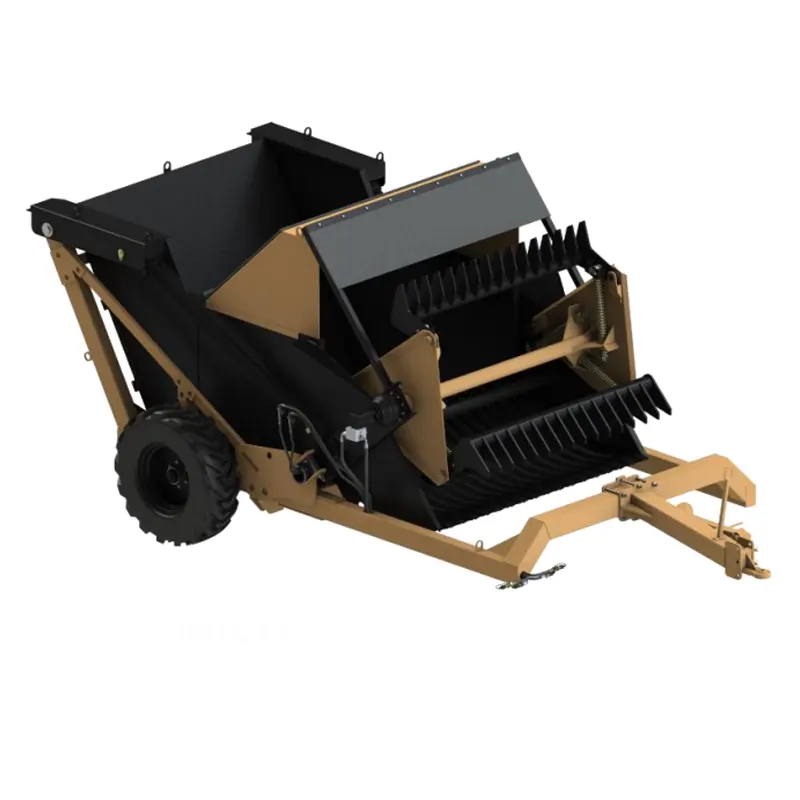
All specifications from the Watanabe official product brochure.
⚠ Two hydraulic remote valves required
The CT-2100 requires two rear hydraulic remote valve outlets — one for the tine drive motor and one for the hydraulic bunker tip function. This is a firm technical requirement: a tractor with only one rear remote valve cannot operate the CT-2100 correctly. Verify your tractor’s rear remote valve count in the specification documentation before ordering. Most Korean tractors above 100 HP have 3–4 rear remote valve outlets; compact tractors in the 80–100 HP range may have only 1–2.
How the CT-2100 Works — The Picking Mechanism Explained
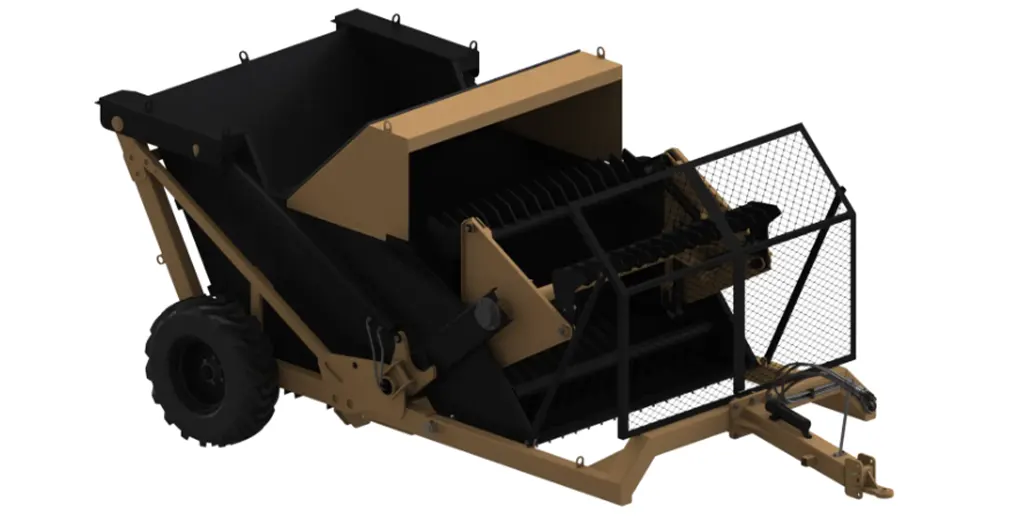
The CT-2100 uses a rotating picking rotor — a drum fitted with carbide-tipped picking tines — that rotates as the tractor advances across the field. The rotor’s tines penetrate the upper 5–10 cm of the field surface as they rotate, catching stones in the size range from approximately 5 cm diameter upward. The rotational motion carries caught stones upward and rearward, where they are discharged into the hydraulic bunker mounted above and behind the rotor assembly.
The 80 Kg Weight Limit — Understanding Its Operational Implications
Critical Specification: 80 Kg Maximum Stone Weight
The CT-2100 picks stones safely up to 80 Kg per individual stone. Stones above 80 Kg cause tine deflection, picking failure, and in severe cases, tine damage from the attempted force. On Korean highland fields with large embedded granite boulders — common in Gangwon-do and South Chungcheong ginseng zones — stones above 80 Kg must be pre-processed by a stone crusher before the CT-2100 can collect them. This limit is the primary reason the THOR 2.4 stone crusher is required before the CT-2100 on heavy-stone fields.
What 80 Kg Looks Like in Korean Highland Rock
80 Kg of granite represents a stone of approximately 25–30 cm maximum dimension, assuming compact granitic shape. This reference helps Korean operators assess their field conditions against the CT-2100’s operating limit:
| Stone size / type | Approximate weight | CT-2100 handles? |
|---|---|---|
| Annual frost-heave surface stones (5–15 cm) | 0.5–5 Kg | ✅ Easily |
| Medium surface granite (15–25 cm) | 5–30 Kg | ✅ Within limit |
| Large surface granite (25–30 cm) | 30–80 Kg | ⚠ At the limit |
| THOR-crushed fragments (up to 10–15 cm) | 0.5–15 Kg | ✅ Ideal range |
| Large embedded boulder (30–60 cm+) | 80–500+ Kg | ❌ Requires THOR first |
This table shows why the CT-2100 following a THOR stone crusher pass is such an effective system: the THOR 2.4 reduces all stones — including those well above 80 Kg — to fragments predominantly below 15 cm (and certainly below 80 Kg). The CT-2100 then collects every fragment the THOR left on the surface, completing the clearance. Each machine does what it is engineered for; neither can do the other’s job.
The Three-Tool System — How CT-2100 Fits With Rake and Crusher
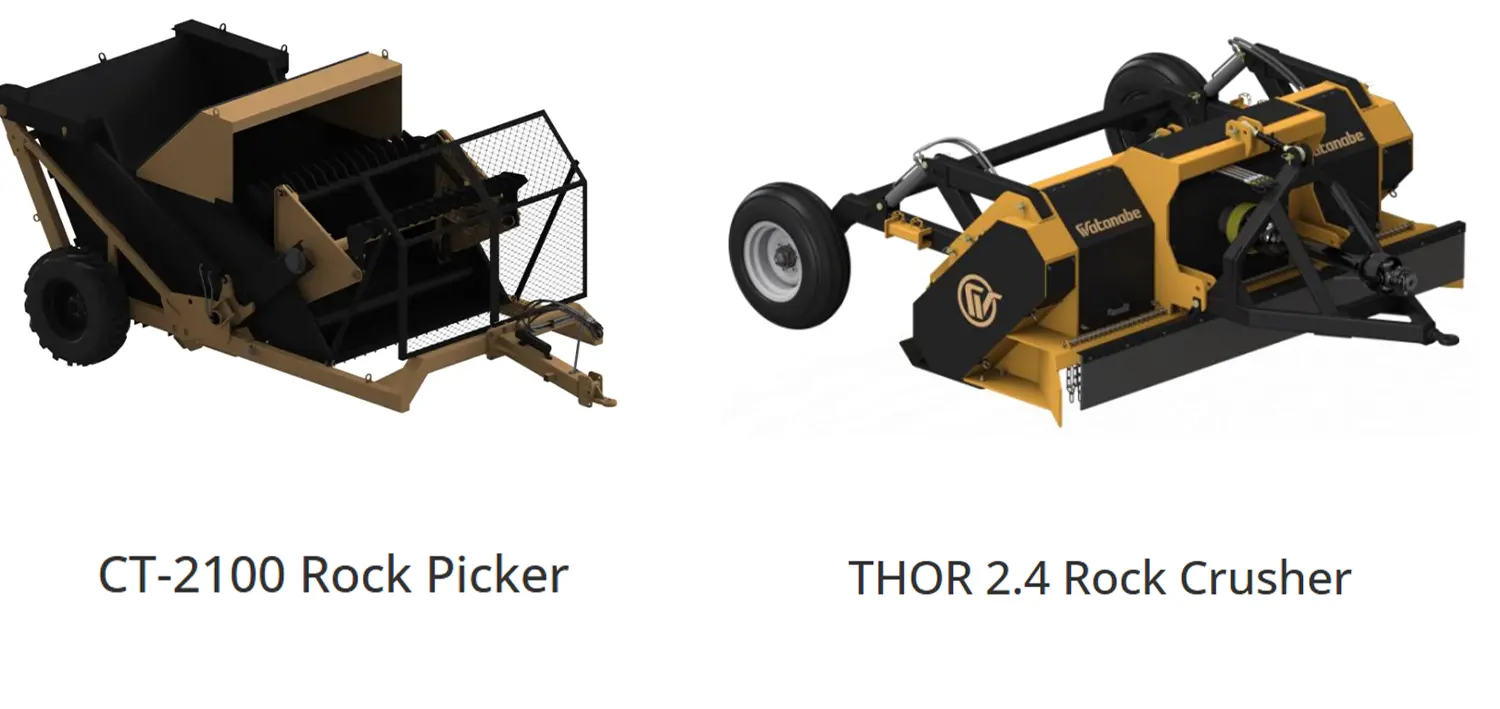
The CT-2100 operates in three different positions within the clearing sequence depending on the field’s stone density and the operation’s downstream requirements:
Configuration A
EP-EW-4000 Rake → CT-2100
For light stone conditions — annual frost-heave on established fields, stones predominantly below 40–50 Kg. The rake windrows the surface stones; the CT-2100 picks from the windrows. No stone crusher needed. Operates at 75–110 HP — standard farm tractor handles both. Most efficient annual maintenance combination for Gangwon-do potato and vegetable fields with small surface stone populations.
Configuration B ★ Most Common
THOR 2.4 → CT-2100
For medium to heavy stone conditions — fields with embedded stones above 80 Kg present. The THOR crushes all stones (including large ones) to below the CT-2100’s 80 Kg pick limit. The CT-2100 then collects everything from 5 cm upward. This is the standard professional sequence for ginseng seedbed preparation, new orchard clearing, and highland potato production on granite-heavy soils.
Configuration C
Rake → THOR 2.4 → CT-2100
Three-machine full system for very heavy and mixed stone fields. The rake pass identifies and windrows manageable surface stones and identifies heavy-stone zones for the THOR. The THOR processes the heavy zones. The CT-2100 collects the full field in a final pick pass. Slower and more resource-intensive — justified on new land conversion, Jeju basalt operations, and fields supplying zero-tolerance crops like certified ginseng.
CT-2100 Application by Korean Crop and Farm Type
Operational Productivity — Coverage Rate and Truck Logistics
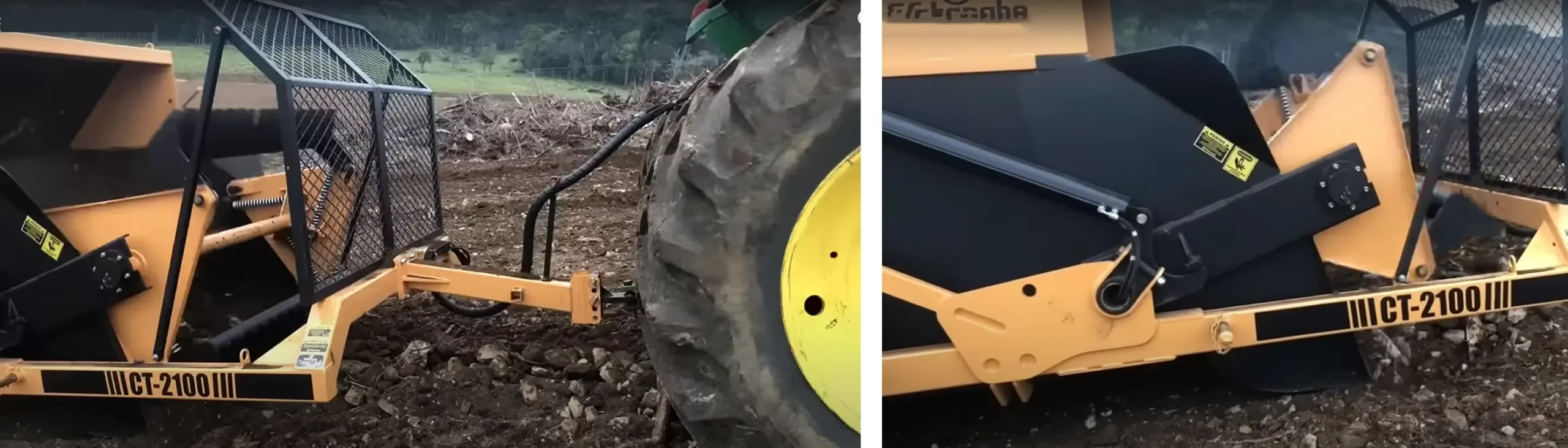
The CT-2100 operates at 3–5 km/h working speed — significantly faster than the THOR stone crusher (0.5–2.5 km/h). This speed difference has an important operational implication: on most Korean highland farm operations, the THOR crusher is the rate-limiting machine in the clearance sequence, not the CT-2100 picker. Planning the sequence around the THOR’s productive daily coverage avoids the common mistake of booking the CT-2100 and truck for a picking session before enough crushed area has been completed by the THOR.
Coverage Rate Reference: CT-2100 at 3–5 km/h, 1.95 m working width
Rates account for working passes only; bunker tip stops and headland turns reduce effective daily area. At granite density ~2.7 t/m³ and 2.5 m³ bunker, each fill cycle carries approximately 4–5 tonnes. One truck per CT-2100 ensures continuous picking — the truck departs for dump site while CT-2100 continues; truck must return before the next bunker fills.
Truck Logistics — the CT-2100’s Hidden Productivity Variable
The CT-2100’s productive output is directly dependent on truck availability for bunker discharge. When the bunker fills and no truck is positioned at the field headland for discharge, the operator must stop the picking pass and wait — a direct productivity loss. On operations where truck round-trip time (field to dump site and return) is longer than the time to fill one bunker, a second truck rotating the route keeps the CT-2100 continuously productive.
Calculate the required truck count: if the CT-2100 fills a bunker every 20–30 minutes of productive picking, and the dump site is 15 minutes each way from the field, a single truck can complete a round trip in 30–35 minutes — meaning the CT-2100 may be waiting 5–10 minutes per cycle. Two trucks overlapping the cycle eliminate the wait and maximise CT-2100 productive time. On remote Korean highland sites where the dump site is further, the calculation shifts more strongly toward two trucks.
Frequently Asked Questions
Can the CT-2100 operate in wet soil conditions?
The CT-2100 operates better in moderately dry to moist soil conditions than in saturated wet soil. In very wet soil, two problems arise: soil adhesion to the picking tines reduces picking efficiency as soil-coated tines cannot engage stones cleanly; and the bunker fills rapidly with wet soil mixed with stones rather than stones alone, reducing the net stone weight per bunker cycle and increasing truck trips required. Picking in wet soil conditions is possible but should be avoided in favour of waiting for soil to drain to workable moisture levels. As a general guideline, if tractor tyres are sinking more than 8–10 cm with each pass, soil conditions are too wet for efficient CT-2100 operation.
Does the CT-2100 disturb soil structure — is it safe to use on prepared seedbeds?
The CT-2100’s picking tines penetrate only the upper 5–10 cm of the soil surface — significantly shallower than the PSW-3200 rotavator’s 25–30 cm tillage depth. The CT-2100 pick pass after THOR crushing and before PSW-3200 rotavator tillage disturbs only the surface layer where crushed stone fragments lie. If the CT-2100 is used after the rotavator tillage pass (to collect any remaining small fragments), the surface disturbance from the CT-2100 is minor and easily incorporated by a light additional rotavator pass. In practice, most Korean ginseng and potato operations use the sequence: THOR crush → CT-2100 pick → PSW-3200 rotavator till, keeping the CT-2100 pick before the final tillage to minimise surface re-disturbance.
Where does the collected stone go — is there a market for the picked granite?
Collected stone from Korean highland granite fields — particularly the THOR-crushed angular aggregate — has limited commercial aggregate value because it lacks the size uniformity and quality control of quarried crushed aggregate. Disposal options for Korean farmers: (1) field margin windrow deposition on the farm’s own boundary — common for smaller operations; (2) licensed construction waste aggregate disposal facility (건설폐기물 처리업체) — required where stone volume is significant and on-farm disposal is not possible; (3) arrangement with local road contractors who accept field stone for access track construction — informal arrangements are common in highland agricultural communities; (4) for very small volumes, incorporation into on-farm drainage structures. Confirm disposal logistics and any relevant permit requirements with your county agricultural office before large-volume stone removal operations.
How do I maintain the picking tine tips — what is the inspection and replacement protocol?
CT-2100 picking tines are carbide-tipped and subject to abrasive wear from rock contact. Inspection protocol: check all tine tips at the start of each operating season and after each multi-day heavy-stone session. Replace tines showing tip shortening (tip nose visibly shorter than a new tine), chipping or cracking of the carbide tip, or bent tine body. Tine replacement is significantly simpler than THOR tooth replacement — most CT-2100 tine configurations allow tool-only tine exchange without rotor removal. Korea Watanabe stocks CT-2100 replacement tine sets locally in Ansan-si, Gyeonggi-do, with next-day domestic dispatch during the operating season. On Jeju Island basalt operations, apply the same shortened inspection interval (60–80 hours vs 100 hours for mainland granite) that applies to THOR carbide teeth.
Is the CT-2100 eligible for Korean agricultural machinery subsidies?
The CT-2100 rock picker qualifies under the 돌 수집기 (stone collector) or 농지 정비 기계류 (farmland improvement machinery) category in the Korean agricultural machinery purchase support program (농업기계 구입 지원사업). This category has been included in recent program year eligible equipment lists. Confirm current year eligibility and subsidy rate with your regional agricultural technology center (농업기술센터) before purchase, and confirm that your operation meets the minimum cultivated area requirement for this category. Korea Watanabe provides complete technical specification documentation for the subsidy application process for the CT-2100.
Tell Us Your Field — We Confirm the Right CT-2100 Configuration
Stone density (light / medium / heavy with typical largest stone size) + crop after clearance + tractor HP + rear hydraulic valve count → specific clearing sequence recommendation (rake-only, crusher+picker, or full three-machine), with CT-2100 integration confirmed. Korea local stock, Ansan-si, Gyeonggi-do.
Editor: Cxm