
O solo rochoso não é um problema específico da agricultura coreana — é o principal desafio de gestão de terras em todas as zonas agrícolas de altitude do país. O cinturão de batata e hortaliças de Gangwon-do assenta em solos derivados de granito que, anualmente, trazem novas pedras à superfície devido ao congelamento e descongelamento do solo. Os pomares de maçã e caqui do norte e do sul de Gyeongsang ocupam as encostas e vales das cordilheiras de Taebaek e Sobaek, onde afloramentos de granito e blocos rochosos incrustados são uma constante. Toda a superfície agrícola da Ilha de Jeju é composta por basalto vulcânico — um dos tipos de rocha mais duros e abrasivos na agricultura coreana.
Durante gerações, os agricultores das terras altas coreanas lidaram com essas pedras manualmente: catando-as em equipe, empilhando-as nas margens dos campos e quebrando as pedras maiores à mão. Com a escassez e o aumento do custo da mão de obra agrícola sazonal ao longo das décadas de 2010 e 2020, a remoção mecanizada de pedras deixou de ser um diferencial para se tornar uma necessidade comercial. Este guia descreve a sequência mecânica de cinco etapas utilizada pelos operadores das terras altas coreanas — desde a nivelação inicial da superfície até o preparo final do solo para o plantio — com as máquinas específicas, os requisitos de trator e as condições do campo para cada etapa.
Por que o solo rochoso nas terras agrícolas é um problema anual, e não um evento isolado
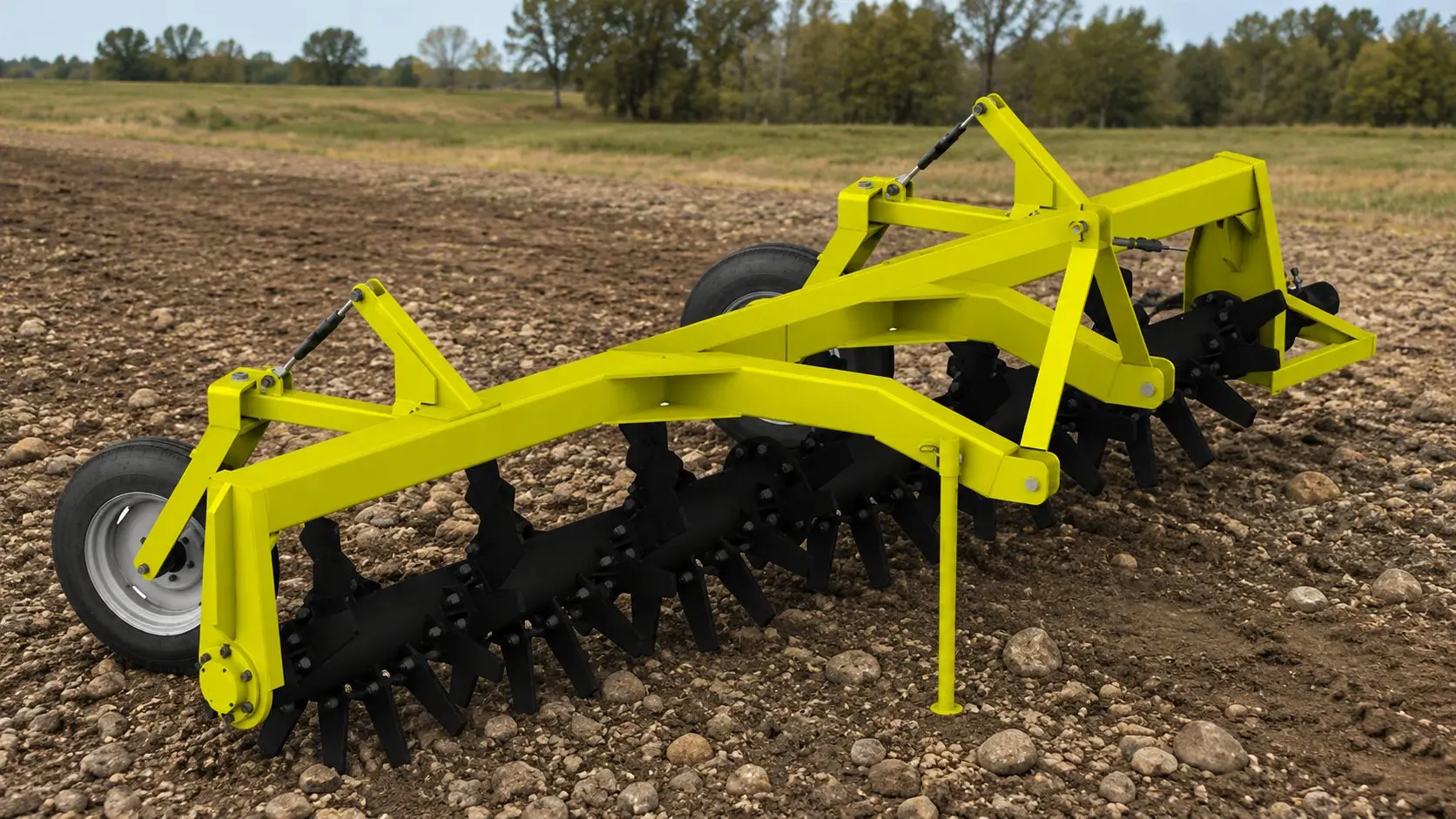
Os agricultores das terras altas coreanas frequentemente perguntam por que a remoção de pedras precisa ser repetida a cada primavera, mesmo em campos que foram completamente limpos na estação anterior. A resposta é o congelamento e descongelamento do solo — um processo da física do solo impulsionado pelo ciclo de congelamento e descongelamento dos invernos nas terras altas coreanas.
Quando a umidade do solo congela no inverno, ela se expande volumetricamente. As pedras — que têm condutividade térmica menor que o solo circundante — atuam como barreiras térmicas que impedem o congelamento uniforme ao seu redor. A expansão diferencial empurra a pedra progressivamente para cima ao longo de múltiplos ciclos de congelamento e descongelamento. Na primavera, pedras que estavam a 15–20 cm abaixo da superfície no outono podem ter migrado para 3–5 cm da superfície ou rompido completamente. Nas zonas montanhosas de Gangwon-do, a altitudes de 500–800 m, onde as temperaturas de inverno atingem regularmente -15 °C a -20 °C e os ciclos de congelamento e descongelamento ocorrem de 30 a 50 vezes por estação, a emergência anual de pedras na superfície é uma exigência previsível e consistente do manejo agrícola — não um evento excepcional.
Na Ilha de Jeju, o mecanismo é um pouco diferente. O basalto de Jeju está localizado sob um perfil de solo raso na maioria das zonas agrícolas. A atividade agrícola — aração, tráfego de veículos, penetração das raízes — perturba e quebra progressivamente a interface entre o substrato basáltico e a camada de solo, criando um acúmulo contínuo de fragmentos angulares de basalto na superfície. Os agricultores de Jeju normalmente removem as pedras duas vezes por estação: uma vez antes do plantio da primavera e outra após a colheita do outono, antes da cobertura de inverno.
Sequência de limpeza mecânica em 5 etapas
A sequência ideal depende da densidade e da distribuição de tamanho dos cálculos no seu campo específico. Abaixo está a sequência completa — os passos necessários dependem das suas condições iniciais.
Rasteamento de pedras na superfície — Rastelo para pedras EP-EW-4000
Quando usar: Campos com pedregosidade superficial leve a moderada, onde as maiores pedras individuais têm menos de aproximadamente 30 kg e não há grandes rochas incrustadas. Limpeza anual para manutenção do solo devido ao congelamento e descongelamento do solo em campos de produção estabelecidos.
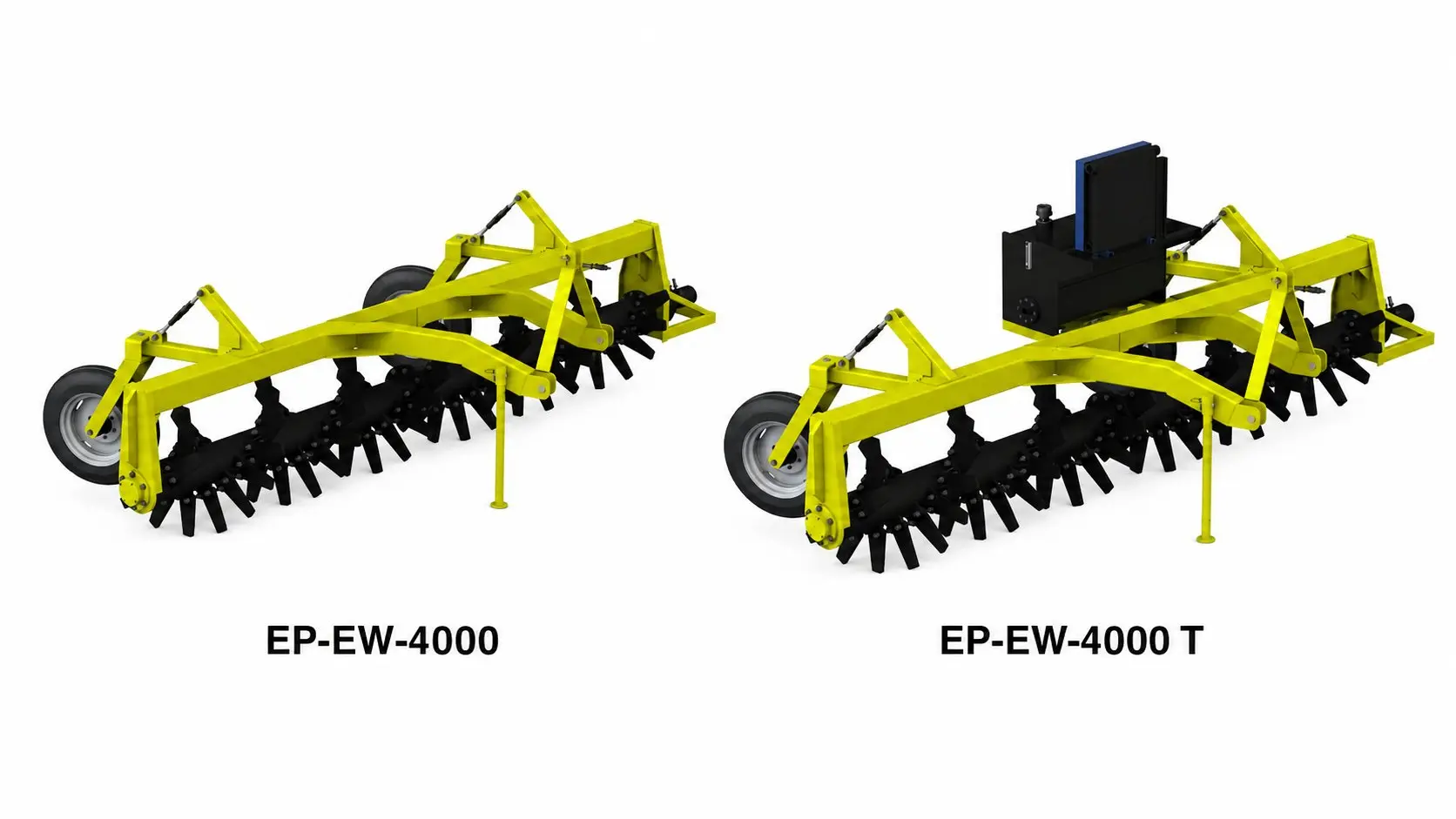
O Ancinho de rocha EP-EW-4000 (Potência mínima de 75 HP, largura de trabalho de 3,6 m, engate de categoria 2, tomada de força de 540 RPM) varre a superfície do campo a uma velocidade de 3 a 6 km/h, recolhendo pedras em leiras organizadas sem as esmagar ou acumular. O design com dentes de mola separa as pedras da fração fina do solo com mínima perturbação — importante para campos já em produção, onde a estrutura do leito de semeadura da safra anterior deve ser preservada. Com potência mínima de 75 HP, o rastelo de pedras funciona no mesmo trator que posteriormente operará a sulcadora de batatas, a plantadeira e o cultivador de meia safra — não sendo necessário um trator específico para a remoção de pedras.
As leiras formadas pelo rastelo de pedras são então recolhidas pelo coletor de pedras CT-2100 (Etapa 3) ou por uma pá carregadeira e caminhão, em campos onde o volume justifica a coleta mecânica. Em campos com pouca ou nenhuma presença de pedras, as leiras podem ser empurradas para a margem do campo manualmente ou com uma lâmina acoplada a um trator, eliminando completamente a necessidade de uma passagem de coleta separada.
Britagem de rochas — Britador de pedra THOR 2.4 ou THOR 3.0
Quando usar: Campos com densidade de pedras média a alta, incluindo pedregulhos incrustados com mais de 30 kg, ou desenvolvimento de novos campos em terrenos montanhosos acidentados. Também é necessário antes da Etapa 3, quando as pedras grandes excederem o limite de peso de 80 kg do coletor de pedras.
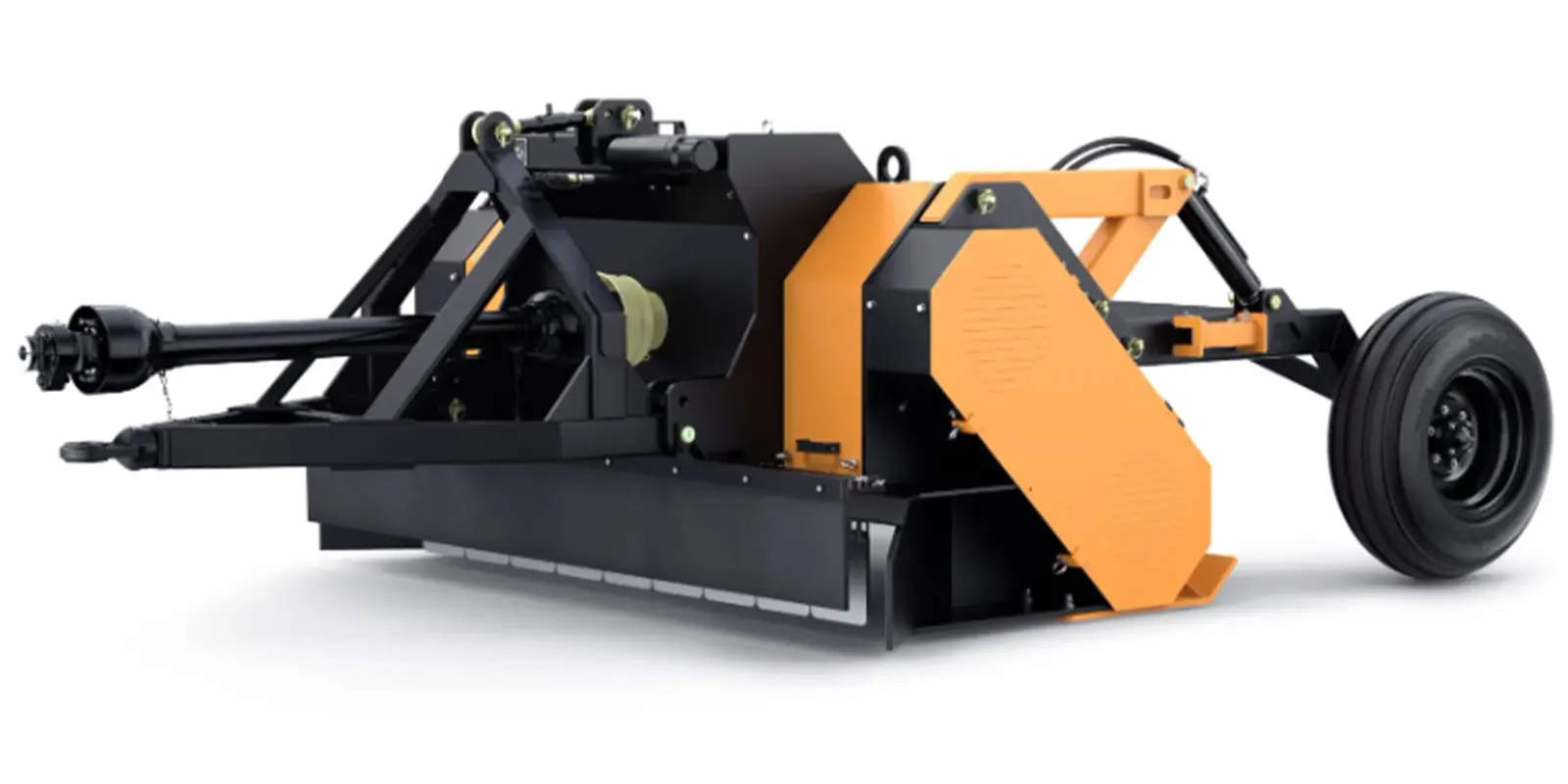
O Triturador de pedra THOR 2.4 (Potência mínima de 180 HP, 2,4 m, 90+6 dentes de carboneto, rotor de 550 mm) processa todas as pedras embutidas e superficiais de até 30 cm de diâmetro em uma única passagem, triturando simultaneamente arbustos e vegetação. O agregado triturado — de tamanho uniforme, desde cascalho fino até aproximadamente 5–10 cm — cai de volta na superfície do campo através da grade de saída hidráulica ajustável. Para aplicações na construção de estradas, esse agregado é o material de base. Para aplicações de preparo de solo que exigem a remoção completa de pedras, essa passagem de britagem permite que a Etapa 3 (recolhimento de pedras) seja realizada de forma eficiente, sem que o recolhedor encontre pedras acima de sua capacidade de manuseio.
Em novas áreas que estão sendo convertidas de matagais ou antigas florestas de montanha, a capacidade de trituração e mulching simultâneos do THOR 2.4 é particularmente valiosa: uma única passagem processa a rocha superficial e incorpora o material vegetal lenhoso. Isso substitui o que, de outra forma, exigiria operações separadas de remoção de raízes, pedras e manejo da vegetação.
Para inclinações acima de 20% — condição comum em estradas de acesso a fazendas de montanha e áreas de preparação de pomares na Coreia — o modo de tração da barra de tração redistribui o peso de 2.300 kg da máquina, deslocando-o da parte traseira do eixo (onde levanta as rodas dianteiras) para a parte dianteira do eixo (onde estabiliza ambos os eixos na inclinação). Os produtores de pomares de montanha coreanos em Cheongdo-gun, Yeongcheon e nas fazendas de encosta do sul de Gyeongsang citam consistentemente esse recurso como o principal motivo para terem escolhido a THOR 2.4 em detrimento de produtos concorrentes.
Coleta e remoção de pedras — CT-2100 Coletor de pedras
Quando usar: Qualquer aplicação onde não se exija resíduo de pedra após a limpeza — ginseng, batata-semente, produção de batata-semente certificada, produção de hortaliças premium, instalação de irrigação por gotejamento em pomares. Segue o Passo 2 em terrenos com muitas pedras; substitui o Passo 2 em terrenos com menos pedras.
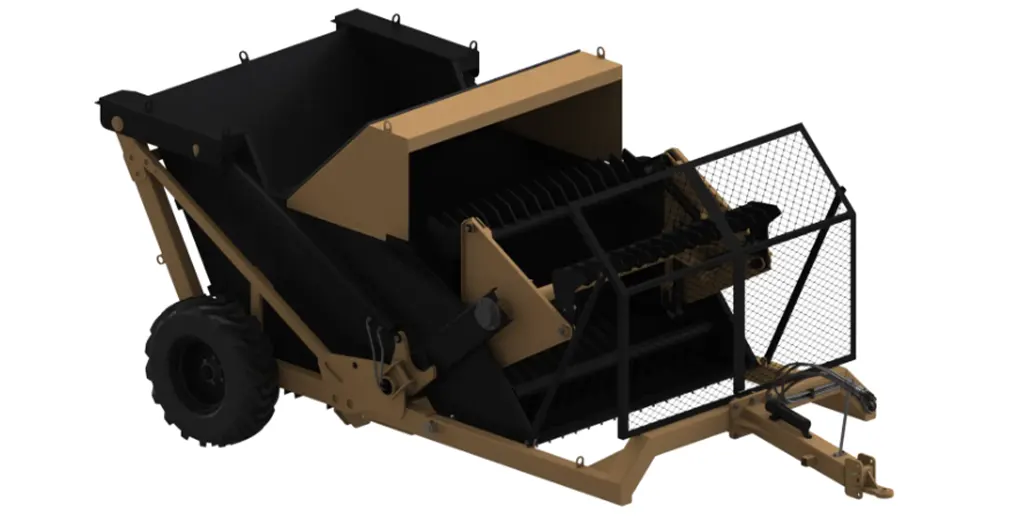
O coletor de rochas CT-2100 (Potência mínima de 110 HP, largura de trabalho de 1,95 m, depósito basculante hidráulico de 2,5 m³) levanta fisicamente pedras com diâmetro de 5 cm e peso de até 80 kg e as carrega no depósito. Quando o depósito está cheio — normalmente com 4 a 5 toneladas de pedras coletadas — ele bascula hidraulicamente para descarregar em um caminhão. A proteção de borracha em toda a largura da máquina impede a projeção de pedras, tornando-a segura para operar perto de estradas, plantações e estufas.
Nas zonas de cultivo de ginseng do sul de Chungcheong (Geumsan-gun, Yesan-gun e municípios vizinhos), onde a classificação das raízes de ginseng na colheita é diretamente afetada por qualquer contato com pedras durante o ciclo de cultivo de 6 anos, a sequência de duas máquinas THOR 2.4 + CT-2100 tornou-se o padrão profissional para o preparo do solo. Os produtores de ginseng que adotaram essa sequência relatam reduções significativas nas taxas de perda de qualidade na inspeção — a combinação produz, de forma confiável, o padrão livre de pedras exigido pela produção de ginseng.
Preparo primário do solo — Rotavator PSW-3200
Quando usar: Após a remoção de pedras em terrenos novos ou anteriormente não cultivados, e como aração primária anual na primavera em campos de produção já estabelecidos, antes do sulcamento e plantio.

Após a remoção de pedras, o preparo primário do solo cria o perfil solto e aerado necessário para o plantio. O Rotavator PSW-3200 (140 HP mínimo, largura de trabalho ajustável de 3,0 a 3,6 m) opera a 3–5 km/h com TDP de 540 ou 1000 RPM, incorporando os resíduos da cultura e criando uma profundidade uniforme de semeadura em toda a área preparada. Com a TDP ajustada para 1000 RPM, a maior velocidade da ponta da lâmina produz partículas mais finas, adequadas para a formação de sulcos para batatas e o preparo de canteiros para hortaliças. A 540 RPM, obtém-se uma incorporação mais grosseira com menor consumo de combustível — ideal para as primeiras passagens de preparo em terrenos novos e irregulares.
A variante PSW-3200 B inclui um depósito de fertilizantes integrado com capacidade para 2.000 kg, combinando o preparo primário do solo com a incorporação de fertilizante de base em uma única passada. Especificamente para a produção de batata em terras altas, isso reduz o número total de operações de pré-plantio no campo e o tráfego de tratores associado no solo recém-preparado e arado — uma consideração importante sobre a estrutura do solo nos frágeis solos das terras altas de Gangwon-do.
Instalação de plantio ou infraestrutura
Quando estiver concluído: Após as etapas 1 a 4, na combinação adequada, o campo limpo e arado está pronto para o plantio de culturas, instalação de irrigação, infraestrutura de pomar ou compactação da superfície da estrada, dependendo do objetivo de uso da terra.
A etapa 5 refere-se ao resultado do uso da terra — não a uma máquina Watanabe específica, mas à atividade agrícola que o trabalho de desmatamento possibilitou. Objetivos diferentes exigem preparativos específicos diferentes:
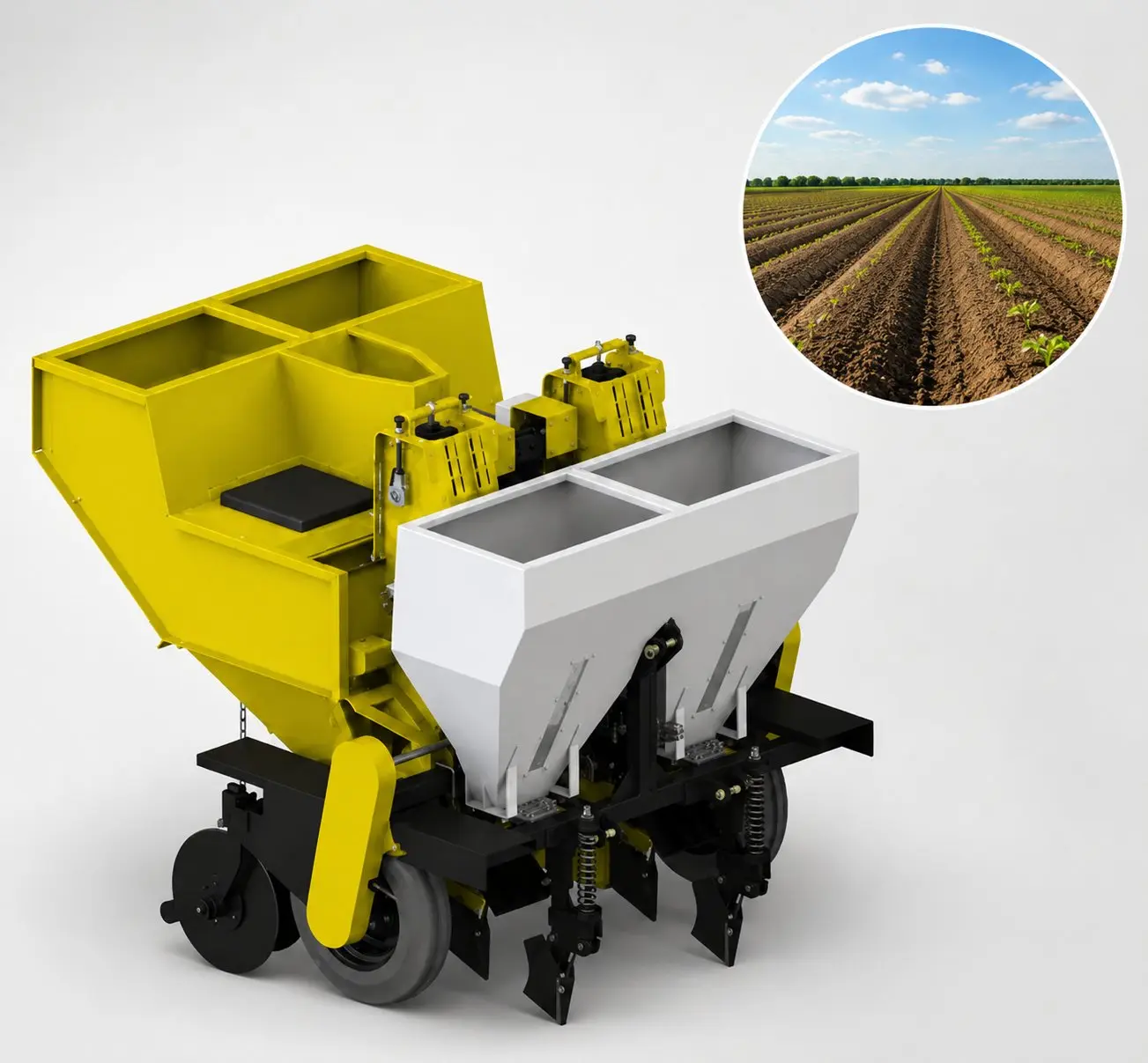
Plantio de batatas e hortaliças: Após o preparo do solo com o rotocultivador PSW-3200, segue-se a sequência padrão de plantio de batata da Watanabe: sulcador (EP-R-380/R-580), aplicador de fertilizantes (EP-ADB-380/ADB-480) e plantadeira (EP-PAI-2100 ou EP-PANTHER). O trabalho de remoção de pedras nas etapas 1 a 3 determina diretamente a qualidade do leito de semeadura onde o sistema de plantio de batata será implementado — um perfil de solo uniforme e livre de pedras é a base para um plantio mecânico eficiente e uma colheita mecânica limpa.
Implantação do pomar: Após a britagem com THOR e a seleção com CT-2100 (Etapas 2–3), a instalação da linha de irrigação por gotejamento pode prosseguir no solo limpo e nivelado do pomar. O plantio das mudas segue o traçado da irrigação. Os produtores de pomares em Cheongdo-gun relatam consistentemente que as condições do solo após a britagem com THOR — com o agregado de pedra britada ainda presente, mas com a remoção de grandes pedras e rochas incrustadas — são adequadas para a instalação de irrigação por gotejamento sem necessidade de seleção adicional em solos com pedregosidade moderada.
Construção de estradas rurais: Para aplicações em construção de estradas, a Etapa 2 (britagem com THOR) é a única etapa obrigatória. O agregado britado produzido pelo THOR constitui a base da estrada — nivelado, compactado e deixado no local. As Etapas 1 e 3 não são necessárias, e a Etapa 4 não é relevante para a construção do pavimento. Esta é a aplicação mais comum do THOR em regime de uso isolado: uma única passagem transforma um terreno rochoso de montanha em um pavimento estável para estradas agrícolas, adequado para todas as condições climáticas.
Quais etapas se aplicam à sua situação?
| Situação | Passo 1 Ancinho |
Etapa 2 Crush |
Etapa 3 Escolha |
Passo 4 Até |
|---|---|---|---|---|
| Construção de estradas rurais (montanha) | Opcional | Obrigatório | Não | Não |
| Limpeza anual do campo de batatas (pedraça leve) | Obrigatório | Opcional | Obrigatório | Obrigatório |
| Leito de sementes de ginseng (pedra pesada) | Opcional | Obrigatório | Obrigatório | Obrigatório |
| Preparação do terreno para novo pomar | Opcional | Obrigatório | Se necessário | Opcional |
| Limpeza anual da superfície de basalto de Jeju | Se for leve | Geralmente | Obrigatório | Obrigatório |
O custo de não limpar o solo — quanto custam, de fato, os leitos rochosos para semeadura.
Os agricultores das terras altas coreanas às vezes atrasam ou reduzem a remoção de pedras para diminuir os custos operacionais da primavera — uma decisão que gera custos maiores mais tarde na temporada. Os custos subsequentes da remoção insuficiente de pedras nos solos agrícolas coreanos se enquadram em três categorias:
Danos na colheitadeira. Na Coreia, as colhedoras mecânicas de batata, cenoura e cebola frequentemente sofrem danos mecânicos causados por pedras quando operam em campos insuficientemente limpos. Os danos nas lâminas e na esteira da colhedora devido ao contato com pedras resultam em custos de reparo que podem exceder o custo sazonal de uma limpeza completa das pedras por hectare. O tempo de inatividade da colhedora durante o período crítico da colheita agrava significativamente esse custo.
Perdas na qualidade das colheitas. Na produção de ginseng, o contato com pedras durante o ciclo de crescimento de 6 anos causa bifurcação das raízes, hematomas e deformidades que reduzem a qualidade da colheita. O ginseng premium (1ª, 2ª e 3ª qualidades) é vendido a preços muito superiores aos do ginseng padrão; uma safra com alta deformidade por contato com pedras cai desproporcionalmente em categorias inferiores, representando uma perda de receita por quilograma que pode ser de 3 a 5 vezes o custo da remoção adequada das pedras no plantio. O mesmo mecanismo de perda de qualidade se aplica às safras de cenoura e batata vendidas sob especificações de qualidade para o mercado de produtos frescos.
Danos no sistema de irrigação. Pomares e hortaliças que utilizam sistemas de irrigação por gotejamento sofrem com a perfuração das linhas de gotejamento por pedras e danos aos emissores quando as pedras no perfil do solo se deslocam devido aos ciclos de congelamento e descongelamento. Os custos de substituição das linhas de gotejamento por quilômetro em pomares coreanos são significativos — o manejo anual de pedras, que estabiliza a camada superficial do solo, reduz esse custo.
Selecionando a balança de máquina adequada para sua área de limpeza anual
A sequência de cinco etapas é a mesma, independentemente do tamanho da fazenda, mas as máquinas específicas em cada etapa são dimensionadas de acordo com a área de desmatamento anual. As operações nas terras altas coreanas utilizam três configurações de escala:
Pequena escala — até 15 hectares por ano
Etapa 1: Rastelo de Rochas EP-EW-4000 (75 HP, 3,6 m). Etapa 2, se necessário: THOR 2.4 (180 HP) — também realiza trituração de vegetação rasteira e trabalhos de construção de estradas simultaneamente. Etapa 3: Coletor de Rochas CT-2100 (110 HP, reservatório de 2,5 m³). Etapa 4: PSW-3200 Standard (140 HP). Com uma área de 15 ha/ano em campos de altitude com densidade moderada de pedras, a sequência de três máquinas (Etapas 1–3–4) (sem a britagem da THOR na Etapa 2 em anos com menos pedras) cobre a necessidade anual de limpeza dentro de um período razoável de preparo do solo na primavera. O EP-EW-4000 e o CT-2100 operam com potências de 75 a 110 HP e podem ser acoplados a um único trator de porte médio; o PSW-3200 requer uma máquina separada de 140 HP.
Escala média — 15 a 50 hectares por ano
Etapa 1: EP-EW-4000 ou THOR 2.4, dependendo da densidade das pedras. Etapa 2: THOR 2.4 (180 HP) — necessário na maioria dos campos de granito em terras altas nesta escala. Etapa 3: Coletor de Rochas CT-2100. Etapa 4: PSW-3200 A (140 HP, estrutura estendida para maior estabilidade em configurações de largura maior). Com 50 ha/ano, a janela de limpeza na primavera é curta em relação ao calendário de plantio — a taxa de cobertura efetiva de 0,8–1,4 ha/h do THOR 2.4 em condições típicas de terras altas cobre 50 hectares em aproximadamente 35–60 horas produtivas de máquina, permitindo que o preparo seja concluído dentro de um período razoável de pré-plantio, mesmo com atrasos devido ao clima.
Grande escala — acima de 50 hectares por ano
Etapa 1: Rastelo BlackBird (9,5 m, 300 HP) para máxima produtividade na pré-nivelação em áreas com pedras menores. Etapa 2: THOR 3.0 (230 HP, 3,0 m) para as áreas com mais pedras — com possível acoplamento combinado BlackBird + THOR 3.0 nas maiores seções abertas. Etapa 3: CT-2100. Etapa 4: PSW-3200 B (140 HP, com depósito de fertilizante integrado de 2.000 kg para reduzir o número total de passagens pelo campo). Com mais de 100 hectares por safra, a operação com tratores em paralelo — um trator nas Etapas 1–2 e outro nas Etapas 3–4 em seções já compactadas — maximiza a produtividade diária dentro do curto período de preparação da primavera, antes do início do calendário de plantio nas terras altas.
Cronograma sazonal — Quando executar cada etapa do Gangwon-do

Nas principais zonas de cultivo de batata e hortaliças das terras altas de Gangwon-do (Pyeongchang-gun, Hoengseong-gun, Inje-gun, entre 400 e 800 metros de altitude), o calendário de preparação do solo para o plantio na primavera se concentra em um curto período entre o degelo do inverno e a data limite para o plantio. Um cronograma típico de preparação do solo para o plantio na primavera nas terras altas de Gangwon-do é o seguinte:
Marchar: O degelo do solo começa em altitudes mais baixas (abaixo de 500 m). A primeira etapa, com o uso de rastelo para remover pedras, inicia-se nos campos que descongelam precocemente. As pedras superficiais resultantes do congelamento e descongelamento do solo durante o inverno já estão visíveis e prontas para serem removidas. A cobertura de neve nas áreas mais altas (acima de 600 m) ainda pode restringir o acesso até o final de março.
Abril (início a meados): Todas as zonas de altitude são acessíveis. As etapas 1 e 2 (rastelo e britagem de pedras) são realizadas simultaneamente em toda a área do campo. O coletor de pedras CT-2100 (Etapa 3) segue a passagem de britagem do THOR nas seções onde a remoção completa de pedras é necessária — canteiros de ginseng, viveiros de batata e áreas de hortaliças de alto valor. O preparo primário do solo com o rotocultivador PSW-3200 (Etapa 4) segue as seções já limpas, trabalhando à frente para preparar os viveiros antes do início do período de plantio.
De meados de abril ao início de maio: Período ideal para o plantio. Todas as cinco etapas devem ser concluídas antes desse período — a sequência de preparação deve acompanhar o calendário de plantio. Operações atrasadas na remoção de pedras na primavera reduzem o período ideal para o plantio e podem resultar em perdas de produtividade no final da temporada, devido à curta estação de cultivo em Gangwon-do.
Na prática: uma operação de cultivo de batata em terras altas com 50 hectares deve planejar de 3 a 4 semanas de limpeza de pedras e preparação do solo antes da primeira data de plantio. A disponibilidade de máquinas, principalmente o tempo de operação dos tratores de 140 a 180 HP necessários para as etapas 2 e 4, é a restrição operacional que determina se esse cronograma é viável. A reserva ou confirmação do aluguel das máquinas para a temporada de limpeza deve ser feita, no máximo, em fevereiro para operações de primavera.
Perguntas frequentes
Posso pular a Etapa 2 (quebra de pedras) e ir diretamente para a Etapa 3 (retirada de pedras) em um campo com muitas pedras?
Somente se todas as pedras individuais no campo tiverem menos de 80 kg de peso. Em campos de granito nas terras altas da Coreia com pedregulhos embutidos — que geralmente excedem 100–300 kg nas zonas de ginseng de Chungcheong do Sul e nas fazendas das terras altas de Gangwon-do — a colhedora de pedras não consegue manusear essas pedras com segurança. A tentativa de colhê-las causa deflexão dos dentes e, em casos graves, danos aos dentes. O britador de pedras THOR deve reduzir essas pedras grandes para menos de 80 kg, o limite de 80 kg, antes que a colhedora de pedras CT-2100 possa processar o campo. Em campos com pedras uniformemente pequenas resultantes do congelamento e descongelamento anual do solo, a Etapa 2 pode ser omitida e a Etapa 3 segue diretamente a Etapa 1.
Quantas passagens da Etapa 2 (esmagamento THOR) são necessárias para campos de pedras muito grandes?
O THOR 2.4 processa pedras de até 30 cm em uma única passagem. Pedras acima de 30 cm podem exigir duas passagens para serem reduzidas ao tamanho de fragmento desejado — a primeira passagem impacta a pedra grande e a fratura parcialmente; a segunda passagem completa a redução. Blocos rochosos muito grandes (acima de 60–80 cm) devem idealmente ser pré-fragmentados por impacto de escavadeira ou britador hidráulico antes da passagem do THOR para evitar estresse excessivo no rotor no primeiro impacto. Em locais típicos de exposição de granito nas terras altas da Coreia, o processamento em uma única passagem é eficaz para a maioria das pedras; o pré-tratamento de blocos rochosos grandes adiciona aproximadamente 5–15 TP5T ao tempo total de remoção de pedras nas seções mais afetadas.
Quanto tempo leva a sequência completa de 5 etapas por hectare?
Estimativas práticas de tempo por hectare para uma operação com 3 máquinas em terrenos montanhosos com densidade média de granito: Etapa 1: rastelo de rocha (1,0–1,5 ha/h a 4–6 km/h): 0,7–1,0 hora; Etapa 2: britador THOR (0,8–1,2 ha/h): 0,8–1,2 hora; Etapa 3: coletor CT-2100 (0,8–1,0 ha/h): 1,0–1,2 hora; Etapa 4: rotocultivador PSW-3200 (2–3 ha/h): 0,3–0,5 hora. Total das etapas 1 a 4: aproximadamente 3–4 horas de máquina por hectare. Em terrenos novos com alta densidade de pedras, considere 4–6 horas por hectare. Compare com a remoção manual de pedras, que leva de 15 a 30 horas-homem por hectare em terrenos com densidade de pedras comparável nas condições dos terrenos montanhosos coreanos.
Todas as cinco máquinas nesta sequência precisam ser da mesma marca?
Não. Cada etapa utiliza máquinas que operam independentemente, conectadas apenas por meio de um fluxo de trabalho lógico — elas não precisam ser mecanicamente compatíveis entre si além das conexões padrão de tomada de força (TDF) e engate que todas as marcas de tratores coreanas e internacionais oferecem. As etapas 1, 2 e 3 são realizadas separadamente, em dias diferentes, se necessário. As máquinas Watanabe cobrem as etapas 1 (rastelo para rochas EP-EW-4000), 2 (britador THOR), 3 (colhedora CT-2100) e 4 (rotocultivador PSW-3200). Se você já possui um rotocultivador de outra marca, pode utilizá-lo na etapa 4. O fator crítico em cada etapa é confirmar se a especificação da máquina corresponde à potência (HP) e ao número de válvulas hidráulicas do seu trator — e não a marca.
Informe-nos sua área de atuação — nós recomendamos a sequência de etapas correta.
Tipo de cultura + densidade de pedras (leve/média/pesada) + tamanho da maior pedra + condições da inclinação + potência do trator → recomendações específicas de máquinas para as etapas 1 a 4, com a lógica completa da sequência explicada. Todas as máquinas estão em estoque local na Coreia, em Ansan-si, Gyeonggi-do.
Editor: Cxm