
Every Watanabe stone clearing operation — every THOR 2.4 fragmentation pass, every CT-2100 collection cycle — is preparation for one thing: the PSW-3200’s tillage pass that transforms fractured granite soil into a seed bed. The PSW-3200 rotavator is the machine that closes the gap between physical stone removal and agronomic productivity. It is the Korean highland farm’s most frequently used implement: not the dramatic first-season stone crusher pass, but the machine that runs before every planting, after every harvest, and through every lime incorporation cycle across the entire life of the farm.
Despite this central role, the PSW-3200 is frequently under-specified — operated at the wrong PTO speed for the soil condition, set to the wrong width for the terrace geometry, or run at the wrong depth for the crop requirement. This guide covers the machine’s confirmed specifications, the engineering basis for the PTO speed decision, the width adjustment system, the double-pass protocol for post-stone-clearing Korean granite soil, and the annual service requirements. It is the single reference document for PSW-3200 operation across the full range of Korean highland applications.
Confirmed PSW-3200 Specifications — What the Official Brochure States
All specifications are from the official Watanabe product brochure. No estimates are included — every figure is the manufacturer’s published value. The PSW-3200 is available in Korea through Korea Watanabe and holds Korean agricultural machinery certification.
The width range of 3.0–3.6 m is a defining characteristic of the PSW-3200 for Korean highland use. Korean highland terraces vary significantly in bed width depending on the altitude, age of construction, and original terrace engineering. The PSW-3200’s adjustable width allows a single machine to cover terrace widths from 3.0 m (narrow mountain terrace) to 3.6 m (wider lower-altitude terrace) by adjusting the end-plate extension configuration — a critical practical advantage over fixed-width European rotavators that require separate machines for different terrace dimensions.
540 RPM vs 1000 RPM — The Most Important Operating Decision on Every Pass
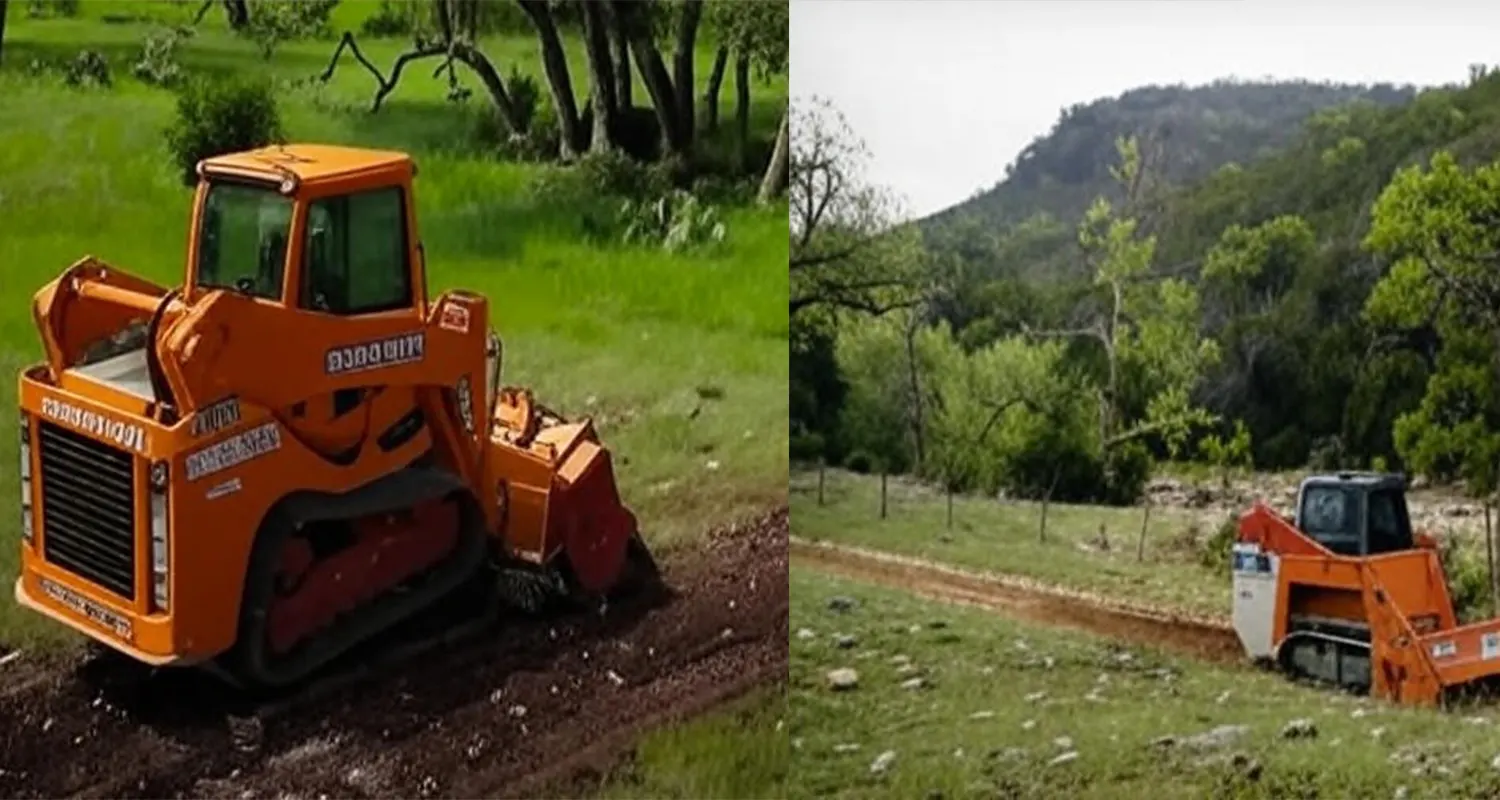
The PSW-3200’s dual PTO speed capability (540 RPM and 1000 RPM) is not a choice between “slow” and “fast” — it is a choice between two fundamentally different tillage mechanisms that produce different soil outcomes. Understanding the engineering basis for each speed makes the correct selection obvious for every Korean highland application.
Rotavator Tine Tip Velocity — The Physics Behind PTO Speed Selection
At 540 RPM:
At 1000 RPM:
The double-pass strategy — 540 RPM first pass for incorporation and initial fragmentation, followed by 1000 RPM second pass for fine tilth — is Korea Watanabe’s recommended protocol for the post-stone-clearing seed bed preparation on Korean highland granite. The 540 RPM first pass at 22–25 cm depth incorporates surface-applied lime and organic material through the full tillage zone. The 1000 RPM second pass at 18–20 cm produces the fine-tilth surface layer that planting machines require for consistent depth performance. The two-pass approach is more fuel-intensive than a single 1000 RPM pass, but produces 30–40% finer seed bed texture at depth — a measurable difference in emergence uniformity.
| Application | PTO Speed | Working depth | Reason |
|---|---|---|---|
| October lime + residue incorporation | 540 RPM | 22–25 cm | Mixes, does not pulverise — lime distributes through profile without excessive dust generation |
| Spring fine-tilth pre-planting pass | 1000 RPM | 18–20 cm | Produces 2–8 mm fine tilth for consistent planting depth — EP-PAI-2100 requires this |
| Post-THOR 2.4 first clearance pass | 540 RPM first → 1000 RPM second | 25 cm → 20 cm | Double-pass: 540 RPM incorporates fragmented material, 1000 RPM creates seed bed |
| Ginseng 40cm preparation (second pass) | 1000 RPM | 25–30 cm | Maximum fine-tilth for ginseng root channel — 1cm residual stone standard requires deepest fine-tilth pass |
| Wet soil after heavy rain | DELAY — avoid operation | — | Both speeds compact wet Korean granite soil and produce compaction layer. Wait minimum 3 days after heavy rain before any PSW-3200 pass |
| Cover crop green manure incorporation | 540 RPM | 20–22 cm | Shreds and mixes biomass rather than over-fragmenting — preserves more organic carbon through incorporation |
Working Width Adjustment — How the 3.0m to 3.6m System Works in Practice

The 3.0–3.6 m working width range of the PSW-3200 is not a continuous adjustment — it is achieved by repositioning or adding end-plate extension panels at either side of the main rotor housing. Understanding the adjustment mechanism prevents the common field error of operating the machine at the wrong width setting for the terrace being worked.
Width Configuration Options — Top-Down Schematic View
Width is set mechanically before field entry — do not attempt width adjustment during operation. Confirm the width setting matches the terrace bed dimension before engaging the PTO.
Width overlap principle: On consecutive tillage passes on the same field, use a 10–15 cm pass overlap — slightly wider than the end-plate boundary — to ensure no untilled strip is left at the terrace edge. An untilled edge strip produces a compaction ridge that resists the planting machine’s furrow-opening disc and creates variable planting depth at the row nearest the terrace edge. This edge strip effect is the most common cause of uneven emergence at the terrace margins on Korean highland potato fields.
The Tillage Quality Matrix — How Depth and Forward Speed Interact
Many Korean highland operators have learned from experience that deeper is not always better and slower is not always finer. The interaction between operating depth and forward speed determines the actual soil structure quality produced — and on Korean highland granite soil, these interactions are more pronounced than on the fine-textured soils for which most tillage guidance was written.
| Depth \ Speed | Slow (1.0–1.5 km/h) | Medium (2.0–2.5 km/h) | Fast (3.0+ km/h) |
|---|---|---|---|
| Shallow (15–18 cm) | Ultra-fine. Over-worked surface. Risk of capping after rain. Not recommended for granite. | ✅ OPTIMAL for ginseng surface pass and spring pre-plant fine-tilth | Acceptable. Surface-only improvement. Misses full seed bed depth requirement. |
| Medium (20–24 cm) | Good mixing, slightly over-refined. Consider 540 RPM at this depth-speed combo for incorporation. | ✅ BEST OVERALL. Balanced fine tilth to 22 cm. Recommended for most Korean highland potato pre-planting passes. | Acceptable throughput compromise. Produces 8–15 mm tilth rather than 2–8 mm. Fine for garlic and radish but borderline for potato. |
| Deep (25–30 cm) | ✅ BEST FOR GINSENG prep and forest land conversion second pass. Slow + deep = maximum disruption and fine tilth throughout. | Good for post-THOR 2.4 second pass on cleared fields. Leaves 10–20 mm tilth at depth. | ❌ Not recommended. At 25+ cm depth and 3 km/h on granite, tines skip and produce irregular, ridged soil profile rather than uniform tilth. |
The “sweet spot” for most Korean highland potato and root crop pre-planting passes is medium depth (20–24 cm) at medium speed (2.0–2.5 km/h) at 1000 RPM. This combination covers approximately 0.7–0.9 ha per hour at the PSW-3200’s 3.6 m working width — equivalent to 5.6–7.2 ha per operating day, sufficient to prepare a 10 ha highland farm’s planting area within 1.5–2 operating days.
Organic Matter Incorporation — Why the PSW-3200’s Depth Matters More Than the Organic Source
The contribution of any organic material — crop residue, compost, legume biomass, lime — to the Korean highland soil’s productive capacity depends almost entirely on the depth at which it is incorporated. Surface-applied material that is not incorporated by the PSW-3200 affects only the top 3–5 cm of the soil profile and contributes minimal benefit to the 15–25 cm root zone where Korean highland potato, garlic, radish, and ginseng roots actually compete for moisture and nutrients.
| Organic material | Surface-only (no PSW) | PSW 540 RPM at 22cm | PSW 1000 RPM at 20cm |
|---|---|---|---|
| Agricultural lime (powdered) | pH effect 0–5 cm only | ✅ pH correction to 22 cm | pH to 18 cm (slightly shallower) |
| Compost (3 t/ha broadcast) | OM benefit 0–4 cm only. Leaches slowly. | ✅ OM distributed 0–22 cm. +0.3–0.4% OM/year | OM to 18 cm. +0.2–0.3% OM/year |
| Red clover green manure | Surface mat. Slow decomp. N losses high. | ✅ OPTIMAL. Biomass shredded and mixed through 22 cm. +0.4–0.6% OM. 150+ KgN/ha released over 12 months. | Biomass over-fragmented at 1000 RPM — some N loss as ammonia. 540 RPM preferred for green manure. |
| Potato haulm (post-harvest) | Disease reservoir. Pathogen carryover risk. | ✅ Shreds and buries haulm. Accelerates decomposition. Reduces surface pathogen reservoir. | Acceptable. Slightly finer shredding than 540 RPM. Less depth penetration. |
| Biochar (2 t/ha broadcast) | Benefits restricted to top 3 cm. Windblown loss risk. | ✅ Mixed through 22 cm. Full water retention and CEC benefit across root zone. | Mixed to 18 cm. Acceptable but 540 RPM preferred for deeper biochar distribution. |
The practical rule: any material broadcast after the DCW 2.2 lime spreader or compost application on the cleared field should be incorporated by the PSW-3200 within 24 hours — before the next rain event redistributes the surface-applied material or allows volatilisation (for nitrogen-rich materials) to begin. The October post-harvest window is the optimal time for the combined lime + compost + haulm incorporation pass: the soil is moist from autumn rains, the temperature is still warm enough for microbial activity (8–12°C), and there is no frost risk for several weeks.
The Double-Pass Protocol — When Two PSW-3200 Passes Outperform One
Acceptable for garlic and radish (shallower root requirements). Borderline for Daejima potato (hollow heart from variable moisture zone at 16–22 cm). Not suitable for ginseng.
Recommended for: all potato production, ginseng preparation, certified seed fields, and any field where uniform emergence is the primary quality objective.
The double-pass protocol adds approximately 50–70% to the total tillage fuel cost per hectare compared to a single 1000 RPM pass. On a 10 ha Korean highland farm, the additional cost is approximately 200,000–350,000 KRW per full double-pass cycle. Against the Grade 1 proportion improvement measurable on Daejima and Dubaek variety crops from the uniform double-pass seed bed, this cost is recoverable from the improved grading outcome within the first production season.
Annual Service Schedule — 12 Months of PSW-3200 Maintenance
Frequently Asked Questions
What is the best rotavator for Korean highland granite soil — is the PSW-3200 superior to European alternatives?
The PSW-3200’s primary advantage for Korean highland use is not mechanical superiority over European equivalents per se — it is dimensional compatibility. European rotavators in the equivalent HP class are typically fixed at widths of 2.5 m or 3.0 m. Korean highland terraces require widths that vary across the farm from 3.0 to 3.6 m. A fixed-width European machine at 3.0 m leaves 0.3–0.6 m of untilled terrace edge on wider terraces; at 3.6 m, it operates beyond the terrace boundary on narrower terraces, disturbing terrace edges. The PSW-3200’s 3.0–3.6 m adjustable width solves this terrace-specific problem. For the mechanical tillage quality itself — tine geometry, PTO power uptake, soil finish — the PSW-3200 performs comparably to equivalent European machines at the same operating conditions on Korean highland granite. The dimensional compatibility is the decisive factor for Korean highland terrace farming.
How deep should the PSW-3200 rotavator work on a Korean highland field after THOR 2.4 stone clearing?
The recommended sequence after THOR 2.4 stone clearing and CT-2100 collection is: first PSW-3200 pass at 22–25 cm depth at 540 RPM (incorporating lime and any surface organic material applied after clearing), followed 3–5 days later by a second pass at 18–20 cm at 1000 RPM (producing the fine-tilth seed bed for planting). The first pass at 22–25 cm is deeper than the standard agricultural tillage depth specifically because the THOR 2.4 clearing has created a stone-free zone at this depth that previously prevented PSW-3200 operation below 15–18 cm. The first post-clearing season is the opportunity to establish a deep, well-mixed root zone that will benefit the crop for years — subsequent annual passes can revert to the 18–20 cm standard depth.
Can the PSW-3200 work on a slope above 15% without the Kit Drawbar that the THOR 2.4 uses on slopes?
The PSW-3200 does not have an equivalent of the THOR 2.4’s Kit Drawbar slope mode — it operates as a standard rear three-point mounted implement in all configurations. On Korean highland slopes above 15%, the PSW-3200’s operation requires additional consideration because the machine’s weight on the rear linkage reduces front-axle steering effectiveness on ascending passes (the same risk as any heavy rear-mounted implement on steep terrain). Korea Watanabe’s recommendation for PSW-3200 operation above 15% gradient: (1) ensure the tractor has at least 140 HP and adequate front ballast for slope operation; (2) make all passes in the upslope direction whenever possible, avoiding cross-slope passes on gradients above 12%; (3) reduce operating depth on steep sections to reduce the draft force and associated rear-linkage load; (4) keep PTO speed at 540 RPM on first passes on steep slopes to reduce the gyroscopic effect of the spinning rotor on slope stability. The PSW-3200 is routinely operated on Korean highland slopes in the 12–18% range without incident when these protocols are observed.
How long do PSW-3200 tines last on Korean highland granite — and what is the replacement cost per hectare?
PSW-3200 tines on Korean highland granite typically reach the 85% remaining-length replacement threshold after 150–200 operating hours. On a 10 ha Korean highland farm with 3 PSW-3200 passes per year (October lime incorporation, spring fine-tilth, and one mid-season pass), the machine accumulates approximately 30–45 operating hours per season — meaning a full tine set replacement approximately every 4–6 seasons. The cost of a full PSW-3200 tine set should be confirmed with Korea Watanabe for current pricing, as tine costs vary with steel market pricing. The annualised tine cost per hectare is typically one of the smallest cost line items in the Korean highland farm operating budget — significantly less than the fuel cost for the same operational passes. The more important service parameter is replacing individual tines that reach critical wear before the full set — the balance and tillage quality deterioration from heavily worn individual tines exceeds the replacement cost of acting promptly.
Does the PSW-3200 qualify for the Korean agricultural machinery subsidy, and what is the net purchase price after subsidy?
Yes — the PSW-3200 holds Korean agricultural machinery certification and qualifies for the MAFRA agricultural machinery purchase support programme. The subsidy rate for tillage machinery (the category under which the PSW-3200 is classified) is typically 30–40% of the certified purchase price in the 2025–2026 programme cycle. The exact 2026 rate for your specific county should be confirmed with Korea Watanabe during the January application preparation process. As a Stage 2 purchase in the recommended 3-year combined purchase strategy (following Stage 1’s THOR 2.4 + CT-2100 rock picker acquisition), the PSW-3200 is typically funded primarily from Year 1’s cleared-field revenue improvement — meaning the net cost after subsidy can often be met without additional borrowing from the farm’s existing cash flow. Korea Watanabe provides a combined Stage 1 + Stage 2 financial planning review at the initial consultation stage for any customer considering the full system build-out.
PSW-3200 Configuration for Your Korean Highland Farm
Farm area + terrace width range + current tractor HP + crop sequence → Korea Watanabe confirms the correct tillage machinery width configuration, PTO speed protocol, double-pass schedule and service calendar for your specific farm system.
Editor: Cxm