
Late blight (Phytophthora infestans) is the most economically damaging disease of Korean highland potato. An unmanaged infection under Korean highland July–August monsoon conditions can progress from first visible lesion to total crop loss in 7–10 days at peak infection temperatures. The entire crop management investment — stone clearing, fine-tilth preparation, seed quality, fertiliser, irrigation — can be destroyed in less than two weeks by a blight epidemic that a correctly timed spray programme would have prevented.
This guide provides the complete late blight management framework for Korean highland potato operators: the disease biology that explains why the July–August window is critical, the 7-day spray interval protocol and what happens when it is missed after typhoon rainfall, the FRAC group rotation that prevents fungicide resistance, and — critically — the connection between the THOR 2.4 rock crusher and PSW-3200 rotavator fine-tilth preparation that reduces the duration of canopy wetness which drives blight infection. This is the first dedicated standalone late blight guide in this series — earlier articles referenced blight only in the context of broader pest and disease management overviews.
Phytophthora infestans Biology — Why Korean Highland Conditions Create Perfect Infection Windows
Phytophthora infestans is not a true fungus — it is an oomycete (water mould) with a lifecycle driven by free water on leaf surfaces. The four conditions that Korean highland potato provides during the July–August period are precisely those that maximise the pathogen’s infection and spread rate:
Temperature:
Optimal sporangia production: 18–22°C. Korean highland 600 m altitude in July–August: average 18–24°C. This temperature range is exactly the peak sporulation temperature for the pathogen. The higher the altitude, the more time the temperature spends in this optimal sporulation range — Korean highland blight risk is paradoxically higher at moderate altitudes (600–700 m) than at extreme altitudes (900+ m, where temperatures are often below the sporulation optimum).
Leaf wetness:
Infection requires free water on the leaf surface for a minimum of 4 hours continuously. Korean highland typhoon events deliver rainfall over 12–48 hours, producing continuous leaf wetness that far exceeds the 4-hour infection threshold. A single typhoon event at 600 m can produce multiple independent infection events across the same canopy as new sporangia from the first infection cycle are washed onto fresh leaf surfaces by continued rainfall.
Canopy density:
By July, Korean highland potato has typically achieved full canopy closure — the leaves of adjacent plants overlap at the row midpoint. This closed canopy traps humidity at the leaf surface level, extending the leaf wetness duration well beyond the visible rainfall period. After typhoon rainfall ceases, the closed canopy at 600 m can maintain leaves at above-90% humidity for 8–16 additional hours as trapped moisture evaporates slowly through the closed canopy. This post-rainfall extension is where unsprayed crops accumulate their infection events.
Inoculum source:
Primary inoculum (the initial infection source) on Korean highland farms comes from infected tubers overlooked at harvest (volunteers) and from infected foliage in neighbouring fields and farm waste piles. Korean highland farms that are geographically close together — typical of Gangwon-do valley agriculture — share inoculum through wind-borne sporangia that can travel several kilometres from a sporulating source. This shared-inoculum environment means that a single unmanaged infected field in a valley can supply primary inoculum to all surrounding farms even if those farms have no initial infection of their own.
The 7-Day Spray Protocol — Why the Interval Is Not Flexible
The 7-day protectant spray interval for Korean highland potato late blight management is derived from the infection cycle period of P. infestans at Korean highland conditions. The logic is not arbitrary — it is set at 7 days because protectant fungicides provide approximately 7–10 days of effective leaf surface protection under Korean highland humidity conditions, and because a new infection cycle from spore landing to visible lesion takes approximately 5–7 days at 20°C. Spraying every 7 days maintains a continuous protective barrier on the leaf surface that exceeds the incubation period of any infection that occurs between sprays:
| Spray timing scenario | Protection status | Risk outcome |
|---|---|---|
| Spray on Day 0, next spray on Day 7 | Continuous protection throughout 7-day window. Leaf surface protectant active at all times. | No infection established. Next spray on Day 7 before protection window expires. |
| Spray on Day 0, typhoon on Day 5, no post-typhoon spray | Typhoon washes residual protectant from leaf surface. Day 5–12: no effective protection. If scheduled spray falls on Day 7, the 2-day gap after washing is manageable. | Moderate risk — depends on whether post-typhoon spray is applied within 24–48 hours of rainfall cessation. If post-typhoon spray is applied: protection restored. If not: Day 6–12 unprotected window during high-humidity post-typhoon conditions. |
| Spray on Day 0, no spray for 14 days (missed schedule) | Days 8–14: fully unprotected leaf surface during the period when post-Day-7 sprays would have maintained the barrier. | High infection probability if any typhoon, heavy dew, or fog event occurs during Days 8–14. A single 12-hour leaf wetness period during this window at 20°C is sufficient for full infection establishment in a susceptible variety. |
The post-typhoon spray rule — most critical single action in the Korean highland blight programme
Apply a fungicide spray within 24–48 hours of typhoon rainfall cessation — regardless of when the last spray was applied. This rule overrides the fixed 7-day schedule. A typhoon that delivers 150 mm of rainfall over 24 hours removes essentially all residual protectant from the leaf surface by physical washoff. The post-typhoon spray restores protective coverage at the moment when the field’s humidity is highest, the inoculum pressure from surrounding fields is highest (typhoon conditions spread sporangia widely), and the Korean highland crop is most vulnerable. Missing the post-typhoon spray is the single most common management failure that leads to Korean highland late blight epidemics.
FRAC Group Rotation — Preventing Fungicide Resistance on Korean Highland Farms

P. infestans develops resistance to systemic fungicide active ingredients (those that are absorbed into plant tissue and act from within) when the same FRAC group is applied repeatedly without rotation. Korean highland potato farms that have used the same systemic fungicide product for multiple consecutive seasons are at elevated risk of harbouring resistant P. infestans populations — populations that survive full application rates of a product that once controlled them completely. The FRAC group rotation principle requires alternating between different modes of action to prevent resistance development:
Protectant fungicides (contact action, FRAC groups M3, M5, M28):
Mancozeb-based products (FRAC M3), chlorothalonil-based products (FRAC M5), and copper-based products (FRAC M1). These act on the leaf surface before infection — they cannot cure established infection. Resistance development risk is low because they act through multiple independent biochemical mechanisms simultaneously (multi-site inhibitors). Use as the base of the Korean highland spray programme — alternated with systemics but not replaced by them.
Systemic fungicides (absorbed action, specific FRAC groups):
Mandipropamid (FRAC 40), dimethomorph (FRAC 40), amisulbrom (FRAC 49), cyazofamid (FRAC 21), fluopicolide (FRAC 43). Each belongs to a different FRAC group — they must be rotated such that no single FRAC group is used more than twice consecutively in a season. Systemics should account for no more than 40–50% of total sprays in a Korean highland season — the rest should be protectant applications.
A representative Korean highland late blight spray programme (6-week July–August season, 6 sprays at 7-day intervals):
| Spray # | Timing | Product type | FRAC group |
|---|---|---|---|
| 1 | Late June (pre-monsoon, 4–6 weeks post-planting) | Mancozeb-based protectant | M3 |
| 2 | Early July | Systemic (mandipropamid) | 40 |
| 3 | Mid July | Mancozeb/copper protectant | M3 or M1 |
| 4 | Late July (peak risk) | Different systemic (dimethomorph or cyazofamid) | 40 or 21 |
| 5 | Early August | Chlorothalonil protectant | M5 |
| 6 | Mid August (final spray, 3–4 weeks before harvest) | Systemic or protectant depending on disease pressure | Rotate to unused group |
How Stone Clearing and Fine Tilth Reduce Late Blight Infection Pressure
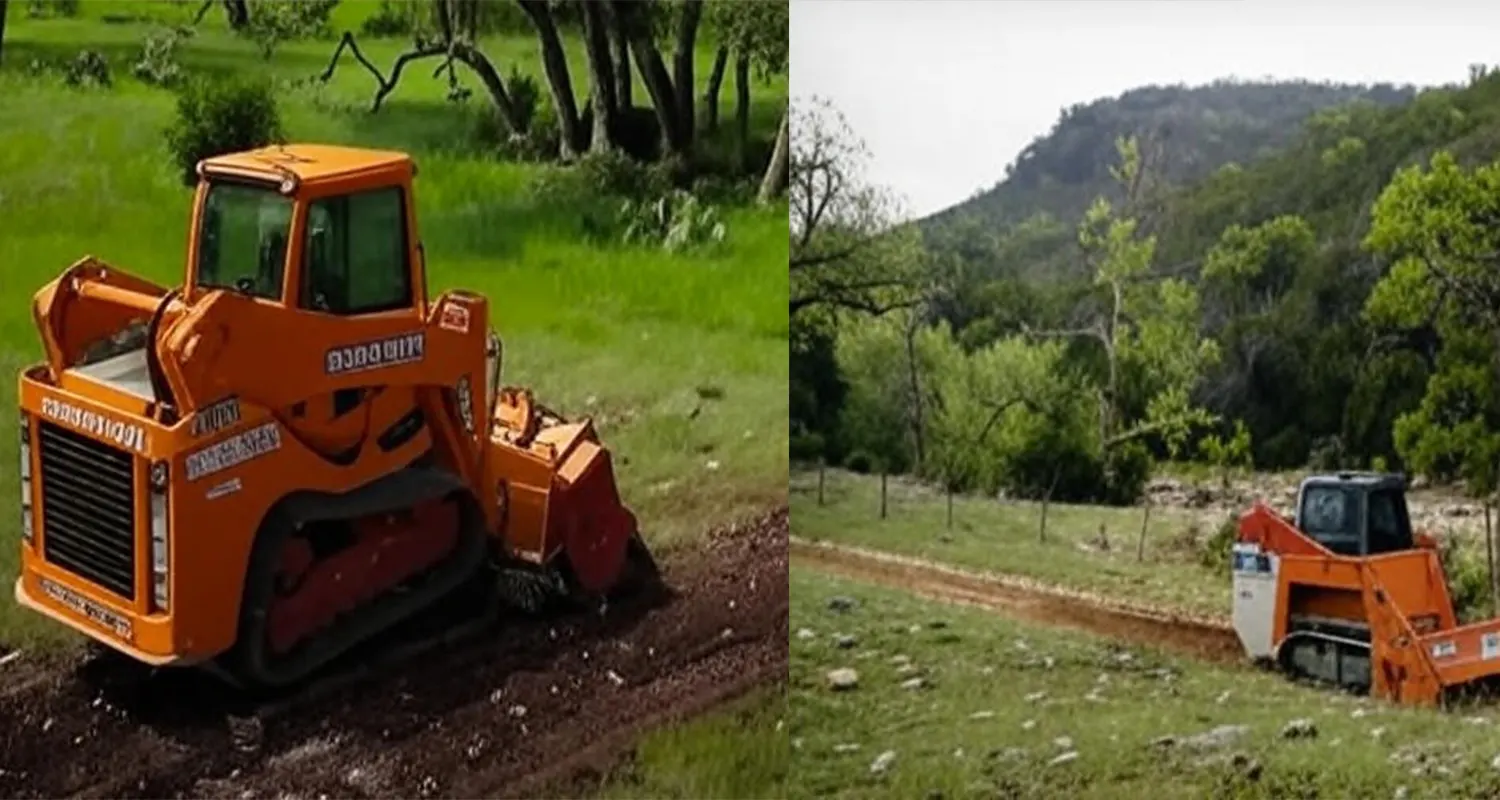
Stone clearing does not directly kill P. infestans or protect leaf surfaces from infection — that is the fungicide’s role. The connection between stone clearing and late blight management is indirect but real: it operates through the canopy microclimate mechanism:
Fine-tilth ridge drainage → shorter leaf wetness:
PSW-3200 fine-tilth ridges drain post-rainfall water faster than coarse-tilth stone-disrupted ridges. The ridge surface moisture that contributes to canopy humidity through soil evaporation is reduced when the ridge drains quickly. On Korean highland farms, the fine-tilth cleared-field ridges typically achieve surface drainage within 30–60 minutes of rainfall cessation — coarse-tilth un-cleared ridges retain surface moisture for 2–4 hours longer. Each additional hour of ridge-surface moisture contributes to the canopy humidity that extends leaf wetness above the infection threshold. Fine-tilth drainage reduces leaf wetness duration by approximately 1–2 hours per rainfall event — marginal on individual events but accumulated over the 8–10 typhoon events in a typical Korean highland season, this is 8–20 hours less total infection-threshold leaf wetness compared to coarse-tilth conditions.
Uniform canopy development → better spray coverage:
Stone-cleared fields with uniform crop emergence and consistent plant vigour develop uniform canopies that allow spray equipment to achieve more consistent leaf coverage. Patchy canopies from stone-disrupted emergence (some plants missing, variable plant height) create canopy gaps that complicate spray penetration and produce inconsistent fungicide deposition. Uniform canopy coverage is the agronomic prerequisite for the spray programme to deliver consistent leaf protection across the whole field.
Certified seed (virus-free) → less systemic stress:
NAAS certified seed production, described in the certification guide, requires stone-cleared fields as a prerequisite for field approval. Certified seed potato grown on stone-cleared fields is free from PVY and PLRV virus infections that reduce plant vigour. Virus-infected plants are more susceptible to late blight infection because their immune response is partially suppressed — certified seed from stone-cleared fields is both virus-free and physiologically stronger, producing crops with inherently higher resistance to blight infection than virus-infected equivalent crops.
Vine Destruction Timing — Stopping Blight Spread to Tubers Before Harvest
The final management action in the Korean highland late blight programme is vine destruction — removing the potato foliage before harvest to prevent late blight lesions on infected leaves from producing sporangia that can infect tubers during the harvest operation. This is a mandatory step for certified seed blocks (required by NAAS) and strongly recommended for all commercial blocks where late blight has been detected in the canopy during the final weeks of the growing season:
Certified seed blocks (mandatory)
NAAS requires vine destruction 3 weeks before harvest on all certified seed fields. The 3-week interval allows tuber skin to set fully (suberise) after vine destruction and separation from the mother plant’s nutrient supply, producing the firm skin required for certified seed storage and grading. Apply vine destruction (mechanical flailing or approved chemical desiccant) on the NAAS-confirmed date and document in the farm diary for the inspection record.
Commercial blocks (recommended)
Where late blight has been observed in the canopy during the final 4 weeks of the growing season, destroy vines 10–14 days before harvest on commercial blocks. This stops the production of new sporangia from the infected foliage and reduces the risk of tuber infection during the EP-AWB-1600 harvest operation. Late blight tuber infection produces a characteristic late blight rot that develops during storage and can spread through stored lots — harvesting infected-foliage crops without vine destruction in the presence of late blight is a storage quality risk regardless of how well the spray programme performed earlier in the season.
Frequently Asked Questions
Which Korean potato variety is most resistant to late blight and does variety choice reduce the spray requirement?
No Korean highland commercially grown potato variety is immune to late blight — Sumi, Daejima, Dubaek, and Atlantic all require full spray management at Korean highland altitude during the July–August risk window. Some Korean potato varieties have been developed with partial resistance genes that slow the rate of disease progress after initial infection (quantitative resistance) — Daejima and some newer NAAS-released varieties have modestly improved late blight tolerance compared to Atlantic (which is particularly susceptible). However, no variety tolerance at Korean highland conditions substitutes for the 7-day spray programme during peak infection conditions. The practical management approach: do not select varieties based on blight resistance as the primary criterion for Korean highland production — select on market channel, dry matter, and yield characteristics, then manage blight aggressively with the spray programme regardless of variety.
What is the correct rain-fast period for Korean highland late blight fungicides?
The rain-fast period varies by fungicide formulation — the technical specification from the product manufacturer defines the minimum time between application and rainfall for the active ingredient to bind sufficiently to the leaf surface that it will not be washed off by subsequent rain. For mancozeb-based protectants, the rain-fast period is typically 2 hours for the commonly used Korean wettable powder formulations — applying within 2 hours before a typhoon is ineffective. For systemic products (mandipropamid, dimethomorph), the rain-fast period is typically 1–2 hours because the active ingredient begins absorbing into the leaf surface within minutes of contact. Never apply any late blight fungicide when rain is forecast within 2 hours. On Korean highland farms where the microclimate can produce afternoon fog and dew even without forecast rainfall, apply sprays in the early morning (6:00–10:00) when the leaf surface is moist from overnight dew but no additional rainfall is forecast — the dew helps the product spread on the leaf surface, and the morning application time allows the full rain-fast period to elapse before afternoon convective rainfall risk.
Can drone spraying substitute for tractor-mounted sprayer at Korean highland altitude?
Agricultural drone spraying for potato late blight management is an emerging technology in Korean highland farming — several highland farm cooperatives in Gangwon-do have adopted drone spraying programmes, driven by the difficulty of operating tractor-mounted sprayers on narrow terrace ridges where the tractor straddling the planted rows creates compaction stress. Drone spraying provides genuine advantages on Korean highland terraces: no row compaction from repeated sprayer tractor passes, ability to spray on gradients where tractor access is restricted, and lower per-pass operational cost on small individual terrace sections. The limitations of current drone spraying technology for Korean highland late blight management: (1) deposit volume per unit area is lower than tractor sprayers, which may reduce protectant fungicide efficacy on the leaf surface; (2) scheduling reliability depends on drone availability and operator access; (3) the post-typhoon 24-hour spray window is difficult to guarantee with drone services that schedule multiple farms. Tractor-mounted spraying remains the standard for high-reliability blight management on Korean highland potato farms with adequate tractor access — drone spraying is a practical supplement for inaccessible terrace sections.
How does stone clearing help with the practical logistics of applying fungicides on Korean highland fields?
The practical logistics connection between stone clearing and late blight spray management operates through the potato machinery field access described in the road network guide. A farm with poor track access may not be able to deploy a tractor-mounted sprayer to every field block within the 24-hour post-typhoon window — particularly if tracks are damaged or muddy after the typhoon. Stone-cleared fields with improved access tracks (where the stone aggregate from clearance operations has been used to surface the tracks) maintain access for tractor-mounted sprayers even in wet conditions, allowing the critical post-typhoon spray to be applied within the optimal window. Un-cleared fields with rough, stone-exposed tracks may be inaccessible for tractor sprayers immediately after typhoon events — the fields most at blight risk (high humidity, high inoculum) are also the hardest to reach for the most critical spray application timing.
What is the correct spray interval during the certified seed vine destruction period?
For certified seed blocks, maintain the regular 7-day spray interval up to the vine destruction date — do not reduce spray frequency during the final canopy period on the assumption that harvest is imminent. Late blight infection of the canopy during the 3-week pre-harvest vine destruction window can still produce tuber infection through the stolon connections even after vine destruction if the infection level is high. The last spray before vine destruction should be a protectant application (mancozeb or copper-based) to ensure maximum protective residue on the foliage at the time of vine destruction — protecting the tubers from any sporangia produced from dying infected foliage during the vine destruction process itself. After vine destruction, no further sprays are applied — the foliage is no longer present and the tubers are protected by the skin suberisation that develops during the 3-week post-vine-destruction interval before harvest.
Complete Potato System — From Stone Clearing to Blight Management
Variety + altitude + current spray programme + certified seed status → integrated blight management calendar coordinated with stone clearing, tillage, and vine destruction timing. Korea Watanabe, Ansan-si, Gyeonggi-do.
Editor: Cxm