Jeju Island is Korea’s most agriculturally diverse island and its most geologically distinctive — a shield volcano built on Tertiary basalt that produces one of the most visually striking and agronomically challenging farming environments in Korea. The same black volcanic rock that defines Jeju’s landscape, its traditional stone walls (돌담), and its identity as a Korean tourist destination is the primary production challenge for every Jeju agricultural sector.
Jeju basalt differs from Gangwon-do granite in several ways that affect stone management: it is vesicular (containing gas bubble voids that make fragments lighter per unit volume than granite); it weathers into irregular angular pieces that score and cut soil when dragged rather than rolling; and annual surface emergence rates are higher on Jeju than on comparable Gangwon-do granite land because Jeju’s mild, frost-light winter provides continuous weathering year-round rather than concentrated spring frost-heave. The cumulative effect is that Jeju agricultural land requires stone management every year on essentially all cultivated areas — not every 2–3 years as on well-managed Gangwon-do highland fields.
This guide covers stone clearing requirements for Jeju’s major crop and livestock systems — 감귤 (citrus), 마늘 (garlic), 당근 (carrot), 고구마 (sweet potato), and 흑돼지 (black pork) pasture management — with specific machine configurations for Jeju basalt conditions.
Jeju Basalt — Why It Is Harder to Manage Than Mainland Granite
Year-Round Emergence
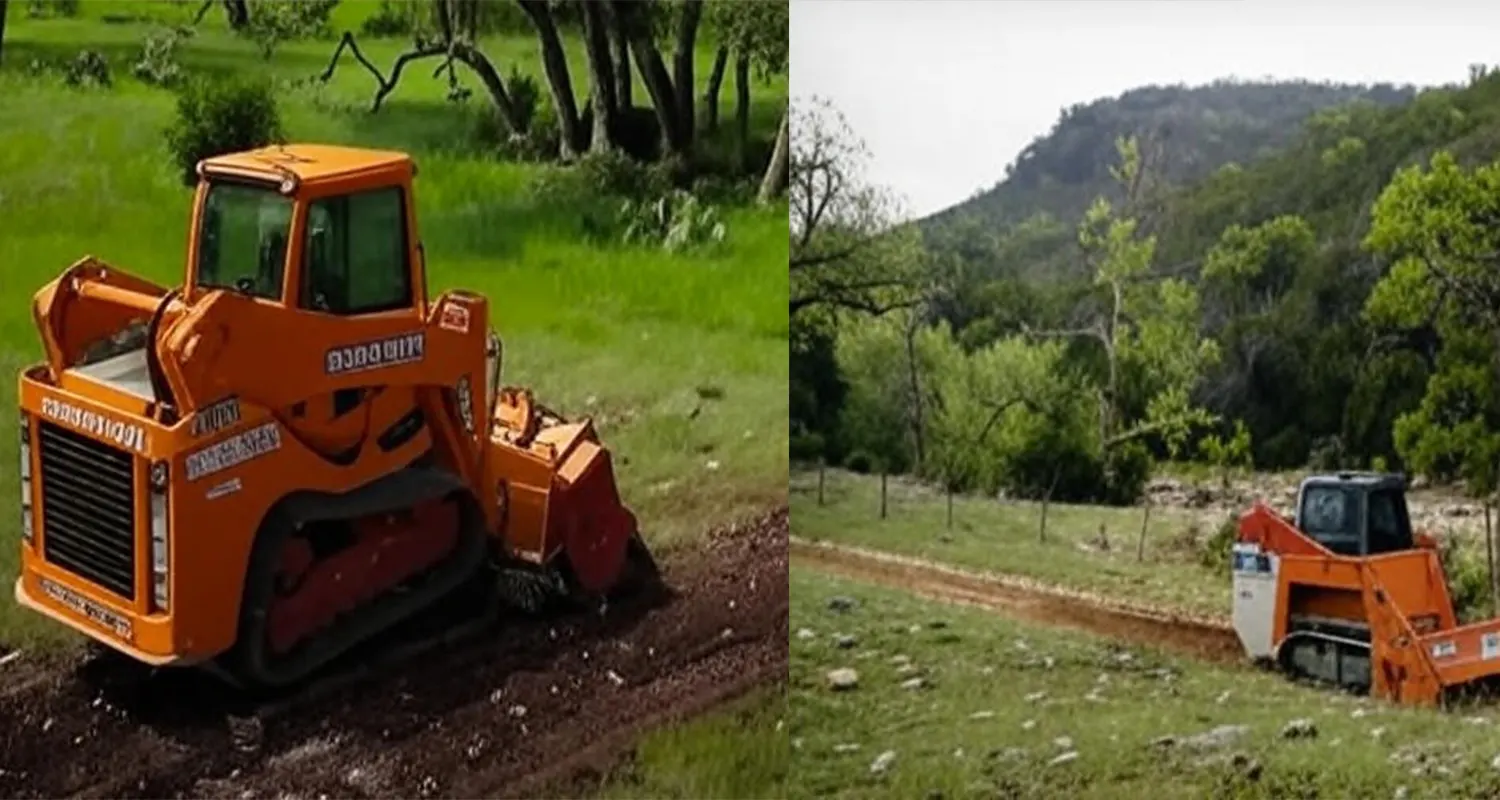
Jeju’s mild winter temperatures (average January minimum 2–5°C) mean freeze-thaw stone heave occurs frequently but not severely — small movements throughout winter rather than one large spring thaw event. New basalt fragments emerge continuously from the subsoil through weathering, root displacement, and minor seismic vibration. Unlike Gangwon-do where stone emergence is concentrated in the spring thaw, Jeju stone management is a year-round operational need.
Highly Abrasive Vesicular Structure
Jeju basalt’s vesicular (bubble-void) surface texture makes it more abrasive than smooth-surfaced granite on equipment cutting edges and carbide teeth. THOR stone crusher carbide tooth wear rates on Jeju basalt are 20–30% higher per tonne of crushed material than on Gangwon-do granite of similar Mohs hardness. Maintenance intervals should be shortened accordingly (as described in Art.38 maintenance guide Jeju section).
Shallow Soil Profile
Many Jeju agricultural fields have soil depths of only 20–40 cm before reaching volcanic rock. This thin soil profile means that deep tillage (above 25 cm) regularly encounters bedrock or large sub-surface rock — limiting the PSW-3200 tillage depth on shallow-profile Jeju fields compared to the full 30 cm depth achievable on deeper Gangwon-do highland soils.
Crop-by-Crop Stone Clearing for Jeju’s Main Agricultural Sectors
감귤 — Jeju Citrus (Hallabong, Unshiu, Various Varieties)
SURFACE TOLERANCE
Perennial — 20–30 year lifespan
Jeju 감귤 orchards grow on volcanic basalt soil in both open-field cultivation and greenhouse (하우스 감귤) production. The stone tolerance standard for orchard alleys is surface — deep embedded basalt does not affect the tree root system at agricultural depths. Annual alley stone management is required because surface basalt emergence is the highest of any Korean agricultural zone.
제주 마늘 — Jeju Garlic (남도마늘, 대서마늘)
LOW TOLERANCE
Annual — planted Sep/Oct, harvested May/Jun
Jeju is Korea’s largest garlic producing region, growing 남도마늘 and 대서마늘 varieties on volcanic basalt soils. Basalt fragments in the bulb development zone (0–15 cm) abrade the outer papery scales — reducing grade and shelf life. Jeju garlic’s stone sensitivity is higher than mainland Korea garlic because Jeju basalt’s vesicular surface texture is more scoring than smooth granite.
제주 당근 — Jeju Carrot (주로 5촌 당근)
ZERO TOLERANCE
Annual — planted Aug/Sep, harvested Nov–Jan
Jeju carrot (제주 당근) is one of Korea’s premium carrot products — long, straight, orange taproot grown on volcanic soil that produces exceptional colour and flavour. Stone in the carrot development zone (0–25 cm) forces root bifurcation — producing forked, split roots that are cosmetically unacceptable to Korean premium fresh market buyers and carrot juice processors. The zero-stone tolerance for Jeju carrot is non-negotiable and requires the full THOR 2.4 + CT-2100 sequence before every planting season.
제주 고구마 — Jeju Sweet Potato
ZERO TOLERANCE
Annual — planted April/May, harvested Sep/Oct
Jeju sweet potato (제주 고구마) — grown on Jeju’s well-drained volcanic soil for its distinctive sweetness attributed to the mineral-rich basalt soil — is equally sensitive to stone as mainland sweet potato. Basalt fragments in the storage root development zone cause surface abrasion and deformed root shapes. The Jeju premium sweet potato market (direct sale, premium packaging, Jeju agricultural co-op branding) demands blemish-free, uniformly shaped roots — stone contact damage is a cosmetic rejection. Annual THOR 2.4 + CT-2100 clearance required.
제주 흑돼지 — Jeju Black Pork Pasture
ANIMAL WELFARE + MACHINERY
Perennial pasture
Jeju black pork (제주 흑돼지) is among Korea’s most premium pork products, with outdoor or semi-outdoor pasture access forming part of the production system that commands its premium over industrial pork. Surface basalt stones in pig pastures create foot lesions on free-range pigs — a welfare concern and a production problem (lame pigs eat less and grow more slowly). Annual pasture surface clearance with the EP-EW-4000 rock rake and CT-2100 collection reduces surface stone density to safe levels for pig hoof health.
Jeju Agricultural Stone Clearing Calendar — Year-Round Management
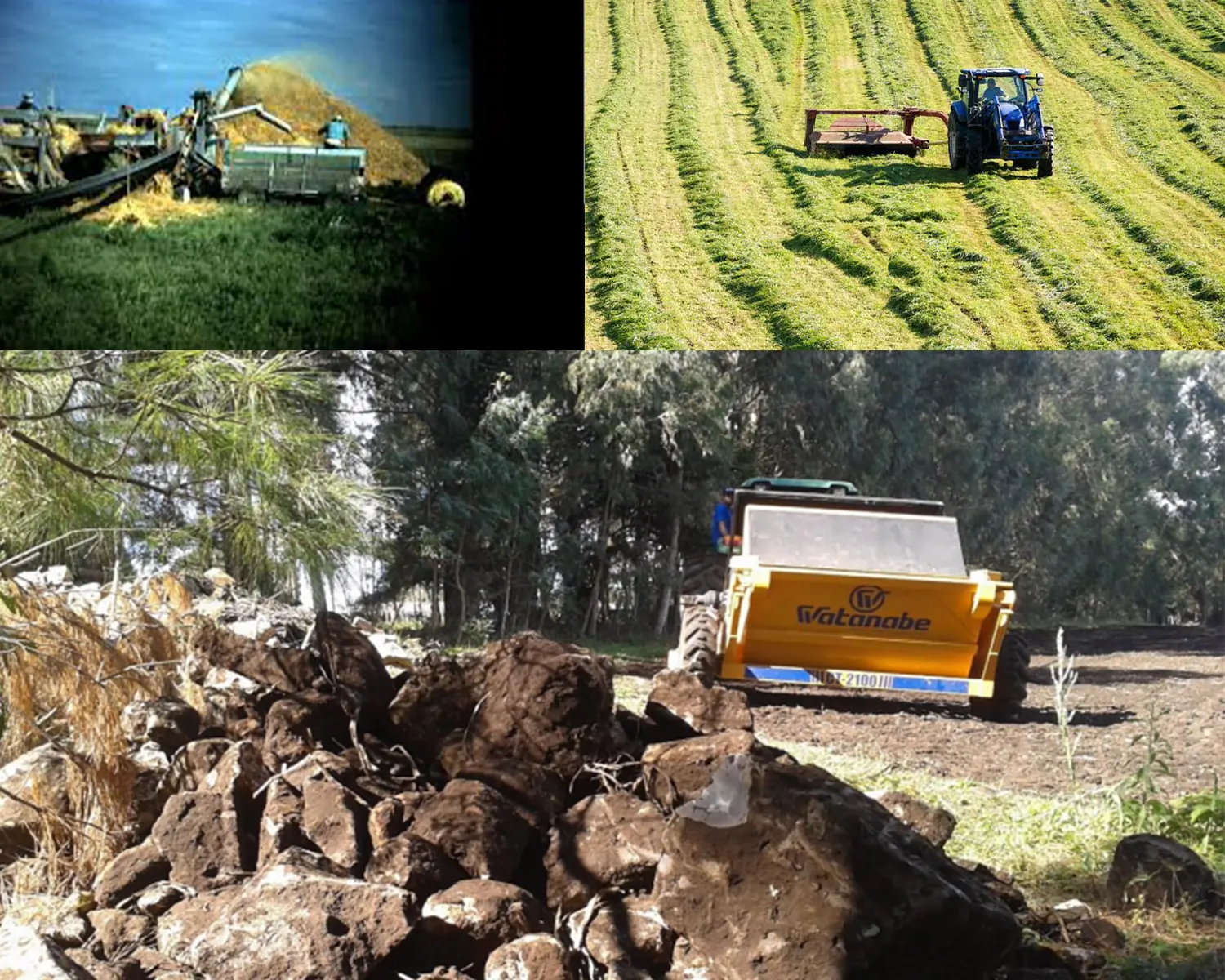
| Month | Crop activity | Stone clearing activity |
|---|---|---|
| Jan–Feb | Carrot harvest complete; garlic growing | Post-carrot harvest field clearance for next season preparation |
| Mar–Apr | Sweet potato planting prep | THOR 2.4 + CT-2100: sweet potato field clearance |
| May–Jun | Garlic harvest | EP-EW-4000 + CT-2100: garlic field post-harvest surface clearance |
| Jun–Jul | Citrus fruit development | Citrus orchard alley clearance (EP-EW-4000 + CT-2100) before summer machinery season |
| Aug–Sep | Garlic planting preparation; sweet potato harvest | THOR 2.4 + CT-2100: garlic field clearance (annual, mandatory) |
| Sep–Oct | Carrot planting preparation | THOR 2.4 + CT-2100: carrot field clearance (annual, mandatory) |
| Oct–Dec | Citrus harvest; early carrot growing | Post-harvest orchard clearing; pig pasture winter check and clearance |
Why Jeju Requires Annual THOR Clearance Where Mainland Korea Manages with the Rake
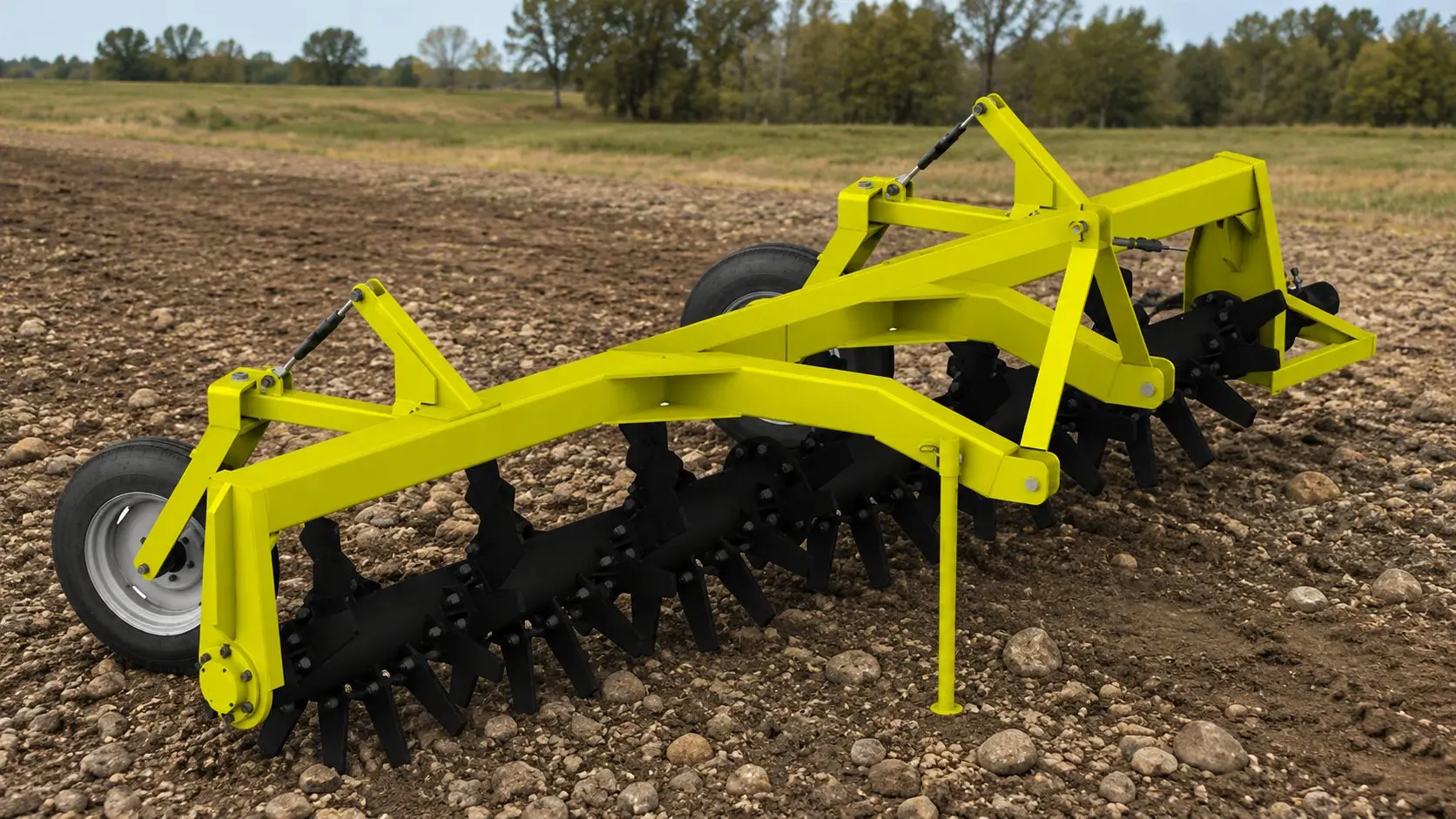
The most common question Jeju farmers ask Korea Watanabe is: “I cleared my field with the THOR last year — can I just use the rake this year?” For mainland Gangwon-do granite highland, the answer is often yes — 2–3 years of rake-only maintenance is normal after thorough initial THOR clearance. For Jeju basalt, the answer is almost always no. The reason is the continuous weathering characteristic of Jeju basalt:
Mainland granite (Gangwon-do)
Stone emergence concentrated in spring frost-heave. After initial THOR clearance, annual frost-heave produces surface stones — mostly manageable by rake in most years. Heavy frost-heave years bring larger stones requiring THOR.
Jeju basalt
Stone emergence is year-round from continuous weathering. Previous season’s THOR clearance does not create a “cleared base” that persists — Jeju basalt continuously weathers and produces new surface fragments from below. Most Jeju crop farmers report needing THOR 2.4 clearance every year rather than alternating with rake-only seasons.
The practical Jeju stone management approach that Korea Watanabe recommends for crop-producing operations: annual THOR 2.4 + CT-2100 for all root and bulb crop fields (carrot, garlic, sweet potato); annual EP-EW-4000 + CT-2100 for orchard alleys and pig pastures; and always completing the THOR pass before rather than after the crop is planted — on Jeju, there are no “light years” for root crop stone management.
Jeju’s Unique Stone Management Economics — Higher Frequency, Still Cost-Justified
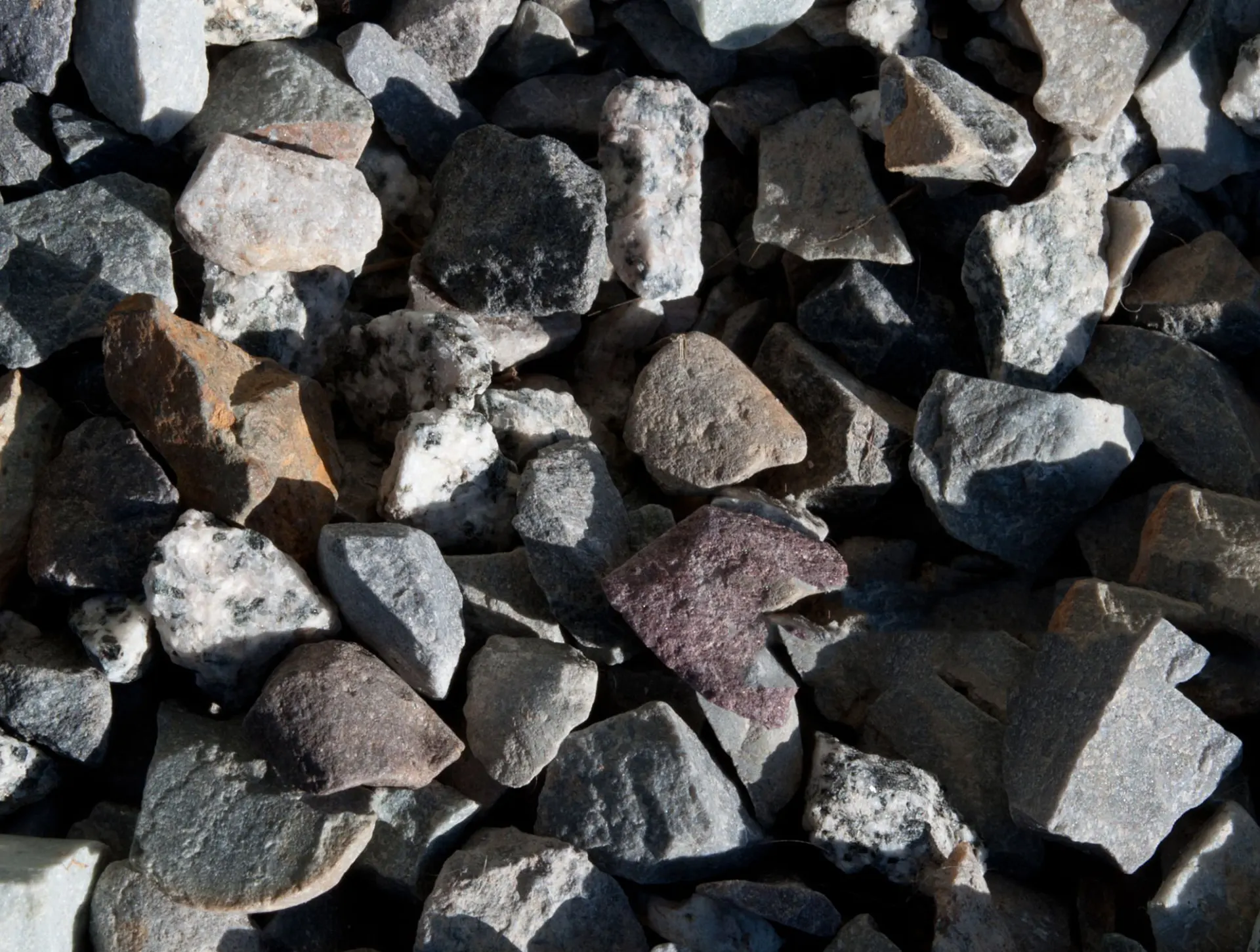
Jeju Island’s annual THOR clearance requirement — versus the mainland’s typical 2–3 year crusher cycle — approximately doubles the annual stone clearing operating cost for comparable crop types. However, Jeju crop production economics more than compensate for this higher maintenance frequency. Three factors explain why Jeju farmers consistently find the annual clearance investment worthwhile:
Jeju premium pricing for root and bulb crops. Jeju carrot, garlic, and sweet potato command 20–40% price premiums over mainland-produced equivalents in Korean fresh markets — attributed to Jeju’s volcanic mineral soil, distinctive flavour profiles, and strong Jeju agricultural branding. This premium makes the annual clearance investment a small fraction of the incremental revenue premium that Jeju provenance provides.
Higher per-hectare crop intensity on cleared land. Jeju cleared fields produce 2–3 crops per year in some rotations (carrot September–January, sweet potato April–September, and garlic overlay) — significantly higher land utilisation than Gangwon-do highland fields with a single main crop season. The annual clearance investment is amortised across 2–3 crop seasons per year rather than one.
Jeju’s tourist economy creates high-value direct sales channels. Jeju Island’s 15+ million annual visitor economy creates premium direct sale, farm-to-table, and tourist retail channels for Jeju agricultural products that mainland farms do not have access to. Stone-cleared, high-quality crop production for Jeju tourist sales commands the highest per-kilogram prices in Korean agriculture — making the investment in annual clearance clearly justified by the resulting product quality premium.
Jeju Stone Clearing Equipment Configuration — Summary Recommendation
For a Jeju Island mixed farming operation growing citrus orchard + carrot + garlic + sweet potato (a common Jeju multi-crop configuration), the recommended stone clearing equipment system is:
All three machines in Korean local stock, Ansan-si, Gyeonggi-do. Contact Korea Watanabe for Jeju Island delivery logistics including sea freight co-ordination and current delivery lead time to Jeju harbour.
Jeju Island Soil After Stone Clearance — Building on Volcanic Mineral Wealth
Jeju basalt soil — once cleared of mechanical stone barriers — has a distinctive agricultural advantage: volcanic mineral content. Basalt weathers over geological time to release silica, magnesium, iron, calcium, and trace minerals into the soil profile. Jeju agricultural soils tend toward moderate-to-good natural mineral content for these elements compared to Korean mainland granite soils that are mineral-poor except for silicon.
The primary soil building challenge on Jeju cleared land is organic matter, not mineral supplementation. Jeju’s warm-season rainfall (1,500–2,000 mm annually, concentrated in summer) accelerates organic matter decomposition — Jeju soils consume added organic matter faster than Gangwon-do highland soils where cooler temperatures slow microbial activity. Korean highland soil building principles (Art.43) apply to Jeju cleared land with one modification: organic matter application rates should be 1.5–2× the mainland recommended rates to compensate for Jeju’s faster decomposition rate. Annual organic matter additions of 30–40 t/ha compost (versus 20 t/ha on mainland highland) are typically needed to raise and maintain Jeju soil organic matter above 2.5–3.0% over the first 3–5 years of production.
Jeju soil pH management follows the same lime application principles as mainland Korea — Jeju volcanic soils are typically pH 5.0–6.0 and often require lime correction for garlic (pH 6.0–6.5), carrot (pH 6.0–7.0), and sweet potato (pH 5.8–6.5). The lime incorporation pass using the PSW-3200 rotavator is equally applicable on Jeju — noting that shallow-profile Jeju fields (20–35 cm soil depth) require the PSW-3200 depth set below the bedrock/rock contact zone to avoid rotor damage from sub-surface basalt impact.
Frequently Asked Questions
Is Jeju Island stone clearing equipment available through Korea Watanabe for local delivery?
Korea Watanabe ships to all Korean addresses including Jeju Island from the Ansan-si, Gyeonggi-do base. Jeju Island delivery requires sea freight from the mainland port — typically Mokpo or Yeosu to Jeju. Delivery lead time to Jeju is typically 3–5 business days from dispatch, depending on ferry scheduling. For large equipment (THOR 2.4, CT-2100), confirm the delivery logistics including on-island transport from Jeju harbour to the farm before ordering. Korea Watanabe coordinates with freight partners familiar with Jeju agricultural equipment delivery and can confirm current delivery lead times and costs at the time of enquiry.
Are Korean agricultural machinery subsidies available to Jeju Island farmers at the same rate as mainland Korea?
Korean agricultural machinery subsidies for Jeju Island farmers are administered through the Jeju Special Self-Governing Province agricultural support program (제주특별자치도 농기계 지원사업), which operates parallel to the national MAFRA program. Jeju agricultural machinery subsidy rates and eligible equipment categories may differ from mainland Korea program rates. Jeju farmers should confirm current subsidy availability for stone clearing equipment (THOR 2.4, CT-2100, EP-EW-4000) through the Jeju Agricultural Technology Center (제주도 농업기술원) rather than the mainland county program. Korea Watanabe provides complete technical documentation for Jeju subsidy applications for all relevant machines.
Jeju citrus orchards have traditional stone wall 돌담 boundaries — does the THOR or rake risk damaging these walls?
Traditional Jeju 돌담 (dry stone walls) marking field boundaries are cultural heritage features as well as practical windbreaks. The EP-EW-4000 rake operating in orchard alleys does not approach the wall boundaries — it works in the alley surface zone between rows, not at the row ends. The THOR 2.4, if used in orchard alleys for heavier stone clearance, should maintain a minimum 1.0–1.5 m clearance from the 돌담 wall face — both to avoid stone throw toward the wall and to avoid undermining the wall’s base through deep rotor penetration adjacent to its foundation. Both machines can safely operate in Jeju 감귤 orchards with 돌담 boundaries provided the operator maintains appropriate clearance distances — which Korea Watanabe confirms at the time of equipment delivery guidance for Jeju orchard operations.
제주도 농업 돌 제거 장비 — 작물 + 면적 + 트랙터 HP 알려주세요
Crop (감귤/마늘/당근/고구마/흑돼지) + field area (ha) + tractor HP + existing stone clearance history → annual machine sequence recommendation with Jeju basalt-specific maintenance interval adjustment. Korea Watanabe, Ansan-si, Gyeonggi-do.
Editor: Cxm