कोरिया के पहाड़ी क्षेत्रों में आलू की खेती में, जहाँ अभी भी मुख्य रूप से हाथ से खुदाई की जाती है, यांत्रिक आलू कटाई उत्पादकता में सुधार का सबसे बड़ा साधन है। गंगवोन-डो के पहाड़ी क्षेत्रों में 1 हेक्टेयर आलू की हाथ से खुदाई के लिए आवश्यक श्रम (जो उपज और पत्थर की मात्रा के आधार पर आमतौर पर 25-40 व्यक्ति-घंटे प्रति हेक्टेयर होता है) को यांत्रिक खुदाई मशीन के संचालन से 1.5-3 ट्रैक्टर-घंटे में पूरा किया जा सकता है। उन खेतों के लिए जहाँ बुवाई से कटाई तक का समय ऊँचाई और पाले के कारण सीमित है, यांत्रिक कटाई से समय की बचत श्रम बचत जितनी ही महत्वपूर्ण है।
वातानाबे ईपी-एडब्ल्यूबी आलू खोदने वाली मशीन श्रृंखला में चार कॉन्फ़िगरेशन उपलब्ध हैं: दो-पंक्ति वाली ईपी-एडब्ल्यूबी-1600, चार-पंक्ति वाली ईपी-एडब्ल्यूबी-3200 और खेत में ही पैकेजिंग करने वाली ईपी-सीडब्ल्यूबी-2एल बिग बैग हार्वेस्टर। प्रत्येक कॉन्फ़िगरेशन का एक विशिष्ट उपयोग क्षेत्र है - खेत का आकार, खेत की बनावट, पंक्तियों की संख्या और आपूर्ति श्रृंखला का गंतव्य, ये सभी कारक प्रभावित करते हैं कि कौन सा कॉन्फ़िगरेशन किसी विशिष्ट कोरियाई कार्य के लिए सर्वोत्तम परिणाम देता है। गलत कॉन्फ़िगरेशन खरीदने का मतलब है एक ऐसी मशीन खरीदना जो आपकी वास्तविक परिचालन आवश्यकताओं के मुकाबले कमज़ोर प्रदर्शन करती है, भले ही विनिर्देश कागज़ पर तुलनीय प्रतीत हों।
यह गाइड बताती है कि वातानाबे आलू खोदने वाली मशीनों की श्रृंखला की संरचना कैसी है, विभिन्न कोरियाई पहाड़ी क्षेत्रों में खेती के लिए सही कॉन्फ़िगरेशन क्या निर्धारित करता है, और पीएसडब्ल्यू-3200 रोटावेटर चरण में निर्धारित पंक्ति अंतराल को उस मशीन से कैसे मिलाया जाए जो छह महीने बाद कुशलतापूर्वक फसल काट सके।
मुख्य निर्णय — वाहन पर सवार होकर या ट्रेलर पर ले जाकर चलाना, और यह क्यों मायने रखता है
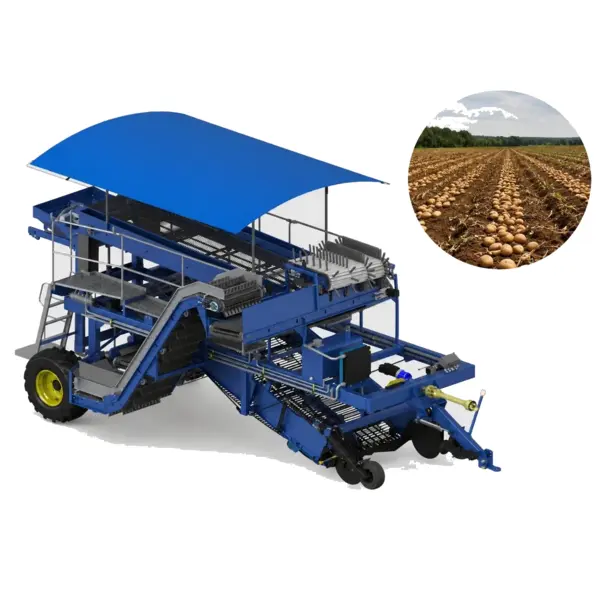
माउंटेड और ट्रेल पोटैटो डिगर कॉन्फ़िगरेशन के बीच मूलभूत अंतर यह है कि कटाई के बाद आलू को उठाने और अलग करने की प्रक्रिया के बाद कहाँ ले जाया जाता है:
माउंटेड डिगर (ईपी-एडब्ल्यूबी-1600): यह मशीन ट्रैक्टर के पिछले तीन-बिंदु वाले हिच पर लगाई जाती है। वाइब्रेटिंग वेब सेपरेटर द्वारा उठाए गए आलूओं से मिट्टी हटाने के बाद, साफ आलूओं को तीन निकास विकल्पों में से किसी एक पर भेजा जाता है — साइड विंडरो (किट A), पीछे लगे एलिवेटर द्वारा संग्रह कार्ट में ले जाना (किट B), या ट्रांसफर एलिवेटर द्वारा ट्रेलर में ले जाना (किट C)। ट्रैक्टर, डिगर और आउटपुट सिस्टम एक इकाई के रूप में खेत में चलते हैं। यह कॉन्फ़िगरेशन कॉम्पैक्ट है, कम लंबाई वाले खेतों में आसानी से चलाया जा सकता है, और छोटे ऑपरेशनों के लिए उपयुक्त है जहाँ हमेशा एक अलग कार्ट या ट्रक उपलब्ध नहीं होता है।
ट्रेल डिगर (ईपी-एडब्ल्यूबी ट्रेल सीरीज, ईपी-एडब्ल्यूबी-3200): यह मशीन अपने पहियों पर ट्रैक्टर के पीछे खींची जाती है। आमतौर पर, ट्रेलर वाली मशीनें अधिक क्षमता वाली होती हैं - EP-AWB-3200 एक साथ 4 पंक्तियों की कटाई कर सकती है - और इनमें एकीकृत बंकर या टैंक क्षमता शामिल हो सकती है, जिससे मशीन को डिस्चार्ज स्टॉप की आवश्यकता होने से पहले लंबे समय तक स्वतंत्र रूप से काम करने की सुविधा मिलती है। ट्रेलर वाली खुदाई मशीनें बड़े खेतों के लिए उपयुक्त होती हैं, जहाँ शुरुआती पूंजी की अधिकता उत्पादन में वृद्धि से उचित ठहराई जाती है, और जहाँ खेत की बनावट मेड़ों पर ट्रैक्टर-प्लस-ट्रेलर संयोजन के व्यापक मोड़ने की अनुमति देती है।
| कारक | माउंटेड (ईपी-एडब्ल्यूबी-1600) | ट्रेल किया हुआ (ईपी-एडब्ल्यूबी-3200) |
|---|---|---|
| पंक्तियों की कटाई हो चुकी है | 2 पंक्तियाँ | 4 पंक्तियाँ |
| न्यूनतम ट्रैक्टर एचपी | 75 एचपी | 110+ एचपी |
| कड़ी | श्रेणी 2 (पिछला हिच) | ड्रॉबार टो |
| हेडलैंड मोड़ | तंग - छोटी पंक्तियों के लिए उपयुक्त | अधिक त्रिज्या — लंबी पंक्तियों की आवश्यकता है |
| भूभाग लचीलापन | ऊँची ढलानें, संकरी छतें | निचले — समतल, बड़े खेत |
| दैनिक कवरेज | 0.5–1.2 हेक्टेयर/घंटा (2-पंक्ति) | 1.0–2.0 हेक्टेयर/घंटा (4-पंक्ति) |
| सर्वोत्तम पैमाना | 2–15 हेक्टेयर के संचालन | 15+ हेक्टेयर के संचालन |
ईपी-एडब्ल्यूबी-1600 माउंटेड पोटैटो डिगर — कोरियाई हाईलैंड स्टैंडर्ड
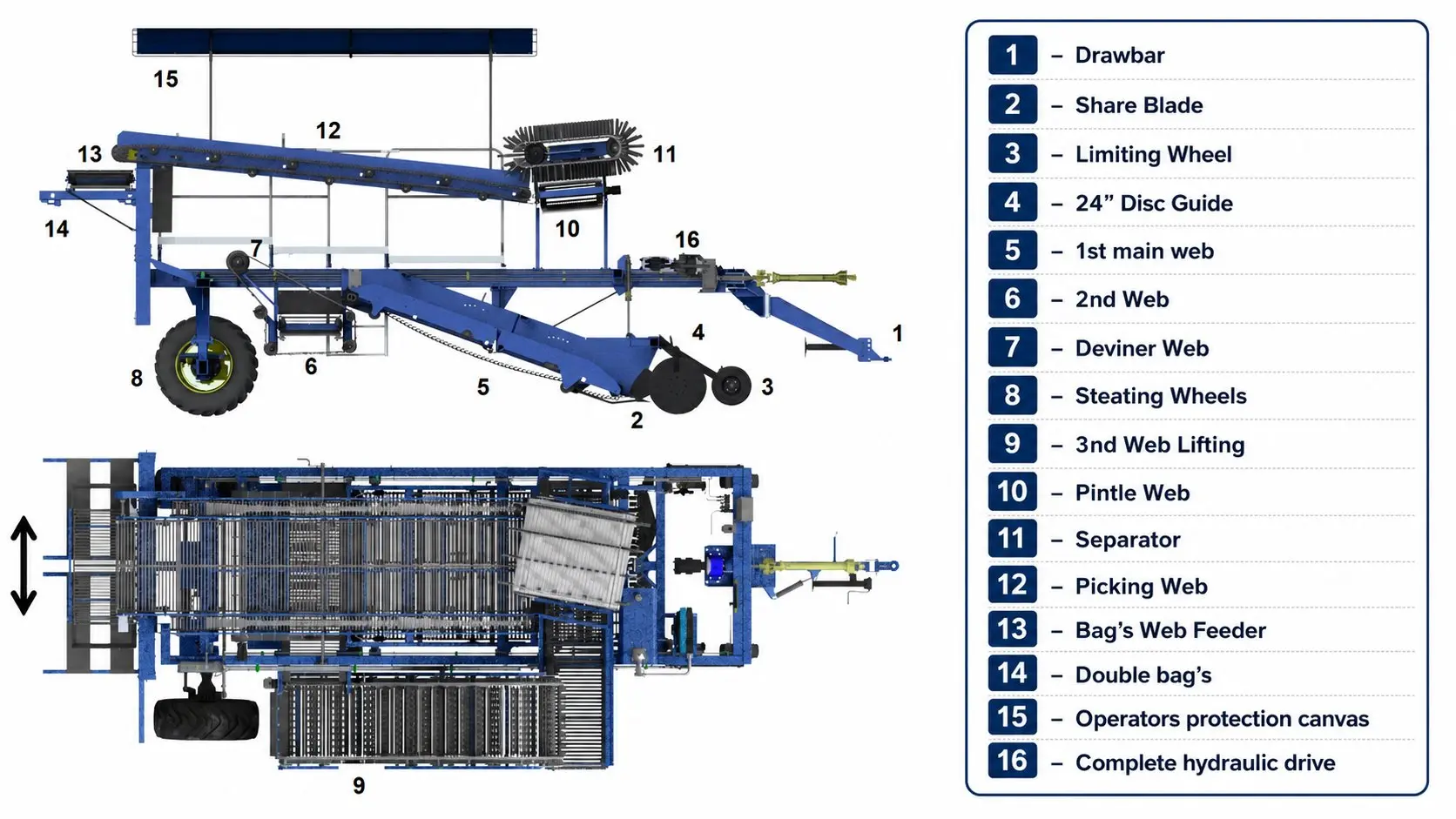
The ईपी-एडब्ल्यूबी-1600 आलू खोदने वाली मशीन यह एक दो-पंक्ति वाला माउंटेड उपकरण है (श्रेणी 2 तीन-बिंदु हिच, न्यूनतम 75 एचपी पीटीओ) - जो 2-15 हेक्टेयर परिचालन पैमाने की कोरियाई पहाड़ी आलू की खेती के लिए मानक कॉन्फ़िगरेशन है। अधिकांश कोरियाई वाणिज्यिक पहाड़ी आलू उत्पादन द्वारा इसे अपनाने से कई व्यावहारिक लाभ झलकते हैं जो गंगवोन-डो आलू उत्पादक क्षेत्र की विशिष्ट खेत स्थितियों और कृषि व्यवस्था के अनुरूप हैं:
ईपी-एडब्ल्यूबी-1600 कैसे काम करता है
मशीन के दो लिफ्टिंग शेयर बोई गई दो पंक्तियों के नीचे से गुजरते हैं, और 15-20 सेंटीमीटर की गहराई पर कंद क्षेत्र के नीचे तक पहुँचने के लिए कोण बनाते हैं। जैसे-जैसे ट्रैक्टर आगे बढ़ता है, शेयर पूरी मेड़—मिट्टी, कंद और सतह पर बची हुई कोई भी सामग्री—को ऊपर कंपन करने वाले वेब कन्वेयर पर उठा लेते हैं। वेब कन्वेयर की आगे-पीछे की गति ढीली मिट्टी और छोटे कणों (जो वेब से होकर वापस खेत में गिर जाते हैं) को कंदों (जो वेब की जाली से गिरने के लिए बहुत बड़े होते हैं और कन्वेयर पर आगे बढ़ते हैं) से अलग कर देती है। जब तक कंद कन्वेयर के पिछले हिस्से तक पहुँचते हैं, कंपन द्वारा चिपकी हुई अधिकांश मिट्टी अलग हो चुकी होती है—जिससे साफ, मिट्टी रहित कंद प्राप्त होते हैं जो निकालने के लिए तैयार होते हैं।
कंपन जाल द्वारा मिट्टी को अलग करना गुणवत्ता निर्धारण का एक महत्वपूर्ण चरण है: कटाई के समय जिन कंदों पर मिट्टी अधिक चिपकी होती है, वे ग्रेडिंग और पैकेजिंग में समस्याएँ पैदा करते हैं, और दीर्घकालिक भंडारण में, कंदों के बीच मिट्टी की जेबें नमी के संचय और रोग प्रसार को बढ़ावा देती हैं। मिट्टी को पूरी तरह से अलग करने के लिए जाल की कंपन दर और आयाम निर्धारित होते हैं — जिन्हें कोरियाई उच्चभूमि ग्रेनाइट से बनी मिट्टी के विशिष्ट घनत्व और नमी की स्थितियों के लिए अनुकूलित किया गया है।
तीन आउटपुट किट — कटाई संबंधी रसद व्यवस्था के अनुरूप
ईपी-एडब्ल्यूबी-1600 तीन अलग-अलग आउटपुट कॉन्फ़िगरेशन किट के साथ उपलब्ध है, जिनमें से प्रत्येक अलग-अलग कटाई लॉजिस्टिक्स दृष्टिकोण के लिए उपयुक्त है:
किट ए — साइड विंडरो
कटाई की गई पंक्ति के बगल में कंदों को एक कतार में रखा जाता है। खुदाई के बाद, कतार से कंदों को हाथ से तोड़ा जाता है। यह सबसे कम लागत वाली उत्पादन विधि है - इसमें किसी अतिरिक्त संग्रहण उपकरण की आवश्यकता नहीं होती - और यह छोटे पारिवारिक व्यवसायों के लिए उपयुक्त है जहाँ कटाई के लिए श्रम उपलब्ध हो। यह लगभग 2-3 हेक्टेयर से अधिक के खेतों के लिए उपयुक्त नहीं है, जहाँ कटाई के चरम समय में कतार से कंदों को हाथ से तोड़ने से श्रम की कमी हो जाती है।
किट बी — कार्ट तक जाने वाला पिछला एलिवेटर
एक रियर एलिवेटर वेब सेपरेटर से साफ कंदों को निकालकर सीधे डिगर के पीछे चल रही कलेक्शन कार्ट या बिन ट्रेलर में पहुंचाता है। ऑपरेटर ट्रैक्टर (डिगर सहित) को आगे बढ़ाता है; कार्ट अपने पहियों पर स्वचालित रूप से पीछे-पीछे चलती है। जब कार्ट भर जाती है, तो उसे खाली कार्ट से बदल दिया जाता है - जिससे विंडरो पिकिंग का चरण पूरी तरह समाप्त हो जाता है। यह 5-15 हेक्टेयर क्षेत्र में गंगवोनडो के व्यावसायिक आलू उत्पादन में प्रचलित व्यवस्था है, जहां बिना मैन्युअल पिकिंग के यांत्रिक कटाई लक्ष्य है।
किट सी — ट्रेलर में स्थानांतरण लिफ्ट
लैटरल ट्रांसफर एलिवेटर, डिगर से कंदों को सीधे डिगर के साथ चलने वाले ट्रेलर में स्थानांतरित करता है (पीछे चलने वाले ट्रेलर के बजाय)। यह उन खेतों और ट्रैक्टरों के लिए उपयुक्त है जहां खेत की चौड़ाई या मेड़बंदी की बाधाओं के कारण पीछे-पीछे चलने वाली गाड़ी संभव नहीं है। समानांतर चलने वाले ट्रेलर की आवश्यकता के कारण यह किट बी की तुलना में कोरियाई पहाड़ी क्षेत्रों में कम प्रचलित है, लेकिन उत्तरी ग्योंगसांग और दक्षिणी ग्योंगगी आलू उत्पादन क्षेत्रों में विशिष्ट चौड़ी सीढ़ीदार खेतों में इसका उपयोग किया जाता है।
कोरियाई अनुशंसा: 5 हेक्टेयर से अधिक के व्यावसायिक कार्यों के लिए, जहाँ न्यूनतम मैन्युअल श्रम के साथ यांत्रिक कटाई का लक्ष्य रखा गया है, किट बी (पीछे से एलिवेटर से कार्ट तक) वह कॉन्फ़िगरेशन है जो मैन्युअल विंडरो पिकिंग चरण को समाप्त करता है और साथ ही कोरियाई पहाड़ी खेतों की ज्यामिति और ट्रैक्टर लॉजिस्टिक्स के अनुकूल भी रहता है। किट ए 2-3 हेक्टेयर से कम के कार्यों के लिए व्यावहारिक है जहाँ श्रम लागत को मशीनीकरण के बजाय पारिवारिक कृषि संरचना के माध्यम से नियंत्रित किया जाता है। किट सी को विशिष्ट खेत कॉन्फ़िगरेशन के लिए चुना जाता है जहाँ किट बी की कार्ट-फ़ॉरवर्डिंग ज्यामिति सीमित होती है।
पंक्ति अंतराल मिलान क्यों अपरिहार्य है?
EP-AWB-1600 के दो लिफ्टिंग शेयर दो आसन्न रोपित पंक्तियों के कंद क्षेत्र के नीचे से गुजरने चाहिए। शेयर की दूरी — दोनों लिफ्टिंग शेयरों की केंद्र रेखाओं के बीच की क्षैतिज दूरी — रोपित पंक्तियों की दूरी से बिल्कुल मेल खानी चाहिए। यदि शेयर के केंद्र और रोपित पंक्तियों के केंद्र मेल नहीं खाते हैं, तो शेयर पूरी तरह से कंदों के नीचे से गुजरने के बजाय आंशिक रूप से उनके नीचे से गुजरते हैं: शेयर कंद क्षेत्र को काटते हैं, जिससे कंदों को सीधा नुकसान होता है, छंटाई की दर बढ़ती है और राजस्व कम होता है।
बोई गई पंक्तियों के बीच की दूरी निर्धारित की जाती है। PSW-3200 रोटावेटर जुताई के समय कार्य चौड़ाई (आलू की 7-चरण प्रणाली में चरण 2), जिसे फर्रोवर (चरण 3), प्लांटर (चरण 5) और कल्टीवेटर (चरण 6) के माध्यम से बनाए रखा जाता है — डिगर खरीदने से पहले इसकी पुष्टि अवश्य की जानी चाहिए। EP-AWB-1600 शेयर स्पेसिंग निर्दिष्ट करने से पहले खेत से अपनी रोपित पंक्ति रिक्ति माप की पुष्टि करें। कोरिया के पहाड़ी क्षेत्रों में नियोजित और वास्तविक रोपित रिक्ति के बीच 5 सेमी का अंतर काफी आम है, इसलिए खेत में माप लेना आवश्यक है — केवल नाममात्र प्रणाली विनिर्देशों के आधार पर ऑर्डर न दें।
ईपी-एडब्ल्यूबी ट्रेल सीरीज और ईपी-एडब्ल्यूबी-3200 — बड़े ऑपरेशनों के लिए
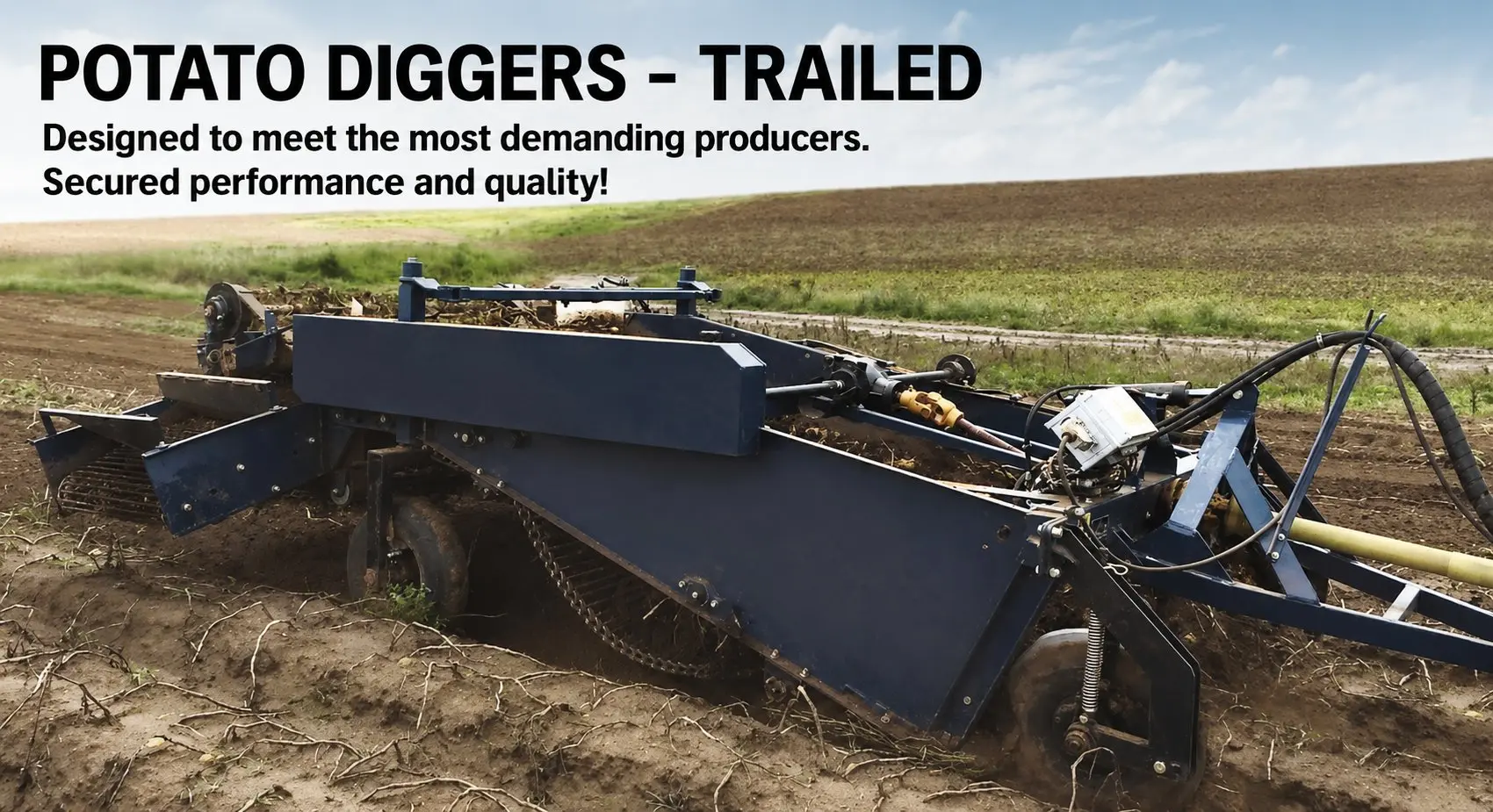
ईपी-एडब्ल्यूबी ट्रेलड डिगर श्रृंखला और ईपी-एडब्ल्यूबी-3200 (4-पंक्ति ट्रेलड) लगभग 15 हेक्टेयर वार्षिक फसल क्षेत्र से ऊपर के कोरियाई आलू के संचालन के लिए उपयुक्त हैं, जहां ईपी-एडब्ल्यूबी-1600 की 2-पंक्ति थ्रूपुट - आमतौर पर खेत की लंबाई और लॉजिस्टिक्स के आधार पर 0.5-1.2 हेक्टेयर प्रति घंटा - फसल की इष्टतम कटाई अवधि के सापेक्ष कटाई के समय की बाधा उत्पन्न करती है।
कोरियाई पर्वतीय परिस्थितियों में थ्रूपुट क्यों मायने रखता है?
कोरिया में पहाड़ी क्षेत्रों में आलू की कटाई का समय दो परस्पर संबंधित कारकों से प्रभावित होता है: फसल की कटाई के लिए उपयुक्त परिपक्वता अवधि (आमतौर पर अंकुरण के 80-100 दिन बाद, किस्म के अनुसार) और कटाई के लिए उपयुक्त ऊंचाई पर मौसम। गंगवोनडो में 600-800 मीटर की ऊंचाई पर, कटाई के लिए उपयुक्त परिपक्वता अवधि और शरद ऋतु की बारिश के आगमन के बीच का समय अक्सर 3-4 सप्ताह होता है, जिसके कारण भारी मशीनों के लिए खेतों तक पहुंचना मुश्किल हो जाता है। 25 हेक्टेयर आलू की खेती के लिए, 1.0 हेक्टेयर/घंटे की उत्पादक खुदाई दर पर कटाई के लिए 25 घंटे की खुदाई मशीन की आवश्यकता होती है - जो 2-पंक्ति वाली खुदाई मशीन से 4-5 अच्छे मौसम वाले दिनों में प्राप्त की जा सकती है। यदि मौसम में देरी के कारण यह अवधि 2-3 दिनों तक सीमित हो जाती है, तो 2-पंक्ति वाली खुदाई मशीन खराब मौसम के कारण खेत बंद होने से पहले कटाई पूरी नहीं कर सकती।
EP-AWB-3200 (4-पंक्ति वाला ट्रेल मशीन) समान परिस्थितियों में EP-AWB-1600 की तुलना में लगभग दोगुनी पंक्ति कवरेज दर से कटाई करता है — 1.0–2.0 हेक्टेयर प्रति घंटा बनाम 0.5–1.2 हेक्टेयर प्रति घंटा। 25 हेक्टेयर के क्षेत्र में, इससे कटाई दर दोगुनी हो जाती है और कटाई पूरी करने के लिए आवश्यक अनुकूल मौसम वाले दिनों की संख्या आधी हो जाती है। 20–25 हेक्टेयर से अधिक के क्षेत्रों में, जहाँ अनुकूल मौसम का जोखिम उत्पादन के लिए एक महत्वपूर्ण जोखिम कारक है, 4-पंक्ति वाले ट्रेल मशीन का उच्च उत्पादन क्षमता लाभ न केवल उत्पादकता में सुधार है, बल्कि जोखिम प्रबंधन में एक वास्तविक निवेश भी है।
ट्रेल कॉन्फ़िगरेशन के लिए क्षेत्र और भूभाग संबंधी आवश्यकताएँ
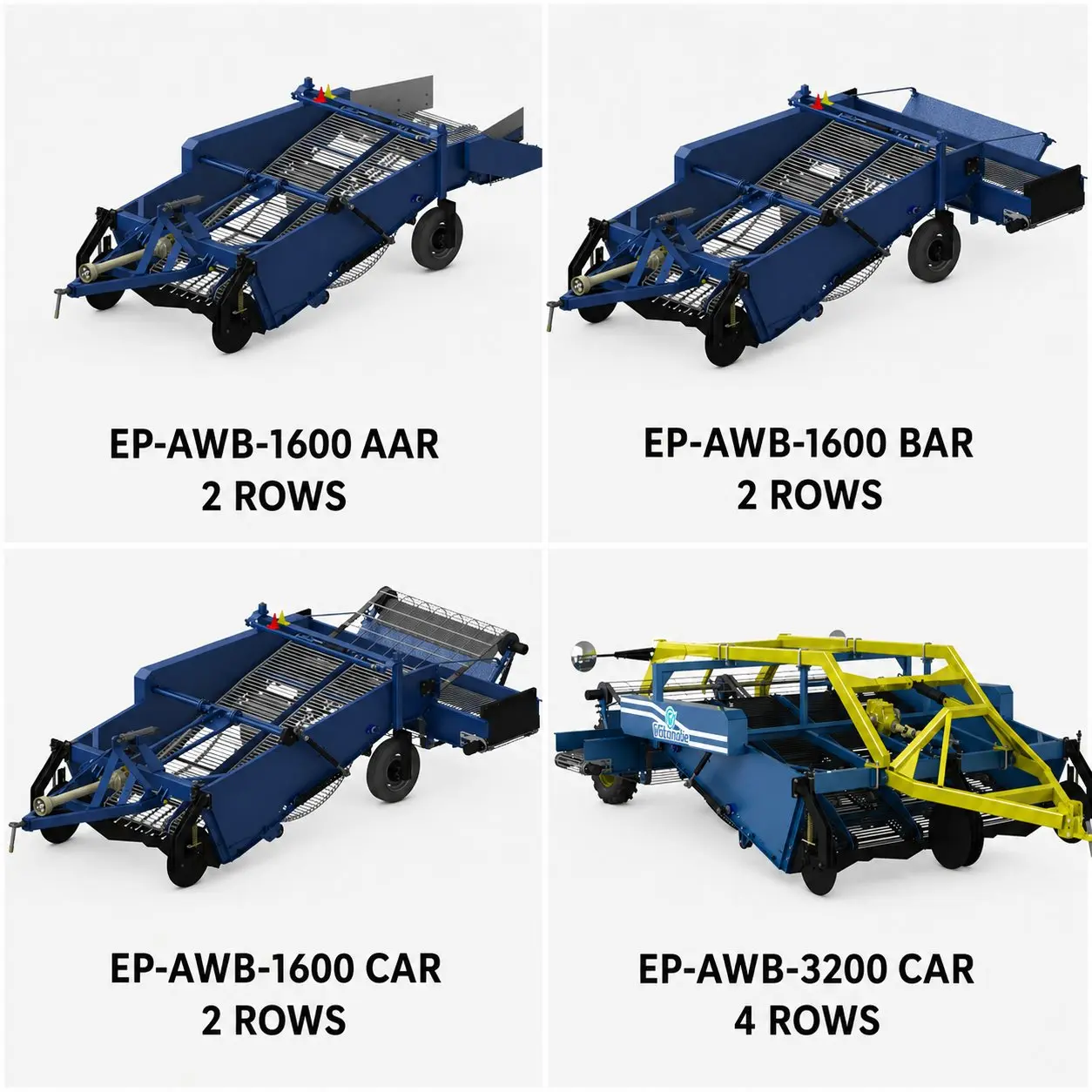
ट्रेल डिगर कॉन्फ़िगरेशन की फील्ड आवश्यकताएं माउंटेड ईपी-एडब्ल्यूबी-1600 से भिन्न होती हैं, जिनका कोरियाई पहाड़ी क्षेत्र में संचालन के लिए ट्रेल कॉन्फ़िगरेशन का चयन करने से पहले आकलन करना महत्वपूर्ण है:
पंक्ति की लंबाई: ट्रेलर्ड डिगर के लिए माउंटेड डिगर की तुलना में लंबी न्यूनतम पंक्ति लंबाई की आवश्यकता होती है क्योंकि ट्रैक्टर-प्लस-ट्रेलर संयोजन को पंक्ति के सिरों पर मुड़ने के लिए अधिक जगह की आवश्यकता होती है। व्यावहारिक रूप से, लगभग 80-100 मीटर से कम लंबाई वाली पंक्तियों में, उत्पादक कटाई समय की तुलना में ट्रेलर्ड डिगर की हेडलैंड टर्निंग आवृत्ति बहुत अधिक हो जाती है - ट्रैक्टर अपने परिचालन समय का एक बड़ा हिस्सा कटाई के बजाय मुड़ने में व्यतीत करता है। छोटी पंक्तियों वाले खेत के हिस्सों के लिए, माउंटेड EP-AWB-1600 अपनी कम सैद्धांतिक क्षमता के बावजूद अधिक कुशल है। कोरिया के पहाड़ी आलू के खेतों में, उनकी विशिष्ट सीढ़ीदार ज्यामिति और अनियमित लंबाई के कारण, अक्सर ऐसे हिस्से होते हैं जहाँ माउंटेड डिगर अधिक उपयुक्त होता है, यहाँ तक कि उन बड़े कार्यों में भी जहाँ ट्रेलर्ड मशीन का उपयोग उचित हो।
खेत की ढलान: ट्रेलिंग वाले उपकरण, माउंटेड उपकरणों की तुलना में क्रॉस-स्लोप और डाउन-स्लोप ग्रेडिएंट के प्रति अधिक संवेदनशील होते हैं। माउंटेड डिगर ट्रैक्टर के रियर हिच पर घूमता है और अपने स्थिर पहियों पर चलने वाले ट्रेलिंग उपकरण की तुलना में सतह की विभिन्नताओं का अधिक लचीले ढंग से अनुसरण कर सकता है। कोरिया के पहाड़ी क्षेत्रों में, जहाँ ढलान 15% से अधिक है (जो होएंगसेओंग-गन और जियोंगसेओन-गन के सीढ़ीदार क्षेत्रों में आम है), माउंटेड EP-AWB-1600 समान ढलानों पर ट्रेलिंग उपकरणों की तुलना में खेत की सतह का अधिक विश्वसनीय ढंग से अनुसरण करता है। मिश्रित खेत ज्यामिति वाले बड़े कोरियाई आलू उत्पादक (कुछ समतल, कुछ ढलानदार) अक्सर 2-पंक्ति वाले माउंटेड और 4-पंक्ति वाले ट्रेलिंग डिगर दोनों का उपयोग करते हैं, और प्रत्येक को उस खेत के हिस्से में लगाते हैं जिसे वह सबसे कुशलता से संभाल सकता है।
ईपी-सीडब्ल्यूबी-2एल बिग बैग हार्वेस्टर — प्रत्यक्ष प्रसंस्करण आपूर्ति के लिए
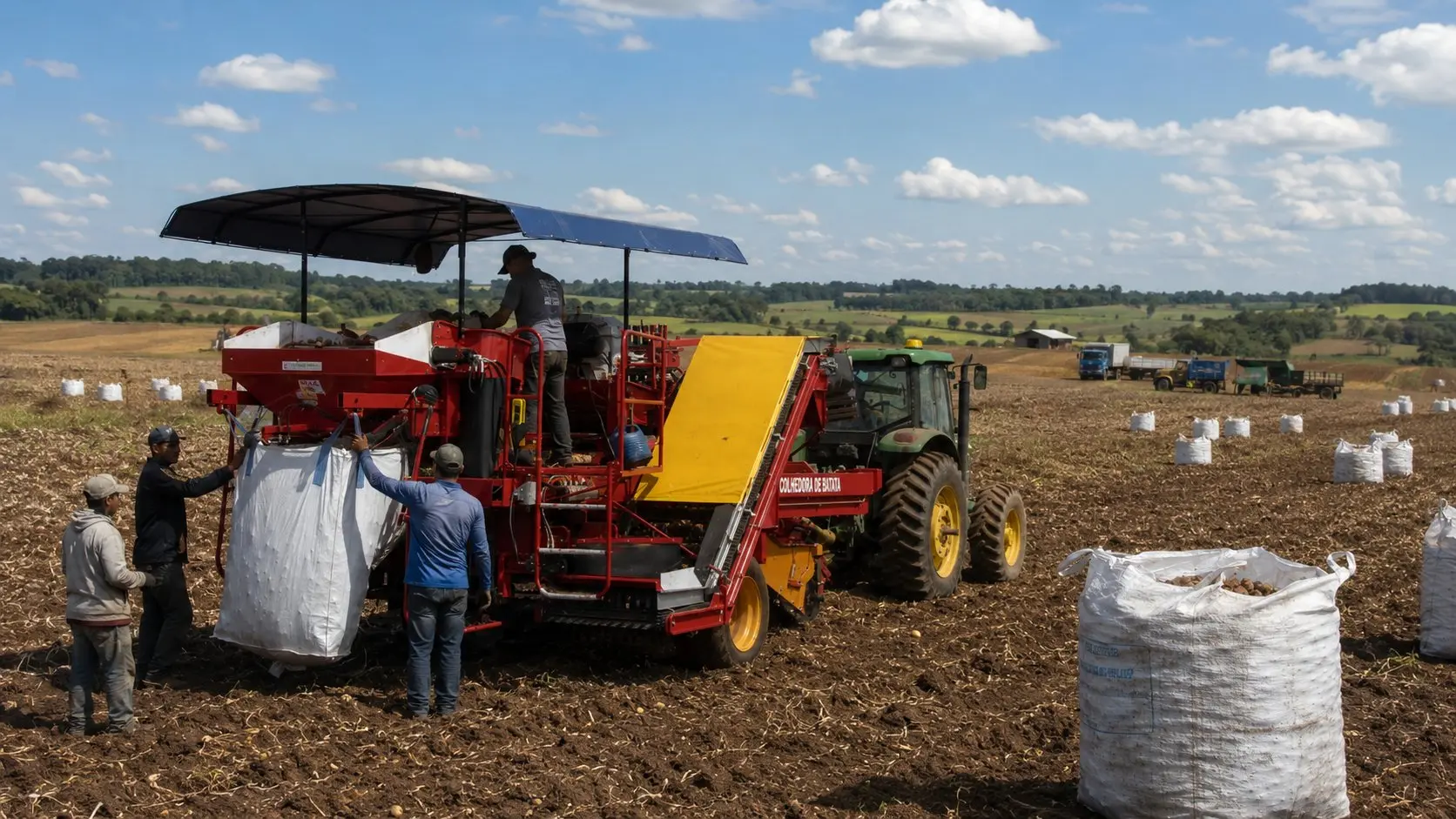
The ईपी-सीडब्ल्यूबी-2एल बिग बैग हार्वेस्टर यह कोरियाई आलू उत्पादकों के लिए एक विशेष विन्यास है जो सीधे प्रसंस्करण संयंत्रों को आलू की आपूर्ति करते हैं - चिप निर्माता, स्टार्च प्रोसेसर और औद्योगिक खाद्य कंपनियां जो थोक या छोटी इकाई पैकेजिंग के बजाय 500 किलोग्राम एफआईबीसी (लचीले मध्यवर्ती थोक कंटेनर) "बड़े बैग" में आलू प्राप्त करती हैं।
EP-CWB-2L मशीन खेत में ही आलू की कटाई और ग्रेडिंग करती है, जिससे पैकिंग हाउस की मध्यवर्ती प्रक्रिया समाप्त हो जाती है, और उत्पाद को सीधे मशीन पर रखे बड़े थैलों में भर देती है। जब एक थैला भर जाता है, तो ऑपरेटर कटाई प्रक्रिया को रोके बिना उसे खाली थैले से बदल देता है। खेत में ही पैकेजिंग की यह विधि खेत से प्रसंस्करण संयंत्र तक डिलीवरी के बीच पैकिंग हाउस की प्रक्रिया को समाप्त कर देती है: खेत में ही काटे गए आलू को FIBC थैलों से सीधे ट्रक में लोड किया जाता है, प्रसंस्करण संयंत्र तक डिलीवरी के लिए, बीच में किसी भी प्रकार की ग्रेडिंग, छँटाई या पुनः पैकिंग की आवश्यकता नहीं होती है।
EP-CWB-2L उन कोरियाई आलू उत्पादकों के लिए उपयुक्त विकल्प है जिनकी विशेषताएँ इस प्रकार हैं: प्रसंस्करण संयंत्र को अनुबंधित आपूर्ति, जहाँ बड़े बैग में डिलीवरी की आवश्यकता होती है; लगभग 20 हेक्टेयर से अधिक के क्षेत्र में फैले आलू उत्पादक जहाँ पैकेजिंग लागत को कम करना महत्वपूर्ण है; और ऐसे आलू उत्पादक जहाँ प्रसंस्करण संयंत्र सीधे खेत से पैक किए गए छांटे और वर्गीकृत आलू को स्वीकार करने के लिए तैयार है। सुपरमार्केट, सहकारी समितियों या बाज़ारों को ताज़ा आलू की आपूर्ति करने वाले उत्पादकों के लिए — जहाँ पैकेजिंग, ताज़ा बाज़ार विनिर्देशों के अनुसार ग्रेडिंग और खुदरा प्रस्तुति महत्वपूर्ण हैं — पैकेजिंग के बाद ग्रेडिंग की जाने वाली EP-AWB श्रृंखला अधिक उपयुक्त आपूर्ति श्रृंखला है।
फसल की गुणवत्ता — खुदाई मशीन के प्रदर्शन पर शुरुआती चरण की हर चीज़ का प्रभाव क्यों पड़ता है
खराब तरीके से तैयार किए गए खेत से ईपी-एडब्ल्यूबी डिगर उच्च गुणवत्ता वाली फसल नहीं दे सकता। पत्थर हटाने से लेकर बुवाई तक की हर तैयारी का चरण डिगर के सामने आने वाली चुनौतियों और उसके काम करने के तरीके को सीधे प्रभावित करता है। कोरियाई किसान जो संपूर्ण वतनबे अपस्ट्रीम सिस्टम में निवेश करते हैं, वे उन किसानों की तुलना में लगातार बेहतर फसल गुणवत्ता परिणाम बताते हैं जो अपूर्ण या बेमेल अपस्ट्रीम उपकरणों से तैयार खेतों में डिगर का उपयोग करते हैं। इसका सीधा संबंध है:
पत्थर की सफाई (चरण 1-3) → खुदाई करने वाले का हिस्सा और जाले की दीर्घायु। कटाई क्षेत्र में 10-15 सेंटीमीटर से बड़े बचे हुए पत्थर लिफ्टिंग शेयर के सीधे संपर्क में आते हैं, जिससे घिसाव तेजी से होता है और सबसे खराब स्थिति में, अचानक टक्कर लगने से कटाई का काम रुक जाता है। पत्थरों को पूरी तरह से हटाने की प्रक्रिया — THOR क्रशर + CT-2100 पिकर — शेयर को नुकसान पहुंचाने वाले पत्थरों को हटाकर डिगर की सुरक्षा करती है। जो ऑपरेटर तैयारी के खर्च को बचाने के लिए पत्थरों को पूरी तरह से नहीं हटाते, उन्हें अक्सर डिगर के वार्षिक रखरखाव का खर्च तैयारी में होने वाली बचत से अधिक उठाना पड़ता है।
रोटावेटर की गुणवत्ता (चरण 2) → मृदा पृथक्करण दक्षता। EP-AWB-1600 पर लगा कंपनशील वेब सेपरेटर तब सबसे अधिक प्रभावी होता है जब कटाई की गई मिट्टी ढीली, भुरभुरी और एकसमान कण आकार की हो। मोटे तौर पर जुताई की गई मिट्टी जिसमें बड़े-बड़े ढेले होते हैं — जो गीली मिट्टी पर 540 RPM की रोटावेटर मशीनों के चलने पर आम बात है — वेब को जाम कर देती है और उत्पादन क्षमता को कम कर देती है, जिससे काम करने की गति धीमी करनी पड़ती है और कटाई किए गए कंदों में मिट्टी की मात्रा बढ़ जाती है। बारीक जुताई की गई 1000 RPM की बीज क्यारियों में ढीली, भुरभुरी मिट्टी की संरचना होती है जो वेब सेपरेटर को अधिकतम दक्षता पर काम करने देती है।
पंक्ति संरेखण (चरण 3-7 संगति) → गहराई सटीकता साझा करें। EP-AWB-1600 लिफ्टिंग शेयर्स को कटाई की गई प्रत्येक पंक्ति में कंद क्षेत्र के नीचे बिल्कुल एकसमान गहराई पर चलना चाहिए। यदि पंक्ति की ज्यामिति अनियमित है — जैसे कि अलग-अलग ऊँचाई वाली मेड़ें, या मशीन की केंद्र रेखा से हटती हुई पंक्तियाँ — तो शेयर्स को सावधानीपूर्वक गहराई पर सेट करना होगा ताकि वे पंक्ति में सबसे गहरे कंदों के नीचे से गुजर सकें। इस सावधानीपूर्वक सेटिंग से वेब कन्वेयर पर प्रति पंक्ति मीटर मिट्टी की मात्रा बढ़ जाती है, जिससे पृथक्करण दक्षता और उत्पादन क्षमता कम हो जाती है। एकसमान मेड़बंदी (चरण 3) और एकसमान रोपण गहराई (चरण 5) — दोनों चरण 2 में रोटावेटर द्वारा की गई जुताई की गुणवत्ता पर निर्भर करते हैं — इष्टतम शेयर गहराई सेटिंग और अधिकतम डिगर उत्पादन क्षमता के लिए आवश्यक शर्तें हैं।
आलू की कटाई प्रणाली की योजना बनाना — खेत के प्रकार के अनुसार विन्यास
छोटा पहाड़ी पारिवारिक फार्म — प्योंगचांग-गन, 2–5 हेक्टेयर
कॉन्फ़िगरेशन: EP-AWB-1600 किट A या किट B के साथ। 2-5 हेक्टेयर की वार्षिक फसल के लिए, दो-पंक्ति वाला माउंटेड डिगर 2-3 दिनों के अनुकूल मौसम में आराम से कटाई पूरी कर लेता है। किट A (साइड विंडरो) उन पारिवारिक व्यवसायों के लिए है जिनमें मैन्युअल रूप से चुनने के लिए श्रम उपलब्ध है; किट B (कार्ट तक रियर एलिवेटर) उन व्यवसायों के लिए है जो मैन्युअल रूप से चुनने की प्रक्रिया से हटकर खेती की ओर बढ़ रहे हैं। 75 HP का ट्रैक्टर जो फर्रोअर, प्लांटर और कल्टीवेटर को चलाता है, वही ट्रैक्टर डिगर को भी चलाता है - इसके लिए अतिरिक्त ट्रैक्टर में निवेश की आवश्यकता नहीं है।
मध्यम वाणिज्यिक परिचालन — होएंगसेओंग-गन, 10–20 हेक्टेयर
कॉन्फ़िगरेशन: प्राथमिक के रूप में EP-AWB-1600 किट B; समतल खंडों के लिए EP-AWB ट्रेलड पर विचार करें। 10-20 हेक्टेयर के क्षेत्र में, मौसम की अनुकूलता का जोखिम महत्वपूर्ण हो जाता है — कटाई की गति उपकरण की लागत के साथ-साथ एक परिचालन संबंधी विचारणीय विषय बन जाती है। एक EP-AWB-1600 किट B (कार्ट तक पीछे से जुड़ा एलिवेटर) को दो संग्रहण कार्ट के साथ मिलाकर निरंतर कटाई कार्य को बिना रुके पूरा किया जा सकता है — एक कार्ट डिगर से फसल एकत्र करती है जबकि दूसरी को खेत के ऊपरी भाग में उतारने के लिए ले जाया जाता है। यह दोहरी कार्ट प्रणाली 2-पंक्ति वाले डिगर की प्रभावी कटाई दर को उसके सैद्धांतिक अधिकतम के लगभग बराबर बढ़ा देती है। 100 मीटर से अधिक पंक्ति लंबाई वाले समतल खेतों के लिए, सबसे आसान खेतों में उत्पादन क्षमता को और बढ़ाने के लिए एक ट्रेल कॉन्फ़िगरेशन को दूसरी मशीन के रूप में उपयोग करने पर विचार किया जा सकता है।
प्रसंस्करण आपूर्ति सहित विशाल वाणिज्यिक परिचालन — 25+ हेक्टेयर
कॉन्फ़िगरेशन: समतल खंडों के लिए EP-AWB-3200 (4-पंक्ति वाला ट्रेल) + ढलान वाले खंडों के लिए EP-AWB-1600; यदि प्रसंस्करण संयंत्र को बड़े बैग की आपूर्ति करनी हो तो EP-CWB-2L। 25 हेक्टेयर से अधिक के क्षेत्र में, उत्पादन क्षमता ही मुख्य बाधा है। समतल और लंबी पंक्तियों वाले क्षेत्रों के लिए चार-पंक्ति वाली ट्रेल मशीन और ढलान वाले और छोटी पंक्तियों वाले क्षेत्रों के लिए दो-पंक्ति वाली माउंटेड मशीन, दोनों का संचालन मिश्रित खेत की भूमि पर प्रतिदिन कटाई किए जाने वाले क्षेत्र को अधिकतम करता है। EP-CWB-2L को ट्रेल मशीन के बजाय तब चुना जाता है जब ऑपरेशन में एक अनुबंधित प्रसंस्करण संयंत्र होता है जो खेत से सीधे बड़े बैग में माल की डिलीवरी प्राप्त करता है और उसके लिए प्रीमियम का भुगतान करता है - पैकहाउस में मध्यवर्ती हैंडलिंग लागत का उन्मूलन और आपूर्ति श्रृंखला का सरलीकरण इस पैमाने पर मशीन में निवेश को उचित ठहराता है।
अक्सर पूछे जाने वाले प्रश्न — आलू खोदने की मशीन का चयन
मैं अपने द्वारा बोई गई पंक्तियों के बीच की दूरी को ठीक से कैसे मापूं ताकि यह सुनिश्चित हो सके कि डिगर शेयर अनुकूल हैं।
पौधरोपण के बाद, पंक्ति की लंबाई के साथ-साथ कई स्थानों पर दो आसन्न पंक्तियों के बीच की केंद्र-से-केंद्र दूरी मापें — केवल पंक्तियों के सिरों पर ही नहीं। मेड़ के किनारे के बजाय मेड़ की मध्य रेखा (प्रत्येक मेड़ का उच्चतम बिंदु) तक मापने के लिए टेप का उपयोग करें। 50 मीटर लंबी पंक्ति में यादृच्छिक स्थानों पर पाँच माप लें और उनका औसत निकालें। यह औसत ही वह पंक्ति रिक्ति है जिससे खुदाई करने वाले को मेल खाना चाहिए। माप बिंदुओं के बीच 3-4 सेमी से अधिक का अंतर अनियमित जुताई या रोपण को दर्शाता है — जिससे औसत मेल खाने पर भी कुछ भागों में रिक्ति का बेमेल हो सकता है। EP-AWB-1600 रिक्ति निर्दिष्ट करते समय अपने कोरिया वातानाबे संपर्क को औसत और अधिकतम अंतर दोनों की जानकारी दें।
यदि खुदाई करने वाली मशीन के फाल बहुत गहराई में लगा दिए जाएं तो फसल की पैदावार पर क्या असर पड़ेगा?
शेयर को बहुत गहराई में (कंद क्षेत्र से नीचे) लगाने से प्रति पंक्ति मीटर मिट्टी की मात्रा फसल की आवश्यकता से अधिक हो जाती है, जिससे कटाई की दक्षता कम हो जाती है और मशीन की टूट-फूट बढ़ जाती है, जबकि कटाई पूरी होने में कोई फायदा नहीं होता। इससे कंदों को होने वाले नुकसान पर कोई खास असर नहीं पड़ता। शेयर को बहुत कम गहराई में (सबसे गहरे कंदों से ऊपर) लगाना नुकसानदायक होता है: शेयर कंद क्षेत्र को काटते हुए कंदों को कुचल देते हैं और काट देते हैं, जिससे कटाई के समय नुकसान दिखाई नहीं देता, लेकिन भंडारण में सड़न तेज हो जाती है। शेयर को सबसे गहरे कंद की अनुमानित स्थिति से 3-5 सेमी नीचे लगाएं - कोरिया के पहाड़ी इलाकों में 15-18 सेमी की अधिकतम कंद गहराई वाली किस्मों के लिए इसका मतलब आमतौर पर मेड़ की सतह से लगभग 20-22 सेमी नीचे होता है।
क्या EP-AWB-1600 किट की कॉन्फ़िगरेशन को खरीद के बाद बदला जा सकता है?
जी हां – किट A, B और C कॉन्फ़िगरेशन आउटपुट अटैचमेंट सिस्टम हैं जो एक ही EP-AWB-1600 बेस मशीन से जुड़ते हैं। जिन ऑपरेशनों को अपनी कटाई लॉजिस्टिक्स पद्धति में बदलाव करने की आवश्यकता होती है – उदाहरण के लिए, खेत के बढ़ने के साथ किट A विंडरो पिकिंग से किट B मैकेनिकल कलेक्शन में बदलाव करना – वे बेस मशीन को बदले बिना किट को अपग्रेड कर सकते हैं। प्रारंभिक खरीद के समय कोरिया वातानाबे से किट की इंटरचेंजेबिलिटी की पुष्टि करें और अपग्रेड करते समय संदर्भ के लिए बेस मशीन के दस्तावेज़ संभाल कर रखें। मूल खरीद के समय योजनाबद्ध न किए गए अपग्रेड को करने से पहले किट की उपलब्धता और अनुकूलता की पुष्टि अवश्य कर लें।
क्या कोरिया में आलू की कटाई का मौसम इतना छोटा होता है कि मध्यम आकार के खेतों में दो खुदाई मशीनों की आवश्यकता होती है?
12-20 हेक्टेयर क्षेत्र में 600 मीटर से अधिक ऊंचाई पर स्थित खेतों में, जहां कटाई के लिए अनुकूल मौसम लगातार 2-3 सप्ताह तक रहता है, वहां आमतौर पर दो संग्रहण कार्ट के साथ एक EP-AWB-1600 किट B पर्याप्त होती है। 0.8-1.2 हेक्टेयर/घंटे की उत्पादक कटाई दर (कार्ट बदलने और खेत की कटाई को ध्यान में रखते हुए) पर, 15 हेक्टेयर क्षेत्र के लिए लगभग 12-18 उत्पादक घंटे लगते हैं, जो 3-4 अच्छे मौसम वाले कार्य दिवसों में प्राप्त किया जा सकता है। दो डिगर की आवश्यकता तब पड़ती है जब कटाई क्षेत्र लगभग 25 हेक्टेयर से अधिक हो, खेत की परिस्थितियां विशेष रूप से चुनौतीपूर्ण हों (पत्थरों की अधिक मात्रा के कारण धीमी गति से काम करना, बार-बार मोड़ वाली खड़ी ढलान), या जब फसल में अलग-अलग परिपक्वता अवधि वाली कई किस्में हों जिन्हें बाजार विनिर्देशों के लिए किस्म की शुद्धता बनाए रखने के लिए सख्त क्रम में काटना आवश्यक हो। अपने विशिष्ट कटाई क्षेत्र, खेत की संरचना और किस्म के समय-सारणी के साथ हमसे संपर्क करें ताकि हम उत्पादन क्षमता का विश्लेषण कर सकें।
क्या कोरिया में आलू की कटाई के उपकरणों के लिए सरकारी सब्सिडी उपलब्ध है?
कृषि, खाद्य एवं ग्रामीण मामलों के मंत्रालय (농림축산식품부) द्वारा प्रशासित कृषि मशीनरी सब्सिडी (농업기계화 촉진 지원사업) में अधिकांश वार्षिक कार्यक्रम वर्षों में कटाई मशीनरी श्रेणियां शामिल होती हैं। आलू काटने की मशीनें — जिनमें माउंटेड डिगर और ट्रेल कॉन्फ़िगरेशन शामिल हैं — हाल के कार्यक्रम वर्षों में पात्र उपकरण श्रेणियों में शामिल रही हैं। सब्सिडी दरें और पात्र उपकरण श्रेणियां वार्षिक रूप से बदलती रहती हैं। खरीद से पहले अपने क्षेत्रीय कृषि प्रौद्योगिकी केंद्र (농업기술센터) या काउंटी कृषि कार्यालय से वर्तमान पात्रता की पुष्टि करें और सब्सिडी आवेदन प्रक्रिया में सहायता के लिए कोरिया वातानाबे से तकनीकी विनिर्देश दस्तावेज़ का अनुरोध करें। हम सभी EP-AWB श्रृंखला कॉन्फ़िगरेशन के लिए सब्सिडी आवेदनों हेतु आवश्यक संपूर्ण तकनीकी विनिर्देश दस्तावेज़ प्रदान कर सकते हैं।
हमें अपने खेत के बारे में बताएं — हम आपके लिए उपयुक्त खुदाई मशीन का चयन करेंगे।
वार्षिक फसल क्षेत्र + रोपित पंक्तियों के बीच की दूरी + खेत की ढलान + आपूर्ति श्रृंखला (ताजा बाजार / प्रसंस्करण / बड़ी बोरी) + ट्रैक्टर की HP → किट चयन और पंक्ति मिलान पुष्टि के साथ विशिष्ट EP-AWB कॉन्फ़िगरेशन की अनुशंसा। सभी कॉन्फ़िगरेशन कोरिया के स्थानीय स्टॉक, अनसान-सी, ग्योंगगी-डो में उपलब्ध हैं।
संपादक: सीएक्सएम