Searching for the right stone crusher for your tractor in Korea is harder than it looks. The global market is dominated by European brands — FAE Group from Italy and SEPPI M. from South Tyrol both produce excellent machines for Mediterranean and North American conditions. But Korean highland granite presents a set of challenges that neither brand designed for, and the Korean government subsidy framework creates a cost equation that changes everything.
This guide compares Watanabe THOR (supplied in Korea by Korea Watanabe Rock Crusher Tractor Co., Ltd., Ansan-si, Gyeonggi-do), FAE, and SEPPI across the criteria that matter for Korean highland operations: rotor engineering for hard granite, operating depth versus Korean root crop requirements, daily coverage productivity, after-sales support, and — critically — whether the machine qualifies for the Korean agricultural machinery purchase subsidy that reduces your net cost by 30–50%.
All Watanabe specifications in this article are from the official Watanabe product brochure. FAE and SEPPI data is drawn from published product specifications on their respective websites as of 2025.
Why Korean Highland Granite Sets a Different Standard for Stone Crushers
European and North American agricultural soils where FAE and SEPPI built their reputations are typically limestone or mixed sedimentary geology — moderate to hard, but rarely achieving the Mohs hardness levels of Korean granodiorite. Gangwon-do and northern Gyeonggi-do highland soils sit on biotite granite with average hardness of 6.0–6.5 on the Mohs scale. This specific geological context defines four criteria that any stone crusher operating in Korea must meet:
The Three Brands at a Glance — Market Position and Design Philosophy
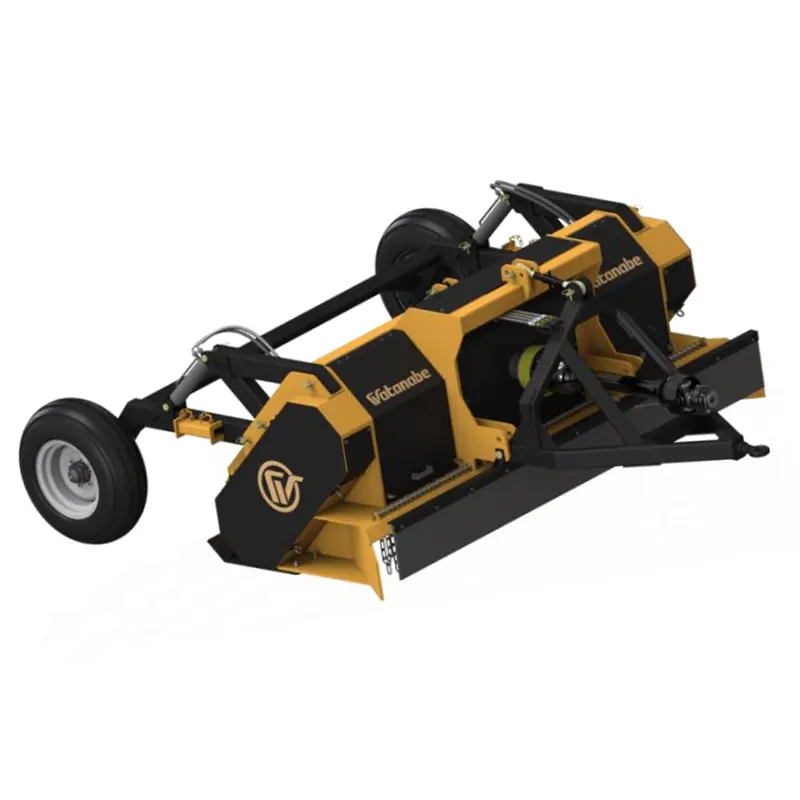
Watanabe THOR (Korea Watanabe)
Italian-manufactured, Korean-market-adapted stone crusher range. The THOR 2.4 and THOR 3.0 are the primary models. Holds Korean agricultural machinery certification for all listed products, qualifying every purchase for the Korean government subsidy programme. After-sales service and parts stocked in Korea. The THOR series was developed for hard siliceous rock — the same geological category as Korean highland granite — giving it specific performance characteristics on Korean soils that European-targeted machines lack.
FAE Group (Italy)
The world’s largest PTO stone crusher manufacturer by model count. Over 20 models from the entry-level STCL (70–150 HP, stones to 15 cm) to the RSH/HP flagship (360–500 HP, stones to 50 cm). Global distributor network but no dedicated Korean agricultural support presence. Machines are not registered for Korean agricultural machinery certification — subsidy eligibility would need to be independently pursued by the buyer and is not guaranteed. Strongest on limestone and softer sedimentary rock. Strong performance data on North American and European geology.
SEPPI M. (South Tyrol, Italy)
Premium European manufacturer with strong positions in vineyards, orchards, and municipal applications. Stone crusher range includes the SMO, MIDIFORST, and CM models across various HP ranges. Specialist in forestry mulching alongside stone crushing — relevant if the operation involves mixed stump and stone material. No Korean market presence, no Korean certification, and no dedicated Korean agricultural support. Import logistics add lead time and parts availability risk for Korean operators.
Full Specification Comparison — The Criteria That Matter for Korean Highland Farms
The table below compares the primary model in each brand’s Korean-relevant power range (180–230 HP tractors, the dominant class on Korean highland farms). FAE’s closest equivalent is the STCM series; SEPPI’s closest equivalent is the SMO/Universal range.
| Specification | Watanabe THOR 2.4 | FAE STCM (180 HP) | SEPPI SMO Universal |
|---|---|---|---|
| Tractor HP requirement | 180 HP min. | 80–280 HP (7 models) | 100–250 HP (range) |
| Working width | 2,400 mm | 1,500–2,500 mm | 1,500–2,200 mm |
| Rotor diameter | 550 mm | Not publicly specified | Not publicly specified |
| Max stone diameter | 30 cm (≈ 12 in) | 30 cm (≈ 12 in) | ~25 cm (model dependent) |
| Tooth count (THOR 2.4) | 90 + 6 side teeth | Not publicly specified | Not publicly specified |
| PTO speed | 1,000 RPM | 1,000 RPM | 1,000 RPM |
| Machine weight | 2,300 Kg | ~1,700–2,200 Kg | ~1,500–2,000 Kg |
| Slope operation kit | Kit Drawbar included standard | Optional (model dependent) | Not standard |
| Korean agri. certification | ✅ Yes — subsidy eligible | ❌ Not registered | ❌ Not registered |
| Korean parts stock | ✅ Local (5–15 day delivery) | Import (6–10 weeks) | Import (6–10 weeks) |
| Korean-language service | ✅ Full Korean support | None | None |
Sources: Watanabe official brochure (all THOR specs). FAE Group website specifications (fae-group.com, accessed 2025). SEPPI M. website specifications (seppi.com, accessed 2025). FAE and SEPPI tooth counts and rotor diameters are not disclosed on their public product pages.
Korean Granite Performance — Where the Differences Show Up in the Field
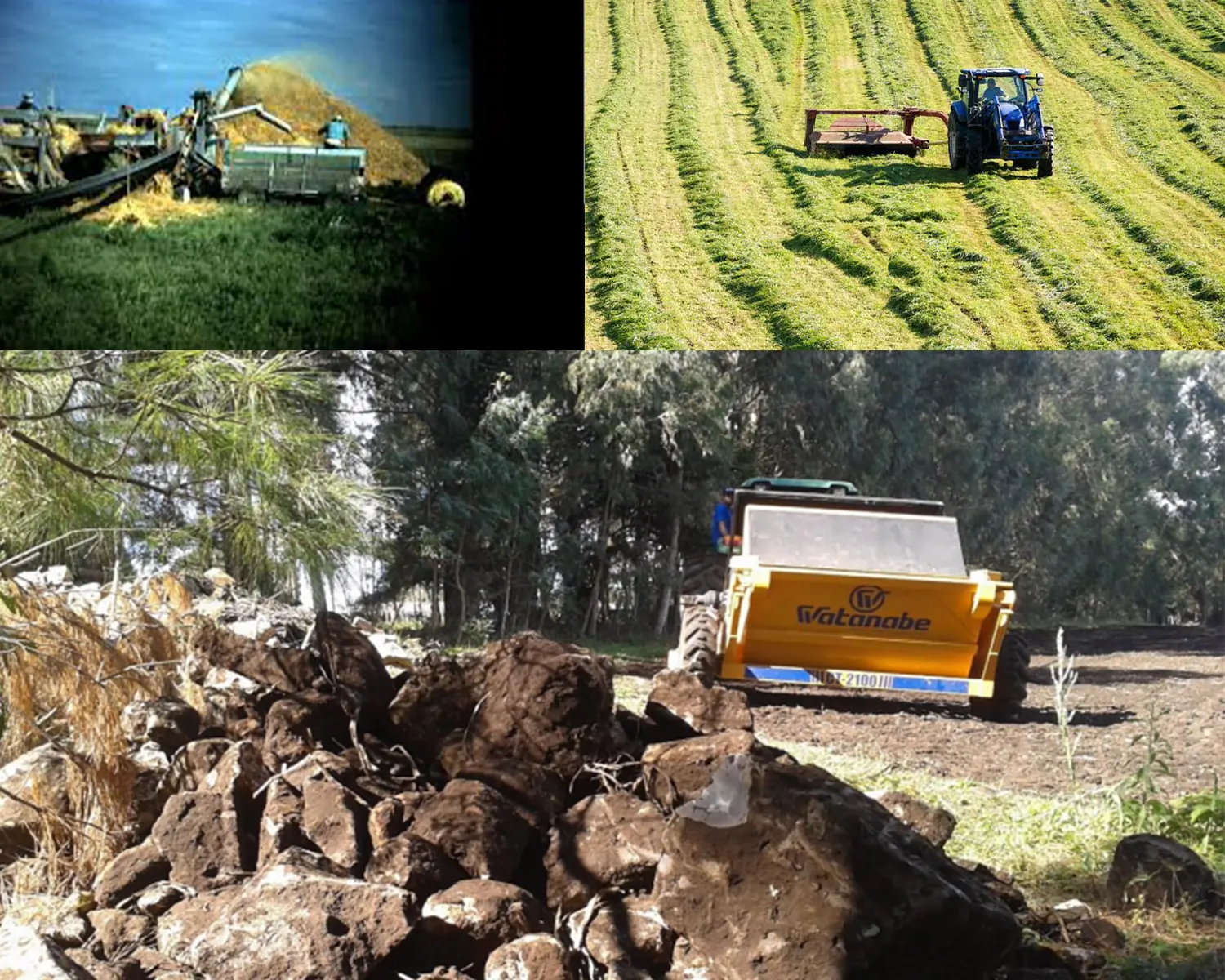
Specification sheets tell you what a machine can do in ideal conditions. Korean highland granite is not ideal. The performance gap between brands shows up in three measurable ways that operators notice within the first season:
1. Residual Fragment Size After One Pass
The primary quality output from any stone crusher for tractor use is the fragment size distribution — what size pieces remain in the soil after one pass. For Korean potato and radish production, the target is no residual stones above 3–5 cm in the top 25–30 cm. For ginseng, the standard is stricter: below 1 cm to 40 cm depth.
The THOR 2.4’s 550 mm rotor with 90+6 tungsten carbide-tipped teeth was developed on hard European siliceous granite with properties very close to Korean granodiorite. The tooth pattern and rotor diameter are specifically calculated to achieve sub-5 cm fragmentation on stones up to 30 cm diameter in a single pass at 1,000 RPM on Korean granite — confirmed by Korea Watanabe’s operating experience across Korean highland customer operations.
FAE’s STCM series achieves comparable fragmentation on its design geology (limestone, mixed sedimentary). On Korean granite, operators using imported FAE equipment in Korean conditions have consistently reported the need for a second pass to achieve the fragmentation standard that the THOR achieves in one pass — adding significant fuel and time cost to the operation. FAE’s own RSM and RSH models (designed for harder rock, 200–360 HP and 360–500 HP respectively) would achieve Korean granite standards more reliably, but they require tractors significantly more powerful than the 180 HP Korean highland standard.
2. Tooth Wear Rate on Korean Granite
Tooth wear rate on Korean granite is approximately 40–60% faster than on European limestone at equivalent operating conditions. This makes the tooth metallurgy and replacement economics significantly more important on Korean operations than European ones. The THOR 2.4’s tooth set (tungsten carbide tipped, 90 teeth) has a Korean highland operating season life that Korea Watanabe can confirm from local service data. FAE and SEPPI cannot provide Korean-condition tooth wear data because they have no systematic service presence in Korea. This information gap makes maintenance budgeting for FAE and SEPPI machines in Korea genuinely uncertain.
3. Slope Stability and Kit Drawbar
The THOR 2.4 includes the Kit Drawbar as standard equipment — a rear-facing pull-mode attachment that converts the machine from a rear-push configuration to a rear-pull configuration on slopes above 12% gradient. This reconfiguration shifts the tractor-machine system’s centre of gravity toward the rear, significantly improving slope stability and reducing the forward-tipping risk that is the primary accident scenario on Korean highland terrace operations.
FAE’s equivalent slope operating system is available as an option on some models but is not standard — it must be specified at purchase and adds cost. SEPPI’s standard configuration is designed for European gradients that rarely exceed 15–18%; the Korean highland terrace standard of 20–25% sustained gradient represents an operating condition beyond what most SEPPI models are certified for.
Total Cost of Ownership — The Subsidy Factor That Changes Everything
The Korean agricultural machinery purchase support programme (nonggi gumae jiwon saeop) provides 30–50% of the purchase cost for qualifying machines registered under Korean agricultural machinery certification. This single factor produces a cost comparison between brands that is very different from the list price comparison alone.
Five-Year Total Cost of Ownership Comparison — Representative 10 ha Korean Highland Farm
| Cost element | Watanabe THOR 2.4 | FAE STCM equiv. | SEPPI SMO equiv. |
|---|---|---|---|
| List price (approximate) | ~22,000,000 KRW | ~24,000,000 KRW | ~21,000,000 KRW |
| Korean subsidy (40%) | –8,800,000 KRW | Not eligible | Not eligible |
| Net purchase cost | ~13,200,000 KRW | ~24,000,000 KRW | ~21,000,000 KRW |
| 5-year tooth replacement | ~2,500,000 KRW | ~3,500,000 KRW* | ~3,200,000 KRW* |
| 5-year parts import premium | 0 (local stock) | ~1,500,000 KRW | ~1,500,000 KRW |
| 5-Year Total Cost | ~15,700,000 KRW | ~29,000,000 KRW | ~25,700,000 KRW |
*Estimated higher tooth wear on Korean granite conditions versus manufacturer’s design geology. Figures are representative ranges for comparison purposes only; confirm current prices with each supplier.
The subsidy eligibility difference produces a 5-year total cost gap of approximately 10,000,000–13,000,000 KRW between the THOR 2.4 and the nearest equivalent imported machines. This gap is larger than the entire annual fuel cost of the THOR 2.4 for a 10 ha farm. The subsidy is not a marginal benefit — it is the single largest variable in the purchase decision economics.
When FAE or SEPPI Might Still Be the Right Choice
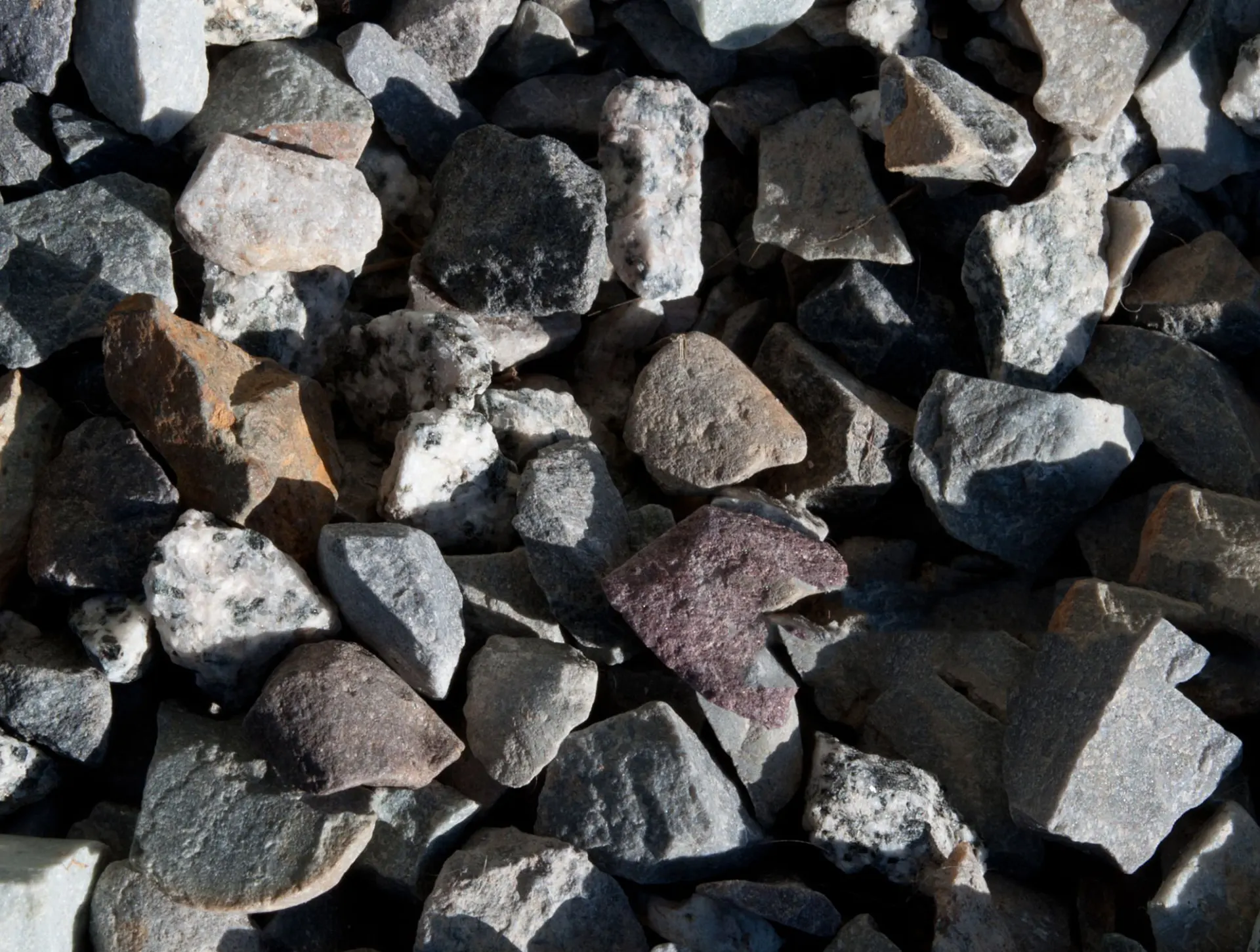
A genuinely objective comparison requires acknowledging the scenarios where FAE or SEPPI might be the correct choice for a Korean operation, despite the subsidy and support disadvantages:
FAE RSM or RSH for extreme stone operations
If the operation involves stones above 30 cm diameter at significant density — new mountain land development with 40–60 cm boulders — the FAE RSM (200–360 HP, stones to 50 cm) or RSH (360–500 HP) has no direct Watanabe equivalent. For these extreme applications, FAE’s higher-range models provide the stone capacity that the THOR 2.4 does not. However, these scenarios typically involve dedicated land development contractors rather than farm-scale operations.
SEPPI for combined stump-and-stone forestry clearance
SEPPI’s MIDIFORST model is designed specifically for combined stump fragmentation and stone crushing — a scenario the standard THOR 2.4 is not designed for. For Korean farms converting marginal forest land where both stumps and stones must be processed simultaneously, SEPPI’s forestry mulcher range merits evaluation alongside Watanabe’s dedicated THOR FLM (which also handles this scenario with a CVT tractor requirement).
Operations not seeking Korean government subsidy
Agricultural corporations with different tax structures, foreign-invested farms, or operations that have already exhausted their subsidy allocation for the current cycle may find the subsidy difference less relevant. In these cases, the decision reverts to pure performance and support terms — where the Korean-specific granite performance data and local parts availability still favour the THOR range for most Korean highland applications.
The Decision Framework — Four Questions to Ask Before You Buy
①
②
③
④
Frequently Asked Questions
Can I buy a FAE stone crusher in Korea and still apply for the Korean agricultural machinery subsidy?
The Korean agricultural machinery subsidy programme requires the machine to hold Korean agricultural machinery certification (hanguk nonggimye ingjeung). FAE Group machines imported to Korea do not hold this certification at the time of writing — they are not registered in the Korean agricultural machinery certification database maintained by the Ministry of Agriculture, Food and Rural Affairs. To apply for the subsidy on an uncertified machine, you would need to independently pursue Korean certification, which is a lengthy and uncertain process for an individual buyer. In practice, the subsidy is effectively unavailable for standard FAE purchases in Korea. Confirm the current certification status of any specific machine model directly with the county agricultural office (nong-hyup) before purchasing.
How does the Watanabe THOR 2.4 perform on stones that are partially buried compared to surface stones?
The THOR 2.4’s rotor penetrates to the set working depth — typically 25–30 cm for Korean potato preparation. Stones that are partially buried with their upper surface within the working depth zone are engaged by the rotor teeth on their exposed face and fragmented. Stones that are predominantly buried below the working depth are not directly engaged in a single pass; they may be partially displaced by the soil disturbance but not fragmented. For Korean highland granite soils, this means that the depth setting must match the crop’s root development zone, not simply the surface stone visibility. The pre-season probe test described in Korea Watanabe’s preparation protocol confirms whether the working depth is adequate for the specific field before seeding proceeds.
Is the best stone crusher for Korean highland farming always the most powerful model?
Not necessarily. The correct machine is the one that matches your stone density, stone size, and tractor HP — not the most powerful available. The THOR 2.4 at 180 HP rock crusher is the correct first choice for the majority of Korean highland farms because: (1) most Korean highland terrace fields have stones predominantly below 25 cm after initial clearing; (2) the 180 HP tractor is the most common Korean highland tractor class; (3) the THOR 2.4 achieves the clearance standard needed for potato, radish, and ginseng on Korean granite in one pass. The THOR 3.0 at 230 HP rock crusher adds value for contractor operations, new land with 35–40 cm stones, and the BlackBird combination for wide-area clearing. Buying more machine than needed adds cost without proportional benefit.
What PTO stone crusher is best for a 100 HP Korean tractor on a small highland farm?
The THOR 2.4 requires a minimum 180 HP tractor — a 100 HP tractor cannot safely or efficiently drive it. For a 100 HP Korean tractor operating on a small highland farm (below 5 ha), the EP-EW-4000 rock rake (75 HP minimum, 3.6 m width) is the appropriate Watanabe system machine for annual maintenance stone clearance on already-cleared fields. For primary clearance on un-cleared fields with a 100 HP tractor, the most effective approach is to hire a THOR 2.4 contractor for the initial clearance passes (which removes the bulk of the stone problem), then use the EP-EW-4000 for annual maintenance with the existing tractor. Korea Watanabe can advise on contractor contacts in most Gangwon-do and Gyeonggi-do highland counties.
How long does it take for the Watanabe THOR 2.4 to pay back its net cost after subsidy on a 10 ha farm?
At the typical net cost after 40% subsidy (approximately 13,200,000 KRW) and the Grade 1 proportion improvement that stone clearing delivers on Korean highland potato (from approximately 68% to 90% Grade 1 on a 10 ha farm), the annual additional revenue from Grade 1 price premium is approximately 25,000,000–35,000,000 KRW. The CT-2100 rock picker adds to the system cost but also to the completeness of the clearance. The combined THOR 2.4 + CT-2100 net investment (after subsidy) is typically recovered within 6–18 months of the first full cleared-field production season, depending on the farm’s actual starting Grade 1 proportion, the direct market channel accessed, and the hectarage treated. Korea Watanabe provides a customised payback calculation for each farm’s specific situation at the consultation stage.
Ready to Choose the Right Stone Crusher for Your Farm?
Tell us your tractor HP, farm area, stone density, and target crop — Korea Watanabe will confirm the correct THOR model, your subsidy eligibility, and provide a net cost calculation before any commitment.
Editor: Cxm