
Potato yield is a product of four multiplied variables: the number of plants per hectare, the average number of stems per plant, the number of tubers per stem, and the average weight of each tuber at harvest. Of these four, planting spacing directly controls the first — plants per hectare — and through it influences the last: closer spacing produces more, smaller tubers per plant (competition increases tuber number but reduces individual tuber size); wider spacing produces fewer, larger tubers per plant. For any specific market — processing crisp, ware, or certified seed — there is an optimal plant population that maximises the proportion of tubers in the required grade at harvest. Setting the planter to deliver that population, and calibrating it to verify it is doing so accurately, is the foundation of potato agronomy from the first field pass.
How Plant Population Shapes Tuber Size — Market-Specific Target Populations
| Market / Product | Target Plants/ha | Within-Row Spacing (75cm rows) | Tuber Size Effect |
|---|---|---|---|
| Seed potato (certified, 25–55mm) | 55,000–70,000 | 19–24 cm | High population → many small tubers within seed grade; maximises seed yield per hectare |
| Ware / fresh market | 40,000–50,000 | 26–33 cm | Moderate population → tubers predominantly 55–100mm; commercial supermarket grade profile |
| Processing crisps / chips | 35,000–42,000 | 31–38 cm | Lower population → larger tubers 60–120mm; processing plants prefer uniform, larger tubers for slicing efficiency |
| Baking potato / large ware premium | 28,000–35,000 | 38–48 cm | Low population → maximum individual tuber size; premium baking potato markets require tubers above 200g individual weight |
The population-tuber size relationship is not absolute — it is modified by variety (some varieties produce more stems per plant and therefore more tubers regardless of spacing), by seed tuber size (larger seed produces more stems), and by growing conditions. But the within-row spacing setting is the primary agronomic lever available before the season begins. Getting it right at planting is the most cost-effective yield management decision in the potato calendar — more reliable in its effect than any in-season intervention.
Seed Rate Calculation — Weight Per Hectare from Population and Tuber Size
The seed rate (kilograms per hectare) is not the same as the plant population (plants per hectare). A farm that knows its target population must convert that to a seed weight requirement based on the average weight of its seed tubers — which varies by variety, growing conditions, and the seed grade purchased. The conversion formula:
Seed rate (kg/ha) = Target plants/ha × Average seed tuber weight (g) ÷ 1,000
Worked example 1 — ware potato: Target 45,000 plants/ha × 65g average seed tuber = 2,925 kg/ha ≈ 2.9 t/ha seed required.
Worked example 2 — seed potato production: Target 60,000 plants/ha × 40g average seed tuber (smaller certified seed) = 2,400 kg/ha ≈ 2.4 t/ha seed required.
Worked example 3 — crisp variety: Target 38,000 plants/ha × 80g average seed tuber (larger seed) = 3,040 kg/ha ≈ 3.0 t/ha seed required.
Measure average seed tuber weight from a 50-tuber sample of the actual seed lot before planting. Do not use the weight grade label as a substitute — actual weight within a grade range varies significantly by variety and source.
Two important adjustments to the basic formula: chitted (pre-sprouted) seed that has been stored in light and warmth before planting will have lost some moisture weight relative to its handling weight — the actual planted weight may be 5–10% lower than the delivered weight. Second, any seed lot with irregular tuber size distribution (high variance — some very large, some very small tubers in the same batch) will produce more variable within-row spacings from a cup planter, because cups sized for the average tuber will miss-pick the very small and double-pick or skip the very large. Sorting or dressing irregular seed lots before planting reduces this variability and improves calibration accuracy.
Calibration Protocol — Verifying Actual Spacing Before Field Entry
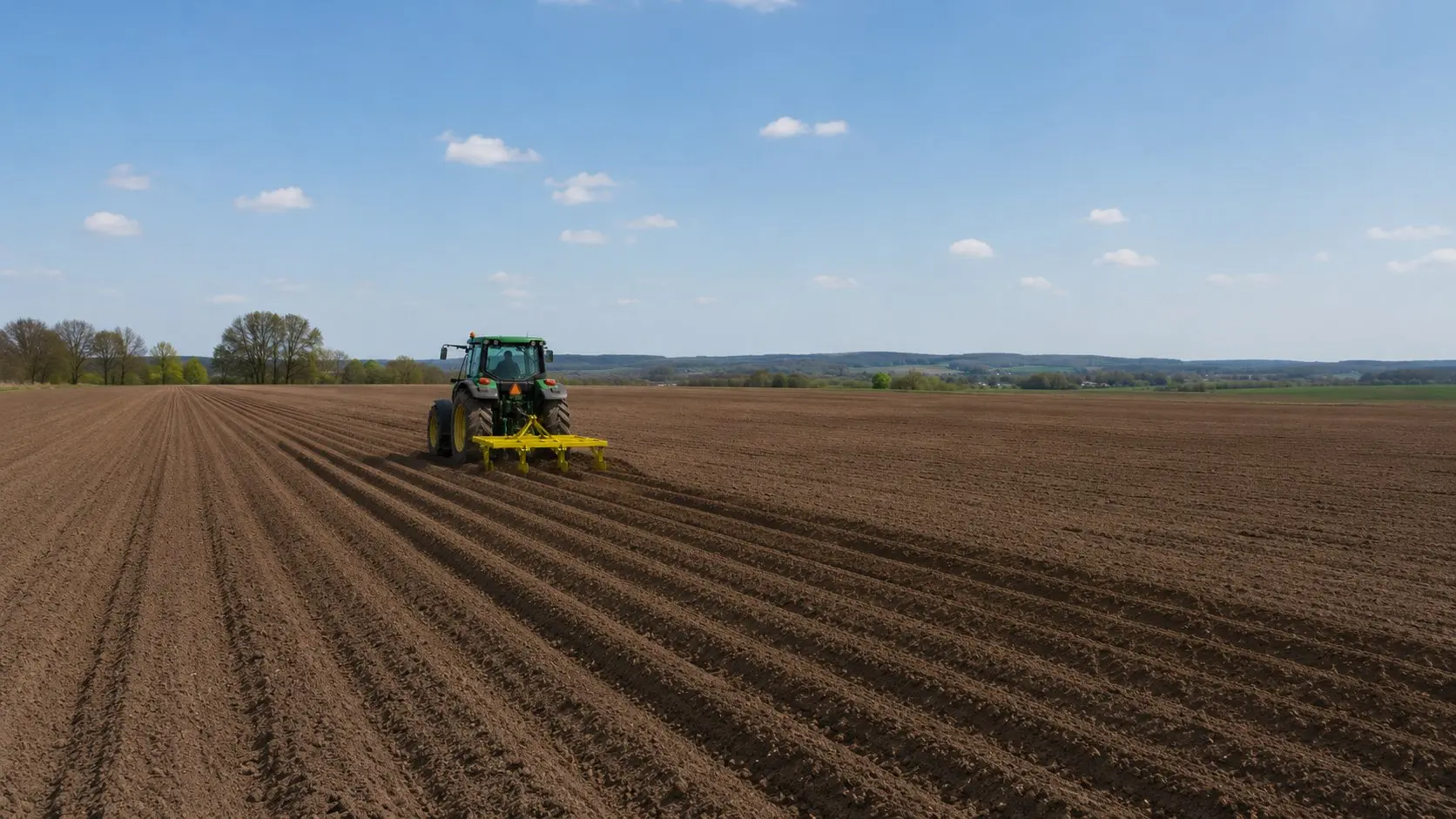
Two additional calibration quality checks are worth including in any planting operation above 5 hectares. The first is double-planting detection — the rate at which two tubers fall from the same cup or belt position simultaneously, producing two plants in the same location. Doubles are economically significant: they consume double the seed cost at that location, produce an over-dense plant that suppresses itself and its neighbours, and create an irregular plant population across the field. A double rate above 3% is worth investigating — common causes are cups worn to a size that can accommodate two small tubers simultaneously, seed tubers with very irregular shape that stack in the cup, or cup delivery channels that allow two tubers to enter the cup from behind in high-speed operation. Check for doubles during the in-field calibration verification at 50 metres: dig a 10-metre section of planted row and count any locations with two tubers at the same depth and position. The second check is orientation: in a cup planter, some cups are designed to place tubers rose-end up (sprouting end uppermost) which accelerates emergence. Confirm by digging planted tubers in the first 10 metres of the first row and checking that the orientation is consistent with the intended rose-end-up placement.
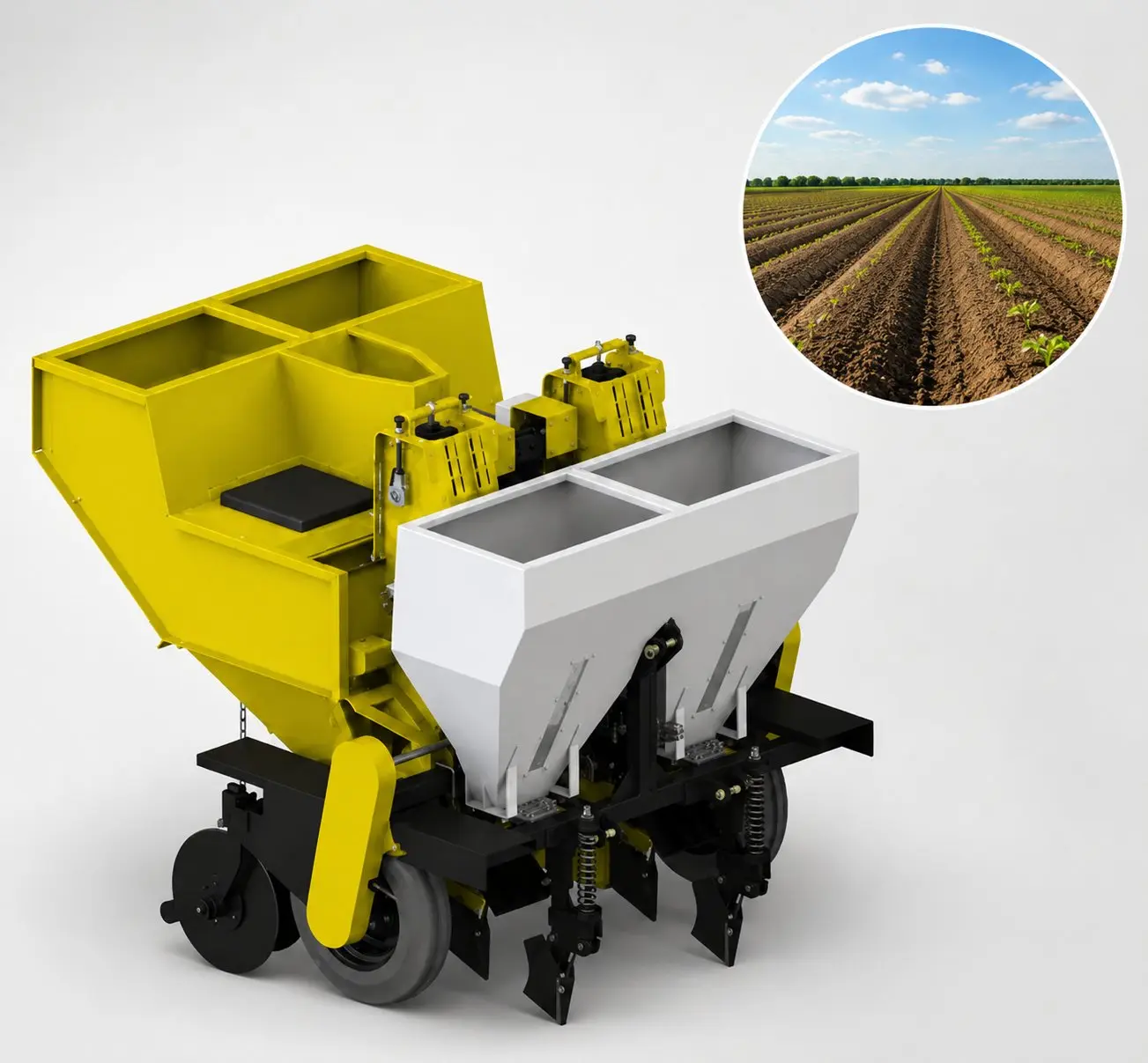
For potato planter specifications and cup size availability for different seed tuber grades, Korea Watanabe can confirm which cup size ranges are available for each planter model and advise on the correct configuration for specific seed potato size grades.
Cup Planter vs Belt Planter — Mechanism Comparison for Each Seed Type
| Characteristic | Cup Planter | Belt Planter |
|---|---|---|
| Metering principle | Individual cups pick and place one tuber per cup | Belt channel transports tubers; releases at intervals |
| Spacing accuracy | High — one tuber per cup position | Moderate — clusters possible |
| Regular oval / round seed | ✅ Excellent — correct cup size picks reliably | ✅ Good |
| Irregular / elongated shapes | ⚠️ Miss-picks and doubles possible | ✅ Better — belt tolerates shape variation |
| Chitted (sprouted) seed | ❌ Sprouts broken by cup mechanism | ✅ Gentler — preserves sprouts |
| Speed capability | Standard field speed | Can work at higher forward speeds |
| Maintenance complexity | Moderate — cups and chain | Lower — fewer components |
The cup planter’s accuracy advantage is most valuable on certified seed potato production, where precise spacing determines both yield and certification compliance. The belt planter’s advantage on chitted seed is most relevant to growers who pre-chit (pre-sprout) their seed tubers before planting to accelerate emergence — a practice common in short-season climates where every day of growing season matters. Choosing between the two mechanisms should be based on the seed type and market, not on cost alone: a cup planter used on chitted seed will break a significant proportion of the sprouts during planting, negating the benefit of pre-chitting and reducing the early emergence advantage that pre-chitting was intended to provide.
Frequently Asked Questions
▶My seed lot has large tubers averaging 90g — will this force an excessively high seed rate for a ware target population?
Yes — using large seed tubers for a ware population target does increase the seed rate proportionally. At 45,000 plants/ha and a 90g average seed tuber, the formula gives 90 × 45,000 ÷ 1,000 = 4,050 kg/ha — approximately 4 tonnes/ha, which is at the high end of commercial seed rates and significantly above the 2.5–3.0 t/ha typical for 60–70g seed. The economic solution is either to use a smaller seed grade (35–55mm certified seed, averaging 45–55g), which reduces seed cost while achieving the same plant population at 2.0–2.5 t/ha, or to cut the large seed tubers if cutting facilities and disease management allow — a cut 90g tuber can be divided into two 45g pieces each carrying one or two sprouts, effectively halving the seed rate while maintaining or increasing the plant population. Tuber cutting requires clean equipment, dried or dusted cuts, and careful disease management; it is standard practice in some markets (the USA, parts of South America) but less common in Europe where certified whole seed is the commercial norm. Confirm with your agronomist or buyer before cutting, as some contracts specify whole uncertified or certified whole seed.
▶How does planting depth affect emergence speed, and can I use depth to compensate for a late planting date?
Planting depth influences emergence speed primarily through soil temperature: shallow-planted seed (5–8cm below crown) is in warmer soil that changes temperature faster with ambient air, producing quicker emergence in warming spring conditions. Deep-planted seed (12–15cm below crown) is in cooler, more stable soil — which can be advantageous in a late frost situation (deep planting provides more soil insulation above the developing sprouts) but slows emergence in cold springs. For a late planting date on a schedule-restricted season, reducing planting depth slightly (from 10cm to 7cm) can accelerate emergence by 3–5 days in typical spring conditions — the equivalent of approximately 3–4 degree-days of growing time. This is a small but practically useful adjustment when every growth day matters. However, shallow planting increases greening risk and frost damage risk if the weather deteriorates after planting — the agronomic risk is real and must be weighed against the emergence timing benefit. Variety also matters: some varieties emerge faster regardless of depth (vigorous sprout growth); others are inherently slow from the same depth. Check the variety’s emergence vigour rating before using depth as a speed tool.
▶What is the effect of miss-plants (gaps in the row) on final yield, and should I plant at a denser spacing to compensate?
Miss-plants — gaps in the row where a cup failed to pick a tuber — have a smaller effect on final yield than is often assumed, because potato plants can partially compensate for gaps through lateral stolon spread and increased tuber set in the surrounding plants. Research from the UK and Netherlands consistently shows that miss rates up to 5–8% have minimal effect on total yield — the neighbouring plants produce slightly more tubers at slightly larger size, partially filling the yield gap from the missing plant. Above 10–15% miss rate, yield loss becomes significant and linear with miss frequency. The agronomic response should not be to plant at a denser spacing to compensate for expected misses — this would over-compensate by driving all plants toward smaller tubers if the miss rate is lower than expected. Instead, the correct response to persistent miss rates above 5% is to identify and fix the cause: cup size mismatched to seed tuber size (most common), damaged or worn cups that fail to hold the tuber, or irregular seed tuber shape causing cup mis-engagement. Address the mechanism, not the spacing.
▶How many rows does a commercial potato planter typically plant simultaneously, and how does this affect daily output?
Commercial potato planters range from 1-row units (for small farms and early trials) to 4, 6, or 8-row units for large commercial operations. At 75cm row spacing and a typical field forward speed of 4–5 km/h: a 2-row planter covers 0.75m × 2 = 1.5m width, planting approximately 6–7.5 ha per 10-hour day; a 4-row planter at 3.0m width plants approximately 12–15 ha/day; a 6-row unit at 4.5m width plants approximately 18–22 ha/day. Row count selection is driven by farm scale: for a 15-hectare potato enterprise with a 3-week planting window, a 2-row planter working 5 ha/day is sufficient; for a 150-hectare commercial operation with a 2-week planting window, an 8-row planter is the minimum to complete the planting in the available time. The planting window is typically 3–5 weeks in temperate European climates, constrained on one side by soil temperature (minimum 6–8°C for viable seed germination) and on the other by the latest acceptable planting date for the target variety to complete the growing season before first autumn frost.
▶Can the same planter handle both pre-formed ridges and flat beds, and does operating on a pre-formed ridge affect calibration accuracy?
Most commercial potato planters are designed to work into pre-formed ridges, with their furrow openers configured to penetrate the ridge crown at the target planting depth and their closing discs pressing the disturbed ridge soil back over the placed seed. Flat bed planting — where the planter simultaneously forms the ridge and places the seed — requires a different front-of-machine configuration, typically with bedforming discs ahead of the seed placement units. Not all planters can do both without modification: confirm with the manufacturer whether the specific model you are specifying can operate in both modes, or whether a flat-bed planting attachment needs to be specified separately. Regarding calibration accuracy: a pre-formed ridge affects calibration testing because the calibration procedure (driving on a hard surface) does not replicate the resistance the furrow opener experiences when penetrating the ridge crown. In soft, freshly-formed ridges, the furrow opener meets less resistance than the calibration surface, which may cause the planter to “run ahead” slightly, placing tubers marginally closer than the calibration spacing. In hard, settled ridges (formed some days before planting), resistance is higher and tubers may be placed marginally wider. The standard response is to conduct the calibration test, then verify in-field spacing in the first 50 metres and make fine adjustments if needed.
Planter Configuration or Seed Rate Query?
Share your target market, seed tuber average weight, row spacing, and preferred planter rows. Korea Watanabe will recommend the correct potato planter configuration and cup size for your specific seed grade and population target.
Korea Watanabe Rock Crusher Tractor Co., Ltd. — Ansan-si, Gyeonggi-do
Editor: Cxm