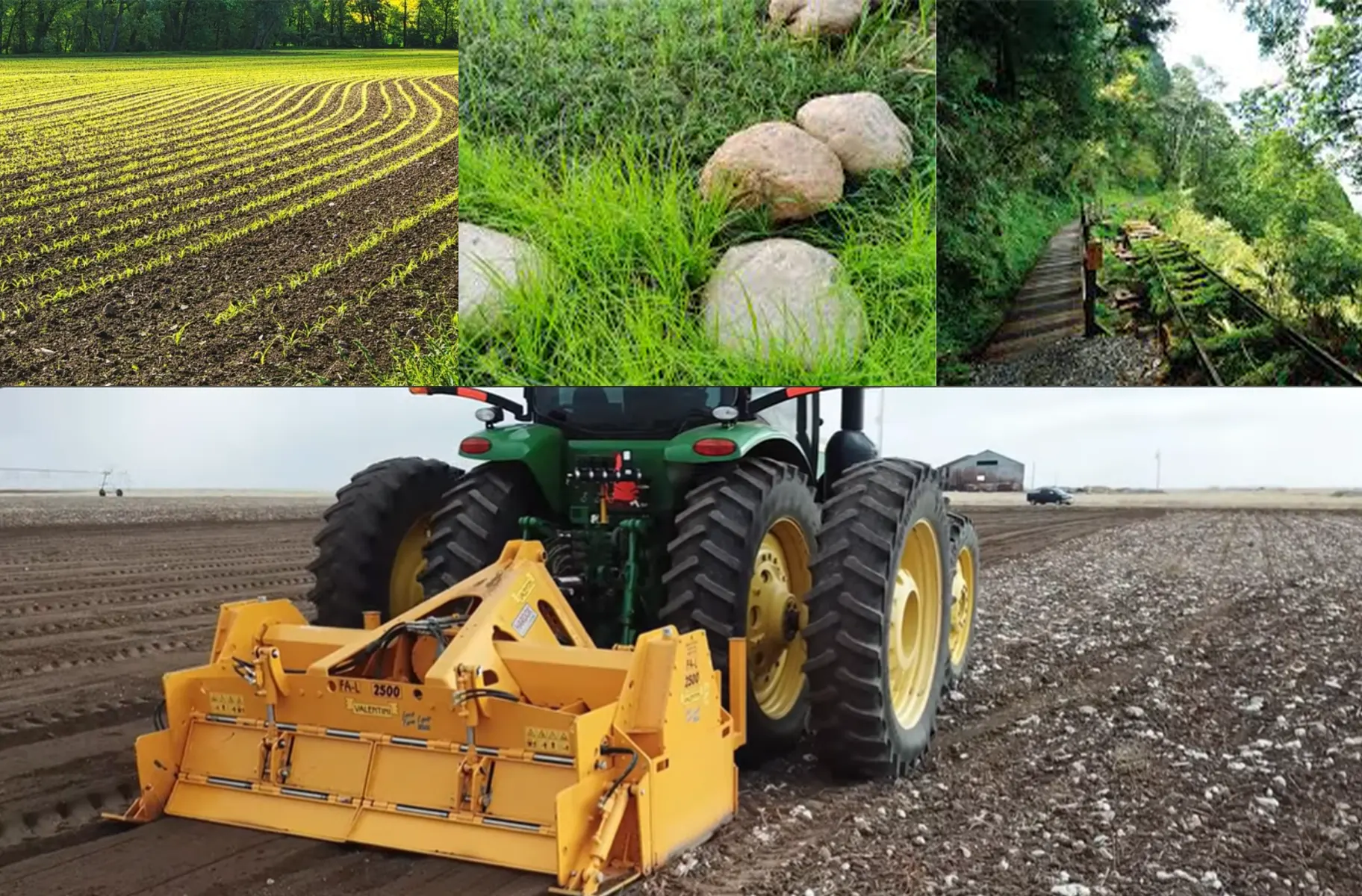
Korean radish (mu, 무, Raphanus sativus var. hortensis) is the backbone ingredient of Korea’s kimchi industry and one of the most commercially significant crops on Korean highland farms. With annual cultivation area above 70,000 hectares — making it the most widely grown vegetable in Korea by area — radish production intersects with stone management in a direct and quantifiable way: a stone at 15–25 cm depth in a radish field produces a forked root that is immediately classified Grade 3 at the kimchi manufacturer’s intake station, regardless of its size or freshness.
Korean highland radish farming stone clearing is therefore not about improving a marginal quality attribute — it is about protecting the entire crop’s eligibility for the kimchi manufacturer channel, which accounts for the majority of Gangwon-do highland radish production volume. This guide covers the taproot forking biology that makes radish specifically vulnerable to stone obstacles, the kimchi manufacturer Grade 1 specifications, the correct stone clearing depth for radish fields, and the PSW-3200 ridge formation that optimises the cleared-field environment for maximum straight-root production.
The Taproot Forking Mechanism — Why Radish Is More Stone-Sensitive Than Potato
A radish develops its edible taproot through a single directional growth axis — it grows straight down from the point of germination, expanding radially as the cells accumulate. This growth mechanism makes it fundamentally different from potato (which expands as a tuber from a stolon) or garlic (which expands as a bulb from a basal plate). The radish’s directional single-axis growth is also what makes it specifically vulnerable to stones: any solid obstruction in the root’s path does not deform the root into a slightly different shape — it redirects the entire growth axis, producing a forked root that cannot be straightened and cannot be re-graded after harvest.
Korean Daikon Taproot Development — How Stone Contact Creates the Fork
Stone-Free Field → Grade 1
Straight, uniform, single axis
≥500g → Grade 1 kimchi
1,500–4,000 KRW/Kg
Stone at
15–25 cm
depth
↓
Stone-Present Field → Grade 3
Forked / double root
Grade 3 regardless of size
200–600 KRW/Kg
Schematic illustration. Actual forking geometry varies with stone size and soil density.
The forking occurs when the developing taproot tip encounters a stone during the 45–60 day underground expansion phase (approximately Days 20–80 after germination in Korean highland summer conditions). The root tip, growing at 0.5–2 cm per day, presses against the stone surface and the growth axis bifurcates around the obstacle. Both branches of the fork continue growing — but neither produces a commercially usable straight root. The result is two thin, misshapen branches that together may equal the weight of a single straight root, but cannot be sold to kimchi manufacturers at any Grade above Grade 3.
The depth range at which this forking occurs — 10–30 cm — directly defines the stone clearing depth requirement for radish. The THOR 2.4 at 30–35 cm operating depth removes stones from the full depth zone where taproot bifurcation can occur. A clearing pass at 20 cm (sufficient for some surface crops) leaves stones at 20–30 cm that remain in the radish taproot’s development path for the second half of the growth season, when the root is 15–25 cm long and most vulnerable to fork-producing stone contact.
Kimchi Manufacturer Standards — What Grade 1 Radish Requires
Korea produces approximately 1.5–1.8 million tonnes of kimchi annually, of which the kimchi radish (kkakdugi and various radish kimchi types) component accounts for a significant proportion of total radish consumption. Major kimchi manufacturers (Daesang’s Chongga brand, CJ Foods’ Bibigo brand, and the major Nong-hyup cooperative processing facilities) set specific intake standards for radish that define exactly which physical characteristics qualify for Grade 1 pricing and which immediately downgrade the lot.
| Grade | Form requirement | Min. weight | Stone-cleared field typical proportion | Price range (KRW/Kg) |
|---|---|---|---|---|
| Grade 1 (Kimchi premium) | Straight single taproot. Smooth, uncracked skin. Cylindrical, no branching or deformation. | ≥500 g | 84–92% | 1,500–4,000 |
| Grade 2 (Processing use) | Slight taper irregularity, minor skin blemish, small lateral root development. No significant forking. | ≥350 g | 6–12% | 700–1,500 |
| Grade 3 (Extract / livestock) | Forked / double root. Cracked. Hollow. Any stone-contact deformation. Size below minimum. | Any | 2–4% | 200–700 |
| Un-cleared field Grade 1 (reference) | Same Grade 1 standard — but stone presence reduces eligibility dramatically | — | 52–65% (un-cleared field) | Same Grade 1 price if achieved |
The Grade 3 classification applies immediately and permanently to any forked radish — there is no partial credit for the straight portion of a forked root, and no re-grading available after harvest. A kimchi manufacturer’s intake inspector classifies each root by visual inspection in approximately 2–3 seconds per root — a forked root is identified and redirected to the Grade 3 pile without the possibility of appeal. On un-cleared fields with typical Korean highland granite stone density at 15–25 cm depth, the Grade 3 proportion of 20–30% of total yield represents a direct revenue loss that stone clearing eliminates at its root cause.
Gangwon-do Highland Radish — The Production Calendar and Season Constraints
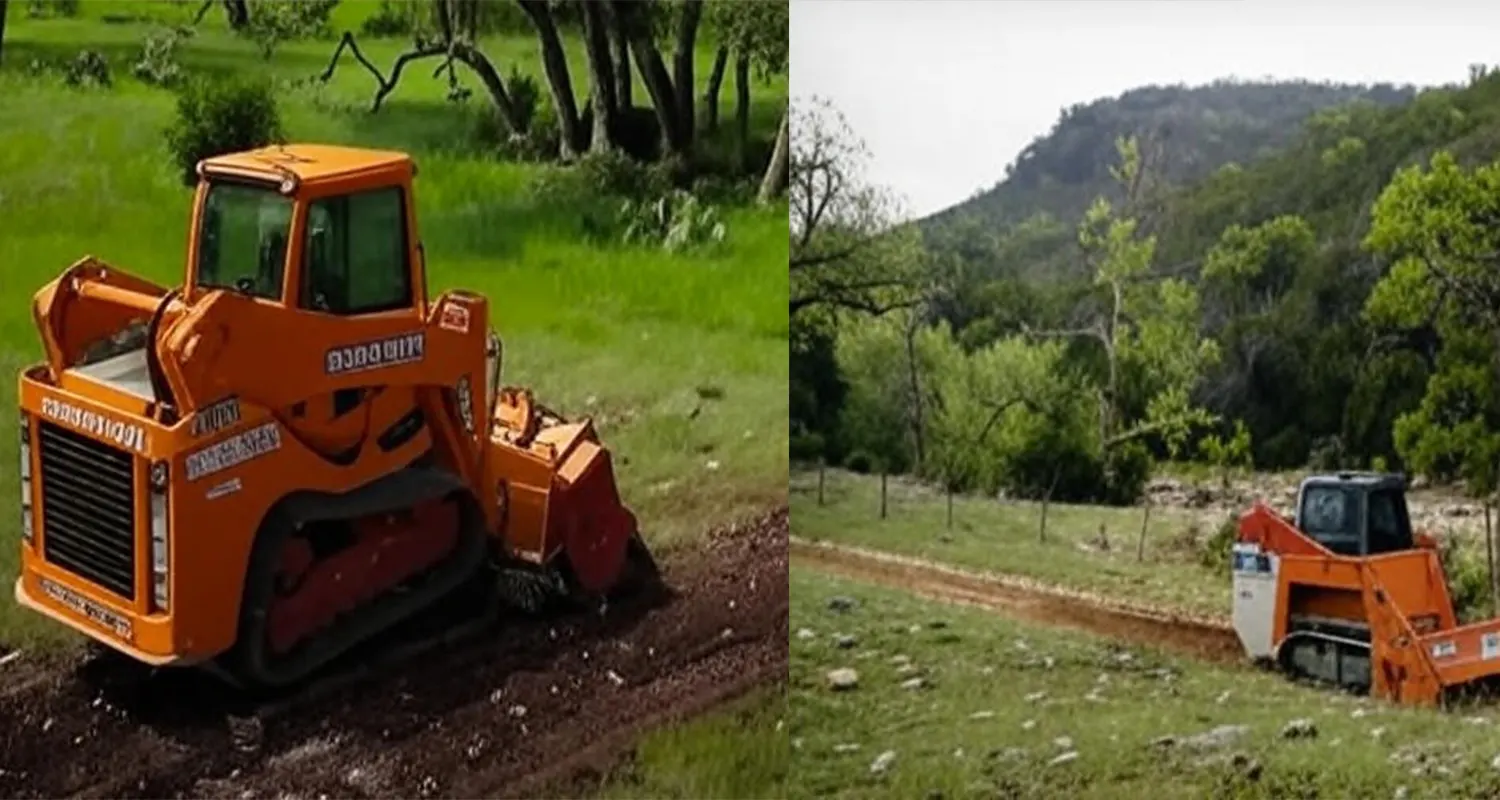
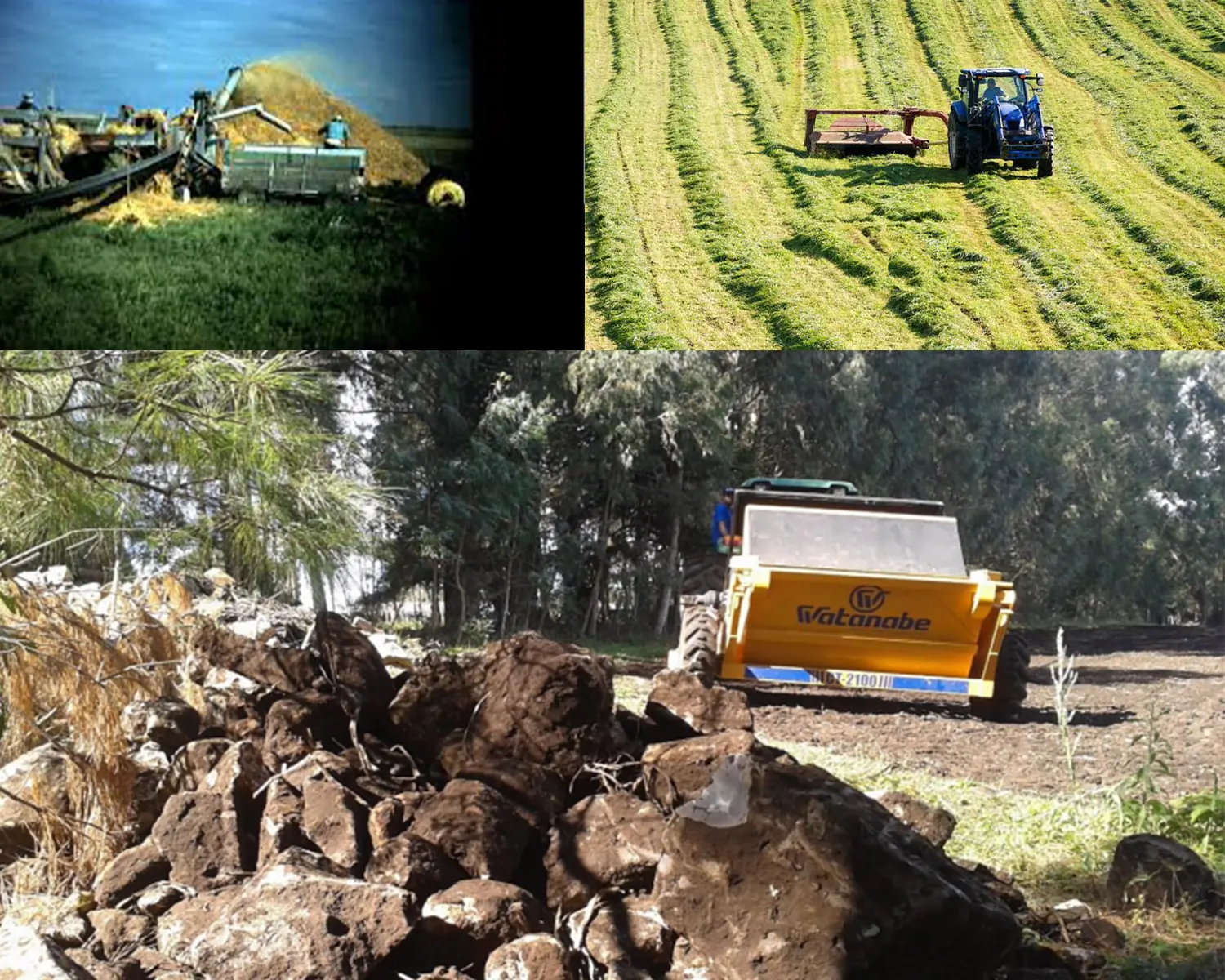 alt=”CT-2100 rock picker completing stone collection after THOR 3.0 clearing pass for Korean highland radish field preparation — for summer radish production in Gangwon-do, the CT-2100 rock picker collection must be completed before June planting, meaning the spring THOR 3.0 clearing window runs from April to late May”
title=”CT-2100 Stone Collection for Radish — May Completion Deadline Before June Planting”
style=”width:100%;height:auto;display:block;border-radius:6px;margin:20px 0 28px 0;” />
Korean highland radish production is concentrated in a single annual season in Gangwon-do — planted in late May to early June, harvested in September to early October. This seasonal structure creates a spring stone clearing window that is tighter than the autumn window available for winter garlic:
Gangwon-do Highland Radish Production Calendar
The spring stone clearing window (March–April) is the only practical option for Korean highland radish because the autumn clearing window (October–November) falls after the radish season has ended — there is no pre-planting autumn timing equivalent to garlic’s October clearing. Spring soil conditions on Korean highland granite are workable from late March when the frost is out of the ground to a depth of 30+ cm, providing approximately 6–8 weeks of clearing time before the May preparation deadline.
Stone Clearing Depth — Why Radish Requires Deeper Clearing Than Garlic
The stone clearing depth requirement varies by crop — specifically, by the maximum depth to which the crop’s edible root or bulb develops. Understanding this relationship allows Korean highland farms rotating between crops to plan their clearing operations for the deepest-rooted crop in the rotation (which provides adequate coverage for all shallower crops).
Stone Clearing Depth Requirement by Crop — Korean Highland Production
25–28 cm
28–32 cm
30–35 cm
38–42 cm
Korean highland potato (30cm), radish (35cm), and ginseng (40cm) form a depth ladder. Clearing to ginseng standard covers all three crops — but incurs the highest per-hectare clearing cost.
The practical implication for farms rotating between radish and other crops: if ginseng is planned within the next 5–7 years on any field, clearing to 40 cm in the radish preparation year costs nothing additional (same THOR 3.0 operating pass) but provides a 5-year head start on the ginseng clearing standard. If ginseng is not planned, the 30–35 cm standard for radish is the correct and sufficient clearing depth — clearing deeper than necessary provides diminishing returns for radish-only production and slightly increases operating time and fuel cost.
PSW-3200 Ridge Formation for Radish — Drainage Is the Primary Design Requirement

Radish requires a ridge formation that prioritises drainage above all other parameters — the Korean highland monsoon season (July–August, 50–100 mm events) saturates the soil around a growing radish taproot, and poorly drained ridges produce the hollow heart defect (pithy, air-filled centre) that kimchi manufacturers reject regardless of root straightness. The PSW-3200 ridge formation for radish differs from potato and garlic in three specific ways:
| Parameter | Radish Ridge | Potato Ridge (reference) | Garlic Raised Bed (ref.) |
|---|---|---|---|
| Ridge height (above furrow) | 25–30 cm (highest) | 20–25 cm | 15–20 cm |
| Ridge top width | 20–30 cm (narrow single-row) | 25–35 cm | 60–80 cm (wide multi-row) |
| Ridge spacing (centre to centre) | 60–70 cm (wide furrow for drainage) | 60–80 cm | 90–120 cm (bed + wide furrow) |
| PSW-3200 RPM setting | 1,000 RPM, 2.0 km/h (fine tilth for direct seeding) | 540→1000 RPM double pass | 1,000 RPM (fine-tilth for clove planting) |
| Primary design objective | Maximum drainage — prevent monsoon soil saturation around taproot | Consistent planting depth for tuber development | Wide, flat surface for multi-row clove placement |
The higher ridge (25–30 cm) combined with a wide furrow between ridges provides the drainage pathway that Korean highland monsoon-season rainfall requires. The stone-cleared, well-drained ridge — combined with the deep-cultivated sub-ridge profile from the PSW-3200’s 25–30 cm pass — creates the growing environment where a Korean highland radish can develop its full 25–30 cm taproot without encountering either stones or waterlogged soil. These two obstacles (stones and waterlogging) together account for approximately 85–90% of all Grade 3 classification events at Korean kimchi manufacturer intake stations.
The Taproot Rotation Benefit — What Radish Does for the Crops That Follow
Unlike potato, which leaves minimal structural improvement in the soil after harvest, radish provides a unique long-term benefit to the crops that follow it in the Korean highland rotation. The radish taproot at 25–30 cm depth creates a network of vertical biopores — cylindrical channels 2–4 cm in diameter penetrating through the soil profile. After harvest, these channels persist for 12–18 months, providing:
The radish taproot rotation benefit is one of the most undervalued agronomic advantages available to Korean highland farms rotating between high-value cash crops. Korea Watanabe recommends a radish rotation year every 3–4 seasons on established cleared highland fields — generating kimchi manufacturer revenue while simultaneously improving the soil structure for the potato and garlic crops that follow.
Frequently Asked Questions
Korean highland radish stone clearing guide — what depth does the THOR 2.4 need to clear for radish production?
The recommended stone clearing depth for Korean highland radish production is 30–35 cm on a first-season clearance of un-cleared ground, and 25–28 cm for annual maintenance passes on previously cleared fields. The 30–35 cm initial clearing depth targets the full zone within which Korean highland daikon-type radish taproots develop — any stone at 10–30 cm can redirect the taproot and produce a forked root that is immediately Grade 3 at the kimchi manufacturer’s intake. The THOR 2.4 rock crusher at 30–35 cm operating depth on Korean highland granite in spring soil conditions (March–April, moisture level appropriate for fragmentation) can operate at 1.5–2.0 km/h forward speed. The THOR 3.0’s wider 3.0 m pass width and 40 cm stone capacity makes it the more efficient choice for radish field clearing above 3 ha — covering the same area in fewer passes while providing the extra depth margin that protects deep taproot development.
Can the THOR 3.0 be used for radish field preparation instead of the THOR 2.4, and what is the advantage?
The THOR 3.0 stone crusher is the preferred choice for radish field preparation above 3 ha for two reasons. First, its 3.0 m working width vs the THOR 2.4’s 2.4 m means 25% more ground covered per pass at the same forward speed — for a 5 ha radish field, the THOR 3.0 completes clearing in approximately 30% less time than the THOR 2.4, which matters significantly within the tight March–April spring clearing window. Second, the THOR 3.0’s 40 cm stone capacity vs the THOR 2.4’s 30 cm capacity provides a deeper clearing reach that is beneficial for radish — the 35–40 cm depth provides complete clearance through the full radish taproot development zone in a single pass. For farms already operating the THOR 2.4 for potato and garlic clearing, the THOR 2.4 is adequate for radish at 30–32 cm depth; the THOR 3.0 upgrade is justified when radish represents more than 30% of total cleared field area, or when the 3-4 week spring clearing window is consistently tight for the farm’s total cleared area.
What is the Grade 1 proportion difference between stone-cleared and un-cleared Korean highland radish fields?
The Grade 1 proportion improvement from stone clearing on Korean highland radish is among the most dramatic across all highland crops. On un-cleared Korean highland granite fields with typical stone density at 15–25 cm depth, Grade 1 proportion (straight, single taproot, ≥500 g) typically falls in the range of 52–65%. On THOR 2.4 or THOR 3.0 cleared fields with proper PSW-3200 ridge formation and drainage, Grade 1 proportion consistently reaches 84–92%. The improvement represents a 25–35 percentage point grade shift — meaning that on a 10 ha radish field producing 30 t/ha total yield, clearing converts approximately 7,500–10,500 additional tonnes from Grade 3 (200–600 KRW/Kg) or Grade 2 (700–1,500 KRW/Kg) to Grade 1 (1,500–4,000 KRW/Kg) per season. The revenue impact of this grade shift is substantially larger than the equivalent grade shift in potato, because radish’s Grade 3 channel price (livestock feed and extract processing) is particularly low relative to the kimchi manufacturer Grade 1 price.
Does Korean highland radish require the same GAP certification as potato to access premium kimchi manufacturer contracts?
Major Korean kimchi manufacturers increasingly specify GAP certification or equivalent food safety documentation for their primary radish supply contracts — particularly in the context of expanding export kimchi production where international food safety standards require traceable, certified raw material sourcing. For Gangwon-do highland radish sold through the cooperative channel to regional processors, GAP is currently not universally required but represents a commercial advantage as the market moves toward food safety documentation as a baseline expectation. Korea Watanabe’s recommendation: Korean highland radish farms pursuing direct kimchi manufacturer supply contracts (as opposed to cooperative pooling) should initiate GAP certification simultaneously with stone clearing preparation. The stone-cleared, documented field record that the THOR 2.4 probe verification and CT-2100 operating log produces forms part of the field management documentation that GAP certification requires. Starting both processes at the same time reduces the total administrative burden and allows the farm to be fully GAP-certified and supply-contract-ready within two seasons of the first stone clearing pass.
What is the correct radish–potato rotation sequence for a Korean highland farm operating both crops on the same cleared fields?
The recommended rotation for a Korean highland farm producing both potato and radish on cleared fields is a 3–4 year cycle: Year 1 potato (Sumi or Dubaek, direct market or cold storage), Year 2 potato (same varieties or Atlantic if processing contract in place), Year 3 radish (kimchi channel, summer season), Year 4 garlic or legume (soil restoration, see D-1 garlic guide for garlic-specific requirements). The radish year provides the taproot biopore and compaction benefits described in Section 6, which measurably improves the Year 4 and Year 1 potato root zone access. A potato monoculture beyond 2–3 consecutive years accumulates Rhizoctonia and Sclerotinia soil-borne disease pressure that reduces Grade 1 proportion even on cleared fields — the radish break year disrupts this disease cycle because radish is not a host for the key potato soil pathogens. The potato machinery system (EP-PAI planter, EP-ERA hiller, EP-AWB harvester) does not need to be reconfigured for the radish year — radish is direct-seeded without a planting machine and harvested with a different collection system, so the potato machinery investment is fully retained during the radish rotation year.
Radish Field Preparation — March is the Critical Window
Field area + planned radish planting date + current tractor HP + kimchi manufacturer target → Korea Watanabe provides the spring clearing schedule, THOR depth protocol, PSW-3200 drainage ridge specification and 2026 subsidy calculation for radish production.
Editor: Cxm