Korean garlic is one of the country’s most commercially significant agricultural products — it is a dietary staple, a medicinal crop, and a major export commodity. The two principal production regions are Gyeongnam (South Gyeongsang Province, producing the Namdo variety) and Gangwon-do and North Gyeongsang (producing the Uiseong and other varieties). Both regions grow garlic on granite-derived or mixed parent-material soils that present stone management challenges — and garlic bulb skin is as sensitive to stone-contact damage as highland potato skin, for the same market reason: the premium Korean dried garlic market grades on outer skin integrity, and any stone-contact abrasion on the bulb wrapper skin eliminates the premium dried garlic classification.
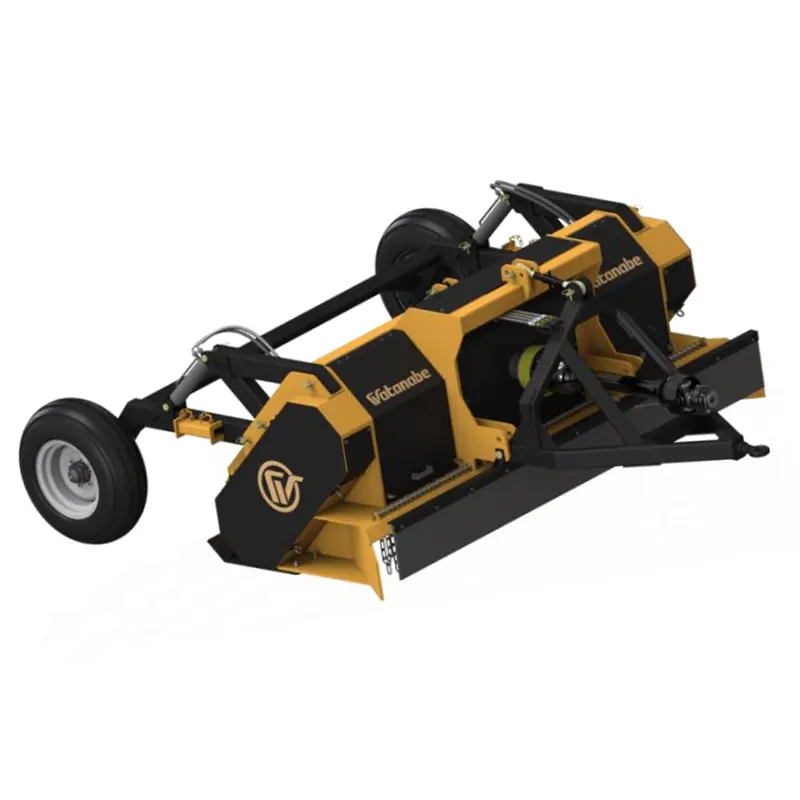
This article covers the Korean garlic stone clearing system from the farm operator’s perspective: why garlic shares the same zero-tolerance stone sensitivity as highland potato, how the garlic calendar (September–October planting) differs from the potato system in terms of stone management timing, the THOR 2.4 depth setting appropriate for garlic, the EP-EW-4000’s role in pre-harvest spring maintenance, Korean garlic variety characteristics, and how the stone management investment in garlic fields integrates with the broader farm rotation that may also include highland potato, radish, or cabbage.
Why Garlic Shares Potato-Level Stone Sensitivity — The Bulb Skin Damage Market Mechanism
Korean garlic bulb quality grading is based on three criteria: bulb size, shape uniformity, and outer skin (wrapper leaf) integrity. The wrapper leaves — the dry, papery layers surrounding the cloves — are the visual quality indicator that buyers examine first. Wrapper leaf damage from stone-contact abrasion during mechanical harvest is categorically different from wrapper leaf damage from disease (white rot, botrytis) — stone damage is a mechanical failure that the wrapper cannot heal or conceal, while disease damage has a characteristic visual pattern that is separately classified. Both cause grade loss, but stone damage is entirely preventable through pre-planting clearance.
Korean premium dried garlic commands significant price premiums (50–150% above commodity garlic) based on geographic origin and quality certification. The certification requires: intact outer wrapper (no stone-contact tears or abrasions), minimum bulb diameter by variety standard, and uniform clove fill. Stone-contact damage that produces even a single wrapper tear — regardless of the underlying clove quality — eliminates the bulb from premium dried garlic classification. The economic cost of a 15% stone-damage downgrade from premium to commodity on a 1 ha garlic field at peak Korean premium garlic pricing can exceed 3,000,000–5,000,000 KRW per hectare of revenue loss.
Korean garlic is harvested in late May–June when the field is dry and the bulbs have completed their development. Harvest involves lifting the bulbs from the soil, which in stone-present fields means bulbs rolling against stone fragments on the harvester share and web — producing the same stone-contact abrasion mechanism as potato. The key difference from potato: garlic bulbs are often harvested by machine-assisted lifting followed by manual laying and field drying (in-field drying for 2–3 days) before collection. During the field drying period, stone-damaged bulbs (with compromised wrapper integrity) deteriorate faster than intact bulbs, compounding the grade loss.
Korean Garlic Varieties — Namdo and Uiseong Stone Management Implications
The two principal Korean garlic variety types have different growing season lengths and different bulb development depths — both affecting the appropriate THOR 2.4 clearance depth for each:
Namdo ()
Soft-neck, Gyeongnam coastal and southern regions
- ▸Planted: September–October
- ▸Harvested: late May – early June
- ▸Bulb depth: 8–15 cm
- ▸Stone clearing depth: 20–22 cm
- ▸Region: Gyeongnam coast, mild winter
Uiseong ()
Hard-neck, North Gyeongsang and Gangwon highland
- ▸Planted: September–October
- ▸Harvested: mid June – early July
- ▸Bulb depth: 10–18 cm
- ▸Stone clearing depth: 22–25 cm
- ▸Region: Uiseong, Gangwon highland, colder climate
Why Uiseong hard-neck requires 2–3 cm deeper clearance:
The Uiseong hard-neck garlic variety produces a central flower stalk (scape) from the bulb centre that elongates upward — the presence of this scape indicates the bulb is developing deeper than soft-neck Namdo bulbs of equivalent above-ground size. Hard-neck garlic develops its primary bulb mass at 10–18 cm depth, with individual cloves extending to 20 cm in well-developed bulbs. Setting the THOR 2.4 clearance depth to 20–22 cm (appropriate for Namdo) leaves the deepest Uiseong clove zone partially in un-cleared soil. The 22–25 cm depth for Uiseong ensures the full bulb development zone is in THOR 2.4-cleared, stone-free soil throughout the growing season.
Garlic Stone Clearing Calendar — September Preparation vs Potato’s March Window
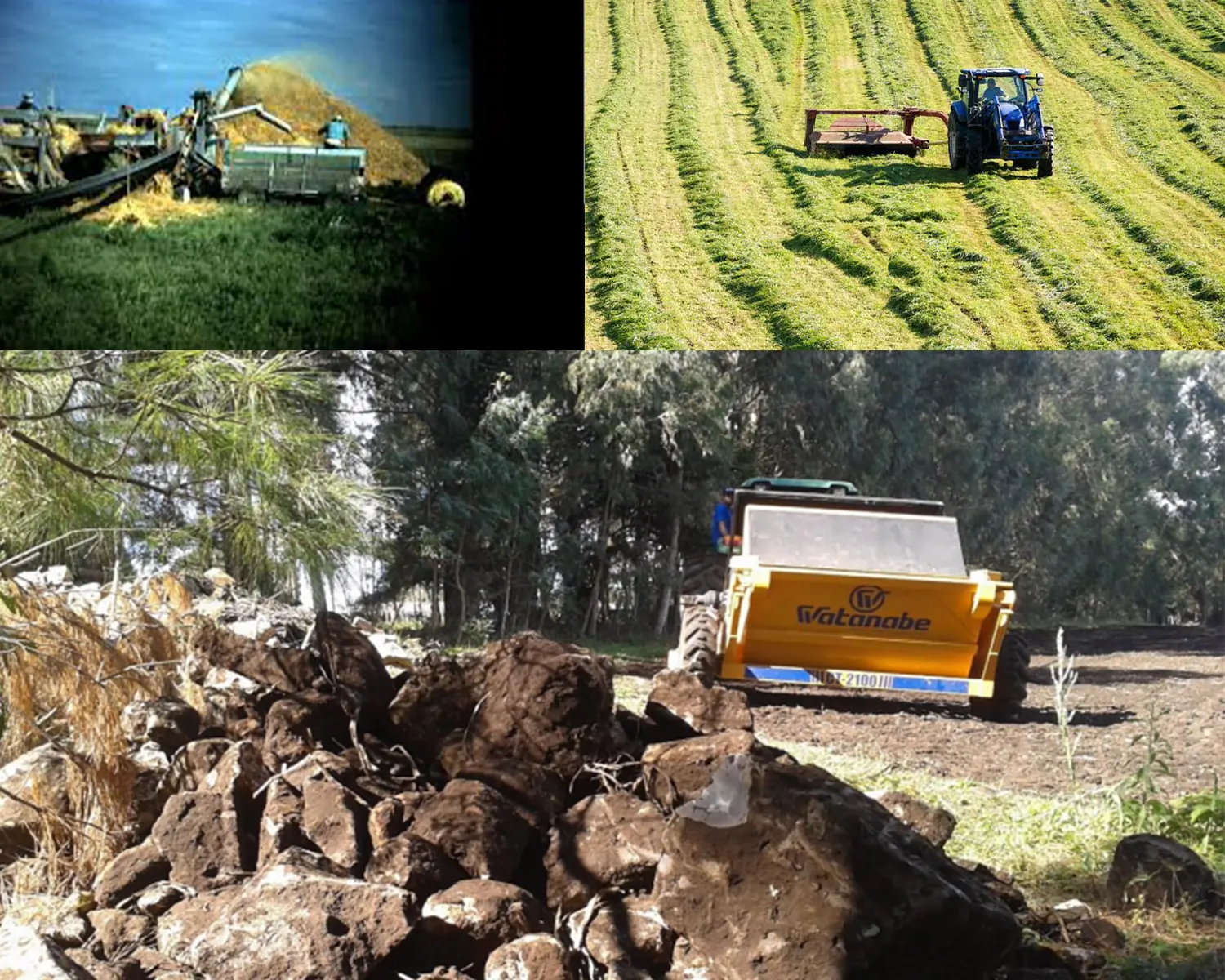
The garlic stone clearing calendar differs fundamentally from the highland potato system — not in the machines or procedures used, but in the timing. Korean garlic is planted in September–October, meaning all field preparation (stone clearing, tillage, lime application, bed formation) must be completed in August–September:
THOR 2.4 Depth Protocol for Garlic Fields — Shallower Than Potato but No Less Thorough
Korean garlic develops its bulbs in the upper 15–18 cm of the soil profile — shallower than highland potato tubers (which develop to 25 cm). The THOR 2.4 clearance depth for garlic is therefore set at 20–25 cm (depending on variety) rather than the 25–30 cm protocol for potato. This shallower depth affects the operating parameters:
20–22 cm for Namdo soft-neck; 22–25 cm for Uiseong hard-neck. Confirm actual soil depth in each field section before setting — garlic fields in Gyeongnam coastal alluvial zones may have sufficient depth for 25 cm clearance, while Gangwon granite highland garlic fields may have shallow bedrock in some sections (use probe check as for potato fields).
At 20–22 cm clearance depth (versus 25–30 cm for potato), the THOR 2.4 operates in a shallower soil volume per pass — encountering slightly fewer stones per linear metre in fields with stone depth increasing with depth. This allows the possibility of 0.2–0.4 km/h higher forward speed than equivalent potato preparation at the same stone density. Do not increase speed above what produces the target fragmentation standard — the garlic field’s stone residual requirement (zero tolerance for stones above 3 cm in the garlic bulb zone) is the governing constraint, not the speed increment.
Same as potato zero-tolerance clearance: rear hood fully closed for finest fragmentation output, producing residual fragments below 2–3 cm maximum. Garlic bulbs developing in the 8–18 cm zone are as sensitive to stones in this size range as potato tubers are in the equivalent zone — the residual stone standard is the same despite the different clearance depth.
EP-EW-4000 Role in the Garlic System — Spring Pre-Harvest Surface Clearance
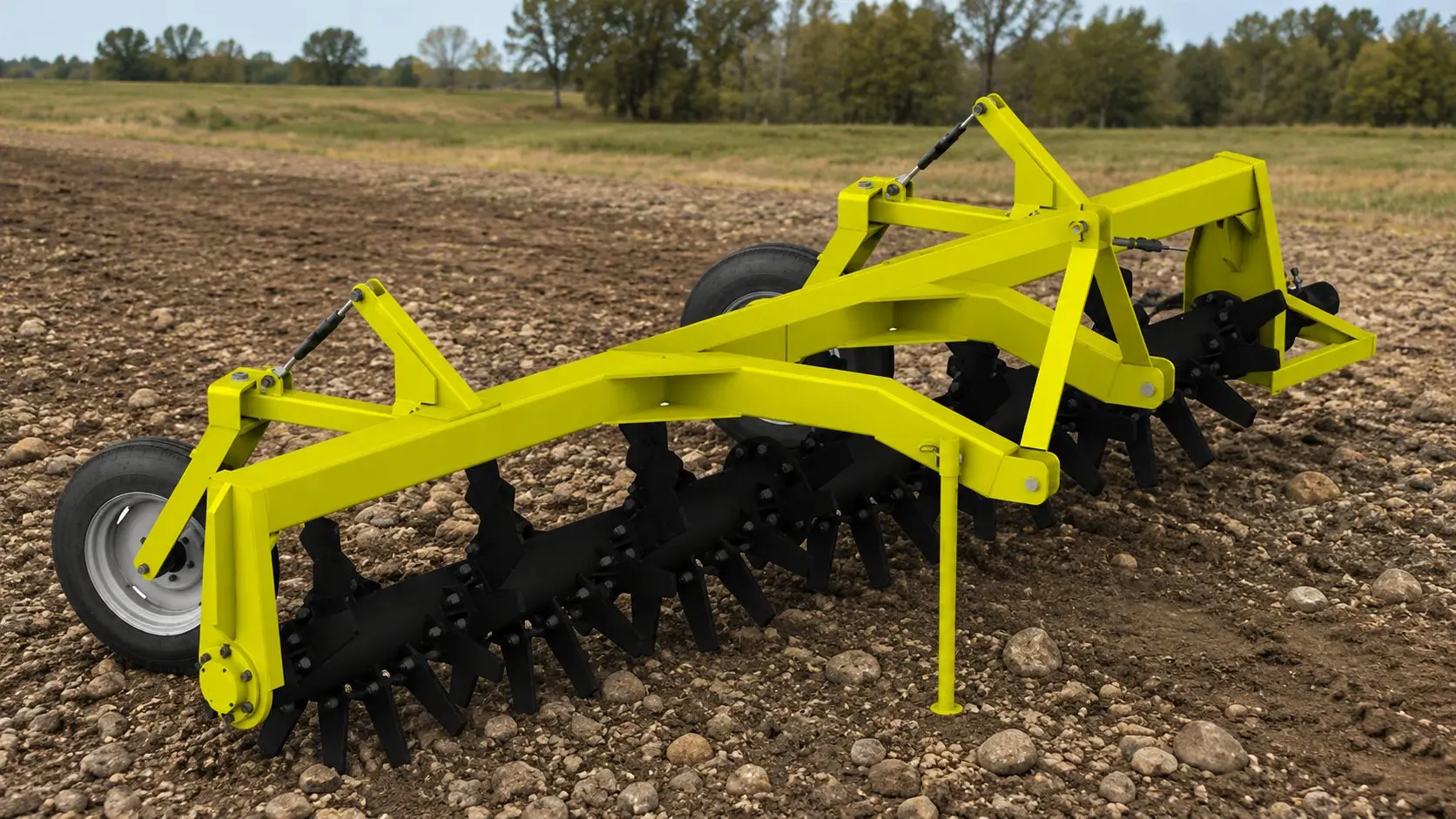
Between the September THOR 2.4 clearance and the May–June garlic harvest, Korean garlic fields in highland and northern Gyeongnam locations experience 15–40 freeze-thaw cycles that produce surface stone re-emergence from the frost heave mechanism. The stones that emerge during the garlic overwintering period are not within the standing garlic rows (the growing crop prevents the EP-EW-4000 from working in the rows) but they appear in the headlands, access routes, and field edges that harvest equipment must traverse in May–June.
The pre-harvest EP-EW-4000 pass timing for garlic (third week of April) is different from the potato system’s pre-harvest pass (third week of September for autumn cabbage). The garlic-specific timing is driven by two factors: (1) the frost heave season is ending in April, so the EP-EW-4000 pass at this point captures the full winter’s stone emergence before it is compacted back by spring rainfall; (2) the April timing provides 4–6 weeks before the first harvest vehicle enters the field in late May, allowing any disturbed headland soil to re-compact before heavy harvest traffic.
Garlic-Potato Mixed Farm Scheduling — THOR 2.4 Utilisation Across Two Systems
Korean farms that produce both garlic and highland potato on separate field blocks achieve exceptionally good THOR 2.4 utilisation because the two crop systems use the machine in different seasons — garlic preparation in August–September and potato preparation in March–April. A THOR 2.4-owning farm with both crop systems operates the machine in two seasonal windows rather than one, improving the annual operating hours per machine and reducing the per-hectare ownership cost:
Garlic-Potato mixed farm THOR 2.4 utilisation:
Garlic Rotation and Soil Health — Disease Management and pH Targets
Korean garlic, like highland potato, requires careful rotation management to prevent the build-up of soil-borne pathogens. The most significant garlic soil-borne disease is white rot (Sclerotium cepivorum) — a persistent fungal pathogen whose sclerotia survive in Korean soils for 15–20 years after a white rot infection event. White rot management for Korean garlic requires:
Garlic (and all Allium crops — onion, leek, spring onion) must not be grown in the same field for a minimum 3-year interval to prevent white rot sclerotia density from reaching commercially significant levels. A 4-year rotation including one garlic year, one legume year, and two cereal or other non-allium crops is the standard Korean garlic disease management rotation.
Korean garlic prefers a soil pH of 6.0–6.8 — broadly compatible with the potato year’s 5.8–6.2 target and the cabbage year’s 6.5–7.0 target. On mixed garlic-potato farms, the pH management for garlic years is not a major additional complication — a pH of 6.0–6.5 satisfies both crops. However, on garlic fields where the rotation includes cabbage in adjacent years, monitor pH carefully to avoid driving the garlic year above 6.8 from residual cabbage-year lime.
Frequently Asked Questions
Is garlic stone clearing depth different for Jeju Island garlic versus mainland Korean garlic?
Yes — Jeju garlic (primarily the Namdo variety grown at lower elevation in Jeju’s volcanic basalt soil) has the same bulb development depth characteristics as mainland Namdo (8–15 cm), requiring 20–22 cm clearance depth. The Jeju-specific difference is the basalt soil profile and shallow bedrock challenge described in the Jeju stone clearing guide — the THOR 2.4 depth must be set based on confirmed minimum soil depth in each field section (probe check at 10 m intervals), and the depth setting for Jeju garlic may need to be shallower than the 20–22 cm standard if bedrock is closer to the surface in some sections. This is the same precaution recommended for all Jeju field operations. The August–September timing for Jeju garlic preparation also aligns with the general Jeju clearing calendar (July–August for garlic preparation, then September–October planting), which conveniently allows mainland Gyeongnam and Gangwon garlic preparation in September to precede the Jeju window — a contractor serving both markets would sequence Jeju in August and mainland Korean garlic in September.
Can the THOR 2.4 teeth used for potato clearance in March be reused for garlic clearance in September?
Yes — the THOR 2.4 tooth set does not have separate specifications for garlic versus potato. The same tungsten carbide teeth handle both applications. The practical wear management consideration: if the March potato clearance pass leaves teeth at 65–70% remaining profile, the remaining tooth life may or may not be adequate for the September garlic clearance pass depending on the stone density and hardness of the garlic fields. Inspect tooth wear after the March potato clearance pass in the standard post-season inspection (described in the tooth wear monitoring guide) and record the wear level. If teeth are above 70%: available for September garlic clearance. If teeth are at 65–70%: evaluate whether the September garlic clearance is light enough (recently cleared fields, low re-emergence) to operate within the 60% threshold. If teeth are below 65%: replace before September garlic clearance to ensure clearance quality in the garlic bulb zone. Order replacement teeth in July to ensure August stock availability for the September deployment window.
Does the PSW-3200 require any different setup for garlic bed preparation compared to potato?
The PSW-3200 setup for garlic bed preparation differs from potato in depth: a single pass at 18–20 cm is typically sufficient for garlic (versus the double pass at 25 cm for potato). Korean garlic is planted into rows or raised beds rather than the high ridged rows used for potato — the bed preparation requires fine tilth in the upper 15–20 cm for good seed clove-to-soil contact and uniform rooting, but does not require the deep fine tilth needed for potato’s ridge formation. On stone-cleared fields where the September PSW-3200 pass operates in clean fine-particle soil, a single pass at 20 cm produces the uniform seedbed that garlic planting requires. On new garlic land where the September THOR pass has fragmented large stones, the PSW-3200 double pass at 25 cm may still be beneficial to fully homogenise the freshly fragmented stone material into the top 20 cm before bed formation — confirm with a visual inspection of the tilth quality after the single pass before deciding whether a second pass is needed.
Is Korean garlic stone clearing eligible for the same agricultural machinery subsidies as potato machinery?
Yes — the THOR 2.4 rock crusher, CT-2100 rock picker, and EP-EW-4000 rock rake qualify under the farmland improvement machinery category of the Korean agricultural machinery purchase support program for garlic field applications, the same as for potato. The program does not distinguish between crop applications — it covers the machine for farmland improvement use, which garlic field stone clearing meets. Korea Watanabe prepares certification documentation for garlic field applications and can confirm current year rates and allocation timing. For garlic-potato mixed farms applying for THOR 2.4 subsidy, the application can reference both garlic and potato applications to document the full seasonal utilisation and strengthen the application case for the machine’s necessity.
How does a Korean garlic farm calculate the ROI on THOR 2.4 investment based on grade improvement?
The Korean garlic ROI calculation is built on the same framework as the potato ROI guide: stone-damaged Grade 2 proportion × (premium dried Grade 1 price – commodity price) × annual production = annual revenue benefit from stone clearing. Using representative Korean premium garlic pricing: Uiseong premium dried Grade 1 = 8,000–12,000 KRW/Kg; commodity Grade 2 = 2,000–4,000 KRW/Kg. Price differential = 6,000–8,000 KRW/Kg. At 15% Grade 2 proportion from stone damage on 2 ha of garlic at 8 tonnes/ha yield: 2,400 Kg downgraded × 6,000 KRW differential = 14,400,000 KRW (14.4 million KRW) annual revenue loss from stone damage on 2 ha. After adding the potato system ROI (from the parallel potato blocks), the combined annual benefit from stone clearing on a mixed 10 ha garlic-potato farm typically exceeds 50,000,000 KRW — providing a full THOR 2.4 + CT-2100 investment recovery within 2–3 years even before subsidy contribution. Korea Watanabe provides farm-specific ROI calculations on request.
Korean Garlic Stone Clearing — THOR 2.4 Depth Protocol and September Calendar
Garlic variety (Namdo / Uiseong) + field area (ha) + current stone assessment result + potato system configuration → September THOR 2.4 clearance protocol with depth setting and EP-EW-4000 spring maintenance plan. Korea Watanabe, Ansan-si, Gyeonggi-do.
Editor: Cxm