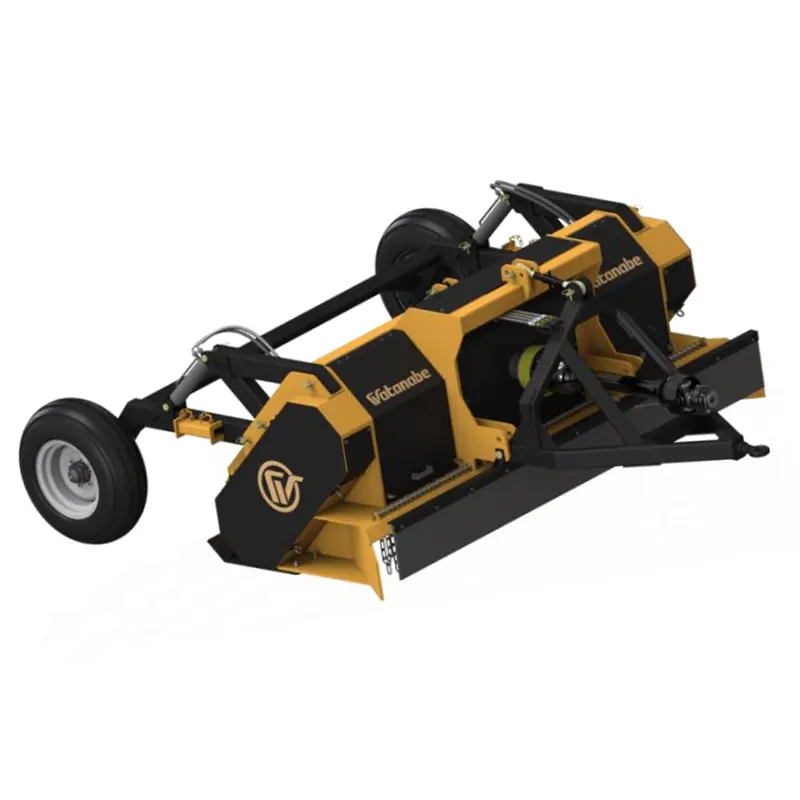
の THOR 3.0 石破砕機 occupies the top of the Watanabe stone crusher range for Korean agricultural applications. Where the THOR 2.4 ロッククラッシャー handles stones up to 30 cm for highland potato and vegetable preparation, the THOR 3.0 handles stones up to 40 cm — the category that includes the large intact boulders found on new land development sites, the massive basalt fragments on un-cleared Jeju agricultural land, and the heavy stone populations on abandoned highland terraces that have had 20+ years of frost heave accumulation without removal. It also provides the wider 3.0 m working width that contractor operations need to achieve economically viable daily coverage rates on large-scale Korean farmland clearance projects.
This guide covers the THOR 3.0’s confirmed specifications from the official Watanabe brochure, the operational differences from the THOR 2.4 that operators must understand before deployment, the 2-valve hydraulic requirement that is the most commonly missed prerequisite in Korean tractor configuration, daily coverage and capacity planning, and the THOR 3.0’s role in Korean agricultural contractor operations paired with the BlackBird 9.5 m rock rake.
THOR 3.0 Confirmed Specifications

仕様はすべて渡辺の公式製品カタログからのものです。
Key Operational Differences from the THOR 2.4
Operators experienced with the THOR 2.4 who deploy the THOR 3.0 for the first time consistently encounter the same surprises — not from incompetence but from assuming the two machines behave identically at different scales. Four differences require active awareness:
Difference 1: The 2-Valve Hydraulic Requirement
The THOR 3.0 requires two independent hydraulic valve outputs from the tractor — one for rear hood position control and one for the Drawbar Kit hydraulic circuit. Many Korean domestic tractors in the 200–230 HP power range have only one rear remote hydraulic valve as standard, with the second valve available as a factory option or aftermarket addition. Confirm the tractor’s valve count before any THOR 3.0 purchase commitment — a tractor with only one rear remote valve cannot operate the THOR 3.0 with the Drawbar Kit simultaneously, which means slope operations (where the Drawbar Kit is mandatory above 12%) cannot use the rear hood adjustment during the pass. Korea Watanabe confirms the 2-valve requirement and can advise on which Korean domestic tractor models have 2-valve standard or option availability.
Difference 2: The 2,800 Kg Weight and Tractor Rear Axle Load
At 2,800 Kg, the THOR 3.0 is 500 Kg heavier than the THOR 2.4 (2,300 Kg). The rear-mounted weight places additional load on the tractor’s rear axle and tyres. For Korean domestic tractors at the 230 HP rating, confirm that the rear axle and three-point hitch maximum carrying capacity (typically 5,000–8,000 Kg for 230 HP class tractors) accommodates the THOR 3.0 weight plus any ballast weight on the front of the tractor needed to maintain front axle steering control at the rear load. Front ballast of 400–600 Kg is typically required when running the THOR 3.0 on Korean highland slope terrain to prevent front axle lightness from reducing steering authority during the pass.
Difference 3: The 600mm Rotor and 40cm Stone Capacity
The THOR 3.0’s 600 mm rotor diameter (versus 550 mm on the THOR 2.4) increases the stone capture and fragmentation zone — allowing stones up to 40 cm diameter to be processed at speed rather than deflected or requiring multiple passes that the THOR 2.4 needs for 35–40 cm stones. The practical effect on Korean new land development and contractor operations is that the THOR 3.0 makes one effective pass where the THOR 2.4 would require two — on heavily stoned new land with large boulder populations, this halves the per-hectare THOR operating time for the first clearance pass.
Difference 4: 116 Teeth and Higher Tooth Consumption Rate
The THOR 3.0’s 108+6 = 116 tooth count (versus 90+6 = 96 on the THOR 2.4) means a full tooth replacement set for the THOR 3.0 contains 20 more teeth than the THOR 2.4 set. At comparable operating conditions, the per-tooth wear rate is similar — but the total tooth replacement cost per season is higher on the THOR 3.0 because it carries more teeth. Korean contractors operating the THOR 3.0 at maximum utilisation (150+ ha/season) should plan for annual or semi-annual full tooth set replacement and budget accordingly. Korea Watanabe maintains THOR 3.0 tooth sets in Korean local stock — contact in November before the spring clearance season to confirm availability and lead time.
Who Needs the THOR 3.0 in Korean Agriculture

The THOR 3.0 is the correct investment for three specific Korean agricultural situations. Understanding which situation applies to a given operation determines whether the 230 HP investment is justified versus the 180 HP THOR 2.4:
New highland land development with large boulder populations. Virgin or long-abandoned Korean highland terrain commonly contains intact boulders above 30 cm diameter — the THOR 2.4’s ≤30 cm specification handles the majority but requires multiple passes on the largest stones. The THOR 3.0’s ≤40 cm specification and higher rotor energy handles these larger stones in a single pass, reducing the total number of THOR passes needed on new land from 2–3 (THOR 2.4) to 1–2 (THOR 3.0). On 10+ ha new land development projects where the stone population regularly exceeds 30 cm, the THOR 3.0’s per-hectare productivity advantage over the full project more than offsets the higher machine cost.
Korean agricultural stone clearing contractor operations. A contractor providing stone clearing services to multiple farms needs daily coverage rates that justify the operating cost (fuel, consumables, operator) per hectare served. The THOR 3.0’s 3.0 m working width versus the THOR 2.4’s 2.4 m provides 25% more coverage per hour at equivalent forward speed — from approximately 2.5 ha/day (THOR 2.4) to approximately 3.0–3.5 ha/day (THOR 3.0) under typical contractor operating conditions. At a contractor service price of 300,000–500,000 KRW per hectare, this additional 0.5–1.0 ha/day represents 150,000–500,000 KRW of additional daily revenue — sufficient to justify the higher THOR 3.0 investment cost at contractor operating intensity levels.
BlackBird 9.5 m rock rake companion for large-scale road clearance. The THOR 3.0 is the specified companion machine for the BlackBird 9.5 m rock rake system — the BlackBird’s product specification requires the rear hitch to accommodate a THOR 3.0 for integrated road-and-field large-scale stone management operations. The THOR 3.0 + BlackBird 9.5 m combination is the highest-coverage stone management configuration in the Watanabe Korean range — the BlackBird’s 9.5 m path plus the THOR 3.0’s 3.0 m path cover 12.5 m total width on combined passes. This combination is designed for contractors servicing large-scale Korean agricultural road and field clearance in a single deployment.
Not justified for standard annual maintenance on established highland farms. A Korean highland potato or vegetable farm with 5–15 ha of established, previously cleared fields using the annual maintenance clearance protocol (frost heave re-emergence only) does not need the THOR 3.0’s 40 cm stone capacity or 3.0 m width — the THOR 2.4 handles these operations at lower investment, fuel, and consumable cost. The THOR 3.0 is a specialist machine for heavy clearance and high-coverage applications, not a replacement for the THOR 2.4 in standard highland farm maintenance.
Daily Coverage and Capacity — THOR 3.0 Performance Data
THOR 3.0 daily coverage estimate — established cleared field, spring maintenance pass:

CT-2100 Pairing — Collection Volume and Scheduling on THOR 3.0 Operations

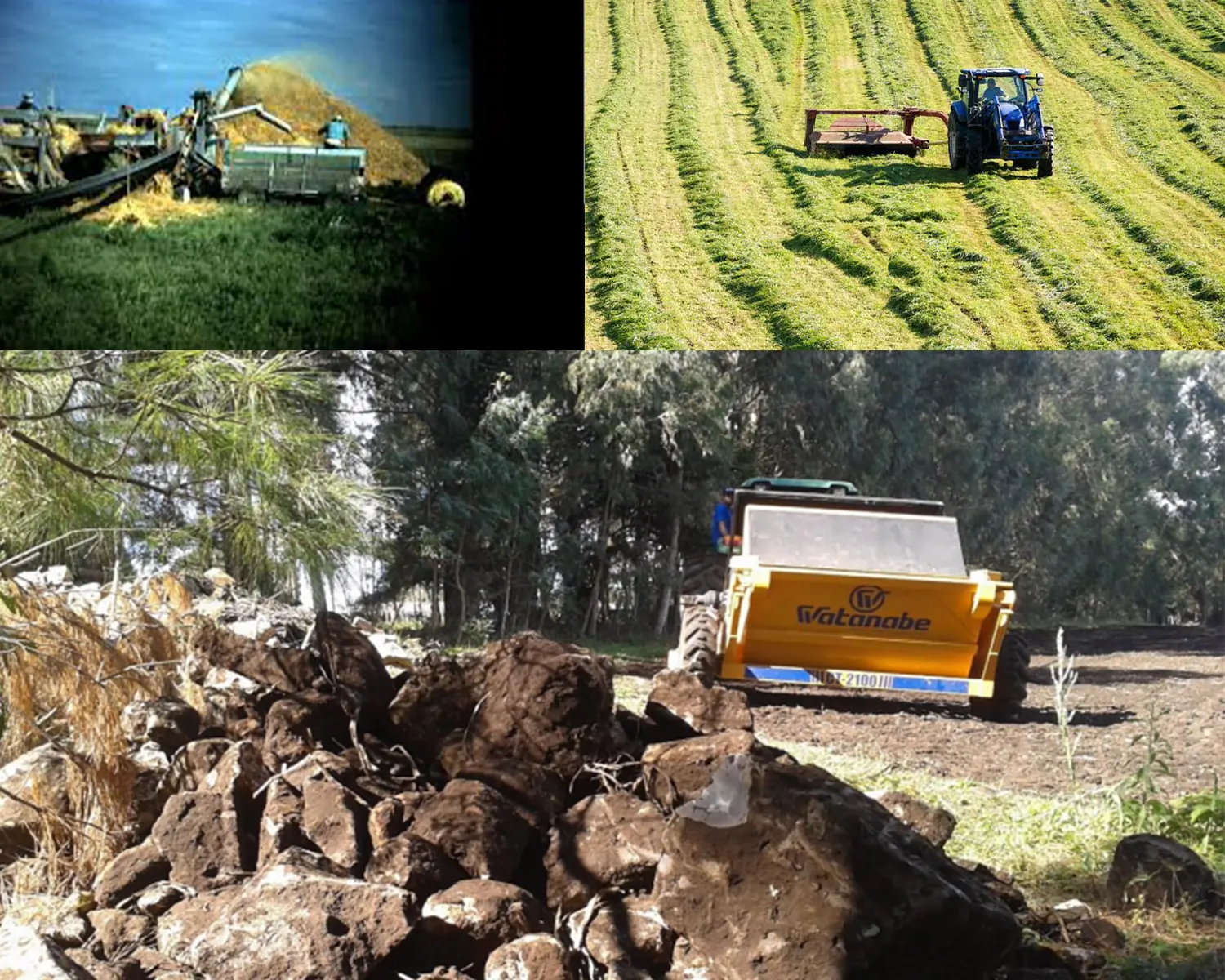
の CT-2100 ロックピッカー is paired with the THOR 3.0 in the same way it follows the THOR 2.4 — collecting fragmented stone material from the THOR’s output zone. Two operational differences on THOR 3.0 operations compared to THOR 2.4 follow operations:
Higher volume per pass
The THOR 3.0’s 3.0 m width collects 25% more fragmented stone per linear metre of pass than the THOR 2.4 at equivalent stone density — the CT-2100 bunker fills approximately 25% faster per pass length. Plan the CT-2100 deposit cycle at 25% shorter field section intervals than equivalent THOR 2.4 operations. This means more bunker deposit stops per hour — position the stone deposit zone for CT-2100 access more frequently.
CT-2100 width vs THOR 3.0 width
The CT-2100’s 2.5 m³ bunker collection width is approximately 2.0 m — narrower than the THOR 3.0’s 3.0 m output path. The CT-2100 must make approximately 1.5 passes per THOR 3.0 pass to collect the full output width. For THOR 3.0 + CT-2100 operations, allow the CT-2100 two collection passes per THOR pass: one centred on the THOR 3.0 track, one offset to one side to cover the full 3.0 m width. This 1.5× pass ratio reduces the CT-2100’s effective coverage relative to the THOR 3.0’s pass rate — on very large fields, a second CT-2100 machine may be needed to maintain pace with the THOR 3.0’s higher output rate.
よくある質問
What is the typical Korean tractor in the 230HP class that is compatible with the THOR 3.0?
The THOR 3.0’s 230HP minimum requirement and 2-valve hydraulic requirement places it in the operating range of the largest Korean domestic agricultural tractors available from LS, TYM, and Kukje in the 220–280 HP class. Common models used with the THOR 3.0 in Korea include: LS tractors in the XU and MT heavy series (230+ HP); TYM tractors in the T1204 and T1354 class (230–230HP range with 2-valve hydraulic option); Kukje tractors in the GM series (230+ HP). For all THOR 3.0 deployments, Korea Watanabe confirms tractor compatibility based on three specific criteria: rated PTO HP at 1,000 RPM, rear hitch Cat.2 rated capacity (minimum 5,000 Kg for THOR 3.0 at 2,800 Kg with safety margin), and hydraulic valve count. Provide your tractor model and serial number to Korea Watanabe for a specific compatibility confirmation before purchase.
Does the THOR 3.0 use the same Kit Drawbar system as the THOR 2.4 for slope operations?
Yes — the THOR 3.0 includes the Drawbar Kit as standard (confirmed in the Watanabe official product brochure), operating on the same pull-mode principle as the THOR 2.4 Kit Drawbar. The Drawbar Kit converts the THOR 3.0 from rear three-point hitch push mode to drawbar tow pull mode for slope terrain, reducing the risk of machine lateral displacement on steep gradients above 12%. The 2-valve hydraulic requirement on the THOR 3.0 is partly driven by the Drawbar Kit’s hydraulic circuit — the second valve controls the Drawbar Kit hydraulic functions. If the tractor has only one rear remote valve, the Drawbar Kit cannot be used simultaneously with the rear hood position control, which limits slope management options. The full THOR 3.0 operational capability (hood adjustment + Drawbar Kit hydraulic simultaneously) requires the 2-valve tractor confirmation before deployment on Korean highland slope terrain.
Is the THOR 3.0 eligible for the same Korean agricultural machinery subsidies as the THOR 2.4?
Yes — the THOR 3.0 qualifies under the Korean agricultural machinery purchase support program in the farmland improvement machinery category, the same category as the THOR 2.4. Korea Watanabe holds Korean agricultural machinery certification for both models. The subsidy amount for the THOR 3.0 is typically higher than for the THOR 2.4 in absolute terms (because the subsidy is a percentage of the purchase price and the THOR 3.0 has a higher purchase price) but the percentage contribution (30–50% of eligible cost) is applied consistently across both models. For contractor operations where the THOR 3.0 will serve multiple farms, confirm the contractor-use eligibility with your county agricultural office — some county programs require the subsidised machine to be used on the applicant’s own registered farmland for a minimum period (typically 5 years) with contractor services permitted after this period or under specific conditions.
Can the THOR 3.0 be used for agricultural road FDR operations similar to the THOR ST?
No — the THOR 3.0 is an agricultural stone crusher, not a road soil stabilizer. Its design objective is stone fragmentation at agricultural depth (25–30 cm) with a fragmented stone output remaining in the field. The THOR ST (soil stabilizer) is a fundamentally different machine: it mixes the entire existing road pavement material with cement or lime binder at 0–200 mm depth to produce a stabilised base layer — the output material stays in place as the stabilised road structure. The THOR 3.0 cannot produce the uniform mixing depth, controlled working speed (0.5–1.5 km/h), and binder integration that road FDR requires. For Korean rural road FDR and soil stabilisation operations, the THOR ST is the specific machine — the THOR 3.0 is not a substitute. Farm contractors who offer both agricultural stone clearing (THOR 3.0) and road stabilisation (THOR ST) services are investing in two separate specialist machines for two distinct application categories.
What is the stone size difference between THOR 2.4 (≤30cm) and THOR 3.0 (≤40cm) in practice?
The 10 cm difference between the THOR 2.4’s ≤30 cm and THOR 3.0’s ≤40 cm maximum stone diameter represents a significant difference in the stone population accessible in a single pass. A 30 cm stone has a volume of approximately 14 litres; a 40 cm stone has approximately 34 litres — more than twice the volume and mass. On Korean highland granite terrain, stones in the 30–40 cm diameter range are typically the single-boulder class that has not yet been fragmented by repeated frost heave cycles — they are found on new land development sites, long-abandoned terraces, and on forested land being cleared for the first time. On established Korean highland farms where annual frost heave clearance has been maintained for 3+ years, stones above 30 cm diameter are rare because the THOR 2.4’s annual passes have progressively fragmented the large stones in prior seasons. The 40 cm capacity of the THOR 3.0 is therefore primarily relevant for first-generation land development and contractor operations on diverse field types — not for annual maintenance on established farms.
THOR 3.0 Configuration — Tractor Compatibility and Contractor System Design
Tractor model + HP rating + hydraulic valve count + planned application (new land / contractor / BlackBird companion) → THOR 3.0 compatibility confirmation and operation plan. Korea Watanabe, Ansan-si, Gyeonggi-do.
編集者: Cxm