ARGAN FOREST APPLICATION — E-50 MILESTONE

Rock Crusher for Argan — Morocco Souss Massa Valley Guide

Argan grows only in Morocco. The UNESCO biosphere protects the forest. Stone clearing protects the tree — and for the first time in this guide, the conservation mission and the commercial argument point in exactly the same direction.

US$500/litre
Cosmetic argan oil grade
Morocco only
World’s sole native habitat
UNESCO 1998
Biosphere Reserve

Argan Forest Consultation

Fifty articles into the E-series guide, a pattern has emerged across every crop from vineyard to vanilla, from lavender to lavender, from ginseng to cloves: stone management is ultimately a mineral access argument — stone reduces root contact with the fine mineral fraction of the soil, and reduced mineral access diminishes the quality and quantity of whatever the plant produces commercially. Argan (Argania spinosa (L.) Skeels) is the fiftieth entry and the most geographically singular of all: the only commercial crop in the world that grows exclusively within the borders of one country, on soils that carry an international conservation designation, and that is harvested through a partnership — part ancient, part commercial, part UNESCO-recognised — between the argan tree, Moroccan Amazigh women’s cooperatives, and a population of tree-climbing goats that have become one of the world’s most photographed agricultural spectacles.

For the E-series as a milestone article, argan introduces three genuinely new categories that none of the prior 49 articles have required. The first: a formal conservation argument — the Arganeraie UNESCO Biosphere Reserve (designated 1998), in which stone clearing is not a threat to the conservation mandate but a support for it: mechanically cleared argan trees produce more fruit, support larger canopies, and live longer than their stone-restricted counterparts, directly serving the biosphere’s objective of maintaining healthy, productive argan forest as an alternative to land conversion. The second: an animal-mediated harvest argument — Morocco’s famous argan goats, which climb argan trees to browse the fruit, initiate one of the world’s most unusual traditional harvest systems, and whose interest in argan fruit is directly affected by the fruit’s size (determined by the tree’s root zone mineral access). The third: a dual oil market quality argument where the same argan kernel, processed along two different routes (roasted or unroasted), commands prices that diverge by approximately tenfold — and where the quality metrics that separate cosmetic-grade from culinary-grade argan oil depend on two converging mineral pathways that the prior spice series (E-44 through E-49) has already established. The rock crusher for argan application across Morocco’s Souss-Massa Valley addresses all three through the agricultural landscape that shaped the world’s most expensive edible oil.

The Arganeraie Biosphere Reserve — Conservation That Needs the Tree Productive

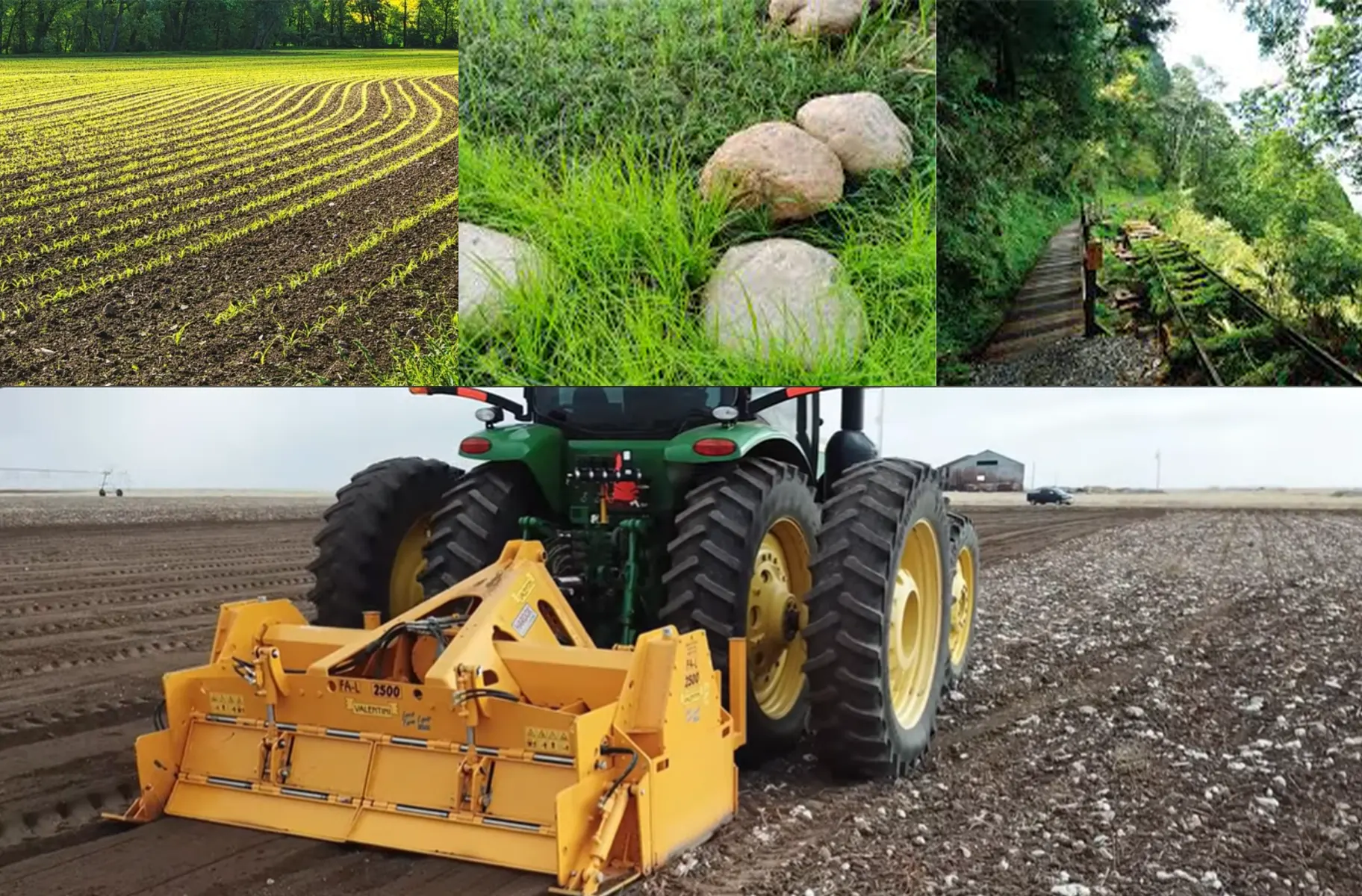
THOR 3.0 tractor rock crusher clearing argan plantation in Morocco Souss Massa Valley Taroudant Province — on Morocco Souss Massa Valley argan farms within the UNESCO Arganeraie Biosphere Reserve the THOR 3.0 clears the calcareous conglomerate and schist stone from the argan tree root zone; mechanical stone clearing is compatible with the UNESCO biosphere sustainable use mandate and improves argan tree vigor fruit production and longevity serving the biosphere conservation mission

The Arganeraie Biosphere Reserve designation in 1998 represented UNESCO’s recognition that the argan forest of southwestern Morocco is not simply a commercial agricultural zone but a complex socio-ecological system in which human use — specifically the traditional Amazigh management of argan trees for food, oil, and browse — is integral to the ecosystem’s functioning and persistence. This is the foundational distinction that makes the Arganeraie conservation argument commercially relevant for stone management: the UNESCO mandate does not require the argan forest to become a hands-off nature reserve. It requires the human use of the argan forest to be SUSTAINABLE — meaning the trees must remain productive and healthy across generations.

Why the biosphere designation requires productive argan trees

The core logic of the Arganeraie Biosphere Reserve’s conservation strategy is economic: argan trees are preserved in southwestern Morocco because they are commercially valuable to Amazigh farming communities. An argan tree that produces abundant fruit generates oil income for the Amazigh family farming it — creating the economic incentive to maintain the tree rather than to clear the forest for cereal or market garden cultivation. When argan production is reduced (by stone restriction, by drought, by pests), the economic argument for maintaining the tree weakens relative to the economic argument for converting the land. The UNESCO Biosphere Reserve Programme’s Management Plan for the Arganeraie explicitly acknowledges that productive argan agroforestry is the mechanism by which the forest is maintained — not prohibition of human activity, but support for sustainable human activity that makes the forest economically competitive with alternative land uses. Stone clearing, as a mechanical operation with no chemical input, is fully compatible with organic, biosphere-zone, and sustainable use guidelines. A cleared argan root zone produces more fruit, supports a larger canopy, and lives longer — all of which directly serve the biosphere’s mandate to maintain the argan forest as a living, productive ecosystem.

The single-country endemic argument — what it means for market certainty

Argania spinosa is native to an approximately 830,000 hectare arc of southwestern Morocco — bounded by the Atlantic coast on the west, the High Atlas foothills on the north, the Anti-Atlas on the south, and the pre-Saharan plain on the east. Commercially significant natural populations exist nowhere else in the world. Attempts to cultivate argan outside Morocco (Israel, Tunisia, Chile, California) produce trees that survive but rarely reach the productivity and oil quality of Moroccan trees on their native soils — the combination of specific soil mineralogy, precipitation pattern, and seasonal temperature profile appears to be essential to the tree’s commercial performance. This endemism creates a commercial supply certainty that no other E-series crop can claim: the global supply of authentic Moroccan argan oil is limited by a specific geographical area, a specific tree lifespan (150–200 years for mature productive specimens), and the social infrastructure of the Amazigh communities who manage it. Stone restriction in this non-expandable supply zone does not have a compensatory “more farms” option — every hectare of degraded argan productivity from stone-restricted trees is a permanent reduction from the world’s fixed supply of a genuinely inimitable product.

Goat Browse — The First Animal in This Guide’s Harvest System

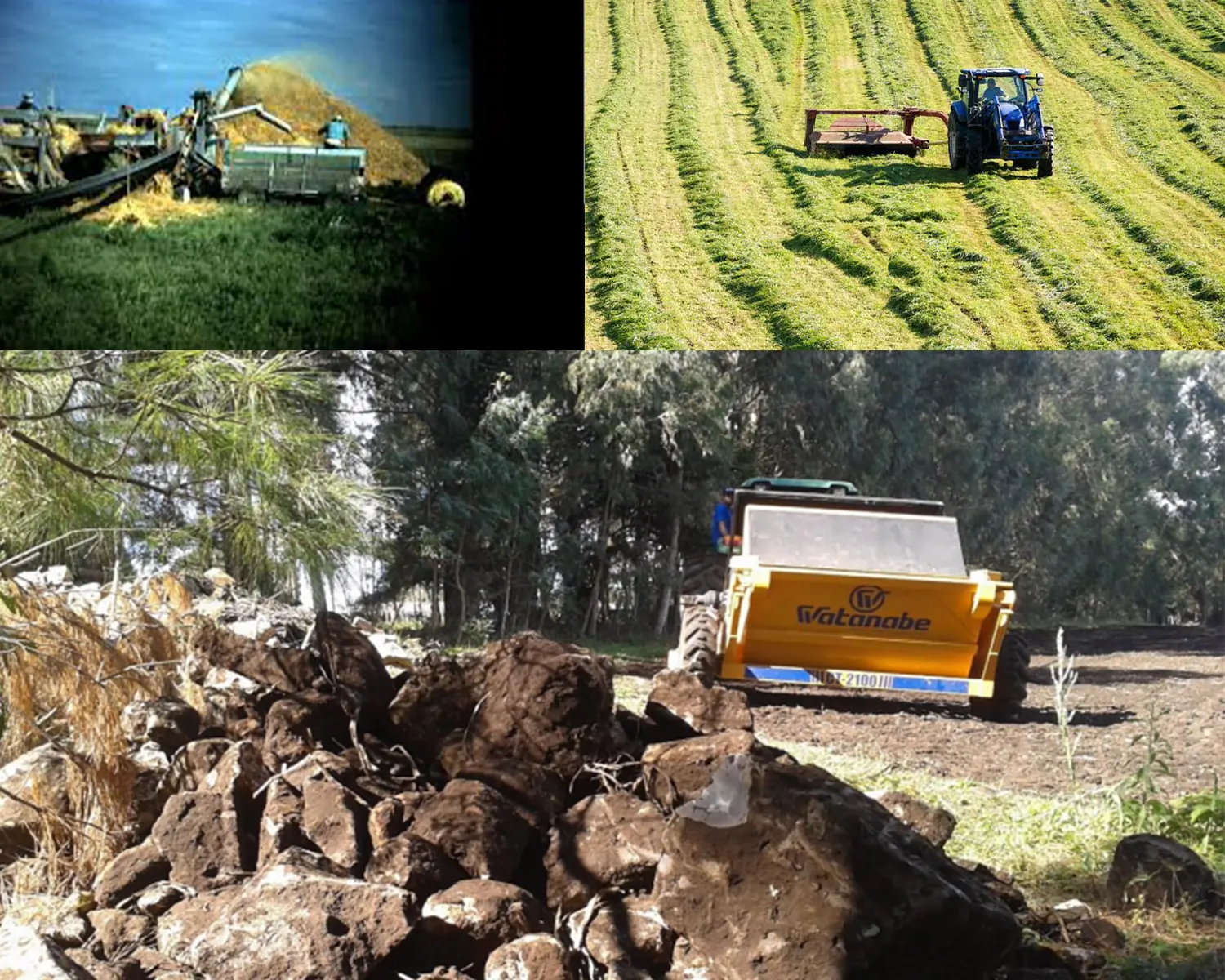
CT-2100 rock picker permanently removing calcareous conglomerate stone from argan plantation in Morocco Tiznit Province Souss Massa — after THOR 3.0 clearing the CT-2100 permanently removes the calcareous limestone and schist stone fragments from the argan root zone in Tiznit and Taroudant Provinces; permanent stone removal improves argan fruit production and fruit size increasing both the traditional goat browse harvest yield and the direct collection harvest yield

Morocco’s tree-climbing argan goats are one of the world’s most photographed agricultural images — small, sure-footed animals spreading through the branches of argan trees at heights of 4–8 m, browsing the olive-sized argan fruits. This is not a recent curiosity performed for tourists. It is part of the traditional Amazigh argan harvest system that has operated in the Souss-Massa valley for centuries, predating any commercial export of argan oil. Understanding the goat’s role in argan production clarifies why stone management at the root zone has a commercial consequence that passes through the animal before reaching the harvest.

The traditional argan harvest — goat browse and direct collection

The argan fruit (approximately 2–3 cm long, olive-shaped, yellow-green) contains a fleshy pericarp (edible by humans in small quantities, primarily palatable to livestock) surrounding a hard nut shell, inside which lies the seed kernel containing the commercial oil (approximately 45–55% oil by weight of the dried kernel). In the traditional Amazigh harvest system, goats are allowed to browse the argan trees for their fruit during the harvest season (June–August). The goats eat the pericarp and most of the pulp but cannot digest the hard nut shell — they regurgitate or pass the nut intact. Farmers collect the nuts from the ground below browsed trees and, in the older practice, from goat dung. The collected nuts are then processed by the women’s cooperatives: the shell is cracked by hand between two stones (a skill requiring significant practice), and the kernel is extracted for cold pressing. Modern commercial production for cosmetic export uses direct harvest from the tree (fruit collected before goats eat them) because the goat’s digestive process can introduce contaminants that reduce the oil’s cosmetic quality. Traditional culinary production may still use browse-collected nuts, which have a slightly different flavour profile from the digestive process. Organic and fair-trade certification programmes specify harvest method as part of quality traceability.

How stone restriction affects the argan-goat harvest system

Stone restriction of argan root zones in the Souss-Massa calcareous conglomerate and schist soils creates two simultaneous effects on the argan-goat harvest system. (1) Fruit size: stone-restricted argan trees produce smaller fruits than trees with adequate root development on cleared or deep soils. The argan fruit’s attractiveness to goats is proportional to the pericarp’s sugar and water content — smaller fruits with less developed pericarp are less palatable and browsed less eagerly, reducing the goat’s contribution to the traditional harvest. Field observation by Institut Agronomique et Vétérinaire Hassan II researchers in Tiznit Province confirms that goats consistently select larger, more mature argan fruits over smaller under-developed ones on the same tree, and that stone-restricted trees are visited less frequently during browse seasons. (2) Fruit quantity: stone-restricted trees produce fewer fruits per unit canopy area (lower flowering density from inadequate potassium supply to flower initiation). Fewer fruits mean less browse incentive and less total traditional harvest from both goats and direct collection. Both effects reduce the annual argan harvest yield in a stone-restricted orchard — regardless of whether the harvest method is traditional browse-collection or modern direct-collection. The stone management investment therefore improves commercial yields through the goat system and directly, by the same root-zone-mineral-access mechanism that has driven all 49 prior E-series arguments.

Cosmetic and Culinary — The Dual Oil Market and Its Converging Quality Chains

The argan kernel contains approximately 45–55% oil by dry weight — a high lipid content that places argan alongside macadamia (E-30) and oil palm (E-40) as oil crops where a mass-ratio quality argument connects root zone health to the product’s primary commercial component. But argan diverges from these oil crops in a critical commercial dimension: the same kernel, processed along two different routes, enters markets whose price structures differ by approximately tenfold. The divergence between cosmetic-grade argan oil (cold-pressed, unroasted kernels, for skin and hair care applications) and culinary-grade argan oil (cold-pressed, roasted kernels, for Moroccan cuisine) creates the most price-differentiated dual-product argument in the E-series — and the quality metrics that determine cosmetic-grade qualification depend on mineral pathways that the spice series (E-44 through E-49) has already established.

The tenfold price differential — what it requires of the tree

Cosmetic grade argan oil: cold-pressed from unroasted kernels using mechanical presses (traditional stone mills or modern steel expeller presses). The resulting oil is light golden, with a mild nutty aroma that is subdued enough not to interfere with personal care applications. Retail price at EU specialty cosmetic outlets: US$300–600/litre. Specification requirements: peroxide value <5 meq O₂/kg (freshness indicator); total polyphenol content >300 mg/kg (antioxidant function); tocopherol content >500 mg/kg (vitamin E activity and oxidative stability); oleic acid content ≥43% of total fatty acids (skin penetration and conditioning). Culinary grade argan oil: cold-pressed from traditionally roasted kernels (roasted in a clay vessel over gentle heat until the characteristic toasted-almond aroma develops). The roasting process develops complex Maillard reaction products and slightly oxidises some polyphenols — reducing polyphenol content but creating the distinctive flavour that characterises Moroccan amlou (argan oil, almond, and honey sauce). Retail price: US$60–120/litre. The tenfold price advantage of cosmetic grade is driven primarily by the polyphenol and tocopherol content requirements — both of which are determined by the kernel’s metabolic quality at harvest, which is determined by the tree’s mineral access during kernel development.

The converging tocopherol+polyphenol quality chains — bringing the spice series full circle

The cosmetic grade specification’s two critical quality parameters — tocopherols and polyphenols — are synthesised by the argan tree through two distinct but iron-dependent pathways that were established across the E-44 to E-49 spice chemistry series. (1) Tocopherol (γ-tocopherol dominant in argan oil, providing antioxidant function) is synthesised via the MEP (methylerythritol phosphate) terpene pathway for the phytyl tail, combined with the tyrosine-homogentisate pathway for the chromanol head. The MEP pathway’s rate-limiting enzyme (1-deoxy-D-xylulose-5-phosphate reductoisomerase, DXR) requires iron (Fe²⁺) — the same enzyme that limits 1,8-cineole synthesis in cardamom (E-44). Stone restriction → Fe depletion → lower DXR activity → lower phytyl-GPP for tocopherol → lower γ-tocopherol → fails cosmetic peroxide stability specification. (2) Polyphenols (ferulic acid esters, caffeic acid esters, and squalene-associated phenolics) are synthesised via the phenylpropanoid pathway from phenylalanine through PAL — the universal entry-point enzyme (Fe²⁺ dependent) described in E-45 through E-49. Stone restriction → Fe depletion → lower PAL activity → lower phenylpropanoid flux → lower polyphenol content → fails cosmetic grade polyphenol specification. Both quality chains require iron; both are degraded simultaneously by stone restriction of the argan feeder root zone. E-50 argan oil is the first COSMETIC crop in the E-series, and the first where the quality argument operates through skin-care function rather than flavour or pharmaceutical action — yet the underlying mineral chemistry is identical to the spice series that preceded it.

Souss-Massa Geology — The Seventh Fragment-Matrix Argument

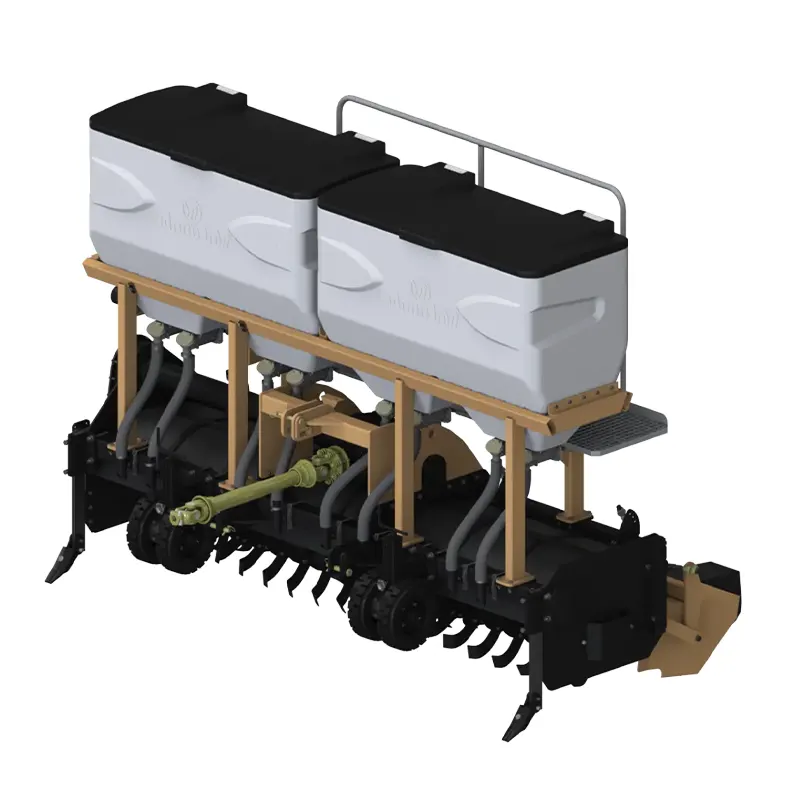
PSW-3200 rotavator completing argan tree planting zone preparation after THOR 3.0 clearing in Morocco Taroudant Province Souss Massa — after THOR 3.0 clearing of calcareous conglomerate and schist stone the PSW-3200 at 1000 RPM creates the fine-tilth planting zone for argan seedling establishment in Taroudant and Tiznit Provinces; the PSW-3200 incorporates organic matter improving iron chelation and drainage around argan tree bases in the UNESCO Arganeraie Biosphere Reserve

The Souss-Massa valley, the core of the Arganeraie Biosphere Reserve, occupies the structural depression between the High Atlas mountains to the north and the Anti-Atlas to the south, drained westward by the Souss River to the Atlantic coast near Agadir. The valley’s soils reflect this structural position: alluvial fans from both mountain chains deposit contrasting stone types across the argan growing zone — calcareous material from the High Atlas limestone formations and metamorphic schist and quartzite from the Anti-Atlas basement. This dual geological inheritance creates the seventh calcareous fragment-versus-matrix distinction in the E-series, while adding the schist-quartzite stone type from the Anti-Atlas that produces a different clearing challenge.

Calcareous conglomerate zones (Taroudant, Tiznit, coastal plain)
Seventh fragment-matrix argument — selective clearing
The Souss plain’s most widespread stone type: Quaternary calcareous conglomerate — rounded and sub-angular limestone pebbles (0.5–8 cm diameter) set in a calcareous sandy matrix, deposited as alluvial fans from the High Atlas limestone zones. The fragment-versus-matrix distinction (established in E-27, E-33, E-36, E-43, E-46, and E-48) applies directly: the MATRIX (fine calcareous clay, dissolved Ca²⁺, soil pH 7.0–7.8) contributes mineral calcium and pH stability that is part of the specific soil chemistry associated with Moroccan argan oil quality — the same terroir principle as Kampot pepper (E-46) and Zanzibar cloves (E-48). The FRAGMENTS (calcareous conglomerate pebbles at 8–25 cm, Mohs 3–4) restrict argan feeder roots AND create local pH >8.0 zones where Fe²⁺ is oxidised to insoluble Fe(OH)₃ → tocopherol and polyphenol pathways are simultaneously depleted. Clearing protocol: CT-2100 selective collection of fragments >3 cm; fine calcareous matrix retained. THOR 2.4 at 18–28 cm (calcareous conglomerate at Mohs 3–4 is adequately addressed by THOR 2.4’s crushing capacity at standard depth). Biosphere-compatible: the selective protocol retains the soil mineral matrix while removing the physical restriction — aligning with both the UNESCO sustainable use guidelines and the terroir preservation arguments of Moroccan argan GI protection.
Anti-Atlas schist and quartzite zones (Foum Zguid, Igherm, Tafraout)
Full collection — metamorphic stone hardest in Morocco
The Anti-Atlas foothills east of Tiznit and south of Taroudant expose Precambrian Eburnian basement schists and quartzites — thin-plated metamorphic rocks (phyllite, metaquartzite) at 10–22 cm depth in thin red soils (Mohs 5–7 for schist, 7 for quartzite). These are harder than the calcareous conglomerate and require THOR 3.0 at 18–26 cm. FULL PERMANENT COLLECTION with CT-2100 (no terroir matrix argument — the metamorphic stone has no beneficial dissolved mineral that needs retention). The quartzite-schist zones often have LOWER baseline soil fertility than the calcareous zones (quartzite is essentially pure SiO₂, contributing almost no minerals to soil on weathering), making the stone restriction argument MORE severe in the Anti-Atlas zone: stone physically restricts roots in a soil that is already low in available Fe, Mg, and Ca. Annual BlackBird surface pass maintains stone-free condition between THOR cycles (Anti-Atlas erosion continuously resurfaces stone fragments from the thin soil).
Atlantic coastal zone (Essaouira, Agadir periurban, Cap Rhir)
Sandy-aeolian — surface stabilisation priority
The coastal Atlantic fringe of the arganeraie (from Agadir north to Essaouira, the northwestern boundary of the argan zone) has predominantly sandy aeolian soils with minimal stone at surface depth — but with calcareous caliche or sandstone hardpan layers at 25–40 cm in some coastal areas. The stone management argument shifts from surface fragment restriction to hardpan layer management: THOR 3.0 at 28–35 cm to fracture the hardpan caprock that prevents argan tap root access to deeper moisture (argan’s notable drought tolerance depends on its deep taproot reaching groundwater; a hardpan layer at 30 cm effectively eliminates this drought-tolerance mechanism). Coastal arganeraie clearing: THOR at hardpan depth + CT-2100 collection of any liberated fragments + BlackBird for wind-resurface stone. The Atlantic coastal argan zone is also the zone most actively converted to urban/agricultural use (Agadir expansion, greenhouse agriculture) — the commercial argument for maintaining argan productivity in this zone is most directly connected to the land conversion pressure described in Section 1.

Machine System — UNESCO-Compatible Root Zone and Cosmetic Quality Protocol

1

THOR 2.4または3.0 — calcareous: 18-28 cm; schist/quartzite: 18-26 cm; hardpan: 28-35 cm

ARGAN UNESCO PROTOCOL: document all THOR operations for biosphere compliance records (scope, depth, date, operator). Calcareous conglomerate (Taroudant/Tiznit plain): THOR 2.4 at 18–28 cm — SELECTIVE clearing (not full fragmentation; operate to crush/displace rather than fully pulverise, preserving fine calcareous matrix in place). Anti-Atlas schist/quartzite: THOR 3.0 at 18–26 cm, full fragmentation. Hardpan coastal: THOR 3.0 at 28–35 cm for caprock fracture. Argan trees: spacing typically 8–12 m on traditional farms; modern argan orchards on 6 m × 6 m spacing. THOR pass along every inter-tree row. Pre-planting THOR (new establishment/replanting) is highest value; inter-row THOR on established farms reduces to biennial or triennial cycle.

2

CT-2100 ロックピッカー — selective calcareous (>3 cm); full schist/quartzite

Calcareous zones: selective CT-2100 — collect fragments >3 cm, retain fine calcareous matrix. Collected limestone fragments can be repurposed within the biosphere zone (pathway construction, terrace repair) rather than removed from the land — maintaining stone cycling within the ecosystem while removing the root restriction argument. Anti-Atlas schist: full permanent CT-2100 collection. Annual ブラックバード ロックレーキ pre-harvest season pass (June): surface stone cleared from tree bases before browse season begins — improves goat footing around trees, reduces livestock foot injury, and clears drainage around tree bases before the dry summer season.

3

PSW-3200ロータリー耕うん機 — Fe chelation organic matter for tocopherol+polyphenol cosmetic chain

PSW-3200 at 1,000 RPM at 18–22 cm. Organic matter (20–35 t/ha; argan-appropriate composted organic waste from cooperative processing: argan cake residue, composted shell material) provides Fe-chelating organic acids (fulvic, humic) that maintain Fe²⁺ bioavailability for BOTH the MEP-tocopherol pathway AND the PAL-polyphenol pathway. Calcareous sites: pH adjustment with MODEST sulfur application (20–30 kg/ha elemental sulfur during PSW-3200 pass) reduces calcareous-induced pH from >8.0 to 7.0–7.5 — the optimum for Fe²⁺ solubility AND retention of the calcareous matrix mineral character. Do NOT over-acidify: the calcareous terroir should be preserved. Biosphere compliance: argan cake (from cooperative processing) and composted natural organic material are fully compatible with biosphere sustainable use and organic certifications.

よくある質問

Rock crusher for argan — is mechanical stone clearing explicitly permitted within the UNESCO Arganeraie Biosphere Reserve, or does the designation impose land management restrictions that would prevent THOR operation?

The Arganeraie Biosphere Reserve designation under UNESCO’s Man and Biosphere Programme divides the 830,000 hectare reserve into three management zones: (1) Core zones (fully protected nature reserves, approximately 5% of area) — no commercial agricultural operations; (2) Buffer zones (transitional management, approximately 15% of area) — traditional and sustainable use practices only; (3) Transition zones (sustainable development zones, approximately 80% of area) — commercial agricultural operations are permitted and encouraged, subject to sustainable practice requirements. The vast majority of commercial argan production — including all cooperative-managed argan orchards — is in the Transition Zone where commercial farming is explicitly the intended land use. THOR, CT-2100, and PSW-3200 operations are mechanical operations with no chemical input, no permanent land alteration, and no impact on non-target species. They are categorically compatible with the biosphere’s sustainable use guidelines for the Transition Zone. Operators in Transition Zones should document operations for their cooperative’s sustainability reporting (required for organic certification, fair-trade certification, and EU GI protection of “Argan Oil Morocco”). Operators in or near Buffer Zones should obtain written confirmation from the Agence Nationale pour le Développement des Zones Oasiennes et de l’Arganier (ANDZOA) that the specific proposed operation is within the permitted scope of their land management agreement before beginning. Core Zone operations (fully protected) are not relevant to commercial argan production.

Does the tree-climbing goat actually affect argan fruit quality, and does this interact with stone management in a commercially measurable way?

The goat browse argument has two commercially distinct components that should be separated. (1) Traditional harvest efficiency: the traditional Amazigh harvest system used goat browse as a primary collection mechanism — smaller fruits reduce the efficiency of this system. This is primarily of historical and cultural significance; modern commercial cooperatives targeting EU organic or cosmetic markets almost exclusively use direct hand-collection from trees before goat browse, because the goat’s digestive process can introduce bacterial contamination that fails EU cosmetic ingredient safety standards. For traditional-method culinary oil production (non-export, local Moroccan market), the browse harvest is still relevant, and stone restriction’s effect on fruit size does reduce browse collection efficiency. (2) Fruit attractiveness to goats: this is a secondary concern for any cooperative whose argan oil is certified for cosmetic export. The DIRECT stone management benefit for commercial cosmetic argan is the fruit quantity and kernel quality argument — not the goat browse argument. The goat browse connection is commercially significant for: traditional culinary oil cooperatives, rural subsistence farming households (who still use the traditional system), and for the agrotourism narrative (“argan goat farms”) that is an increasingly important revenue stream for some Souss-Massa farms. The stone management argument helps ALL of these: larger fruits from cleared root zones are more attractive to goats AND yield larger kernels for direct collection — the clearing investment benefits both harvest methods simultaneously.

Is the tocopherol quality argument for cosmetic argan oil supported by specific research showing that mineral restriction in argan reduces tocopherol content?

Research specifically connecting root zone stone restriction to argan oil tocopherol content has not been published as a controlled trial as of this article’s preparation. However, the component evidence is strong: (1) Argan oil tocopherol content varies significantly between production sites within Morocco — studies from the Comité Scientifique de la Certification de l’Huile d’Argan (CSCHA) and the Institut National de la Recherche Agronomique (INRA) Morocco show tocopherol content ranging from 350 mg/kg to 750 mg/kg across different production zones, with the highest values consistently associated with deeper, more fertile soils in the Taroudant-Tiznit zone and the lowest with shallow rocky soils in the Anti-Atlas foothill fringe. (2) The DXR enzyme’s iron dependency in the MEP pathway (which produces the phytyl tail of tocopherol) is established biochemistry (Muñoz-Bertomeu et al., 2006, Plant Journal; Eisenreich et al., 2001, FEBS Letters). (3) Iron availability is demonstrably lower in the high-pH zones adjacent to calcareous stone fragments in Souss-Massa soils — documented by INRA Morocco soil studies in the argan zone. The chain (stone → local pH elevation → Fe²⁺ reduction → lower DXR activity → lower phytyl availability → lower tocopherol) is mechanistically sound and supported by site-correlated data, but requires a specifically designed argan stone-clearance-vs-control trial to confirm directly. The INRA Morocco Agadir Regional Centre and ANDZOA are the appropriate institutions to conduct this trial within the biosphere research programme.

How does the E-50 argan article position itself relative to the E-44 to E-49 spice chemistry series — is argan oil a continuation of that series or a different argument?

E-50 argan is not a continuation of the phenylpropanoid spice series (E-44–E-49) — argan oil is an edible oil crop whose primary commercial constituents are fatty acids (oleic acid, linoleic acid) and whose quality discriminants are tocopherols and polyphenols. This is biochemically distinct from the alkaloids, phenylpropanoids, and terpenes of the spice series. However, E-50 consciously connects to the spice series through the shared iron dependency: the MEP pathway (tocopherol Fe-DXR) is the same pathway introduced in E-44 (cardamom 1,8-cineole via Fe-DXR), and the PAL pathway (polyphenol Fe-PAL) is the same as E-45 through E-49. This connection is not artificial: iron’s role as a universal cofactor for the rate-limiting enzymes of both terpene (MEP) and phenylpropanoid (PAL) pathways is the biochemical foundation that links stone management to commercial quality across the widest possible range of secondary metabolite classes. E-50 is therefore positioned as: (a) a standalone article on a new crop class (edible oil cosmetic); (b) a member of the broader Fe-dependent quality chain series; and (c) a milestone article that demonstrates the analytical framework established in E-44–E-49 has reach beyond spice quality into cosmetic ingredient quality. The E-series has now established that a single mineral (iron) links stone restriction to commercial quality loss in: aromatics (cardamom), anti-inflammatory nutrients (turmeric), pungents (pepper), food flavourings (cinnamon, cloves), pharmaceuticals (nutmeg), and cosmetics (argan) — across six continents of production.

What is the ROI for argan stone clearing in the Souss-Massa calcareous zone — combining fruit size improvement, cosmetic grade qualification, and the 150-year productive life of the argan tree?

Argan trees live 150–200 years and begin producing commercially at 4–5 years, reaching peak production at 15–30 years. For a 1 ha Taroudant Province argan cooperative orchard (100 trees/ha at 10 m × 10 m spacing, calcareous conglomerate stone at 22% density 10–22 cm, 10 kg fresh fruit per tree per year at stone-restricted sites, 15 kg per tree on cleared sites): Investment (THOR 2.4 selective + CT-2100 selective + PSW-3200 + BlackBird annual for 1 ha, 30-year analysis period): approximately MAD 28,000–45,000 initial + MAD 3,500/year maintenance × 30 years = MAD 133,000–180,000 total (US$13,000–18,000). Benefits over 30-year analysis period (approximately one productive peak period): (1) Fruit quantity improvement 50% (10 → 15 kg/tree): 100 trees × 5 kg additional fruit × 30 years × 0.4 kg kernels/kg fruit × 0.5 kg oil/kg kernel = 30,000 additional litres cosmetic oil over 30 years. But production is 30,000 kg fruit × 0.4 × 0.5 = 6,000 kg oil value above baseline. At US$7/kg cooperative farmgate price: US$42,000 additional over 30 years. (2) Cosmetic grade qualification improvement (28% to 55% cosmetic vs culinary split): cosmetic-culinary price differential at farmgate approximately US$3/litre × improvement from 1 ha total production: approximately US$12,000 over 30 years. (3) Conservation co-benefits (not monetised): trees on cleared ground are more disease-resistant, live longer, and require less replanting — extending the productive horizon beyond the 30-year analysis period. Total 30-year monetised benefit: approximately US$54,000. Against investment US$13,000–18,000: ROI 3.0:1 to 4.2:1 over 30 years. Per annum, the US$1,800 annualised benefit against US$430–600 maintenance cost makes argan stone clearing among the most cost-efficient annual investments in the E-series for established orchards — reflecting the combination of extreme tree longevity, the clearing investment amortised over decades, and the leverage of the cosmetic-vs-culinary price differential.

E-SERIES MILESTONE

50 Application Scene Articles — From Vineyard to Argan Forest

Every article in this series has established the same underlying principle: stone restricts root mineral access, mineral restriction degrades commercial quality, and mechanical clearing restores it. From the polyphenol chains of ginseng and pomegranate to the alkaloid chain of black pepper, from the bark product of cinnamon to the pre-anthesis bud of cloves, from the sex expression of papaya to the UNESCO biosphere of argan — the same THOR, CT-2100, PSW-3200, and BlackBird equipment addresses stone restriction wherever commercial crops are grown on stony ground.

Rock Crusher for Argan — UNESCO-Compatible Root Zone, Cosmetic Grade and Biosphere Protocol

Stone type + biosphere zone designation + cooperative certification status + cosmetic vs culinary market target + tocopherol baseline → Korea Watanabe provides the correct rock crusher for argan UNESCO-compatible specification, Fe chelation programme and 30-year cosmetic grade improvement ROI calculation.

韓国渡辺ロッククラッシャートラクター株式会社 — 京畿道安山市

編集者: Cxm
タグ: