Korean highland radish ( , 高冷地 蘿蔔) is one of Gangwon-do’s most commercially important highland vegetables alongside Korean highland Chinese cabbage ( ). Grown in the same Taebaek mountain granite and basalt soils, at similar altitudes (400–800 m), and harvested in the same autumn window (September–November), highland radish shares the stone management challenges of highland potato and cabbage — but adds a specific stone tolerance dimension that is unique to root vegetables.
Unlike highland Chinese cabbage ( ), where stone affects machinery and transplanting quality but not the harvested head shape, highland radish’s marketable product is the root itself — and the root’s shape is permanently determined by the stones (or absence of stones) in the root development zone during the 60–90 day growing period. A single stone of 3–5 cm diameter in the path of the developing taproot causes the permanent bifurcation ( ) that disqualifies the root from premium fresh market sale. This is the zero stone tolerance that defines every aspect of stone management.
The Root Forking Mechanism — Why Even Small Stones Cause Permanent Damage
Radish root development follows a predictable pattern: the main taproot grows vertically downward from the seed, expanding in diameter from above and extending in length from the tip. The root tip is guided by geotropism (growth toward gravity) — under ideal stone-free conditions, it grows straight downward to produce the long, straight, cylindrical shape that Korean fresh market and processing buyers specify.
When the root tip encounters a stone of any significant size (above approximately 2–3 cm diameter), the tip is deflected by the mechanical obstruction. The apical meristem (growing tip) must grow around the obstruction — splitting into two or more growth points that produce separate root segments, each now growing at an angle from the deflection point. This produces the characteristic forked root ( ) that is the most common quality defect in highland radish production:
Grade 2 downgrade () — minor forking
Root with one or two small secondary growth branches below the main root — visually acceptable to many consumers but below Grade 1 () specification. Korean fresh market buyers typically accept Grade 2 at 60–70% of Grade 1 price.
Grade 3 or rejection — severe forking
Multiple forked branches, irregular shape, deformed root below the shoulder. Unsuitable for fresh market Grade 1/2 sale. Accepted only for kimchi processing ( raw material) at very low commodity pricing — typically 25–40% of Grade 1 value.
The irreversibility of the forking decision is the critical point for stone management. Unlike a bruised apple that may heal partially, a forked radish root cannot be corrected once the forking event occurs — the shape is set in the parenchyma tissue as the root matures. Every stone in the root development zone produces a grade consequence at harvest — and that consequence was created on a specific day during the growing season, long before any farmer can see or respond to it.
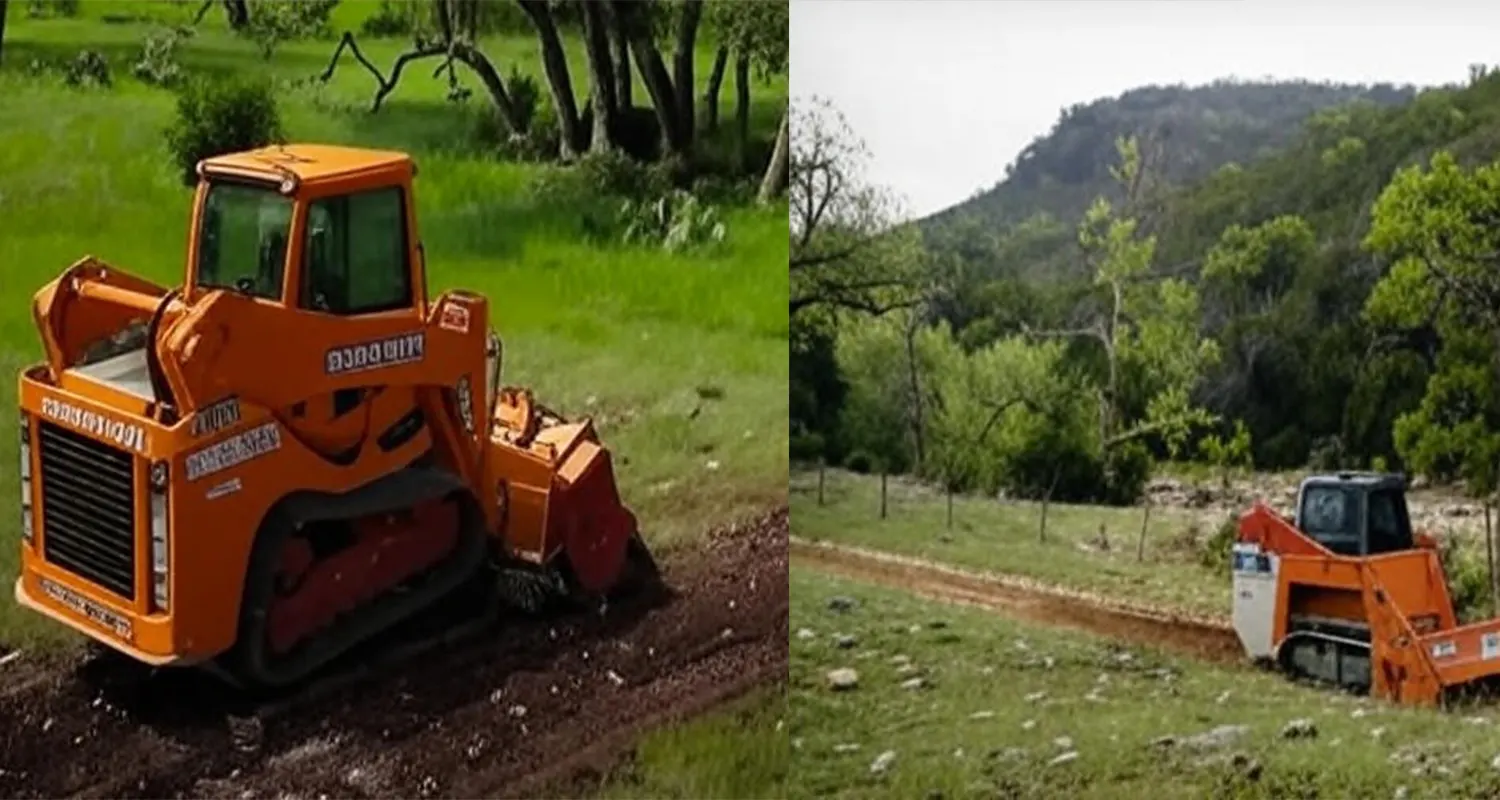
Why Annual THOR 2.4 + CT-2100 Clearance Is Non-Negotiable for
The stone tolerance analysis for reaches a different conclusion from highland potato regarding clearance frequency. For highland potato, established fields can sometimes use EP-EW-4000 rake-only maintenance in light frost-heave years. For , this flexibility is much more limited:
Even light frost-heave produces forking-risk stones. A potato digger share requires stones above 5–8 cm to cause significant damage. A radish root tip requires stones of only 2–3 cm to begin deflection. The frost-heave stones that are “too small” for potato mechanical damage are still large enough to cause radish root forking. Even in years where the EP-EW-4000 would be adequate for potato field maintenance, the smaller stone threshold for radish root forking means the THOR 2.4’s deeper and more thorough clearance is needed annually for .
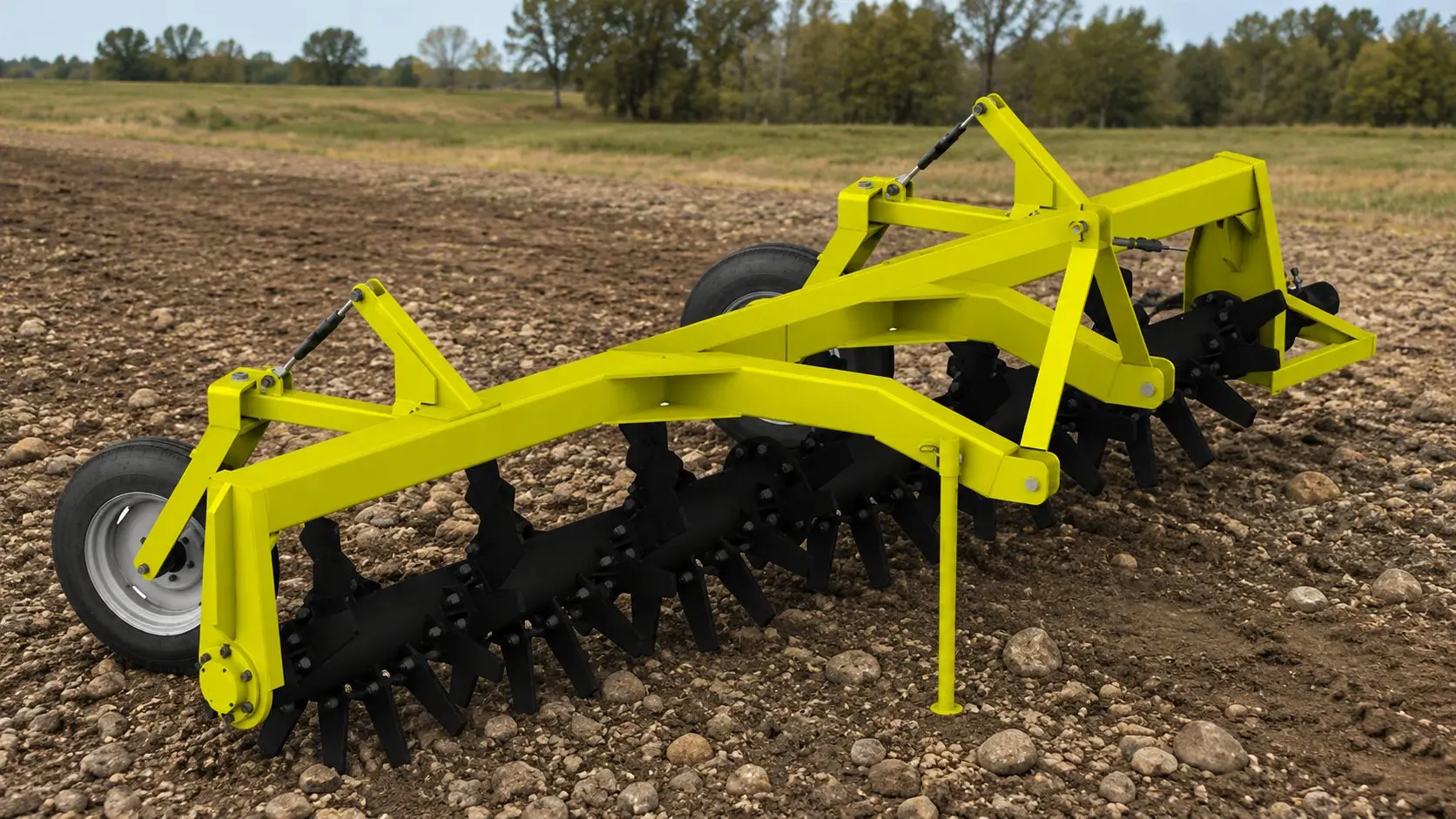
Root development depth (20–30 cm) extends below the rake’s practical collection range. The EP-EW-4000 rake effectively collects surface stones and stones embedded in the upper 5–8 cm. Stones at 10–25 cm depth — within the radish root development zone — are not addressed by the rake. The THOR 2.4’s rotor penetration to 30 cm fractures stones at the depth where radish roots develop. Annual THOR 2.4 clearance to full depth is required for consistent Grade 1 production.
Korean Highland Radish Varieties — Gangwon Production Standard
Korean highland radish production in Gangwon-do uses specific variety selections suited to the highland growing environment and target market. Three varieties dominate highland production:
(Namdo)
Most widely planted highland variety
Large, long-cylindrical root; excellent fresh market appearance; high yield potential. Planted April–May at 400–600 m; planted May at 600–800 m. Harvest September–October. Specific gravity: medium-high. Suitable for fresh market, sliced kimchi (), and winter kimchi raw material.
(Tongmu)
Processing and kimchi market
Shorter, thicker root profile than Namdo; higher water content for kimchi processing; tolerates higher soil moisture conditions. Planted in succession with other crops in 2-season highland production schedules. Lower unit price than Namdo fresh market but stable processing contract pricing.
(Cheongsu)
Premium fresh market
White-skinned, very clean appearance; preferred by premium supermarkets and agricultural cooperative branded products. Higher Grade 1 price premium when correctly produced. Stone clearance is most critical for this variety — any forking from stone contact destroys the premium appearance grade.
Production Calendar — From Stone Clearing to Market
| Period | Activity | Machine / Note |
|---|---|---|
| Jan | Planning; seed ordering; subsidy application | Order certified seed; submit application |
| Late Mar | Stone clearance — THOR 2.4 + CT-2100 | Full depth (30 cm). Annual. Non-negotiable for Grade 1 production |
| Apr (early) | PSW-3200 tillage + fertilizer | Rotavator at 20–25 cm depth; confirm pH 6.0–6.8 for radish (higher than potato) |
| Apr 15–May 5 | Direct seeding () | Ridge sowing at 20–25 cm in-row; 70–90 cm row spacing; 3–5 seeds per station (thin to 1–2 after emergence) |
| May–Jun | Thinning; fertilizer side-dress | Thin to 1 plant per station; nitrogen top-dress at 4-leaf stage |
| Jul–Aug | Root bulking; irrigation management | Consistent soil moisture critical — irregular moisture causes internal cracking () |
| Sep–Oct | Harvest — before first frost | Manual or mechanical harvest; roots must not be frost-damaged |
| Oct–Nov | Post-harvest clearance | EP-EW-4000 rake + CT-2100 for autumn surface stone removal before next spring |
vs — Different Stone Tolerance, Different Clearance Requirements
Many Gangwon-do highland farmers grow both and on their land. The key difference in stone management between these two crops is often not fully appreciated until a grade failure event occurs:
| Factor | (Radish) | (Cabbage) |
|---|---|---|
| Stone tolerance | Zero (root forking) | Low (machinery damage) |
| Primary stone damage | Root shape (permanent) | Transplant machines, irrigation |
| Critical stone size | 2–3 cm (root tip deflection) | 5–10 cm (machine damage) |
| Required clearance depth | 25–30 cm (root zone) | Surface 10–15 cm |
| Annual THOR requirement | Every year | Heavy frost years; light years — rake only |
| Market premium lost to stone | Grade 1→2/3: 30–75% price loss | Machine repair + tyre cost |
For mixed radish-and-cabbage Gangwon-do highland farms, the stone management system must be designed to the radish standard — THOR 2.4 + CT-2100 annual clearance to full depth — because the cabbage standard (rake-only in light years) is insufficient for the radish root development zone. Farms that try to use cabbage-standard clearance for radish fields consistently report 20–40% Grade 2/3 radish rates from forking — a preventable grade loss that the annual THOR investment eliminates.
Grade 1 checklist — field to market
- ✓Annual THOR 2.4 stone clearance to 30 cm depth before every planting season
- ✓CT-2100 collection pass immediately after THOR — zero residual stones above 2 cm
- ✓PSW-3200 double-pass fine tilth (5–15 mm particle target)
- ✓Soil pH corrected to 6.0–6.8 with lime before seeding
- ✓Boron (1–2 Kg/ha borax) applied at base fertilizer stage
- ✓Consistent drip irrigation during July–August bulking
- ✓Harvest before first frost; grade on-site; segregate Grade 1/2/3 at harvest
- ✓Post-harvest autumn field clearance with EP-EW-4000 rock rake + CT-2100 to prepare field surface for the following season — reduces spring THOR pass frequency over multi-year management
Seedbed Quality for — Why Tilth Is as Important as Stone Clearance

Stone clearance removes the mechanical obstacle to straight root development. Seedbed quality — the particle size and structure of the soil in which the seed germinates and the taproot develops — is the second critical factor that determines whether the developing root grows straight or encounters resistance that causes minor deformation even in the absence of stones.
Korean highland radish requires a finer seedbed tilth than potato. Potato tubers develop by lateral expansion — they push against the surrounding soil and are not significantly redirected by coarse soil aggregates. Radish taproots grow downward by cell division and elongation at the root tip — the tip follows the path of least resistance through the soil matrix. In coarse-tilth soil (large clods above 3–5 cm), the root tip can be deflected by soil aggregates in the same way as by stones, producing minor branching or irregular shape even in a technically stone-free field.
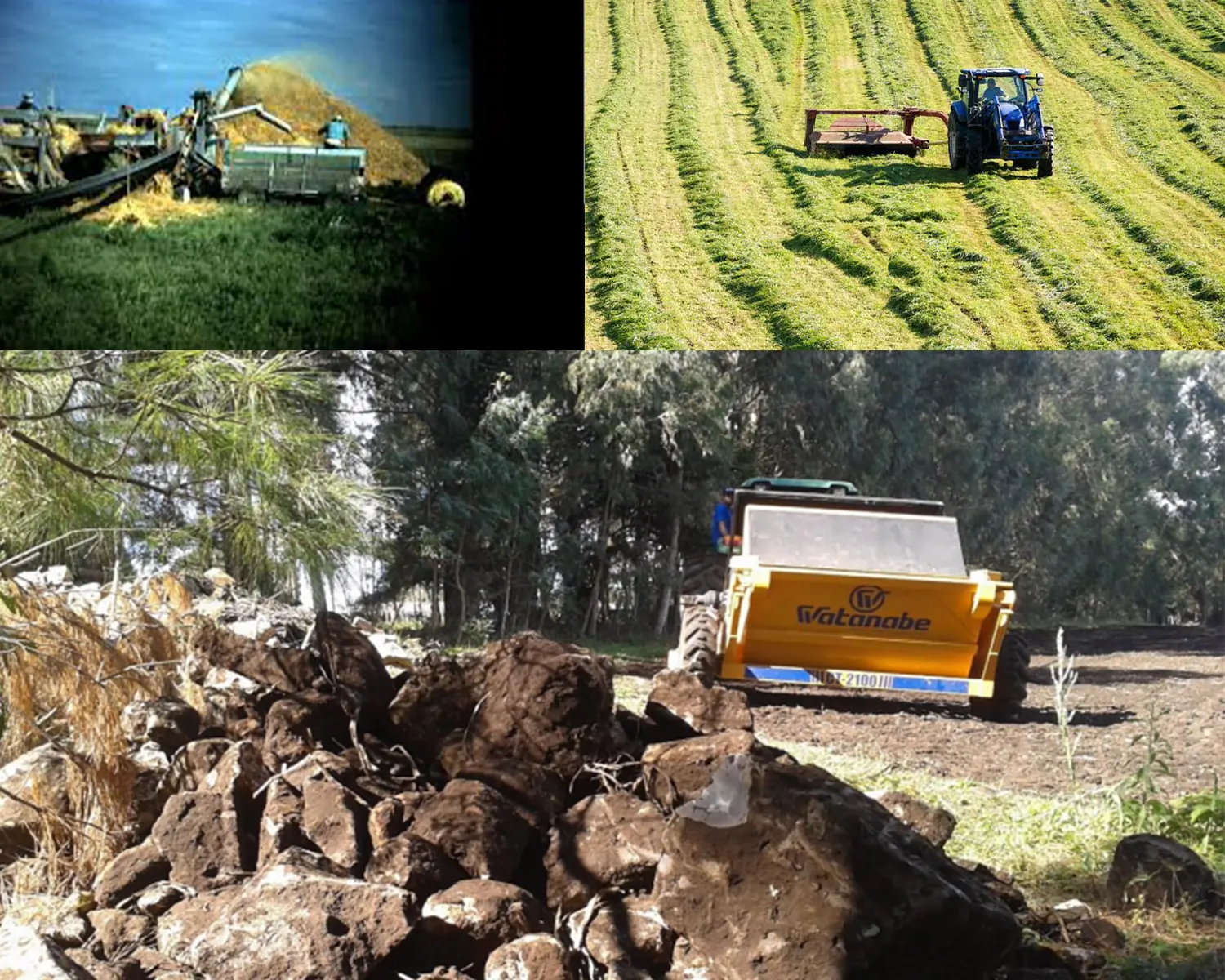
Recommended PSW-3200 approach for seedbed
Two PSW-3200 passes produce a finer tilth than a single pass. First pass at 5–6 km/h opens the soil to 25 cm depth; second pass at 3–4 km/h at 90° to the first further reduces clod size. For highland radish, the target seedbed particle size is 5–15 mm — finer than the 10–30 mm suitable for potato. Confirm by hand: soil squeezed and released should fragment into small particles rather than holding a clod shape.
Nutritional Management — What Affects Root Shape Beyond Stone
Two nutritional factors cause root shape problems that can be confused with stone-induced forking by less-experienced producers — leading to incorrect diagnosis and repeated stone clearing expense when the actual problem is nutritional:
Boron deficiency ( )
Boron is essential for cell elongation in growing root tips. Boron-deficient radish produces stunted, malformed, sometimes cracked roots with irregular shape. Distinguished from stone-forking by: deficiency affects the entire root tip zone rather than a single deflection point; root surface is rough or cracked; internal tissue shows brown discolouration. Korean highland granite soils are typically low in available boron. Apply 1–2 Kg/ha borax at pre-planting fertilizer application to correct deficiency.
Irregular soil moisture ( / )
Internal cracking ( ) and hollow heart () — where the internal flesh of the radish develops air voids — are caused by rapid re-wetting of dry soil after drought stress during bulking. Highland radish during the July–August bulking period is particularly vulnerable if irrigation is uneven. Drip irrigation set at consistent intervals prevents the wet-dry cycling that triggers hollow heart formation. Hollow heart is an internal defect invisible at harvest but discovered by the buyer — producing rejection and buyer confidence loss more damaging than a visible forked root.
Harvest and Post-Harvest — Maintaining Grade 1 to the Market
is harvested manually or with simple mechanical assistance (root loosening vibration tools) in most Korean highland operations — the crop’s delicate root shape and large individual root size make mechanical harvesting more challenging than potato. Key harvest management points:
Timing: Harvest before first frost. Hard frost damages radish shoulder tissue and introduces discolouration that reduces Grade 1 value. Monitor 10-day forecasts from late September and accelerate harvest if a below-zero night is forecast within the window.
Pre-harvest softening: Apply light irrigation 3–4 days before harvest in dry autumn conditions — slightly moist soil allows root extraction without breakage. Extracting radish from hard-dry soil pulls and breaks fine root laterals that reduce Grade 1 appearance.
Grading and packing: Grade at harvest — field-sorting Grade 1/2/3 into separate collection containers. This prevents Grade 3 roots contaminating Grade 1 containers and allows immediate market channel routing for each grade lot.
Gangwon-do highland radish production at Grade 1 standard is achievable consistently when all seven checklist points above are met every season. The stone clearing investment — THOR 2.4 + CT-2100 annually — is the non-negotiable foundation. Everything from seedbed quality through irrigation and harvest timing builds on the stone-cleared base that the THOR 2.4 creates. Without that foundation, all other management inputs produce unpredictable results. With it, Grade 1 production is a repeatable, scalable outcome that commands Gangwon-do highland premium pricing every season.
Disease Management in Korean Highland Radish — The Stone Clearing Connection
Korean highland radish faces several soil-borne and foliar diseases whose incidence and severity are directly linked to soil preparation quality — including stone clearing. Understanding this connection helps Korean highland radish producers see stone clearing as a disease management tool as well as a root quality tool.
Clubroot (Plasmodiophora brassicae) — Soil-Borne, Long-Persistent
Clubroot resting spores persist in Korean highland soils for 15–20 years. Infection produces severely distorted, club-shaped root growth that completely destroys root quality. Prevention: maintain soil pH above 7.0 in affected areas (lime application as for stone clearing pH management), and avoid introducing clubroot-contaminated soil on equipment. Equipment hygiene — washing THOR and PSW-3200 equipment when moving between farms — prevents clubroot spread. On known-infected land, a 5-year break from all Brassica crops (radish, cabbage, turnip) is required before resuming production, making clubroot one of the most economically damaging diseases in highland radish and cabbage production.
Soft Rot (Pectobacterium carotovorum) — Exacerbated by Soil Compaction
Bacterial soft rot in radish is worst in waterlogged or compacted soils where anaerobic zones allow bacterial populations to build. Stone-cleared, fine-tilth highland radish fields drain more effectively than un-cleared fields — because surface stones impede water flow through the ridge and into the drainage path, while cleared land allows free lateral drainage from the ridge base. The PSW-3200’s fine tilth also improves macropore drainage compared to coarse, cloddy soil. Soft rot incidence is measurably lower on well-cleared, well-tilled highland radish land — connecting the THOR + PSW-3200 investment to disease management outcomes beyond root shape.
Market Channels for Korean Highland Radish — Fresh, Kimchi Processing, and Premium
Korean highland radish producers access three market channels, each with different quality specifications that determine the required production standard:
Fresh Market (wholesale)
Cooperative weekly consignment to Garak Market (Seoul) and provincial wholesale markets. Grade 1 specification: straight, long (25–35 cm), white-skinned, no forking or damage. Stone clearing to zero-tolerance THOR+CT-2100 annual standard is mandatory. Price premium for highland-origin Grade 1 radish versus lowland production: 20–35% in autumn market season.
Kimchi Processing
Contract supply to kimchi manufacturers (cubed radish for kkakdugi, sliced radish for other kimchi types). Less strict shape requirements than fresh market — forked roots accepted if size is adequate for processing cuts. Stone clearing still necessary to prevent digger/harvest equipment damage. Price: 60–70% of fresh market Grade 1 per kilogram, offset by higher volume acceptance and more stable contract pricing.
Premium Direct Sale
Direct online sale, farm-to-consumer delivery, or premium retail supply (department store food halls, specialty grocery). Requires exceptional Grade 1 appearance — no defects, uniform size, premium packaging. Stone-cleared Grade 1 highland radish commands the highest premium in this channel: 40–60% above wholesale Grade 1 price. Growing market channel for Gangwon-do highland producers with direct sales capability.
Frequently Asked Questions
Can I use raised bed planting with thick ridge to avoid root-stone contact?
High-ridge planting (adding additional ridge height through multiple tillage and furrowing passes before seeding) increases the stone-free soil depth above the surface level — theoretically reducing root-stone contact risk. In practice, Korean highland radish growers who use high-ridge techniques without stone clearing still experience significant forking rates because the stone problem is in the subsurface zone below the added ridge soil, not in the added ridge material itself. High-ridge techniques reduce surface stone contact risk during the seedling emergence phase but do not address the embedded stones 10–30 cm below the surface where mature radish taproot development occurs. Stone clearance to the full root development depth (THOR 2.4 at 30 cm) remains the only reliable preventive measure.
What is the market price difference between Grade 1 and Grade 3 ?
Korean fresh market radish prices vary significantly by season, region, and year — specific prices are not publishable as stable reference figures. The structural price relationship between grades is more reliable: Grade 1 ( — straight, large, clean, undamaged) typically commands 2–3× the price of Grade 3 ( or rejection — forked, small, irregular) in the same market session. Grade 2 () falls between, typically 60–75% of Grade 1 price. For a farm producing 30 tonnes per hectare, with 30% forking rate from inadequate stone clearance, the grade penalty represents approximately 9 tonnes at Grade 3 pricing rather than Grade 1 — a revenue reduction that exceeds the annual THOR + CT-2100 operating cost many times over.
Is grown in rotation with highland potato, or are they separate fields?
Highland radish and highland potato are complementary rotation crops in Gangwon-do. Both are grown in highland granite soil at similar altitudes, but they differ in pH optimum (radish prefers pH 6.0–6.8; potato 5.8–6.5), root depth (radish 20–30 cm; potato tubers 10–20 cm from seed), and disease spectrum (no shared diseases between radish and potato). A 3-year rotation of radish → potato → highland cabbage on the same fields provides crop diversification, reduces pathogen build-up from any single crop, and allows fertilizer programs to be tailored to each crop’s specific nutritional requirements within the same physical field infrastructure. The stone management requirement for the rotation is set by the most demanding crop (radish) — THOR 2.4 + CT-2100 annual clearance to 30 cm serves all three crops in the rotation.
What seed spacing and planting density is optimal for Korean highland radish?
Korean highland radish (Namdo and Tongmu varieties) is typically direct-seeded at 20–25 cm in-row spacing with 70–90 cm between rows on ridge beds, seeding 3–5 seeds per station and thinning to 1–2 plants after emergence. The final in-row plant spacing after thinning (25–35 cm) determines individual root size — tighter spacing (20–25 cm) produces more roots per hectare at smaller individual size, suitable for kimchi processing markets. Wider spacing (30–35 cm) produces fewer but larger individual roots preferred for fresh market Grade 1 large-size specification. The ridge bed system (20–25 cm raised ridges formed after PSW-3200 tillage) is standard for Korean highland radish — the raised bed improves drainage and provides additional stone-free growing depth above the base soil surface.
Can I grow highland radish in rotation with ginseng on the same land?
Radish and ginseng should not be grown in close rotation on the same land — both are root crops with deep development zones, and the intensive tillage and repeated deep stone clearing required for radish production disrupts the soil structure that ginseng benefits from during its multi-year development. More importantly, ginseng land has specific crop history requirements (no Apiaceae or Araliaceae family plants in the preceding rotation) that radish does not violate directly, but the stone clearing standard that ginseng requires (zero residual to 30 cm, NAAS inspected) is equally appropriate for radish production. Farms that grow both ginseng and radish typically keep them in separate land blocks — ginseng blocks maintained to the strictest zero-stone standard (NAAS-grade), radish blocks to the slightly less strict but still annual THOR standard. The same THOR 2.4 + CT-2100 system serves both crops.
Highland Radish Grade 1 Production — Stone Clearing System Consultation
Field area (ha) + altitude + existing stone clearance history + current Grade 1 percentage → annual THOR 2.4 + CT-2100 clearance system configuration for Grade 1 production. Korea Watanabe, Ansan-si, Gyeonggi-do.
Editor: Cxm