The PTO stone crusher safety considerations for Korean highland operation are more demanding than for flatland agricultural machinery for two compounding reasons: the machine’s stone ejection energy is exceptionally high (a 550 mm rotor at 1,000 RPM generates tip velocities that eject fragments well beyond the distances associated with lighter-duty equipment), and the Korean highland terrain gradient creates slope-stability risks that are absent from flatland stone crushing applications.
This guide provides the engineering basis for each safety requirement — not just the rules, but the physics and mechanics behind them — so that Korean highland operators can apply the protocol intelligently rather than mechanically. A rule followed without understanding can be bent when circumstances seem to allow it. A rule understood from its physical basis is applied consistently because the operator recognises the hazard that the rule prevents.
The Physics of Stone Ejection — Why 30 Metres Is the Minimum Exclusion Zone
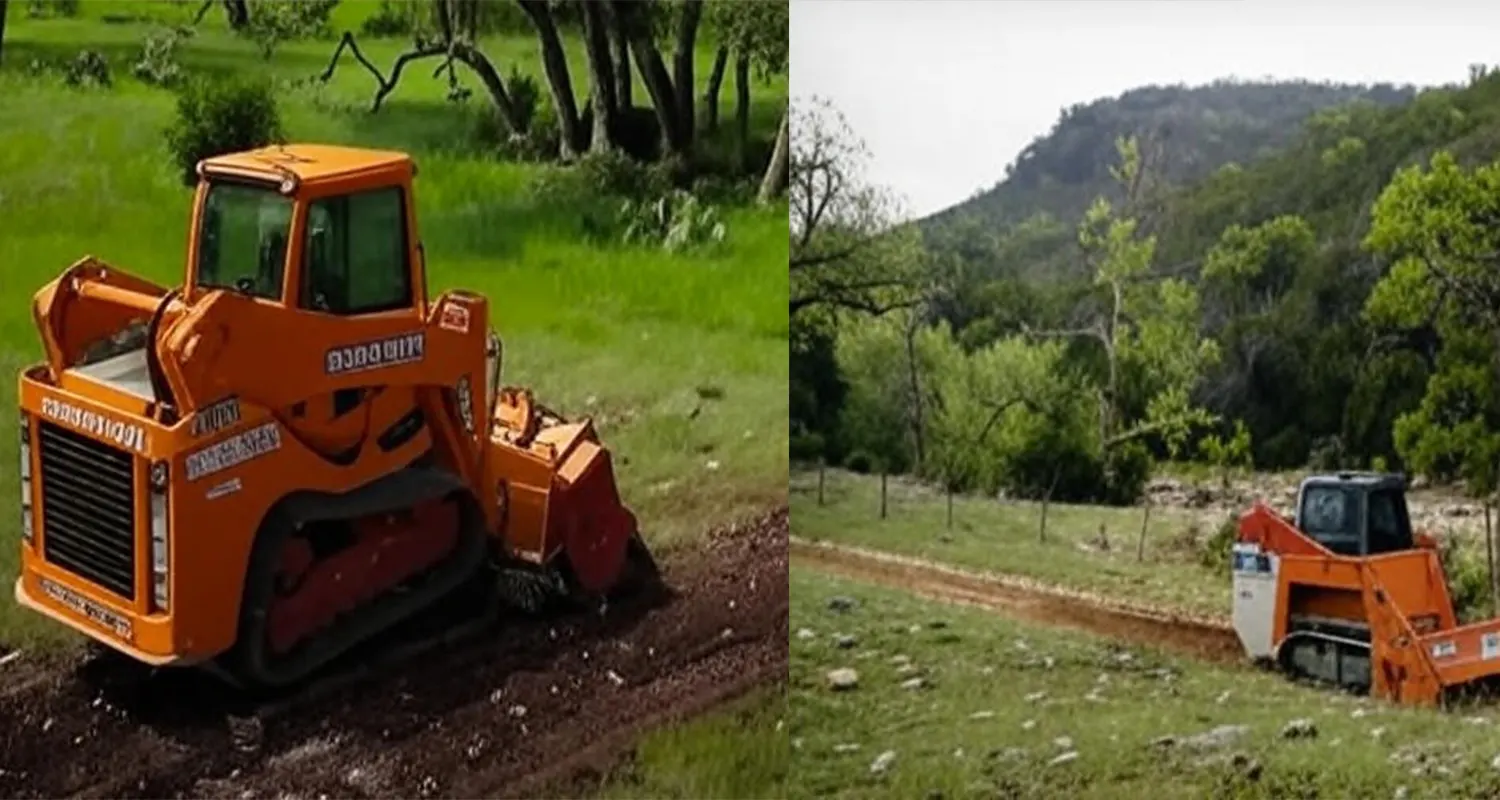
The THOR 2.4’s rotor is a 550 mm diameter steel assembly spinning at 1,000 RPM under PTO drive. The tooth tips, positioned at the full rotor radius of 275 mm from the centre, travel at a circumferential velocity of:
Tip Velocity Calculation — THOR 2.4 at 1,000 RPM
The THOR 2.4’s rear hood — the steel cowling that encloses the rear of the rotor — is designed to redirect fragmented material downward into the soil profile. When the hood is correctly set and in good condition, it contains most of the fragmented output and significantly reduces the ejection hazard to the rear of the machine. However, three operational conditions create elevated ejection risk despite the rear hood:
▲
▲
▲
Stone Ejection Exclusion Zones — THOR 2.4 in Operation
Korean Highland Slope Risk — How Gradient Changes the Tipping Threshold
Korean highland terrace farms operate on gradients that are significantly steeper than the flatland conditions that most agricultural machinery is designed for. The THOR 2.4’s 2,300 Kg machine weight, when attached to the rear three-point hitch of a 180 HP tractor, affects the tractor-machine system’s combined centre of gravity in a way that changes the tipping threshold on slopes:
| Slope gradient | Risk level | THOR 2.4 configuration | Required action |
|---|---|---|---|
| 0–8% | LOW | Standard rear three-point push mode | Standard operating protocol. No additional stability measures required. |
| 8–12% | MODERATE | Push mode acceptable; Kit Drawbar recommended | Reduce forward speed to maximum 1.5 km/h. No cross-slope turns with PTO engaged. Assess surface stability before each pass. |
| 12–20% | HIGH | Kit Drawbar pull mode REQUIRED | Disengage PTO before any turns. Do not operate across slope without explicit stability assessment. Korea Watanabe consultation recommended before first operation at this gradient. |
| Above 20% | VERY HIGH | Case-by-case assessment required | Do not operate without specific confirmation from Korea Watanabe and the tractor manufacturer that the specific tractor-THOR combination has been assessed for this gradient. Absolute maximum operating gradient must be confirmed in writing before operation. |
The critical mechanical principle: in standard rear push mode, the THOR 2.4’s 2,300 Kg is cantilevered behind the tractor’s rear axle. On an ascending slope, this rear weight creates a moment (rotational force) that tends to lift the tractor’s front axle. As the front axle unloads, steering effectiveness decreases and, at sufficient gradient, front wheel lift occurs — producing a rearward tipping scenario. Kit Drawbar pull mode converts the THOR 2.4 from a push attachment to a trailing attachment — the machine follows behind rather than being pushed ahead, which fundamentally changes the load distribution and greatly reduces the front-axle-lift risk.
The Kit Drawbar Safety System — How Pull-Mode Changes the Physics
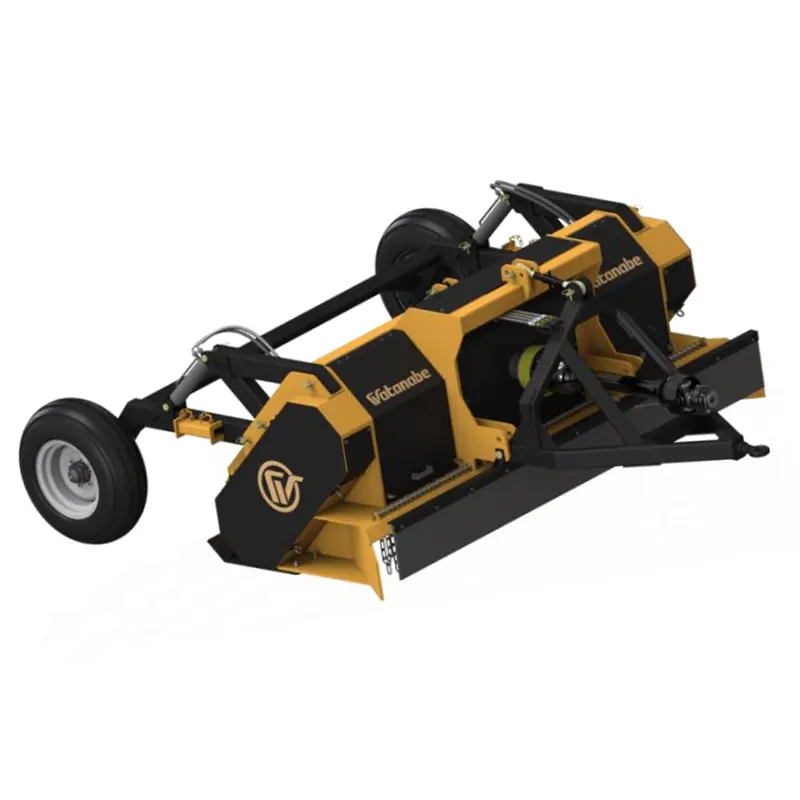
The Kit Drawbar is included as standard equipment with the THOR 2.4 — it is not an optional accessory. Its inclusion as standard reflects the Korean highland operating environment for which the THOR 2.4 was designed. The mechanical change it produces:
Standard mode (3-point rear hitch)
THOR 2.4 is rigidly attached to the tractor’s rear three-point hitch. The machine’s 2,300 Kg acts as a rear-projecting cantilever — its weight moment arm from the rear axle tends to lift the front wheels on ascending slopes. The tractor must carry and push the machine weight. In steep terrain, the combined system’s centre of gravity can move ahead of the rear axle tipping point.
Kit Drawbar mode (trailing attachment)
The THOR 2.4 is attached via the Kit Drawbar — a pivot hitch that connects the machine to the tractor as a trailing implement. The machine’s weight is distributed between its own rear support wheels and the drawbar hitch point, not entirely cantilevered from the rear axle. The trailing mode also changes the tractor’s steering response on slopes: the tractor now pulls the machine weight rather than pushing it, which is mechanically more stable on ascending gradients. The pivoting hitch allows the machine to follow terrain independently of the tractor, reducing the torquing forces that cause instability on uneven Korean highland terrace surfaces.
Switching between standard mode and Kit Drawbar mode requires a configuration change that takes approximately 15–20 minutes with correct equipment. Korea Watanabe’s pre-season consultation includes a Kit Drawbar configuration check for all customers operating on Korean highland terrace gradients above 10%. The configuration is not something to decide on the fly at the top of a steep field — it should be set before leaving the farm yard based on the day’s field plan.
Pre-Operation Safety Protocol — 15 Checks Before Every Field Day
The 15-point pre-operation checklist covers both the machine and the operating conditions. It takes approximately 20 minutes to complete thoroughly. Skipping any item removes a layer of protection that exists for a specific reason — each check was added to the list in response to a known incident scenario.
Third-Party Liability and Insurance — Your Legal Exposure From Stone Ejection
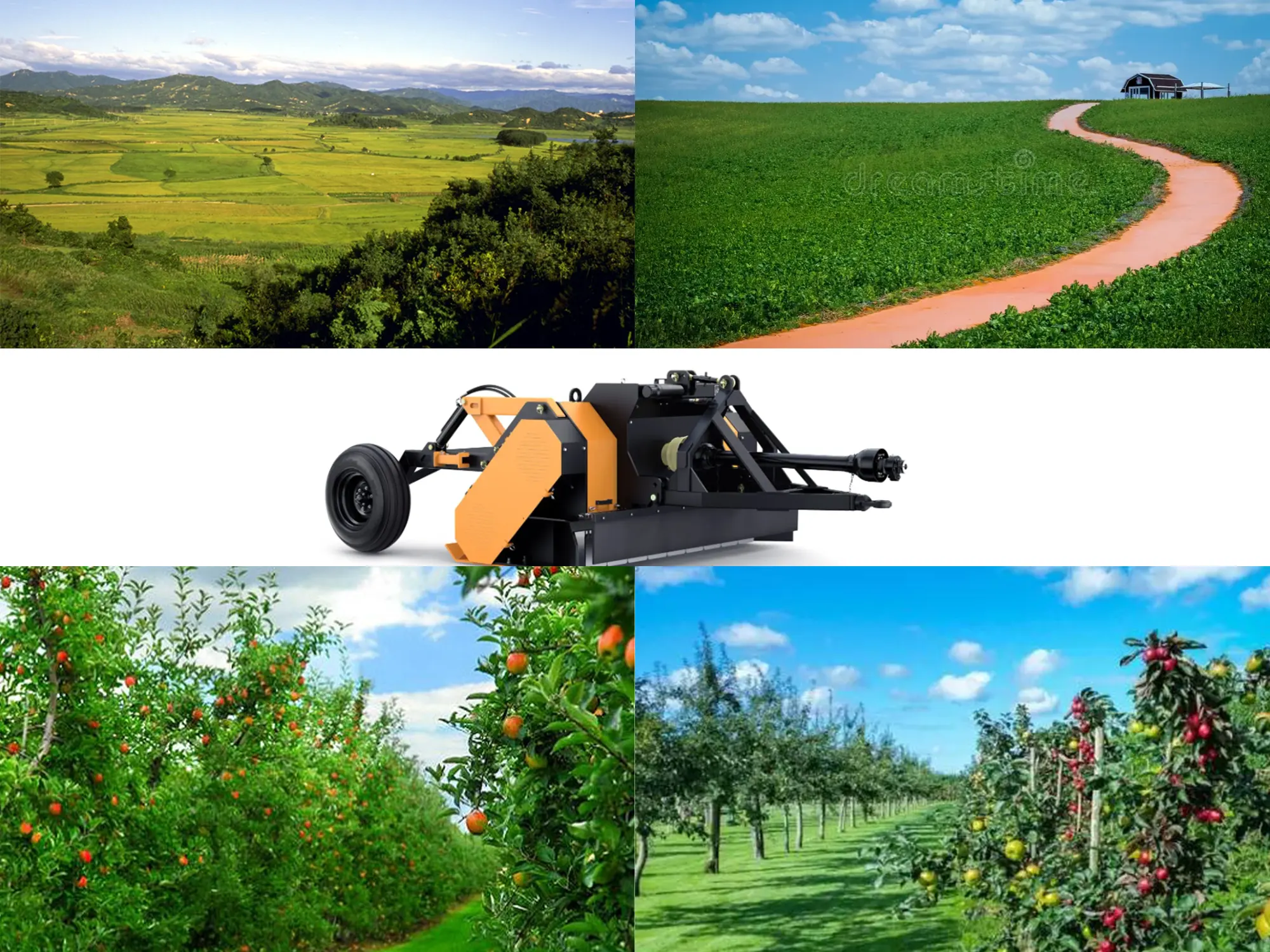
Under Korean civil law (specifically, the liability provisions applicable to machinery operations causing damage to third parties), the person operating the THOR 2.4 bears direct liability for personal injury and property damage caused by ejected stone fragments. This liability is not limited to the immediate operating field — it extends to:
⚠
⚠
⚠
Insurance obligation: Korean agricultural machinery operators are required to hold liability insurance covering third-party injury and property damage from machinery operation. The specific coverage requirements for PTO rock pickers and stone crushers — which are classified as high-risk agricultural machinery under Korean insurance regulations due to the stone ejection hazard — should be confirmed with the insurer when the machinery is purchased. Korea Watanabe advises all new THOR 2.4 and THOR 3.0 purchasers to notify their agricultural machinery insurer at purchase and confirm that the stone crusher is specifically listed on the policy. A policy that covers “general agricultural machinery” without specific stone crusher notation may not respond to a stone ejection liability claim.
Emergency Response Protocol — If the Tractor Stalls or Becomes Unstable on a Slope
The two primary emergency scenarios in Korean highland THOR 2.4 operation are: (1) tractor engine stall while the PTO is engaged on a slope, and (2) tractor wheel slip or beginning of sideways slide on a steep section. Both scenarios are more manageable when the operator has pre-rehearsed the response rather than improvising under stress.
Frequently Asked Questions
How far do stones actually fly from a PTO stone crusher like the THOR 2.4?
Under normal operating conditions with the rear hood correctly set, the majority of fragmented stone is directed downward into the soil profile and does not travel far from the machine. The 30 m exclusion zone applies to the worst-case scenario: a large stone (up to 30 cm diameter) that is deflected by the rotor rather than fragmented, and exits through the partially open hood gap or past the hood side edges. Such deflection events are relatively infrequent but occur without warning — the exclusion zone must therefore be maintained continuously during operation, not just during periods of high stone density. Laboratory testing of PTO stone crushers by European agricultural safety institutes (used as a reference baseline given the absence of Korea-specific published data) has documented stone ejection events at distances exceeding 40 m under worst-case conditions with partially opened hoods. The 30 m standard is the minimum safe exclusion; operating in conditions that increase ejection risk (large stones, worn hood, high forward speed) warrants increasing the zone to 40+ m.
Is the THOR 2.4 safe to operate alone on a Korean highland farm without a second person present?
Solo operation — a single operator with no other persons present at the farm during THOR 2.4 operation — is common on Korean highland family farms. It is not inherently unsafe provided the operator has a charged mobile phone, the field is not adjacent to a public road or other person’s property where a bystander could inadvertently enter the exclusion zone, and the pre-operation safety checklist is completed before the field day begins. The risk of solo operation is the delay in emergency response if the operator is injured — on a remote Korean highland terrace, help may not arrive within the response window for serious trauma. Korea Watanabe recommends that operators working alone on high-gradient sections (above 15%) inform a family member or neighbouring farm of their operating location and expected return time before departure. This 30-second communication step provides the emergency response trigger if the operator does not return as scheduled.
What Korean operator certification or licence is required to operate the THOR 2.4?
Under Korean law, operating a tractor (including when a PTO-driven implement is attached) on farm tracks that connect to public roads requires the operator to hold a valid Korean Type 2 agricultural machinery operator licence (nong-eop gigye jojongsajeogeung). The THOR 2.4 is an implement attached to the tractor — the tractor’s licence requirement governs the tractor-plus-implement combination. For purely within-field operation on private land that does not connect to public roads, the licence requirement is less strict but the insurance coverage typically requires the operator to be identified and to hold a licence appropriate for the machinery. Contact your county nong-hyup or agricultural office to confirm the current licence requirement for tractor-plus-stone-crusher operation in your specific county.
How does slope gradient affect the THOR 2.4’s tractor rollover prevention specifically on Korean highland terraces?
Korean highland terrace farms add a specific rollover risk factor that is absent from smooth slope operations: the terrace edge. A tractor operating along a terrace can slide laterally toward the terrace edge, which presents a vertical drop rather than a continuous slope. Lateral rollover over a terrace edge is typically a much more severe event than a slope rollover because the vertical fall component adds to the energy of the overturn. Operating within 3 m of a terrace edge requires particular attention to wheel track alignment and surface moisture. The Kit Drawbar pull mode reduces lateral drift tendency on slopes by providing a trailing resistance that inhibits sideways movement — another reason why Kit Drawbar mode is important on Korean highland terrace operations above 12% gradient, independent of the front-axle-lift risk that Kit Drawbar mode addresses on direct ascending slopes.
Does Korea Watanabe provide safety training for new THOR 2.4 operators?
Yes — Korea Watanabe provides a machine handover and operating procedure briefing for every new THOR 2.4 rock crusher purchaser. This briefing covers: the pre-operation checklist specific to the purchaser’s field conditions, the Kit Drawbar configuration procedure and the gradient threshold at which it must be used, the ejection zone requirements for the specific farm layout, and the emergency response procedure. For new operators purchasing their first stone crusher, Korea Watanabe recommends a supervised first-day field operation where a Korea Watanabe representative is present for the first 2–3 hours of operation — providing real-time guidance on speed setting, depth adjustment, and slope approach technique. This supervised introduction is available at no additional charge for customers within the Korea Watanabe service coverage area. Contact Korea Watanabe through the link below to arrange a handover date that coincides with the first planned field day.
New THOR 2.4 Operator? Book a Supervised First-Day Session
Korea Watanabe provides a supervised first-day field operation for new THOR 2.4 purchasers — real-time guidance on slope protocol, speed setting, and Kit Drawbar configuration for your specific field layout. No additional charge for customers in our service coverage area.
Editor: Cxm