Korean highland Chinese cabbage (Brassica rapa subsp. pekinensis) grown in the 400–800 m altitude zones of Gangwon-do is the primary ingredient for autumn kimchi production — one of Korea’s most culturally and economically significant food production systems. The highland growing environment gives Gangwon-do cabbage its characteristic density, moisture content, and flavour profile that differentiates it from lower-altitude and greenhouse-produced cabbage. But the same granite highland soils that create the production environment also present the stone management challenge that every Gangwon-do cabbage farmer must plan around each season.
Understanding Korean highland cabbage stone management requires distinguishing it clearly from the zero-tolerance requirements of root crops (potato, radish) discussed elsewhere in this series. Cabbage does not develop a harvestable root that stones can deform — its stone sensitivity is operational, not agronomic. Stones damage transplanting machines, puncture drip irrigation lines, and cause tyre failures on field tractors. The clearance standard for cabbage is therefore lower than for root crops, but it is not zero — and the correct machine choice for each season’s stone condition is a decision that affects operational costs and crop establishment quality significantly.
Why Cabbage Has a Different Stone Tolerance from Root Crops
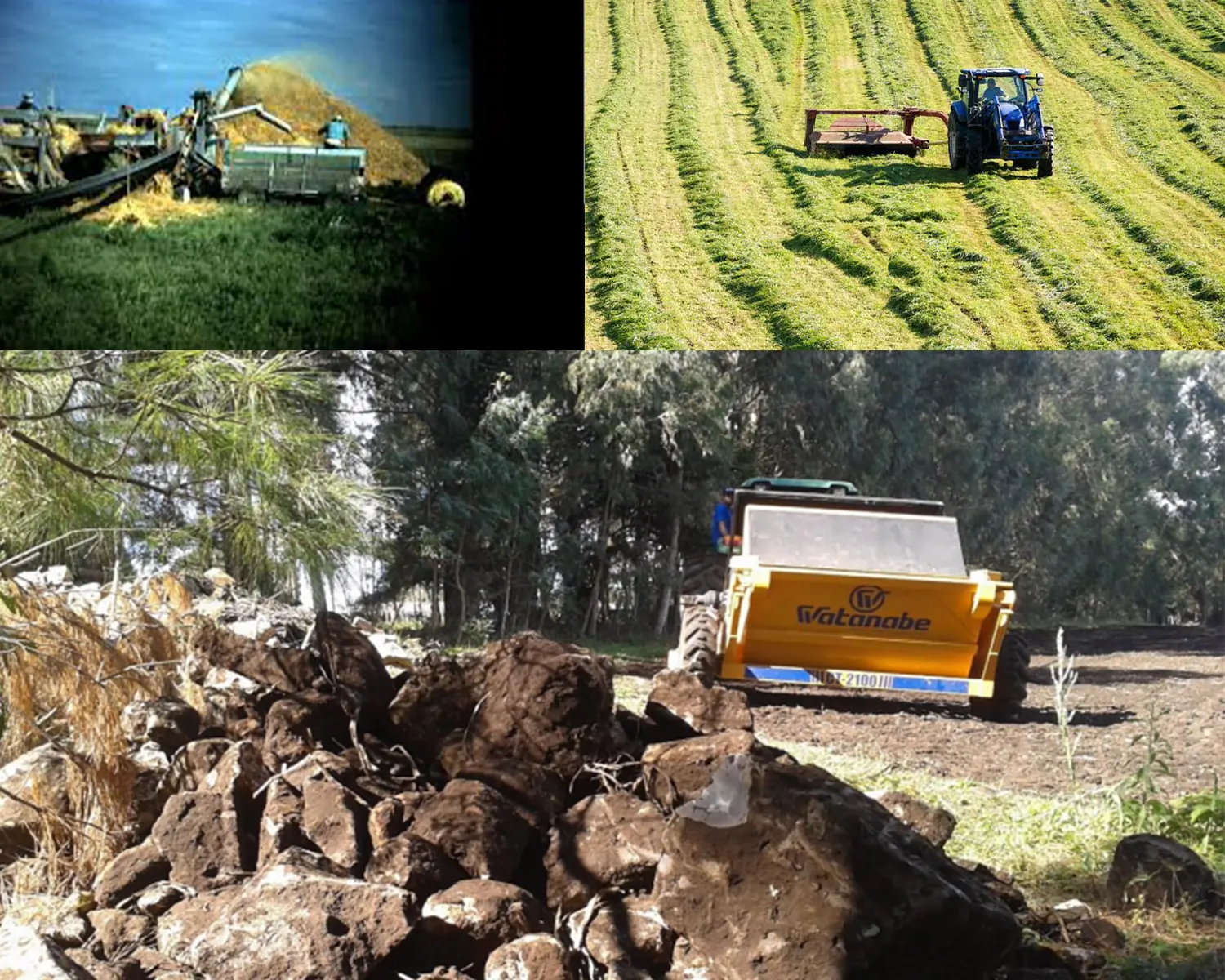
The distinction between cabbage and root crops in stone management is the mechanism of harm. For potato and radish, stones in the soil cause the harvested product to be malformed — a consequence that is direct, invisible at cultivation time, and irreversible. For cabbage, stones cause two categories of operational harm that are more visible and, in most cases, more manageable:
Harm 1: Transplanting Machine Damage
Cabbage is transplanted as 25–30 day seedlings from nursery trays using mechanical transplanting machines operating in the field ridge. The transplanting machine’s share and press wheels contact the soil surface at each plant position. Stones above 5–8 cm at the soil surface or in the upper 10 cm can deflect or damage the transplanting share, produce inconsistent planting depth, and in some cases fracture the machine body on hard stone impact. Transplanting machine shares are expensive and their replacement takes 0.5–1 day — lost transplanting time in a compressed May–June transplanting window.
Harm 2: Irrigation and Spray Equipment Damage
Drip irrigation lines laid in cabbage ridges contact stones during laying and during the season as roots and frost movement shift them. Surface stones above 3–4 cm can puncture polyethylene drip tape during machine laying — or be forced against drip emitters by tractor wheel pressure, blocking emitters. Spray equipment tyre damage from surface stones on access tracks and field headlands is a recurring cost on un-cleared highland cabbage fields.
The critical difference: cabbage stone damage is primarily to equipment, not to the crop itself. The cabbage head — harvested from the above-ground leafy structure — is not affected by what is in the soil below. This means that stones below approximately 5–8 cm on established highland cabbage fields do not require removal unless they are in the direct path of irrigation line laying or transplanting machine travel. The clearance standard for cabbage is therefore: clear stones above the machinery damage threshold from the surface and upper tillage zone — not the full 25–30 cm depth required for radish and potato.
Machine Selection by Season — Light Years vs Heavy Years
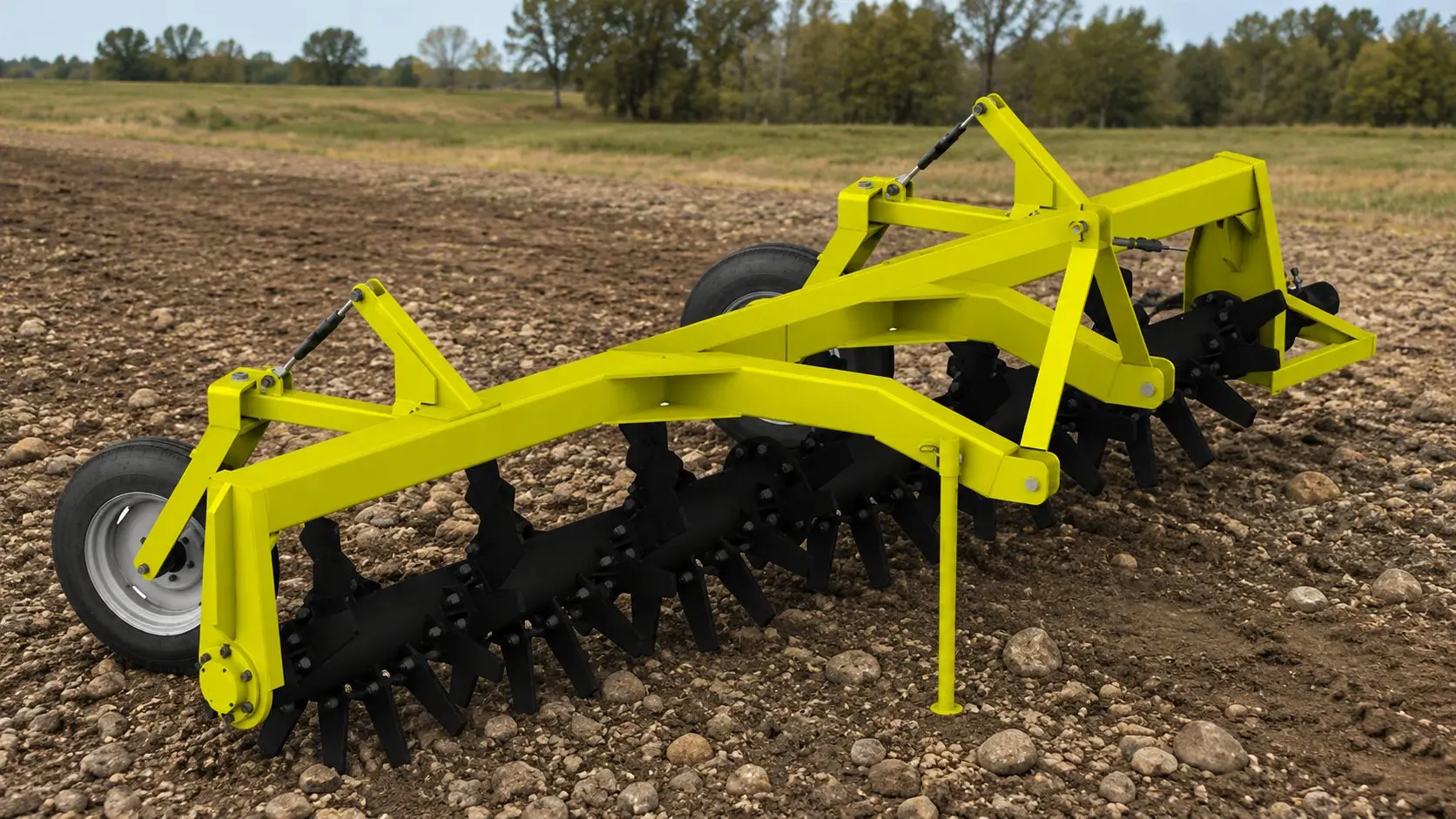
Unlike root crops where annual THOR crushing is non-negotiable, highland cabbage has a two-tier machine selection that responds to each season’s actual stone emergence from the preceding winter:
How to Assess Which Year You Are In — the Early Spring Walk
The season assessment that determines THOR vs rake is a field walk done as soon as the snow clears and before the soil has fully thawed — typically late February to mid-March at 600 m altitude in Gangwon-do. Walk every field section, push a stick into the soil every 5–10 metres at 15 cm depth, and note any stones that feel above fist-size (approximately 8–10 cm). If more than 5–8 stones per 100 m² feel above fist-size in the first 15 cm, deploy the THOR 2.4. If the walk produces only occasional small stones at shallow depth, the EP-EW-4000 rake season applies. Experienced Gangwon-do cabbage farmers complete this walk in 30–45 minutes per field section and have reliable machine selection by mid-March — 3–4 weeks before the transplanting preparation must begin.
Gangwon-do Highland Cabbage Production Calendar

| Month | Activity | Key decision / note |
|---|---|---|
| Jan–Feb | Planning; seedling nursery booking | Confirm variety with cooperative; book nursery tray production for May transplant |
| Mar (late) | Stone clearance (THOR 2.4 or EP-EW-4000) | Early spring walk determines machine selection |
| Apr (early) | PSW-3200 tillage (15–20 cm) + lime/compost incorporation | Shallower tillage than potato — cabbage transplants have shallow initial roots |
| Apr–May | Nursery seedling production | 25–30 day seedlings in heated nursery; confirm 4–6 leaf stage before transplanting |
| May 20 – Jun 15 | Transplanting window (600 m altitude) | After last frost risk; soil temperature above 10°C at 5 cm depth |
| Jun–Jul | Establishment irrigation; side-dress nitrogen | Consistent moisture critical for head formation initiation |
| Jul–Aug | Head development; disease monitoring | Downy mildew and black rot peak risk during wet periods |
| Sep–Oct | Harvest — before first hard frost | Harvest at 80–90% heading density; kimchi market peak Sept–Oct |
| Oct–Nov | Post-harvest field preparation | EP-EW-4000 surface clearance; compost application; soil test |
Variety Selection for Gangwon-do Highland Conditions
Korean highland Chinese cabbage variety selection is one of the most consequential pre-season decisions because variety choice determines the production window, the target market channel, and the disease resistance profile — all of which affect the season’s operational plan and economics:
Summer Highland ( )
For Garak Market July–August supply
Transplanted late May, harvested August. Shorter growing period (70–80 days). Tolerates higher summer temperatures. Primary supply for the mid-summer kimchi market when highland is the only source of field-grown cabbage nationally. Premium pricing window.
Autumn Kimchi ( )
For September–November kimchi season
Transplanted early June, harvested October. Longer growing period (90–100 days). Produces larger, denser heads preferred for kimchi fermentation. The largest volume market for highland cabbage — cooperatives fill kimchi manufacturer contracts with this production timing.
Disease-Resistant Varieties
For high-disease-pressure years
Modern Korean highland cabbage varieties carry resistance genes for clubroot, downy mildew, and black rot — the three most economically damaging highland cabbage diseases. In years following severe clubroot or mildew pressure in the valley, selecting a variety with resistance to the local pathotype significantly reduces disease management cost.
Cabbage vs Potato vs Radish — Stone Clearing Standard Comparison
| Factor | Cabbage | Potato | Radish |
|---|---|---|---|
| Tolerance category | Low (machinery) | Zero (mechanical) | Zero (root quality) |
| Primary stone damage | Machine damage, tyre puncture | Digger damage, tuber bruising | Root bifurcation (permanent) |
| Annual THOR needed? | Light years: No (rake only) Heavy years: Yes |
Established: every 2–3 years New land: annual |
Every year — no exceptions |
| Clearance depth required | Surface 10–15 cm | 20–25 cm (root zone) | 25–30 cm (taproot zone) |
| Annual clearance cost (relative) | Lowest (20–40% of potato) | Medium | Highest (annual full depth) |
| Rotation value | Excellent disease break; lowest stone clearance cost year | Highest revenue; highest clearance cost | High revenue; high clearance cost |
Gangwon-do Highland Cabbage Pricing and Market Structure
Korean highland Chinese cabbage market pricing is one of the most volatile of any Korean agricultural commodity — driven by the complete absence of alternative domestic supply during the highland season and the concentrated demand from the nationwide autumn kimchi production period. Understanding the price cycle is essential for timing harvest and storage decisions:
July–August: Summer Highland Premium
The mid-summer price window, when highland production is the only domestic field cabbage available. Prices typically 40–80% above autumn harvest levels. Summer highland varieties producing heads in August command the highest cabbage prices of the year.
September–October: Autumn Supply Surge
All highland cabbage farms harvest simultaneously in September–October. The concentrated supply surge drives prices down — typically the lowest period of the highland cabbage price cycle. Farmers with cold storage can hold cabbage through October, releasing to the November–December kimchi peak when prices recover.
Cooperative Contract vs Spot Market
Highland cabbage cooperative contract pricing provides price floor protection against the September spot market collapse. Farmers supplying kimchi manufacturers on direct contracts receive a pre-agreed price regardless of the spot market level. The trade-off is limited upside in high-price years — contract price is typically set below the summer premium.
Soil Preparation and Nutrition for Highland Cabbage
Korean highland cabbage performs best on well-drained, fertile soils with pH 6.0–7.0 — slightly higher than highland potato (5.8–6.5) and approximately equal to highland radish. The higher pH requirement makes lime management slightly different from potato rotations:
pH management: Apply lime to achieve pH 6.5–7.0 for cabbage years in the rotation. This is 0.3–0.5 pH units higher than the potato optimum — meaning cabbage years provide an opportunity to push pH slightly higher, which also suppresses clubroot infection (most virulent below pH 6.0). Autumn lime application in the cabbage year builds pH for the following potato year, where it will naturally acidify back toward potato’s 5.8–6.2 optimum range.
Nitrogen management: Highland cabbage is a high-nitrogen demand crop. Split nitrogen application — base dressing at transplanting plus side-dress topdressing 3–4 weeks after establishment — produces more efficient nitrogen use than single pre-plant application. Korean highland granite soils have low native nitrogen — rely on soil test to confirm baseline N and calculate supplement requirement rather than applying blanket rates.
Calcium and boron: Cabbage is sensitive to both calcium deficiency (causing tipburn — brown, papery inner leaf edges) and boron deficiency (causing hollow stem and distorted growth). Korean highland granite soils are typically low in both. Calcium foliar sprays during head formation and borax application at base dressing reduce the incidence of both disorders in highland cabbage.
Frequently Asked Questions
Can I grow cabbage immediately after clearing new highland land with the THOR 2.4?
Yes — cabbage is well-suited as a first-year crop on newly cleared highland land because its stone tolerance is operational rather than root-morphology driven. After thorough THOR 2.4 + CT-2100 clearance, the PSW-3200 tillage, and lime application, newly cleared land can produce a commercially acceptable cabbage crop in Year 1. This is in contrast to ginseng (requires 6 years of root development — new land mistakes are extremely costly) and radish (any residual stone after clearance produces forked roots). Starting the 4-year rotation sequence with cabbage (or legume) in Year 1 gives the field one additional season before the highest-value root crops (potato, radish) are planted — allowing the stone clearing infrastructure to settle and annual stone maintenance patterns to be established before the zero-tolerance crops begin.
What is the minimum altitude for Gangwon-do highland cabbage production?
The minimum effective altitude for highland Chinese cabbage production in Gangwon-do is approximately 350–400 m. Below this altitude, summer temperatures during the July–August head formation period are too high for tight, dense head formation — producing loose, poor-quality heads unsuitable for commercial kimchi production. The highland temperature advantage (cooler summer nights at 600–800 m compared to lowland production areas) is the primary agronomic reason highland cabbage forms tighter, denser heads with higher water content preferred by kimchi processors. This altitude dependence also means cabbage production and stone clearing schedules must be calibrated to altitude — operations at 800 m are 10–14 days behind 400 m operations on every seasonal milestone from soil thaw to transplanting to harvest.
How does the EP-EW-4000 rock rake handle surface stones in highland cabbage fields more efficiently than manual collection?
The EP-EW-4000’s rotating tine drum at 3.6 m working width windrows surface stones in a single forward pass at 4–6 km/h — covering 10–15 ha per day. Manual stone collection from the same area typically requires 2–4 person-days per hectare in moderate-stone conditions. For a 5 ha highland cabbage field in a light-year, the EP-EW-4000 completes the surface clearance in 3–5 hours of machine time, with the CT-2100 following to collect the windrows. Manual collection of the same field would require 10–20 person-days at prevailing Korean agricultural labour rates — making the EP-EW-4000 mechanical approach both faster and dramatically more cost-effective. The EP-EW-4000’s 75 HP tractor requirement means it is compatible with standard Korean farm tractors, unlike the THOR 2.4’s 180 HP minimum.
Does highland cabbage benefit from drip irrigation or is rainfall generally sufficient in Gangwon-do?
Gangwon-do highland areas receive 1,200–1,500 mm annual rainfall, but the distribution is highly uneven — concentrated in the typhoon and monsoon season (July–August) with much drier conditions in May–June (critical transplant establishment period) and September–October (head formation to harvest). Drip irrigation is strongly recommended for Korean highland cabbage to cover the May–June establishment dry period and to provide supplemental irrigation during any August dry spells. The stone clearing investment that creates clear field conditions protects drip irrigation infrastructure — drip tape laid in stone-free soil is significantly less likely to be punctured or blocked by stone contact than tape laid in un-cleared fields. This operational connection between stone clearing and irrigation infrastructure protection is one of the practical efficiency arguments for maintaining field clearance standards even for a crop with relatively low stone tolerance compared to root crops.
Is Korean highland cabbage eligible for direct payment support programs?
Korean highland Chinese cabbage qualifies for the highland vegetable direct payment program ( ) administered through Gangwon-do province and MAFRA. This program provides per-hectare direct payments to registered highland vegetable producers in designated altitude zones, recognising the higher production cost and shorter growing season of highland conditions compared to lowland equivalents. The direct payment partially offsets the higher stone clearing, lime, and labour costs of highland production. Registration for the highland vegetable direct payment program requires: confirmed production in a designated highland vegetable zone (altitude and geographic qualifying criteria), annual crop reporting to the county agricultural office, and compliance with good agricultural practice requirements. Confirm current payment rates and registration requirements with your county agricultural technology center — rates are updated annually through MAFRA budget allocation.
Cabbage Field Stone Assessment — Which Machine Does Your Season Need?
Field area (ha) + altitude + existing machine ownership + last season’s stone assessment result → THOR 2.4 or EP-EW-4000 recommendation with cost comparison. Korea Watanabe, Ansan-si, Gyeonggi-do.
Editor: Cxm