Korean highland agriculture has historically been dominated by single-crop monoculture — primarily highland Chinese cabbage ( ) in many Gangwon-do valleys, or Highland potato ( ) in specialised production zones. The agronomic and economic case for multi-crop rotation has been understood by research institutions (NAAS, RDA) for decades but has been slower to penetrate actual highland farm practice, where crop-specific machinery investment, cooperative supply contracts, and established production knowledge create inertia toward single-crop systems.
This guide provides the practical framework for Korean highland farmers planning a 3–4 crop rotation — covering the rotation sequence rationale, disease management logic, soil fertility implications, stone management requirements for each crop in the rotation, and the machinery system that serves all four crops from a single core investment.
Why Rotation — The Three Compounding Benefits

Benefit 1: Disease Break
Soil-borne pathogens that affect potato (Fusarium, Rhizoctonia, Verticillium) do not infect radish, cabbage, or legumes — and vice versa. A 3-year break between potato crops on the same field allows potato pathogen populations to decline to non-economically-significant levels without fungicide intervention. Korean highland farms running continuous potato monoculture on the same land for 5–10 years consistently show increasing Fusarium and Rhizoctonia pressure that requires intensifying fungicide programs — adding cost without solving the root cause. Rotation breaks this escalation cycle permanently.
Benefit 2: Soil Fertility Building
Different crops have different root architectures, residue chemistries, and nutrient requirements — creating complementary effects on soil when rotated. Legumes (, ) fix atmospheric nitrogen at 50–150 Kg N/ha, reducing the nitrogen fertilizer requirement for the following potato or radish crop. Radish’s deep taproot breaks soil compaction zones formed by repeated shallow tillage. Cabbage’s dense surface root mat builds organic matter at the 0–15 cm zone. Each crop contributes to the soil conditions that benefit the next crop in the sequence.
Benefit 3: Revenue Diversification
Korean highland potato, radish, and cabbage prices are correlated with production volumes — when all farms in a highland zone overproduce simultaneously, price crashes affect all single-crop producers together. A mixed-rotation farm is exposed to three different price cycles rather than one — reducing the risk that a single bad-price year destroys the season’s economics. Korean highland farms combining potato + radish + cabbage in rotation report more stable 5-year average income than neighbouring single-crop farms in the same highland zone.
The Recommended 4-Year Gangwon-do Highland Rotation Sequence
Stone Management Across the 4-Year Rotation

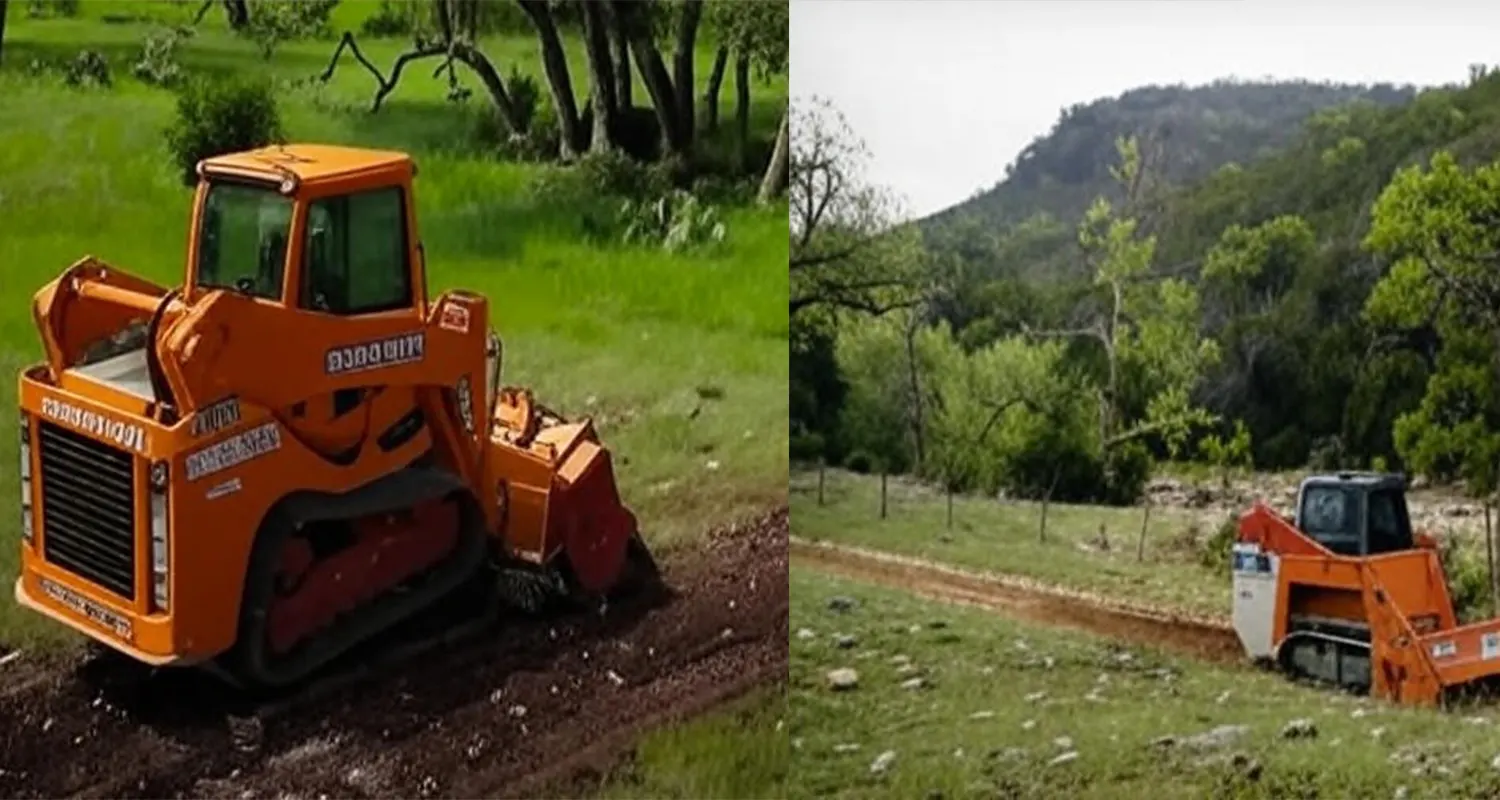
The stone clearing requirement varies across the 4-year rotation sequence — not because stones vary by year, but because different crops have different stone tolerance standards (as covered in the crop master guide). The rotation stone management schedule:
| Year / Crop | Spring clearance | Autumn clearance | 原因 |
|---|---|---|---|
| Y1 Potato | THOR 2.4 + CT-2100 (full) | THOR 2.4 + CT-2100 (if new land) | Zero mechanical tolerance; digger protection |
| Y2 Radish | THOR 2.4 + CT-2100 (annual) | EP-EW-4000 + CT-2100 | Zero root-forking tolerance requires full-depth annual |
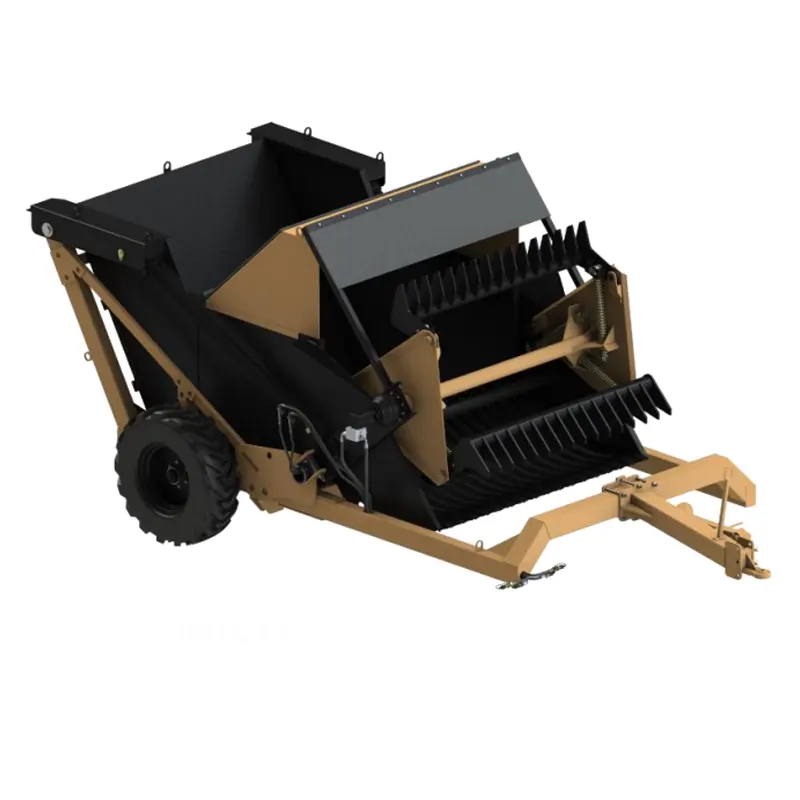
| Y3 Cabbage | EP-EW-4000 + CT-2100 (light years); THOR if heavy | EP-EW-4000 + CT-2100 | Low tolerance — surface clearance sufficient unless heavy frost-heave |
| Y4 Legume | EP-EW-4000 + CT-2100 (surface only) | EP-EW-4000 + CT-2100 | Minimal stone sensitivity — surface management sufficient; THOR amortisation reduces to nearly zero |
The key insight is the amortisation pattern: the THOR 2.4 + CT-2100 investment is most intensively used in Year 1 (potato) and Year 2 (radish). Year 3 (cabbage) and Year 4 (legume) use the machines much less — the THOR may not be needed at all in Year 4 for established land. Over 4 years, the annual average machine operating cost is approximately 50–60% of the Year 1 cost alone — meaning the stone clearing investment is more economical when viewed across the full rotation than when evaluated only against the Year 1 potato crop.
PSW-3200 Tillage Management Across the Rotation
这 PSW-3200旋耕机 serves every crop in the 4-year rotation but at different depth and speed settings:
Potato (Y1) — Deep single pass
25–28 cm depth; 1000 RPM; 4–5 km/h. Maximise fragmentation for ridge formation. PSW-3200 B if combining with base fertilizer application.
Radish (Y2) — Fine double pass
20–25 cm depth; two passes at 90° to produce fine 5–15 mm tilth for taproot straight development. Do not go deeper than the cleared stone zone.
Cabbage (Y3) — Shallow seedbed
15–20 cm depth for transplant bedding. Cabbage transplants have shallow initial roots — deep tillage adds no establishment value. Lime + compost incorporation from autumn application.
Legume (Y4) — Green manure incorporation
20 cm depth after legume harvest. Incorporates legume residue and root nodules for nitrogen release. This pass prepares the seed bed for the following year’s potato return to the field.
Planning Across Multiple Fields — Keeping Consistent Supply

A 4-year rotation on a single field means potato is grown only once every 4 years on that specific field. For a farm with a cooperative potato supply contract requiring consistent annual delivery, this means the farm must have at least 4 field units (or blocks of land) rotating in staggered sequence — so each year, one-quarter of the total farm area is in potato, one-quarter in radish, one-quarter in cabbage, and one-quarter in legume.
This field staging approach allows the farm to maintain stable annual supply commitments to buyers across all three commercial crops (potato, radish, cabbage) simultaneously — while each individual field unit benefits from the 3-year break between same-crop plantings. The machinery system — stone crusher, rotavator, and each crop’s specific implements — must cover all four blocks in the appropriate operations each season. Korea Watanabe’s complete product range covers all four crop categories.
This 4-block staggered rotation delivers potato, radish, and cabbage from the farm every year — maintaining all three market supply relationships simultaneously while each block achieves the full 3-year disease break between same-crop seasons. The legume block produces some marketable soybean yield while providing nitrogen and pathogen suppression for the following year’s crop rotation cycle.
Legume Year Management — Getting Maximum Value from the Break Crop

The legume year is often treated as a “do nothing” year by highland farmers new to rotation — minimising investment and attention because the crop is lower value than potato, radish, or cabbage. This approach misses the full value of the legume year. With appropriate management, the legume year actively builds the soil conditions that produce higher yields in the subsequent potato year:
①
Choose the right legume variety for your altitude. (soybean) is most common in Gangwon-do highland rotation at 400–600 m — well adapted to the highland growing season. At 600–800 m, the shorter growing season suits faster-maturing bean varieties ( ) or green manure cover crops (hairy vetch, clover) that produce nitrogen fixation even without reaching harvest maturity. Confirm variety selection with your county agricultural technology center for the specific growing season length at your altitude.
②
Inoculate seed with Rhizobium. Soybean and other legumes form nitrogen-fixing root nodules only when compatible Rhizobium bacteria are present in the soil. Korean highland soils where legumes have not been grown recently may have low Rhizobium populations. Commercial Rhizobium seed inoculant applied at planting ensures effective nodulation and maximum biological nitrogen fixation — typically adding 80–120 Kg N/ha as fixed nitrogen that is available to the following year’s crop after incorporation. Without inoculation, the legume may grow without nodulation — missing the nitrogen fixation benefit that justifies the break crop year.
③
Incorporate residue before winter. After legume harvest (or after frost-kill for green manure varieties), incorporate the above-ground residue and stubble with the PSW-3200 tillage pass. Decomposition of legume residue over winter releases the nitrogen from the root nodules and plant tissue into the soil mineral nitrogen pool — available for the following spring’s crop uptake after mineralisation. Do not remove legume residue from the field; its nitrogen content is the primary value being transferred to the next crop in the rotation.
Rotation and Subsidy — How Crop Diversification Affects Support Program Access
Korean agricultural support programs are crop-specific — different crops qualify under different support program categories, and some programs require specific crop history for eligibility. A rotation farm producing potato, radish, and cabbage in a staggered 4-block system has access to subsidy and direct payment programs across three crop categories:
— Potato
(upland farming direct payment); seed potato subsidy if growing certified seed; stone clearing machinery subsidy (agriculture machinery support).
/ — Radish/Cabbage
programs in Gangwon-do; highland vegetable production support; market stability fund access for price-floor protection during over-supply seasons.
— Soybean
(soybean direct payment program under the strategic crop support scheme); rotational farming incentive programs where available.
A rotation farm is therefore accessing three separate support program streams simultaneously — compared to a single-crop farm accessing only one. The cumulative subsidy and direct payment access across three crops can offset a significant portion of the additional machinery and management cost of the diversified rotation system. Confirm current-year program specifics with your county agricultural technology center when planning the rotation implementation.
Transitioning from Single-Crop to Rotation — The First-Year Plan
For Korean highland farmers currently in single-crop monoculture who want to implement a 4-crop rotation, the transition does not require starting from scratch — it requires dividing the existing farm area into four blocks and identifying which block starts which crop in Year 1. The practical transition plan for a 10 ha potato monoculture farm transitioning to a 4-block rotation:
▸
Block A (2.5 ha): Continue potato — no change required. Stone clearing, tillage, and potato machinery system as existing.
▸
Block B (2.5 ha): Switch to radish in Year 1. Stone clearing requirement is similar to potato (THOR annual) — no additional equipment needed beyond direct seeding equipment. Confirm cooperative or market channel for radish before switching.
▸
Block C (2.5 ha): Switch to cabbage. EP-EW-4000 rake + CT-2100 surface clearance in most years — THOR operating hours on this block drop significantly. Cabbage transplanting equipment needed (low incremental cost vs potato system).
▸
Block D (2.5 ha): Switch to legume (). Minimal machinery — only seeding and harvest equipment for soybean. Stone clearing EP-EW-4000 surface only. This block receives maximum nitrogen fixation benefit before returning to potato in Year 5.
The existing THOR 2.4 + CT-2100 + 马铃薯机械 system continues to serve Blocks A and B at the same operating intensity. Blocks C and D reduce the annual THOR operating hours by approximately 50% — lowering tooth replacement cost, fuel cost, and tractor wear in proportion. The transition delivers immediate cost reduction on the stone clearing side in Year 1, while the disease break and soil fertility benefits accumulate over the full 4-year cycle.
Soil Organic Matter Trajectory — What Changes Over 4 Rotations
One of the most compelling long-term arguments for Korean highland crop rotation is the soil organic matter improvement that accumulates over successive rotation cycles. Korean highland granite soils cleared and brought into production typically start with 1.5–2.5% organic matter. The 4-crop rotation’s organic matter trajectory over 8–12 years (two to three full rotation cycles):
The organic matter increase over 3 full rotation cycles produces measurable improvements in water holding capacity (reducing drought stress during the critical potato bulking period in July–August), cation exchange capacity (reducing nutrient leaching from the high-rainfall Korean highland environment), and soil biological activity (more earthworms, higher microbial diversity, better nutrient cycling). These soil quality improvements compound annually — the rotation system becomes more productive and more resilient with each passing cycle, not less.
Record-Keeping for Rotation Compliance and Subsidy Eligibility
Korean highland rotation farms accessing multiple support programs need accurate field-by-field crop history records — both for managing the rotation schedule and for demonstrating program compliance. A simple record-keeping system that serves both purposes:
①
Field map with block IDs: A numbered field map showing each rotation block, its area (ha), altitude, and soil type. Keep this as a permanent farm document — it is the reference for all rotation planning and record entries.
②
Annual crop record per block: Year, crop planted, planting date, variety, stone clearing operations performed (date, machine, operator), lime and fertilizer applied (date, material, rate), and yield achieved. This record satisfies the crop history requirements for most Korean agricultural support programs.
③
Machinery purchase and subsidy records: Keep all Korea Watanabe purchase documentation, subsidy approval notices, and machine inspection records in the same farm file. These are required for the mandatory use period compliance documentation that prohibits machine transfer within 5 years of subsidised purchase.
常见问题解答
My farm is only 4 ha — is 4-block rotation practical at small scale?
Yes — the 4-block rotation is implemented at 1 ha per block on a 4 ha farm as effectively as at 10 ha per block on a 40 ha farm. The per-hectare economics are identical. The practical challenge at small scale is that each annual supply volume (1 ha of potato, 1 ha of radish, 1 ha of cabbage) may be below the minimum delivery requirement for some cooperative contracts. Small-scale highland farmers implementing rotation should confirm cooperative acceptance of smaller annual supply volumes, or explore collective marketing arrangements with neighbouring farms also implementing rotation — pooling 1 ha each from 4 farms produces the 4 ha annual supply block that cooperatives typically prefer. Korea Watanabe’s machinery system scales to 1 ha operation as easily as to 40 ha — the same THOR 2.4, PSW-3200, and crop-specific implements serve both scales.
Does the crop rotation affect my THOR 2.4 stone clearing operating cost significantly?
Yes — significantly positively. In a single-crop potato monoculture, the THOR 2.4 is needed at full clearance frequency (THOR pass every year or every second year for established fields) on 100% of the farm area each season. In a 4-block rotation, only the potato and radish blocks require THOR annual clearance — 50% of the farm area. The cabbage block needs THOR only in heavy frost years. The legume block needs only the rake. The annual THOR operating hours per hectare of farm land drops by approximately 40–50% compared to all-potato monoculture — reducing annual tooth consumption, fuel costs, and tractor wear proportionally.
Can I use the same 马铃薯机械 for all crops in the rotation?
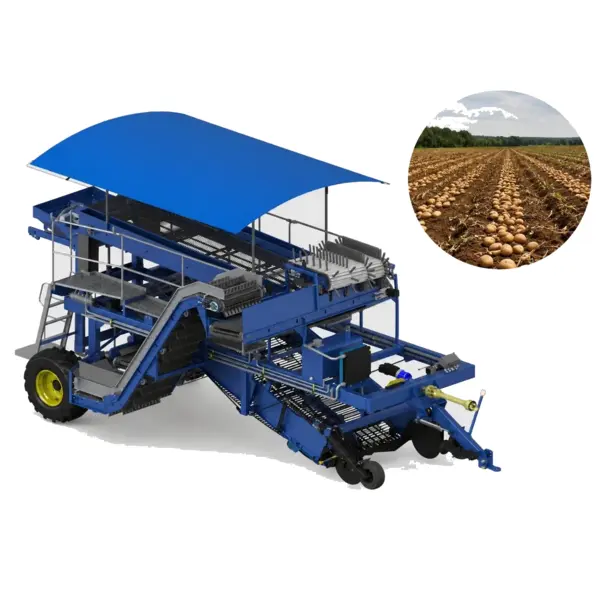
The Watanabe potato machinery system (furrower, planter, cultivator, digger) is designed specifically for potato and cannot be used for radish or cabbage planting and harvesting. However, the stone clearing machinery (THOR 2.4, CT-2100, EP-EW-4000) and the PSW-3200 rotavator serve all crops in the rotation — these are universal land preparation machines, not crop-specific. For a farm adding radish and cabbage to a potato rotation: the stone clearing and tillage infrastructure (the most expensive investment) is already in place from the potato operation. The radish crop requires only direct seeding equipment (relatively low cost); cabbage requires transplanting equipment. The incremental machinery investment for adding radish and cabbage to an established potato system is therefore much lower than establishing those crops from scratch — making the rotation transition economically accessible for existing Watanabe potato system owners.
How long does it take before the disease break benefit becomes visible in potato yield?
The disease break benefit is measurable from the first potato return after a full 3-year rotation break — the population of Fusarium, Rhizoctonia, and Verticillium pathogens in the soil declines significantly over the break period. Korean highland farmers implementing a 4-block rotation consistently observe the first improvement in the block returning to potato in Year 5 (first potato after the full Y2-Y4 break): lower fungicide requirement, reduced black dot and scab incidence, and higher proportion of unblemished Grade 1 tubers. The magnitude of improvement is largest on fields where soil-borne pathogen pressure was highest before rotation — farms that had operated continuous potato monoculture for 5+ years show the most dramatic yield and grade quality improvement when rotation restores the pathogen break.
Can I substitute sweet potato or carrot for radish in the 4-year rotation?
Yes — the 4-year rotation framework is flexible in its crop selection as long as the disease break principle is maintained. Sweet potato (a member of the Convolvulaceae family, unrelated to potato or radish) provides an effective disease break for potato Solanaceous pathogens. Carrot (Apiaceae family) similarly provides an effective pathogen break. The stone clearing requirement for both sweet potato and carrot is zero-tolerance (both are root crops developing in the 15–30 cm zone), so the stone management intensity in the rotation does not change when substituting these crops for radish. The key rotation principle to maintain is: never return the same family to the same field block for at least 3 years. Potato (Solanaceae), radish (Brassicaceae), carrot/parsnip (Apiaceae), and legumes (Fabaceae) are all from different plant families — any combination of these four family groups across four years provides effective pathogen break rotation for highland potato.
Rotation Planning — Tell Us Your Current Crops, Area, and Machinery
Current crop + farm area per block (ha) + existing machinery → 4-year rotation plan with stone clearing schedule, additional machinery requirements, and incremental cost for rotation transition. Korea Watanabe, Ansan-si, Gyeonggi-do.
编辑:Cxm