Korean rural road rehabilitation — specifically the restoration of failed 농어촌도로 (agricultural and rural road) base layers — is one of Korea’s largest ongoing infrastructure maintenance challenges. The Rural Development Administration estimates that a significant proportion of Korea’s rural road network requires base layer rehabilitation within any given 5-year period, driven by: original road construction with under-specified base thickness; progressive saturation of granular bases from inadequate drainage; and traffic loading increases from modern farm machinery that exceeds the original road design loading.
Conventional road base rehabilitation — excavating the failed base, hauling it away, delivering new aggregate, compacting new base — is expensive, disruptive, and slow in Korean rural contexts where the narrow road alignment, limited staging areas, and heavy agricultural traffic make large equipment access difficult. Full-Depth Reclamation (FDR) using the THOR ST soil stabilizer and DCW 2.2 binder spreader offers an alternative that rehabilitates the failed base in-place — no excavation, no aggregate haulage, significantly lower project cost and duration.
The Two Machines — THOR ST and DCW 2.2 Confirmed Specifications

All specifications from the Watanabe official product brochure.
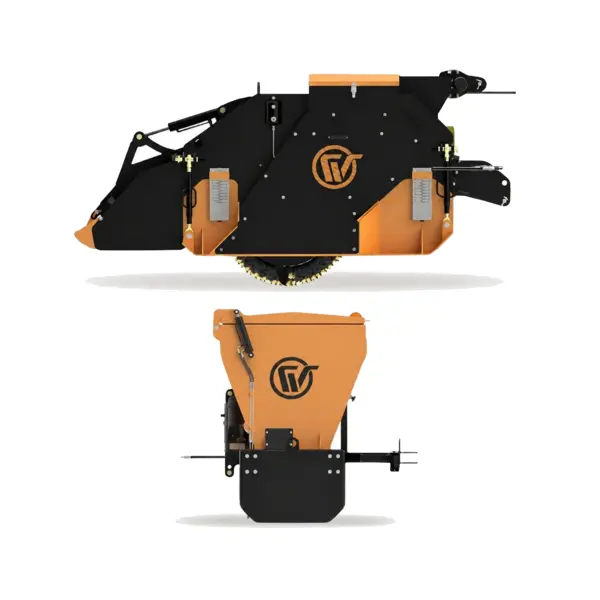
THOR ST Soil Stabilizer
250 CV minimum · CVT tractor mandatory · 1000 RPM PTO
- ▸5,300 Kg machine weight
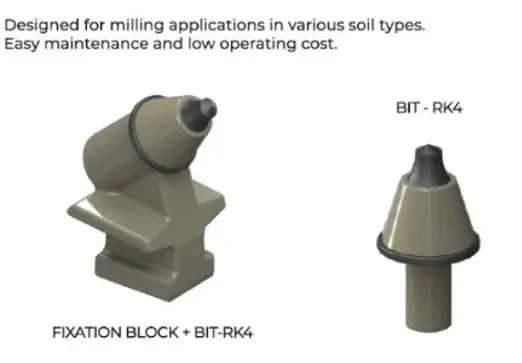
- ▸92 × Kennametal RK4 carbide bits
- ▸0–200 mm adjustable milling depth
- ▸Working speed: 0.5–1.5 km/h
- ▸1.3/8″ − 21 spline PTO shaft
- ▸Transport: 2,960 × 2,745 × 2,615 mm
DCW 2.2 Binder Spreader
Front-mount · 2,140 mm working width · Electronic cab control
- ▸Front-mount on same tractor as THOR ST
- ▸1,300 Kg mandatory ballast
- ▸2 internal rollers (1 m / 2 m switchable)
- ▸Electronic application rate control from cab
- ▸Distributes cement, lime, or combined binder
- ▸Cab control: precise rate adjustable while working
What FDR Is — and What It Is Not

FDR (Full-Depth Reclamation / 전층 재활용 공법) is a road rehabilitation technique where the existing road base material is milled in-place, mixed with a chemical binder, and compacted to form a new stabilized base layer — without removing the old material or importing new aggregate. The THOR ST performs the milling and mixing operation; the DCW 2.2 distributes the binder immediately ahead of or during the milling pass.
FDR is not surface patching, not thin overlay, and not crack sealing — those are surface treatments for minor distress. FDR addresses the structural failure of the road base — the granular layer below the wearing surface that provides load-bearing capacity. When the base fails (as evidenced by rutting, settlement, base saturation, or longitudinal cracking that reflects base movement), surface treatments provide no benefit. FDR restores the structural integrity of the road from below the surface — which is why it outperforms surface treatments for failed-base roads.
The FDR Project Sequence — Pre-Treatment to Finished Surface
Step 0 — Pre-Treatment: Rocky Road Surface Clearance
Before the THOR ST begins its FDR pass, any surface boulders above 10–15 cm must be cleared from the road surface. The THOR ST’s Kennametal RK4 bits are designed for high-volume milling of compacted base material — not for the shock loading of large embedded granite boulders that the agricultural THOR 2.4 handles routinely. Surface boulders above 10 cm on the road alignment can damage the RK4 bits and disrupt the controlled milling depth if encountered at THOR ST working speed.
Pre-treatment for rocky Korean rural roads: a single pass of the THOR 2.4 stone crusher along the road alignment before the THOR ST reduces all surface boulders to below the 10 cm threshold. This pre-treatment pass takes 30–60 minutes per kilometre of road depending on surface stone density. The THOR 2.4 pre-treatment is standard practice for rocky 농어촌도로 FDR projects in Korean highland areas — it protects the THOR ST’s more expensive RK4 bit set from damage that would require mid-project bit replacement.
Step 1 — Binder Pre-Spreading (DCW 2.2)
The DCW 2.2 front-mounted binder spreader on the THOR ST’s tractor distributes the binder (cement, lime, or combined cement-lime formulation) uniformly across the road surface ahead of the THOR ST milling pass. The DCW 2.2’s electronic cab control allows the tractor operator to adjust the binder application rate while moving — responding to changes in observed base material condition along the road.
Binder selection for Korean rural road FDR: ordinary Portland cement (1종 보통 포틀랜드 시멘트) at 3–5% by dry weight of treated material is the standard binder for most Korean 농어촌도로 FDR applications. Hydrated lime (소석회) at 2–3% is used as a primary or supplementary binder where soil plasticity is high (clay-contaminated base) — lime reduces plasticity before cement addition. Cement-lime combination treatments are specified for high-clay base materials where lime pre-treatment provides better short-term stabilization than cement alone.
Step 2 — Milling and Mixing (THOR ST)
The THOR ST follows the DCW 2.2 pre-spreading pass at 0.5–1.5 km/h working speed. At this forward speed, the 92 Kennametal RK4 bits mill the existing base material to the programmed depth (0–200 mm, adjusted for the specific road’s base thickness) and mix the milled material with the pre-distributed binder. The slow forward speed at 250 CV PTO power produces thorough mixing — the milled material and binder are combined uniformly throughout the milling depth in a single forward pass.
Water addition: at the THOR ST working stage, water is typically added from a water truck running parallel to the THOR ST to bring the milled material to the optimum moisture content for compaction. The optimum moisture content for cement-stabilized base material in Korean highland conditions is determined by Proctor test before the project begins — confirming the specific moisture target for the base material composition at the project site.
Step 3 — Grading and Compaction
After the THOR ST milling pass, a motor grader shapes the milled material to the design road profile and cross-fall (typically 2–3% cross-fall for drainage). A vibratory roller then compacts the shaped material to the design density — typically 95–98% of Proctor maximum dry density for cement-stabilized Korean rural road base. Compaction must be completed within the cement’s initial setting time (typically 2–4 hours from water addition, temperature-dependent) — the compaction window on a warm Korean summer day is shorter than on a cool autumn day.
Step 4 — Curing and Surface Treatment
Cement-stabilized base requires a curing period of 7–14 days before trafficking — during which the cement hydration reaction develops the stabilized base’s structural strength. A curing membrane (bituminous emulsion spray) is applied immediately after compaction to prevent moisture loss that would impair cement hydration. After the curing period, a wearing surface treatment (single chip seal, slurry seal, or thin asphalt overlay for higher-traffic roads) is applied over the stabilized base to provide weather resistance and surface texture.
Why CVT Is Mandatory — The Engineering Reason
The THOR ST’s mandatory CVT (Continuously Variable Transmission) tractor requirement is the specification that most often surprises Korean buyers encountering the machine for the first time — and it deserves a full explanation, because the reason is engineering rather than commercial preference.
FDR road stabilization requires the THOR ST to advance at 0.5–1.5 km/h forward speed while maintaining the rotor at full rated RPM under heavy milling load. At this forward speed — approximately walking pace — the tractor’s main drive wheels are spinning very slowly while the engine is producing near-rated power output. In a conventional (gear-shift) transmission tractor, achieving this very slow forward speed at high engine RPM requires either: starting in the lowest possible gear ratio with significant clutch slippage (causing clutch overheating and failure over sustained use); or accepting a forward speed that, in the lowest gear available, is faster than the optimum milling speed (producing inadequate mixing depth and quality).
CVT transmission — whether hydrostatic, mechanical CVT, or electronic power-split — decouples forward speed from engine RPM. The CVT allows the tractor to move at exactly 0.5 km/h forward speed while the engine runs at 1,500–1,900 RPM providing full rated PTO power for the milling rotor. This combination — very slow forward speed, full engine and PTO power — is physically achievable only with CVT. It is the fundamental reason the THOR ST and THOR FLM both specify CVT as a mandatory requirement, not a preference.
Typical Korean Rural Road FDR Project Cost Structure
A Korean 농어촌도로 FDR project’s cost structure differs significantly from conventional reconstruction. Understanding the cost components helps road authorities and contractors build accurate project budgets for THOR ST system FDR versus conventional alternatives:
| Cost item | FDR (THOR ST) | Conventional reconstruction |
|---|---|---|
| Base aggregate | 零 — existing material reused | Major cost — all imported new |
| Excavation & haulage | Zero — no excavation | Major cost — failed base excavated and hauled |
| Binder (cement/lime) | 3–5% of treated material mass | Zero (conventional base) |
| THOR ST operation | Machine + tractor + operator day rate | Not required |
| Traffic disruption | Minimal — work progresses continuously | Extended — road closed while base excavated |
| Wearing surface | Chip seal or slurry after curing | Same — chip seal or asphalt overlay |
The total cost comparison for a typical Korean rural road rehabilitation project consistently shows FDR at 35–55% lower total cost per kilometre than conventional reconstruction — with the saving coming almost entirely from eliminating the aggregate import cost and excavation/haulage operations that dominate conventional project budgets. For remote Korean highland rural roads where aggregate hauling distance is 20–50 km, the FDR saving versus conventional reconstruction is at the upper end of this range.
Korean Rural Road Rehabilitation Programs — FDR Eligibility
Korean rural road (농어촌도로) rehabilitation is funded through multiple overlapping programs at national and provincial levels. FDR using the THOR ST system qualifies under the cost-effective rehabilitation methodology that these programs support — primarily because FDR’s lower cost per kilometre versus conventional reconstruction allows more road length to be rehabilitated within the same program budget:
농어촌도로 정비사업
MAFRA and Korea Rural Community Corporation (한국농어촌공사) rural road improvement program. Covers base rehabilitation, drainage improvement, and surface treatment for the designated 농어촌도로 network. FDR qualifies as an approved base rehabilitation methodology under this program.
지방도 및 군도 유지보수
Provincial and county road maintenance budgets (지방비) fund maintenance of 지방도 and 군도 roads within the 농어촌도로 network. County road authorities (군청 도로과) manage these budgets — contractors proposing FDR methodology for rural road rehabilitation should approach the county road authority with THOR ST technical documentation and FDR cost comparison versus conventional reconstruction.
Combining THOR ST with THOR 2.4 Pre-Treatment — The Two-Machine Rocky-Road System
Korean highland 농어촌도로 typically have two complicating factors that plain-terrain road FDR does not: surface rock emergence from annual frost-heave, and roadside embankment rock that falls onto the road surface from freeze-thaw cycling. For highland rural roads with these surface rock conditions, Korea Watanabe recommends combining the THOR 2.4 stone crusher pre-treatment with the THOR ST FDR stabilization pass as a co-ordinated two-machine project approach.
The two-machine sequence for rocky highland rural road FDR: THOR 2.4 pass (Day 1–2) fractures all surface rock above 10 cm on the road alignment, depositing the crushed aggregate onto the road surface where it becomes part of the FDR base material. THOR ST pass with DCW 2.2 (Day 3–5) mills the existing base plus the THOR 2.4 crushed aggregate together with binder — incorporating the newly crushed stone into the stabilized base layer. The THOR 2.4 crushed aggregate actually improves the gradation of the FDR base material on roads where the original granular base has become fine-grained and weak over its service life.
This two-machine approach is unique to rocky Korean highland road conditions and is not required for lower-altitude Korean rural road FDR projects where surface rock accumulation is minimal. For highland Gangwon-do and North Gyeongsang rural road authorities with both surface rock and base failure conditions, the combined THOR 2.4 + THOR ST system produces better FDR base quality at comparable cost to THOR ST-only on cleaner-surface roads at lower altitude.
Frequently Asked Questions
How much cheaper is FDR compared to conventional rural road reconstruction in Korea?
Korean road rehabilitation cost comparisons vary significantly by project location, road width, material access costs, and current contractor market rates. As a general industry benchmark across multiple Korean rural road rehabilitation projects, FDR using cement stabilization typically achieves a 30–60% cost reduction per kilometre of rehabilitated road versus full conventional reconstruction (excavate, haul, new aggregate, compact, surface treat). The cost reduction is larger on remote highland road projects where aggregate hauling distance and equipment mobilisation are higher — precisely the conditions of many Korean 농어촌도로 projects in Gangwon-do and highland Gyeongsang. For specific project cost estimates, Korea Watanabe can provide THOR ST + DCW 2.2 system operating cost data; road design and binder volume calculations require a road engineer’s assessment of the specific project conditions.
What is the minimum road width for THOR ST FDR operation?
The THOR ST has a 2,200 mm working width plus the tractor width of approximately 2,400–2,800 mm for a 250 CV class tractor. The minimum practical road width for THOR ST FDR operation — accounting for safe tractor positioning within the road width without operating on the road edge — is approximately 4.0–4.5 m effective working width. Korean 농어촌도로 typically have 3.0–6.0 m road widths in rural agricultural zones; roads at the lower end of this range (3.0–3.5 m) may require partial-width THOR ST passes with repositioning rather than full-width single passes. For roads below 3.0 m effective width, THOR ST access is not practical without road widening as a preliminary operation.
Is the THOR ST available for hire in Korea, or must contractors purchase it?
The THOR ST is a specialist piece of equipment in Korea — it is not widely available from standard plant hire companies. Contractors and local authorities planning FDR road rehabilitation projects have two access options: purchase through Korea Watanabe (with Korean government subsidy where applicable under road maintenance equipment programs), or contracting through a specialist road rehabilitation contractor who owns THOR ST equipment. Korea Watanabe can provide information on current Korean THOR ST ownership and availability for contract hire on request. For county authorities planning multi-year rural road rehabilitation programs where annual THOR ST deployment is planned, ownership typically becomes cost-effective versus annual hire within 3–5 years of use. Contact Korea Watanabe for the current ownership vs hire cost comparison for your specific project volume.
Planning a 농어촌도로 FDR Project? Get THOR ST + DCW 2.2 System Specifications.
Road condition description + length (km) + road width + existing base thickness → THOR ST milling depth recommendation, DCW 2.2 binder type and rate, pre-treatment requirement, and system operating cost framework. Korea Watanabe, Ansan-si, Gyeonggi-do.
Editor: Cxm