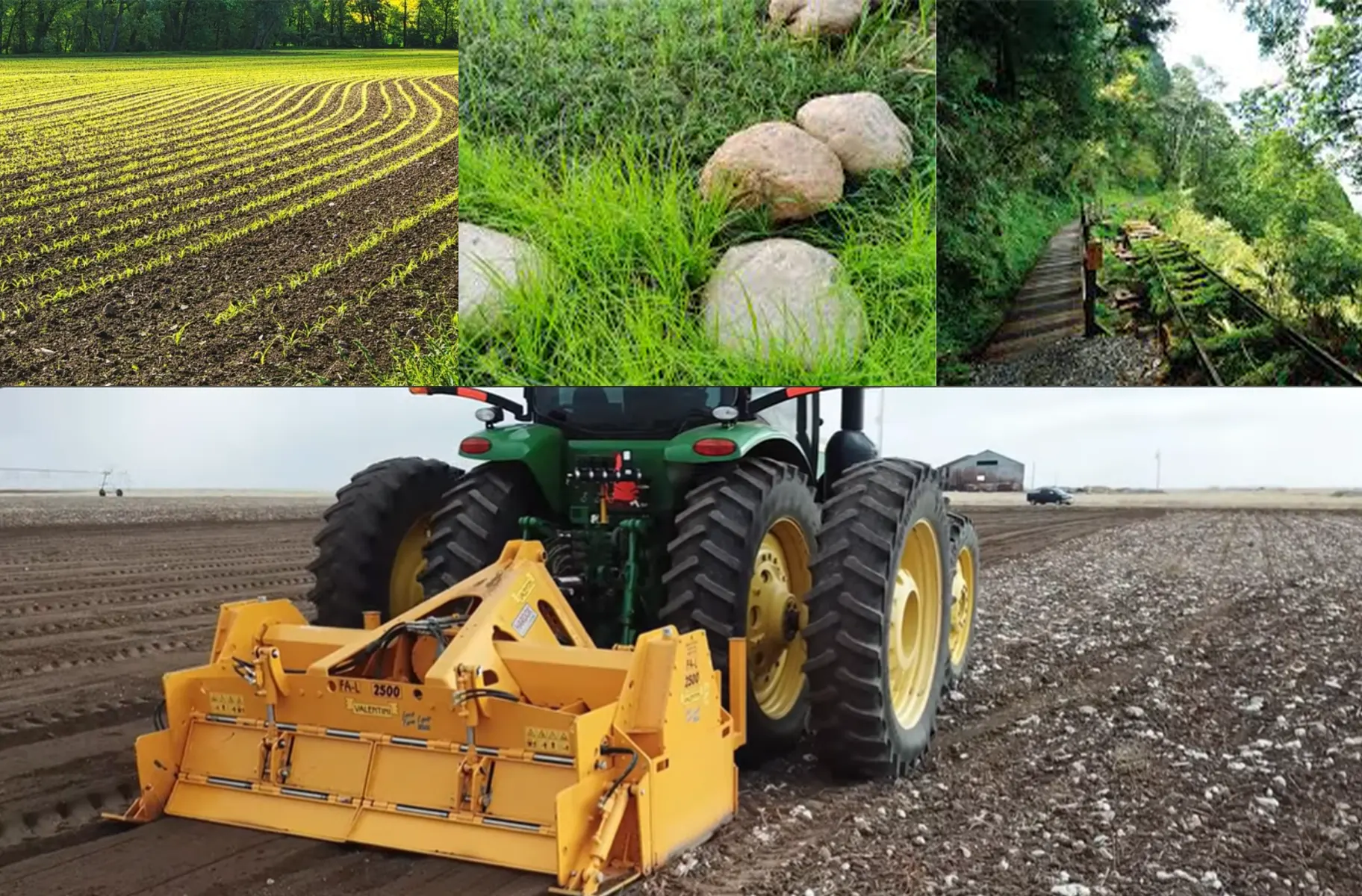
The Korean highland stone clearing market has a structural gap: demand for stone clearing services significantly exceeds the number of farms that own a THOR 2.4 or THOR 3.0. Many Korean highland farms — particularly those in the 3–8 ha range — cannot justify the capital cost of owning a stone crusher outright, but need clearing services every 1–3 years to maintain their fields at the Grade 1 production standard. This gap is the commercial opportunity for a stone crusher contractor business in Korea.
A Korean highland stone crusher contractor with a THOR 3.0, a 180–230 HP tractor, and a well-planned 60-day operating season can generate gross revenue of 130–200 million KRW per year from contracted clearing services alone — before any subsidy and before any own-farm production revenue. This guide provides the complete financial model, the machine configuration comparison, the registration requirements, and the customer acquisition strategy for a Korean highland stone clearing contractor operation in 2026.
The Korean Highland Contractor Market — Demand Exceeds Machine Ownership
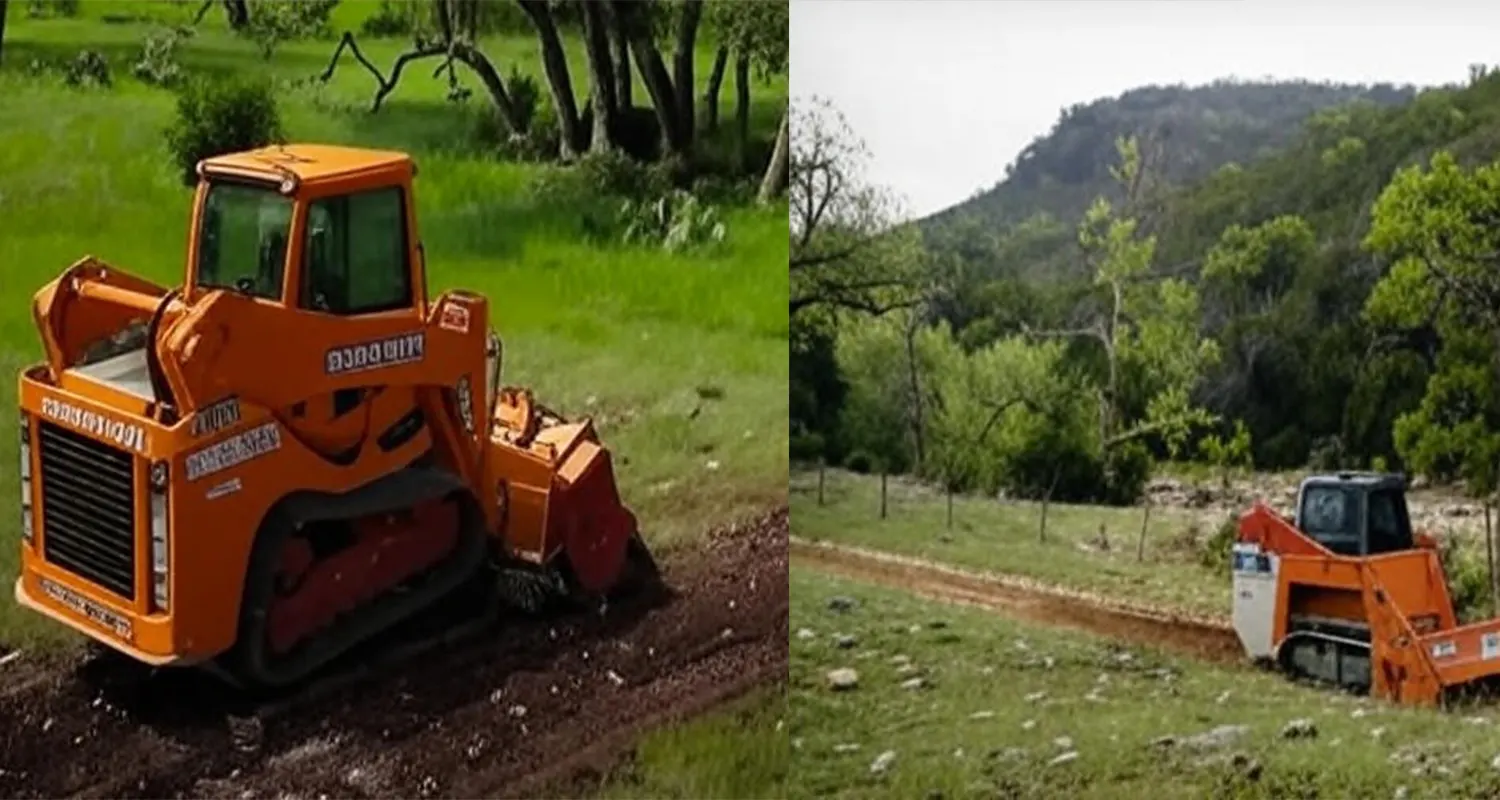
Korean agricultural contractor services are a well-established market segment — the Korean Rural Development Administration (RDA) has formally supported agricultural machinery contractor registration since the 1990s, and the Nong-hyup cooperative network actively facilitates contractor–farmer matching across all Korean highland counties. Within this established framework, stone clearing contracting is a relatively recent addition — the market for THOR-type stone crusher contractor services has grown significantly as Korean highland farms’ awareness of the Grade 1 proportion economics has driven demand for clearing services that individual farm machine ownership has not yet fully supplied.
Primary clearing market
Farms that have never been cleared — typically 1–3 ha annual demand per un-cleared farm at initial season rates. These are one-time high-value jobs: primary clearing of 2 ha generates 3–7 million KRW per job at the rates confirmed below. The market for first-time clearing is strongest in late-opening highland regions where stone clearing awareness has spread from early-adopter neighbours.
Annual maintenance market
Farms that were cleared 2–5 years ago and need annual maintenance passes (1–2 cm annual stone re-emergence from frost heave, plus missed stones from initial clearing). Annual maintenance rate is 40–60% of the primary clearing rate per hectare because the stone density is lower. These are lower-rate but highly predictable repeat jobs — the same client, same field, same week each year.
Forest conversion market
THOR FLM forest land conversion contracting — the highest per-hectare rate of any clearing type (2,000,000–4,000,000 KRW/ha) but requiring a CVT tractor and the specialised THOR FLM machine. Most contractors do not enter this segment initially — it requires a larger capital investment but commands the highest day rates.
A practical Korean highland contractor business typically starts with primary clearing (Year 1–2), builds a repeat maintenance client base (Year 3–4), and considers THOR FLM forest conversion contracting as a premium service addition once the core business is profitable (Year 5+). This three-phase market entry strategy matches the investment and risk profile of a Korean agricultural contractor startup.
THOR 2.4 vs THOR 3.0 — The Contractor Machine Investment Decision
The machine choice is the most consequential financial decision in the contractor business plan. The THOR 2.4 and THOR 3.0 differ in four contractor-relevant ways:
| Parameter | THOR 2.4 | THOR 3.0 |
|---|---|---|
| Working width | 2.4 m | 3.0 m (+25%) |
| Min. tractor HP | 180 HP | 230 HP (higher capital) |
| Max stone size | ≤30 cm | ≤40 cm (fewer pre-clearance refusals) |
| Primary clearing coverage | 0.8–1.2 ha/day | 1.4–2.0 ha/day (+65%) |
| Tractor + machine net cost (after 40% subsidy) | ~36M–44M KRW ★ | ~52M–64M KRW ★ |
| Annual gross revenue potential (60 days) | ~72M–144M KRW | ~126M–252M KRW |
| Break-even (years to recover machine cost) | 0.5–1.0 year | 0.5–0.8 year (faster due to higher revenue) |
★ Machine costs are indicative — confirm current pricing with Korea Watanabe. Revenue figures use 1,500,000–2,100,000 KRW/ha primary clearing rate range. Actual rates vary by county, terrain, and stone density.
Contractor Rate Structure — Primary, Maintenance, and Specialist Rates
Korean highland stone crusher contractor rates vary by job type, stone density, terrain difficulty, and travel distance from the contractor’s base. The following benchmarks are based on Korea Watanabe’s knowledge of current Korean highland contractor market pricing — all rates require local market confirmation before quoting clients.
60-Day Season Revenue Calculator — What a Full Season Produces at Different Scales
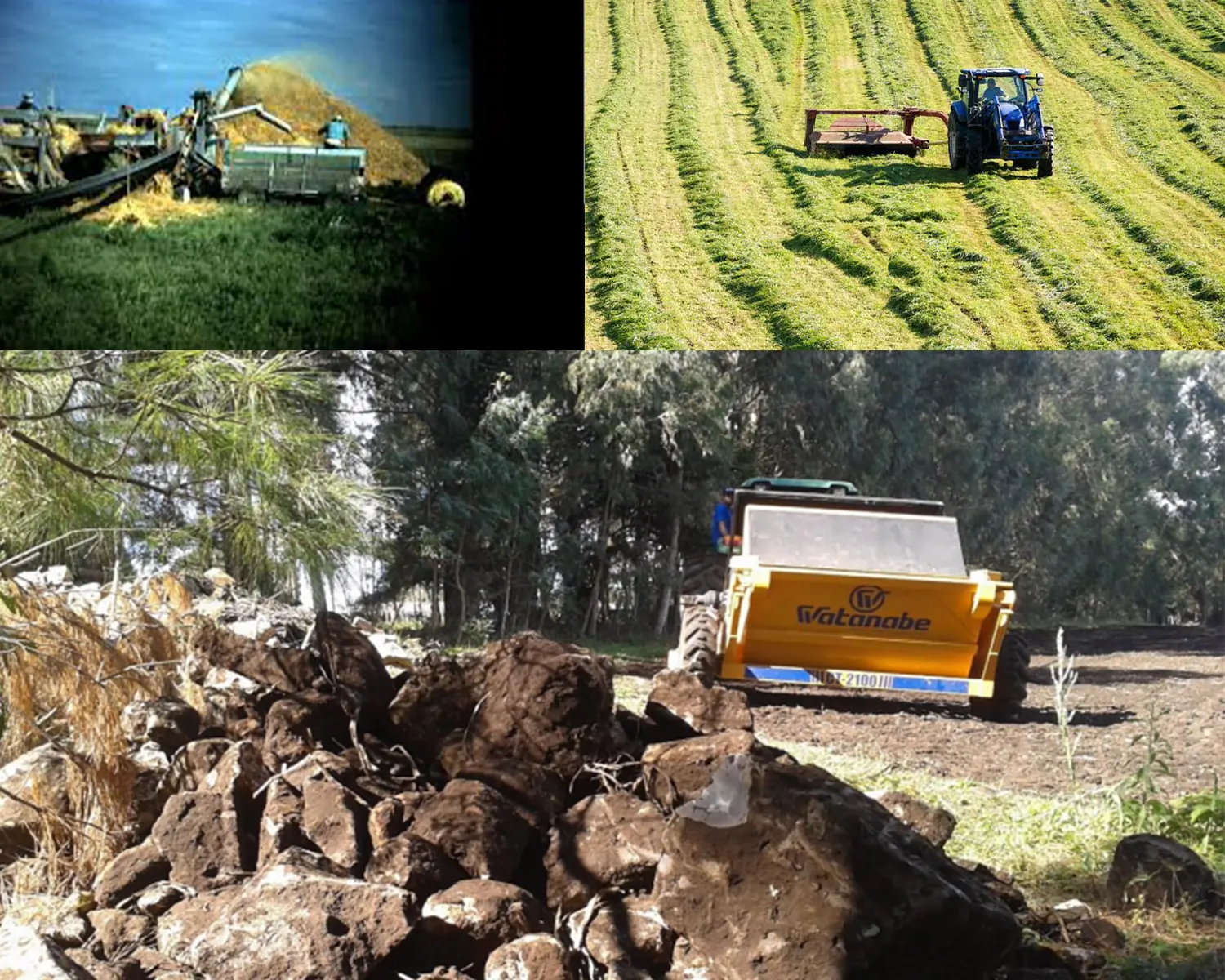
The Korean highland stone crusher contractor season runs across two windows: the spring window (April to mid-June, approximately 35–40 billable days) and the autumn window (October to mid-November, approximately 20–25 billable days). Combined, a well-managed contractor operation can achieve 55–65 billable days per year, taking into account weather delays, travel between sites, and administrative days.
Annual Gross Revenue Scenarios — THOR 3.0 Contractor, 60 Billable Days
* Maintenance passes at 2.2 ha/day vs 1.6 ha/day primary. ** Blended rate (primary 2,000,000 × 40 days + maintenance 800,000 × 20 days). All rates ★ require local market confirmation.
Operating Cost Structure — From Gross Revenue to Net Profit
Gross revenue is not net income. The operating cost structure of a Korean highland stone crusher contractor includes fuel, wear parts, insurance, machine financing repayment, and owner operator compensation. Understanding this structure determines whether the business is viable at a specific rate level and scale.
Operating Cost Waterfall — Realistic Mix Year (175M KRW gross revenue reference)
THOR 3.0 at 230HP: ~25–35 L/hr diesel × 8 hr/day × 60 days + 180HP tractor transport. At 1,800 KRW/L diesel.
THOR 3.0 teeth: replacement cycle 100–150 ha at Korean highland granite density. CT-2100 picking web and tines. PSW-3200 tines (if also contracting tillage). Annual wear parts budget: 18M–24M KRW for 96–108 ha season.
THOR 3.0 + 230HP tractor net purchase ~58M KRW at 40% subsidy. 5-year repayment at 4% interest: ~13M KRW/year principal + ~2M interest. Tractor: ~16M KRW/year. Total: ~29M KRW/year.
Agricultural contractor liability insurance, machine insurance, registration fees, accounting.
Illustration based on 175M KRW gross revenue scenario. Actual costs vary with diesel price, stone density (affecting wear parts consumption), and local financing terms. Tax treatment confirmed with Korean agricultural accountant.
5-Year Cash Flow Progression — Why the Contractor Business Improves Every Season
Registration and Customer Acquisition — The Legal and Market Entry Steps
Customer Pipeline — How Korean Highland Stone Crusher Clients Move From Awareness to Repeat
Frequently Asked Questions
What is the stone crusher contractor rate per hectare in Korea — what can I charge?
Korean highland stone crusher contractor rates for primary clearing (first-time, un-cleared field) range from approximately 1,500,000 to 3,500,000 KRW per hectare depending on stone density, terrain difficulty, and access road quality. The rate must be confirmed with your local county market before quoting — rates in heavily-demanded highland clearing counties (high stone density, many un-cleared fields, limited contractor supply) can exceed 3,000,000 KRW/ha for primary work, while more competitive markets may price closer to 1,500,000 KRW/ha. Annual maintenance passes on previously cleared fields are priced at 40–60% of the primary rate — typically 600,000 to 1,200,000 KRW/ha. Never quote a rate without a physical site inspection — stone density variation across Korean highland granite fields can differ by 3–5× within the same county, and pricing without inspection produces under-quotation on difficult sites and over-quotation on easy sites.
Can I start a stone crusher contractor business with the THOR 2.4 rather than the THOR 3.0?
Yes — the THOR 2.4 is a viable contractor machine for operators starting with a 180 HP tractor who want lower initial capital cost. The THOR 2.4’s 0.8–1.2 ha/day primary coverage is sufficient for a contractor targeting 30–40 billable days in the first season and building up to a full 60-day season by Year 3 as the maintenance client base grows. The lower daily coverage rate means the gross revenue ceiling for a THOR 2.4 operator is approximately 40–50% below the THOR 3.0 ceiling — which translates to a longer break-even timeline and slower client-base growth. Korea Watanabe recommends the THOR 2.4 start for contractors with a limited initial capital budget or who plan to operate part-time while maintaining own-farm operations. Operators planning a full-time contractor business should consider the THOR 3.0 from the start — the higher coverage rate and ≤40 cm stone capacity genuinely justify the additional capital at the scale of a full-time operation.
Does the Korean agricultural machinery subsidy apply to machines purchased for contractor use?
The Korean agricultural machinery subsidy is designed for farmers purchasing machines for own-farm use. Machines purchased specifically for contractor service (with the primary purpose of providing services to third parties rather than farming the purchaser’s own land) may have different subsidy eligibility depending on how the application is structured and the county programme rules. Korea Watanabe advises on the correct subsidy application strategy for contractor-use machines — in many cases, a contractor who also operates their own farm can legitimately apply for the subsidy on the basis of own-farm use, with contractor services as a secondary income. The subsidy eligibility question should be resolved with the county agricultural office and Korea Watanabe before purchase, not after. If the machine is purchased before the subsidy question is resolved and the application is rejected, the subsidy cannot be claimed retroactively.
How many client farms can one THOR 3.0 contractor realistically serve in a 60-day Korean highland season?
At 1.6 ha/day average (mixed primary and maintenance), a THOR 3.0 contractor completing 60 billable days covers approximately 96 ha total. If the average farm field size being serviced is 1.5 ha, this translates to approximately 64 individual farm-fields (not necessarily 64 different clients — many clients have multiple fields). In practice, Year 1 typically covers 20–30 individual client relationships (many clients have 2–4 ha total field area requiring 1–3 days per client). By Year 3, the maintenance repeat-client base and new primary bookings typically produce a full season calendar of 25–35 individual client relationships covering the full 60 days. Managing this many client relationships simultaneously requires a simple booking calendar — Korea Watanabe recommends the March pre-booking call to each maintenance client to confirm the season’s schedule before new primary clients are quoted, so that maintenance commitments are protected as the highest-priority bookings.
Does Korea Watanabe provide any ongoing support to contractors using THOR machines?
Korea Watanabe provides comprehensive ongoing support to all THOR machine owners including contractors: parts supply for wear items (teeth, rotor components, CT-2100 picking web sections) with priority service to ensure contractor machines are not delayed by parts waiting during the peak season; technical advisory on field-specific settings (operating depth, speed, rotor RPM for specific stone density conditions) to maintain optimal contractor productivity; rate benchmarking advisory based on Korea Watanabe’s knowledge of current Korean highland contractor market pricing; and client referrals where Korea Watanabe is approached by Korean highland farmers seeking stone crusher contractor services in a specific county. Korea Watanabe maintains a registered contractor referral network — contractors who purchase THOR machines through Korea Watanabe and register as contractors are included in this network at no additional cost. Contact Korea Watanabe for the full range of stone management machines appropriate for contractor business use.
Start Your Korean Highland Stone Crusher Contractor Business
Intended coverage area + available capital + existing tractor HP + own-farm vs full-time contractor → Korea Watanabe provides the machine selection (THOR 2.4 or 3.0), the financial model for your specific market, subsidy strategy, registration guidance and Year 1 client pipeline plan.
Editor: Cxm