When Korean highland farmers evaluate whether to invest in a THOR 2.4 stone crusher and CT-2100 rock picker, they typically frame the decision as: “how much does this equipment cost?” But this framing misses the more financially important question: “how much is the current situation of un-cleared fields costing me every season?” The cost of NOT clearing — through machinery damage, tyre replacement, grade penalties, and yield shortfall — frequently exceeds the annual ownership cost of the stone clearing equipment that would prevent all of it.
This guide builds a systematic cost framework for Korean highland farmers across the most common crop types — potato, ginseng, highland vegetable — showing the measurable annual cost of stone management inadequacy and comparing it against the annual ownership cost of stone clearing equipment, with and without subsidy. The numbers in this guide are illustrative frameworks built on documented cost categories and Korean market benchmarks — your specific situation will vary, but the calculation methodology applies universally.
The Cost Categories — What Stone Damage Actually Costs
Category 1: Agricultural Tyre Punctures
HIGH FREQUENCY — VISIBLE COST
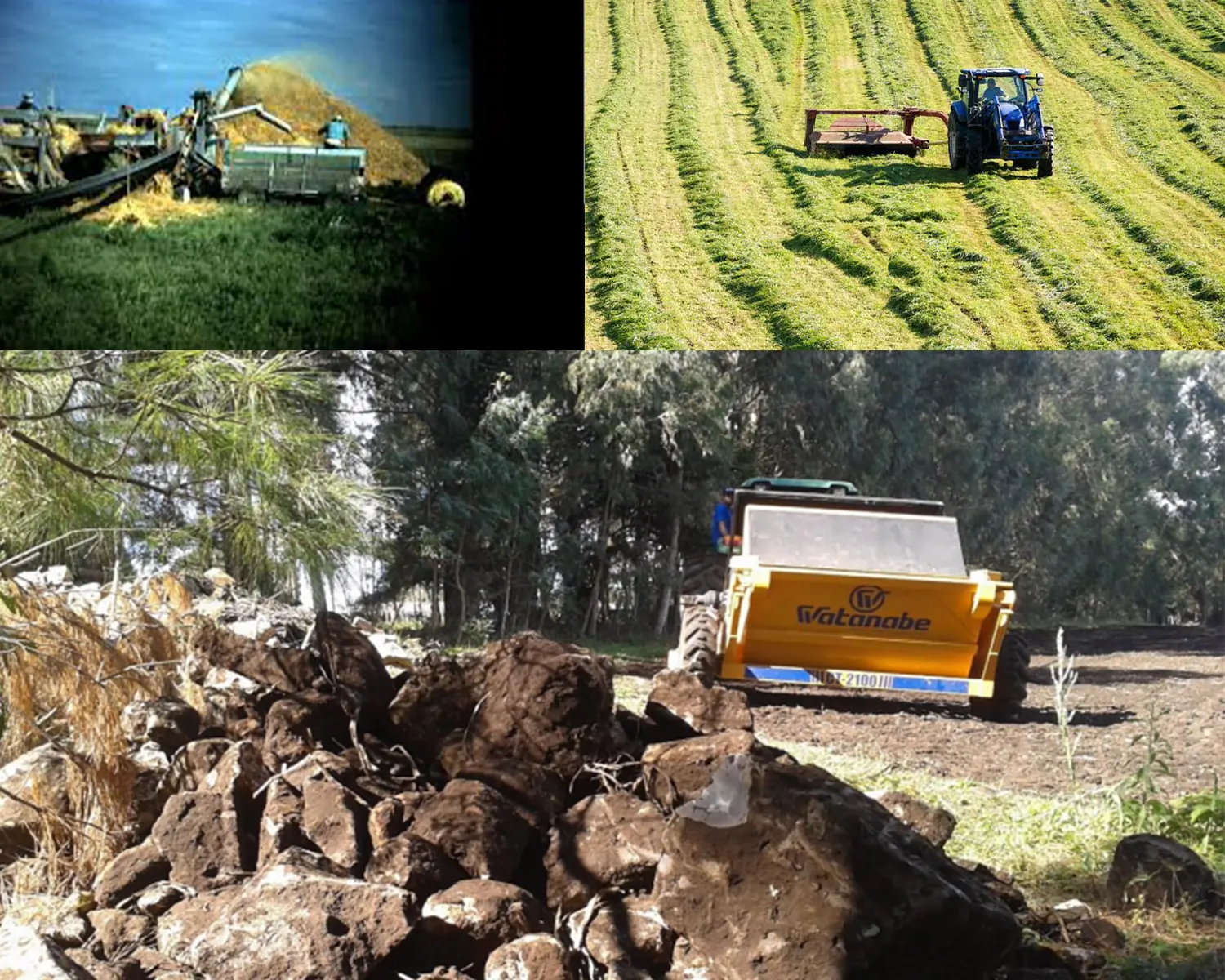
Agricultural tyres on highland granite and Jeju basalt farms puncture regularly from sharp stone fragments. Korean agricultural tyre replacement cost ranges from ₩250,000–₩800,000 per tyre depending on size and type. A Highland farm with 4 tractors experiencing 2–3 tyre punctures per tractor per season is spending ₩2,000,000–₩9,600,000 annually on tyre-related costs — before accounting for field downtime during tyre service.
Annualised tyre cost on un-cleared highland field (10 ha, 4 tractors): ₩3,000,000–₩8,000,000 estimate
Category 2: Potato Digger Share Damage
LOW FREQUENCY — HIGH SINGLE-EVENT COST
EP-AWB-1600 digger shares damaged by stones during harvest require replacement (parts cost ₩150,000–₩400,000 per share set) plus 1–2 days downtime waiting for parts during the harvest window. If the harvest window is limited by approaching frost, 2 days of harvest downtime can mean 15–20% of the field is harvested late — with potential frost damage to those tubers. The single-event cost of one harvest stoppage from stone damage can exceed ₩5,000,000 including lost crop value on frost-affected areas.
Annual probability on un-cleared field: 1 significant incident every 2–3 seasons = ₩1,500,000–₩3,000,000 amortised annually
Category 3: Grade Penalties on Root Crops
EVERY SEASON — COMPOUNDING COST
For ginseng production: residual stone in the root zone causes bifurcation that downgrades roots from Grade 1 (최상품, ₩800,000–₩1,200,000/Kg for 6-year ginseng) to Grade 3 (₩150,000–₩300,000/Kg). On a 1 ha ginseng block producing 1,000 Kg at harvest, if 20% of roots are downgraded from Grade 1 to Grade 3, the grade penalty is approximately 200 Kg × (₩900,000 − ₩250,000) = ₩130,000,000 of lost premium income from that single harvest. This 6-year compounded loss from a single CT-2100 collection pass omission in Year 0 is extraordinary.
For highland potato: tuber bruising from stone contact reduces Grade A proportion by 5–15% on un-cleared fields = ₩1,000,000–₩4,000,000 lost premium per season per 10 ha
Category 4: Transplant and Irrigation Equipment Damage
MODERATE FREQUENCY
Vegetable transplanting machine share damage from stones (₩200,000–₩600,000 per incident), drip irrigation line punctures (₩50,000–₩200,000 per repair plus 2–3 days of reduced irrigation efficacy during critical growth stages), and spray equipment damage from road stones on field access tracks all contribute to the direct cost of operating on un-cleared land.
5-Year ROI Framework — THOR 2.4 + CT-2100 Investment vs Running Costs
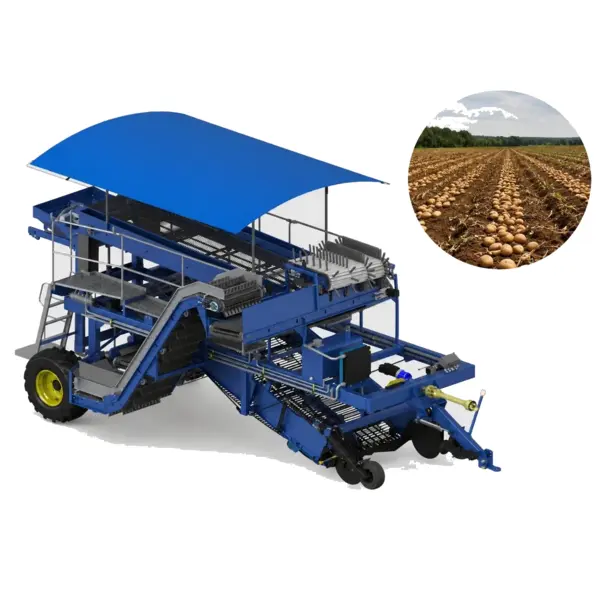
The 5-year ROI framework for a representative 10 ha Korean highland potato farm illustrates the financial case for THOR 2.4 + CT-2100 investment:
Representative 10 ha Highland Potato Farm — 5-Year Cost Comparison (Illustrative)
Without Stone Clearing
With THOR 2.4 + CT-2100 System
With 40% Subsidy Applied
* Equipment amortisation based on illustrative machine cost, 5-year period. Actual machine cost and subsidy eligibility vary — confirm current machine pricing and subsidy rate before calculating your specific ROI. This framework is illustrative, not a guarantee of financial outcome.
The framework shows that for a 10 ha potato farm, the pre-subsidy annual total cost difference between cleared and un-cleared is approximately ₩1,000,000 per year — essentially break-even on a per-year basis, before accounting for the operational certainty, harvesting window protection, and quality assurance benefits that cleared fields provide. After the 40% subsidy, the stone clearing system is consistently more cost-effective than absorbing ongoing damage costs from un-cleared fields.
For ginseng production (where the grade penalty alone in Year 6 harvest can be ₩50,000,000–₩130,000,000 on a 1 ha block), the ROI calculation is not marginal — the CT-2100 collection pass omission cost is extraordinary relative to the ₩1,000,000–₩2,000,000 annualised cost of including it.
When the ROI Improves Most — Crop, Scale, and Subsidy Multipliers
Three factors make the stone clearing ROI calculation most favourable — farms combining all three have the strongest financial case for immediate system investment:
💎
High-value crops
Ginseng (인삼), certified seed potato (씨감자), premium Jeju carrot, Jeju garlic. Grade penalties from stone damage are proportionally larger when crop unit value is high. The ROI of preventing one grade downgrade event exceeds the entire annual clearing cost for premium crops.
📏
Larger scale
Fixed equipment amortisation cost per hectare decreases with scale. On 5 ha, amortisation is ₩1,200,000/ha/year (illustrative); on 15 ha, ₩400,000/ha/year. The damage costs per hectare remain constant — so larger farms achieve stronger ROI from the same investment.
🏦
Government subsidy
40–60% subsidy reduces the capital cost of the system that must be amortised. Young farmer programs (청년 농업인) at 50–60% subsidy rate can make the stone clearing system effectively cash-flow positive from Year 1 — the damage costs avoided in Year 1 can exceed the farmer’s net purchase cost after subsidy.
The Annual Maintenance Approach — How the EP-EW-4000 Keeps ROI Positive After Year 1
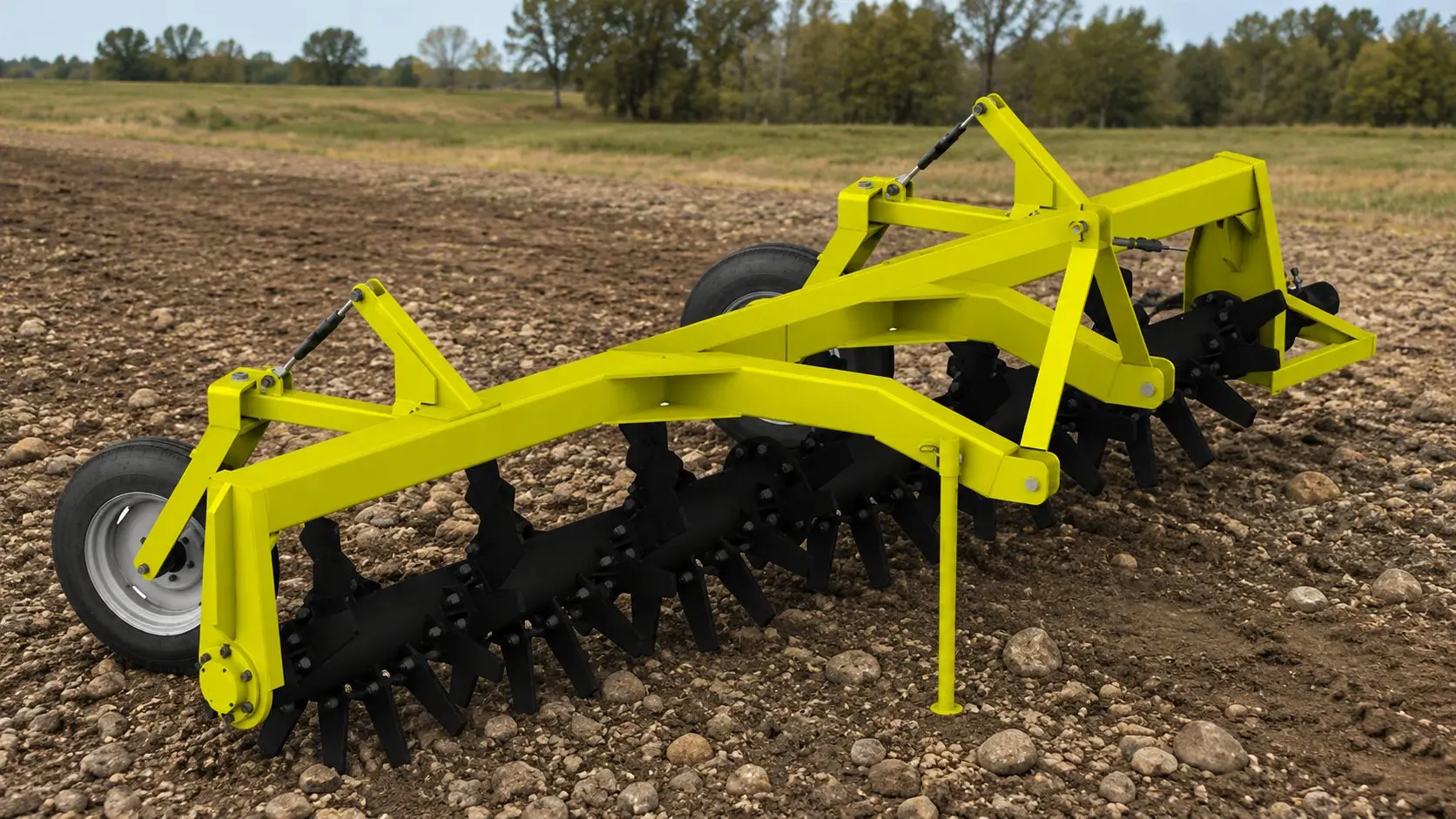
The stone clearing ROI calculation changes significantly from Year 1 to Year 3 and beyond. The THOR 2.4 + CT-2100 initial clearance investment is the largest single cost — but from Year 2 onward, most established Korean highland fields can be maintained with the EP-EW-4000 rock rake (75 HP, 3.6 m) and CT-2100 collection on light frost-heave years, deploying the THOR 2.4 only when frost-heave produces stones above the rake’s 40 Kg threshold. This maintenance-phase cost reduction is critical to the long-term ROI:
| Year | Stone clearing sequence used | Approximate relative operating cost |
|---|---|---|
| Year 1 (new land) | THOR 2.4 (2–4 passes) + CT-2100 (2–3 passes) | 100% (base cost) |
| Year 2 | THOR 2.4 (1 pass secondary stones) + CT-2100 (1 pass) | ~45–55% |
| Year 3 (light year) | EP-EW-4000 rake + CT-2100 | ~20–25% |
| Year 4 (moderate) | THOR 2.4 (1 pass) + EP-EW-4000 + CT-2100 | ~40% |
| Year 5 (light year) | EP-EW-4000 rake + CT-2100 | ~20–25% |
The 5-year average annual operating cost — combining high-cost Year 1 initial clearance and low-cost maintenance years — typically averages 35–50% of the Year 1 cost per year. This reducing cost profile is why stone clearing economics improve substantially for farmers who commit to the full five-year cycle versus those who do the initial clearance and then stop maintaining the field (allowing stone re-accumulation that requires another full initial clearance 3–5 years later at full Year 1 cost).
The Hidden Cost — Opportunity Loss from Delayed Investment
The ROI framework above quantifies the ongoing damage costs of un-cleared fields. But there is a second financial dimension that the damage cost framework does not capture: the opportunity cost of delayed investment — the profitable seasons that could have been achieved on better-maintained land, but were not because the investment was deferred.
A Korean highland potato farmer who has operated for 5 years on un-cleared fields — accepting the tyre costs, grade penalties, and machine damage described above as “normal” overhead — and then invests in the THOR 2.4 + CT-2100 system has lost not only the 5 years of damage costs (₩8,000,000 × 5 = ₩40,000,000 estimated) but also the grade improvement and yield protection value that stone-cleared fields would have delivered over those 5 years. These 5 years of foregone premium income are not recoverable — they are a permanent opportunity loss that the delayed investment decision created.
The correct financial framing for the stone clearing investment decision is therefore not “when do I break even on the machine purchase” but “how much total value is being destroyed per season by operating on un-cleared fields, and how many more seasons is it rational to accept that destruction before investing in the prevention?” For Korean highland farmers growing ginseng, certified seed potato, or premium root vegetables, the answer to this question is typically: zero additional seasons.
Subsidy and Financing — Making the Investment Accessible
The financial barriers to stone clearing investment are addressed through two mechanisms that substantially reduce the effective upfront cost:
농업기계 보조금 (Subsidy)
30–60% of eligible machine price covered by government subsidy depending on program and farmer category. Young farmers (below 40) accessing the 청년 농업인 창업지원사업 can receive 50–60% subsidy — reducing the effective purchase cost of the THOR 2.4 + CT-2100 system to 40–50% of list price. The 40% system cost funded by the farmer is typically recoverable within 2–3 seasons from damage cost avoidance alone.
농업기계 구입 농협 융자 (Agricultural loan)
Farmers ineligible for or not awarded subsidy can access agricultural machinery purchase loans (농업기계 구입 자금 지원) through the National Agricultural Cooperative Federation (농협) at preferential interest rates. The loan repayment spread over 3–5 years at low interest rates converts the capital cost of stone clearing equipment into an annual cash outflow comparable to the annual damage costs the equipment prevents — making the investment cash-flow neutral or positive from Year 1.
Land Value and Farmland Transaction Value — The Asset Dimension of Stone Clearing
The ROI framework above focuses on annual operating economics — damage costs versus clearing costs. There is an additional asset dimension that is particularly relevant for Korean farmers who may eventually sell or lease their farmland: cleared, productive highland farmland transacts at a measurably higher market price than un-cleared marginal land.
Korean highland agricultural land prices reflect the productive capability of the land — and stone-cleared, well-maintained highland farmland with an established production history commands 30–60% higher market price per pyeong than equivalent un-cleared land in the same highland zone. A 10 ha highland potato field with established THOR clearance history and 5 years of production records has demonstrably higher market and rental value than the same land without clearance investment. The capitalised value of the annual income improvement from cleared versus un-cleared land is typically 15–25 times the annual income improvement — translating a ₩5,000,000 annual income improvement into ₩75,000,000–₩125,000,000 of additional farmland asset value over a 15–25 year capitalisation period.
Korean highland farmers who plan to eventually transfer their operation to the next generation — or who want to optimise the value of their agricultural land asset — have a compelling reason to invest in stone clearing infrastructure that extends well beyond the annual operating cost avoidance framework. A cleared, productive farm with documented machinery infrastructure and production history is a substantially more valuable agricultural asset than an un-cleared farm of equivalent area and soil type.
Korea Watanabe’s complete stone clearing system — THOR 2.4, CT-2100, EP-EW-4000 — is an investment in both the annual productive capacity of your highland land and its long-term asset value as a productive Korean agricultural enterprise. The financial case, when considered across both operational and asset dimensions, is consistently positive for Korean highland farmers with the right crop, scale, and subsidy access conditions.
Frequently Asked Questions
The cost of the THOR 2.4 plus CT-2100 is very high — how long before break-even for a small 5 ha farm?
For a 5 ha farm producing highland potato (not ginseng), the break-even period on the THOR 2.4 + CT-2100 investment without subsidy is typically 6–9 years using the damage cost avoidance framework above. With the standard 40% subsidy, break-even shortens to approximately 4–6 years. With the young farmer 50–60% subsidy, break-even can be 3–4 years. For 5 ha operations where break-even is beyond the farmer’s planning horizon, contractor service (hiring THOR clearance rather than owning the machine) is the economically rational choice — the contractor’s service cost per hectare incorporates the machine ownership cost and is payable only in the years the service is needed, without capital commitment. The correct answer for 5 ha is: calculate contractor service cost vs ownership amortisation annually and choose the lower-cost option for your specific circumstances.
Does the ROI calculation change in years where stone damage does not actually occur?
Yes — the ROI framework is built on average annual probability of damage events, not certainty. In a specific year where no tyre punctures occur, no digger shares fail, and all crops grade correctly, the damage cost side of the calculation is zero and the clearing system operating cost is an unrecovered expense for that year. However, the value of stone clearing is partly insurance — the years where damage would have occurred but did not because the field was cleared are the positive ROI events, and they are invisible by definition. The relevant question is: over a 5–10 year period, does the pattern of damage events on un-cleared fields exceed the annualised clearing cost? On Korean highland granite and Jeju basalt, the documented answer for farms above 5 ha is consistently yes.
Can Korea Watanabe help me build my specific ROI calculation before I commit to purchasing?
Yes — Korea Watanabe provides pre-purchase consultation that can build a rough ROI framework for your specific situation using your crop type, farm scale, existing tyre replacement history, and any stone-related machinery damage costs you have documented. Bring 2–3 years of your actual machinery repair and tyre replacement records to the consultation (if available) — actual historical costs are more accurate than industry averages for your specific field conditions. Korea Watanabe provides the machine cost data (current pricing, subsidy eligibility, amortisation assumptions) and you provide the damage history. Together, the framework shows whether stone clearing investment is clearly justified, marginal, or better addressed through contractor hire in your specific case.
투자 수익 계산 준비됐나요? 작물 + 면적 + 현재 피해 비용 알려주세요.
Crop type + farm area (ha) + tractor tyre replacement history + any machinery damage in last 3 years → ROI framework calculation with subsidy scenario. Korea Watanabe, Ansan-si, Gyeonggi-do.
Editor: Cxm