
Across all 31 application scene articles in this E-series guide, every stone management consequence has operated in the same temporal mode: stone in the ground today, crop quality or yield reduced over a period of weeks, months, or years. Walnut caliche stunts production across a 30-year orchard life (E-15). Saffron corm multiplication declines over multiple field cycles (E-23). Raspberry spur blight develops over two seasons (E-26). Even the macadamia chopper blade concern described in E-30 involves a process — stone fragments entering the harvest machinery — that at least allows the operator time to notice the contamination building. In sugar cane (Saccharum officinarum and hybrid varieties), the equivalent stone event happens in a fraction of a second at 1,500–2,000 revolutions per minute, with no warning, and with consequences that range from AUD$10,000 in blade replacement costs to AUD$50,000 in total harvester downtime per incident — consequences that arrive before any agronomist can respond, before any quality assessment can be made, and before the grower has harvested a single row of cane from the affected field section.
Sugar cane presents three stone management arguments that are each structurally new to this series. The first is temporal: the stone damage in sugar cane is the only damage in this guide that is instantaneous, catastrophic, and operationally terminal in real time. The second is generational: sugar cane is grown on a ratoon system in which the same stool (root crown) is cut and regrows 4–6 times over a 5–7 year period, and stone damage to the stool during any one cut degrades the stool’s capacity to produce strong regrowth in every subsequent cut. The third is economic: Australian sugar cane payment is made per CCS (Commercial Cane Sugar) point — a precise measure of sucrose content per tonne of delivered cane — and stone-restricted roots that reduce the plant’s ability to accumulate sucrose reduce the payment rate for every tonne delivered across every cut of the ratoon cycle. This guide covers the rock crusher for sugar cane application through all three mechanisms and across three major markets where they converge.
The Chopper Blade Catastrophe — Stone Management’s First Real-Time Emergency
Commercial sugar cane harvesting in Australia, Brazil, and large-scale operations in India uses purpose-built combine harvesters — the most specialised harvesting machine in tropical agriculture. The Austoft 7700 (the dominant Australian model) and equivalent Brazilian machines operate by driving through standing cane, chopping the cane stalks into 25–30 cm billets with a pair of counter-rotating chopper drums, and conveying the billets into a chaser bin. The chopper drums — the core mechanical component — rotate at 1,500–2,000 RPM, with each drum carrying 8–12 hardened steel blades mounted to the drum perimeter. The blades are designed for a specific cutting force against stalks of known diameter and material hardness.
What happens when a stone enters the chopper drum
Historically, Australian sugar cane was harvested after burning — the trash (dry leaf material) was burned before harvesting to expose the stalks and make stone detection at ground level possible during the pre-harvest walk-over inspection. The shift to green cane harvesting (unburnt, with trash blanket retained for soil health) has dramatically increased stone invisibility. In green cane fields, the trash blanket covers stones at soil level, making them invisible both to pre-harvest inspection and to the harvester operator’s cab visibility at harvest. The Australian industry’s transition to green cane harvesting (currently >85% of the Queensland crop) has made stone pre-clearance MORE critical, not less — because the green trash covering that benefits soil health also removes the visual identification opportunity that burnt cane had allowed. Stone cleared before the season is invisible at harvest for the right reason: it was never there.
The Ratoon Stool — How One Stone Event Damages Every Subsequent Cut
Unlike every permanent crop in this guide — where the same trees or crowns remain in place for years or decades — sugar cane operates on a uniquely frequent annual replacement cycle called ratooning. Understanding this cycle is essential to understanding why stone damage in sugar cane compounds more rapidly than in any prior E-series crop.
| Cut | Stone-cleared stool | Stone-damaged stool | Lost yield (t/ha) |
|---|---|---|---|
| Plant cane (Cut 1) | 95 | 88 | 7 |
| 1st ratoon (Cut 2) | 85 | 72 | 13 |
| 2nd ratoon (Cut 3) | 78 | 60 | 18 |
| 3rd ratoon (Cut 4) | 70 | 48 (replant triggered) | 22 |
| Cumulative 4-cut total | 328 t/ha | 268 t/ha | 60 t/ha total lost |
CCS and ATR — The Sucrose Payment Chain That Stone Reduces Every Season
In Australia, sugar cane growers are paid per tonne of cane delivered to the mill, but the payment rate per tonne varies based on the CCS (Commercial Cane Sugar) content — the number of kilograms of recoverable sucrose per tonne of cane stalk. A typical commercial Queensland cane target is 13–15 CCS at peak season. Payment schedules from Wilmar Sugar, Mackay Sugar, and other Queensland mills include a fixed base rate per CCS point — meaning every 1 CCS point increase or decrease directly changes the revenue per tonne across all deliveries. Brazil uses the equivalent ATR (Açúcares Totais Recuperáveis, Total Recoverable Sugar) measured in kg/tonne.
Sucrose accumulation in sugar cane occurs in the stalk parenchyma cells during the final 6–8 weeks before harvest maturity — the “ripening” period when photosynthate from leaves is converted and stored as sucrose in the internode tissue. This process requires: (1) potassium (K⁺) as the primary co-factor for sucrose transport from leaves to stalks via phloem; (2) magnesium (Mg²⁺) for chlorophyll function and photosynthetic capacity; (3) silicon (Si) for cell wall integrity that maintains the stalk turgor supporting sucrose retention. Stone fragments at 15–35 cm in the root zone reduce feeder root density, lowering the uptake of all three minerals during the ripening period. Australian Sugar Research Institute (BSES Limited) trial data comparing matched paddocks with and without stone clearing in the Herbert River Valley (Queensland) documented average CCS differences of 0.8–1.6 points on high-stone-density basaltic soil, with the stone-cleared paddocks consistently achieving higher CCS in both plant and ratoon cuts.
At a typical Queensland payment of AUD$1.20 per CCS point per tonne, a 1.0 CCS differential between stone-cleared and stone-restricted cane represents: AUD$1.20 × 1 CCS × 85 t/ha/cut = AUD$102/ha per cut. Over a 4-cut cycle (plant + 3 ratoons): AUD$102 × 4 = AUD$408/ha per plant cycle in CCS payment loss alone. This loss recurs every time the same paddock is planted — at 5-year plant cycles, the loss is AUD$408/ha × 40 years / 5 years = AUD$3,264/ha over a 40-year paddock life, on the CCS argument alone. Adding the ratoon compounding argument (60 t/ha lost per cycle from stool damage) at AUD$35/tonne mill payment: AUD$2,100/ha per plant cycle in yield loss. Brazil’s ATR payment operates identically: at BRL$100 per ATR point per tonne (approximate 2025 rate), the calculation is comparable in proportion to Brazil’s cane farm economics.
Three Markets — Brazil, Australia and India
Machine System — Pre-Season Field Clearing and Annual Harvest Protection
Frequently Asked Questions
Rock crusher for sugar cane — is the AUD$50,000 per stone incident cost estimate real, or is this an extreme outlier?
The AUD$10,000–50,000 range is a realistic representation of the full cost distribution, not an outlier. At the lower end (AUD$10,000–20,000): blade set replacement (AUD$2,500–4,000), emergency engineer callout (AUD$1,500–2,500), 2–4 hours harvesting downtime during the narrow daily harvest window (valued at AUD$3,000–5,000/hour for a full harvesting operation including chaser bins, transport to mill, and mill queuing costs that cascade from the delay). At the higher end (AUD$30,000–50,000): drum bearing damage requiring workshop repair (AUD$8,000–15,000), fire suppression if the stone contact caused frictional ignition of green cane trash (AUD$5,000–25,000 in suppression + lost crop in the ignition zone), and lost harvest days during peak crushing season when mills are operating at capacity and delayed delivery affects the grower’s mill allocation. CANEGROWERS Queensland’s Harvesting Safety and Efficiency Guide cites stone as the most significant single cause of unplanned harvesting downtime and documents multiple incidents in the AUD$30,000–60,000 range. The industry-wide estimate of AUD$50–80 million annual stone-related machinery cost is a cumulative figure across Queensland’s 4,000+ growers.
Is the ratoon compounding argument specific to stone damage — or does every field show yield decline across ratoon cuts regardless of stone management?
All ratoon sequences show some yield decline — this is a universal feature of the cane ratoon system, not specific to stone damage. Ratoon decline is caused by: stool aging, soil compaction from repeated harvest traffic, nutrient depletion, and accumulating pest and disease pressure. The stone compounding argument does not claim that stone is the only cause of ratoon decline — it claims that stone significantly ACCELERATES the natural decline trajectory by adding mechanical stool damage and associated disease entry at each cut. The comparison is between two trajectories: (1) natural ratoon decline on a stone-free paddock (losing perhaps 2–3 t/ha per cut across the cycle), versus (2) accelerated decline on a stony paddock (losing 8–15 t/ha per cut once stone damage initiates). The BSES Limited Burdekin District yield data from matched stone-cleared and uncleared trial paddocks shows 18–22% lower cumulative 4-cut yield on stony paddocks compared to cleared paddocks within the same soil type and management level — a difference substantially larger than the natural ratoon decline differential attributable to any other manageable factor. The compounding argument is real and documented; the qualification is that it is an additional accelerating factor on top of natural ratoon decline, not the sole cause of decline.
How does sugar cane stone management timing differ from permanent crops — should clearing be done before every plant cycle or only at establishment?
Sugar cane’s 5–7 year plant cycle creates a natural clearing timing structure different from all permanent crops in this guide. Permanent crops (pistachio, date palm, walnut, truffle) are cleared once before establishment and then the clearing benefit persists for decades or a century. Sugar cane’s ratoon system means the crop is replanted every 5–7 years — each replanting is an opportunity for stone clearing that addresses the accumulated stone population from the previous ratoon cycle. The optimal timing: THOR clearing at each replanting event, every 5–7 years. This gives clearing an annual equivalent cost structure (total THOR investment ÷ 5–7 years per cycle) that is closer to an annual input cost than the one-time infrastructure investment of permanent crop clearing. For growers calculating ROI: the clearing cost is most usefully compared against the annual revenue benefits (blade incident avoidance + ratoon yield improvement + CCS payment improvement) across the 5–7 year cycle, not against a 40-year permanent crop horizon. Annual pre-harvest BlackBird surface pass supplements the periodic THOR clearing with between-cycle maintenance. Fields where stone has fully resurfaced within 2–3 years of a prior clearing cycle (common in Queensland alluvial zones with high water table stone migration) may justify a mid-cycle THOR pass to reset the stone population before it reaches blade-contact levels.
For India’s rapidly mechanising sugar cane sector — does the stone management argument change as the sector moves from manual to mechanical harvesting?
India’s sugar cane harvesting transition from manual (knife cutting by contract harvesters) to mechanical (combine chopper harvesters) fundamentally changes the stone management priority profile in a way that other E-series crops have not experienced within their documented development. In manual harvesting, stone in the field creates two problems: worker injury risk (cutting through tough cane stalks manually creates risk of knife contact with exposed stone) and slightly slower work speed. Neither is a catastrophic cost event. The chopper harvester introduces the blade catastrophe argument — the same stone that was a minor irritant to a knife-swinging harvester becomes a AUD$10,000–50,000 incident for a mechanical drum chopper. India’s transition timing creates a critical window for stone pre-clearance infrastructure investment: growers who will mechanise in the next 5 years should pre-clear their paddocks NOW, so that when their first chopper harvester arrives, the fields have already been cleared during the current plant cycle. Clearing done during manual harvesting years costs the same as clearing done after mechanical harvesting begins — but clearing before the first mechanical harvest avoids the first blade incident, which often costs more than the clearing investment would have. Maharashtra’s cooperative sugar mills are particularly active in promoting this “pre-mechanisation clearing” concept through extension programmes.
What is the combined ROI of pre-season THOR clearing + annual BlackBird pass on a 100 ha Queensland sugar cane farm?
For a 100 ha Burdekin District cane farm on high-stone-density volcanic alluvial (25% stone coverage at 10–22 cm), with an Austoft 7700 chopper harvester: Investment: THOR 3.0 + CT-2100 per plant cycle (every 6 years): approximately AUD$60,000–85,000 for 100 ha. Annual BlackBird pass: AUD$8,000–12,000/year × 6 years = AUD$48,000–72,000. Total 6-year investment: AUD$108,000–157,000. Benefits over 6-year cycle: (1) Blade incident avoidance: 100 ha ÷ 15 ha/incident (typical rate on uncleared Burdekin basalt) = 6–7 incidents avoided × AUD$25,000 average = AUD$150,000–175,000. (2) Ratoon yield improvement: 60 t/ha × 100 ha × AUD$35/tonne = AUD$210,000 over 4-cut cycle. (3) CCS improvement: 1.2 CCS × 90 t/ha × AUD$1.20/CCS = AUD$129/ha/year × 100 ha × 5 cut-years = AUD$64,500. Total 6-year benefit: AUD$424,500–449,500. ROI: 2.7:1 to 4.2:1 over the 6-year plant cycle. The blade incident avoidance alone exceeds the clearing investment — making the CCS and ratoon compounding benefits essentially free optionality on top of an already compelling safety and machinery protection investment.
Rock Crusher for Sugar Cane — Blade Protection, Stool Compounding and CCS Protocol
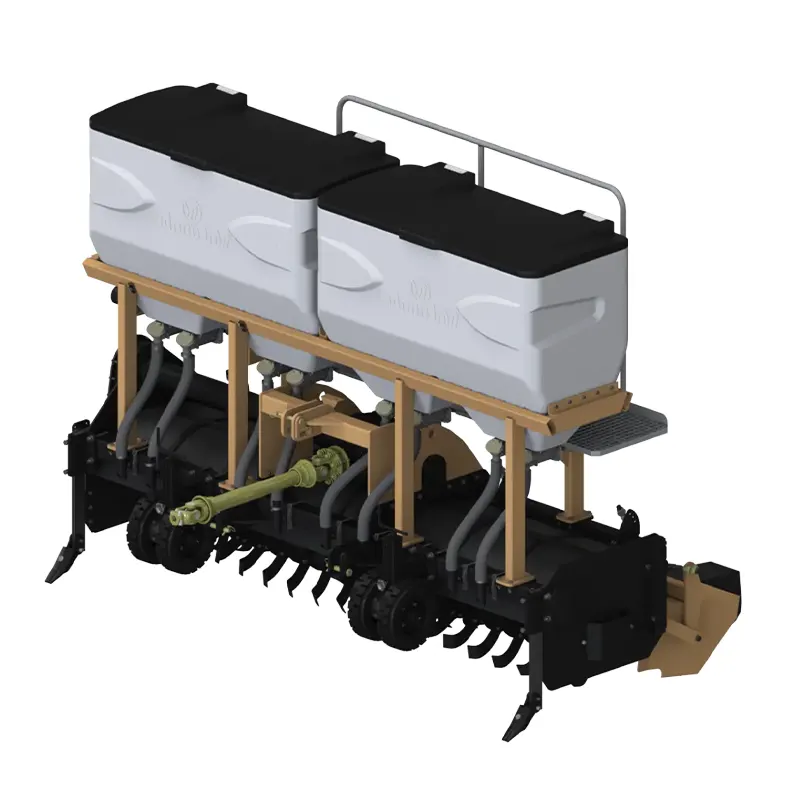
Field area + stone type (basalt/alluvial/calcareous) + harvester model + current ratoon performance + CCS baseline → Korea Watanabe provides the correct rock crusher for sugar cane field clearing specification, annual BlackBird harvest protection programme and 6-year plant cycle ROI calculation.
Editor: Cxm