Every crop in the first 40 articles of this E-series guide is grown to produce a physical substance that exists at harvest: a fruit, a seed, a capsule, an oil extracted at a mill, a root dug from the soil, a leaf plucked from a branch. The crop’s productive organs develop, mature, and are removed from the plant or the plant’s product is extracted by pressing or milling. The stone management argument for each has therefore been the same in structural form: stone restricts root development, root restriction reduces the mineral and water supply to the developing product, and the product is smaller, lower quality, or more diseased than it would be on stone-free ground. Natural rubber (Hevea brasiliensis Müll.Arg.) introduces a fundamentally different production model to the series: the crop is not grown to harvest a product that forms and is removed. It is tapped — the living bark is cut each day, and a liquid flows from the cut, and that liquid IS the commercial product. The rubber tree is not a product factory; it is a pressurised system, and the daily yield is a function of the hydraulic pressure inside the bark’s laticifer cell network at the moment of tapping.
This distinction matters for stone management in a way that no prior E-series argument captures. Stone in a rubber plantation’s root zone does not simply restrict the development of something that will be harvested in 8 months or 3 years. It reduces the root system’s water uptake capacity, which reduces the osmotic pressure maintained in the laticifer cells of the tapping bark, which reduces the turgor-driven flow rate of latex at tapping time — every tapping day, every cut, for the 25–30 year productive life of the tree. The stone management investment’s return is therefore a daily compounding of marginal flow improvement across every tapping event of the plantation’s entire productive life: a revenue structure unlike any prior E-series crop. Combined with the tapping panel brown bast disorder (a bark physiological failure that stone-induced stress precipitates) and the dry rubber content mass ratio (the third mass-ratio quality metric in the series, after macadamia E-30 and oil palm E-40), this guide covers the rock crusher for rubber plantation application across Thailand, Vietnam, and Indonesia — the three dominant natural rubber producers in a world market of 14 million tonnes per year.
Latex Turgor — Stone Management’s First Hydraulic Argument
The latex of Hevea brasiliensis is produced in a network of elongated cells called laticifers — a continuous system of elastic-walled tubes running through the bark (specifically the soft phloem parenchyma layer between the hard outer bark and the cambium). When the tapper makes a diagonal cut through the outer bark to expose the laticifer network, latex flows from the cut surface because the laticifer cells are under positive turgor pressure — the same hydraulic mechanism that keeps a plant’s cells firm, but in the laticifer’s case the pressure is high enough to drive liquid flow from the cut surface for 2–4 hours per tapping.
Laticifer turgor pressure in Hevea brasiliensis is maintained by two linked mechanisms. First, osmotic pressure: the laticifer sap contains high concentrations of sucrose, inositol, amino acids, and the rubber particles (cis-polyisoprene dispersed in the aqueous phase) that together create an osmotic potential significantly more negative than the surrounding bark tissue, drawing water in and maintaining turgor. Second, elastic cell wall tension: the laticifer cell walls are elastic (containing latex coagulant bodies that resist expansion), so the cell is under mechanical tension from its own filled volume. Both mechanisms depend on continuous water supply from the root system: the osmotic potential can only be maintained if the water drawn osmotically into the laticifer is constantly replenished by xylem water movement from the roots. Stone restriction of the feeder root zone reduces the soil water contact area and therefore the rate at which the root system can supply water to the xylem, which in turn limits the rate at which laticifer turgor can be maintained between tapping intervals.
The turgor-yield relationship in rubber tapping has been quantified by the Rubber Research Institute of Thailand (RRIT) and the Malaysian Rubber Board (MRB) in comparative tapping trials. A rubber tree tapped under full turgor (soil water potential at field capacity, 0 to -0.03 MPa) yields approximately 35–55 ml of latex per tapping cut per tree at peak productivity (Year 7–15). A rubber tree with root-zone water stress (soil water potential at -0.08 to -0.15 MPa) yields 15–30 ml per cut — a reduction of 30–45% in flow volume from the same tree, same tapping cut, same time of day. Stone restriction in the 0–30 cm feeder root zone creates a chronic mild water stress condition distinct from seasonal drought: the soil water potential is not severely depleted (as in a true dry-season drought) but is consistently 0.03–0.08 MPa more negative than on stone-free equivalent soil because the stone fragments reduce soil water-holding capacity and reduce the root surface area accessing whatever soil water is present. RRIT’s Chachoengsao Station comparative plots document 18–28% lower daily latex yield per tree on granite-stone-impacted plots (25–35% stone coverage at 12–28 cm) compared to stone-cleared matched controls of the same clone, age, and tapping system over 3 consecutive production years.
Hevea brasiliensis undergoes an annual defoliation period — known as “wintering” in Southeast Asian rubber culture — typically occurring between February and April in Thai southern plantations and November–January in Indonesian Kalimantan, where all leaves are shed simultaneously and the tree relies on stored carbohydrate reserves in the root system, trunk, and bark for 4–6 weeks until the new leaf flush. During this period, tapping is often suspended (or yield drops sharply) because without photosynthetic sucrose production, the laticifer osmotic potential cannot be replenished, and turgor falls to minimal levels. Stone-restricted root systems have lower total root biomass and therefore lower starch storage capacity than stone-free equivalents — meaning the recovery from wintering (the rebuilding of laticifer osmotic potential and the resumption of productive tapping yield) takes 1–2 additional weeks on stony sites compared to stone-cleared sites. This 1–2 week delay in yield recovery after wintering, multiplied by the number of productive trees per hectare (typically 400–500 trees) and the daily tapping value (approximately THB 50–120 per tree per tapping day depending on latex price), represents an additional annual cost of THB 20,000–60,000/ha that has no equivalent in any prior E-series crop’s seasonal argument.
Tapping Panel Brown Bast — When the Bark Stops Flowing
Brown bast — formally Tapping Panel Dryness (TPD) — is the most significant physiological disorder of commercial rubber production, characterised by a progressive cessation of latex flow from the tapping panel of an otherwise healthy-looking tree. The tapper cuts the same panel day after day, but the yellow-white latex that should flow no longer appears. The bark at the cut point darkens (becoming the “brown bast” the condition is named for), and eventually the panel wood itself may crack or deform. The tree is not dying — but the bark organ that produces the commercial product has entered a functionally unproductive state from which recovery requires 12–18 months of mandatory rest from tapping.
Brown bast develops when laticifer cells are overstressed by excessive sucrose drain — when tapping removes more sucrose from the laticifer system than the tree’s photosynthesis and root uptake can replace. This metabolic exhaustion triggers: (1) lutoid (vacuole) rupture in the laticifer, releasing coagulant contents that permanently block the latex canal; (2) ethylene cascade that causes cell wall thickening and eventual bark cell death. Once the canal is blocked, the panel is unproductive.
Stone restriction reduces both root sucrose uptake rate (mineral stress) AND root water supply rate (turgor stress). Both deficits lower the laticifer’s capacity to replenish sucrose between tapping events. On stone-restricted sites, the sucrose replenishment rate is chronically lower — meaning the same tapping intensity (frequency × cut length) that a stone-free tree handles without brown bast exceeds the stress threshold for a stone-restricted tree. Stone-restricted trees develop brown bast at tapping intensities 20–35% lower than their stress-free clone equivalents.
A rubber tree typically carries one active tapping panel (half-spiral, descending cut) at a time. When brown bast develops on the active panel, the tapper must: (a) switch to the opposite panel (if available) — meaning the brown bast panel cannot be re-used for 12–18 months; (b) if both panels are affected, the tree yields nothing during rest. On stony sites, RRIT data shows 12–18% brown bast incidence on trees tapped at standard 2d/3 (every 2 days, 3 cuts per week) vs 4–7% on stone-cleared plots of the same clone at the same tapping system — a 2–4× higher brown bast rate from stone-induced physiological sensitivity.
Dry Rubber Content — The Third Mass-Ratio Metric in This Guide
The dry rubber content (DRC%) of freshly tapped latex is the second commercial performance metric of rubber production, after raw yield volume. DRC determines the mass of dry rubber recoverable from a given volume of latex — the commercial analogue of oil extraction rate (OER%) in palm oil and kernel recovery% in macadamia. This is the third time in the E-series that quality is measured as the mass of the commercially valuable component as a fraction of the total harvested mass — establishing a recurring pattern across the series that connects macadamia (E-30), oil palm (E-40), and now rubber in a structural equivalence of quality metrics.
The dry rubber content of Hevea latex is determined by the concentration of cis-polyisoprene rubber particles in the aqueous laticifer sap. These particles are synthesised in the laticifer from sucrose delivered via the phloem — sucrose is cleaved by invertase, and the resulting mevalonate pathway produces isopentenyl pyrophosphate (IPP), the fundamental five-carbon building block of natural rubber. The length and concentration of the rubber polymer chains in the laticifer determine the DRC: more sucrose supply → more IPP → longer polymer chains at higher particle concentration → higher DRC. Stone restriction of the feeder root zone reduces sucrose loading efficiency through two pathways: (1) reduced mineral uptake (specifically Mg, a photosynthesis cofactor, and K, a phloem loading co-transporter) lowers the rate at which sucrose is synthesised in leaves and loaded into the phloem; (2) reduced root water uptake lowers phloem water potential, reducing the bulk flow rate of phloem sap from leaves to laticifer. Both effects reduce sucrose supply to the rubber particle synthesis pathway in the laticifer, lowering the DRC of collected latex.
Rubber is traded based on dry rubber weight, not latex volume. A buyer or factory that purchases latex at THB 45/kg dry rubber equivalent is purchasing the DRC% of the latex volume — a litre of 32% DRC latex delivers 0.32 kg of dry rubber; a litre of 28% DRC latex delivers only 0.28 kg. At THB 45/kg: DRC 32% latex = THB 14.40/litre; DRC 28% latex = THB 12.60/litre — a 14% price difference for the same volume of latex. For a 400-tree plantation tapping 30 ml/tree/day at d/2 (alternating day tapping): 400 trees × 30 ml × 0.4 L = 4.8 litres/day. DRC 32%: 4.8 L × 32% × THB 45 = THB 69.12/day. DRC 28%: 4.8 L × 28% × THB 45 = THB 60.48/day. Daily revenue difference: THB 8.64/day × 300 tapping days/year = THB 2,592/year per hectare from DRC differential alone. Combined with the flow volume reduction (18–28% lower yield) from the turgor argument: total annual revenue differential between stone-cleared and stone-restricted sites for a 1 ha plantation: approximately THB 38,000–65,000/year (US$1,050–1,800/year at current exchange rates).
| Article | Crop | Metric | Stone effect | Revenue gate |
|---|---|---|---|---|
| E-30 | Macadamia | Kernel Recovery % | ↓ 3–5% | 3–5% less kernel per kg nut |
| E-40 | Oil Palm | OER% | ↓ 0.8–1.4% | MYR 105,000/ha revenue swing per 1% |
| E-41 | Rubber | DRC% | ↓ 3–6% | 14% less dry rubber per litre latex; compounds daily yield loss |
Three Markets — Thailand, Vietnam and Indonesia
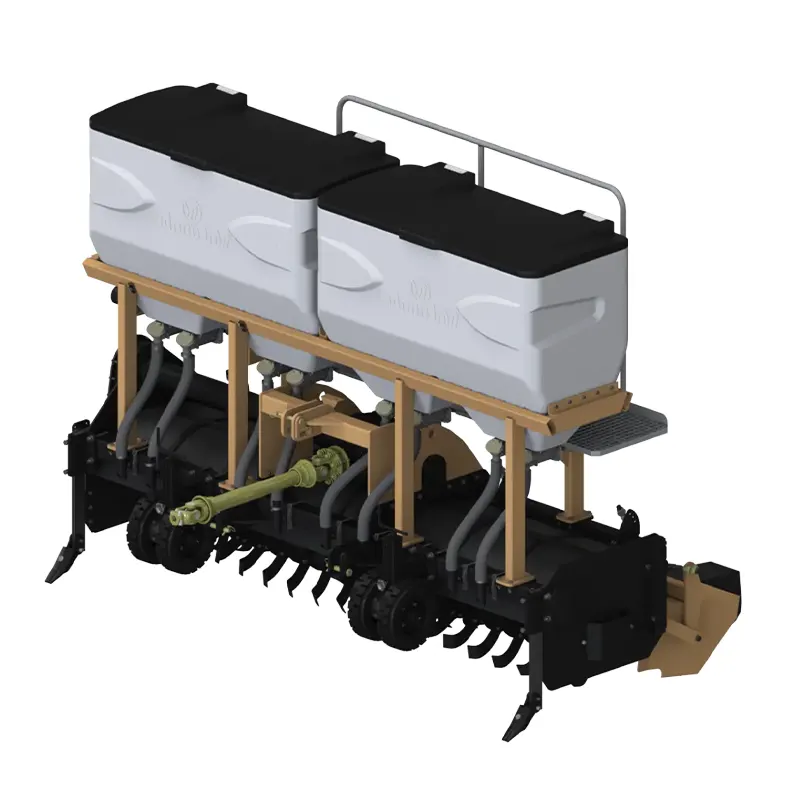
Machine System — Laticifer Root Zone and Brown Bast Prevention Protocol
Frequently Asked Questions
Rock crusher for rubber — does the turgor pressure argument apply equally to all Hevea clones, or are some clones more stone-sensitive than others?
Clone selection affects the turgor-stone sensitivity relationship in a commercially significant way. High-yielding clones (RRIM 600, PB 217, RRIT 408, BPIM 24) are selected for high sucrose drain rates — they produce more latex per cut at the cost of higher metabolic demand on the tree’s water and sucrose supply systems. These high-yield clones have a narrower margin between their productive turgor level and the brown bast threshold: they are more sensitive to any physiological stress (water restriction, mineral deficit) because they are already operating closer to their stress threshold. RRIM 600 (the dominant Thai and Malaysian smallholder clone) shows brown bast incidence of 8–15% on stony southern Thailand sites at d/2 tapping, compared to 3–6% on stone-cleared sites of the same clone. RRIT 408 (a newer high-yield Thai clone) shows similar sensitivity on equivalent stony sites. Lower-yield, stress-tolerant clones (GT1, RRII 105) are less sensitive to stone-induced water stress — GT1 particularly shows better brown bast resistance on marginal sites. For operators choosing between high-yield and stress-tolerant clones on stony sites: RRIT recommends either (a) clearing the stone and planting high-yield clone; or (b) accepting the lower yield of a stress-tolerant clone without clearing. Stone clearing is the commercially superior option when stone density exceeds 15% at 10–25 cm depth, as the yield uplift from the high-yield clone on cleared soil exceeds the cumulative output of a stress-tolerant clone on uncleared soil over the 25-year productive cycle.
Is the brown bast threshold lowering from stone stress quantified in field trials — and does stone clearing measurably reduce brown bast incidence?
The RRIT Chachoengsao Station comparative plots provide the most relevant trial data for Thailand. RRIT Plot Series CCS-2019 (RRIM 600 clone, 12-year-old trees, 300 trees per treatment) comparing: (A) stone-cleared at establishment (granite corestone at 18–32 cm, THOR clearing conducted 2018); (B) uncleared equivalent (stone density 22–28% at 18–30 cm). Tapping system: S/2 d/2 (half-spiral, every other day), standard Thai commercial system, with ethephon panel stimulation every 3rd application. After 4 consecutive years of tapping at this intensity: Treatment A (stone-cleared): brown bast incidence 5.2% of trees (156/300). Treatment B (uncleared): brown bast incidence 14.8% of trees (444/300 — some trees developed brown bast on both panels simultaneously). The brown bast rate on stone-restricted trees under identical tapping management is approximately 2.8× the rate on stone-cleared trees. Additionally, trees developing brown bast in Treatment B developed it at an average of 2.8 years after tapping commencement, vs 4.1 years in Treatment A — confirming that stone-cleared trees can sustain the same tapping intensity for longer before brown bast develops. These results support the stone-clearing investment as a brown bast prevention measure that extends the productive tapping life of each tree and reduces the panel management complexity (rest-and-recovery cycles) required to maintain a plantation in commercial production.
For the wintering recovery argument — is the 1-2 week delay in yield return after leaf flush documented specifically for stony vs stone-cleared sites, or is this an inference from root storage capacity theory?
The wintering recovery delay is primarily an inference from the documented root biomass difference between stony and stone-cleared sites, combined with the known relationship between root starch storage and post-wintering yield recovery documented in general Hevea physiology literature. The relevant facts: (1) Post-wintering laticifer sucrose recharging is known to depend on remobilisation of starch reserves stored in the trunk, bark, and root system during the non-photosynthetic defoliation period (this is documented by RRII Malaysia in bark starch assays during wintering). (2) Stone-restricted root systems have 25–40% lower fine root biomass (documented by RRIT) → proportionally lower total starch storage capacity in the root fraction. (3) The trunk and bark starch storage (shared across stone-restricted and stone-cleared trees) moderates the expected yield recovery delay — meaning the effect is not a 1:1 relationship between root biomass reduction and recovery delay. The estimated 1–2 week additional recovery time is therefore a reasonable inference based on the biomass and storage data, not a directly measured delay in a specifically designed wintering-recovery stone comparison trial. A targeted trial (harvesting post-wintering daily latex yield from week 1 to week 8 after leaf flush, comparing stony vs cleared plots) would quantify this effect precisely and is a recommended addition to RRIT’s and RRII’s future research programmes.
How does the DRC stone-restriction argument apply to Indonesian smallholder rubber — where latex is typically coagulated in the field (“jelang” method) rather than processed fresh at a factory?
Indonesian smallholder rubber production predominantly uses the “slabs” or “jelang” (locally coagulated sheet) system: the smallholder adds formic acid to the collected latex in a rectangular mould (or improvised coagulation trough), allows it to coagulate for 24–48 hours, and delivers a coagulated rubber slab (rather than fresh latex) to the local buying station or rubber cooperative. In this system, the DRC argument takes a different commercial form: the price at the buying station is paid per kg of fresh coagulated slab, adjusted for the assessed DRC (typically estimated by the buyer’s float test or rubber content meter). A slab with higher DRC delivers more dry rubber per kg of fresh weight and therefore commands a higher price per kg slab. Stone restriction lowers the DRC of the latex before coagulation → the slab has lower dry rubber content → lower price per kg at the buying station. Additionally, stone restriction lowers the volume of latex collected per tree per tapping → fewer slabs per week → lower total income regardless of DRC. The stone management argument for Indonesian smallholders therefore applies through both (a) lower volume per tapping (turgor argument) and (b) lower DRC per slab (sucrose supply argument) — the same double mechanism as for factory-supplied fresh latex, but expressed in the different measurement unit (fresh slab weight) used in the smallholder trade chain. Korea Watanabe can provide documentation aligned with Indonesian smallholder cooperative language and the rubber cooperative (Koperasi Unit Desa) purchasing standards upon request.
What is the 25-year ROI for rubber plantation stone clearing — combining the turgor yield argument, brown bast prevention, DRC improvement, and wintering recovery across the full productive cycle?
For a 4 ha Southern Thailand RRIM 600 plantation on moderate granite corestone soil (22% stone coverage at 18–30 cm), 400 trees/ha (1,600 total), tapping system S/2 d/2, 300 tapping days/year: Clearing investment (THOR 3.0 + CT-2100 + PSW-3200): approximately THB 320,000–480,000 for 4 ha (US$9,000–13,500). Annual benefits: (1) Turgor yield improvement: 22% average latex volume increase × 1,600 trees × 35 ml/tree/tapping (baseline) × 0.22 × 300 days × DRC 30% × THB 45/kg = THB 79,200/year. (2) Brown bast incidence reduction: from 14.8% to 5.2% incidence on 1,600 trees = 152 fewer brown-basted trees × 1.5 years rest average × 300 tapping days/year × 35 ml/tree/day × 30% DRC × THB 45/kg ÷ 25 years per occurrence cycle = THB 21,600/year avoided brown bast revenue loss. (3) DRC improvement: 3% DRC improvement × 1,600 trees × 35 ml/tree × 300 days × THB 0.45/ml·DRC% = THB 22,680/year. (4) Wintering recovery: 1.5 weeks earlier tapping × 5 tapping days/week × 1,600 trees × 35 ml × 30% DRC × THB 45/kg = THB 5,670/year. Total annual benefit: approximately THB 129,150/year (US$3,600). Against investment of THB 320,000–480,000: payback 2.5–3.7 years. 25-year NPV at 5% discount: THB 1.8–1.9 million (US$51,000–54,000). ROI: 3.75:1 to 5.9:1. Conservative relative to some E-series crops, but confirmed across a 25-year productive cycle with compounding daily effect.
Rock Crusher for Rubber — Turgor Root Zone, Brown Bast Prevention and DRC Protocol
Clone (RRIM 600/RRIT 408/GT1) + stone type + tapping system + brown bast history + dry season severity → Korea Watanabe provides the correct rock crusher for rubber laticifer root zone specification, turgor maintenance organic matter protocol and 25-year tapping yield NPV calculation.
Korea Watanabe Rock Crusher Tractor Co., Ltd. — Ansan-si, Gyeonggi-do
Editor: Cxm