The 43 crops in this E-series guide have required stone management arguments that progressively explore more sophisticated biological mechanisms — from the straightforward mechanical restriction of root expansion (E-1 through E-12) to pollination biology (E-34 vanilla, E-39 fig), metabolic inversion (E-37 dragon fruit), sex determination (E-42 papaya), and turgor-driven liquid product flow (E-41 rubber). Passion fruit (Passiflora edulis Sims) introduces two simultaneous pollination biology constraints that have not appeared in combination in any prior article — a compound pollination system that stone restriction degrades through two distinct and independent mechanisms, either of which alone would be commercially damaging, and both of which operate simultaneously.
Passion fruit is self-incompatible: every flower on every vine requires pollen from a genetically distinct individual — not from itself, not from a vine propagated from the same parent, but from a plant with different self-incompatibility alleles. This is a stricter requirement than the fig’s wasp pollination (E-39), where a correctly sized ostiole and a present wasp were sufficient conditions — for passion fruit, the pollen source must satisfy a genetic criterion before any physical pollination mechanism matters. Having satisfied the genetic criterion, the physical pollination mechanism then introduces a second constraint unique in the guide: passion fruit flowers have poricidal anthers — anthers that release pollen only through small apical pores, not through longitudinal slits as in most flowers. These pores open only when vibrated at approximately 400 Hz — the frequency range of carpenter bees (Xylocopa spp.), not common honeybees. Stone restriction reduces the corona diameter of the passion fruit flower, narrowing the landing surface on which the Xylocopa bee must position to deliver its buzz, creating the most precisely constrained pollination failure in the series. The rock crusher for passion fruit argument covers this compound pollination mechanism, the ester aromatic quality chain that determines Ecuador’s premium juice concentrate grade, and the crown collar drainage argument that makes passion fruit the most time-urgently stone-sensitive vine crop in the guide.
Buzz Pollination and Self-Incompatibility — The Compound Pollination System
The passion fruit flower is one of the most structurally complex in commercial horticulture — a fact immediately apparent from its appearance. The circular corona (a ring of colourful filaments surrounding the reproductive structure) serves simultaneously as a landing platform for pollinators and as a visual signal from a distance. The stamens and pistil are elevated above the corona on the androgynophore (a central column unique to Passiflora). This architecture means that a pollinator landing on the corona must reach upward or outward to contact the anthers — a positioning requirement that places specific demands on the size of the landing surface and the mass and reach of the pollinator.
Passion fruit is self-incompatible via the sporophytic self-incompatibility (SSI) mechanism: pollen tube growth is inhibited when the S-allele of the pollen matches the S-alleles of the pistil. Every passion fruit flower requires pollen from a plant with at least one different S-allele. This means: (1) a passion fruit vine cannot fertilize its own flowers; (2) vines propagated from cuttings of the same mother plant share identical S-alleles and cannot cross-pollinate each other; (3) commercial orchards must be planted with seedlings from multiple parents, or from clones of multiple genetically distinct parents, to ensure adequate cross-compatible pollen sources in the orchard. Stone restriction’s role in this self-incompatibility argument: stone-restricted vines produce fewer, smaller, weaker flowers. With fewer flowers open simultaneously across the orchard (from all vines), the probability of a cross-compatible pollen transfer event during each flower’s viability window (typically one morning, 6–10 AM) is statistically lower. On low-stone-density orchards where all vines are vigorous and producing many simultaneous flowers, the orchard-wide pollen mixing is adequate for good fruit set. On high-stone-density orchards where flower production per vine is suppressed, the orchard-wide cross-pollination rate falls proportionally.
Passion fruit anthers are poricidal — they bear a small apical pore through which pollen must be expelled rather than the longitudinal slits that allow pollen to fall or be brushed from open anthers. This pore opens under resonant vibration at approximately 400 Hz — the flight muscle frequency of Xylocopa (carpenter bee) species. Common honeybees (Apis mellifera) fly at 200–220 Hz — half the required frequency — and cannot trigger pollen release. When a Xylocopa bee lands on the corona and grips the anthers, it decouples its wings from its flight muscles, contracts those muscles at 400 Hz (causing the bee’s body to vibrate audibly — the source of the term “buzz pollination”), and pollen is expelled through the anther pores in a burst. This buzz event is positionally specific: the bee must hold the anther in the correct anatomical grip on the upper surface of the corona for the expelled pollen to contact the bee’s body and subsequently be deposited on the pistil stigma. The corona’s diameter determines whether the bee has adequate space to adopt this grip position. A corona below the threshold diameter (approximately 6 cm for the body width of the dominant Xylocopa species in Ecuador and Colombia) prevents the bee from positioning correctly, and buzz pollination either fails entirely or transfers significantly less pollen. Stone-restricted passion fruit vines produce flowers with corona diameters 8–18% smaller than equivalent vines on stone-free ground (Escuela Politécnica Nacional Ecuador research, Quito agri-research programme).
The compound nature of the pollination failure is what distinguishes passion fruit from all prior E-series pollination arguments. In vanilla (E-34): the argument was indirect (support tree → vine → flowers) and required one species (the vanilla vine). In fig (E-39): the argument was direct for the ostiole dimension + indirect for caprifig wasp supply — two arguments on two different plant species. In passion fruit: there is one plant species, one flower, and two simultaneous requirements that are independently necessary and independently compromised by stone restriction. A pollen-compatible flower that arrives correctly but cannot be buzz-opened is commercially useless. A buzz-opened flower that only receives self-incompatible pollen sets no fruit. Stone restriction simultaneously (a) reduces the probability of the genetic pollen source requirement being met (fewer flowers per vine → lower cross-pollination probability) AND (b) reduces the physical corona diameter that enables the buzz mechanism (smaller flowers from nutritional restriction → narrower corona → weaker Xylocopa positioning). Both compromises are caused by the same stone-induced nutritional and water stress. Both apply to every flower on every stressed vine. The commercial result: fruit set rate on high-stone-density Ecuador passion fruit farms is documented at 35–55% of the rate on stone-cleared control plots (INIAP Ecuador research station comparisons, Quito-Cayambe zone).
Ester Aromatic Quality — The First Ester Chemistry Argument in This Guide
The commercial premium for passion fruit — whether for Ecuador’s yellow passion fruit (Passiflora edulis f. flavicarpa) in the juice concentrate market or for Colombia’s Granadilla (purple Passiflora edulis) in the European specialty fresh fruit market — rests on a specific aromatic chemistry that connects directly to mineral nutrition through the ester synthesis pathway. This is the first time in the 43-article series that quality is measured through the ester chemistry of a fruit’s volatile profile — a pathway distinct from the polyphenol chains (ginseng E-29, pomegranate E-25), the betacyanin chain (dragon fruit E-37), the fatty acid chain (Musang King durian E-33), or the essential oil chains (saffron E-23, vanilla E-34).
Yellow passion fruit’s characteristic aroma is produced by a complex blend of volatile compounds, but the dominant and most commercially significant group is short-chain fatty acid esters: ethyl butanoate (~25% of total volatile weight), ethyl hexanoate (~15%), methyl butanoate (~12%), and ethyl acetate (~8%). These four esters together account for approximately 60% of the total aromatic impact of a grade-A passion fruit juice concentrate. Ecuador’s primary export product is passion fruit juice concentrate (single-strength juice frozen at -18°C, or concentrated 40–50 Brix NFC/frozen concentrate) sold to juice blenders in the EU, USA, and Japan. INIAP Ecuador’s juice quality grading specifies minimum total ester content of 4.2 mg/L in commercial concentrate for Grade 1 certification — below this threshold, the concentrate is classified Grade 2 and sold at approximately 25–35% lower price. Colombia’s Granadilla for the specialty European fresh market (primarily Germany, Netherlands, Belgium) is judged primarily by aroma intensity and sugar-to-acid balance at the point of consumption — high ester concentration is the primary commercial discriminant between farm-specific lots at European auction.
Passion fruit ester synthesis in the developing and ripening fruit follows the fatty acid ester pathway: long-chain fatty acids (C16:0 palmitic, C18:1 oleic) from the mesocarp are degraded via β-oxidation to short-chain fatty acids (C4 butanoic, C6 hexanoic), which then undergo esterification with ethanol or methanol via ester synthase enzymes. This pathway has two critical mineral dependencies. First, coenzyme A (CoA) is the obligatory thiol carrier for all fatty acid β-oxidation steps — CoA requires pantothenic acid (vitamin B5, itself containing a sulfur-thiol group in the phosphopantetheine moiety). Sulfur (S) availability from the soil, absorbed as sulfate (SO₄²⁻) through root uptake, is the precursor for pantothenic acid synthesis. Stone restriction reduces SO₄²⁻ uptake surface area → lower pantothenate synthesis → lower CoA → slower β-oxidation → fewer short-chain acid precursors for ester synthesis. Second, the alcohol dehydrogenase (ADH) enzyme that reduces fatty acid aldehydes to the alcohol component of esters (e.g. butyraldehyde → 1-butanol for ethyl butanoate) requires zinc (Zn²⁺) in its catalytic centre. Zinc is available in the soil as Zn²⁺ ions associated with clay mineral surfaces and organic matter — stone fragments physically displace the clay mineral and organic matter components in the 0–30 cm root zone, reducing the Zn²⁺ availability per unit root volume. Stone restriction therefore simultaneously reduces S (via SO₄²⁻ root access) and Zn (via clay mineral displacement) — both mineral deficits converging on the same ester synthesis pathway from different biochemical steps.
Crown Collar Drainage and the Fastest Vine ROI in This Guide
Passion fruit vines produce their first commercially harvestable fruit within 6–9 months of transplant — the fastest fruiting interval of any cultivated vine crop in commercial horticulture, and the shortest time-to-first-revenue of any vine crop in the 43-article series. This exceptional speed creates the most acute stone management urgency in the guide for a vine-type crop: stone-induced delays to vine establishment compress a production window that is already shorter than any other vine or tree crop in the series. The clearing investment payback therefore occurs within months of the first harvest, which occurs within months of planting — a commercial rhythm unlike anything in the prior 42 articles.
The passion fruit vine has a narrow stem (1.5–3 cm diameter) at the soil surface — the crown collar where the primary root and stem tissues meet. This collar zone is uniquely sensitive to waterlogging: even 3–4 hours of standing water at the collar creates anaerobic conditions that allow Fusarium solani f.sp. passiflorae and Nectria haematococca to infect collar tissue, causing collar rot and complete vine death within 10–21 days. Stone fragments around the vine planting position create micro-drainage barriers that collect and retain water specifically at collar level — the narrowest point in the soil drainage geometry — after rainfall. Unlike root rot (which attacks subsurface roots), collar rot from stone-retained waterlogging kills the entire vine aboveground.
Passion fruit production life: 2–3 years before vine productivity declines and replanting is necessary. First harvest: month 6–9. Peak production: months 12–30. Stone-induced collar rot killing a vine at month 3 eliminates 2.5 years of production from one vine position. Replanting and re-establishing takes another 8 months before the next vine reaches harvest. Every vine killed by collar rot from stone-retained drainage creates a 3-year revenue gap in that orchard position. Compared to crown-collar rot in other crops: passion fruit is uniquely vulnerable because the stem diameter (1.5–3 cm) provides almost no protective bark buffer around the collar — the entire stem circumference is at risk from any sustained waterlogging event.
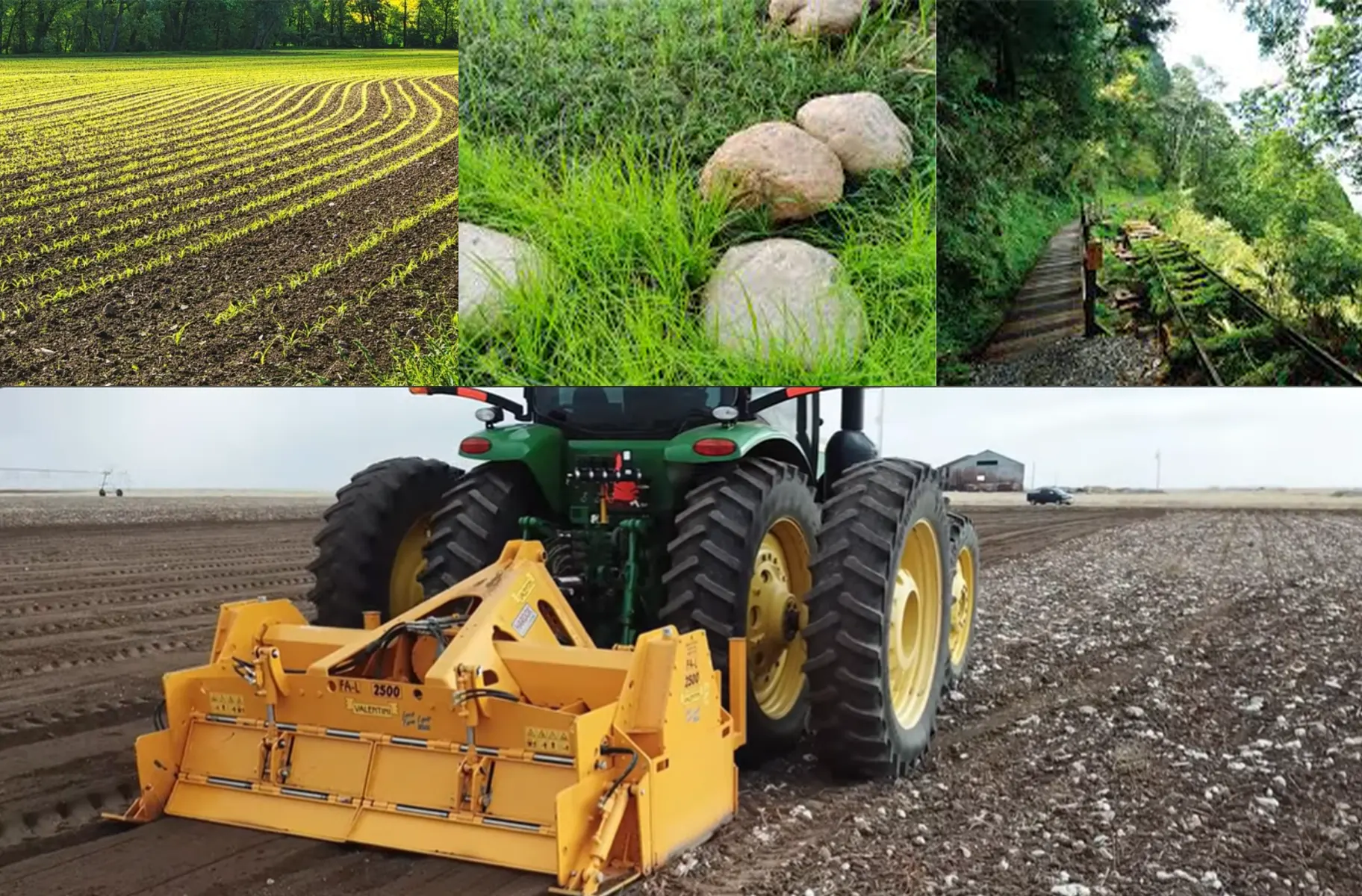
Passion fruit is trained on a 1.5–2 m trellis wire system (similar to kiwifruit E-19 and hops E-10) with 2–3 main lateral shoots per vine spread along the wire. Stone around trellis post bases creates the same post-stability argument as dragon fruit (E-37) — but at smaller scale (passion fruit posts are lighter than single-post dragon fruit). The main post-stability argument for passion fruit is at the ANCHOR POST positions that hold the end-post wire tension: stone in the anchor post hole reduces wire tension stability, causing wire sag that allows the vine canopy to droop, reducing air circulation and increasing humidity in the fruit zone — a pathway to post-pollination fruit disease. THOR + CT-2100 clearing before trellis installation prevents both the crown collar drainage problem and the anchor post stability issue simultaneously.
Three Markets — Ecuador, Colombia and Kenya

Machine System — Crown Collar, Trellis Base and Ester Quality Protocol
Frequently Asked Questions
Rock crusher for passion fruit — can the buzz pollination requirement be addressed by introducing commercial honeybee hives into the orchard, or does it specifically require wild Xylocopa populations?
Commercial honeybees (Apis mellifera) cannot provide effective buzz pollination for passion fruit regardless of hive density. The physical constraint is absolute: honeybee flight muscles produce vibrations at 200–220 Hz; passion fruit anthers require approximately 400 Hz for pollen release. No number of honeybees can collectively achieve the single-bee 400 Hz frequency required at each anther. Introducing honeybee hives into a passion fruit orchard does increase flower visitation rate — honeybees do visit passion fruit flowers for nectar — but visitation without effective buzz does not result in pollen release and fruit set. The correct approach for orchards with inadequate wild Xylocopa populations: (1) Provide nesting habitat: hollow logs, bamboo tubes, or dedicated carpenter bee nesting boxes (Xylocopa are wood-boring nesters, not ground nesters — they do not need specific soil conditions for nesting, but do need suitable wood materials nearby). (2) Maintain flowering windbreak or hedge species that provide supplemental nectar for Xylocopa support between passion fruit flowering periods. (3) Avoid broad-spectrum insecticides during flowering period, which kills adult Xylocopa. Stone clearing’s role in the Xylocopa population: stone affects Xylocopa indirectly through the corona size argument (requiring adequate vine nutrition), not through Xylocopa habitat (since Xylocopa nest in wood, not soil). The primary benefit of stone clearing for buzz pollination is therefore restoring the flower corona dimensions that allow Xylocopa to position correctly — the population management approaches above address wild bee abundance separately.
Is Ecuador’s passion fruit production entirely self-incompatible (requiring cross-pollen from different plants), or are there self-compatible varieties that avoid the SI constraint?
Yellow passion fruit (Passiflora edulis f. flavicarpa) — Ecuador’s primary commercial variety — is consistently self-incompatible in all documented trials, with fruit set rates below 2% under self-pollination compared to 35–85% under cross-pollination in controlled studies. INIAP’s Ecuador passion fruit breeding programme has sought self-compatible yellow passion fruit genotypes for several decades, as eliminating the SI constraint would significantly simplify commercial production (a single-clone orchard would be feasible). However, as of the preparation of this article, no commercially viable self-compatible yellow passion fruit variety has been released. Some purple passion fruit (P. edulis) accessions show partial self-compatibility in specific environments (Brazilian research from the Bahia State programme documented 15–25% fruit set under self-pollination in some purple accessions), but yellow flavicarpa has shown near-absolute self-incompatibility in Ecuador and Colombian trial conditions. The practical implication: Ecuador’s commercial orchards require seedling-raised plants from seed lots with adequate parent diversity to ensure mixed S-allele representation in the orchard — vegetative clonal propagation from a single parent creates an orchard where all plants are SI-incompatible with each other, and no cross-pollination can occur regardless of Xylocopa abundance. Stone clearing’s benefit in this context: orchards with vigorous stone-free vines produce more flowers per vine per day, increasing the statistical probability that a cross-compatible pollen transfer event occurs within each flower’s brief viability window.
How does the ester aromatic argument connect to Colombia’s Granadilla variety specifically — is purple passion fruit more aromatic than yellow, and why does the European premium market value Granadilla over other passion fruit?
Purple passion fruit (P. edulis) and yellow passion fruit (P. edulis f. flavicarpa) have different aromatic profiles that are valued in different market contexts. Purple passion fruit has a higher proportion of aromatic terpenes and benzyl esters in its volatile profile, producing the complex floral-tropical aroma that European specialty buyers associate with the “true” passion fruit fragrance. Yellow passion fruit has a higher proportion of short-chain aliphatic esters (ethyl butanoate dominant) that produce the intense, direct, punchy aroma used in juice blending. Colombia’s highland Granadilla (purple) is valued in Europe precisely for its terpene-dominant aromatic complexity — it is regarded as more “refined” and less “aggressive” than yellow passion fruit by European specialty buyers. The stone-ester argument applies differently to each: for yellow passion fruit (Ecuador), the ethyl butanoate-dominant ester chain is the direct quality target, and the S/Zn pathway described in Section 2 is the primary mechanism. For Granadilla (Colombia highland), the terpene aromatic profile additionally depends on geranyl pyrophosphate (GPP) pathway for monoterpene synthesis, which requires magnesium (Mg²⁺) as cofactor for GPP synthase — adding a third mineral (Mg, alongside S and Zn) to the aromatic quality chain for purple passion fruit. Highland Colombia granite stone (Mohs 6–7 at 15–30 cm) restricts both the aliphatic ester pathway minerals (S, Zn) and the terpene pathway mineral (Mg) simultaneously, creating a comprehensive aromatic profile reduction that Colombian Granadilla highland farms experience on all stone-density sites.
For the collar rot drainage argument — is the risk specifically from surface stone around the vine planting hole, or does deeper stone create the same waterlogging at collar level?
The crown collar waterlogging risk from stone operates at two distinct depth zones, each with a different drainage mechanism. At the surface level (0–5 cm): stone fragments protruding above or just below the soil surface around the vine stem create micro-drainage barriers that slow lateral water movement away from the collar zone after rainfall. This is the most immediate risk — stone within 15–20 cm of the vine stem at 0–5 cm depth creates a local “cup” effect where water drains away from the field surface but not away from the collar-immediate zone. This is the primary target of the crown collar zone clearing specification (CT-2100 zero tolerance within 30 cm radius at 0–5 cm). At intermediate depth (8–20 cm): stone creating the general root zone drainage impairment argument (as in all prior E-series articles) increases the time for which the soil profile below the collar remains saturated after rainfall events. If the water table sits at 8–15 cm after rain because stone impedes downward drainage, the crown collar is in intermittent contact with water even if the stone is not at the exact surface level where the collar sits. Both mechanisms contribute to collar rot risk and both are addressed by THOR + CT-2100 clearing: surface stone by CT-2100 zero tolerance protocol; deeper stone by THOR fragmentation + collection. The surface stone argument is more immediately damaging; the deeper stone argument is more chronic. Both are addressed by the same clearing operation, making passion fruit one of the more complete clearance-benefit arguments in the series.
What is the ROI for passion fruit stone clearing across a typical 3-year orchard cycle in Ecuador — combining pollination improvement, aromatic grade, crown collar protection and trellis stability?
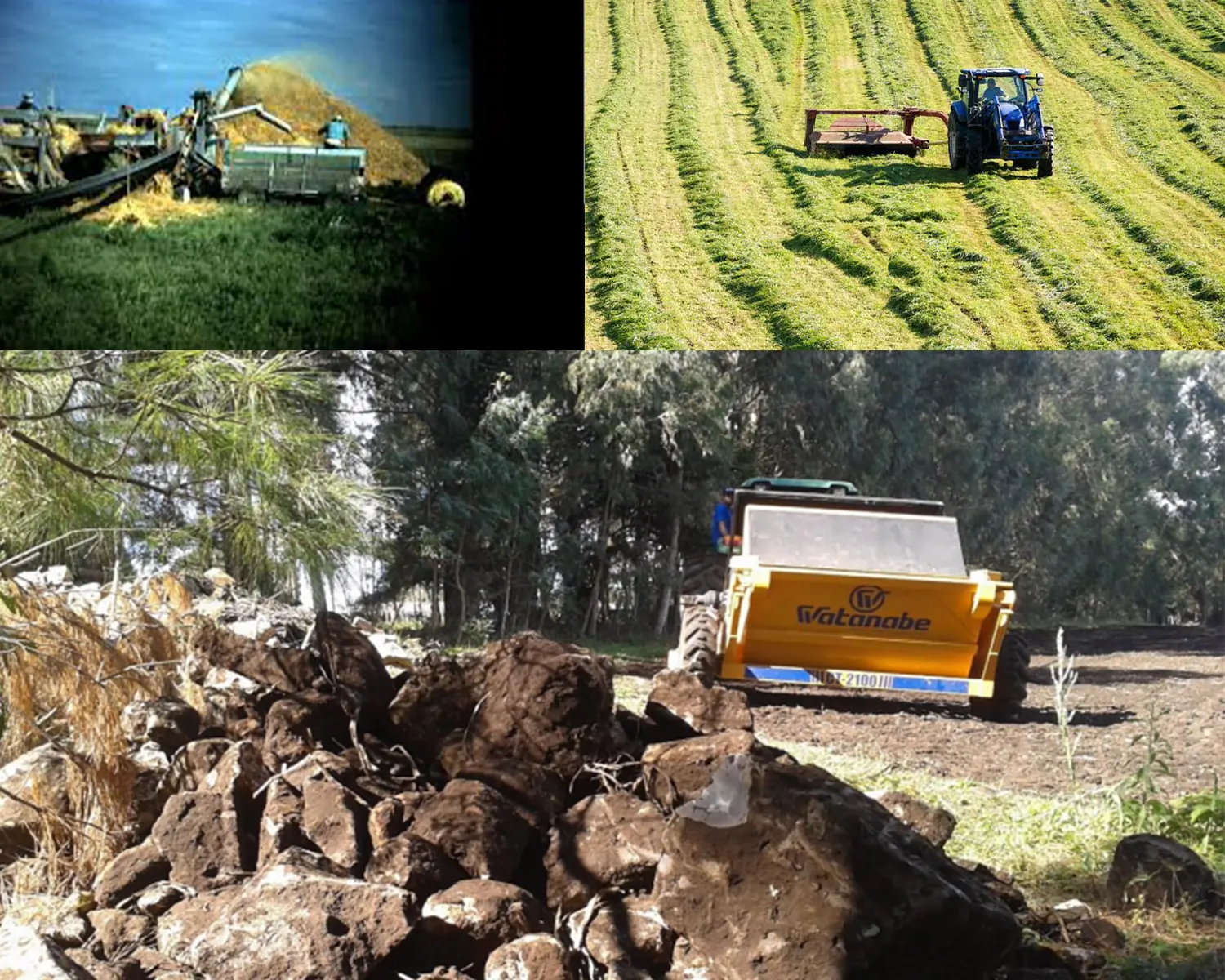
For a 3 ha Ecuador yellow passion fruit operation (Santo Domingo pyroclastic andesite, 20% stone coverage at 10–22 cm, approximately 1,500 plants/ha = 4,500 total, standard 3-year orchard cycle): Investment (THOR 3.0 at 22–28 cm + CT-2100 + PSW-3200 with sulfur amendment): approximately US$3,800–5,500 for 3 ha. Benefits over 3-year cycle: (1) Pollination improvement (fruit set from 42% to 70% on cleared site): 4,500 vines × 25 fruits/vine/month × 12 months × 28% additional fruit set × US$0.30/fruit = US$113,400 over 3 years. (2) Ester aromatic grade (Grade 1 juice concentrate qualification): 3 ha × 20 t/ha/year fruit × 3 years × 0.12 t concentrate/t fruit × 25% grade improvement × US$400/t grade differential = US$72,000. (3) Crown collar rot prevention (12% vine mortality rate on stony sites vs 3% on cleared, over 3-year cycle): 9% × 4,500 vines × US$0.30/fruit × 25 fruits/vine/month × 12 months average remaining life per protected vine = US$29,160. (4) Trellis stability and establishment timing: US$8,400 estimated. Total 3-year benefit: approximately US$222,960. Against investment of US$3,800–5,500: ROI 40:1 to 58:1 over 3 years. The extraordinary ROI is driven by the compound pollination benefit — the 28 percentage point improvement in fruit set rate is the largest absolute pollination-driven yield improvement in the series, reflecting the compounding of two simultaneous pollination mechanisms in one clearing investment.
Rock Crusher for Passion Fruit — Buzz Pollination, Ester Quality and Crown Collar Protocol
Stone type + variety (yellow/purple) + Xylocopa population status + ester grade target + crown collar drainage assessment → Korea Watanabe provides the correct rock crusher for passion fruit vine zone specification, sulfur/zinc amendment programme and 3-year buzz pollination ROI calculation.
Editor: Cxm