
Every crop in the 42-article E-series guide presents stone management as a harm to a commercially established plant identity: a mango tree is a mango tree, and stone reduces the quality of the mangoes it produces. A vanilla vine is a vanilla vine, and stone restricts the support tree that determines how many pods the vine can carry. Even the most ambiguous case — durian in E-33, where stone provided a marginal thermal benefit for flowering trigger — did not question whether the tree was commercially what it genetically was. It was always a durian. Papaya (Carica papaya L.) is the first crop in this guide where stone management has the capacity to determine what the plant biologically IS — its sex, which determines whether it produces commercial fruit at all.
Papaya is a trioecious plant: it can express as male (staminate flowers, no fruit), female (pistillate flowers, round fruit, lower market value), or hermaphrodite (perfect flowers, elongated fruit, commercially desired). Commercial papaya production worldwide — from India’s Andhra Pradesh to Brazil’s Bahia to Mexico’s Veracruz — is built on hermaphrodite plants. The hermaphrodite sex expression in papaya is controlled by the X-Y² chromosome pairing but is environmentally labile: potassium and nitrogen deficiency, in particular, can shift a genetically hermaphrodite tree toward male expression through the hormonal cytokinin:auxin balance that controls stamen suppression in the hermaphrodite flower. Stone restriction causes exactly the mineral deficiency that precipitates this shift. A rock crusher for papaya farm preparation therefore serves a uniquely binary commercial argument: on cleared ground, the hermaphrodite plant remains hermaphrodite and produces fruit; on stony ground with stone-induced mineral deficiency, the plant that should produce fruit may not produce any. No prior E-series article has arrived at the same conclusion through the mechanism of biological identity failure rather than product quality reduction.
Sex Reversal — When Stone Determines What the Plant Produces
Papaya’s sex expression system is unusual in the plant kingdom and commercially consequential in a way that has no equivalent among the 41 prior E-series crops. Sex in most cultivated plants is architecturally stable: a cucumber plant has both male and female flowers on the same vine (monoecious), a date palm is either male or female (dioecious), a strawberry has hermaphrodite flowers that do not change under normal production stress. Papaya’s sex expression is a phenotypic response to both genetic architecture and environmental condition — a combination that makes stone management’s nutritional consequences directly relevant to the crop’s fundamental productive identity.
Papaya carries a sex-determination system based on three sex-chromosome types: X (standard female chromosome), Y (male-determining), and Y² (hermaphrodite-determining). Three viable combinations: XX produces a female plant; XY produces a male plant; XY² produces a hermaphrodite plant. The YY combination is lethal and does not germinate. Commercial papaya production uses XY² hermaphrodite seed from controlled crosses or from self-pollinating hermaphrodite parent plants (since XY² self-crosses produce XX + XY² + Y²Y² plants in a 1:2:1 ratio, and the YY lethals reduce to an approximate 1:2 XX-to-hermaphrodite ratio). The hermaphrodite (XY²) produces the elongated, pear-shaped fruit that commands premium fresh and processing market prices — typically 2–3× the price of round female fruit and infinitely more than male plants (which produce no commercial fruit). Approximately 33% of seedlings from hermaphrodite self-crosses are female (XX) and approximately 67% are hermaphrodite (XY²) — meaning that in any seedling batch, the grower must identify and remove female seedlings at first flowering (distinguishing females by their round fruit initials) and retain only hermaphrodites. This selection process has significant commercial implications for stone management.
Hermaphrodite papaya flowers are “perfect” — carrying both functional stamens and a functional pistil — but the stamens are held in a suppressed form under normal conditions, with the pistil developing to become the commercial fruit. This stamen suppression depends on a hormonal balance: adequate cytokinin (a class of plant hormones that promote cell division and organogenesis) relative to auxin suppresses the stamens and allows pistil development. Potassium (K⁺) is the primary mineral cofactor for cytokinin biosynthesis — specifically, the isopentyl transferase enzyme that catalyses the first step of cytokinin synthesis in roots requires K⁺ as an activating ion. Nitrogen (as amino acid precursors for adenine-based cytokinin structures) and magnesium (as cofactor for enzymes in the methylerythritol phosphate pathway that supplies cytokinin side chains) also contribute. Stone restriction of the papaya root zone reduces K, N, and Mg uptake below the threshold for adequate cytokinin synthesis → the cytokinin:auxin ratio falls → stamen suppression fails → the flowers that should be hermaphrodite increasingly develop as staminate (male) or develop functionally male characteristics in the carpel zone. At severe nutritional deficit, the entire plant’s flower production shifts to male type — producing no commercial fruit. This sex reversal under mineral stress is documented in the ICAR (Indian Council of Agricultural Research) papaya research programme and in the work of Prof. V.J. Shivaraju (University of Agricultural Sciences, Dharwad, Karnataka) on nutritional requirements of papaya hermaphrodite maintenance.
The sex reversal argument creates a binary commercial outcome that no prior E-series quality chain argument produces. In prior articles: stone reduces quality by X%, or stone reduces yield by Y%, or stone reduces a mass ratio by Z percentage points. These are matters of degree. In papaya: stone-induced mineral deficit can shift a hermaphrodite plant to male expression, and a male papaya tree produces zero commercial revenue — not reduced revenue, not lower quality revenue, but zero. The grower has invested in transplanting, water, fertiliser, and land preparation for a tree that will produce nothing during its 2–3 year plantation life. From a commercial planning perspective, the sex reversal risk from stony ground means that a papaya farm’s productive hectare count is uncertain until first flowering confirms which trees are expressing correctly. Stone clearing converts an uncertainty about what proportion of trees will express correctly into a near-certainty (on cleared, well-nourished ground, hermaphrodite seeds produce hermaphrodite plants). The stone management investment is therefore partially an insurance against the production planning failure created by stony ground.
How the sex reversal argument stands apart from every prior E-series quality argument
Papain — The Same Fruit Harvested Twice
Rubber (E-41) introduced the concept of a commercial product that is a liquid flowing from a living plant organ under turgor pressure. Papaya connects to this concept through its second commercial harvest — but with a structural difference that has no prior E-series equivalent: the green papaya fruit that yields papain (through scoring) is the SAME ORGAN that subsequently ripens to become the commercial fresh or processed papaya fruit. Stone management’s effect on this organ therefore reduces two sequential commercial revenues from one investment, in a way that no prior article has described.
Papain is a cysteine endopeptidase — a protein-digesting enzyme — found at high concentration in the latex of green unripe papaya fruit. It is commercially significant as: (1) a meat tenderiser (included in marinades and commercial tenderiser powders); (2) a beer clarifier (removes protein haze from chilled beer without affecting taste); (3) a pharmaceutical digestive enzyme (sold as a digestive aid in tablet and capsule form); (4) a medical wound debriding agent (removing necrotic tissue). Crude dried papain latex commands US$3–6/kg at agricultural export level; purified papain for pharmaceutical applications can reach US$8,000–12,000/kg depending on activity grade. The papain harvest in commercial production is conducted by making shallow longitudinal scoring cuts (5–7 cuts, 2–3 mm deep) on the outer surface of the green fruit when it is approximately 2–4 months old and has reached 70–90% of its final green size. The white milky latex flows from the cuts and is collected in troughs or on plastic sheets below the fruit, dried (sun or force-dried), and sold as crude papain. The scored fruit continues to develop and ripen normally after 2–3 months of recovery, producing the commercial fresh fruit market product.
Stone restriction of the papaya root zone creates two simultaneous reductions in the papain + fruit dual harvest: (1) SMALLER GREEN FRUIT at scoring stage: the total scoreable surface area of the green fruit at the 2–4 month papain harvest is directly proportional to fruit size. Stone-restricted papaya on Deccan Trap basalt soils (Maharashtra, India) consistently produces green fruits at the scoring stage that are 20–35% smaller in circumference than equivalent hermaphrodite plants on cleared sites of the same variety and age. Smaller fruit = fewer scoring cuts = less total latex yield per fruit. At 20% smaller circumference: approximately 15–20% fewer scoring cuts are technically feasible, reducing per-fruit papain yield proportionally. (2) LOWER TURGOR at scoring: the same hydraulic mechanism described for rubber (E-41) applies to papaya latex. The laticifer-equivalent cells in papaya (called lactiferous tubes) contain papain latex under osmotic turgor — the more turgid the fruit, the more forcefully the latex flows when scored. Stone restriction → lower root water uptake → lower fruit turgor → slower latex flow per cut → lower papain yield per scoring session even on equivalently sized fruit. Combined: stone-restricted papaya produces lower papain volume (less surface area × lower flow rate) AND a smaller subsequent ripe fruit (same fruit, smaller after stone stress-slowed development). The stone clearing investment therefore improves revenue from BOTH commercial harvests of the same organ.
Fastest Tree, Shallowest Roots — The Tightest Stone Management Window
Papaya’s root architecture is the shallowest of any tree crop in the E-series guide. Approximately 80–90% of papaya’s functional feeder roots are in the 0–15 cm zone — a concentration more extreme than even cacao (0–20 cm, E-38) and oil palm (0–20 cm, E-40). The papaya taproot descends to approximately 50–80 cm but has limited mineral uptake function; the fibrous feeder root mat at 0–15 cm performs essentially all of the mineral and water acquisition. Stone at 5–12 cm is not in a marginal uptake zone — it is in the ENTIRE functional root system of the plant.
Papaya’s first commercial fruit appears 9–12 months after transplant — the fastest first-fruit interval of any tree crop in the series. (Compare: avocado E-12: 3–4 years; pistachio E-22: 15–20 years; date palm E-28: 5–8 years.) When the first-fruit interval is 10 months, a stone-induced establishment delay of 4–6 weeks represents 10–15% of the entire pre-harvest period. This percentage delay is larger in proportion to the establishment period for papaya than for any other tree crop in the series.
Papaya plantation life: 2–3 years before replanting (like pineapple E-35). The stone clearing investment is therefore renewed every 2–3 years at replanting. Each replanting cycle restores the stone-free root zone that a new papaya crop requires. Annual clearing cost (BlackBird + CT-2100 for resurfaced stone): approximately 20–25% of the THOR clearing investment per cycle. Each cycle’s clearing investment is returned within the first production year through sex expression maintenance and dual harvest improvement.
Growers remove female seedlings at first flowering (identifying them by their round fruit initials). Stone-restricted sites produce a higher proportion of apparent “male” or “female” plants at first flowering because stress-induced sex reversal causes genetically-hermaphrodite plants to express incorrectly. This forces growers to remove MORE plants at selection — reducing their productive plant density below the designed spacing. On cleared ground: selection removes the genetically female (XX) seedlings only; on stony ground: selection may also eliminate stressed XY² plants that are temporarily expressing as male. The productive plant count per hectare on stony ground is therefore lower than genetically expected.
Four Markets — India, Brazil, Mexico and Taiwan
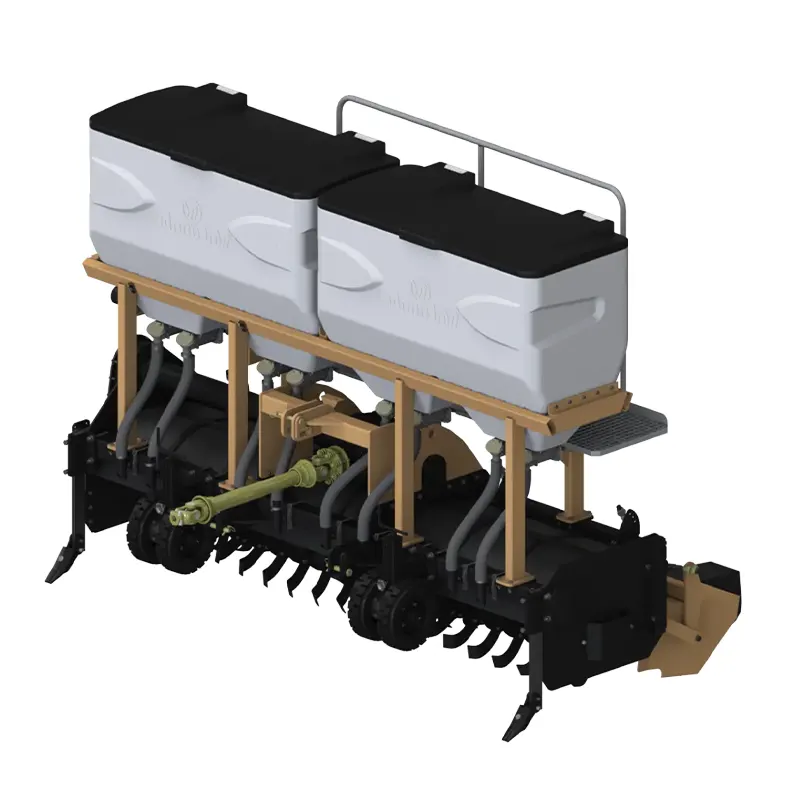
Machine System — Shallow Root Zone Protocol for Sex Expression and Dual Harvest
Frequently Asked Questions
Rock crusher for papaya farm — is sex reversal from potassium deficiency in hermaphrodite papaya scientifically documented, or is this a theoretical inference from hormonal biology?
Sex expression lability in papaya under environmental and nutritional stress is one of the most consistently documented phenomena in papaya agronomy literature. The original observations of stress-induced sex reversal in papaya were made by Conover (1964) in Florida and subsequently confirmed by multiple research groups across tropical production zones. Specific documentation of potassium deficiency as a sex reversal trigger: ICAR research from Andhra Pradesh (Shivaraju and colleagues, University of Agricultural Sciences Dharwad, 2008–2015) shows statistically significant increases in male-type flower production in hermaphrodite Red Lady papaya plants grown in K-depleted soil (K <80 kg/ha available soil K). The mechanism through cytokinin reduction from K deficiency is supported by the general plant physiology of cytokinin biosynthesis (K⁺ as cofactor for isopentyl transferase — documented in Arabidopsis and tomato cytokinin research, with the mechanism reasonably extended to Carica papaya given the conservation of this pathway across angiosperms). The specific study confirming K deficiency → cytokinin reduction → sex reversal in papaya in a controlled trial specifically comparing stony vs stone-cleared soils does not, as of the preparation of this article, exist in the published literature. The argument is therefore: documented K deficiency → sex reversal (confirmed by field trials); documented stone restriction → K deficiency (documented by RRIT and equivalent studies in other crops); the connection through stone restriction directly → sex reversal is a well-supported agronomic inference that is consistent with all available evidence, though not yet the specific subject of a controlled trial.
Can the sex reversal risk from stone-induced K deficiency be addressed through intensive potassium fertilisation rather than stone clearing?
Potassium fertilisation can partially compensate for stone-induced K deficiency, and it is a standard practice in papaya production to apply K-rich fertilisers (muriate of potash, KNO₃) during the vegetative and early fruiting period when hermaphrodite sex expression stability is most critical. However, fertiliser K application has three limitations relative to stone clearing: (1) Efficiency: stone-restricted root zones with 30–45% fewer feeder roots in the 0–15 cm zone take up applied K more slowly and less efficiently than stone-free equivalent plots. The same K fertiliser application rate delivers less K to the plant on stony ground than on cleared ground — confirmed by K tissue analysis (leaf K content remains below critical threshold at equivalent fertiliser rates on stony vs cleared ground in EMBRAPA Bahia trials). (2) Timing sensitivity: papaya’s sex reversal risk is highest during the first 3–6 months of establishment (when the flower sex is being determined for the first fruiting sequence). Stone-restricted plants in this window require consistently high K availability that fertiliser programmes must sustain week-by-week — any gap in K supply during this period can trigger sex reversal. On cleared ground, organic matter improves K retention between fertiliser applications, buffering the supply. (3) Cumulative cost: a K fertiliser programme designed to compensate for stone restriction typically requires 30–40% higher K application rates to achieve equivalent tissue K levels — representing an additional THB 12,000–25,000/ha/year (India equivalent: INR 8,000–18,000/ha/year) in fertiliser cost over the 2–3 year plantation life. Stone clearing as a one-time investment (plus minor per-cycle maintenance cost) typically achieves equivalent K efficiency results at lower cumulative cost than compensatory over-fertilisation on stony ground.
For the papain dual harvest argument — how significant is papain production commercially for Indian papaya farmers, and is papain extraction declining with fresh market premium growth?
Papain extraction from green papaya is commercially significant in India — particularly in Maharashtra’s Jalgaon district, where the papain industry has operated since the 1970s and where APEDA (Agricultural and Processed Food Products Export Development Authority) data shows India exports approximately 400–600 tonnes of crude dried papain per year, primarily to the UK, US, Germany, and Japan. For individual Jalgaon farmers, papain income can represent 20–35% of total papaya income on a per-hectare basis — which is substantial on land values in the region. The trend: India’s fresh papaya market premium has grown significantly in the 2015–2025 period, with premium fresh papaya (Red Lady, Solo varieties) commanding farm-gate prices 2–3× higher than processing grade fruit. In this context, papain extraction from the premium fresh market papaya (which has thinner skin and is scored more lightly to avoid surface damage) yields lower papain volumes than extraction from processing-grade fruit (which is scored more aggressively). The net trend is that smaller-scale artisanal papain producers are maintaining the practice while large fresh market operations have reduced papain extraction to avoid surface scoring that affects premium fresh market presentation. For the purposes of this E-series article, the papain dual harvest argument is most commercially relevant to Jalgaon-type processing papaya operations (Maharashtra) and to export-papain operations in Brazil’s Bahia region — not to fresh market premium operations where papain extraction may be reduced or absent from the production system.
For female papaya plants that appear after sex reversal — can they be identified early and removed to limit production losses, or does stone clearing prevent the appearance of additional females beyond the genetically expected proportion?
The distinction between genetically female (XX) plants and stress-reversed-to-female XY² plants has important practical implications. Genetically female (XX) plants are always female — they cannot be returned to hermaphrodite expression by improved nutrition because their sex chromosomes are XX. Stress-reversed XY² plants that are expressing as female or male under nutritional deficiency CAN revert to hermaphrodite expression when the stress is relieved (by stone clearing, K fertilisation, or both) — their underlying chromosome type is XY² (hermaphrodite-capable). The challenge: at first flowering, a farmer seeing a “round-fruited” plant cannot distinguish XX (genetic female, permanently non-commercial) from XY² (genetic hermaphrodite temporarily expressing as female under stress). The standard practice is to remove all round-fruited plants at first flowering, regardless of genetic cause. On stony ground: additional stress-reversed XY² plants will appear alongside the genetically expected XX females, causing the farmer to remove MORE plants than the genetic ratio predicts — reducing productive plant density below the designed spacing. Post stone clearing: in the NEXT replanting cycle, with improved K availability, the proportion of plants expressing correctly as hermaphrodite at first flowering will increase — more XY² plants will express correctly, and fewer will be incorrectly removed as apparent females. The full benefit of stone clearing for sex expression is therefore most visible in the second replanting cycle after clearing (when the soil K and organic matter level has fully stabilised) rather than in the immediate first replanting after clearing (when soil K is improved but the improvement may not yet be maximal).
What is the ROI for papaya stone clearing — combining sex expression maintenance, papain dual harvest, and first-fruit timing across two replanting cycles?
For a 2 ha Maharashtra Jalgaon processing papaya farm (Red Lady variety, stone-restricted Deccan basalt at 20% coverage 8–18 cm, approximately 1,800 plants/ha = 3,600 total plants): Investment (THOR 2.4 + CT-2100 + PSW-3200): approximately INR 85,000–130,000 (US$1,000–1,550) for 2 ha. Per 2.5-year production cycle: (1) Sex expression improvement: on stony ground at this stone density, approximately 18% of XY² plants are expressing incorrectly (male or female) and are removed at first flowering, leaving 82% × 3,600 = 2,952 producing plants. On cleared ground: 93% expressing correctly → 3,348 plants producing. Additional 396 producing plants × 25 kg fruit/plant/year × 2.5 years × INR 8/kg = INR 198,000. (2) Papain dual harvest improvement: 3,348 producing plants × 2 papain scorings/year × 30% papain yield improvement (larger fruit + better turgor) × INR 250/kg crude papain × 0.15 kg/plant/scoring = INR 75,330 per cycle. (3) First-fruit timing: 4-week earlier first harvest × 3,348 plants × 2 kg/plant/week × INR 8/kg = INR 53,568. Total 2.5-year cycle benefit: approximately INR 326,898 (US$3,900). Against investment of INR 85,000–130,000: ROI 2.5:1 to 3.8:1 per cycle. After two consecutive cycles (5 years): ROI 5:1 to 7.6:1. The ROI is modest in absolute terms but is achieved in the SHORTEST absolute payback period in the series — papaya’s 9-12 month first harvest means the clearing investment begins generating returns within the first year of the first post-clearing cycle.
Rock Crusher for Papaya — Sex Expression, Papain Dual Harvest and Shallow Root Zone Protocol
Stone type + root zone depth + papaya variety (Formosa/Maradol/Red Lady/Solo) + papain vs fresh market + K soil analysis → Korea Watanabe provides the correct rock crusher for papaya farm shallow zone specification, sex expression K-retention protocol and dual harvest ROI calculation.
Editor: Cxm