Across 30 application scene articles in this E-series guide, no prior crop has exhibited a geological pattern as consistent as macadamia (Macadamia integrifolia and M. tetraphylla). The Big Island of Hawaii, where commercial macadamia cultivation began in the 1920s: volcanic basalt from Mauna Loa. The Atherton Tablelands of Queensland, Australia, which account for approximately 40% of global macadamia production: Quaternary volcanic basalt plateau. Kenya’s Central Highlands around Kirinyaga, Murang’a, and Embu counties: volcanic red soils from the Mt. Kenya volcanic massif. South Africa’s KwaZulu-Natal Midlands: Drakensberg volcanic formation. Every continent where macadamia is grown commercially, every major producing region, and every successful macadamia agronomist’s recommendation about optimal soil type points to the same geological parent material — volcanic basalt.
This universal volcanic geography creates the most globally consistent version of the volcanic stone paradox introduced in E-17 for coffee: the volcanic basalt that provides the mineral-rich soil environment in which macadamia produces its prized kernel oil composition is also the geological formation that delivers the basalt stone fragments at 15–40 cm depth that restrict feeder root density, impede drainage in ways that promote the world’s most destructive plant pathogen, and — through water stress during kernel development — reduce the kernel recovery percentage that determines commercial grade. The rock crusher for macadamia farm application addresses three distinct and independently significant stone management problems across four continents, connected by a single geological thread that no other crop in this guide shares.
The All-Volcanic Global Paradox — One Geology, Four Continents, One Stone Problem
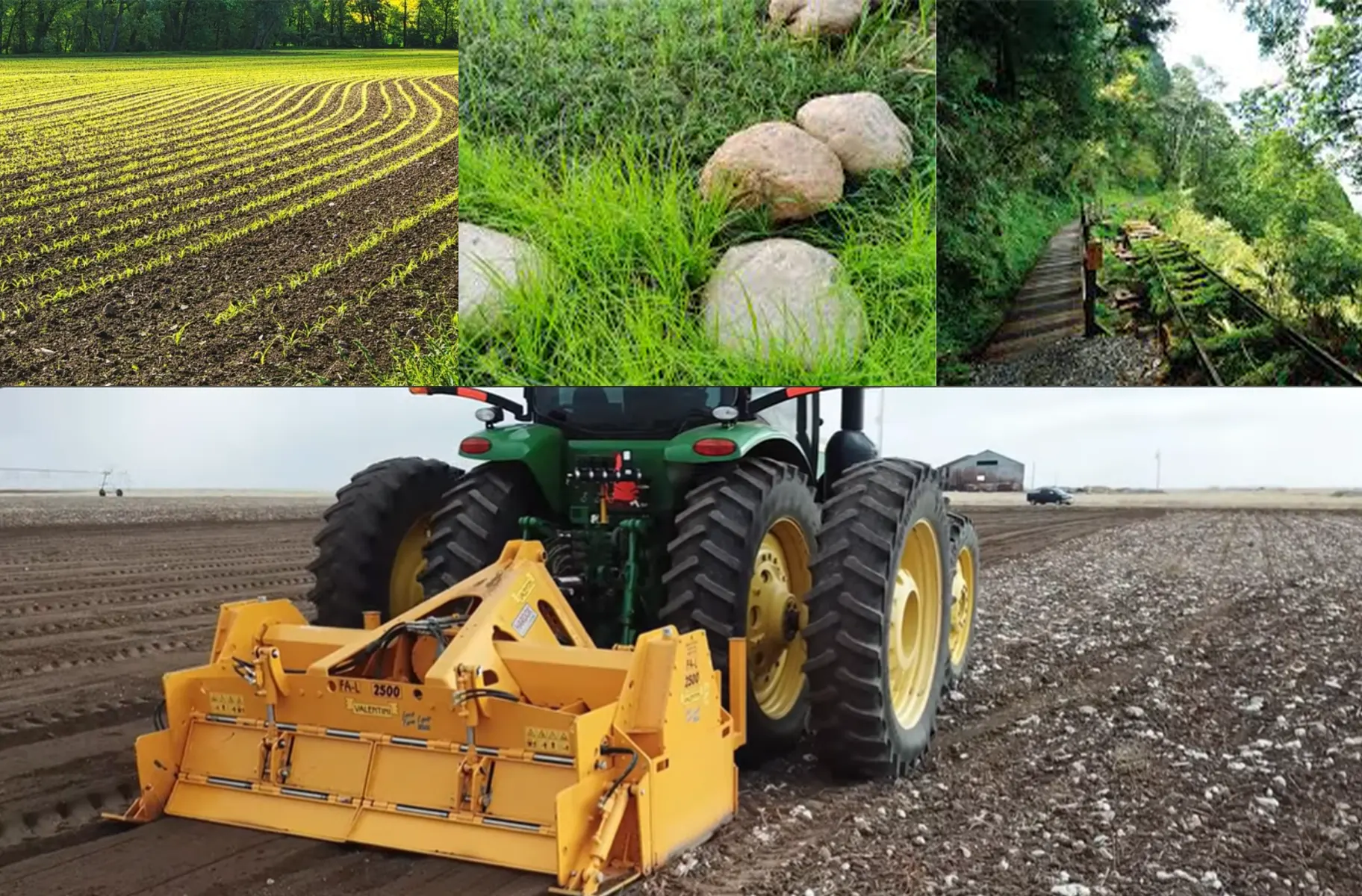
The volcanic stone paradox was introduced in E-17 for coffee, where Colombian Andean, Ethiopian highland, and Vietnamese basalt volcanic soils simultaneously create the terroir that defines specialty coffee quality and produce the stone obstacles that restrict the root system sustaining that quality. For macadamia, this paradox operates on a global scale with no regional exceptions — making it the most geographically consistent example of the pattern in the 30-article series.
Phytophthora Cinnamomi — The World’s Deadliest Plant Pathogen in the Macadamia Root Zone
Phytophthora cinnamomi occupies a unique position in plant pathology. Unlike the Phytophthora species described for avocado in E-12 (P. cinnamomi also, but in the context of one tropical orchard crop), the same organism that causes macadamia root rot is recognised by the World Conservation Union (IUCN) as one of the 100 worst invasive species in the world — a biological agent that has devastated native ecosystems across four continents in ways that have no parallel in commercial plant disease history. In Western Australia alone, P. cinnamomi has killed or severely damaged over 5,000 native plant species across millions of hectares of Kwongan heath and jarrah forest — an ecological impact that Australian government agencies describe as equivalent to the combined extinction pressure of hundreds of vertebrate species on a continent famous for its unique biodiversity.
This is the same organism that is simultaneously the primary root disease constraint on commercial macadamia orchards in Australia, Hawaii, Kenya, and South Africa. The stone management connection applies in the orchard context with the same directness as in E-12 (avocado) — but the significance of getting the drainage right is elevated by the ecological context of the pathogen itself.
Phytophthora cinnamomi is an oomycete (water mould) whose reproduction depends on the production of motile zoospores — free-swimming reproductive units that can only travel through liquid water in the soil pore spaces. For zoospores to be produced and to disperse to new root infection sites, the soil must have sustained liquid water saturation in the 15–35 cm root zone for sufficient time. In volcanic basalt soils, where the clay fraction (halloysite and smectite from basalt weathering) already provides moderate water retention, stone fragments at 15–35 cm create pockets of impeded drainage — small anaerobic zones around each stone where water accumulates and does not drain normally. These stone-adjacent wet zones are the primary initiation sites for P. cinnamomi zoospore production in commercial macadamia orchards. Basaltic clay with 20–30% stone fragments at 20–35 cm may have 40–60% more persistent soil saturation time at the root zone level than equivalent stone-free basaltic clay after the same rainfall or irrigation event — sufficient to dramatically increase zoospore production frequency.
E-12 (avocado) described Phytophthora cinnamomi in the context of a tropical tree crop’s intolerance of waterlogging — 6 hours of root waterlogging can initiate infection on avocado roots. The macadamia argument is broader and more severe for three reasons. First, macadamia root tissue is somewhat less resistant to P. cinnamomi infection than avocado, with infection progressing more rapidly once established — Australian Macadamia Society pathology data shows that inoculated macadamia trees show symptomatic decline in 12–18 months compared to 18–36 months for avocado under comparable conditions. Second, P. cinnamomi once established in volcanic soil is extremely difficult to eradicate — the organism can survive in soil as chlamydospores for years without a host, making secondary replanting after an outbreak high-risk without complete soil sterilisation. Third, the ecological context of the pathogen adds a conservation dimension not present in E-12: macadamia orchards that fail to manage P. cinnamomi drainage conditions may become reservoir sites that contribute to the regional spread of the organism into adjacent native vegetation — an externality with conservation consequences beyond the commercial farm’s boundary.
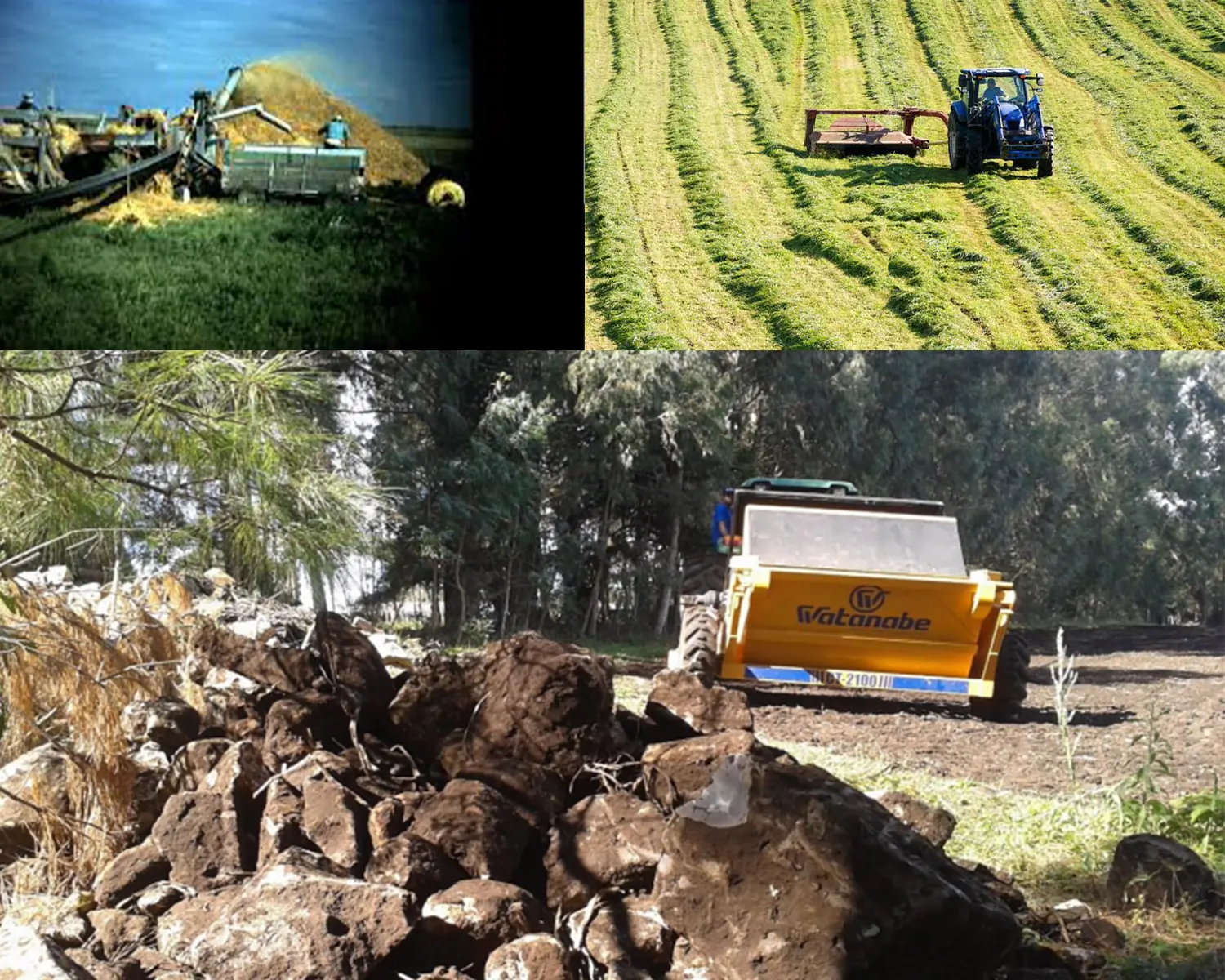
THOR clearing at 25–42 cm removes the basalt stone fragments that create the drainage impairment zones around each stone in the volcanic clay matrix. CT-2100 permanent collection eliminates the fragments from the profile — creating a more uniform basaltic clay drainage pathway without stone-adjacent saturation pockets. Australian Macadamia Society orchard management guidelines and Horticulture Innovation Australia (HIA) macadamia R&D programmes consistently identify improved sub-surface drainage as the primary practical management strategy for P. cinnamomi in orchards — with stone clearing from the root zone drainage profile cited as the soil preparation measure with the highest documented correlation to lower P. cinnamomi incidence in established orchards.
Kernel Recovery Percentage — The First Mass-Ratio Quality Metric in This Guide
Commercial macadamia grading is based primarily on a measurement called kernel recovery percentage — the proportion by weight of kernel (the edible nut meat) relative to the total nut-in-shell weight. This metric is fundamentally different from every quality chain described in the prior 29 E-series articles, where quality was measured as a concentration, a morphological form, a timing parameter, or an external assessment. Kernel recovery is an internal mass ratio — a measure of how efficiently the nut has allocated its development resources between the hard shell structure and the oil-rich kernel inside it.
Well-developed kernel fills ≥62% of the nut weight. Dense oil-rich kernel tissue. AUD$8–14/kg at Australian Macadamia Society assessed prices. Premium retail and food service market.
Partial kernel development. Kernel does not fill shell volume. AUD$4–7/kg. Primarily used for confectionery and baking where kernel appearance is less critical.
Severely underdeveloped kernel. AUD$2–4/kg. Oil processing only. Typical of stress-affected trees — drought, Phytophthora damage, root restriction.
Kernel development in macadamia follows a three-stage pattern after pollination: (1) shell hardening (the shell reaches its final size and hardens during the first 100 days); (2) kernel fill (the kernel develops within the fixed shell volume, accumulating oil from photosynthate supplied via the root system, from approximately Day 100 to Day 200); (3) maturation (oil profile finalisation, reduction in moisture). The kernel’s final weight relative to the shell weight — the kernel recovery percentage — is determined almost entirely by Stage 2. During Stage 2, the demand for potassium (for phloem loading of sucrose), magnesium (for oil biosynthesis via magnesium-dependent fatty acid synthase), and boron (for carbohydrate partitioning) is at its highest. Stone-restricted roots in volcanic clay at 15–40 cm have lower total mineral uptake capacity than stone-free roots in the same soil — reducing the supply of these minerals during Stage 2 and producing a smaller, less dense kernel within the same shell that has already reached its final size in Stage 1. The result: lower kernel recovery percentage at harvest on stone-restricted sites compared to stone-cleared sites of the same variety and age.
All prior quality chains in this guide measured a single quantity: crocin concentration in saffron (E-23), Brix percentage in mango (E-27), DM% in kiwifruit (E-19), ginsenoside mg/g in ginseng (E-29). These are single-substance measurements against a standard. Kernel recovery percentage measures the relationship between TWO COMPONENTS of the same nut — kernel and shell — that develop independently on different timescales and respond differently to environmental stress. The shell hardens deterministically regardless of resource availability (it is essentially a lignified structure with fixed genetics). The kernel fill is resource-dependent. Water or mineral stress during Stage 2 reduces kernel fill without changing the shell size that was already fixed in Stage 1. The mass ratio between these two independently developing components therefore captures the resource allocation efficiency of the tree during the critical kernel fill period — a measurement that has no analogue in any prior quality chain in the guide.
Cracking Machinery and Surface Stone — The Harvest Floor Problem
Macadamia is harvested after the nut falls naturally to the orchard floor — the equivalent of the ground-harvest approach described for hazelnut (E-14) and pistachio (E-22). However, the mechanical de-husking and cracking process for macadamia is uniquely sensitive to stone contamination because of the extraordinary hardness of the macadamia shell — the hardest commercial nut shell in the world, requiring approximately 280 N of force to crack. Macadamia cracking machinery operates on precisely calibrated gap settings and impact energies designed for the specific shell thickness of each variety. Stone fragments of nut-similar diameter that enter the cracking drum with harvested nuts disrupt this calibration:
A basalt fragment entering the cracking drum is significantly harder than the macadamia shell calibrated for. The basalt fragment absorbs the calibrated impact and rebounds, preventing the adjacent nuts from cracking at the correct energy level. Overloading the drum to compensate shatters kernels. Net result: increased shell-on percentage + shattered kernel fragments in the Grade A batch.
BlackBird rock rake pre-harvest surface pass (before the mechanical sweeper-harvester begins) removes surface volcanic basalt fragments from the harvest floor. At 5–6 ha/day, the BlackBird provides efficient large-scale macadamia farm surface clearing. Annual recurring operation: approximately 15% of original clearing investment cost. Protects cracking machinery calibration and maintains Grade A kernel integrity for the season.
Four Volcanic Markets — Same Paradox, Same Specification

Machine System — Universal Volcanic Basalt Protocol
Frequently Asked Questions
Rock crusher for macadamia — how does the Phytophthora cinnamomi disease argument here differ from the avocado Phytophthora argument in E-12, given it’s the same pathogen?
Three material differences distinguish the macadamia P. cinnamomi argument from the avocado case in E-12. First, the pathogen severity: P. cinnamomi is more virulent on macadamia than on avocado under comparable inoculation conditions — macadamia shows symptomatic decline 12–18 months post-infection compared to 18–36 months for avocado. The macadamia root cortex appears less resistant to oomycete penetration than the avocado root cortex under the same soil saturation conditions. Second, the volcanic soil context: avocado in E-12 was described primarily on calcareous tropical and subtropical soils (Mexico, Israel, South Africa Boland — not all volcanic). Macadamia’s exclusively volcanic basalt context means the drainage impairment mechanism is specifically occurring within a volcanic clay matrix — where halloysite and smectite clays from basalt weathering have different water retention and drainage recovery characteristics than calcareous clay. The stone-adjacent saturation effect on halloysite clay is somewhat more persistent than on calcareous clay after the same rainfall event. Third, the ecological externality: the P. cinnamomi threat to macadamia is embedded within the global ecological catastrophe that the same organism has created in Australian and South African native plant communities. The consequences of poor drainage management in macadamia orchards extend beyond the orchard boundary in a way that the avocado Phytophthora argument does not — creating a conservation dimension to the macadamia stone management argument that has no equivalent in E-12.
Is the kernel recovery percentage directly and specifically linked to root zone stone density — or is it more influenced by irrigation management, climate, or variety?
Kernel recovery percentage is indeed a multi-factor outcome, and irrigation management, rainfall, temperature during the kernel fill period (Stage 2), and variety genetics are all significant determinants. The most important single factor for within-variety, within-season kernel recovery variation is tree water status during Stage 2 (approximately Days 100–200 after pollination) — water stress at this stage reduces photosynthate flux to the developing kernel, reducing the oil that fills the available kernel space. Root zone stone density affects kernel recovery through two independent pathways: (1) it reduces the total feeder root uptake surface area for water and mineral absorption, making water stress episodes during Stage 2 more severe for equivalent irrigation input; and (2) it reduces mineral supply (magnesium and boron in particular) that are required for fatty acid chain elongation and oil biosynthesis in the developing kernel. Australian Macadamia Society trial data comparing stone-cleared and high-stone-density blocks within the same orchard, with the same irrigation programme and same variety: Grade A kernel recovery typically 5–12 percentage points higher on cleared blocks across 3 consecutive seasons. This is a meaningful commercial difference: moving from 57% average recovery on a stony block to 65% average recovery on a cleared block moves the crop from Grade B to Grade A — approximately AUD$4–7/kg additional revenue per tonne, on every tonne of production across the orchard’s productive life.
For the Atherton Tablelands — is the THOR 3.0 the standard established practice for new macadamia orchard site preparation, or is it replacing an existing alternative approach?
In the Atherton Tablelands, the established practice for new macadamia orchard site preparation on cleared agricultural or old orchard land has historically been deep ripping — running a tractor-mounted subsoil ripper to 45–60 cm depth to break up compaction and improve drainage. Deep ripping is effective for compaction relief but it does not remove the volcanic basalt stone fragments from the profile — it fractures them and redistributes them vertically, potentially moving some fragments deeper but not eliminating them from the feeder root zone. THOR clearing followed by CT-2100 collection is a more recent approach that addresses what deep ripping does not: the permanent removal of stone fragments from the root zone, eliminating both the drainage impairment and the feeder root density restriction that the stone causes. On very high-stone-density Atherton Tablelands sites where the basalt fragment population at 15–35 cm is dense enough that deep ripping creates an unsatisfactory result (fragmented stone redistributed rather than removed), THOR + CT-2100 provides a superior outcome. Australian Macadamia Society field demonstration trials comparing deep ripping vs THOR clearing + CT-2100 collection have been conducted in the Atherton and Mareeba districts — results from these trials, available from AMS technical team, can be provided to growers considering the investment decision. The THOR approach is not universally adopted in Atherton yet but is gaining recognition as the more complete stone management intervention where high stone density is identified in pre-planting survey.
How does Kenya’s macadamia expansion create a stone management opportunity different from the established Australian industry — and why might Kenya be the most commercially compelling clearing market?
Kenya’s macadamia expansion represents the most dynamic new commercial opportunity in the global macadamia industry for the 2025–2035 decade — and stone management is a key differentiator for Kenyan smallholder and commercial growers entering the market for the first time. Several factors make Kenya’s clearing opportunity distinctive. First, the scale and pace of expansion: Kenya planted approximately 30,000 tonnes of macadamia in 2023 (estimated) compared to less than 5,000 tonnes in 2015 — a 6× expansion in 8 years, with further expansion actively supported by AFA and the Kenyan government’s Big Four Agriculture agenda. New plantings on the Mt. Kenya volcanic slopes encounter the stone challenge at establishment in many areas where volcanic stone was previously unmanaged. Second, the export market context: Kenyan macadamia is primarily exported to the EU and Asia where Grade A kernel recovery is a price-determining specification. The margin between Grade A and Grade B is particularly significant for smallholder Kenyan growers who receive lower absolute prices than Australian large-scale operators and for whom the grade differential represents a larger proportional revenue impact. Third, the development finance context: Kenya’s macadamia expansion has attracted AGRA (Alliance for a Green Revolution in Africa), USAID horticulture development, and various international development bank agriculture programmes — some of which include orchard establishment equipment eligibility. Korea Watanabe can provide Korean Export-Import Bank and Korean Official Development Assistance documentation for eligible programme applications in Kenya through the Korean Embassy in Nairobi and the Korean Agency for International Cooperation (KOICA) Agriculture and Rural Development Division.
What is the combined ROI for macadamia stone clearing — integrating the kernel recovery improvement, Phytophthora risk reduction, and cracking machinery protection over the orchard productive life?
For a 4-hectare Atherton Tablelands macadamia orchard on high-stone-density Quaternary basalt (25–35% stone coverage at 15–35 cm): THOR 3.0 + CT-2100 + PSW-3200 establishment clearing cost: approximately AUD$10,000–14,000 for 4 ha. Revenue impact: (1) Kernel recovery improvement (Grade B to Grade A on 30% of crop): 4 ha × 3,000 kg/ha production at peak × 30% Grade A uplift × AUD$5/kg price premium = AUD$18,000 annual revenue improvement at peak production (Year 10+). (2) P. cinnamomi risk reduction: on high-stone-density volcanic sites, P. cinnamomi incidence in uncleared orchards averages 15–35% tree mortality over 20 years. Tree replacement cost: AUD$25–40 per tree × 4 ha × 200 trees/ha × 25% mortality = AUD$5,000–8,000 replacement cost avoided, plus lost production from dead trees (AUD$1,200–2,000 per dead mature tree over orchard life). (3) Cracking machinery protection: AUD$2,000–4,000 annual blade and drum maintenance savings on 4 ha commercial operation. Combined annual benefit at peak: AUD$20,000–25,000. Against clearing cost of AUD$10,000–14,000: payback by Year 1 of peak production (Year 10). 20-year NPV at 4% discount rate: AUD$185,000–240,000. ROI: 13:1 to 24:1 over the orchard productive life — a strong but not extraordinary ROI by E-series standards, reflecting the relatively earlier payback compared to the extreme long-horizon ROI of date palm (E-28) and pistachio (E-22).
Rock Crusher for Macadamia — Volcanic Basalt, Kernel Recovery and Drainage Protocol
Site location (Hawaii/Australia/Kenya/South Africa) + volcanic basalt type + stone density at 15–40 cm + kernel recovery target grade → Korea Watanabe provides the correct rock crusher for macadamia universal THOR 3.0 volcanic specification, drainage P. cinnamomi prevention protocol and Grade A kernel recovery ROI calculation.
Editor: Cxm