The 28 application scene articles in this E-series guide share one structural assumption: the land being cleared is already under cultivation, or is being prepared for a first planting of a crop that would be cultivated there regardless. Stone management improves the quality, yield, or water efficiency of something that would be grown anyway. Date palm (Phoenix dactylifera) is the first crop in this guide where stone management can expand the assumption itself — where, in specific desert geographies, the removal of a calcareous hardpan layer between the surface and an accessible sub-surface water table does not improve a planned plantation but enables one that would otherwise be physically impossible.
Traditional date palm oases in Arabia, the Sahara, and the Iranian plateau formed where date palm roots could reach a shallow water table without encountering an impenetrable geological barrier. The areas adjacent to these oases — often equally endowed with sub-surface water but separated from it by a calcareous hardpan or evaporite layer at 60–100 cm — remained uncultivated, not for lack of water, light, or temperature, but because the date palm’s rooting system could not penetrate the barrier to access the water that existed below it. The same THOR clearing operation that improves an existing mango orchard (E-27) or pistachio farm (E-22) can, on these desert calcareous hardpan sites, transform permanently barren land into self-sustaining oasis cultivation with no precedent in the site’s agricultural history. This guide covers the rock crusher for date palm application through this unique oasis creation mechanism, the 100-year productive life ROI that makes it the longest investment calculation in the series, and the potassium quality chain that connects root zone access to the premium date markets — including the Ajwa dates of Medina, whose price is supported by a cultural premium that secular fruit markets have never generated.
The Oasis Creation Mechanism — Clearing That Enables What Was Never Possible
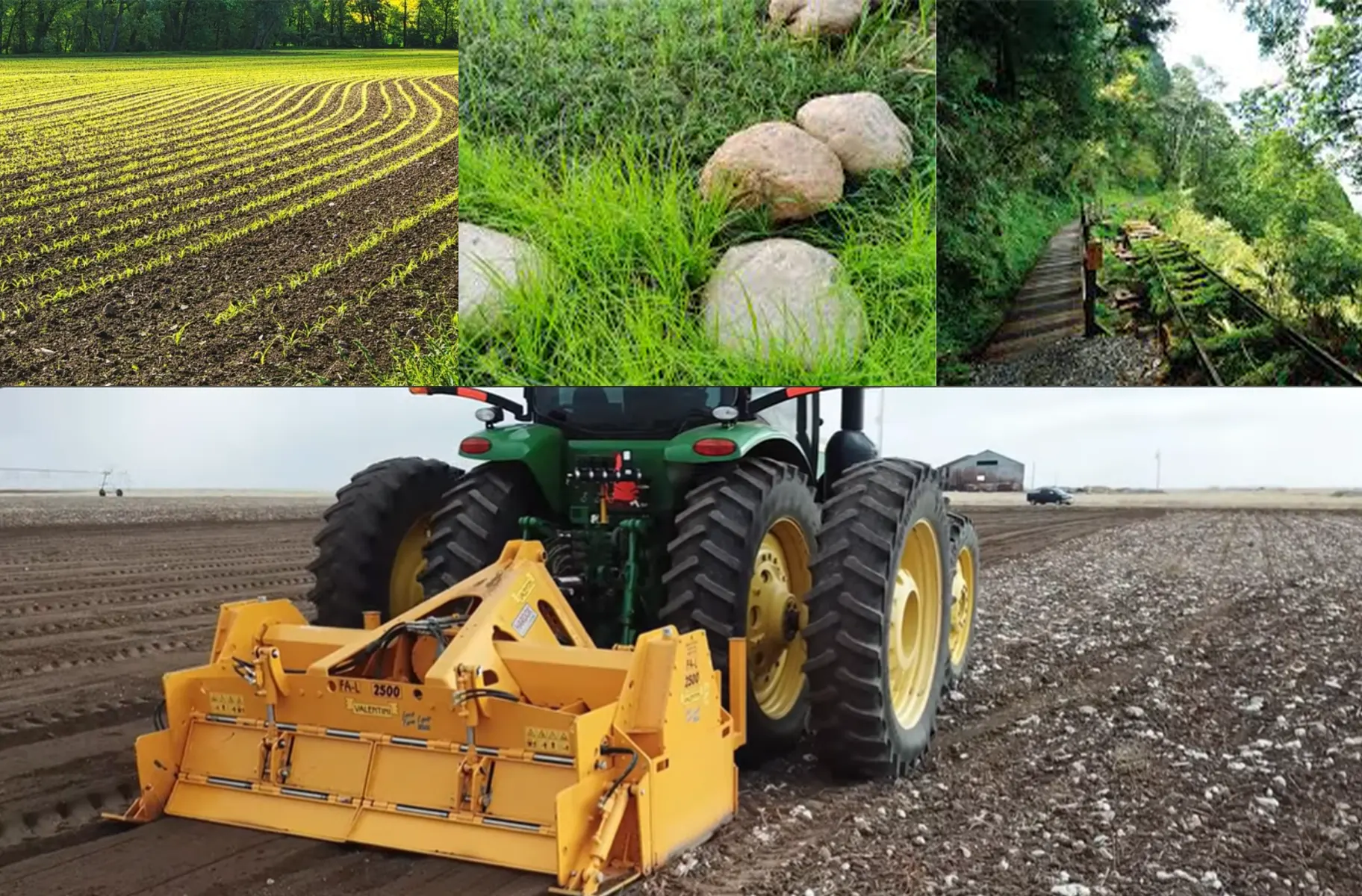
To understand the oasis creation mechanism, it is necessary to understand the geological conditions that determine where traditional date palm oases formed and where they did not.
The sub-surface water table in arid date palm regions
The Arabian Peninsula, the North African Sahara, and the Iranian plateau all contain extensive sub-surface aquifers at 2–15 m depth — fossil water reserves from wetter Pleistocene climates, partially recharged by winter rains in highland catchment areas. In Saudi Arabia’s Eastern Province (Al-Ahsa), the Umm Er Radhuma aquifer and Eocene limestone aquifer system maintains water tables at 2–6 m over substantial areas. In Morocco’s Draa Valley and Algeria’s Tafilalt, the Atlas Mountain snowmelt recharges shallow alluvial aquifers at 3–8 m under the desert floor. These water resources exist independently of annual rainfall — they are permanent and largely unaffected by surface climate conditions. Where date palm roots can access them, the trees are productive for a century without supplemental irrigation.
The calcareous hardpan barrier — why adjacent land stayed barren
The desert surface soils above these aquifers are typically a loose sand-calcareous matrix — easily penetrated by date palm roots. But at 50–100 cm depth, a calcareous hardpan layer (calcrete, “caliche” equivalent, known locally in North Africa as croûte calcaire and in the Gulf as gatch) frequently interrupts the profile. This hardpan forms by the same evaporative carbonate accumulation mechanism described for California caliche (E-15) and Spanish calcretes (E-21), but in the more arid desert environment it typically achieves higher carbonate concentration and more continuous cementation. The hardpan pore spaces are too small for root tip penetration under normal growth pressure. Date palm roots cannot break through it without external disruption. The water table below is inaccessible. The land remains barren — not because the necessary water is absent, but because a geological layer 60–100 cm below the surface prevents the roots from reaching it. This is the geological fact that explains why traditional oases are point phenomena rather than area phenomena: they existed where the calcrete layer was naturally absent (at wadi margins, fault zones, or erosion channels where water flow had dissolved or abrapted the hardpan), surrounded by uncultivated desert where the hardpan remained intact.
After THOR clearing: oasis where desert was
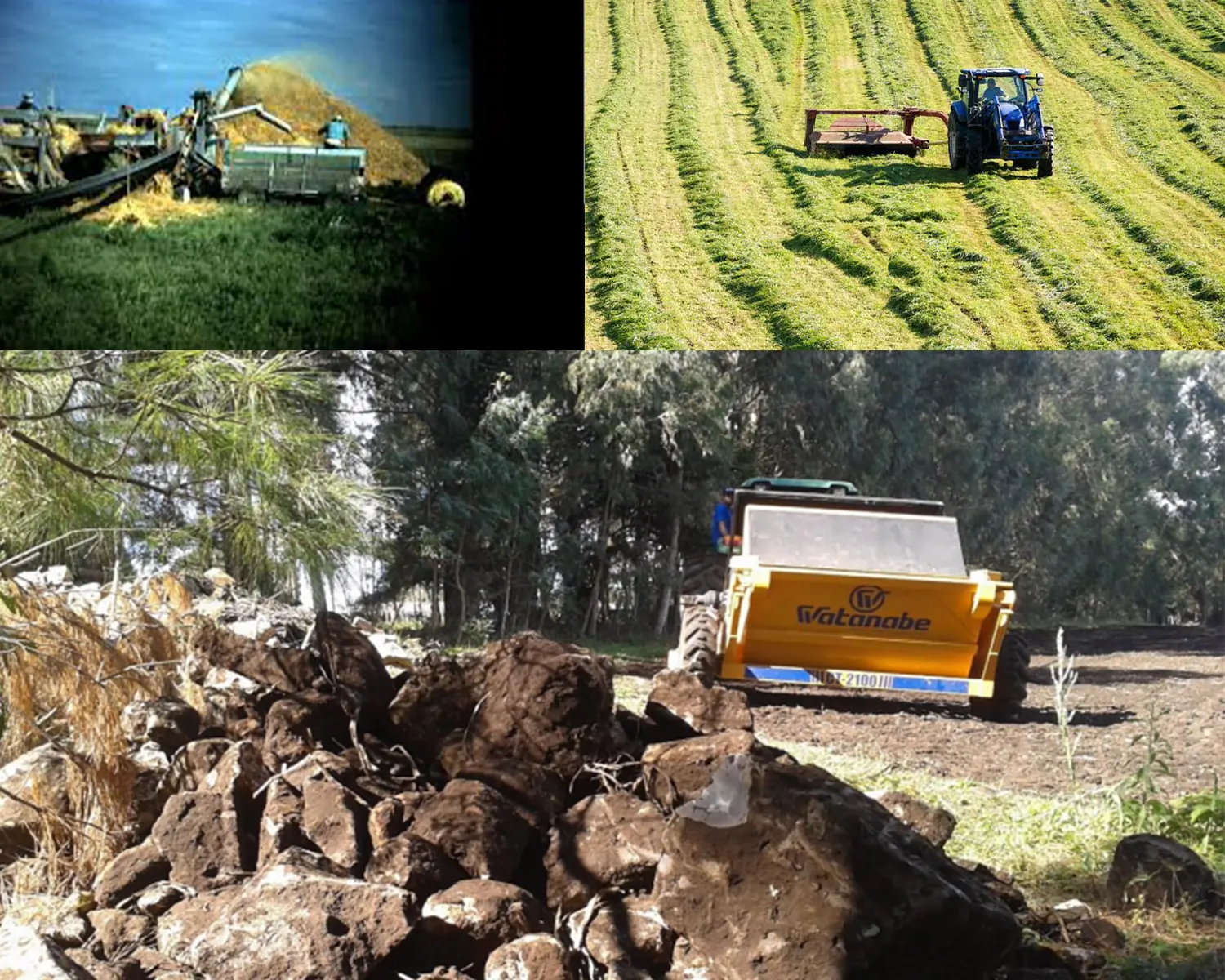
THOR 3.0 clearing at 65–95 cm breaks the calcareous hardpan into fragmented calcium carbonate material, which is collected by CT-2100 (full collection on these sites — the same calcite retention argument as truffle E-24 does not apply here because date palm does not have the pH-demanding mycorrhizal association that truffle requires). The broken hardpan zone, cleared of its fragments, provides a pathway through which date palm roots can descend into the undisturbed sub-surface sand and reach the water table below. The first roots reach the water table at 3–7 years post-planting, depending on depth. Once the water table is reached, the date palm becomes effectively self-sustaining: the fibrous root mat that extends throughout the saturated zone supplies all of the tree’s water requirement through capillary and direct absorption, without supplemental surface irrigation. This is the oasis creation: land that was never cultivated becomes permanently productive, powered by a sub-surface water resource that existed there before the THOR clearing operation and will exist there for centuries after it.
Why this is different from every prior E-series article
In all 27 prior E-series articles, the land being prepared either was already in cultivation or was being planned for cultivation regardless of stone management — stone clearing improved the outcome of an intended agricultural activity. In E-27 (mango), calcium stone restriction reduces the quality of fruit that would have been produced anyway. In E-22 (pistachio), caliche restriction prevents the taproot from reaching its designed productive depth on a site already chosen for pistachio cultivation.
Date palm oasis creation changes the question entirely. The sites described in this section were not under consideration for cultivation — they were considered barren because everyone who had previously assessed them understood that date palm roots could not reach the water table through the hardpan. Stone clearing changes what is possible on these sites. It converts them from “permanently barren” to “permanently productive” — a categorical change in land status, not a marginal improvement in cultivation efficiency. This is a first in the 28-article E-series guide.
100 Years of Production — The Longest Investment Horizon in This Guide
Every E-series article from E-9 (asparagus, 25-year productive life) through E-22 (pistachio, 40–50 years) has expanded the time horizon over which the clearing investment is amortised. Date palm extends this horizon further than any prior crop — not marginally but categorically.
| Crop (article) | Productive life | To full production | Clearing investment NPV basis |
|---|---|---|---|
| Asparagus (E-9) | 20–25 yr | 3 yr | 20-year yield improvement |
| Walnut (E-15) | 30–35 yr | 5–7 yr | 25-year caliche stunt prevention |
| Pistachio (E-22) | 40–50 yr | 15–20 yr | 40-year root descent ROI |
| Truffle (E-24) | 20–40 yr | 7–12 yr | Mycorrhizal network ROI |
| Date Palm (E-28) | 100–150+ yr ★ | 3–7 yr (to water table) | 100-year oasis creation; multi-generational NPV |
The Al-Ahsa 150-year trees
Al-Ahsa Oasis in Saudi Arabia’s Eastern Province — a UNESCO World Heritage Site since 2018 — contains individual date palm trees documented at 150+ years of continuous commercial production. The UNESCO inscription specifically recognises the oasis’s age and the continuity of its date palm cultivation as part of its Outstanding Universal Value. These trees represent the maximum known productive life of any commercially cultivated plant species in the world. The clearing investment required to establish them — breaking a hardpan or stone barrier at establishment before their roots reached the water table — was made in the 19th century and is still yielding commercial return today.
Multi-generational ROI calculation
The NPV calculation for date palm clearing investment spans multiple human generations. A THOR clearing operation at Year 0 on a Saudi or Moroccan site creates 3–5 kg of Medjool dates per tree per year at maturity (Year 7–10), scaling to 80–120 kg/tree at peak production (Year 20–30), and maintaining 60–80 kg/tree for decades thereafter. At $15/kg wholesale Medjool: 80 kg × $15 = $1,200 per tree per year at peak. Over 100 years at 4% discount rate: NPV per tree of the clearing investment is approximately $4,000–8,000. The one-time THOR clearing cost: $50–120 per tree-equivalent land area. ROI: 35:1 to 67:1 over the productive life — the highest absolute NPV multiple in the E-series, across the longest time horizon.
The Potassium Quality Chain and the Ajwa Premium
Date fruit has the highest potassium content of any commercially cultivated tree fruit: 600–700 mg per 100 g fresh weight — approximately 10 times the potassium concentration of mango, 5 times that of citrus, and higher than banana (358 mg/100g). This extraordinary potassium concentration must be supplied to the developing fruit during the 6-month development period (from pollination to tamr stage harvest), making potassium uptake capacity from the root zone the primary mineral nutrition determinant of date quality.
The potassium quality chain in date fruit development
Unlike calcium (E-27 mango), potassium can be partially remobilized from vegetative tissues during fruit development. However, in high-bearing date palm cultivars (Medjool, Khalas, Sukkari, Ajwa), the fruit development demand for potassium exceeds what remobilization can supply — root uptake must contribute continuously to the fruit potassium load. Potassium in developing dates serves several critical functions: (1) it drives the phloem loading of sucrose from leaves to fruit (potassium-sucrose symport in phloem sieve elements); (2) it regulates the turgor pressure in developing cells that determines fruit size and flesh texture; (3) it influences the balance between sucrose, fructose, and glucose in ripening fruit tissue — the sugar composition that determines grade at sorting. Stone-restricted root zones with lower total potassium uptake capacity produce dates with: lower sugar total soluble solids, firmer-than-optimal texture in Rutab stage, and lower individual fruit weight — all of which affect grade assignment at the date sorting facility.
Ajwa dates — the religious premium and the yield argument
Ajwa dates are produced exclusively in the Al-Madinah al-Munawwarah (Medina) region of Saudi Arabia — a geographical premium enforced by the market, not formally by GI registration. Their extraordinary market premium (SAR 120–400/kg, approximately US$32–107/kg, versus Medjool at SAR 25–80/kg) is supported by cultural and religious significance cited in Islamic hadith collections regarding the prophylactic properties of Ajwa consumed in the morning. This religious value driver creates market demand that is substantially inelastic — consumers motivated by religious belief rather than sensory preference maintain their demand across quality fluctuations that would cause secular luxury buyers to switch varieties or suppliers. The stone management argument for Ajwa is therefore not primarily a quality grade argument (the religious premium is geography-dependent, not quality-dependent) but a YIELD argument: stone restriction in Medina-region date palm orchards reduces the number of Ajwa dates produced per tree per year. At SAR 200/kg, a 20% reduction in yield per tree due to potassium-restricting stone in the feeder root zone represents SAR 2,000–4,000 in lost revenue per tree per season on a high-producing Medina palm. Over a 100-year tree life: the NPV of that yield loss is extraordinary.
Premium date variety potassium demand comparison
Potassium demand intensity varies across commercial date varieties. Medjool (Jordan, Morocco, California): large fruit, high moisture content, very high potassium demand at 700–800 mg/100g. Root zone potassium access is the primary determinant of Medjool fruit size, which is the primary grading criterion (USDA Medjool Grade 1: ≥22 g per fruit; Grade 3: 12–16 g). Khalas (UAE, Oman): medium-to-small fruit, high sucrose content, moderate potassium demand. Sukkari (Saudi Arabia): soft, very sweet, high potassium in fruit tissue. Deglet Noor (Algeria, Tunisia, California): semi-dry variety, lower potassium demand, more tolerant of root restriction than moist varieties — the variety most commonly grown on sub-optimal soils. Ajwa (Medina): small fruit, very high polyphenol content, moderate potassium demand. The clearing investment’s quality benefit is highest for Medjool (where fruit size is the grade criterion) and Sukkari (where sugar content is the grade criterion), and lowest for Deglet Noor (where fruit moisture and dry texture are the grade criteria).
Five Markets — Geology, Hardpan Type and Clearing Specification
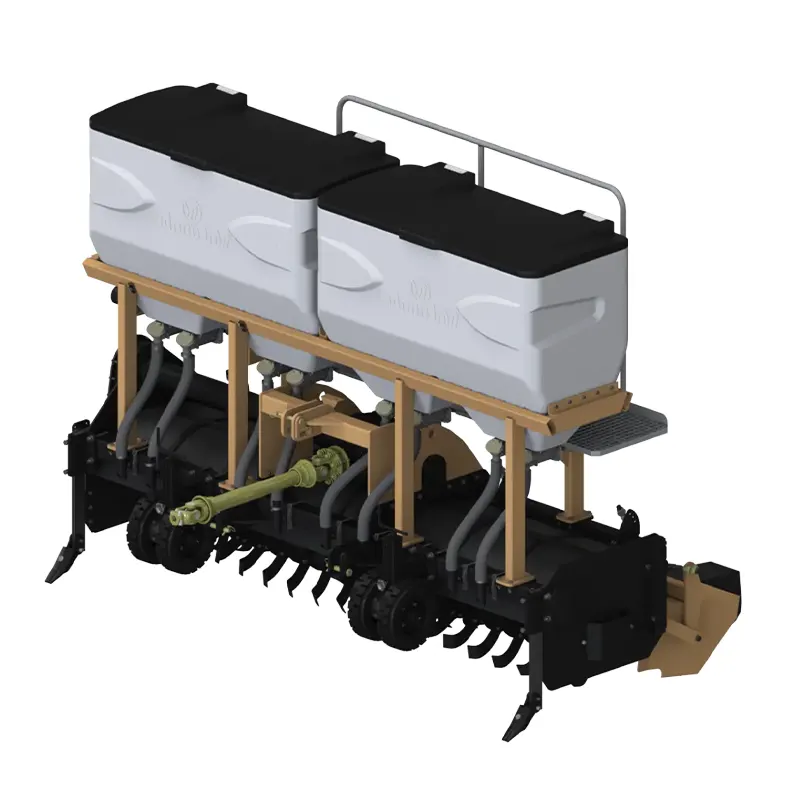
Machine System — Hardpan Breaking Protocol for Oasis Creation and Irrigated Farms
Frequently Asked Questions
Rock crusher for date palm — is the oasis creation argument real, or is it theoretical? Are there actual sites where water tables are accessible but hardpan has prevented cultivation?
The oasis creation argument is grounded in documented geography and hydrology. The North African Sahara contains large areas with fossil water aquifers (the Continental Intercalaire system in Algeria-Tunisia-Libya is one of the world’s largest) accessible at 5–30 m depth over thousands of square kilometres. Traditional oasis cultivation in Algeria’s Mzab and Oued Righ regions, Morocco’s Tafilalt, and Libya’s Kufra is concentrated at specific geological discontinuities where the calcrete layer is naturally absent — alluvial fan toe positions, wadi erosion channels, fault-controlled subsidence zones. These oasis footprints are characteristically small and separated by uncultivated desert where the same water table exists but the calcrete barrier remains intact. Saudi Arabian hydrological surveys of the Al-Ahsa region have documented multiple areas adjacent to the UNESCO oasis where the Umm Er Radhuma aquifer is accessible at 3–6 m but gatch at 55–80 cm has historically prevented date palm establishment without deep well irrigation. Modern date palm expansion programmes in Saudi Arabia (MEWA), Morocco (ONCA), and Algeria (HCDS, Haut Commissariat au Développement de la Steppe) have specifically identified hardpan barrier removal as a priority for extending cultivation into these water-accessible but root-inaccessible zones. The technology to do so (THOR 3.0 at 65–90 cm) is the enabling tool.
How does the Ajwa premium compare with the religious premiums in other agricultural commodities globally — and is it actually inelastic in the sense described?
The Ajwa religious premium is among the clearest examples in global agriculture of a price premium sustained by cultural belief rather than solely by organoleptic quality. Comparable examples include: Zamzam water (sold legitimately around Mecca at prices far above equivalent mineral water), specific Islamic halal certification premiums (which add 10–25% price uplift but represent a compliance premium rather than a scarcity premium), and Kosher food premiums in Jewish markets. The Ajwa premium is distinctive because it is geographic-specific (Medina only) AND religiously motivated (specific hadith reference). The price inelasticity is partially but not absolutely real: Ajwa demand is maintained by Muslim consumers globally who are religiously motivated to purchase this specific variety from this specific location, creating a demand baseline that does not disappear when sensory quality fluctuates below the premium threshold. However, price elasticity is not zero: at SAR 800/kg the market does show price resistance and substitution with other premium varieties. At SAR 150–300/kg — the commercial sweet spot — demand is genuinely inelastic because it is driven by religious motivation rather than hedonic comparison. The stone management argument is that yield restriction from stone-impeded Medina orchards reduces Ajwa availability, pushing market prices toward the upper end of the inelastic range — creating both supply scarcity and higher prices per kilogram that compound the commercial loss per tree on stony sites.
How does the THOR specification for date palm (60–90 cm) compare with the deepest prior specifications in the series — and does this require any machine modification?
The date palm oasis creation specification (65–90 cm for hardpan breaking) is the deepest agricultural clearing specification in the 28-article E-series guide. The comparison: walnut E-15 (65–80 cm for Stage III caliche), almond E-21 (65–80 cm for Nemaguard death prevention), pistachio E-22 (55–65 cm for root descent barrier). The THOR 3.0’s maximum clearing depth capability is approximately 60–65 cm under standard configuration. For the date palm oasis creation specification requiring 70–90 cm, the THOR 3.0 may require extended working depth adjustment available through Korea Watanabe’s equipment specification — this is a consultation-specific modification depending on the gatch hardness and required penetration depth. On sites where the gatch hardpan top is at 55–70 cm (relatively shallow), the standard THOR 3.0 at maximum depth reaches and effectively fragments the layer without modification. On sites where gatch top surface is at 70–85 cm (gatch buried under deeper sand), the required total clearing depth approaches or exceeds standard THOR 3.0 specification — a deep-reach subsoil ripper may be used as the primary barrier disruption tool before the CT-2100 collection phase, with the THOR 3.0 then used for the upper profile stone management. Korea Watanabe provides site-specific equipment specification consultation for deep calcareous desert hardpan breaking requirements.
For the California Coachella Valley date palm farms — does the USDA caliche clearing specification differ from the E-15 walnut and E-21 almond caliche arguments, or is it the same?
The California Coachella Valley caliche geology is substantially the same as the San Joaquin Valley caliche described for walnut (E-15) and almond (E-21) — Quaternary alluvial fan calcium carbonate accumulation at 45–80 cm depth, Stage I–IV depending on position on the alluvial fan. The THOR specification, CT-2100 collection, and fragment removal protocol are the same. The difference is in the depth target and the biological rationale. For Coachella Medjool date palm: clearing to 55–75 cm serves three purposes simultaneously: (1) water table access on sites where the Colorado River alluvial water table is at 6–15 m — not as deep as Saudi/Moroccan water tables, and often supplemented by drip irrigation, making the water table access argument secondary; (2) feeder root potassium access improvement in the 25–55 cm zone — same mechanism as walnut and almond but for a crop with dramatically higher potassium demand; (3) irrigation uniformity — stone-free soil at 25–55 cm allows drip-applied water to move uniformly through the profile rather than channelling around stone voids. For strictly irrigated Coachella date farms (where the Colorado River aquifer provides supplemental water rather than the primary supply), the clearing specification is essentially the same as California almond E-21 caliche clearing — the depth is 55–70 cm, the rationale is feeder root mineral access and irrigation efficiency, and the rootstock mortality argument that governs Nemaguard almond specifications does not apply (date palms do not use grafted rootstocks in the same way).
What is the combined financial return of date palm oasis creation clearing — including both the new land value and the water savings over 100 years?
The combined financial return calculation for date palm oasis creation has two components that prior E-series clearing investments did not have: (1) the value of newly productive land (an asset value increase, not just a revenue improvement) and (2) the elimination of irrigation costs once roots reach the water table. For a 1-hectare Moroccan Draa Valley site with water table at 4 m and croûte calcaire at 60–75 cm: THOR 3.0 clearing cost: approximately US$2,000–3,500/ha. Land value pre-clearing: approximately US$500–2,000/ha (desert without cultivation potential). Land value post-clearing: approximately US$15,000–35,000/ha (irrigated date palm orchard potential). Year 0–7: supplemental irrigation required while roots reach water table. From Year 7–10: irrigation eliminated or dramatically reduced. Irrigation cost saving: at Moroccan drip irrigation cost of MAD 0.80–1.20/m³ and 8,000 m³/ha/year: MAD 6,400–9,600/ha/year (US$640–960/ha/year). Over 90 remaining years of productive life at 4% discount: NPV of irrigation savings: US$13,000–20,000/ha. Revenue from Medjool dates at MAD 25–40/kg (US$2.50–4.00/kg): 8,000–12,000 kg/ha at peak × US$3.25/kg average = US$26,000–39,000/ha/year. Clearing cost: US$2,000–3,500. 100-year NPV of production + land value + irrigation savings: US$300,000–600,000/ha. ROI: 85:1 to 300:1 — the most extreme ROI calculation in the E-series, because the clearing converts barren desert into permanently productive farmland rather than merely improving an existing cultivation system.
Rock Crusher for Date Palm — Hardpan Survey and Oasis Creation Protocol
Water table depth + hardpan type (gatch/calcrete/gypsite) + hardpan depth + variety target (Medjool/Ajwa/Deglet Noor) → Korea Watanabe provides the correct rock crusher for date palm oasis creation or irrigation optimisation specification, 100-year NPV calculation and multi-generational ROI analysis.
Editor: Cxm