
The fig (Ficus carica L.) is not, technically, a fruit. It is a syconium — a hollow, fleshy receptacle lined on its inner surface with hundreds of tiny flowers, all of which are hidden from the outside world and accessible through a single opening at the apex called the ostiole. In every other fruiting crop in this 39-article guide, the flowers that become the commercial product are external: visible, accessible to pollinators from the outside, and forming on standard shoot and branch positions where wind, bees, birds, or the grower’s hand pollination tools can reach them. In the commercial dried fig (Ficus carica Smyrna group — the Sarılop variety that dominates Turkey’s export market and the Calimyrna that anchors California’s premium dried fig industry), the flowers are inside the fig. No external pollinator can reach them. Only one organism in the world performs this pollination: Blastophaga psenes, the fig wasp, which enters the syconium through the ostiole, pollinates the internal flowers as she crawls through the enclosed space, and dies inside. The fig digests her body with its own ficin enzyme.
Stone management in a Smyrna fig orchard affects this mutualistic relationship at two simultaneous points — a biological complexity that no prior E-series article has encountered. Stone in the Smyrna fig tree’s root zone produces smaller figs at the stage when the ostiole must be large enough for a wasp to enter. Stone in the caprifig (male fig) tree’s root zone produces fewer caprifig fruits and therefore fewer wasps available to enter the Smyrna figs that are large enough to accept them. Both sides of a mandatory biological mutualism are degraded simultaneously by the same stone management failure. And the commercial product of this mutualism — a properly pollinated, fully developed Sarılop or Calimyrna fig — must then achieve a minimum sugar concentration in its dried form that stone restriction of root mineral supply also undermines. This guide covers the rock crusher for fig farm application through all three mechanisms across Turkey, California, and Iran.
The Syconium Architecture — Why the Ostiole Is the Stone Management Target
To understand why stone management in a fig orchard operates through the ostiole, it is necessary to understand what a syconium is and how differently it functions from the flowers of every other commercial crop.
A syconium is the unique reproductive structure of the genus Ficus — a hollow fleshy receptacle, roughly pear-shaped, with the interior surface lined by hundreds of small flowers. In commercial dried fig varieties (Smyrna group), the internal flowers are of two types: short-style female flowers that develop into seeds and edible flesh (if pollinated) and gall flowers that form the breeding chambers for the fig wasp. The single exterior opening of the syconium — the ostiole — is the ONLY pathway between the flower-bearing interior and the outside world. For wind, bees, or any conventional pollinator, the ostiole is impassable — too small, too narrowly configured, and sealed by a ring of overlapping bracts that only a wasp with a specifically flattened body can navigate. The commercial consequence of this architecture: if the ostiole is adequately sized and an appropriately proportioned fig wasp is present, the fig develops fully. If either condition fails, the internal flowers remain unpollinated and the fig either produces a lower-quality parthenocarpic fruit (in Common fig varieties) or fails to develop normally at all (in Smyrna varieties that depend entirely on wasp pollination).
The ostiole diameter at the receptive stage of a Smyrna fig (when internal female flowers are ready for pollination, typically when the green fig is 60–80% of its final size) is directly proportional to the overall size of the fig at that stage. A well-nourished fig on stone-free soil develops to its full genetic size potential at the receptive stage, with an ostiole diameter of approximately 2.0–2.8 mm — comfortably exceeding the Blastophaga psenes female body width of approximately 1.4–1.8 mm. A stone-restricted fig on a high-stone-density site develops to only 70–85% of its full genetic size at the receptive stage, producing an ostiole of approximately 1.1–1.6 mm — below or at the margin of the wasp’s physical entry requirement. Turkish Ege University Department of Horticulture research in the İzmir and Aydın production zone documents that stone-restricted Sarılop figs at limestone-fragment-heavy soil sites show a 35–55% higher rate of unpollinated, empty figs compared to stone-cleared matched sites of the same variety under identical caprification management. This is the ostiole-stone relationship: not a dramatic collapse of the biological system, but a progressive reduction in the proportion of figs that succeed in receiving wasp pollination as stone density increases and average fig size at the receptive stage decreases.
The vanilla article (E-34) introduced the first pollination-related stone management argument in the series: stone restriction of the support tree reduced the number of vanilla flowers available for hand pollination within the critical 8-hour window. That argument connected stone management to pollination through the plant’s own flowering capacity. The fig argument goes one step further: it connects stone management to the physical gateway through which the EXTERNAL POLLINATOR must pass. The vanilla argument was about flower count; the fig argument is about door size. Of all the pollination-related stone management arguments in the series, the fig ostiole argument is the most mechanically direct — it is a dimensional incompatibility between the stone-stunted syconium and the biological agent that must enter it.
The Caprifig and the Dual Mutualism Failure
The stone management challenge of the fig orchard has a dimension not found in any other crop in the series: the fig requires not one but TWO plant types working in biological concert, and stone can damage both simultaneously. The Smyrna fig tree (producing the commercial crop) requires the caprifig tree (a male, inedible variety) to produce the Blastophaga psenes wasps that pollinate it. Both are grown in the same orchard. Both have roots in the same stone-impacted soil. Both are made less productive by the same stone that a single clearing operation would remove.
The caprifig is the sole host for B. psenes reproduction. The wasp lays eggs inside caprifig fruits; the larvae develop, emerge as adults carrying caprifig pollen, and then fly to Smyrna fig trees to complete the cycle. Traditional Turkish İzmir-region fig orchards plant 1 caprifig per 8–12 Smyrna trees. A well-nourished caprifig on stone-free soil produces 3–5 fruit crops per year (profichi, mammoni, mamme) providing a continuous wasp supply. Stone-restricted caprifig: 1–2 fruit crops per year; fewer, smaller fruits; fewer wasps per fruit.
A single caprifig fruit (profichi) produces approximately 200–400 wasps at peak production. A stone-restricted caprifig producing 60% fewer/smaller profichi = 60% fewer wasps for the same Smyrna fig area. Reduced wasp density: some receptive Smyrna figs receive no wasp visit during their receptive window (typically 5–10 days). Visited figs with adequate ostiole → pollinated. Non-visited figs → unpollinated regardless of ostiole size. The two failure modes (ostiole too small + no wasp available) combine multiplicatively.
High-stone-density İzmir Sarılop orchard (calcareous at 12–25 cm): measured pollination success rate 42–55% of figs at peak season. Stone-cleared equivalent orchard: 78–88% pollination success. Source: Ege University Faculty of Agriculture, İzmir fig disease and production research (2018–2022). Revenue consequence: Grade 1 dried Sarılop requires minimum 85% marketable fruit per tree. Below 55% pollination rate: Grade 1 certification per tree fails. Entire orchard output downgrades from US$3,800/tonne to US$1,500/tonne average.
The dual stone management target — why both tree types must be cleared
In every prior E-series article, stone management has served one crop — one plant type in one root zone. Fig orchards require stone management in two different root zones with two different stone-damage mechanisms producing two different production failures that together determine the commercial outcome of the single biological system. A clearing operation that only addresses the Smyrna fig root zone (improving ostiole size) while leaving the caprifig root zone stony (reducing wasp supply) is commercially incomplete. A clearing operation that only addresses the caprifig root zone (improving wasp supply) while leaving the Smyrna fig root zone stony (reducing ostiole size) is equally incomplete. The only complete stone management programme for a Smyrna fig orchard clears both root zones — creating both adequate ostiole size and adequate wasp supply simultaneously. This is the first article in the series where the clearing investment must be planned and executed across two different plant species in the same orchard to achieve its commercial objective.
Dried Fig Sugar Grade — The First Post-Harvest Processing Quality Chain
The commercial destination of the vast majority of Smyrna figs — approximately 80% of Turkey’s Sarılop production and 70% of California’s Calimyrna production — is the dried fruit market. The fig is sun-dried (in Turkey) or mechanically dried (California) to reduce moisture from the fresh-fig level of 75–80% to the commercial dried level of 16–24%. In this dehydration process, the sugar content of the fig — already concentrated relative to its fresh weight — is further concentrated to the levels that determine commercial grade. Stone management’s effect on fresh-fig sugar content is therefore amplified by the drying process into a grade consequence that would not be visible in the fresh market but becomes commercially decisive in the dried market.
Turkey’s Turkish Standards Institute (TSE) standard TS 541 for dried figs specifies grade requirements including minimum sugar content. Grade 1 (“Extra”) Sarılop: minimum 48% total soluble solids (Brix) by dry weight, with minimum 500 g per 100 figs (size requirement). Grade 2 (“Choice”): minimum 42% Brix, minimum 400 g per 100 figs. Grade 3 (“Standard”): minimum 36% Brix, below 400 g. Export pricing from Aydın and İzmir packing houses: Grade 1 Extra at US$2,500–4,500/tonne (FOB İzmir); Grade 2 at US$1,400–2,200/tonne; Grade 3 at US$700–1,400/tonne. These price differentials, calculated per tonne, represent the most significant per-unit revenue gap of any quality grade system in Turkish dried fruit exports — and the critical threshold is whether the fresh fig accumulated enough sugar before drying to exceed the 48% concentration gate after drying.
Sugar accumulation in the developing syconium during the 6–8 week post-pollination ripening period follows the same phloem-loading mechanism as other tree fruits: sucrose is loaded into the phloem from photosynthesising leaves and transported to the developing syconium, where it is unloaded and accumulated in the sweet flesh tissue around the internal flowers. This phloem loading and unloading is co-dependent on potassium (K⁺ drives proton-potassium symport that energises sucrose transport) and magnesium (Mg²⁺ is essential for ATP synthesis that powers the phloem loading ATPases and for chlorophyll function in the leaves photosynthesising the sucrose). Stone restriction of the fig root zone at 10–35 cm reduces K and Mg uptake surface area during the ripening period — the same root zone and same mineral supply mechanism described for date palm E-28 (K) and macadamia E-30 (Mg) — but with the unique commercial consequence that the fresh-fig Brix deficit is AMPLIFIED by drying into a greater proportional shortfall from the grade threshold. A fresh fig at 15% Brix (stone-restricted) vs 18% Brix (stone-free) appears similar at fresh market. After drying: the 15% Brix fresh fig produces approximately 42–44% Brix dried (Grade 2), while the 18% Brix fresh fig produces approximately 50–54% Brix dried (Grade 1). The stone-induced fresh Brix deficit of 3 percentage points becomes a dried-grade failure.
In prior E-series quality chain articles, the stone management effect on quality was visible at or after harvest in the harvested product: mango jelly seed appears when sliced (E-27), lychee pericarp browns 24 hours after picking (E-36), dragon fruit flesh is paler at harvest (E-37). All of these quality failures are fixed at the moment of harvest — they do not change further by any subsequent processing step. Dried fig is different: the fresh fig quality at harvest LOOKS similar regardless of stone management effect (Brix difference is too small to detect by eye). The quality failure only becomes commercially decisive AFTER the drying process concentrates and amplifies the sugar content to the level where the grade threshold is either passed or failed. The drying process is therefore the point at which the stone management investment’s commercial value is revealed — making dried fig the first E-series crop where the quality determinant is a post-harvest transformation rather than either the harvest state or a post-harvest degradation.
Three Markets — Turkey, California and Iran
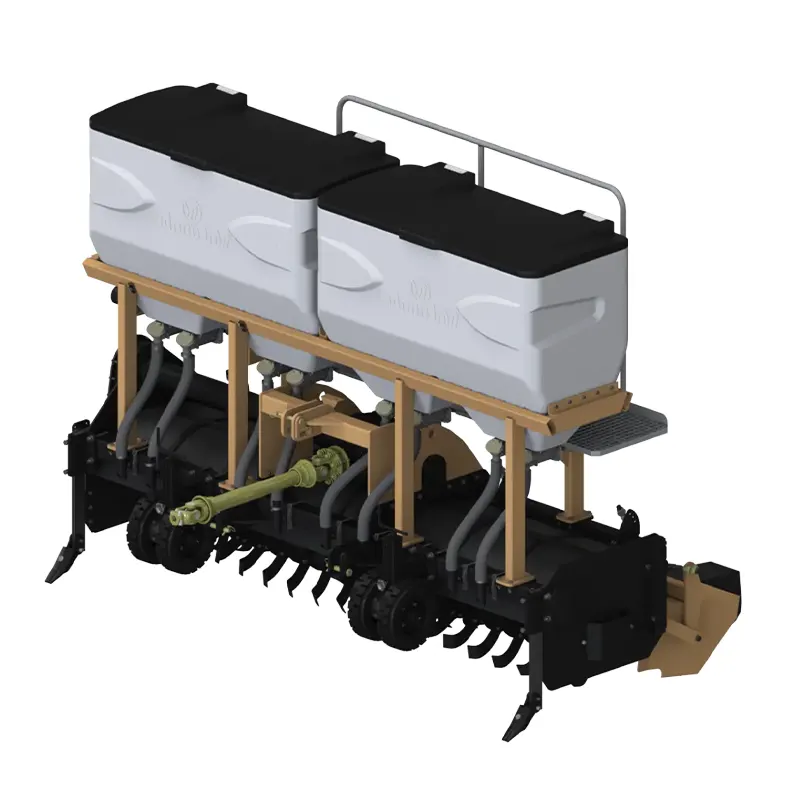
Machine System — Smyrna and Caprifig Dual Zone Protocol
Frequently Asked Questions
Rock crusher for fig farm — does the ostiole-wasp argument apply to all commercial fig varieties, or only to Smyrna figs? Do Common figs like Mission and Brown Turkey need stone clearing for different reasons?
The ostiole-wasp argument applies specifically to the Smyrna fig group (Sarılop in Turkey, Calimyrna in California) and related varieties that require Blastophaga psenes pollination. Common figs (Mission, Brown Turkey, Brown Turkey, Celeste, Kadota) are parthenocarpic — they develop commercially without any pollination, and the ostiole size is not relevant to their fruit development. However, Common figs DO require stone clearing for different reasons: (1) Root mineral access for sugar accumulation in the dried product — the dried fig sugar grade argument (Section 3) applies equally to Common fig drying operations. Mission figs, for example, are dried in California at 60–70°C drying facility temperature, and their Brix at harvest determines whether they meet USDA No. 1 grade (≥56% Brix dry weight for Mission dried) or are relegated to Grade B processing grade. Stone restriction of Mission fig roots reduces K/Mg uptake → lower fresh Brix → lower dried grade. (2) Fresh market Common fig: fresh market figs (not dried) from Common varieties command premium prices for large, plump, dark-skinned, aromatic fruit in European and Japanese fresh markets. Stone restriction reduces fig size and sugar accumulation in exactly the same way as for Smyrna, but the pollination argument is irrelevant. The THOR/CT-2100/PSW-3200 protocol is identical for Common fig and Smyrna fig preparation; only the commercial consequence description changes.
Can the caprifig wasp supply argument be addressed through artificial caprification (hanging fresh caprifig branches in Smyrna trees) as already done in California, rather than clearing caprifig root zones?
California’s commercial Calimyrna production already uses an artificial caprification practice that partially addresses the wasp supply argument: fresh caprifig branches bearing profichi (the wasp-carrying caprifig fruits) are cut from caprifig trees and hung in Calimyrna trees during the receptive window. This practice moves wasps from wherever the caprifig branches come from (which may be a well-maintained stone-free caprifig grove elsewhere) into the Calimyrna orchard. If the caprifig branches come from a stone-free, well-nourished caprifig source, the wasp supply side of the dual damage is addressed. In this context, the primary stone argument for California Calimyrna is the Smyrna fig ostiole side (Section 1) and the dried fig sugar grade argument (Section 3), with the wasp supply argument addressed by the branch importation practice. In Turkey’s İzmir and Aydın traditional fig orchards, caprifig trees are planted permanently IN the orchard (not imported as branches) — meaning the in-orchard caprifig stone restriction directly reduces the permanent orchard wasp supply. In Turkey, both sides of the dual damage argument apply without mitigation by branch importation. The clearing investment for Turkish orchards therefore addresses a more complete dual argument than for California operations using branch caprification. Operators using branch caprification should still clear the Smyrna fig root zones for the ostiole size and dried sugar grade benefits.
For the dried fig sugar grade argument — does the drying method (sun-drying in Turkey vs forced-air drying in California) affect how much the stone-induced fresh Brix deficit translates into a grade failure?
The drying method affects the final moisture content and sugar concentration but not the proportional concentration ratio between fresh and dried sugar. Whether the fig is sun-dried (Turkey, 10–14 days to 16–20% moisture) or forced-air dried (California, 60–70°C, 12–18 hours to 18–24% moisture), the concentration factor is approximately the same — the water content drops from 75–80% fresh to 16–24% dried, producing a 3–4× concentration of the original fresh sugar. A Turkish Sarılop fresh at 14% Brix concentrates to approximately 42–45% Brix dried (Grade 2). A California Calimyrna fresh at 16% Brix concentrates to approximately 48–52% Brix dried (Grade 1). The critical difference between sun-drying and forced-air drying for stone management: sun-drying on the orchard floor (traditional Turkish practice) exposes the drying fig to stone contamination from the orchard floor. Stone fragments (even small limestone pebbles) that land on or are embedded in the drying fig create physical contamination that requires sorting at the packing house and may cause Grade 1 downgrade for stone presence regardless of sugar content. The BlackBird annual pre-harvest surface pass (which clears the orchard floor) therefore prevents BOTH sugar-grade failure (indirectly through root mineral access) AND physical stone contamination in the dried product (directly through floor surface preparation) — a rare double benefit from a single management practice.
How does the fig stone management ROI compare between small Turkish smallholder operations and large California commercial farms?
The ROI calculation differs substantially between these two contexts, reflecting the different scale and market structure. Turkish smallholder (2 ha, 200 Sarılop trees + 25 caprifig trees, typical İzmir smallholder): Clearing investment (THOR 2.4 + CT-2100 + PSW-3200 for Smyrna zone + caprifig zone): approximately TRY 45,000–75,000 (US$1,400–2,300). Pollination improvement (from 52% to 82% pollination success rate based on Ege University data): 200 trees × 50 kg/tree/year dried × 30% additional pollination success × US$3.00/kg Grade 1 = US$9,000 additional annual revenue. Dried grade improvement (Grade 1 vs Grade 2 for 40% of crop): 200 × 50 × 0.40 × (US$3.50 – US$1.70)/kg = US$7,200 additional annual revenue. Total annual benefit: approximately US$16,200. Against investment of US$1,400–2,300: payback within 1–2 months of first harvest season. California commercial (40 ha, 4,000 Calimyrna trees + annual branch caprification): Investment (THOR 2.4 + CT-2100 + PSW-3200): approximately US$50,000–75,000 for 40 ha (lower per-hectare cost at scale). Primary benefit: dried Calimyrna grade improvement (USDA No.1 vs USDA No.2). 4,000 trees × 40 kg/tree/year dried × 25% grade improvement × US$0.80/kg grade differential = US$32,000/year additional revenue. Plus pollination improvement benefit for in-orchard caprifig trees (where present). Payback: within 2 seasons. 20-year NPV: US$350,000–420,000. ROI: 4.7:1 to 8.4:1.
How does the fig stone management argument connect to the wasp-fig mutualism’s sensitivity to climate — specifically to the temperature requirements that affect both wasp emergence timing and fig receptive stage timing?
The timing of wasp emergence from caprifig fruits and the timing of Smyrna fig receptive stage must coincide within a narrow window for pollination to succeed — both events depend on temperature thresholds. Wasp emergence from profichi (first caprifig crop): approximately 25–30°C sustained for 2–3 weeks. Smyrna fig receptive stage: typically when ambient temperatures are 25–32°C and the fig has reached 60–80% of its final size. Stone management’s role in temperature synchrony: stone-restricted fig trees develop more slowly (reduced photosynthate from mineral restriction) and reach the receptive stage 7–14 days later than stone-free trees in the same orchard. This delay is typically within the period during which wasps from the summer caprifig crop (mamme) are available — but if the temperature window for wasp emergence coincides tightly with the peak of the un-delayed receptive stage, the stone-delayed figs may fall outside the peak wasp activity window, receiving fewer wasp visits than the non-delayed trees in the same orchard. This temperature-timing argument is specific to fig and connects to the chilling-hour inversion described for lychee (E-36) — both involve stone management affecting the timing of a biological event relative to an external temperature-driven trigger. In fig’s case, the concern is opposite to lychee’s: stone restriction DELAYS the receptive stage relative to the wasp emergence window (whereas for lychee, stone provided more chilling hours that helped reach the flowering trigger). The net result is the same — stone management creates a timing mismatch in the biological mutualism that reduces commercial output.
Rock Crusher for Fig Farm — Ostiole, Caprifig and Dried Grade Protocol
Fig variety (Smyrna/Common) + stone type (calcareous/gypseous/granite) + orchard type (smallholder/commercial) + caprifig presence + dried grade target → Korea Watanabe provides the correct rock crusher for fig farm dual-zone Smyrna + caprifig specification, ostiole improvement programme and dried grade ROI calculation.
Korea Watanabe Rock Crusher Tractor Co., Ltd. — Ansan-si, Gyeonggi-do
Editor: Cxm