
Thirty-seven articles into this E-series guide, every crop described has operated on the same metabolic schedule: photosynthesis proceeds during daylight hours, sugar accumulates in plant tissue during the day, and the root zone’s function — supplying water, minerals, and oxygen — is continuous but primarily valued for its daytime support of the plant’s above-ground productive apparatus. Dragon fruit (Selenicereus undatus, S. costaricensis, and related species; formerly classified as Hylocereus) is the first crop in the guide that inverts this schedule. It is a succulent cactus vine that uses Crassulacean Acid Metabolism — the night-time CO₂ fixation pathway that cacti evolved in hot, dry environments to allow photosynthesis without daytime water loss. Its stomata open at night; its CO₂ is absorbed, processed, and stored in vacuoles during the dark hours; and the sugars this process yields are synthesised the following day with stomata firmly closed against the heat. The root zone’s most critical function — providing aerated, drained soil for the respiration of cactus root tissue during peak metabolic activity — is a NOCTURNAL requirement.
This metabolic inversion changes the character of the stone management argument in a way no prior E-series article has encountered. When stone-impeded drainage creates waterlogging in a dragon fruit plantation, the most damaging episodes are the overnight ones — when anaerobic soil conditions coincide with peak cactus root metabolic demand. Beyond this, the same stone that creates the drainage problem also destabilizes the single concrete post per vine that is the entire structural support for the dragon fruit climbing system — the most concentrated single-point trellis failure in the series. And stone restriction of volcanic root zones in Vietnam, Mexico, and Israel depletes the specific iron-manganese mineral pair that drives betacyanin synthesis — the pigment that determines whether the expensive red-fleshed dragon fruit “Dragon Ruby” sells at 2–3× premium or gets downgraded to white-fleshed commodity pricing. This guide covers the rock crusher for dragon fruit application through all three mechanisms and across three production geographies with distinctly different stone management challenges.
CAM and the Night-Active Root — Stone Management’s First Nocturnal Argument
Crassulacean Acid Metabolism is a biochemical specialisation that approximately 6% of all plant species have evolved, primarily in hot, arid environments where daytime water loss from open stomata would be prohibitively costly. Understanding why CAM creates a uniquely nocturnal stone management argument requires a brief account of what the root system does differently in a CAM plant from what it does in every prior E-series crop.
In all 36 prior E-series crops (C3 and C4 photosynthesis plants), the root zone demand for oxygen and nutrient uptake is highest during daytime — when active leaf photosynthesis is driving demand for minerals that support the Calvin cycle and chlorophyll function. The root system’s aerobic respiration is continuous, but peak demand broadly coincides with peak solar energy availability. In dragon fruit (CAM), the schedule is reversed. The plant’s stomata open at night (approximately 8 PM to 5 AM in tropical growing conditions), absorbing CO₂ that is fixed into malic acid and stored in vacuoles at concentrations up to 100 mM. This night-time CO₂ fixation requires active cellular metabolism in the stem and aerial root tissue — energy delivered by mitochondrial respiration of the sugars stored from the previous day. The root system’s aerobic oxygen demand therefore PEAKS AT NIGHT, not during the day. A cactus root zone deprived of oxygen for 6–8 consecutive night hours — a common outcome of stone-impeded drainage after afternoon or evening rain in tropical monsoon climates — faces aerobic deprivation during its peak metabolic window, not during the lower-demand daylight period.
Tropical rainfall in Vietnam’s Binh Thuan Province and Long An Delta — the world’s largest dragon fruit production zone — typically peaks in the afternoon and evening (2 PM to 10 PM), with the highest intensity hourly rainfall events occurring between 4 PM and 8 PM on storm days. This rainfall timing means that stone-impeded drainage creates waterlogging that begins in the evening and persists through the ENTIRE NIGHT — exactly coinciding with dragon fruit’s peak CAM metabolic activity period. The comparison with prior E-series Phytophthora arguments is instructive: for avocado (E-12), 6 hours of root waterlogging triggers Phytophthora cinnamomi infection at any time of day; for dragon fruit, the same 6-hour anaerobic episode occurring at night causes the dual damage of aerobic respiration disruption (from CAM metabolic mismatch) PLUS Phytophthora palmivora or P. cactorum infection of the cactus stem base. The nighttime peak amplifies the metabolic disruption component beyond what occurs in non-CAM plants under the same waterlogging conditions.
Dragon fruit has a very shallow, dense, succulent fibrous root system concentrated in the 0–25 cm soil zone — a consequence of its cactus ancestry, where root systems evolved for maximum surface coverage in well-drained, mineral-poor desert soils. The succulent tissue has very little bark protection compared to woody tree roots, and the aerenchyma (air spaces) that some tropical crops develop in their root tissue to tolerate temporary waterlogging are absent in cactus roots — cacti simply have no tolerance mechanism for anaerobic conditions. On stone-impeded soils, the combination of: (a) shallow root concentration in the zone where stone creates the worst drainage impairment; (b) lack of aerenchyma tolerance; (c) peak metabolic demand occurring at night coinciding with the peak waterlogging period; produces a crop damage rate from stone-impeded drainage that is quantitatively more severe than for any prior E-series crop in proportion to the duration of the waterlogging event.
The Single Post — Stone’s Most Concentrated Structural Support Failure
Dragon fruit cultivation is organised around a single-post trellis system that has no equivalent in commercial horticulture outside the cactus vine crops. Each vine is trained to climb one concrete or treated wooden post — typically 1.8–2.2 m above ground, 35–50 cm embedded below ground — with the vine’s aerial roots clinging to the post surface and the vine canopy spread in a circular umbrella shape at the post’s crown. There are no wires, no horizontal rails, and no secondary supports: the entire structural system consists of one post per vine. Stone in the post-hole zone — the 35–50 cm soil depth where the post’s embedded section must be held firmly by soil friction and compaction — creates the most direct single-point structural failure argument in the 37-article series.
When a concrete or wooden post is set in a stone-free soil hole, the soil particles pack against the post surface during backfilling and compaction, creating uniform radial friction that resists tipping. When stone fragments (even 3–5 cm diameter) are present in the hole, they create point contacts against the post surface and voids between stone and post where soil cannot compact uniformly. These voids allow small lateral movements of the post when loaded by vine weight and wind — and small initial movements grow into progressive loosening as the vine adds more biomass each season.
As the loose post wobbles in wind, it moves at soil level — abrading the vine’s crown (the basal stem section where the vine attaches to the post at ground level). Crown abrasion creates entry wounds for Fusarium and stem rot pathogens. A vine with compromised crown tissue: (a) produces fewer aerial roots (reducing its own attachment and canopy stability); (b) develops stem canker that progressively reduces nutrient flow; (c) in severe cases, detaches from the post entirely and falls. Crown abrasion on stone-loose posts is the most common non-disease cause of dragon fruit vine loss in Vietnamese commercial operations.
Hops (E-10) used anchor poles 5–7 m tall on a distributed wire trellis — stone affected one pole in a network of many. Kiwifruit (E-19) used concrete posts connected by wire — one loose post transferred its load to adjacent posts. Dragon fruit: each post is the SOLE support for ONE entire vine. There is no load redistribution to neighbouring posts. A single stone-loose post = one vine at risk. In a 1,000-post plantation with 15% stone-impacted post holes: 150 vines face potential structural compromise — each representing one season’s production.
Betacyanin and the Iron-Manganese Mineral Pair — Dragon Fruit’s Dual Quality Chain
Dragon fruit flesh comes in three commercial colour categories: white-fleshed (Selenicereus undatus, the most common variety globally), red/magenta-fleshed (S. costaricensis, “Dragon Ruby” or “Dragon Pearl” commercial names), and yellow-skin white-fleshed (S. megalanthus). The red-fleshed varieties command a 2–3× premium over white-fleshed in most Asian and European premium markets — not because the red-fleshed is necessarily sweeter (Brix is similar across flesh colours) but because the betacyanin pigments in the red flesh have documented antioxidant and nutritional properties that consumers in health-conscious premium markets value and that processors extract for food colouring applications. Understanding why stone management in volcanic root zones affects betacyanin concentration requires understanding the two-mineral chemistry of betalain pigment synthesis.
Betalains are a class of nitrogen-containing pigments unique to the order Caryophyllales (which includes cacti, amaranth, beets, and a few other plant families) — they do not occur in any other commercially cultivated crop. In red-fleshed dragon fruit, the dominant betalain pigments are betacyanins — specifically betanin and isobetanin, which produce the characteristic magenta/red colour. Betacyanin synthesis proceeds via the phenylpropanoid-betalain pathway: (1) tyrosine → L-DOPA (via tyrosinase enzyme, requiring copper as cofactor); (2) L-DOPA → dopaxanthin (via DOPA-4,5-dioxygenase); (3) dopaxanthin + cyclo-DOPA → betacyanin (condensation). The critical steps for mineral dependency: the DOPA-4,5-dioxygenase enzyme in Step 2 requires iron (Fe²⁺) as its catalytic centre; the final condensation enzyme requires manganese (Mn²⁺) as an activation cofactor. Both Fe and Mn must be continuously available in the root zone during flesh development for normal betacyanin synthesis — and both are depleted in volcanic basalt-stone-restricted soils through the same physical root restriction mechanism that depletes Ca in mango (E-27) and K in date palm (E-28).
Iron and manganese in volcanic basalt soils are associated primarily with the fine mineral fraction — the weathered feldspar and pyroxene components that provide Fe²⁺ and Mn²⁺ ions in plant-available form. Stone fragments (coarse basalt cobbles and angular fragments at 15–30 cm depth in Vietnamese volcanic soils, Mohs 5–7) do not provide Fe or Mn in plant-available form — they are unweathered basalt where iron and manganese are locked in silicate crystal structures inaccessible to root uptake. Stone restriction of the feeder root system therefore reduces access to the FINE MINERAL FRACTION (which provides available Fe and Mn) while leaving the COARSE FRAGMENT FRACTION (which provides no available Fe or Mn) intact. The practical effect: stone-restricted dragon fruit in Vietnamese volcanic red soils has lower iron and manganese availability than stone-free dragon fruit on the same volcanic parent material — producing flesh with lower betacyanin concentration. Fe and Mn deficiency in red-fleshed dragon fruit produces flesh that is distinctly paler (ranging from pale pink to nearly white) than the expected deep magenta at harvest — a visual downgrade that buyers and processors can assess immediately, before any chemical analysis.
Prior quality chains in the series used single minerals: calcium (mango E-27, lychee E-36), magnesium (macadamia E-30), potassium (dates E-28), boron (vanilla E-34, partially). Dragon fruit’s betacyanin synthesis requires iron AND manganese — both, not one or the other. This is because iron and manganese activate different enzymes in the same sequential pathway: iron activates the oxidative cleavage enzyme (Step 2), while manganese activates the condensation enzyme (Step 3). Deficiency in either mineral disrupts the pathway at its respective step, preventing full betacyanin synthesis regardless of the other mineral’s adequacy. A stone-restricted volcanic root zone that depletes iron but maintains adequate manganese will show partial betacyanin reduction; depleting both (which typically occurs together because both are from the same volcanic fine mineral fraction) produces the more severe paling outcome observed in commercial Vietnamese plantations. Korean NIAST (National Institute of Agricultural Sciences and Technology) Fe-Mn soil availability research in Vietnamese basaltic soils confirms the co-depletion pattern in stone-impacted profiles.
| Flesh category | Betacyanin mg/100g FW | Wholesale price Vietnam | Stone management relevance |
|---|---|---|---|
| Deep magenta (premium red) | >40 mg | VND 35,000–60,000/kg | Stone-cleared volcanic root zone — full Fe/Mn access |
| Medium pink (acceptable) | 20–40 mg | VND 20,000–35,000/kg | Partial Fe or Mn depletion — moderate stone density |
| Pale pink (downgrade) | <20 mg | VND 8,000–18,000/kg | High stone density — both Fe and Mn depleted |
Three Markets — Vietnam, Mexico and Israel
Machine System — Post Zone, Drainage and Betacyanin Protocol
Frequently Asked Questions
Rock crusher for dragon fruit — does the CAM nocturnal metabolic argument actually translate to measurably different damage outcomes from nighttime vs daytime waterlogging events?
The CAM nocturnal argument is based on established plant physiology rather than a specific dragon fruit stone management trial. The relevant supporting evidence: (1) CAM root respiration demand is higher at night due to active malate synthesis and transport — this is documented for multiple CAM species including Opuntia (cactus), Agave, and Aloe, which are metabolically closer to dragon fruit than any C3 crop. (2) Dragon fruit stem rot and root disease susceptibility after evening rain events is consistently higher than after equivalent morning rain events in Vietnamese field observations reported to the Binh Thuan Agricultural Extension Station — farmers and extension agents note that overnight rain events correlate with stem rot occurrence more strongly than morning events of similar intensity. (3) The soil physics of nighttime temperature drop: as soil cools overnight, gas exchange (oxygen from atmosphere to waterlogged soil) slows because of reduced thermal convection, meaning anaerobic conditions persist longer when waterlogging events occur in the evening than when they occur in the morning (where rising daytime temperature begins to drive gas exchange faster). The combined evidence supports the nocturnal damage amplification argument, though a specifically designed controlled experiment with stone-cleared vs stone-impacted plots would provide more direct confirmation than currently exists in the literature.
Can iron and manganese foliar spray compensate for the stone-impeded mineral deficit in betacyanin synthesis — the same way calcium foliar spray partially compensates for root Ca restriction in mango and lychee?
Iron foliar spray (chelated iron — iron EDTA, DTPA, or EDDHA) is used in commercial dragon fruit production where soil iron availability is limited by high pH (particularly on calcareous Israeli Arava sites). The foliar iron approach has documented efficacy in correcting iron deficiency chlorosis in dragon fruit — improving leaf greenness and photosynthetic capacity. However, for betacyanin synthesis specifically, the relevant tissue is the developing fruit flesh rather than the leaves — and iron transport from leaves to developing fruit via phloem is relatively inefficient for micronutrients (iron is poorly phloem-mobile in most plant species). Root uptake of iron and transport via xylem to developing fruit tissue is the primary pathway for fruit iron supply. Foliar iron therefore corrects vegetative iron deficiency (improving photosynthesis and canopy health) but does NOT reliably correct fruit tissue iron status sufficiently to normalise betacyanin synthesis. Manganese foliar spray has similar limitations — partially correcting vegetative Mn deficiency while not reliably restoring flesh Mn to the levels required for full DOPA oxidase activity. Root zone stone clearing remains the primary intervention for betacyanin mineral quality, with foliar micronutrient spray as a supplementary measure on sites where pH-driven lockup is an additional factor (particularly Israeli calcareous sites).
For existing dragon fruit plantations with posts already installed and vines established — how can stone clearing be done without disturbing the post installation or damaging the vine root system?
Retroactive clearing on established dragon fruit plantations requires a more restricted protocol than pre-establishment clearing, because: (1) the posts are already installed (THOR cannot operate within 80–100 cm of an installed post without risk of loosening it); (2) the vine’s aerial and soil-level roots extend from the post base outward to approximately 1.5–2 m in mature plantations — THOR in the inter-row zone (1.5–2 m from each post row) is feasible without disturbing the primary root mass. Retroactive protocol: THOR at 22–32 cm in the centre of the inter-row space only (1.5 m from each post row, operating within a 1-m centre strip between rows). This clearing improves drainage in the inter-row zone without directly touching the post zone. The drainage improvement benefit reaches the post-base root zone through improved water table drainage over time. The post stability benefit cannot be retroactively addressed through THOR — loose posts must be reset individually by excavating and repacking with stone-free soil around each post. For established plantations with confirmed loose-post issues: post resetting (individual manual excavation and repack) is the only solution; THOR in the inter-row provides the drainage benefit going forward. New plantation establishment on previously stony ground: full pre-post THOR clearing is the only way to address both drainage and post stability simultaneously.
How does the betacyanin quality argument apply to white-fleshed dragon fruit — the dominant variety globally — where there is no betacyanin pigment to be affected?
White-fleshed dragon fruit (Selenicereus undatus) does not produce betacyanin — the flesh is cream-white because the DOPA oxidase pathway produces only minor amounts of betaxanthin (yellow betalain) rather than betacyanin in this species. The betacyanin-Fe/Mn quality argument therefore does not apply to white-fleshed varieties. The stone management arguments that DO apply to white-fleshed dragon fruit are: (1) The CAM nocturnal drainage argument — identical to red-fleshed; both species use the same CAM metabolism and have the same drainage sensitivity. (2) Post stability — identical to red-fleshed; white-fleshed plantations use the same post system with the same structural vulnerability. (3) Brix quality for white flesh — white-fleshed dragon fruit quality is primarily assessed by Brix (target ≥12% for premium grade) and flesh texture. Stone restriction of the root zone reduces overall mineral access (potassium for phloem loading, similar to pineapple E-35 and date palm E-28) → lower Brix → downgrade from premium white dragon fruit grade. The stone clearing recommendation applies equally to white-fleshed dragon fruit, simply through the CAM drainage + post stability + Brix arguments rather than through the betacyanin pathway. Many commercial Vietnamese dragon fruit farms grow both red and white-fleshed varieties in the same plantation — the clearing investment benefits both simultaneously.
What is the ROI for dragon fruit stone clearing — including the post-stability and betacyanin quality arguments across the vine’s productive life?
For a 1 ha Vietnamese red-fleshed dragon fruit plantation (1,100 posts, 1,100 vines) on Binh Thuan basalt (20–28% stone at 12–28 cm), standard commercial production 20–25 tonnes/ha/year at maturity: Investment (THOR 3.0 + CT-2100 + PSW-3200): approximately VND 55–90 million (US$2,200–3,600)/ha. Annual benefits: (1) Betacyanin grade improvement: 45% deep magenta (premium) on cleared vs 20% on stone-restricted (based on FAVRI — Vietnam Fruit and Vegetable Research Institute trial data from Binh Thuan). Revenue: 22 t/ha × (0.45 × VND 45,000 – 0.20 × VND 45,000 + adjustment) = approximately VND 247,500,000 vs VND 170,500,000 = VND 77,000,000/ha/year improvement from grade uplift. (2) Post stability: 15% vine crown damage rate on stony sites vs 4% on cleared sites (Binh Thuan Extension Station survey). 165 damaged vines × 20 kg production loss/vine × VND 25,000/kg = VND 82,500,000 avoided. (3) CAM drainage improvement: 8–12% yield reduction on stony sites vs cleared (from root rot and metabolic mismatch during wet season). 22 t × 10% × VND 25,000 = VND 55,000,000/ha/year improvement. Total annual benefit: approximately VND 214,500,000/ha (US$8,580). Against investment of VND 55–90 million: payback within 4–6 months of first full production year. 8-year vine productive life NPV at 6% discount: VND 1,340,000,000 (US$53,600). ROI: 15:1 to 24:1 over productive life.
Rock Crusher for Dragon Fruit — CAM Drainage, Post Stability and Betacyanin Protocol
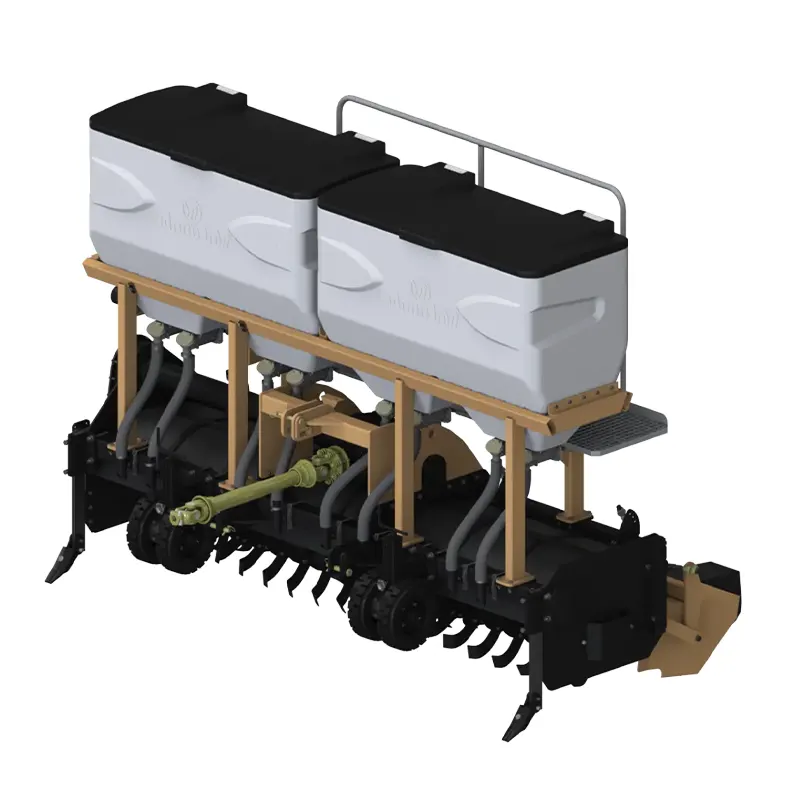
Stone type (basalt/calcareous/andesite) + rainfall timing + post depth + flesh colour target (red/white) + pH profile → Korea Watanabe provides the correct rock crusher for dragon fruit root zone and post zone specification, nocturnal CAM drainage protocol and betacyanin Fe/Mn quality ROI calculation.
Korea Watanabe Rock Crusher Tractor Co., Ltd. — Ansan-si, Gyeonggi-do
Editor: Cxm