Avocado (Persea americana) has become the defining premium fruit of the early 21st century — global production has increased 300% since 2000, driven by export markets in Europe, the United States, and East Asia. Chile, Mexico, Spain, South Africa, Kenya, Peru, and Australia have all undergone significant avocado acreage expansion, much of it on volcanic slopes, granite hillsides, and clay-limestone profiles that present genuine stone management challenges. Yet the stone clearing argument for avocado is uniquely different from every other crop in this E-series guide.
In every prior article — vineyard, olive, orchard, asparagus, hops — the core argument is root depth: stones at a critical depth obstruct, deflect, or damage root tissue. In avocado, the argument is drainage. The avocado feeder root mat lives at 0–30 cm. Stone at 25–50 cm is below the root mat. But stone at this depth creates an impermeable obstruction layer in the drainage profile that causes water to accumulate in the feeder root zone — and six hours of accumulated water is enough for Phytophthora cinnamomi zoospores to swim to the feeder roots, infect them, and begin the root rot that kills a 30-year avocado tree. The rock crusher for avocado orchard clears this drainage obstruction before the first tree is planted — and maintains it throughout the orchard’s productive life.
The Avocado Root System — Why No Taproot Changes Everything
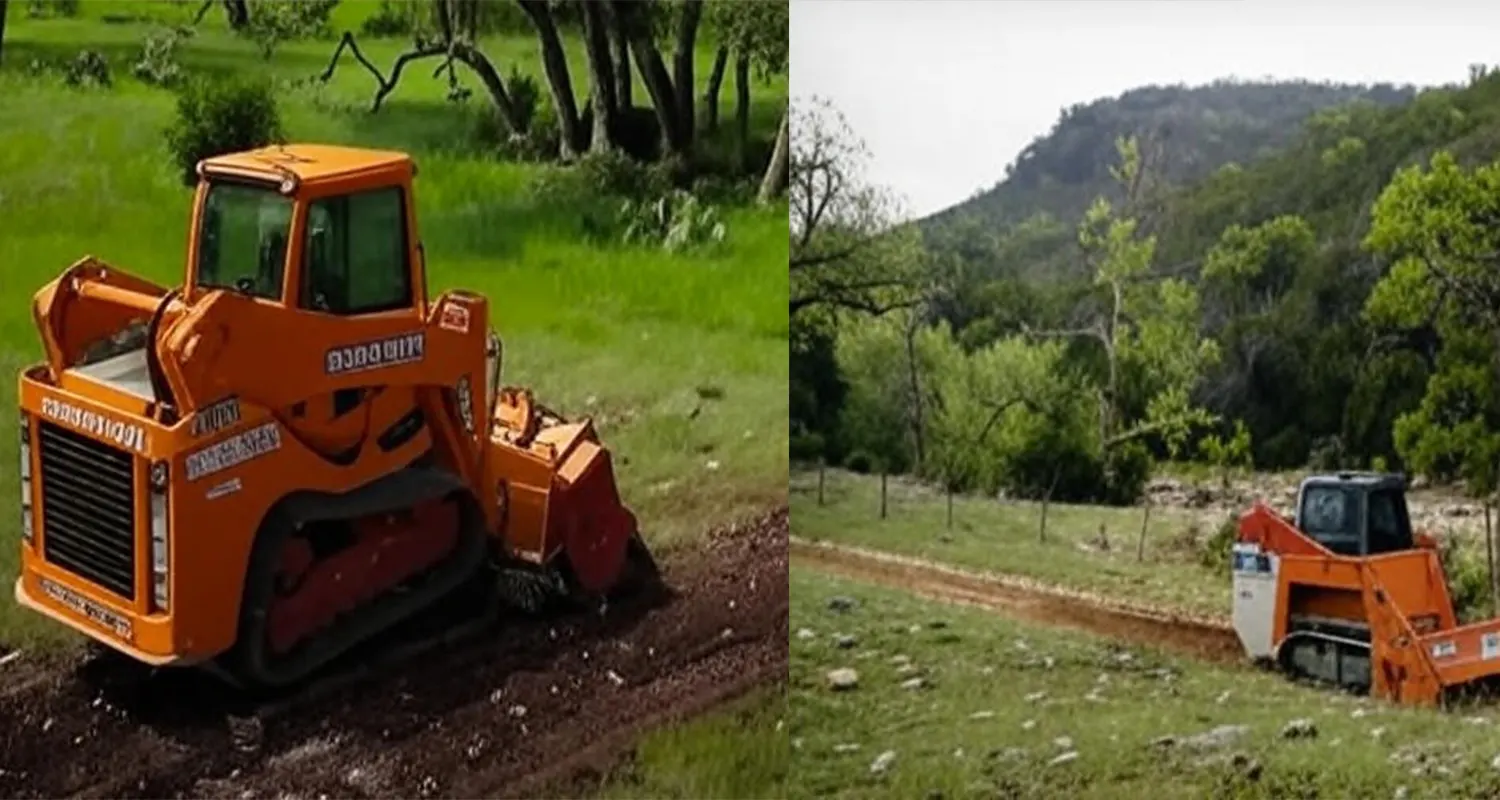
The most important biological fact about avocado cultivation — the one that determines every drainage, irrigation, and stone management decision — is that avocado trees have no taproot. This distinguishes them from virtually every other major commercial tree fruit: apple, pear, cherry, olive, citrus, and walnut all develop taproots that anchor the tree and access deep soil moisture. Avocado’s ancestral adaptation to the permanently moist cloud forest environment of Mesoamerica produced a root architecture suited to shallow, perpetually damp organic soil layers — an architecture that remains in the domesticated cultivar regardless of where it is planted in the world.
Avocado Root Architecture vs Apple Root Architecture — The Critical Difference
| Tree Crop | Max Waterlog Tolerance | Primary Root Depth | Phytophthora Sensitivity | Stone Drainage Risk |
|---|---|---|---|---|
| Avocado | 4–8 hours | 5–30 cm | EXTREME | Single rain event over stone layer → tree death |
| Apple / pear | 2–4 days | 15–35 cm | Moderate | Repeated events cause chronic stress; acute damage rare |
| Olive | 7–14 days | 15–40 cm | Low | Tolerates significant waterlogging; stone drainage secondary concern |
| Citrus | 24–48 hours | 15–40 cm | High (P. parasitica) | Important but less acute than avocado — 24-hour buffer |
| Grapevine | 7–21 days | 20–50 cm | Low | Root depth focus more important than drainage for vine stone clearing |
Phytophthora cinnamomi — The Disease That Stone-Impeded Drainage Triggers
Phytophthora cinnamomi is an oomycete (water mould) classified as one of the 100 worst invasive organisms globally by the IUCN. In avocado, it is the cause of root rot — the single most economically destructive disease of commercial avocado production worldwide, responsible for complete orchard losses across California, South Africa, Chile, Australia, and Israel. It is not technically a fungus (it is more closely related to algae), and this biological distinction explains its uniquely intimate connection to stone-impeded drainage.
The Terrace Paradox — Stone as Both Building Material and Drainage Obstruction
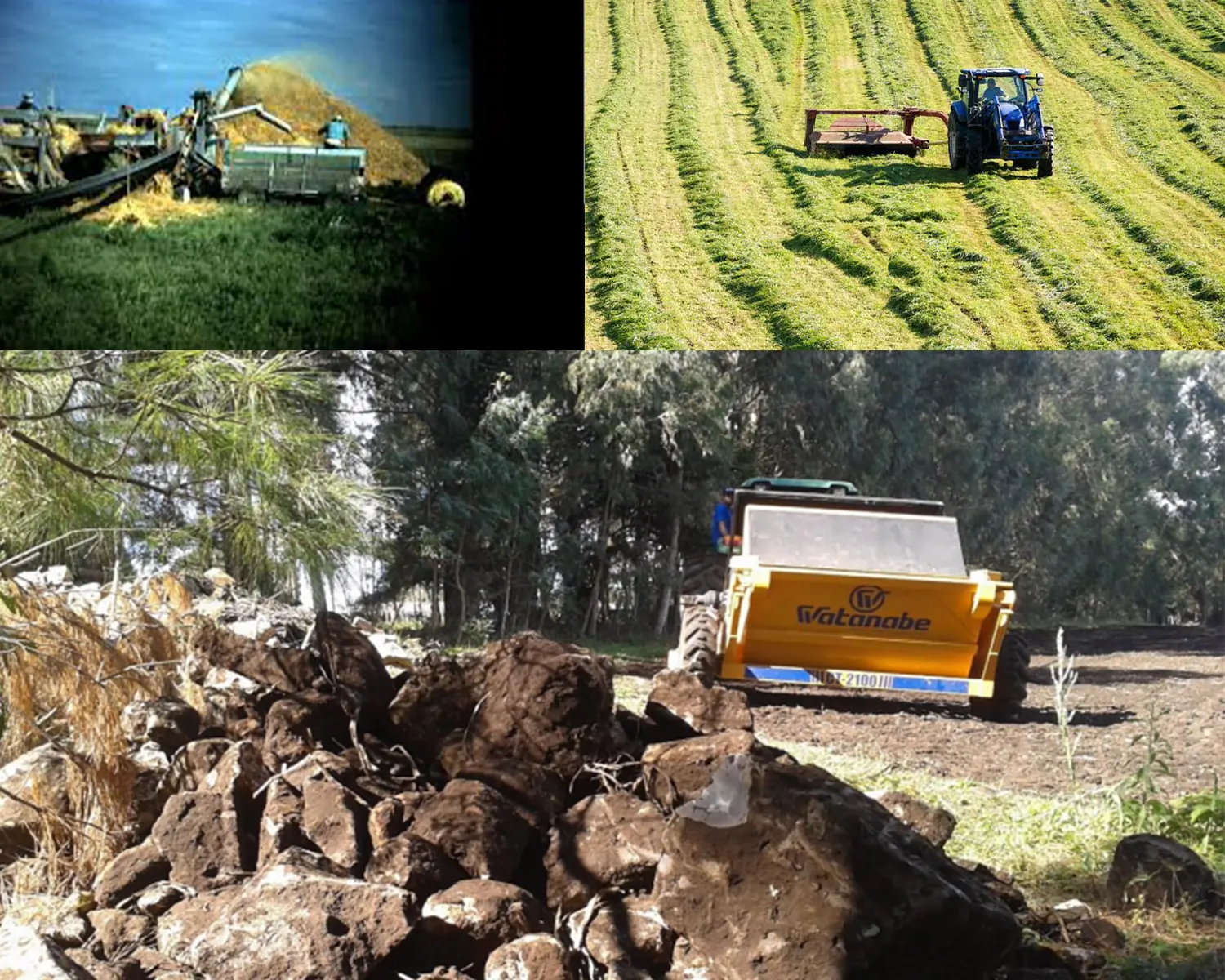
The most operationally distinctive aspect of avocado site preparation on volcanic slopes — particularly in Chile, South Africa, and Kenya — is a paradox that does not exist in any other application in this E-series: the stone that must be removed from the drainage horizon below the feeder root mat is often the same stone that is used to construct the terrace retaining walls that make the slope farmable in the first place. This is the only application in the E-series where the cleared stone has direct positive value in the same site preparation programme that produces it.
Avocado on slopes above 8° requires terracing to prevent erosion, manage irrigation water distribution, and allow machinery access. Standard terrace construction on volcanic or granite slopes: horizontal benches cut into the slope at 5–8 m vertical intervals, retained by dry stone walls built from site-sourced stone. The terrace wall requires substantial stone volume — typically 15–25 m³ of stone per 100 m of terrace wall. This stone must come from somewhere on-site, as importing stone for terrace walls is prohibitively expensive on remote agricultural slopes.
The same slope soil that requires terracing typically has volcanic basalt or granite cobbles at 25–50 cm depth — the drainage obstruction horizon that creates Phytophthora risk. Clearing this horizon with the THOR rock crusher fragments the stone into 2–10 cm pieces; the CT-2100 rock picker then collects these fragments. In a conventional stone clearing operation, this collected material would be removed to a stone depot at the field margin. In avocado terrace construction, the collected stone goes directly to the terrace wall building programme.
THOR 3.0 crushes the drainage obstruction zone → CT-2100 rock picker collects the fragments → collected stone is transported directly to terrace wall construction sites. The stone clearing operation pays for the terrace wall material budget. In Chilean avocado development, contractors report that the CT-2100 collection from the drainage clearance programme typically provides 60–80% of the total stone volume required for the terrace wall programme — substantially reducing the net cost of both operations when conducted as an integrated programme.
Global Avocado Markets — Slope Geology and Clearing Specification by Region
Drainage Engineering and the Machine System — Clearing Depth Protocol for Avocado

Unlike crops where a single clearing depth specification addresses the entire stone management requirement, avocado site preparation requires a two-horizon approach: the drainage obstruction zone clearing (Zone 1, 25–55 cm) and the feeder root zone preparation (Zone 2, 0–25 cm). Both zones must be addressed to eliminate Phytophthora risk and create the aerated, free-draining root environment that avocado requires.
| Geology / Region | Stone Type (Mohs) | Drainage Zone Depth | Machine | Notes |
|---|---|---|---|---|
| Chile Coastal granite (Coquimbo) | Granite 6–7 | 45–55 cm | THOR 3.0 | Hardest stone in Chilean avocado zone. Two passes on dense sites. Terrace wall material integration. |
| Chile Andean volcanic (andesite) | Andesite 5–6 | 40–50 cm | THOR 2.4 | Vesicular texture reduces resistance. THOR 2.4 at 1.5–2.0 km/h sufficient. |
| Spain Axarquía (schist/phyllite) | Schist 4–6 | 30–40 cm | THOR 2.4 | Platy geometry — extra attention to horizontal plate layers. CT-2100 collection very efficient. |
| South Africa Cape Fold (quartzite) | Quartzite 6–7 | 30–45 cm | THOR 3.0 | Highest historical Phytophthora incidence. Most critical drainage clearing of all avocado regions. No compromise on depth or completeness. |
| Kenya/Mexico volcanic (basalt) | Basalt 5–7 | 30–45 cm | THOR 2.4 / 3.0 | Vesicular vs massive basalt — probe first. Short intense rain periods make drainage clearing most urgent. |
| Spain Sevilla / alluvial valley | Low stone | Deep rip only | PSW-3200 | Heavy clay drainage improvement by subsoiling and PSW-3200 aeration — stone crushing less critical than in rocky slope sites. |
Frequently Asked Questions
Rock crusher for avocado orchard — does stone clearing genuinely prevent Phytophthora, or is fumigation and phosphonate spray the only effective management?
Phosphonate (potassium phosphonate, Agri-Fos) spray and injection programmes are the standard chemical management for Phytophthora cinnamomi once infection is established — they do not eradicate the pathogen but suppress its activity and allow infected trees to partially recover. However, phosphonate is a curative and protective treatment for trees that are already under Phytophthora pressure — it does not address the drainage conditions that allow the pathogen to become infectious in the first place. Stone clearing addresses the root cause: eliminating the drainage obstruction that creates the saturated feeder root zone where zoospore production and infection occur. An avocado orchard with stone-cleared drainage horizons and an annual phosphonate programme is substantially better protected than an equivalent orchard with phosphonate alone on a stone-obstructed drainage profile. The South African avocado industry — which has the world’s longest track record of Phytophthora management — consistently identifies improved site drainage (which stone clearing enables) as the single most important intervention for reducing Phytophthora incidence, with phosphonate as the secondary chemical support. Stone clearing and phosphonate are complementary, not alternative, approaches to Phytophthora management.
Why does avocado have no taproot, and does this mean the clearing depth for avocado is shallower than for other tree crops in this guide?
Avocado evolved in the permanently moist cloud forests of Mesoamerica — an environment where deep soil moisture access was not a survival challenge because moisture was constant. In this environment, the energy investment in developing a deep taproot was not rewarded, and avocado developed instead the extremely dense, highly branched shallow feeder mat that maximises uptake from the perpetually moist top soil layer. This root architecture has been preserved in the domesticated avocado despite its transplantation to dryland and semi-arid production regions worldwide. The clearing depth for avocado is indeed shallower for the feeder root zone preparation (25–30 cm) than for apple (28–35 cm) or cherry (32–40 cm). However, the drainage obstruction zone clearing requirement (40–55 cm) is deeper than most agricultural root zone clearing — not because the roots go that deep, but because the drainage zone that protects the shallow roots must be cleared at depth. Avocado stone clearing requires deep clearing below a shallow root zone — the reverse of most other permanent crops where clearing depth tracks root depth.
Does the slope of an avocado orchard change the stone clearing specification — and is there a slope above which clearing is not feasible?
Slope significantly affects stone clearing operations on avocado sites. For slopes up to approximately 20–25°: standard THOR 2.4 or 3.0 operation is feasible with appropriate tractor specification and tyre equipment. Above 25°: the primary safety constraint is tractor lateral stability on the clearing pass — the THOR’s working depth and the resulting machine weight distribution require careful operator assessment on steeper slopes. At 25–35°: terracing is typically required before stone clearing can be conducted safely; the THOR operates on the terraced benches rather than on the raw slope. Above 35°: mechanised clearing is typically limited to terrace bench clearing; the raw slope sections between terraces require hand clearing or are left as permanent vegetation strips. For sloped clearing operations, the THOR always works along contour lines (across the slope, not downslope) to prevent creating concentrated drainage channels that could cause erosion. The BlackBird rock rake surface pass follows the same contour orientation on avocado slope sites.
Is post-planting stone management necessary in an avocado orchard — or is the pre-planting clearing a one-time operation?
Pre-planting drainage zone clearing is the primary investment — once the stone obstruction layer at 25–55 cm is cleared and the CT-2100 collection has permanently removed the fragmented material, the drainage horizon is improved for the orchard’s productive life. Unlike hop gardens (ongoing rhizome expansion encounters new stones) or upland sheep pasture (annual frost heave delivers new stones), the drainage zone in a mature avocado orchard is not a dynamic system that replenishes its stone population rapidly. The pre-planting clearing is genuinely the governing investment. Post-planting management focuses on two narrower stone management activities: (1) maintaining the drainage channel system (clearing vegetation and fine material from perforated pipe outfalls annually, checking for collapse or blockage from any residual stone movement); and (2) surface stone management in the inter-row zones where tractor passes and mulch management equipment operate. For the inter-row surface management, the BlackBird rock rake provides economical periodic clearing (every 2–4 years, or after significant rainfall events that bring surface stone) — at 5–6 ha/day, a single BlackBird pass covers a 5-hectare avocado orchard in one working day.
What is the realistic return on investment for stone clearing in a new avocado orchard, given the catastrophic Phytophthora loss scenario?
The ROI calculation for avocado stone clearing is structured differently from other crops in this series because the primary benefit is loss prevention rather than yield improvement. For a 2-hectare new planting in South Africa (Western Cape, quartzite site, 400 Hass trees/ha): Stone clearing cost (THOR 3.0 + CT-2100 + PSW-3200 for 2 ha): approximately R45,000–80,000 (ZAR). Tree capital at risk (400 trees/ha × 2 ha × R7,500–12,000 per tree in establishment cost): approximately R6,000,000–9,600,000. Probability of Phytophthora event causing 20% tree loss in first 5 years on un-cleared site (historical Western Cape data): approximately 35–55%. Expected Phytophthora loss on un-cleared site: R420,000–2,640,000 (present value). Expected Phytophthora loss on stone-cleared site: estimated 70–85% reduction = R63,000–396,000. Net clearing benefit (loss reduction): R357,000–2,244,000. Against clearing cost of R45,000–80,000: ROI = 4:1 to 28:1 on the loss prevention benefit alone, before any production or quality improvement benefits are counted. For all other avocado markets (Chile, Spain, Mexico, Kenya), substitute local currency and regional Phytophthora incidence rates — the core calculation structure and ROI order of magnitude are consistent across markets.
Rock Crusher for Avocado Orchard — Drainage Zone Specification and Phytophthora Risk Assessment
Avocado area + slope angle + regional geology + rainfall season + existing tractor HP → Korea Watanabe provides the correct rock crusher for avocado orchard specification, two-horizon clearing depth protocol and Phytophthora risk ROI calculation for your plantation investment.
Editor: Cxm