Korean highland farming faces a structural demographic challenge that shapes every long-term investment decision a current farm operator makes. The average age of Korean highland potato farmers is above 60. Most do not have a family member who has committed to continuing the farm. The physical labour demands of un-mechanised highland farming — which requires 3–5 workers per hectare for planting, harvest, and stone management by hand — make the farm unattractive to younger successors who have urban employment alternatives. The result is an accelerating pattern of Korean highland farm abandonment, terrace deterioration, and the reversion of cultivated land to scrub that represents decades of development investment going to waste.
The Watanabe mechanisation investment — THOR 2.4 rock crusher stone clearing, PSW-3200 rotavator tillage, and the complete potato system — changes the farm’s succession attractiveness in ways that this article examines. A mechanised highland farm with established market channels, NAAS certified seed programme assets, and stone-cleared land that has been developed to full productive potential is a business asset that a motivated younger person could take over, manage profitably as a single operator, and build further. This article frames the Watanabe investment as a succession planning tool as well as a production efficiency tool.
The Korean Highland Farm Succession Challenge — Numbers and Context
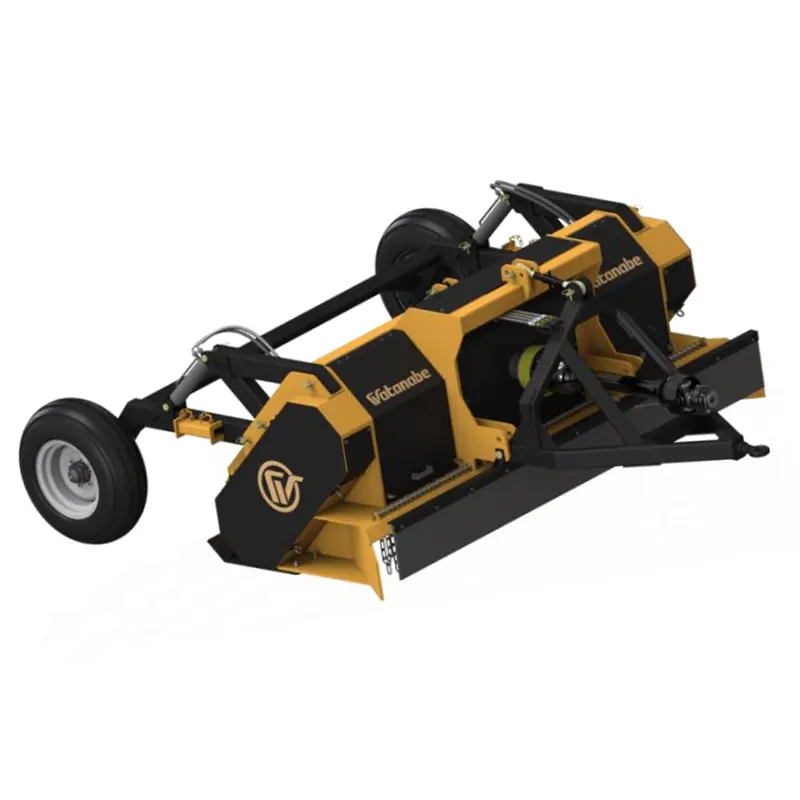
Korean agricultural succession statistics consistently show that highland farming is among the least-likely sectors to be transferred to a younger generation. The combination of physical difficulty, geographic isolation, and modest pre-mechanisation returns makes the transition unattractive to younger Koreans who have easier economic alternatives. Understanding the specific barriers that mechanisation addresses helps explain why the investment is succession planning as much as production improvement:
Un-mechanised highland potato and vegetable farming requires 80–120 person-days of labour per hectare per year for planting, cultivation, harvest, and stone management by hand. For a 10 ha farm, this is 800–1,200 person-days — effectively requiring a full farm family plus seasonal hired workers year-round. A 30-year-old considering taking over a parent’s farm must assess whether this physical workload is sustainable for the 30+ years of their working life. The answer is usually no.
A fully mechanised Watanabe system farm (THOR 2.4 stone clearing, PSW-3200 tillage, EP-PAI planting, EP-ERA hilling, EP-AWB harvest) reduces the labour requirement to approximately 20–35 person-days per hectare per year — primarily for machine operation, seasonal harvest assistance, and management decisions. A motivated single operator can manage 10 ha of mechanised highland potato farming with 2–3 seasonal workers for the 3-week harvest period. This is a manageable sole-operator business model that a younger person could consider taking over.
Pre-mechanisation highland farming income is highly variable — crop yields vary with stone management quality, labour availability, and weather. A younger person comparing a variable highland farm income against a stable urban salary will typically choose the salary unless the farm income is both reliable and competitive. Un-mechanised highland farms with inconsistent Grade 1 proportions cannot access the premium market channels that provide income competitive with urban alternatives.
A mechanised farm with consistent Grade 1 proportions, established direct market relationships, and certified seed production assets generates income that is both higher per hour of operator time and more predictable than un-mechanised farming. The market channels analysis in the previous article shows that direct market and certified seed channels can generate 40–80% higher per-kilogram revenue than cooperative bulk — making the mechanised highland farm economically competitive with urban alternatives for a motivated younger operator.
The 20-Year Asset Value of Stone-Cleared Highland Land
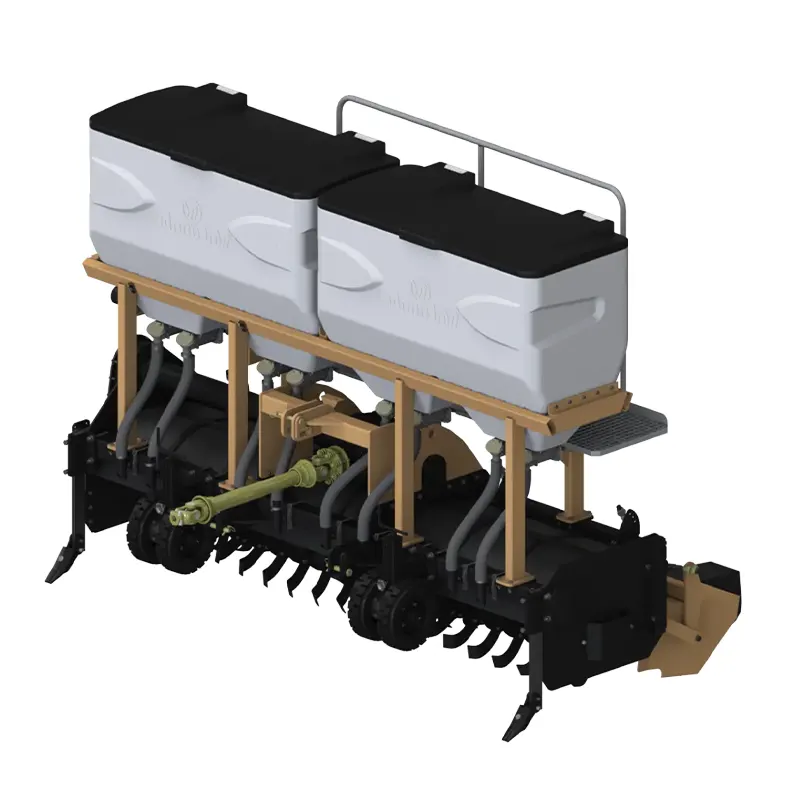
Stone clearing is not a recurring annual cost in the way that fertiliser or fuel is — it is a permanent land improvement investment. The granite stone population in a Korean highland field, once fragmented and removed by the THOR 2.4 + CT-2100 system, does not return to its original density. Annual frost-heave maintenance brings a small fraction to the surface, but the total stone mass available for annual re-emergence decreases progressively with each season of managed clearance. The practical asset value consequence is measurable:
The highest stone management cost occurs in Years 1–3 when the full original stone population is being progressively cleared. THOR 2.4 operating hours are highest in these years (annual stone emergence from deep frost heave plus the large stones brought up for the first time). This is the investment phase of the clearance programme.
By Year 4, the annual maintenance requirement (frost-heave re-emergents only) is typically 40–60% lower in total THOR operating hours than Year 1. The stone mass available for annual re-emergence has been progressively reduced. EP-EW-4000 begins to substitute for THOR on the lighter-stone rotation years. Annual stone management cost falls significantly below the Year 1–3 investment level.
A Korean highland field that has received 10 consecutive years of well-managed THOR 2.4 clearance and EP-EW-4000 annual maintenance has a stone population profile that is fundamentally different from a never-cleared field. The annual stone management cost has dropped to a fraction of the Year 1 cost. This low-maintenance cleared land is a legacy asset that transfers its reduced maintenance requirement to the successor operator — who inherits the benefit of the previous operator’s investment without needing to repeat the initial clearance programme.
NAAS Certified Seed as an Inheritable Business Asset
A farm that has operated the NAAS certified seed programme (described in the certification guide) for 3 or more consecutive seasons has built an asset that is not present on an un-certified farm: the inspection history, the registered field status, the buyer relationships, and the operational knowledge of the certification system. These assets have value that transfers to a successor:
Registered field history
A field with multiple consecutive years of passing NAAS inspections has a documented performance record at the county RDA. A successor taking over this field inherits this inspection history — the field is already known to the inspectors and has demonstrated its management capability. A new applicant on an un-certified field must establish this record from zero, typically taking 2–3 years before inspection confidence builds.
Certified seed buyer network
The farms that purchase certified seed from the operation year after year are a customer base that has established trust with the specific farm’s management quality. A successor who continues the same management standard inherits this customer base — a significant business advantage over starting a new certified seed operation with no buyer relationships. Certified seed buyers typically prefer established suppliers they trust over unknown new suppliers.
Operational knowledge transfer
The certified seed production system (aphid management, isolation distance management, vine destruction timing, NAAS paperwork) requires operational knowledge that takes 2–3 seasons to develop. A successor who learns the system alongside the current operator for 2–3 years before the full handover acquires this knowledge without the cost of the learning period after handover.
Korean Government Succession Support Programmes — Financial Assistance for Farm Handover
The Korean government has recognised the agricultural succession crisis and implemented specific programmes to support farm succession and the entry of younger farmers into Korean agriculture. The programmes most relevant to Korean highland potato and vegetable farms include:
Provides monthly living support payments to qualifying successors who commit to full-time farming for a defined period (typically 3 years minimum). The payment partially compensates the income foregone by a younger person transitioning from urban employment to farm work during the learning and transition period. The programme is administered through the county RDA — application requires proof of farm succession commitment and a farm management plan approved by the county agricultural office.
A higher subsidy rate (sometimes 10–15% above the standard adult farmer rate) for qualifying young farmers (typically under 40) purchasing agricultural machinery. For a Korean highland farm successor purchasing the THOR 2.4, CT-2100, or potato machinery system, this enhanced subsidy rate can meaningfully reduce the capital investment required to build the mechanised system from the first year of farm operation. Confirm current eligibility age and rate with the county RDA in January of the intended purchase year.
Financial support for the legal and administrative costs of farmland succession transfer from the current owner to the successor — including registration transfer costs, inheritance tax support in qualifying cases, and compensation for successor training programme costs. This support is designed to reduce the administrative and financial friction of the succession transfer that currently discourages Korean families from completing formal succession planning.
Planning the Succession Transition — A 5-Year Framework
A realistic Korean highland farm succession timeline — from the current operator’s decision to plan for succession to full operational handover — typically spans 5 years. The investment decisions made in the early years of this timeline determine whether the successor inherits a productive, manageable business or a labour-intensive operation requiring major additional investment:
| Year | Current operator actions | Succession preparation value |
|---|---|---|
| Year 1 | Implement THOR 2.4 stone clearing on all production blocks. Document stone management history in farm diary. | Establishes the permanent land improvement that reduces the successor’s annual maintenance burden from the first year of operation. |
| Year 2 | Complete core machinery system (PSW-3200, EP-PAI, EP-ERA, EP-AWB). Establish direct market buyer relationships. Begin certified seed programme if suitable fields available. | Builds the market channel infrastructure and machinery assets that a successor can operate immediately from handover without re-establishing relationships. |
| Year 3 | Identify and engage the intended successor (family member or incoming farmer). Begin structured knowledge transfer — have the successor participate in all field operations through the full season alongside the current operator. | The successor observes a full production cycle under guidance — learning the seasonal calendar, machine operation, market relationships, and certified seed programme management without the pressure of solo responsibility. |
| Year 4 | Successor takes operational lead on 30–50% of the farm’s operations (specific blocks, specific machinery). Current operator provides guidance and manages exceptions. Apply for relevant government succession support programmes. | Successor develops autonomous decision-making confidence in specific operations before assuming full responsibility. Revenue continues through the transition — no production interruption. |
| Year 5 | Full operational handover. Legal succession transfer completed. Current operator retains advisory role but not operational responsibility. Successor is now the primary farm operator with the machinery, cleared land, market relationships, and operational knowledge transferred. | The successor inherits a business with: stone-cleared productive land, full machinery system, established direct market and/or certified seed buyer relationships, and 4 years of farm diary documentation as operational reference. The mechanised farm is a business, not just land. |
Frequently Asked Questions
If there is no family member to succeed, can the farm be sold as a going concern?
Yes — a mechanised Korean highland farm with documented production history, active market contracts, and NAAS certified seed programme registration can be sold as a going concern rather than as raw land. The key difference: raw highland land sells at the land market price (which reflects its agricultural potential but not its developed state); a going-concern mechanised farm sells at a premium above raw land that reflects the machinery value, the market relationship value, and the certified seed programme value. Korean highland farms with established Watanabe system machinery, 3+ year direct market buyer relationships, and active NAAS certified seed programmes have sold at 40–80% above equivalent un-mechanised land value in recent Korean highland property transactions. The machinery investment that seemed like a production cost is revealed at sale as a land value multiplier. Korea Watanabe cannot provide valuation or sale facilitation services, but can advise on how to document the machinery and production history in a format that supporting a farm business sale presentation.
Is the THOR 2.4 machinery itself inheritable, or is it too old to be useful to a successor?
A THOR 2.4 that has been properly maintained (annual pre-season service, correct tooth replacement at the inspection thresholds, proper winter storage) has a functional life of 20+ years. The rotor body, gearbox, and frame are designed for decades of service — the consumable items (teeth, PTO shaft joints, bearing seals) are replaced as they wear. A THOR 2.4 purchased in Year 1 of the succession plan is still an operational machine in Year 10 or Year 15, with the relevant consumables replaced through the service cycle. A successor taking over in Year 5 inherits a machine with 4 years of operating history, not an end-of-life asset. Maintaining the annual service record in the farm diary (tooth condition, hours, parts replaced) provides the successor with a documented machine history that confirms the machine’s maintenance status — the same documentation that supports a going-concern sale if the farm is eventually sold rather than family-transferred.
What happens to the NAAS certified seed programme registration if the operator changes?
NAAS certified seed field registration is granted to the farm operator registered at the county RDA — when the farm operator changes (through succession or sale), the field registration must be re-applied for in the new operator’s name. In practice, for a planned succession where the new operator is known to the county RDA and the field has a clean inspection history, the re-registration is typically processed without interruption — the new operator applies in October of the transition year (the same window as the annual application) and the field’s existing history is referenced in the application. The buyer relationship with certified seed purchasing farms is informal — it is between people, not registered documents. A successor who has been introduced to these buyers during the Year 3–4 overlap period can maintain the relationship through their own continuation of the quality and reliability that the buyers trusted in the previous operator.
Are there government programmes specifically for incoming farmers taking over existing Korean highland farms?
Yes — the Korean government’s “return to farming” and young farmer support programmes include specific provisions for farmers who take over established farms rather than starting from scratch. The key programmes: (1) the predecessor-successor joint farming support, which provides joint operating grants for 1–3 years while the current operator and successor operate the farm together; (2) the farm takeover loan support (nongji chewi jangnyeo yuija), which provides low-interest loans for the farm takeover transaction to reduce the financial barrier for the successor; and (3) the agricultural education programme for successors (cheongnyon nongup gyoyuk), which funds practical training for successors in modern farm management and machinery operation — including Korea Watanabe system training as part of the approved machinery training curriculum. Confirm the current programme details and eligibility conditions with the Gangwon-do Provincial Agricultural Research and Extension Services office or the county RDA office in your area.
What is Korea Watanabe’s role in supporting succession planning for its customers?
Korea Watanabe provides after-sales support for the full operational life of all Watanabe system machines. For succession planning specifically, Korea Watanabe’s support includes: (1) machine condition assessment for existing customers — confirming the service history and current condition of the full machine system in a format suitable for succession documentation; (2) successor operator training on all Watanabe system machines — practical field training for the incoming operator on correct machine operation, maintenance procedures, and the field inspection protocols (tooth wear assessment, CT-2100 pre-season checks) that experienced operators know; (3) subsidy application support for the successor’s first-year additional machinery purchases under the young farmer programme; and (4) the annual pre-season consultation described in the annual operations calendar article, which can transition from the current operator to the successor as the primary consultation contact during the Year 3–4 handover period. Korea Watanabe, Ansan-si, Gyeonggi-do, considers the generational continuity of Korean highland farming an important outcome of the system investments it supports.
Succession-Ready Farm Investment — From Stone Clearing to Generational Asset
Current farm age + succession timeline + existing system + intended successor profile → succession-optimised investment plan with government programme alignment. Korea Watanabe, Ansan-si, Gyeonggi-do.
Editor: Cxm