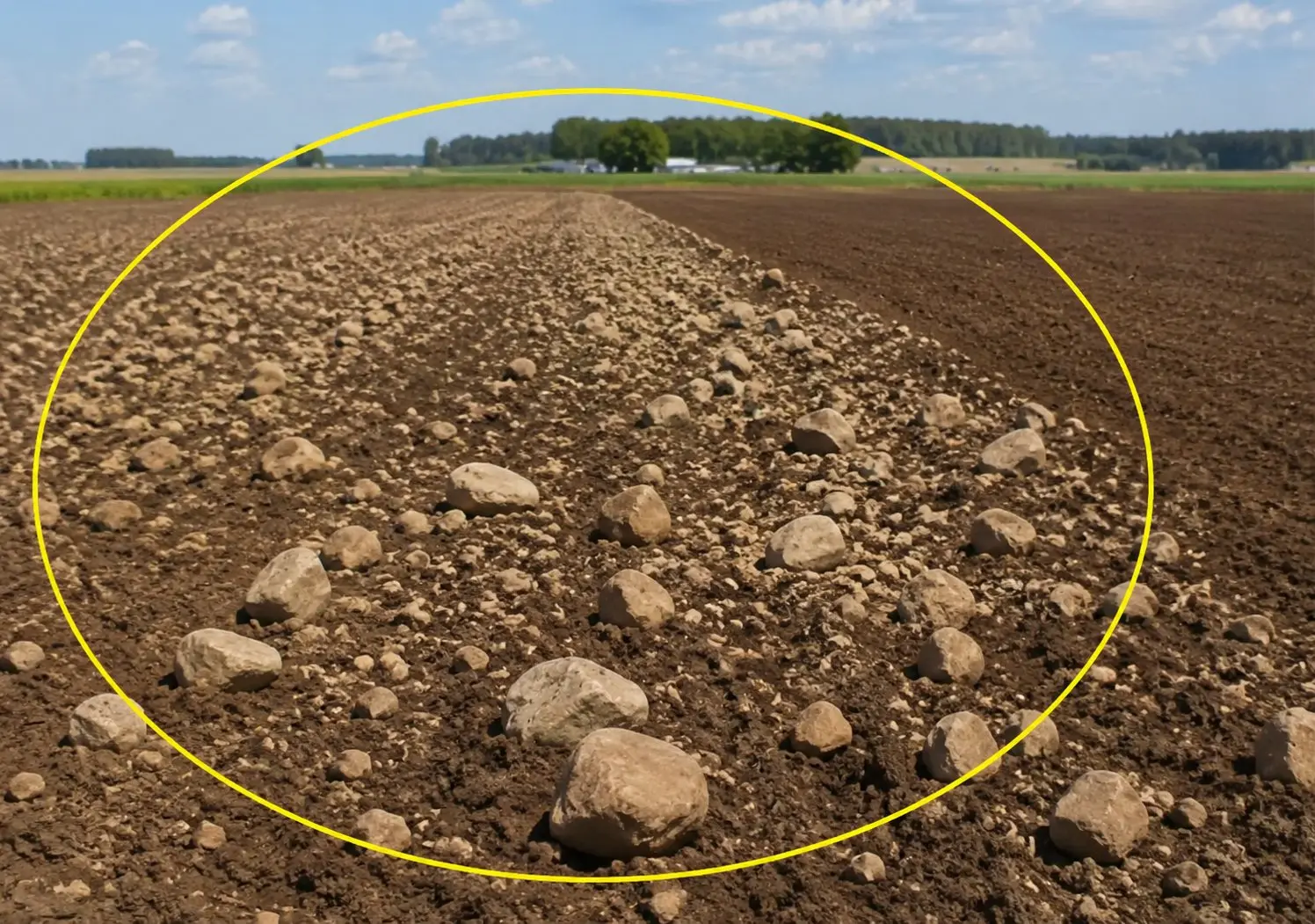
Drip irrigation adoption on Korean highland farms has grown significantly since 2020 — driven by the combination of summer labour shortages, water cost increases, and the agronomic understanding that consistent moisture delivery during potato bulking prevents the Daejima hollow heart defect that is the dominant quality-failure mechanism on premium cold storage production. Yet many Korean highland farms installing drip systems on un-cleared granite soil fields are discovering that their investment delivers less than expected — uneven wetting patterns, tape positioning problems, and continued hollow heart incidence despite running the system correctly.
The reason is physical and unavoidable: stones in the ridge substrate under a drip tape change how water moves through the soil in the same way that a stone in a stream changes how water flows around it. Korean highland drip irrigation and stone clearing are not independent farm investments — they are sequential prerequisites. The drip system’s performance ceiling is set by the homogeneity of the substrate it operates in, and that homogeneity is delivered by the stone clearing operation that precedes installation. This guide explains the mechanism, the correct sequence, and the combined economics.
The Physics — How Stones Under Drip Tape Defeat Moisture Uniformity
Drip irrigation delivers water at low pressure (0.1–0.3 bar at the emitter) in small volumes (1–3 litres per hour per emitter). At these parameters, water movement through soil is governed entirely by capillary forces — the water moves through the soil matrix by surface tension attraction between water molecules and soil particle surfaces. This capillary movement produces a characteristic “onion” or “teardrop” shaped wetting bulb around each emitter, with the shape determined by the soil’s texture and structure.
Ridge Cross-Section — Moisture Distribution With and Without Stones
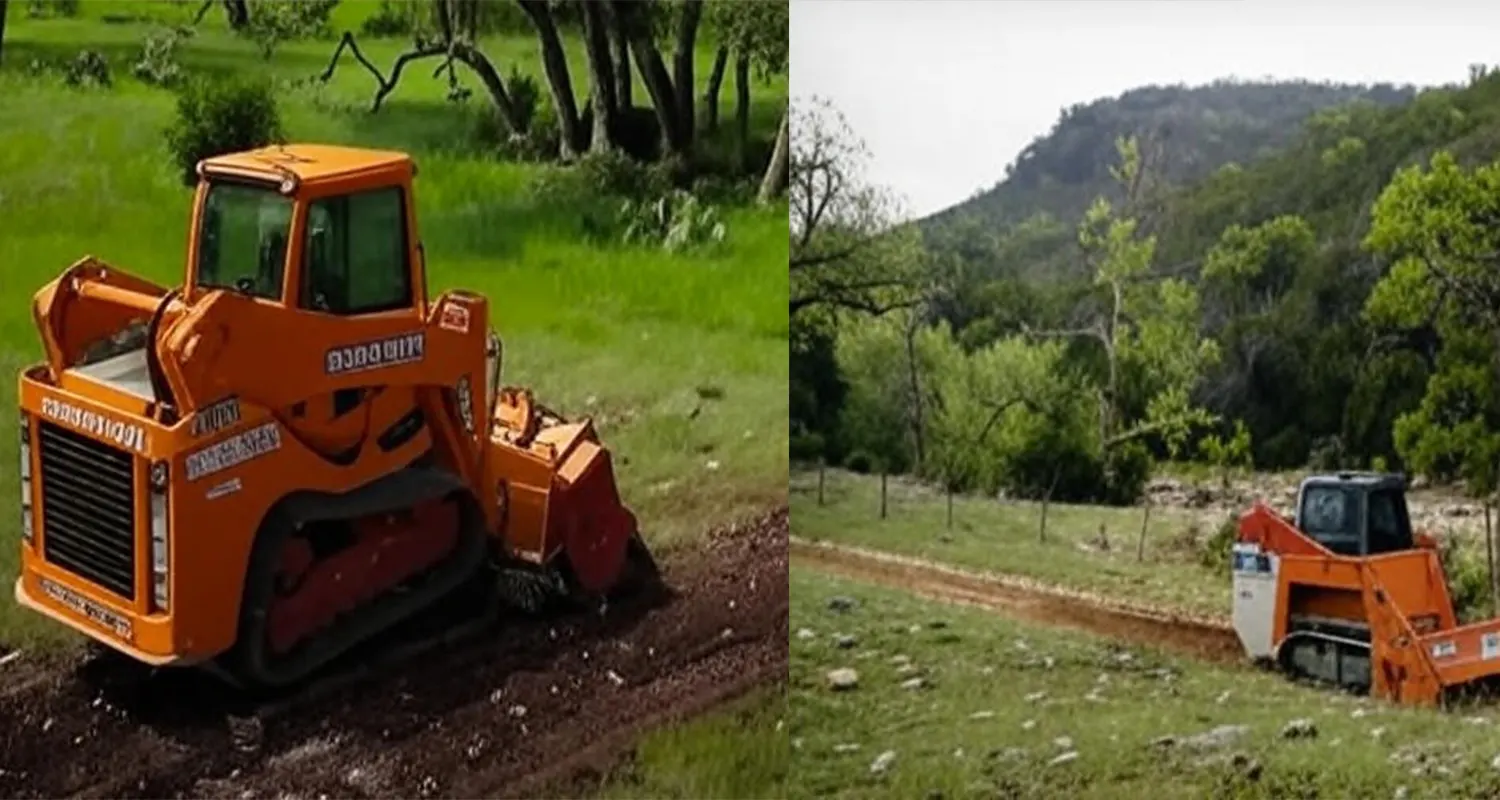
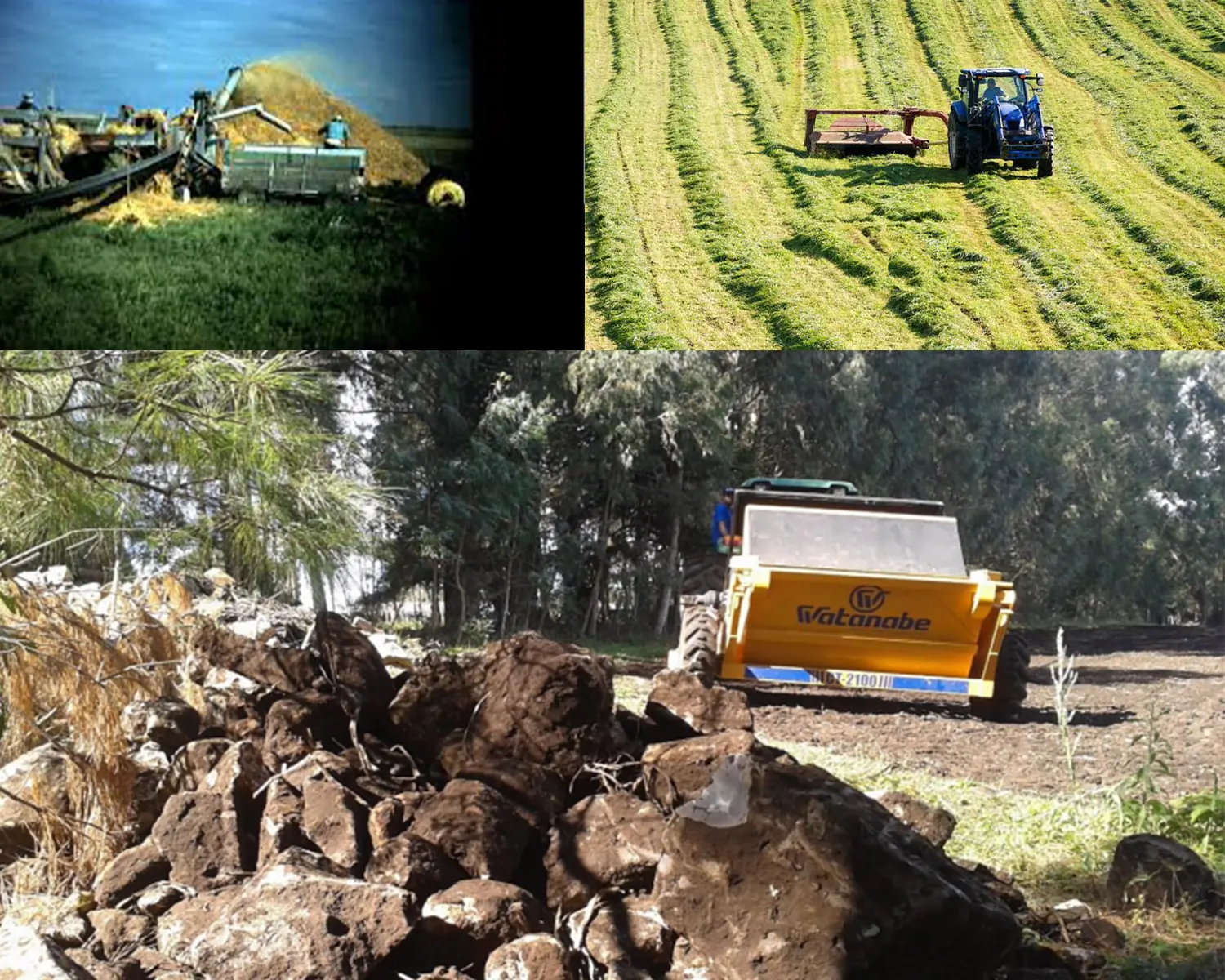
This physical reality explains why Korean highland farms report poor drip irrigation performance on un-cleared fields even when the system is correctly designed and operated. The stone channelling effect is not correctable by adjusting emitter spacing, flow rate, or irrigation timing — it is a substrate problem that requires a substrate solution. The THOR 2.4 + CT-2100 stone clearing system that creates the uniform fine-tilth substrate is the prerequisite without which drip irrigation engineering cannot achieve its designed moisture distribution.
The Daejima Hollow Heart Prevention Chain — From Stone Clearing to Premium Storage
Daejima potato (the most widely grown Korean highland cold storage variety) is specifically vulnerable to hollow heart — a physiological disorder that creates an air cavity in the tuber’s centre. Hollow heart is not a disease, not a pest, and not a genetic defect: it is a cell-death event triggered by a specific moisture pattern. Understanding this chain makes clear why stone clearing is the first link in hollow heart prevention, not drip irrigation.
The Daejima Hollow Heart Causal Chain — and Where Stone Clearing Intervenes
Root cause
Trigger
Stone link
Drip role
Solution
Surface vs Sub-Surface Drip — The Korean Highland Granite Decision

Korean highland drip systems are installed as either surface drip (tape runs along the top of the ridge, sometimes under mulch film) or sub-surface drip (tape buried 8–15 cm below the ridge surface). Both methods require stone-cleared soil, but the stone clearing standard they require is different — and this difference affects the investment sequencing decision.
| Parameter | Surface Drip | Sub-Surface Drip |
|---|---|---|
| Stone clearing requirement | Surface cleared. Tape sits on cleared surface — no burial. First-season clearing (22–30 cm) adequate. | Sub-surface stone-free to burial depth + 5 cm safety margin. Confirmed stone-depleted (Year 3+). |
| Installation method | Laid on cleared ridge surface, typically under black mulch film. No soil penetration required. | Injection knife or vibrating mole blade buries tape at 10–15 cm. Any residual stone deflects the injection knife, misplacing the tape or damaging it. |
| Harvest interference | Tape must be removed before EP-AWB harvester operation. Annual tape roll and re-lay labour cost. | Tape remains below harvest blade depth on cleared field. No annual removal. Multi-year tape lifespan (3–5 years). |
| Moisture distribution quality | Good — surface emitters wet from top down, which is natural for rainfall pattern. Monsoon-season over-saturation possible if surface tape impedes drainage. | Excellent on stone-cleared soil — wetting bulb centred at root depth. More efficient than surface drip for deep-rooted varieties. Minimal evaporation loss. |
| Recommended for Korean highland | Year 1–3 after first stone clearing. Lower risk, easier management while stone population declines. | Year 4+ on fields with confirmed low residual stone population. Maximum return on drip investment. |
| Installation cost (per ha) | 1,500,000–2,000,000 KRW/ha (tape + fittings). Plus annual re-lay labour. | 2,000,000–3,000,000 KRW/ha initial. Lower annual operating cost (no re-lay). Better 5-year TCO on cleared soil. |
Monsoon Season Integration — How Stone Clearing Changes the Drainage Equation
Korean highland farms face a paradox during July–August monsoon season: drip irrigation systems are designed to manage moisture delivery, but monsoon events (50–100 mm per event, 3–5 events per season) temporarily overwhelm any drip system’s capacity to control soil moisture. The question for a drip-equipped farm is not “how does the drip system handle the monsoon” — it is “how does the soil drain after the monsoon, and does the drip system resume from a uniform moisture baseline?” Stones directly affect this question.
Cleared field after 80mm monsoon event
Water drains through uniform fine-tilth soil matrix. No stone channels to redirect flow laterally. The PSW-3200 ridge structure (25–30 cm height, clear furrow between ridges) carries surface runoff away from the ridge into furrow drainage channels. Soil returns to field capacity (the drip system’s target moisture level) within 18–24 hours. Drip system resumes from a uniform moisture baseline across the entire ridge width.
Un-cleared field after 80mm monsoon event
Water channels along stone surfaces — following the path of least resistance around each stone rather than filtering through the soil matrix uniformly. Water pools in the concavities adjacent to stones, creating persistently wet zones that remain saturated for 48–72+ hours after the rain stops. Drip system resumes into a non-uniform baseline: some tuber zones are still saturated while others have drained to below field capacity. This non-uniformity is the dry-wet transition that triggers Daejima hollow heart.
The Correct Drip Setup Sequence — From Stone Clearing to First Irrigation
Combined ROI — Stone Clearing + Drip Irrigation on Korean Highland Potato
| System | Grade 1 % | Hollow heart % | Net revenue / 10 ha | vs Baseline |
|---|---|---|---|---|
| Un-cleared, flood irrigation (baseline) | 55–65% | 12–18% | ~90M–120M KRW | — |
| THOR 2.4 cleared, flood irrigation | 82–88% | 6–10% | ~140M–175M KRW | +50–55M KRW |
| THOR 2.4 cleared + surface drip | 88–93% | 2–4% | ~160M–200M KRW | +70–80M KRW |
| THOR 2.4 cleared + sub-surface drip (Year 4+) | 90–95% | 1–2% | ~170M–215M KRW | +80–95M KRW |
Representative figures for 10 ha Daejima potato, 27 t/ha yield, 2,000 KRW/Kg average Grade 1 cold storage net price. Drip system cost: ~20M KRW for 10 ha surface installation, included in Year 1 calculation. Actual revenue varies with market prices and stone density. Source: Korea Watanabe field experience.
Frequently Asked Questions
Korean highland drip irrigation stone clearing guide — does drip irrigation work without stone clearing on granite soil?
Technically, drip irrigation delivers water on any soil including un-cleared granite soils — the water comes out of the emitters. But the moisture distribution quality that makes drip irrigation agronomically and economically worthwhile requires a uniform substrate. On un-cleared Korean highland granite soil, the stone channelling effect reduces drip uniformity to a level where the actual wetting pattern is not meaningfully better than flood irrigation in terms of preventing moisture stress zones in the root profile. Measured at the tuber level, hollow heart incidence on un-cleared drip-irrigated fields in Korea Watanabe’s farm network experience is typically 6–10% — compared to 2–4% on cleared drip-irrigated fields and 12–18% on un-cleared flood-irrigated fields. The drip system on un-cleared soil does reduce hollow heart compared to flood irrigation, but captures only about 40–50% of the hollow heart reduction that the cleared + drip combination delivers. The other 50–60% of the hollow heart reduction comes specifically from the stone clearing — making stone clearing the larger contributor to hollow heart prevention on a field that has both problems.
How does Korean highland drip irrigation interact with the monsoon season — should the system be turned off during heavy rain?
The drip system should be suspended during monsoon events above 30 mm but managed carefully in the post-monsoon period. During the event itself, running the drip system while 50–100 mm of rain is entering the soil is counterproductive — soil is at or above field capacity and additional water delivery serves no purpose. The critical management window is the 24–72 hours after a major monsoon event, when the soil is draining back to field capacity. On a stone-cleared field, this drainage occurs uniformly and is complete within 18–24 hours. On an un-cleared field, drainage is uneven and some zones remain saturated for 48–72 hours. The drip system should resume at a reduced rate for the 24 hours immediately following the monsoon event to support the transition from saturation back to the drip system’s controlled moisture level — a gentle re-introduction rather than immediately returning to the full pre-monsoon schedule. The automatic controller settings for monsoon-season management should be calibrated for your specific field based on the first 2–3 monsoon events of the season, not on a pre-programmed schedule.
What is the recommended drip tape emitter spacing for Daejima and Sumi potato on Korean highland cleared granite soil?
For Daejima and Sumi potato on Korean highland cleared granite soil (sandy loam texture, moderate-high drainage), emitter spacing of 30–40 cm is recommended. Granite-derived sandy loam soils have relatively narrow lateral water movement compared to clay or loam soils — the wetting bulb from a single emitter extends approximately 20–28 cm laterally on this soil type, meaning 30 cm emitter spacing produces overlapping wetting bulbs without gaps between them. Spacing wider than 40 cm on Korean highland granite soil produces dry zones between wetting bulbs — exactly the moisture gap that triggers hollow heart. The flow rate per emitter: 1.5–2.0 litres per hour for standard drip tape; 1.0–1.5 L/hr for daily short-duration irrigation during the critical bulking phase (July–August). Confirm emitter flow rate and spacing with the drip system supplier’s Korean highland soil specification before purchase — generic international drip tape specifications may be designed for heavier clay soils with wider lateral water movement that are not applicable to Korean highland granite conditions.
Does the Korean agricultural machinery subsidy apply to drip irrigation system purchases on cleared Korean highland farms?
Yes — Korean MAFRA provides subsidy support for agricultural irrigation systems including drip tape installation on certified Korean highland farms. The irrigation system subsidy is typically administered through a separate category from machinery (stone crusher, harvester, planter), with applications made through the county agricultural water management office rather than the general machinery subsidy channel. The subsidy rate and eligibility criteria for drip irrigation differ by county and are subject to annual programme adjustments. Korea Watanabe advises on the combined stone management machinery subsidy + drip irrigation system subsidy strategy — these are separate applications to different county offices but can be coordinated for submission in the same January planning window to reduce administrative burden. Confirm the current drip irrigation subsidy terms for your county before committing to a drip system specification.
How does stone clearing change the water requirement calculation for a Korean highland drip system?
Stone clearing on Korean highland granite soil changes two parameters in the drip system water requirement calculation. First, the effective soil water holding capacity increases — cleared soil without stones has a higher proportion of soil particle surface area available for water retention per unit volume than stone-present soil. A cleared field holds approximately 15–25% more plant-available water per unit soil volume than the same field with stones present. This means a cleared field can buffer a longer interval between drip events before moisture stress begins — the drip system can run on a less frequent schedule after stone clearing than the same system required on the same field before clearing. Second, the drainage rate changes — stone-cleared soil drains more uniformly and at a more predictable rate than stone-present soil. The drip system controller schedule can be calibrated against measured soil drainage data from the cleared field rather than generalised models, producing a more accurate and economical irrigation programme. Korea Watanabe recommends installing a soil moisture sensor at mid-ridge depth in both a typical cleared section and a formerly stone-dense section during the first post-clearing growing season to quantify these changes for the specific field before finalising the drip system programme.
Stone Clearing + Drip Integration — System Planning for Korean Highland Potato
Farm area + tractor HP + current Grade 1 proportion + hollow heart incidence + existing irrigation setup → Korea Watanabe provides the stone clearing protocol, drip tape specification, installation sequence and combined ROI projection for your Daejima or Sumi production system.
Editor: Cxm