Korean napa cabbage (baechu, Brassica rapa subsp. pekinensis) is the single most important kimchi ingredient by volume — the 350,000 tonnes of kimchi produced annually by Korean manufacturers requires approximately 800,000–900,000 tonnes of fresh cabbage at an average 2.5:1 fresh-to-finished weight ratio. Gangwon-do highland farms supply the majority of Korea’s premium summer and early-autumn cabbage, harvested in August–October when lowland cabbage quality is compromised by heat and disease. This highland timing advantage — producing cool-weather, tightly wrapped heads at exactly the moment kimchi manufacturers are building inventory for the November kimjang season — is what makes Korean highland cabbage commercially significant. It is also what makes quality protection through stone clearing non-negotiable for farms in this supply chain.
Korean highland cabbage farming stone clearing addresses the specific vulnerability of cabbage during head formation: a stone at 15–20 cm depth creates lateral soil pressure during the head-forming phase that splits the outer wrapper leaves, deforms the head geometry, and immediately classifies the cabbage as Grade 2 or Grade 3 at the kimchi manufacturer’s intake. This guide covers the head damage mechanism, the kimjang supply chain timeline, the stone clearing protocol for cabbage, and the soil preparation approach that maximises highland cabbage quality for the premium kimchi market.
The Kimjang Calendar — Working Backwards From November to Your Field Preparation Date
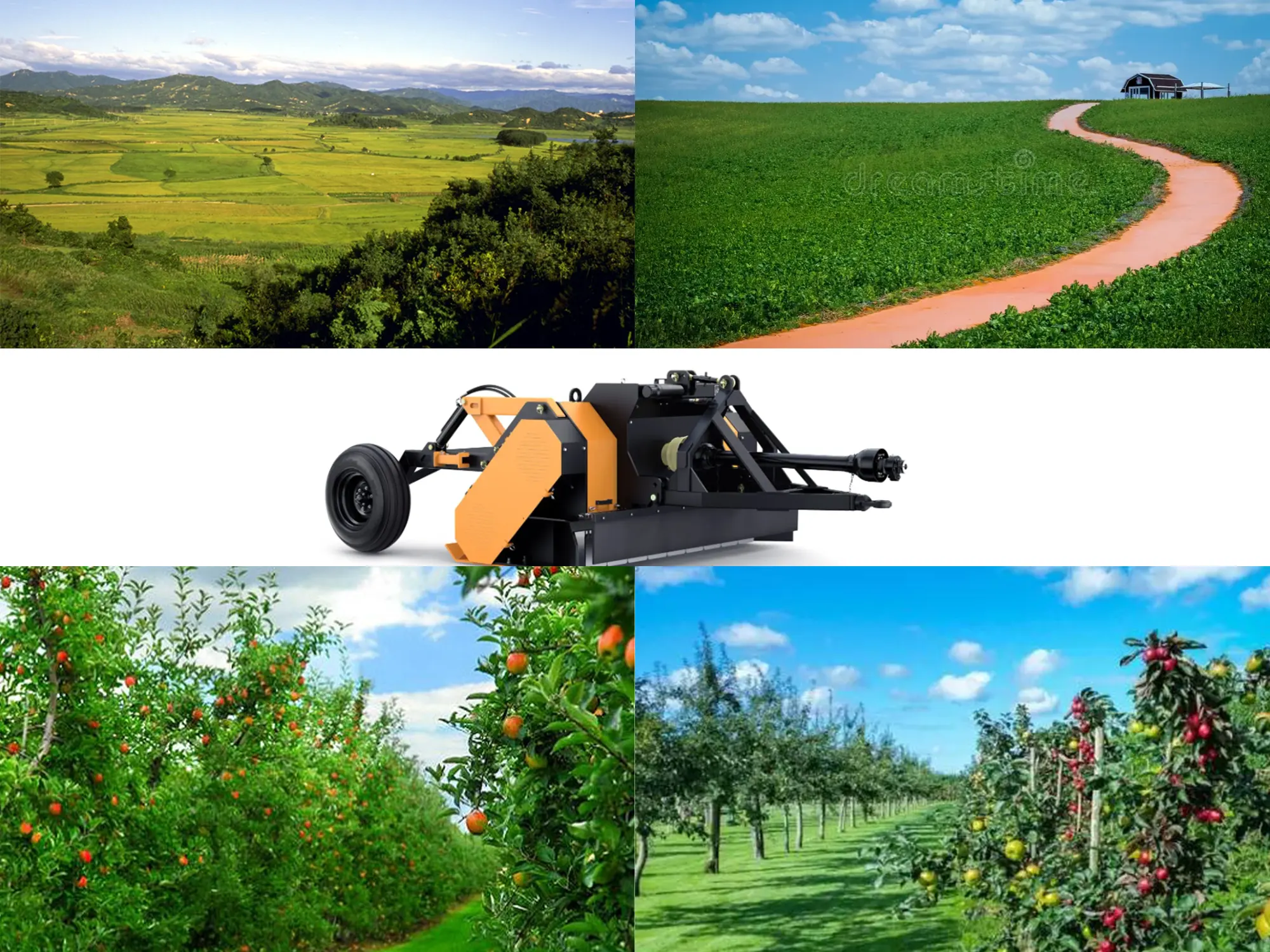
Unlike most agricultural markets where farmers plant and then find buyers, the Korean kimchi cabbage market operates on a demand calendar driven by the kimjang season — the annual nationwide kimchi-making period centred on November. Understanding this reverse-demand calendar is essential for planning the stone clearing and field preparation timeline.
The Kimjang Supply Chain — Working Backwards From November to the Field
The Head Damage Mechanism — How Stones Split Cabbage Wrappers
Cabbage head damage from stone contact during heading is different in mechanism from potato hollow heart, garlic bulb splitting, or radish root forking. Understanding the specific mechanism clarifies both the severity of the risk and the exact depth at which stone clearing is most important for cabbage.
Cabbage Head Formation — Stone Contact Effect on Wrapper Leaves
Stone-Free → Grade 1
Symmetric round head
Tight wrapper, no splits
≥2.5 Kg → Grade 1
15–20cm depth
↓
lateral
pressure
Stone-Present → Grade 2/3
Split outer wrapper
Deformed head geometry
→ Grade 2 or Grade 3
Schematic illustration of cabbage head formation disruption by lateral stone pressure during wrapper leaf expansion (Days 50–80 after transplanting).
The cabbage heading phase begins at approximately Day 50 after transplanting in Korean highland summer conditions and continues for 25–30 days. During this phase, the inner leaves curl inward under hormonal direction while the outer wrapper leaves expand outward — creating the characteristic tight, round head structure. The expansion of the outer wrapper requires the soil immediately surrounding the head to yield outward under the head’s growing pressure. On a stone-cleared field, this outward expansion encounters only fine-tilth soil that compresses easily. On an un-cleared field, the expanding outer wrapper can encounter a stone at the 15–20 cm heading depth — and the stone’s resistance splits the wrapper leaf rather than allowing it to expand past the obstacle.
The split is permanent and immediately visible — a Grade 1 cabbage inspector identifies a split wrapper in under 3 seconds and the head is redirected to Grade 2 or Grade 3 regardless of its weight or internal structure quality. Unlike potato bruising (which is internal and invisible at grading), cabbage wrapper splits are the most obvious and unavoidable quality defect at kimchi manufacturer intake.
Stone Clearing Depth for Cabbage — Shallower Than Radish, Requiring Specific Timing
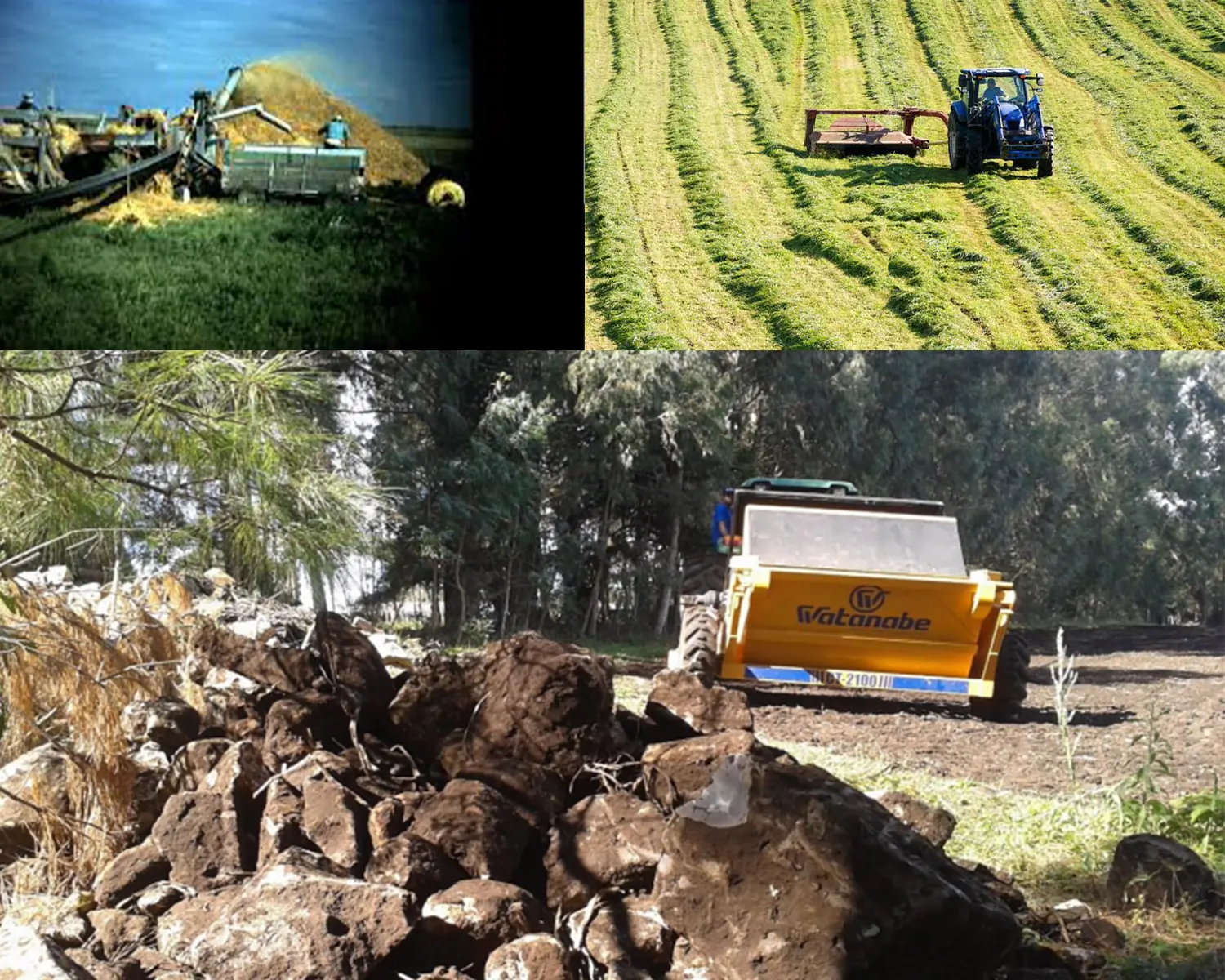
Korean highland napa cabbage develops its head at 10–20 cm depth above the soil surface as the crop matures — the head is not underground like potato, garlic, or radish. The stone clearing requirement for cabbage is therefore focused on the zone where the outer wrapper leaves expand during heading: the 15–25 cm depth band that surrounds the head at the ridge’s shoulder level. This is shallower than the 30–35 cm required for radish, but requires a specific stone size standard because even 3–5 cm stones at the heading depth can cause the wrapper splits that produce Grade 2 classification.
THOR 2.4 depth protocol for cabbage
First-season clearing: 22–26 cm operating depth. Removes stones from the heading zone (15–20 cm) and provides a 5 cm safety margin below. Operating speed: 2.0–2.5 km/h in Korean highland spring soil conditions. CT-2100 collection immediately follows. Annual maintenance: 18–20 cm depth — the annual frost-heave cycle brings sub-surface stones into the 15–20 cm zone; the annual maintenance pass removes this annual addition without the deeper full-profile clearing required in the first season.
Critical timing constraint
Korean highland summer cabbage is transplanted in late June to early July from nursery seedlings that are booked in advance. The seedling nursery operates on a fixed delivery schedule — if the field is not cleared and ridged before the delivery date, the nursery cannot hold seedlings for more than 2–3 additional days. Any clearing delay that pushes the field preparation past the nursery delivery date means no cabbage production for the entire season. Begin the April stone clearing window by April 10 at the latest for a late-June transplanting date.
Transplanting Efficiency — How Stone Clearing Changes the Establishment Rate
Korean highland cabbage is transplanted as seedlings (not direct-seeded like radish) — typically 3–4 week old transplants placed at 40–50 cm spacing along the ridge. The transplanting operation, whether by hand or mechanical transplanter, is directly affected by stone content in the ridge’s root establishment zone.
| Parameter | Stone-Cleared Field | Un-Cleared Field |
|---|---|---|
| Transplanting depth consistency | ±1–2 cm variation | ±4–8 cm variation (stone deflects planting tool) |
| Establishment rate at 2 weeks | 92–96% | 75–85% (shallow transplants wilt in July heat) |
| Re-transplanting labour (gaps) | 2–4% of plants | 10–20% of plants require re-transplanting |
| Heading uniformity (for harvest timing) | Field heads within ±5 days of each other | ±10–15 day spread from uneven establishment |
| Mechanical transplanter viability | ✅ Operates reliably — no stone deflection | ⚠ High machine damage risk from stone contact |
The heading uniformity row in the table above deserves particular attention. When cabbage plants establish at different depths on un-cleared fields, their development rate varies by 5–7 days across the field — producing a harvest that cannot be completed in a single pass. A field with ±15 day heading spread requires 3–4 separate harvest passes over 3 weeks, each collecting the heads that have reached maturity. This fractured harvest schedule conflicts with the kimchi manufacturer’s delivery schedule, which expects full-field deliveries on contracted dates rather than multiple partial deliveries. Stone clearing’s contribution to heading uniformity is therefore directly linked to supply chain contract compliance.
Soil pH Management for Cabbage — The 6.0–6.8 Band and Clubroot Prevention

Cabbage has the widest pH tolerance of the major Korean highland crops — the acceptable range of 6.0–6.8 is broader than garlic’s narrow 6.0–6.5. However, cabbage’s specific vulnerability is to the soil-borne pathogen Plasmodiophora brassicae, which causes clubroot — a severe root gall disease that stunts or kills cabbage plants and has no cure once established in a field. The clubroot pathogen thrives in acidic soils below pH 5.7 and is dramatically suppressed above pH 6.5. Korean highland granite soils, naturally at pH 4.5–5.5, are in the optimal clubroot infection zone without annual lime treatment.
Cabbage Soil pH Band — 6.0–6.8 Target and Clubroot Prevention
Korean granite baseline
Optimal cabbage growth
iron chlorosis risk
2.5–4.0 t/ha agricultural lime per cycle (every 1–2 years on Korean highland granite soil). Slightly higher than the garlic requirement due to cabbage’s need for the 6.5+ range for maximum clubroot suppression.
Apply lime after CT-2100 stone collection, before PSW-3200 ridge formation. The lime must be incorporated by PSW-3200 to 22–25 cm depth — surface-applied lime addresses only the top 3–5 cm, leaving the heading depth zone (15–20 cm) at un-amended acidic conditions where clubroot continues to develop.
Once Plasmodiophora brassicae establishes in a field, it persists in the soil for 15–20 years as resting spores. Prevention through pH management is the only effective strategy — there is no economically viable treatment after establishment. A single season of lime omission on a brassica-cropping highland field at pH below 5.7 can introduce clubroot that makes all future brassica production on that field high-risk.
Brassica Rotation Disease Break — What Cabbage Does for the Farm Rotation
Cabbage in the Korean highland rotation provides a different biological service from radish’s taproot biopore network or garlic’s nitrogen-fixing synergies. The brassica family’s specific contribution is as a disease break — a rotation year that interrupts the accumulation of the soil-borne pathogens that affect potato and garlic without affecting brassicas.
The recommended 4-year highland rotation incorporating cabbage: Year 1 potato, Year 2 garlic, Year 3 cabbage (brassica break), Year 4 potato — captures the brassica disease break benefit for both the potato and garlic crops while maintaining the premium kimjang-season revenue that cabbage provides in Year 3. The stone-cleared field infrastructure supports all three crops without modification — the same THOR 2.4, CT-2100, PSW-3200, and DCW 2.2 system serves each crop in the rotation with only depth setting and lime rate adjustments.
Production Economics — Grade 1 Highland Cabbage Revenue Per 10a
Korean Highland Baechu Cabbage — Cleared vs Un-Cleared Field Economics (per 10a / 1,000m²)
Per 10a (1,000m²). For 1 ha: multiply by 10. Representative figures — confirm with current kimchi manufacturer intake prices before planning. Yield figures assume standard highland summer cabbage variety, adequate water supply.
Frequently Asked Questions
Korean highland cabbage stone clearing guide — what depth and timing does the THOR 2.4 need for baechu production?
The recommended THOR 2.4 clearing depth for Korean highland napa cabbage production is 22–26 cm on first-season un-cleared ground, and 18–20 cm for annual maintenance on previously cleared fields. The April operating window (early April to mid-May) is the required timing — the stone clearing, CT-2100 collection, DCW 2.2 lime application, and PSW-3200 ridge formation must all be complete before the late-June nursery seedling delivery date. The THOR 2.4’s 22–26 cm depth removes stones from the zone where cabbage outer wrapper leaves expand during heading (Days 50–80 after transplanting at 15–20 cm depth). The CT-2100 collects the cleared fragments permanently — un-collected cleared stone fragments remain in the root zone and can still cause wrapper splits even after THOR 2.4 fragmentation, as smaller fragments (2–5 cm) at heading depth create sufficient lateral resistance to redirect wrapper expansion. Always pair the THOR 2.4 clearing with CT-2100 collection before seedling delivery.
What is clubroot and how does stone clearing help prevent it in Korean highland cabbage production?
Clubroot (Plasmodiophora brassicae) is a soil-borne disease that causes severe root galls on all brassica crops — cabbage, radish, turnip, mustard greens. The pathogen thrives in acidic soil below pH 5.7 and persists as resting spores for 15–20 years once established. Stone clearing does not directly suppress clubroot — however, it creates the conditions for effective clubroot prevention by enabling the DCW 2.2 lime application and PSW-3200 incorporation that raise the soil pH above the clubroot suppression threshold (6.5+). On un-cleared Korean highland granite soil at pH 4.5–5.5, clubroot has a high establishment probability. On stone-cleared, lime-incorporated soil at pH 6.2–6.8, clubroot infection risk is dramatically reduced. The stone clearing operation is therefore the enabler of the lime management programme that prevents clubroot — they are functionally inseparable in the context of Korean highland brassica production. A Korean highland farm producing cabbage without lime incorporation (because the DCW 2.2 or equivalent machine is not available) on low-pH granite soil is operating under continuous high clubroot risk regardless of stone clearing status.
Can the same THOR 2.4 and PSW-3200 system serve both cabbage and potato in a Korean highland rotation without reconfiguration?
Yes — the same THOR 2.4 and stone management system serves both cabbage and potato production with only the operating depth setting and lime rate adjusted. The THOR 2.4 for cabbage fields uses 22–26 cm depth (vs 28–32 cm for potato); the PSW-3200 for cabbage ridges uses 1,000 RPM at 2.0 km/h to produce fine-tilth at 20–22 cm (same as potato pre-planting specification). The DCW 2.2 lime rate for cabbage is slightly higher (2.5–4.0 t/ha vs 2.0–3.0 t/ha for garlic) to target the 6.5+ pH that maximises clubroot suppression. These adjustments take less than 30 minutes to implement and do not require any additional tooling or attachment changes — they are operating parameter decisions, not machine configuration changes. The full Korea Watanabe stone management system is explicitly designed to serve multiple Korean highland crop rotations without additional investment, which is why the ROI calculation for the system covers the full crop rotation revenue, not just a single crop.
Is there a direct kimchi manufacturer supply contract available for Korean highland cabbage, and how does stone clearing help secure it?
Yes — major Korean kimchi manufacturers (and their cooperative aggregators) maintain direct supply contracts with highland cabbage producers who can demonstrate consistent Grade 1 delivery at scale. These contracts specify: minimum annual delivery volume (typically 50–200 tonnes per year), minimum Grade 1 proportion (85% or above for direct-contract pricing), delivery timing (September 20 – October 25 for kimjang season supply), and food safety documentation (GAP certification or equivalent). Stone-cleared highland cabbage production reliably achieves the 85%+ Grade 1 threshold — un-cleared field production at 58–68% Grade 1 proportion does not meet the direct-contract Grade 1 minimum and can only be sold into the cooperative channel at standard bulk pricing. Stone clearing is therefore the physical prerequisite for direct kimchi manufacturer contract eligibility, just as it is for other premium market access across all Korean highland crops. Korea Watanabe advises customers on the complete preparation required for direct kimchi manufacturer contract entry — including stone clearing, GAP certification, and delivery logistics — as part of the field preparation consultation.
How does the 4-year cabbage rotation interact with the Korean agricultural machinery subsidy for the full machine system?
The 4-year rotation (potato → garlic → cabbage → potato) is a standard highland crop diversification strategy, and the THOR 2.4 rock crusher + CT-2100 rock picker + PSW-3200 system is the infrastructure that serves all four rotation crops from a single machine investment. For the 2026 MAFRA subsidy application, the machine investment is justified on the full rotation’s crop revenue — not just one crop. Korea Watanabe’s combined subsidy strategy supports applications that list the full intended crop rotation as the farm’s agricultural programme, which strengthens the subsidy justification because the machines serve multiple registered crop types. The DCW 2.2 lime spreader, added as a Stage 2 purchase after the initial stone clearing system, is justified specifically by the cabbage and garlic pH management requirement — another subsidy application that can be made in Year 2. Contact Korea Watanabe to structure the multi-year subsidy application plan for the complete 4-rotation highland farm system.
Cabbage Field Preparation — April is the Deadline for Kimjang Season Revenue
Field area + cabbage transplanting date + current pH + kimchi manufacturer or cooperative target → Korea Watanabe provides the April clearing schedule, THOR depth protocol, DCW 2.2 lime rate, PSW-3200 ridge specification and 2026 subsidy calculation for cabbage production.
Editor: Cxm