Every crop in this E-series guide — from vineyard to coffee — has justified stone clearing by the same core argument: stone in the root zone restricts root development, reduces yield and quality, and the removal cost is repaid over a multi-year production cycle. Strawberry breaks this pattern in almost every respect. It is an annual or biennial crop. Its stone problem is at a depth shallower than any root system in this guide. Its clearing benefit is realised in the same season that clearing is performed. And its premium quality market — the Korean tunnel strawberry industry, producing the world’s most expensive commercial strawberries at scale — creates the highest per-hectare value of any crop in this guide at approximately US$180,000–400,000 per hectare for premium Seolhyang production.
The stone management argument for strawberry begins not with the root zone but with the drip irrigation system. A drip tape buried at 8–12 cm depth — shallower than any structural root in the asparagus, avocado, walnut, or coffee articles — is punctured by a single angular stone fragment during bed formation. That puncture drops the line pressure in the affected bed section from the designed 0.8–1.2 bar to near zero, preventing uniform water delivery to the entire run of plants above it. No other crop in this guide fails this completely, this quickly, from a single stone. This guide covers the rock crusher for strawberry farm application through the three mechanisms that make strawberry stone management categorically different from all prior E-series articles, and the four global markets where those mechanisms converge.
Drip Tape at 8–12 cm — The Shallowest Clearing Target in This Guide

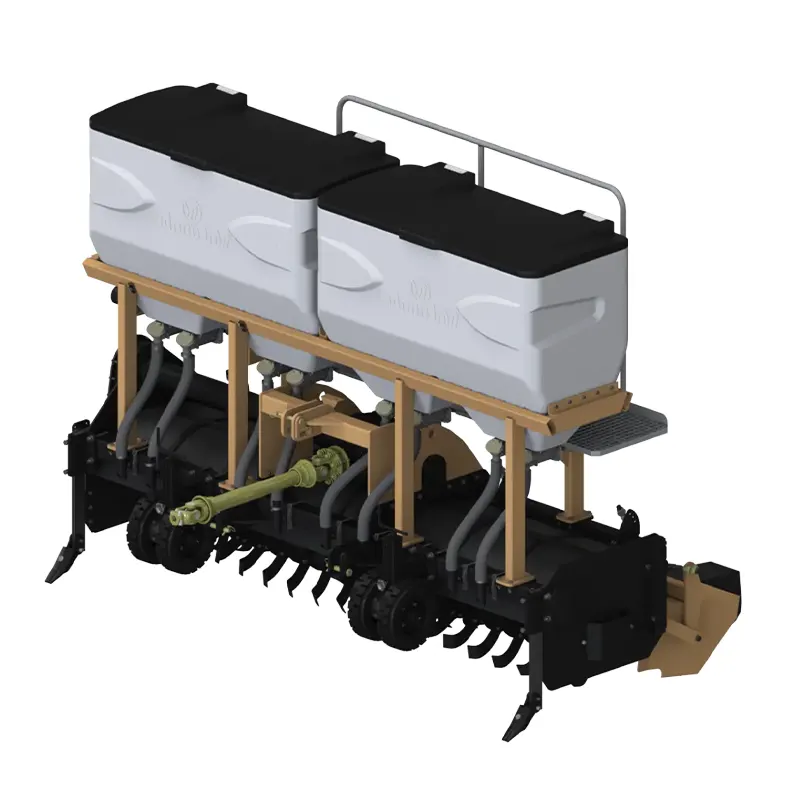
The defining characteristic of modern commercial strawberry production is the plasticulture system: raised beds of 20–30 cm height, formed by a bed-shaping machine that simultaneously shapes the soil, lays black polyethylene mulch, and buries the drip tape at 8–12 cm depth in a single pass. This system — standard practice in Korea, Spain, California, and Chile — delivers the water and fertiliser directly to the strawberry root mat with minimal evaporation loss and maximised disease suppression from the dry soil surface above the plastic.
E-Series Clearing Depth Spectrum — Strawberry vs All Prior Crops
Fumigation Stone Refugia — Why Stones Preserve the Pathogens You Are Trying to Kill

Most strawberry production in commercial intensively managed districts requires pre-plant soil fumigation to break the cycle of soilborne diseases — primarily Fusarium oxysporum f. sp. fragariae (Fusarium crown and root rot), Verticillium dahliae (Verticillium wilt), and Pratylenchus penetrans そして Meloidogyne spp. (root-knot nematodes). The fumigants used — 1,3-dichloropropene/chloropicrin combination (Telone II/Pic), dazomet (Basamid), or metam sodium — function as gases that diffuse through the soil pore network from the injection point. Their efficacy depends entirely on achieving uniform gas distribution throughout the treated volume before the soil is sealed with the polyethylene mulch.
Fumigant gas diffuses through the soil via the inter-particle pore network — the spaces between soil particles. In fine-textured soil with uniform particle size (silt loam or sandy loam), gas diffuses at consistent rates in all directions from the injection point. A stone at 5–25 cm depth is effectively impermeable to fumigant gas — its dense crystalline or sedimentary structure has no connected pore network accessible to the gas. The stone creates a “shadow zone” behind it (in the direction away from the injection point) where fumigant concentration never reaches the lethal threshold for the target organisms. Size of shadow zone: approximately 2–3× the stone’s cross-sectional diameter. A 6 cm stone creates a 12–18 cm shadow zone — sufficient to protect a Fusarium colony or nematode population through the full fumigation period.
The fumigant dissipates from the soil within 7–14 days of injection (the purpose of sealing the plastic mulch is to extend this window). After plastic removal or perforation for planting, the surviving pathogen populations in stone shadow zones begin expanding immediately — they are now the only inoculum source in the field, operating from the protected stone refugia. Fusarium spreads through soil at approximately 2–5 cm per week in moist conditions; nematodes migrate 10–30 cm per week. Within 6–8 weeks of planting, stone shadow zones have re-inoculated the surrounding soil, and within one full season, the fumigation investment has been largely negated. This re-inoculation cycle explains the widely observed phenomenon of “fumigation failure” on stone-laden strawberry fields — the fumigant was applied correctly, but the stone refugia prevented complete pathogen break.
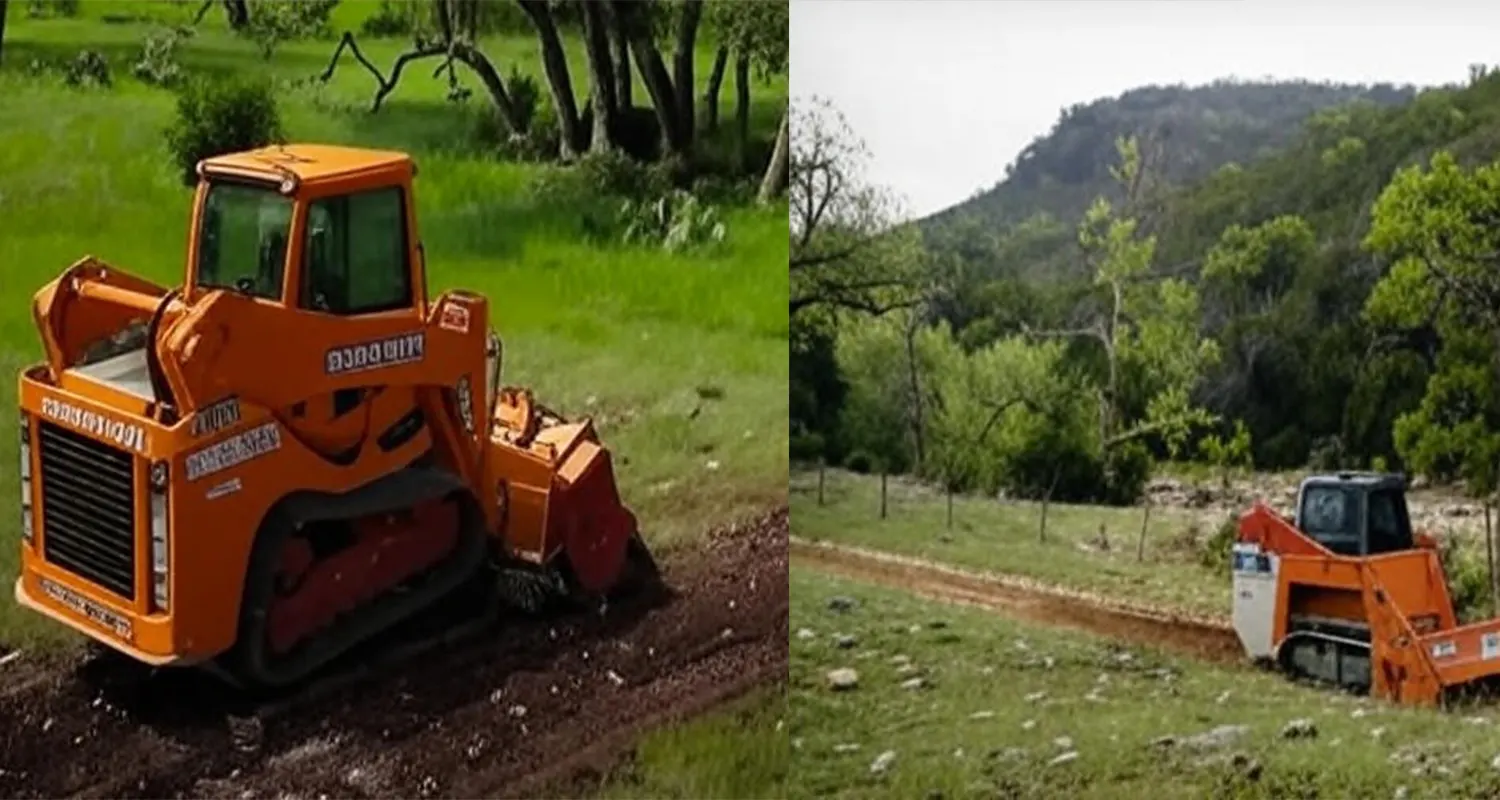
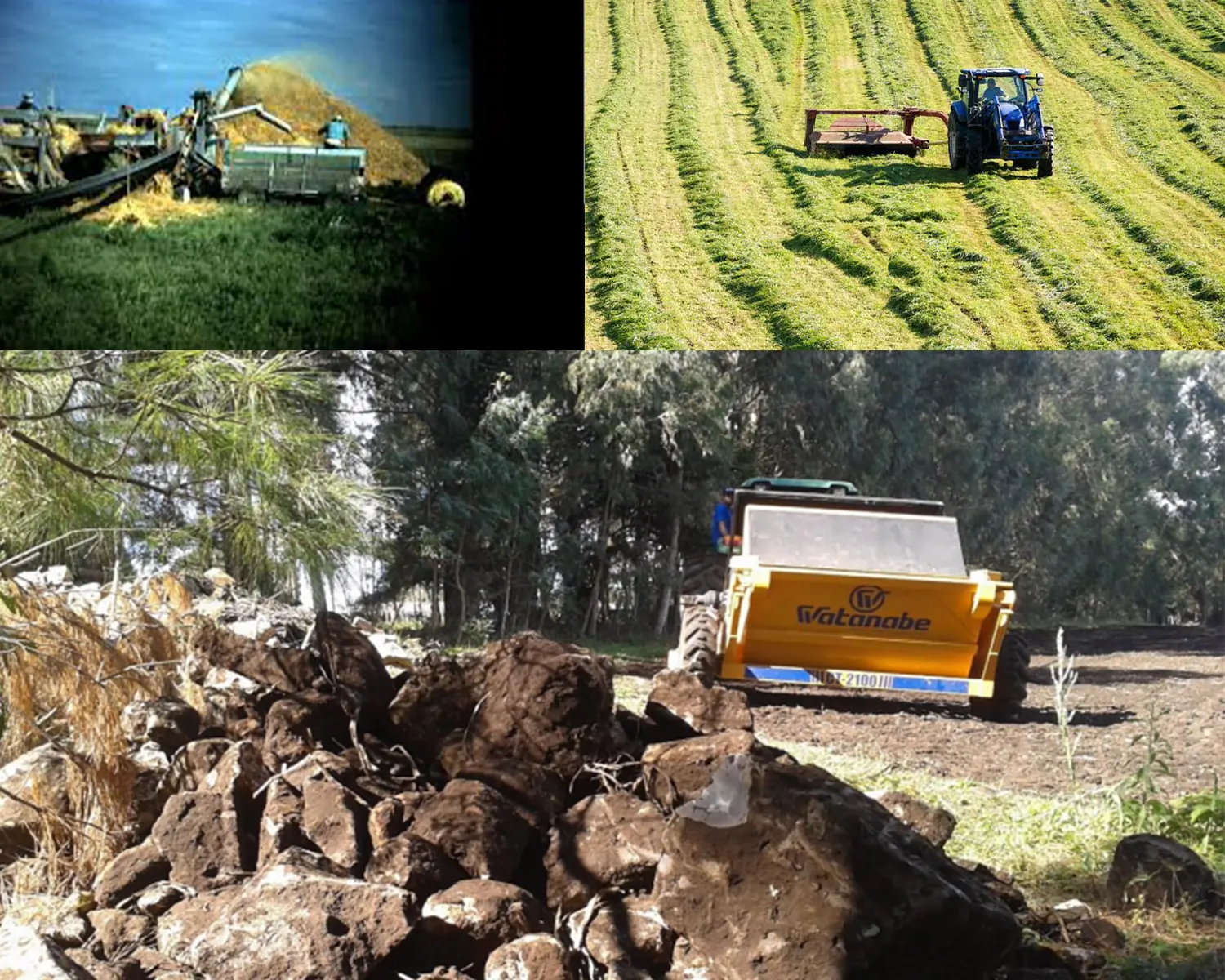
Pre-plant stone clearing with トラクター式岩石破砕機 followed by CT-2100 ロックピッカー permanent collection eliminates the stone refugia from the fumigation zone. When all stones above 3 cm are removed from the 0–22 cm profile, the fumigant gas diffuses uniformly through the entire treated volume without obstruction — achieving the complete pathogen break that is the purpose of the fumigation investment. UK and California strawberry extension advisories consistently identify stone-free soil preparation as a prerequisite for reliable fumigation efficacy, not a supplementary improvement. Fumigation cost for one hectare of strawberry: typically €800–1,800/ha. Stone clearing cost: €600–1,200/ha. The clearing cost is approximately equal to the fumigation cost it protects — and without clearing, a significant portion of the fumigation investment achieves no lasting disease suppression.
The Korean Seolhyang Premium — World’s Most Expensive Commercial Strawberry
Korea is the most valuable strawberry market in the world, measured by per-kilogram farmgate price at premium grade. The dominant commercial variety — Seolhyang (meaning “snow fragrance”) — was developed by the Rural Development Administration in 2005 specifically for Korea’s cold-season tunnel production system. At the Korean premium wholesale market, Seolhyang priced at Brix ≥14.0 routinely achieves ₩50,000–70,000 per kilogram (approximately US$38–53) during the peak December–February season — a price per kilogram approximately 25–35 times the Spain Huelva spot price for standard Camarosa in the same period, and approximately 15–20 times the California Albion price.
| 学年 | Brix | Price (₩/kg) | 根圏の状態 | Stone management |
|---|---|---|---|---|
| Premium (Top Grade) | ≥ 14.0 | ₩50,000–70,000 | Deep feeder mat (0–20 cm) unobstructed. Consistent irrigation. Full Brix accumulation in cold nights. | Stone-free to 22 cm. Drip tape undamaged. Fumigation complete. |
| Grade 1 | 12.0–13.9 | ₩25,000–40,000 | Moderate root restriction from stone. Uneven irrigation from partially compromised drip tape. | Some stone remaining. 5–15% drip tape puncture rate. Partial fumigation. |
| Grade 2 | 10.0–11.9 | ₩12,000–22,000 | Significant root restriction. Multiple drip failures. Soilborne disease present from fumigation refugia. | High stone density. >20% drip tape puncture. Incomplete fumigation break. |
| Processing / rejection | < 10.0 | ₩3,000–8,000 | Severe disease, drip failure, root restriction. Plant stunting from combined stone effects. | Un-cleared stone ground. Drip system failed. Soilborne disease unchecked. |
The Korean stone clearing ROI — same season payback
For a 2,000 m² Korean tunnel strawberry unit (standard single grower unit size): Stone clearing cost (THOR 2.4 + CT-2100 for one 0.2 ha tunnel): approximately ₩800,000–1,200,000 (US$600–900). Annual production: approximately 3,000 Kg of Seolhyang from 2,000 m². Premium grade (Brix ≥14) on cleared ground vs Grade 2 (Brix 11-12) on stone-restricted ground: ₩60,000 vs ₩18,000 per Kg. On 30% of production (the fraction typically upgraded from Grade 2 to Premium by stone management alone): 900 Kg × ₩42,000 incremental price = ₩37,800,000 (US$28,000) additional revenue in Year 1.
Stone clearing cost of ₩800,000–1,200,000 against ₩37,800,000 Year 1 revenue uplift: payback ratio approximately 30:1 to 47:1 in the first production season. No other crop in this E-series guide achieves payback within the same season of the clearing investment.
Annual Crop Economics — Why Strawberry Stone Clearing Works Differently
The economic structure of stone clearing for strawberry is the inverse of every other crop in this guide. In all prior E-series articles — vineyard (E-1), olive (E-2), asparagus (E-9), hazelnut (E-14), coffee (E-17) — the clearing investment is amortised over 5–50 years of productive orchard or plantation life. The stone clearing cost for strawberry is paid back in a single production cycle, and the benefit recurs every year that the field remains in strawberry production.
Once a field is stone-cleared to 22 cm and the stone population is permanently removed by CT-2100 collection, three annual benefits recur for the field’s productive life: (1) drip tape puncture rate drops to near zero each season’s bed installation — tape purchased does the job it was bought for; (2) fumigation achieves complete pathogen break each pre-plant cycle — the fumigation investment is fully utilised; (3) Brix development is consistent and high each season, achieving premium grade rather than Grade 2. The only recurrent stone management cost is a THOR maintenance pass at 12–16 cm after the final harvest strip and before the next season’s bed formation — to remove frost-heave and root-channel residuals. This maintenance pass costs approximately 20–30% of the original clearing investment per year.
Standard annual vegetable crops (brassica, root crops, salad) are rotated annually and require soil preparation regardless of stone, so stone clearing for vegetables is often absorbed into the general cultivation programme. Strawberry is typically produced on the same field for 2–5 consecutive years before fumigation rotation requires the field to be temporarily taken out of strawberry production. During this consecutive period, the stone clearing investment earns its return in every season. For tunnel strawberry in Korea, where tunnel infrastructure (steel hoops, covering film, heating system) is fixed for 10–20 years at one location, the field below the tunnel infrastructure may remain in strawberry for 5–8 consecutive cycles — meaning the clearing investment earns its return 5–8 times before any new clearing is needed.
Four Markets — Stone Profiles and Clearing Specification
Machine System — Pre-Season Clearing Protocol for Plasticulture Strawberry

よくある質問
Rock crusher for strawberry farm — why is the THOR needed at only 15-22 cm when the machine is designed for 40-80 cm permanent crop clearing?
The THOR’s design operating range spans from its minimum clearing depth (approximately 10–12 cm) to its maximum (50–60 cm depending on model). For strawberry clearing at 15–22 cm, the THOR operates at the shallow end of its range — which means it runs at significantly higher forward speed (3.5–4.5 km/h) than deep permanent crop operations (0.6–2.5 km/h). The machine’s rotor speed, tooth count, and rotor diameter are unchanged — the depth is simply set shallower. The result is that a 1-hectare strawberry field can typically be cleared in 2–4 hours with the THOR 2.4 at strawberry depth, compared to 6–12 hours for a 1-hectare walnut orchard at caliche depth. The THOR’s versatility across this depth range makes it an extremely efficient tool for annual strawberry preparation precisely because the shallow clearing specification allows the highest possible daily coverage rate. For Korean tunnel operations where the machine must work within the tunnel structure (typically 6–8 m clear width between tunnel side posts), the THOR 2.4 at 2,400 mm working width fits comfortably — the THOR 3.0 at 3,000 mm typically requires removing side curtains before operation within the tunnel structure.
Is soil fumigation for strawberry still permitted in Korea and Spain, given the global phase-out of methyl bromide?
Methyl bromide was phased out under the Montreal Protocol by 2005 for most developed countries, and Korea and Spain completed their transitions in the early 2010s. Current permitted fumigants in the Korean tunnel strawberry system are: dazomet (Basamid GR, granular) — the most widely used in Korean tunnels due to its handling safety and compatibility with tunnel structures; metam sodium (applied through irrigation system); and limited-registration use of chloropicrin on some commercial operations. In Spain, 1,3-dichloropropene/chloropicrin combination (Telone C35) is the primary commercial option for large outdoor operations in Huelva, with metam potassium as an alternative. In California, 1,3-D/Pic is the industry standard, subject to county permit requirements and buffer zone regulations. All of these alternatives function as gases and are subject to the stone refugia problem described in Section 2 — the mode of action (gas diffusion through soil pore network) is the same for all fumigants, so the stone clearing requirement for uniform coverage applies equally to all permitted alternatives. The transition from methyl bromide has in some cases increased fumigation costs (the alternatives are more expensive per hectare) — which increases the economic incentive for stone clearing that maximises the efficacy of the more expensive alternatives.
For Korean tunnel strawberry, does the clearing need to happen inside the erected tunnel structure or before the tunnel infrastructure is built?
Best practice in Korean tunnel strawberry stone clearing depends on where the farm is in its development cycle. For new tunnel construction: clear the field with THOR 2.4 before the tunnel hoops and side posts are installed — this provides unrestricted machine access across the full field width and is far more efficient than working within the erected structure. For established tunnels in annual rotation: the THOR 2.4 at 2,400 mm working width fits within a standard Korean single-span strawberry tunnel (6–8 m clear span) by making two to three passes within the tunnel bay, with the tractor entering and exiting through the tunnel end openings. This within-tunnel operation is feasible but requires careful driver management to avoid contact between the tractor or THOR frame and the tunnel arch supports. Korean agri-machinery contractors experienced in tunnel strawberry preparation have developed specific THOR operating protocols for within-tunnel use, typically involving reducing working width to 2,000 mm (adjustable within the THOR 2.4’s range) for central bay passes and making narrower passes along the side rows. For initial installation on an established farm where tunnel infrastructure prevents normal field access, the practical recommendation is to conduct within-tunnel clearing in year one, then transition to a pre-winter between-season field clearing programme that removes the plastic and old crowns before the THOR pass, ahead of the next season’s bed installation.
How does the Botrytis grey mould risk from stone surface moisture mentioned earlier actually function — and does clearing reduce it measurably?
Botrytis cinerea (grey mould) is the primary post-harvest disease of strawberry — responsible for the greatest losses in the fresh market chain from farm to retail. Its infection of strawberry fruit requires two conditions: free moisture on fruit or flower tissue, and the presence of fungal spores in the local crop microclimate. Surface stones in the strawberry row create a specific microclimate issue: stone fragments at the soil surface or protruding into the plant canopy area hold dew and irrigation splash water for significantly longer than the surrounding mulch surface or bare soil. The moisture retention in the stone-adjacent microzone extends the daily period of high humidity in the plant’s basal leaf zone — the primary site for initial Botrytis infection that then spreads upward to developing fruit. This moisture mechanism is documented in strawberry Botrytis management literature as a reason for keeping the floor of the fruit canopy dry. On stone-cleared ground with clean raised beds and undamaged plastic mulch, the floor of the canopy is dominated by dry plastic — the stone-adjacent moisture pockets are absent. Field trial data from Korean Rural Development Administration research stations in Nonsan show consistently lower Botrytis incidence per season on stone-cleared plots versus equivalent un-cleared control plots under the same spray and ventilation management — a 15–25% reduction in mouldy berry percentage at harvest on the cleared plots.
Is stone clearing for Korean tunnel strawberry eligible for the MAFRA Smart Farm or rural development machinery support programme?
The Ministry of Agriculture, Food and Rural Affairs (MAFRA) and the Korea Rural Community Corporation (KRC) both operate capital machinery support programmes for agricultural equipment investment. The primary programme relevant to stone clearing for strawberry is the Agricultural Machinery Support Programme (Agricultural Machinery Support Programme), which provides co-funding for agricultural machinery purchase by registered farmers. Stone crushing and rock picking machinery has been included in the eligible equipment categories in recent programme cycles — the Korean Agricultural Machinery Industry Association (Korea Agricultural Machinery Industry Association) can confirm current eligible machinery categories and co-funding rates for the current programme cycle. Additionally, the Smart Farm Innovation Valley programme (Smart Farm Innovation Valley) supports integrated digital farming infrastructure including soil preparation equipment for tunnel crops. Confirm current eligibility with the relevant Provincial Agricultural Technology Centre (Provincial Agricultural Technology Centre) for your province. Korea Watanabe provides full Korean-language technical documentation and machinery certification materials for MAFRA programme applications.
Rock Crusher for Strawberry Farm — Drip Tape Depth and Fumigation Clearing Protocol
Farm type (tunnel/outdoor) + stone density survey + regional geology + tunnel width → Korea Watanabe provides the correct rock crusher for strawberry farm specification, drip tape protection protocol and Seolhyang Brix premium ROI calculation.
韓国渡辺ロッククラッシャートラクター株式会社 — 京畿道安山市
エイター: Cxm