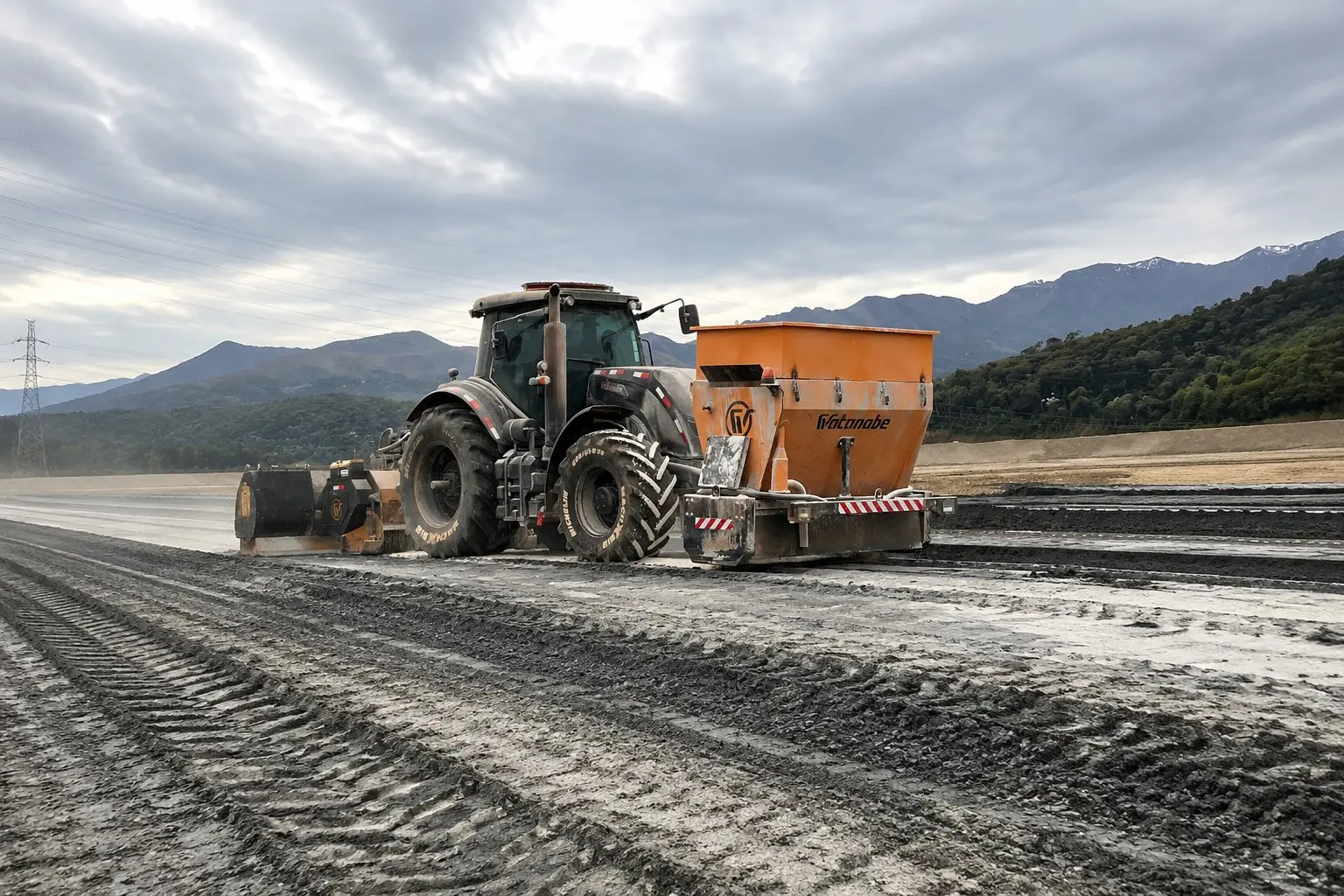
The THOR ST soil stabilizer and DCW 2.2 binder spreader form the core of the Watanabe full-depth reclamation (FDR) system — the method of rural road rehabilitation that converts existing failed road material into a structurally improved base without excavation or aggregate import. Earlier guides on this website have explained the engineering of FDR and the soil types where it works best. This guide focuses on a different question that Korean road project managers, county procurement officers, and agricultural contractors ask before committing to the FDR approach: what does it actually cost, and how do I calculate whether it is worth it for my specific project?
The honest answer is that FDR project economics are highly site-specific — dominated by aggregate haulage distance, binder material costs, and project scale. This guide provides the analytical framework for the calculation, identifies the key input variables and where they are sourced from Korean market conditions, and explains the project planning decisions that affect whether a THOR ST FDR project delivers the documented 40–60% cost reduction relative to conventional reconstruction.
ⓘ Important note on cost figures in this guide
Korean construction material prices, fuel costs, and contractor day rates change with market conditions. This guide provides a cost analysis framework and identifies the dominant cost drivers — it does not state specific KRW amounts for any line item, as these change with market conditions and would mislead if presented as fixed values. Use the framework with current market quotes for your specific project location.
Where the Cost Savings Come From — The Three Eliminated Cost Centres
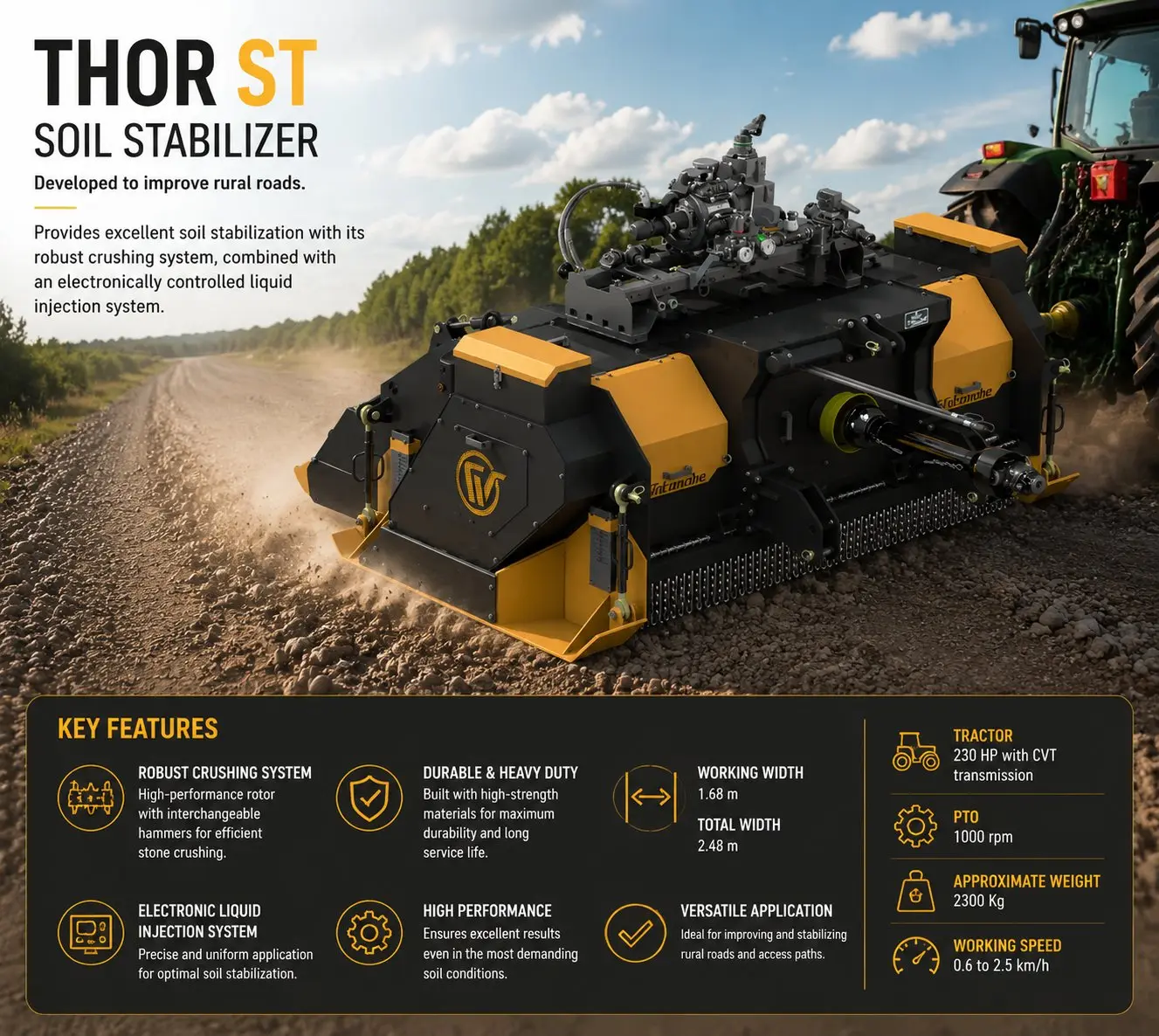
Full-depth reclamation with the THOR ST system achieves cost savings over conventional reconstruction by eliminating three cost centres that are unavoidable in conventional road rebuilding:
The relative magnitude of each of these three eliminated costs determines the project-specific savings from FDR. The aggregate import elimination is by far the most variable — and in Korean highland conditions, it is typically the largest single cost item in conventional reconstruction, making FDR’s savings most pronounced precisely in the highland areas where rural road rehabilitation need is greatest.
The Cost Calculation Framework — Inputs for Your Project
Use this framework to estimate the FDR cost and the conventional reconstruction cost for a specific Korean rural road project. The framework identifies the input variables you need to obtain from current market quotes before making a comparison.
FDR System Cost Components
Conventional Reconstruction Cost Components
The decisive variable: aggregate haulage distance
Of all the cost line items above, aggregate haulage distance is the variable that most determines FDR’s cost advantage in Korean conditions. In areas with a quarry within 15–20 km of the project site, aggregate haulage cost is moderate and FDR’s advantage is 30–40%. In Korean highland areas where the nearest quarry is 50–80+ km from the project (common in remote Gangwon-do valleys and North Gyeongsang highland zones), aggregate haulage cost becomes the dominant cost item in conventional reconstruction, and FDR’s advantage widens to 50–65%. Always obtain the quarry distance and haulage rate for your specific project location before completing the cost comparison.
THOR ST and DCW 2.2 — Key Specifications for Project Planning
THOR ST 土壌安定剤
Rear-mounted on CVT tractor
- ▸Min. tractor: 250 CV, CVT mandatory
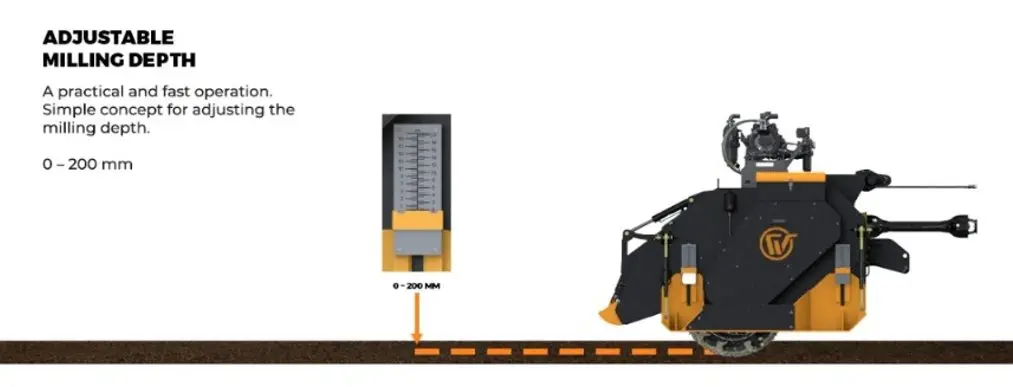
- ▸Milling depth: 0–200 mm (adjustable)
- ▸作業速度:0.5~1.5 km/h
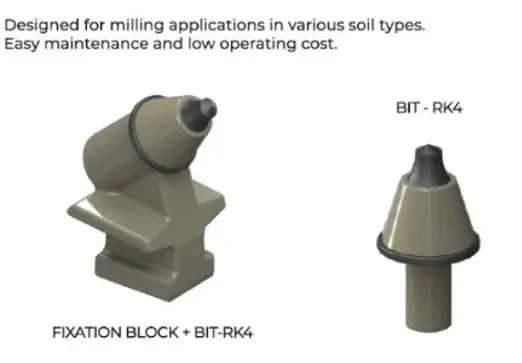
- ▸Rotor: 92 Kennametal RK4 bits
- ▸Machine weight: 5,300 Kg
- ▸PTO: 1000 RPM, 1.3/8″–21 splines
- ▸Water distribution via connected water truck
DCW 2.2 バインダースプレッダー
Front-mounted on same CVT tractor
- ▸Working width: 2,140 mm
- ▸Width setting: 1 m or 2 m (switchable)
- ▸Dosage control: electronic from cab
- ▸Mandatory front ballast: 1,300 Kg
- ▸Binder: lime or cement powder
- ▸Operation: simultaneous with THOR ST (single pass)
Productivity Rate for Project Duration Calculation
The THOR ST operates at 0.5–1.5 km/h forward speed. For a standard 4-metre-wide rural road section, this translates to:
| 作業速度 | Coverage (4m road) | Per 8-hr Day | 1 km Section Takes |
|---|---|---|---|
| 0.5 km/h (heavy material) | 2,000 m²/h | 16,000 m² | ~2.5 hrs |
| 1.0 km/h (medium material) | 4,000 m²/h | 32,000 m² | ~1.0 hr |
| 1.5 km/h (granular material) | 6,000 m²/h | 48,000 m² | ~0.7 hr |
ⓘ Practical daily output is 60–75% of theoretical due to turnaround time at section ends, water truck fill cycles, and binder refill stops. For project duration planning, use 60% efficiency for conservative estimates on unknown material. Section-end and water logistics are the most significant productivity factors — optimise these before field operations begin.
Binder Quantity Estimation — The Key Input for Materials Cost
The binder material cost (cement or lime) is the only significant material cost in FDR that has no equivalent in conventional reconstruction — it must be purchased and brought to site for every FDR project. Accurate binder quantity estimation is therefore important for project budgeting. The calculation framework:
Binder Quantity Formula
Example: 1 km of 4 m wide road, 150 mm milling depth, soil bulk density 1.8 t/m³, 6% cement binder rate (typical for Korean highland decomposed granite):
Treated volume = 4,000 m² × 0.15 m = 600 m³
Soil mass = 600 m³ × 1.8 t/m³ = 1,080 tonnes
Binder mass = 1,080 tonnes × 6% = 64.8 tonnes of cement
ⓘ Bulk density varies with material type (1.6–2.0 t/m³ for typical Korean rural road base materials). Binder rate is determined by laboratory mix design — 4–8% cement or 3–6% lime, confirmed from UCS testing on site soil samples before project commencement. The formula provides an estimate; laboratory design provides the confirmed rate.
Binder Logistics — Bulk vs Bagged Delivery
Cement and lime for road stabilization projects in Korea are available in either bulk pneumatic tanker delivery (for larger projects where a silo or temporary storage can be set up on-site) or bagged delivery (25 Kg or 50 Kg bags for smaller projects or remote sites without tanker access). Bulk delivery is typically 15–25% less expensive per tonne than bagged delivery but requires site storage and handling infrastructure. For projects below approximately 20 tonnes of binder, bagged delivery is often more practical despite the higher per-tonne cost. For projects above 50 tonnes, bulk delivery with a temporary field silo is the economically preferred option.
Pre-Project Planning Checklist — 8 Steps Before Field Operations Begin
よくある質問
What is a typical project duration for 1 km of Korean rural road FDR treatment?
For a standard 4-metre wide, 1 km rural road section with medium-density granular base material: THOR ST milling pass — 1 working day. Grading and compaction — 0.5–1 day. Curing before traffic opening — 1–2 days. Total project duration from mobilisation to traffic opening: approximately 3–5 working days for 1 km at 4 m width. The same 1 km section with conventional reconstruction (excavation, haulage, aggregate delivery, base placement, surfacing) typically takes 3–5 weeks. Add 2–5 days for any pre-treatment THOR 2.4 stone crushing pass if the road surface has significant rock content.
Can I do the laboratory soil testing myself, or do I need a geotechnical laboratory?
Atterberg limit testing, particle size analysis, and UCS testing for stabilization mix design require laboratory equipment and trained technicians — these are not field tests. Korean geotechnical laboratories (토질시험소) are available in major cities and university-affiliated research centers. In some cases, the county agricultural technology center (농업기술센터) or the Korea Rural Community Corporation (한국농어촌공사) can facilitate soil testing for rural road projects in their program areas. Korea Watanabe can provide contact recommendations for appropriate geotechnical laboratories for stabilization mix design work in different Korean regions upon request.
How long does the FDR stabilized base last compared to conventional reconstruction?
A correctly designed and constructed FDR stabilized base — with the binder content confirmed by laboratory design and the compaction density confirmed by density testing — is structurally equivalent to a conventionally constructed granular base of comparable stiffness. Korean projects that have been in service for 18–24 months post-treatment show maintenance-free performance on most reported sites. Long-term performance beyond this timeframe is consistent with the international FDR literature showing 10–20 year service lives for well-constructed stabilized base layers under the traffic loads typical of Korean rural roads. As with any road base, performance is contingent on drainage — water ingress from surface or subsurface sources is the primary mechanism of base deterioration for both FDR and conventional construction, and surface maintenance to prevent water infiltration extends the service life of both methods.
What happens if it rains during the THOR ST treatment operation?
Light rain during the THOR ST milling pass has limited effect — the binder has already been distributed by the DCW 2.2 immediately before the rotor incorporates it into the soil, and the mixing action continues during the pass regardless of light precipitation. Heavy rain that produces surface runoff before compaction is a problem: it can wash binder material from the treated surface and dilute the binder-soil mix beyond the design water content, reducing final strength. If heavy rain begins during treatment, stop the milling operation, grade and compact the completed section immediately to minimise rain exposure, and re-assess the treated but un-compacted section for binder loss before completing compaction. Plan treatment operations around dry weather forecasts of at least 24 hours — see checklist item 8 above.
Ready to Calculate Your Project ROI? Let’s Build the Cost Comparison.
Road length + width + existing material description + nearest aggregate quarry distance → FDR vs conventional cost comparison framework with THOR ST + DCW 2.2 system configuration for your specific Korean project. Korea Watanabe, Ansan-si, Gyeonggi-do.
編集者: Cxm