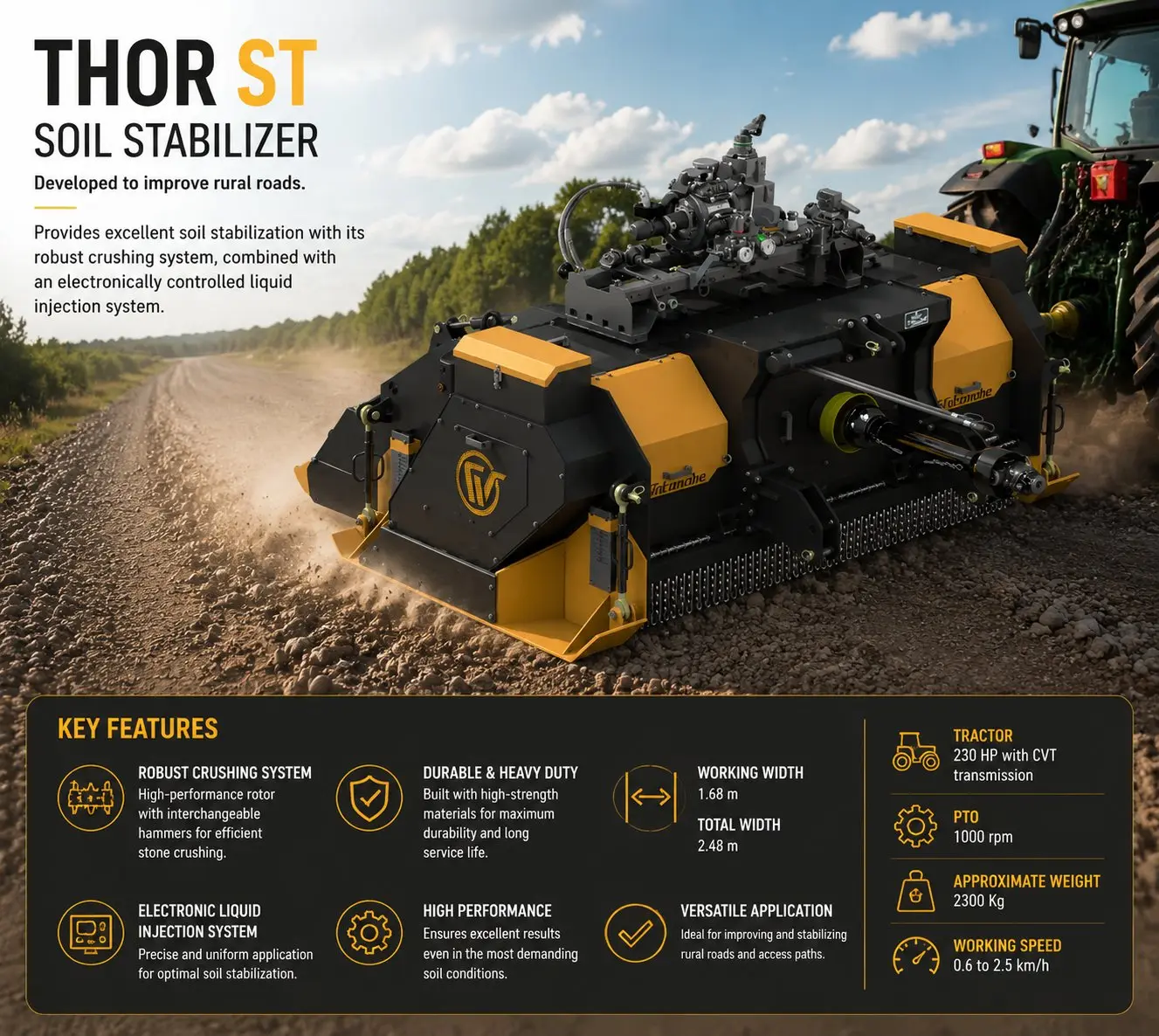
Stabilizer tanah THOR ST dan penyebar pengikat DCW 2.2 membentuk inti dari sistem reklamasi kedalaman penuh (FDR) Watanabe — metode rehabilitasi jalan pedesaan yang mengubah material jalan yang rusak menjadi dasar yang lebih baik secara struktural tanpa penggalian atau impor agregat. Panduan sebelumnya di situs web ini telah menjelaskan rekayasa FDR dan jenis tanah di mana metode ini bekerja paling baik. Panduan ini berfokus pada pertanyaan berbeda yang diajukan oleh manajer proyek jalan Korea, petugas pengadaan kabupaten, dan kontraktor pertanian sebelum berkomitmen pada pendekatan FDR: Berapa sebenarnya biayanya, dan bagaimana cara saya menghitung apakah hal itu sepadan untuk proyek spesifik saya?
Jawaban jujurnya adalah bahwa ekonomi proyek FDR sangat spesifik lokasi — didominasi oleh jarak pengangkutan agregat, biaya material pengikat, dan skala proyek. Panduan ini menyediakan kerangka analitis untuk perhitungan, mengidentifikasi variabel input utama dan dari mana sumbernya berdasarkan kondisi pasar Korea, dan menjelaskan keputusan perencanaan proyek yang memengaruhi apakah proyek THOR ST FDR memberikan pengurangan biaya 40–60% yang telah didokumentasikan dibandingkan dengan rekonstruksi konvensional.
ⓘ Catatan penting mengenai angka biaya dalam panduan ini
Harga material bangunan, biaya bahan bakar, dan tarif harian kontraktor di Korea berubah sesuai kondisi pasar. Panduan ini menyediakan analisis biaya. kerangka dan mengidentifikasi pendorong biaya dominan — kerangka kerja ini tidak menyebutkan jumlah KRW spesifik untuk setiap item, karena jumlah tersebut berubah sesuai kondisi pasar dan akan menyesatkan jika disajikan sebagai nilai tetap. Gunakan kerangka kerja ini dengan penawaran pasar terkini untuk lokasi proyek spesifik Anda.
Dari Mana Penghematan Biaya Berasal — Tiga Pusat Biaya yang Dieliminasi
Reklamasi kedalaman penuh dengan sistem THOR ST mencapai penghematan biaya dibandingkan rekonstruksi konvensional dengan menghilangkan tiga pusat biaya yang tidak dapat dihindari dalam pembangunan kembali jalan konvensional:
Besarnya relatif dari masing-masing tiga biaya yang dihilangkan ini menentukan penghematan spesifik proyek dari FDR. Penghapusan impor secara agregat adalah yang paling bervariasi — dan dalam kondisi dataran tinggi Korea, ini biasanya merupakan item biaya tunggal terbesar dalam rekonstruksi konvensional, sehingga penghematan FDR paling terasa justru di daerah dataran tinggi di mana kebutuhan rehabilitasi jalan pedesaan paling besar.
Kerangka Perhitungan Biaya — Masukan untuk Proyek Anda
Gunakan kerangka kerja ini untuk memperkirakan biaya FDR dan biaya rekonstruksi konvensional untuk proyek jalan pedesaan tertentu di Korea. Kerangka kerja ini mengidentifikasi variabel masukan yang perlu Anda peroleh dari penawaran pasar saat ini sebelum melakukan perbandingan.
Komponen Biaya Sistem FDR
Komponen Biaya Rekonstruksi Konvensional
Variabel penentu: jarak pengangkutan total.
Dari semua item biaya di atas, jarak pengangkutan agregat adalah variabel yang paling menentukan keunggulan biaya FDR dalam kondisi Korea. Di daerah dengan tambang dalam jarak 15–20 km dari lokasi proyek, biaya pengangkutan agregat moderat dan keunggulan FDR adalah 30–40%. Di daerah dataran tinggi Korea di mana tambang terdekat berjarak 50–80+ km dari proyek (umum di lembah Gangwon-do yang terpencil dan zona dataran tinggi Gyeongsang Utara), biaya pengangkutan agregat menjadi item biaya dominan dalam rekonstruksi konvensional, dan keunggulan FDR melebar menjadi 50–65%. Selalu dapatkan jarak tambang dan tarif pengangkutan untuk lokasi proyek spesifik Anda sebelum menyelesaikan perbandingan biaya.
THOR ST dan DCW 2.2 — Spesifikasi Utama untuk Perencanaan Proyek
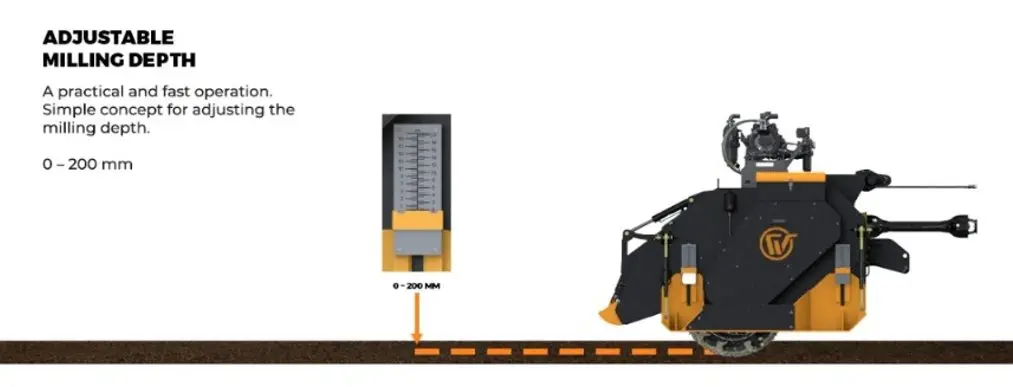
Penstabil Tanah THOR ST
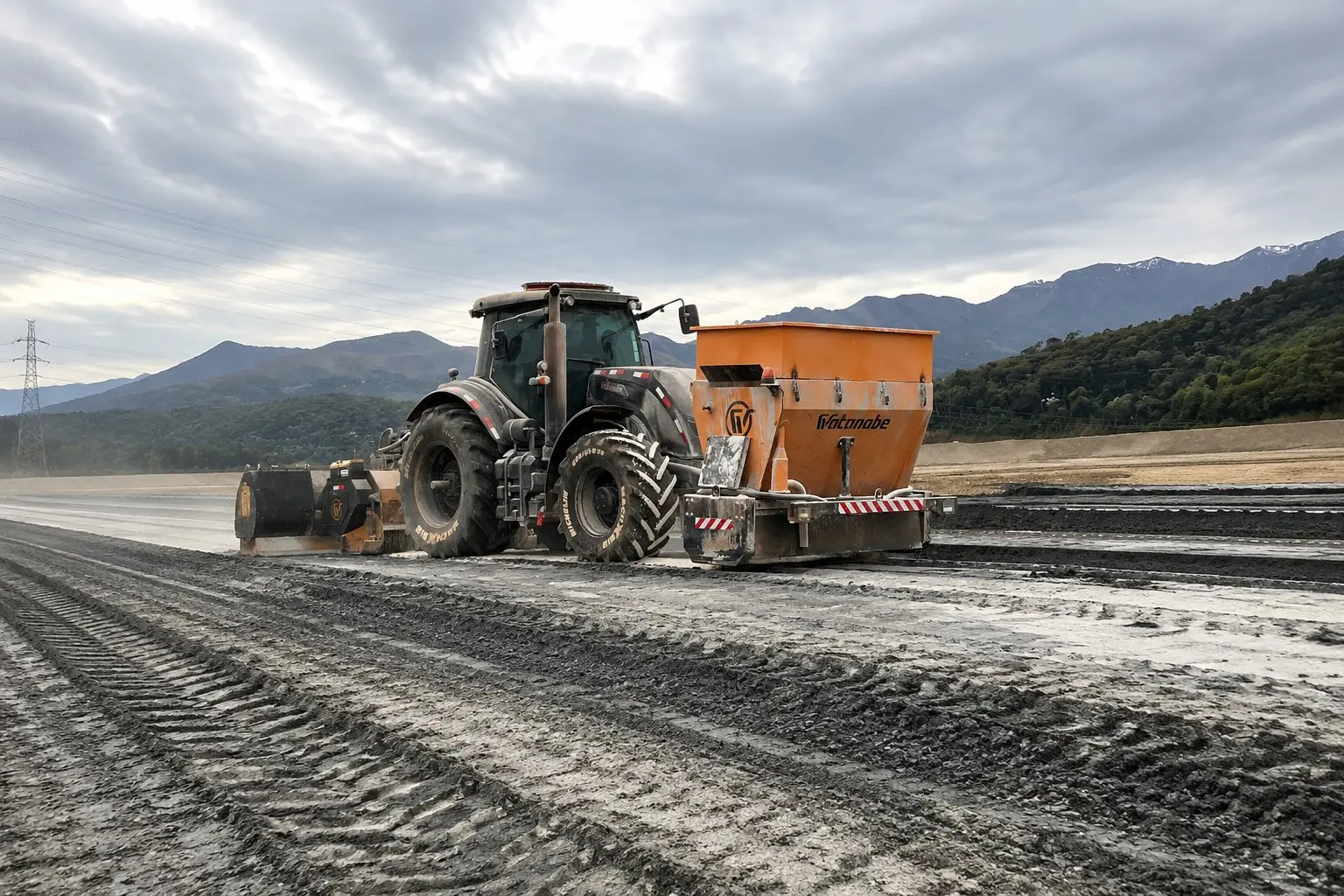
Dipasang di bagian belakang pada traktor CVT
- ▸Traktor minimum: 250 CV, transmisi CVT wajib.
- ▸Kedalaman penggilingan: 0–200 mm (dapat disesuaikan)
- ▸Kecepatan kerja: 0,5–1,5 km/jam
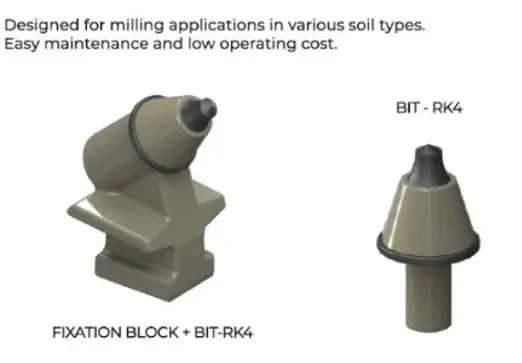
- ▸Rotor: 92 bit Kennametal RK4
- ▸Berat mesin: 5.300 Kg
- ▸PTO: 1000 RPM, 1.3/8″–21 splines
- ▸Distribusi air melalui truk air yang terhubung
DCW 2.2 Binder Spreader
Dipasang di bagian depan pada traktor CVT yang sama
- ▸Lebar kerja: 2.140 mm
- ▸Pengaturan lebar: 1 m atau 2 m (dapat diubah)
- ▸Kontrol dosis: elektronik dari kabin.
- ▸Pemberat depan wajib: 1.300 Kg
- ▸Bahan pengikat: kapur atau bubuk semen
- ▸Pengoperasian: bersamaan dengan THOR ST (lintasan tunggal)
Tingkat Produktivitas untuk Perhitungan Durasi Proyek
THOR ST beroperasi dengan kecepatan maju 0,5–1,5 km/jam. Untuk ruas jalan pedesaan standar dengan lebar 4 meter, ini berarti:
| Kecepatan Kerja | Jangkauan (jalan 4m) | Per 8 jam Sehari | Bagian sepanjang 1 km membutuhkan waktu... |
|---|---|---|---|
| 0,5 km/jam (material berat) | 2.000 m²/jam | 16.000 m² | ~2,5 jam |
| 1,0 km/jam (material sedang) | 4.000 m²/jam | 32.000 m² | ~1,0 jam |
| 1,5 km/jam (material granular) | 6.000 m²/jam | 48.000 m² | ~0,7 jam |
ⓘ Output harian praktis adalah 60–75% dari output teoritis karena waktu penyelesaian di ujung bagian, siklus pengisian truk air, dan pemberhentian pengisian ulang pengikat. Untuk perencanaan durasi proyek, gunakan efisiensi 60% untuk perkiraan konservatif pada material yang tidak diketahui. Logistik di ujung bagian dan air merupakan faktor produktivitas yang paling signifikan — optimalkan faktor-faktor ini sebelum operasi lapangan dimulai.
Estimasi Kuantitas Bahan Pengikat — Input Kunci untuk Biaya Material
Biaya material pengikat (semen atau kapur) adalah satu-satunya biaya material signifikan dalam FDR yang tidak ada padanannya dalam rekonstruksi konvensional — material ini harus dibeli dan dibawa ke lokasi untuk setiap proyek FDR. Oleh karena itu, estimasi kuantitas pengikat yang akurat sangat penting untuk penganggaran proyek. Kerangka perhitungannya adalah:
Rumus Jumlah Pengikat
Contoh: Jalan sepanjang 1 km dengan lebar 4 m, kedalaman penggilingan 150 mm, kepadatan curah tanah 1,8 t/m³, rasio pengikat semen 6% (khas untuk granit lapuk dataran tinggi Korea):
Volume yang diolah = 4.000 m² × 0,15 m = 600 m³
Massa tanah = 600 m³ × 1,8 t/m³ = 1.080 ton
Massa pengikat = 1.080 ton × 6% = 64,8 ton semen
ⓘ Kepadatan curah bervariasi tergantung jenis material (1,6–2,0 t/m³ untuk material dasar jalan pedesaan khas Korea). Rasio pengikat ditentukan oleh desain campuran laboratorium — semen 4–8% atau kapur 3–6%, dikonfirmasi dari pengujian UCS pada sampel tanah di lokasi sebelum proyek dimulai. Rumus tersebut memberikan perkiraan; desain laboratorium memberikan rasio yang telah dikonfirmasi.
Binder Logistics — Pengiriman Curah vs Pengiriman dalam Karung
Semen dan kapur untuk proyek stabilisasi jalan di Korea tersedia dalam pengiriman tangki pneumatik curah (untuk proyek yang lebih besar di mana silo atau penyimpanan sementara dapat dibangun di lokasi) atau pengiriman dalam karung (karung 25 Kg atau 50 Kg untuk proyek yang lebih kecil atau lokasi terpencil tanpa akses tangki). Pengiriman curah biasanya 15–25% lebih murah per ton daripada pengiriman dalam karung tetapi membutuhkan infrastruktur penyimpanan dan penanganan di lokasi. Untuk proyek di bawah sekitar 20 ton bahan pengikat, pengiriman dalam karung seringkali lebih praktis meskipun biaya per tonnya lebih tinggi. Untuk proyek di atas 50 ton, pengiriman curah dengan silo lapangan sementara adalah pilihan yang lebih ekonomis.
Daftar Periksa Perencanaan Pra-Proyek — 8 Langkah Sebelum Operasi Lapangan Dimulai
Pertanyaan yang Sering Diajukan
Berapa durasi proyek tipikal untuk perawatan FDR (Fixed Road Debris) jalan pedesaan Korea sepanjang 1 km?
Untuk ruas jalan pedesaan standar selebar 4 meter dan sepanjang 1 km dengan material dasar granular kepadatan sedang: Penggilingan THOR ST — 1 hari kerja. Perataan dan pemadatan — 0,5–1 hari. Pengeringan sebelum pembukaan lalu lintas — 1–2 hari. Total durasi proyek dari mobilisasi hingga pembukaan lalu lintas: sekitar 3–5 hari kerja untuk 1 km dengan lebar 4 m. Ruas jalan sepanjang 1 km yang sama dengan rekonstruksi konvensional (penggalian, pengangkutan, pengiriman agregat, penempatan lapisan dasar, pelapisan permukaan) biasanya memakan waktu 3–5 minggu. Tambahkan 2–5 hari untuk setiap proses penghancuran batu THOR 2.4 pra-perawatan jika permukaan jalan memiliki kandungan batuan yang signifikan.
Bisakah saya melakukan pengujian tanah di laboratorium sendiri, atau saya membutuhkan laboratorium geoteknik?
Pengujian batas Atterberg, analisis ukuran partikel, dan pengujian UCS untuk desain campuran stabilisasi memerlukan peralatan laboratorium dan teknisi terlatih — ini bukan pengujian lapangan. Laboratorium geoteknik Korea (토질시험소) tersedia di kota-kota besar dan pusat penelitian yang berafiliasi dengan universitas. Dalam beberapa kasus, pusat teknologi pertanian kabupaten (농업기술센터) atau Perusahaan Komunitas Pedesaan Korea (한국농어촌공사) dapat memfasilitasi pengujian tanah untuk proyek jalan pedesaan di wilayah program mereka. Korea Watanabe dapat memberikan rekomendasi kontak untuk laboratorium geoteknik yang sesuai untuk pekerjaan desain campuran stabilisasi di berbagai wilayah Korea berdasarkan permintaan.
Berapa lama pondasi yang distabilkan FDR bertahan dibandingkan dengan rekonstruksi konvensional?
Lapisan dasar yang distabilkan FDR yang dirancang dan dibangun dengan benar — dengan kandungan pengikat yang dikonfirmasi melalui desain laboratorium dan kepadatan pemadatan yang dikonfirmasi melalui pengujian kepadatan — secara struktural setara dengan lapisan dasar granular yang dibangun secara konvensional dengan kekakuan yang sebanding. Proyek-proyek di Korea yang telah beroperasi selama 18–24 bulan pasca-perawatan menunjukkan kinerja bebas perawatan di sebagian besar lokasi yang dilaporkan. Kinerja jangka panjang di luar jangka waktu ini konsisten dengan literatur FDR internasional yang menunjukkan masa pakai 10–20 tahun untuk lapisan dasar yang distabilkan dan dibangun dengan baik di bawah beban lalu lintas yang khas untuk jalan pedesaan Korea. Seperti halnya lapisan dasar jalan lainnya, kinerja bergantung pada drainase — masuknya air dari sumber permukaan atau bawah permukaan adalah mekanisme utama kerusakan lapisan dasar untuk konstruksi FDR dan konvensional, dan pemeliharaan permukaan untuk mencegah infiltrasi air memperpanjang masa pakai kedua metode tersebut.
Apa yang terjadi jika hujan turun selama operasi perawatan THOR ST?
Hujan ringan selama proses penggilingan THOR ST memiliki efek terbatas — bahan pengikat telah didistribusikan oleh DCW 2.2 tepat sebelum rotor mencampurkannya ke dalam tanah, dan aksi pencampuran berlanjut selama proses tersebut terlepas dari curah hujan ringan. Hujan deras yang menghasilkan limpasan permukaan sebelum pemadatan merupakan masalah: hujan dapat mencuci bahan pengikat dari permukaan yang telah diolah dan mengencerkan campuran pengikat-tanah melebihi kadar air yang dirancang, sehingga mengurangi kekuatan akhir. Jika hujan deras mulai turun selama pengolahan, hentikan operasi penggilingan, ratakan dan padatkan bagian yang telah selesai segera untuk meminimalkan paparan hujan, dan nilai kembali bagian yang telah diolah tetapi belum dipadatkan untuk mengetahui kehilangan bahan pengikat sebelum menyelesaikan pemadatan. Rencanakan operasi pengolahan berdasarkan prakiraan cuaca kering setidaknya selama 24 jam — lihat butir 8 dalam daftar periksa di atas.
Siap menghitung ROI proyek Anda? Mari kita buat perbandingan biayanya.
Panjang jalan + lebar + deskripsi material yang ada + jarak tambang agregat terdekat → Kerangka perbandingan biaya FDR vs konvensional dengan konfigurasi sistem THOR ST + DCW 2.2 untuk proyek spesifik Anda di Korea. Korea Watanabe, Ansan-si, Gyeonggi-do.
Editor: Cxm