
The EP-EW-4000 rock rake serves a specific and well-defined role in the Korean highland stone management system: it is the annual maintenance clearance machine for established fields that have already received THOR 2.4 rock crusher primary clearance in prior seasons. The EP-EW-4000 does not fragment stones — it collects and windrows them from the surface zone (0–8 cm depth). This distinction determines exactly when the EP-EW-4000 is the correct machine and when the THOR 2.4 is needed instead.
This guide provides the first standalone EP-EW-4000 operation guide in this series. Previous articles mentioned the EP-EW-4000 in context (orchard clearance, pre-harvest headland clearance, legume year maintenance) but none covered the machine’s own operational system: the vibrating rake mechanism, how stone size threshold works, daily coverage and productivity data, rake finger calibration, pre-season service requirements, and the complete decision framework for EP-EW-4000 versus THOR 2.4 deployment on different Korean highland crop and field situations. All specifications from the Watanabe official product brochure.
EP-EW-4000 Confirmed Specifications
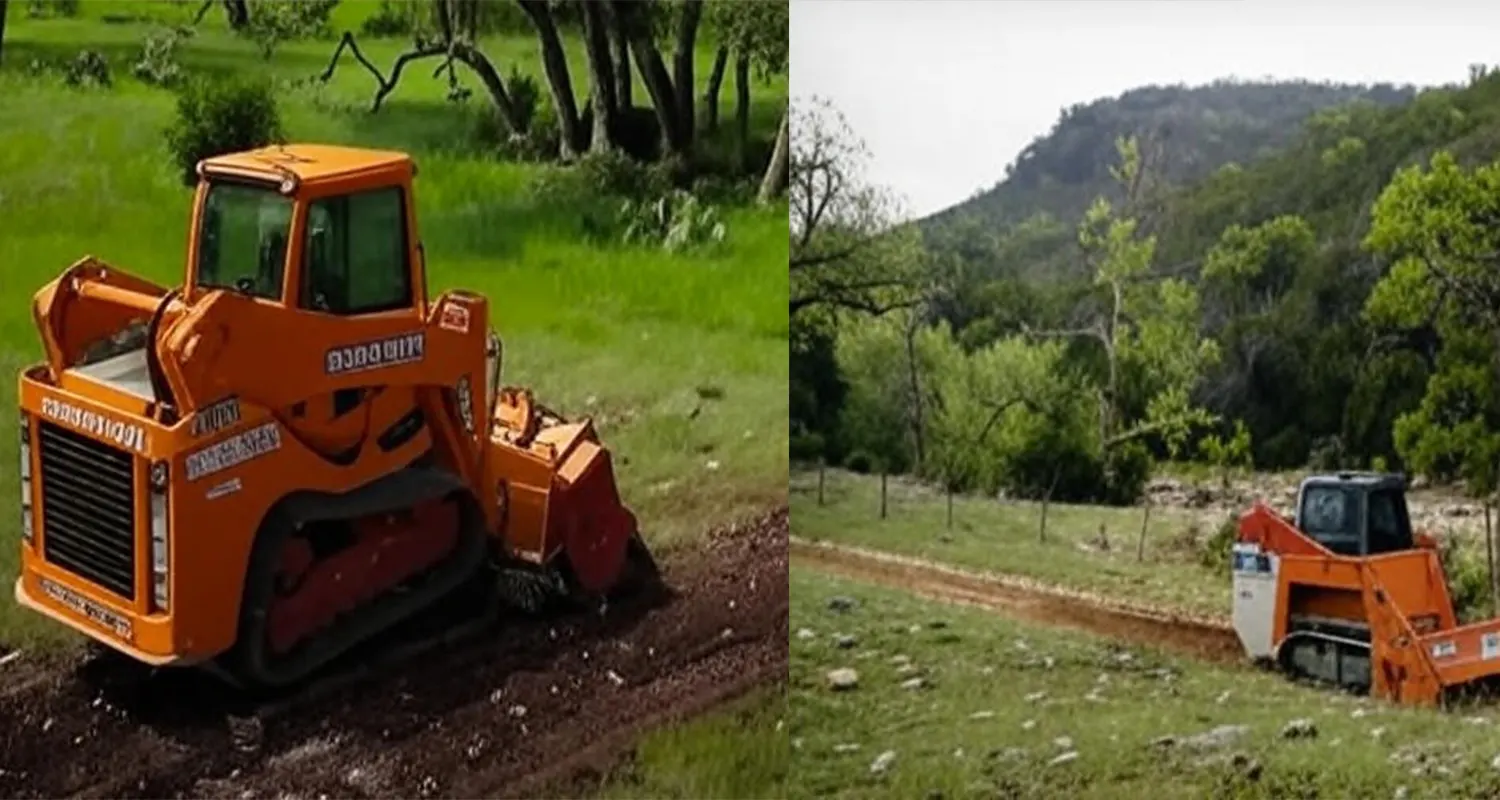
All specifications from the Watanabe official product brochure.
How the Vibrating Rake Mechanism Works — Separation Without Fragmentation
The EP-EW-4000’s working principle is fundamentally different from the THOR 2.4: where the THOR 2.4 fragments stones using rotor impact energy, the EP-EW-4000 separates existing surface stones from fine soil using a vibrating tine array and gravity. Understanding the separation mechanism explains both the EP-EW-4000’s advantages and its limitations:
Vibrating tine penetration (0–8 cm). The EP-EW-4000’s array of hardened steel tines penetrates the soil surface to 6–8 cm depth as the machine travels forward. PTO-driven eccentric cams vibrate the tine array at high frequency — the vibration loosens the surface soil around embedded stones, temporarily reducing the soil’s grip on stones above the minimum collectible size (approximately 2–3 cm diameter).
Separation on the tine array. As the tines move forward through the soil, the material they lift is a mix of fine soil particles, stones above the retention threshold, and fine organic debris. The tine spacing (adjustable on the EP-EW-4000) determines what passes through and what is carried forward — fine soil passes between the tines back to the field surface, while stones above the tine gap size are retained on the tine array surface and carried forward to the collection zone.
Windrow deposition. Retained stones are deposited in a continuous windrow at the side or rear of the EP-EW-4000 as the machine travels forward. The windrow pattern can be adjusted to deposit on one side (for subsequent CT-2100 collection or manual removal) or to form a central windrow between passes. The CT-2100 collection of EP-EW-4000 windrows is significantly faster than CT-2100 collection from THOR output, because the windrow is already concentrated rather than distributed across the field surface.
Stone Size Threshold — What the EP-EW-4000 Captures and What It Misses
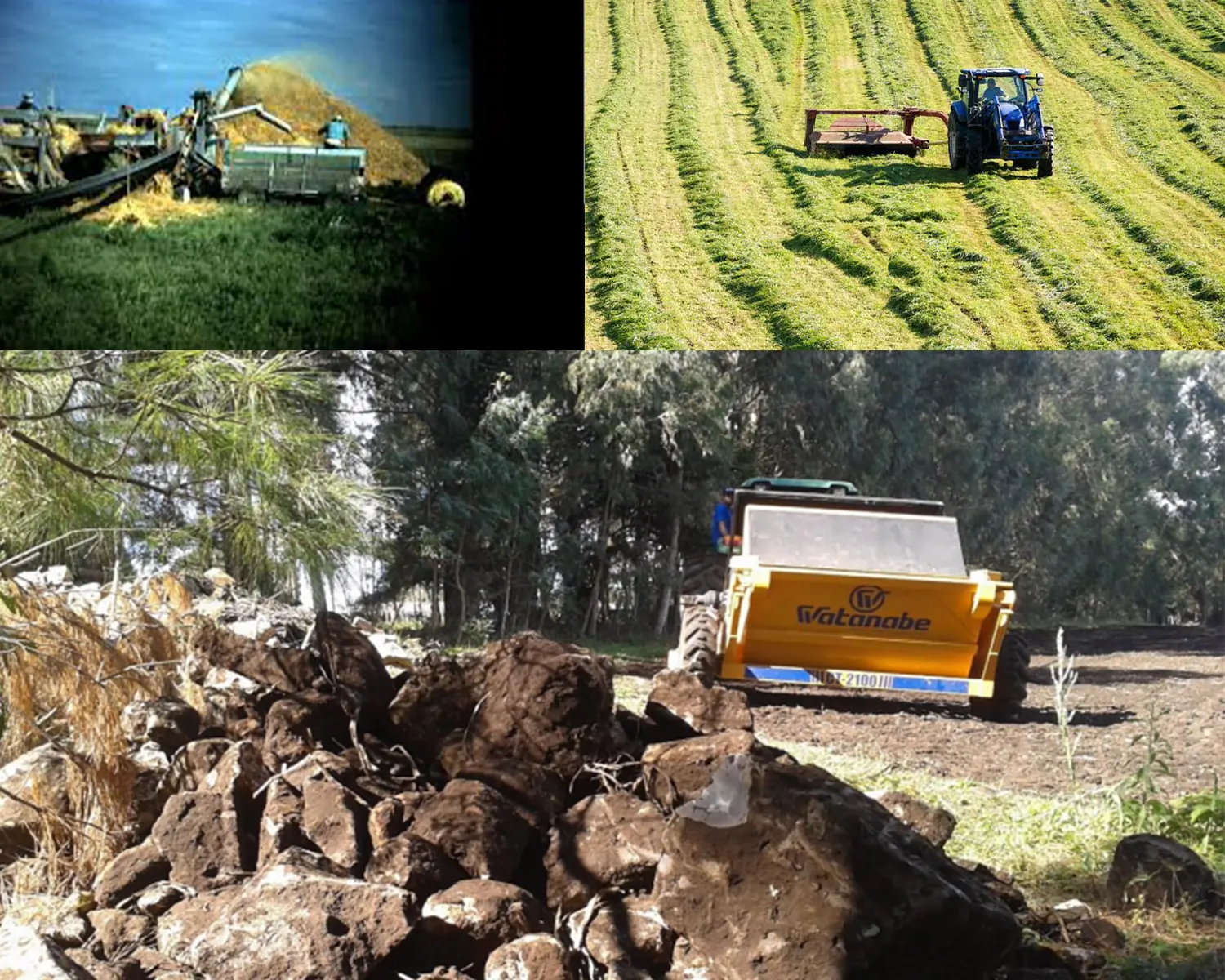
The EP-EW-4000’s tine spacing determines the stone size threshold — the minimum stone diameter that is retained on the tines rather than passing through with the fine soil. This threshold is adjustable but has practical limits that define the machine’s operational range:
| Stone situation | EP-EW-4000 effective? | Action required |
|---|---|---|
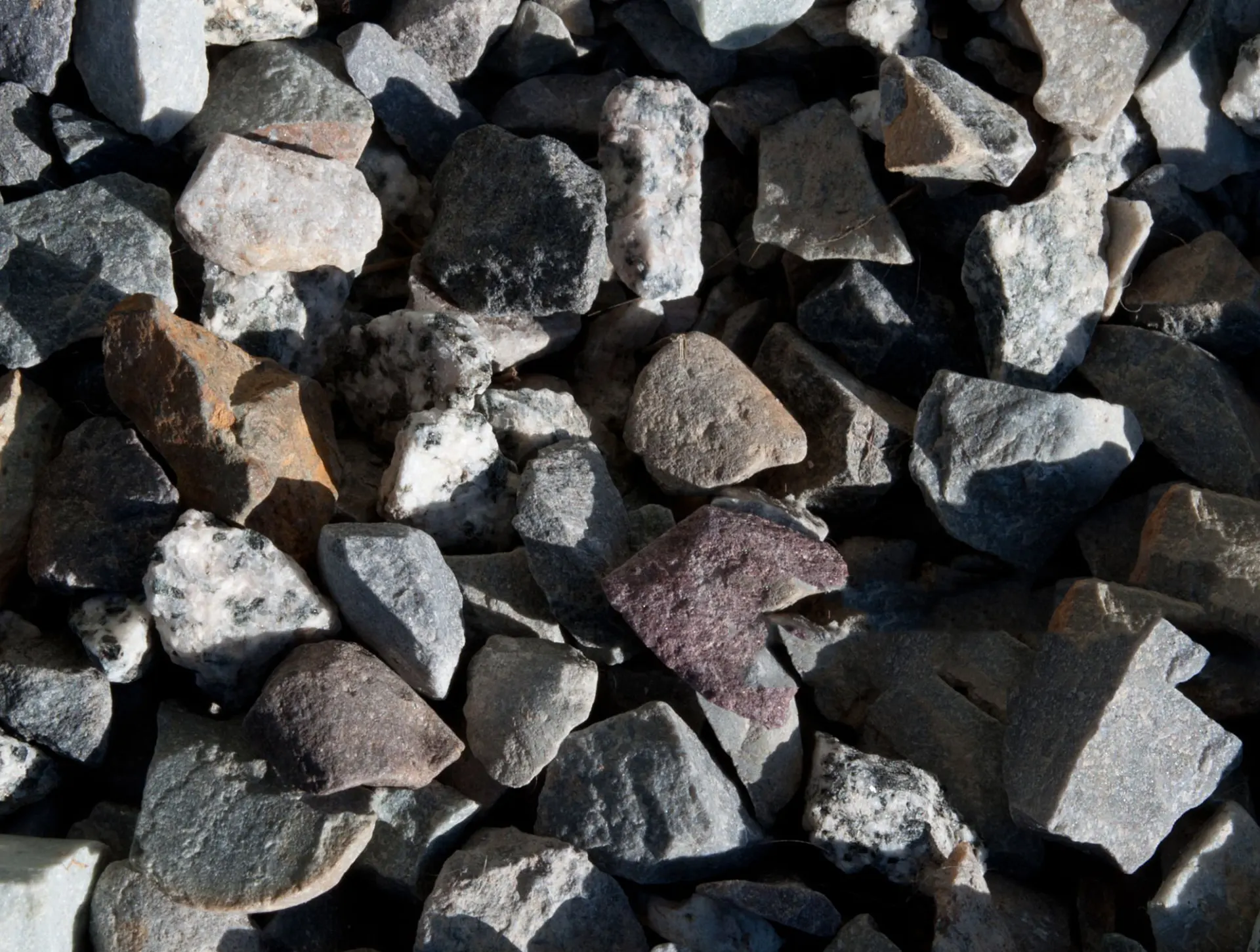
| Surface stones 3–40 cm, previously THOR-cleared field | ✅ Fully effective | EP-EW-4000 is the correct and only machine needed. Annual frost-heave stones in this size range are precisely the EP-EW-4000’s design target. |
| Small stones 1–3 cm diameter (fine gravel, granite chips) | ⚠ Partial — depends on setting | At maximum-sensitivity tine setting, the EP-EW-4000 captures some 2–3 cm stones but not reliably. For potato, radish, and ginseng fields requiring stones below 2 cm throughout the root zone: THOR 2.4 fragmentation is required — the EP-EW-4000 cannot address sub-surface stones. |
| Large stones 40–100 cm (boulders, partially buried) | ❌ Not effective | Stones above 40 cm that emerge as single boulders at the surface cannot be retained by the tine array — they are too heavy for the tines to carry to the windrow. THOR 2.4 fragmentation is required before EP-EW-4000 collection. |
| Sub-surface stones (below 8 cm depth) | ❌ Not reachable | The EP-EW-4000 works only in the 0–8 cm surface zone. Stones at 10–30 cm depth are completely outside its operational range. These require THOR 2.4 deployment to fragment and bring to the surface. |
Daily Coverage and Productivity — EP-EW-4000 vs THOR 2.4 Comparison
Daily coverage comparison — EP-EW-4000 vs THOR 2.4 + CT-2100, Korean highland conditions:
Rake Finger Calibration — Setting the Correct Tine Gap for the Crop and Field
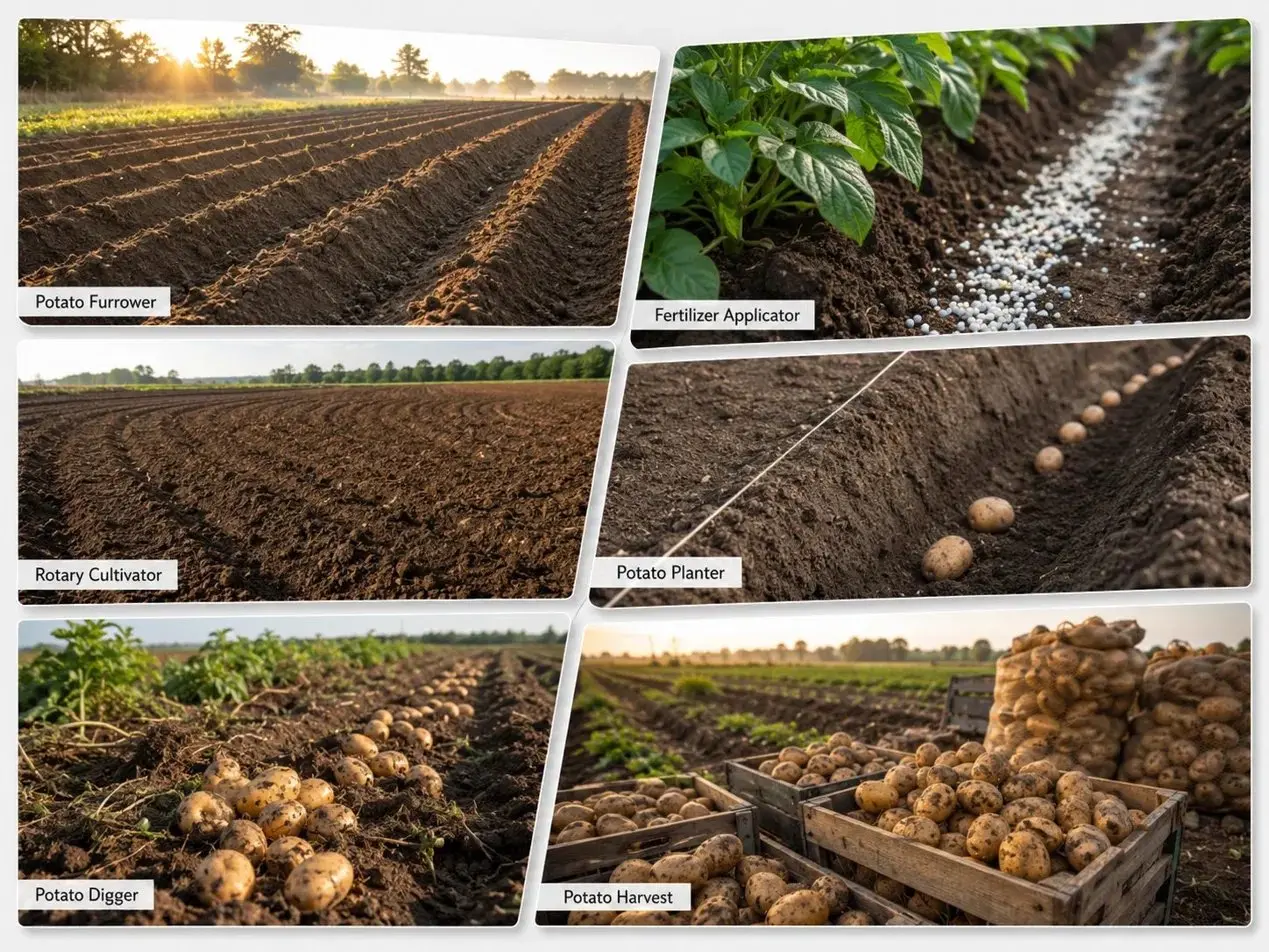
The EP-EW-4000’s tine array gap is adjustable — widening the gap reduces the fraction of the soil’s stone population that is retained, allowing faster travel speed but collecting only the larger stones. Narrowing the gap captures more stones including fine gravel but reduces forward speed and increases the PTO loading. The crop-specific calibration recommendations:
Minimum tine gap (maximum sensitivity setting). Potato’s zero-tolerance surface stone requirement means the EP-EW-4000 must collect the smallest collectible stones from the 0–8 cm surface zone. At minimum tine gap: reduced forward speed (5–6 km/h maximum) and higher PTO load, but the finest possible surface stone collection. On the potato year block, accept the lower coverage rate from the tight setting — the zero-tolerance standard takes priority over daily coverage rate.
Minimum tine gap (same as potato). Radish taproot forking risk requires the same fine surface collection as potato — stones above 2 cm in the surface zone present the same taproot deflection risk.
Medium tine gap. Cabbage’s headland and access route surface clearance does not require the finest surface collection — the harvest machine and truck tyres need protection from stones above 5–8 cm, but the finer gravel does not present the same damage risk. Medium gap setting allows 7–8 km/h forward speed, maximising coverage of the cabbage field’s headlands and access routes before October harvest truck access.
Wide tine gap (coarsest setting). The legume crop has no stone sensitivity — only stones that would impede PSW-3200 incorporation in autumn (above approximately 10 cm diameter) need collection. Maximum tine gap allows maximum forward speed (8+ km/h), covering the legume year block in the shortest possible time. This is the EP-EW-4000’s fastest operating configuration and where the 12 ha/day coverage rate is most achievable.
Pre-Season Service — February Checks Before the First Field Day
The EP-EW-4000’s pre-season service requirements are less intensive than the THOR 2.4’s (no rotor bearing or tooth inspection) but have specific checks for the vibrating tine system that differs from standard hitch-mounted tillage implement service:
| Component | Check and action | Symptom if neglected |
|---|---|---|
| Tine tips | Inspect all tine tips for wear. Tips should have a sharp, pointed profile. Tips worn to a rounded or flat profile collect stones less efficiently and tend to ride over rather than penetrate the soil surface. Replace worn tips before the season start. | Rounded tine tips reduce penetration depth, reducing effective collection zone from 8 cm to 3–5 cm — missing stones that are partially buried at 5–8 cm depth. |
| Vibration eccentric bearings | Manually rotate each eccentric shaft to check for bearing play. More than 2 mm of radial play indicates worn bearing requiring replacement. Grease all eccentric bearing lubrication points. | Worn eccentric bearings produce irregular vibration amplitude — reduces separation efficiency and can cause bearing failure during operation, requiring mid-field repair. |
| Tine mounting bolts | Check all tine mounting bolt torques after first 30 minutes of operation in the season — the vibration of the first operational pass loosens any bolts that were insufficiently torqued during winter storage. | Loose tine bolt allows the tine to pivot during operation — produces erratic penetration depth and stone retention inconsistency across the width. |
| PTO shaft and guard | Standard PTO safety check as for all machines: guard condition, cardan joint play, grease nipples. The EP-EW-4000 at 540 RPM produces lower PTO shaft loads than the THOR 2.4 at 1000 RPM — but the same guard integrity requirement applies for operator safety. | Same PTO entanglement risk as all PTO-driven machines — guard must be intact and rotate freely around the shaft. |
The Definitive EP-EW-4000 vs THOR 2.4 Decision Framework
The single most important operational decision in Korean highland stone management is choosing between the EP-EW-4000 and the THOR 2.4 for each field section and rotation year. Deploying the THOR 2.4 where the EP-EW-4000 would suffice wastes machine operating time and fuel. Deploying the EP-EW-4000 where the THOR 2.4 is needed leaves stones in the root development zone and produces crop damage. The framework:
The field has had at least 1 year of THOR 2.4 primary clearance. All visible surface stones are below 40 cm diameter. No stones above 2 cm are confirmed below 8 cm depth by probe test. The crop for the coming year accepts the EP-EW-4000’s 0–8 cm clearance depth (cabbage, legume, garlic on established fields, annual maintenance on potato and radish after prior THOR year). The season’s stone emergence is normal (not an exceptional frost-heave year).
New or previously un-cleared land. Field has been clear for 2+ years without THOR maintenance and probe test shows sub-surface stone accumulation. The crop requires zero-tolerance clearance to the full root development depth (potato new land, radish new land, ginseng). Stones above 40 cm are present on the surface. The field assessment reveals stones at 10–30 cm depth that the EP-EW-4000 cannot reach.
Frequently Asked Questions
Can a Korean highland farm use only the EP-EW-4000 without ever purchasing a THOR 2.4?
Only in very limited circumstances — specifically, on established cleared fields that were THOR 2.4-cleared by a previous owner or contractor and have been maintained since. In that scenario, the EP-EW-4000 alone is sufficient for annual surface maintenance indefinitely, as long as the sub-surface stone population remains at the low level achieved by prior THOR clearance. For the vast majority of Korean highland farms that have never received THOR 2.4 primary clearance, the EP-EW-4000 alone is inadequate for the root crop zero-tolerance standard — it cannot address stones below 8 cm depth, which is where most of the potato, radish, and ginseng quality problems originate. The standard recommendation: the THOR 2.4 provides the primary clearance that creates the cleared soil environment in which the EP-EW-4000’s annual maintenance role becomes sufficient. Purchasing the EP-EW-4000 before the THOR 2.4 on a never-cleared field is a mistake in sequencing — the EP-EW-4000 is the annual maintenance tool for a field that has already been THOR-cleared.
How does forward speed affect EP-EW-4000 collection quality?
Forward speed has a direct and significant effect on EP-EW-4000 collection quality — the stone separation efficiency decreases as forward speed increases. At slow speed (4–5 km/h), the tines have more contact time per unit area of soil, the vibration produces more complete soil loosening around each stone, and the separation efficiency is highest — capturing the finest size fraction the tine setting allows. At high speed (8–10 km/h), the tines spend less time in contact with each section of soil, vibration loosening is less complete, and smaller stones that would be captured at slow speed pass through the tine array with the fine soil. The practical management: calibrate forward speed to the stone size standard required by the crop. For potato year (fine collection required): 4–5 km/h. For legume year (coarse collection sufficient): maximum achievable speed without stone retention loss at the wide tine gap setting.
Does the EP-EW-4000 damage soil structure compared to the THOR 2.4?
The EP-EW-4000 has a notably lower impact on soil structure than the THOR 2.4. The tine penetration depth (6–8 cm) and the vibration mechanism produce minimal disturbance below the operating depth — unlike the THOR 2.4’s rotor action, which fragments the full 25–30 cm soil profile and temporarily disrupts the established aggregate structure. The EP-EW-4000’s light surface action leaves the sub-surface soil structure established by prior THOR 2.4 clearance and PSW-3200 tillage largely intact. On established cleared fields where soil structural improvement (from legume roots, compost additions, and organic matter increase) is ongoing, the EP-EW-4000’s light surface action is actually preferable to the THOR 2.4’s deep disruption for annual maintenance — the THOR 2.4 disruption resets the sub-surface structural improvement each time it is deployed. Limiting THOR 2.4 deployment to years when it is actually needed (new stone emergence in the 10–30 cm zone) and using the EP-EW-4000 for surface maintenance in all other years preserves the soil structural improvement investment.
Is the EP-EW-4000 eligible for Korean agricultural machinery subsidies?
Yes — the EP-EW-4000 qualifies under the farmland improvement machinery (nongji gaeryang gigyehwa) category of the Korean agricultural machinery purchase support program, the same category as the potato machinery system. Korea Watanabe holds Korean agricultural machinery certification for the EP-EW-4000 and provides full subsidy documentation at no charge. The EP-EW-4000 is typically included in the same January application as the THOR 2.4 when both are being purchased as the initial stone management system — the subsidy application covers the two-machine system (THOR 2.4 for primary clearance, EP-EW-4000 for annual maintenance) together as the integrated farmland improvement machine package.
Can the EP-EW-4000 be used after the PSW-3200 preparation pass, or must it come before?
The EP-EW-4000 must be used before the PSW-3200 preparation pass — after the PSW-3200 has tilled the soil to 20–25 cm depth, the surface stones that the EP-EW-4000 would have collected are now buried within the tilled zone and mixed throughout the profile. Running the EP-EW-4000 after the PSW-3200 would collect only the coarsest stones that protrude above the freshly tilled surface — the fine stones that are most damaging to root crops are now uniformly distributed through the tilth and cannot be separated by the EP-EW-4000’s surface action. The correct sequence for all crop preparation is: EP-EW-4000 (or THOR 2.4 if needed) → CT-2100 collection → PSW-3200 tillage → furrower → planting. Stone management always precedes tillage; tillage never precedes stone management.
EP-EW-4000 System Configuration — Annual Maintenance Coverage Plan
Crop rotation + field area + THOR 2.4 clearance history → EP-EW-4000 annual maintenance schedule with tine gap setting by crop year and coverage time estimate. Korea Watanabe, Ansan-si, Gyeonggi-do.
Editor: Cxm