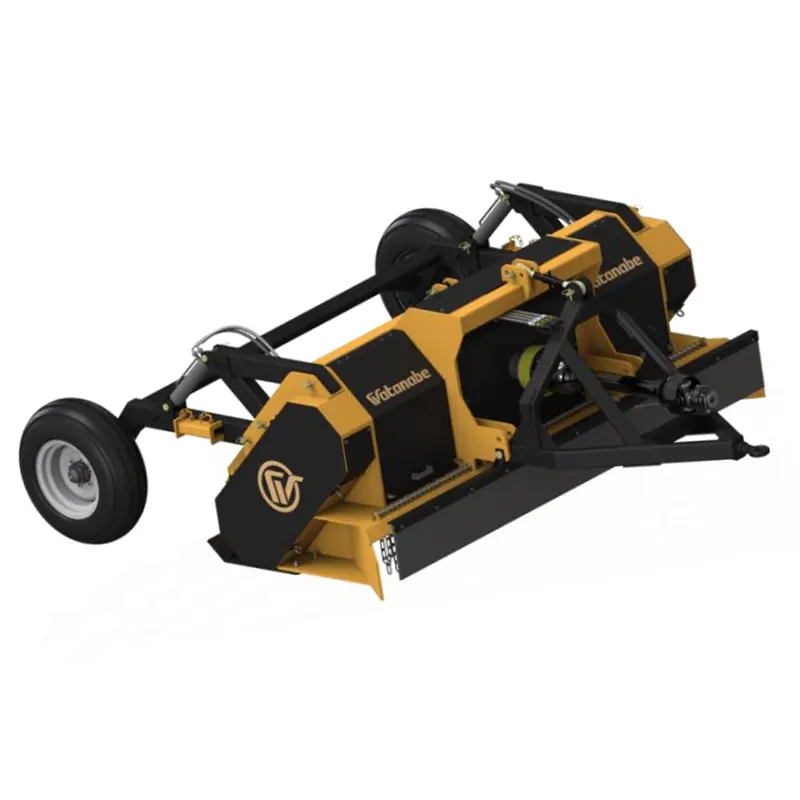
Every crop guide in the Korea Watanabe series eventually arrives at the same recommendation: apply lime before PSW-3200 incorporation, target pH 6.0–6.8 for the specific crop, repeat annually on Korean highland granite. The machine that executes this recommendation is the DCW 2.2 — a front-mounted spreader with specifications that are specific to the Korean highland operating environment in ways that lowland spreader alternatives are not. This guide covers all of them: the physics of why front-mounting is required on Korean highland slopes, the 1,300 Kg ballast calculation, the dual roller system’s compatibility with different lime types, the electronic cab control rate protocol, and the integration with the PSW-3200 incorporation pass that converts a surface lime application into a root-zone pH treatment.
No competitor covers the DCW 2.2. For Korean highland farmers who have read the crop guides and understand that lime management is the foundation of their soil improvement programme, this guide provides the machine-level operating knowledge that converts the agronomic principle into a practical field operation.
Confirmed DCW 2.2 Specifications — What the Official Brochure States
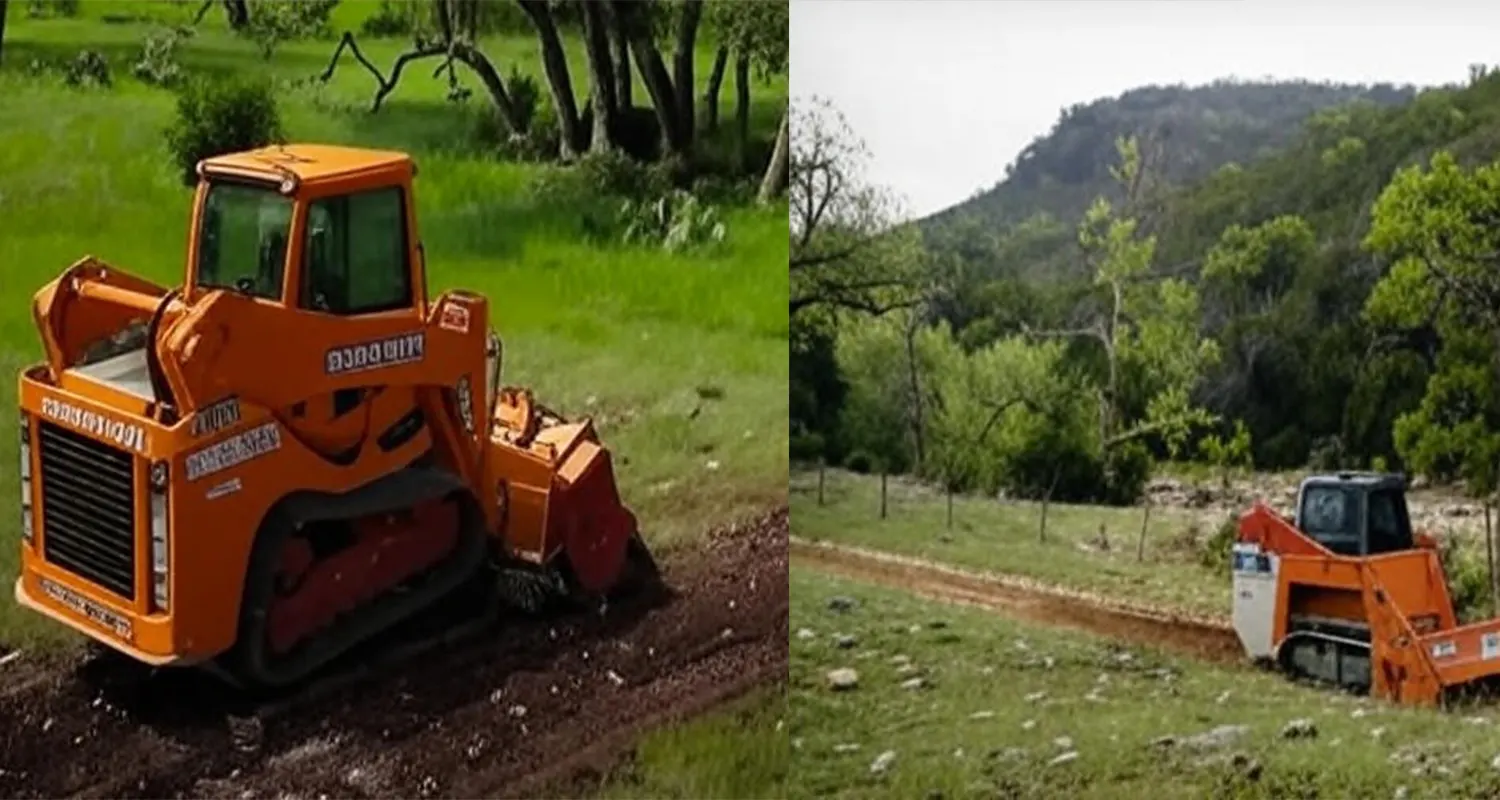
All specifications confirmed from the official Watanabe product brochure. The DCW 2.2 holds Korean agricultural machinery certification and is eligible for the MAFRA subsidy programme under the soil amendment machinery category.
Cab Control
Three specifications stand out from this list for Korean highland operation: the front-mount configuration, the 1,300 Kg mandatory ballast, and the electronic cab control. All three are directly related to the challenge of operating a loaded spreader on slopes of 8–18% — the standard gradient range for Korean highland terrace farming. The section below covers why each of these specifications exists and what happens when any of them is not met.
Why Front-Mount — The Stability Physics of Spreading on Korean Highland Slopes
The conventional design for agricultural spreaders is rear-mounted — the machine attaches to the tractor’s rear three-point hitch and spreads behind the tractor. On flat lowland fields, this arrangement is entirely adequate. On Korean highland slopes above 8%, the rear-mounted arrangement creates a stability problem that the DCW 2.2’s front-mount design specifically solves.
- Loaded spreader weight (300–500 Kg) acts at rear hitch — behind the rear axle
- On slope, this rear weight + gravity component lifts the front axle
- Front wheels lose ground contact → steering effectiveness drops
- At 12%+ slope with full lime load: front-axle lift can reach 30–40% of normal front-axle load
- Result: reduced ability to steer across steep terrace headlands
- DCW 2.2 weight acts at front hitch — ahead of the front axle
- 1,300 Kg front ballast adds further downforce on the front axle
- Combined front weight maintains steering effectiveness on 8–18% slopes
- Front axle load remains above the minimum for steering control throughout lime spreading operation
- Result: safe, steerable operation on all Korean highland terrace gradients
Why 1,300 Kg — The Ballast Requirement Calculation
Machine empty weight + full lime load (~300–500 Kg lime): approximately 600–900 Kg total at full load. Acts at the front hitch point, which is forward of the front axle centreline.
On a 12% slope (6.8°), the downslope gravity component shifts the tractor’s effective centre of mass toward the rear relative to the horizontal. This effectively reduces front-axle load by approximately 10–15% of total vehicle weight on a 12% slope.
The 1,300 Kg front ballast weight is sized to ensure that on a standard 180 HP Korean highland tractor (approximately 7,500–8,500 Kg total operating weight), the front-axle load remains above 25% of total weight on gradients up to 18% — the minimum front-axle load fraction for safe steering. The exact ballast required varies with tractor weight and gradient; 1,300 Kg is specified as the minimum for the DCW 2.2 working range. Never operate the DCW 2.2 without the full 1,300 Kg ballast fitted — a partial ballast load changes the front-axle loading calculation and may produce unsafe steering conditions at the DCW 2.2’s maximum operating gradient.
The Dual Roller System — Lime Type Determines the Correct Roller Configuration

The DCW 2.2’s two internal rollers are what determine the spread pattern quality for different lime material types. Understanding which roller configuration works with which lime type prevents the most common DCW 2.2 operating error — using the wrong roller setting and producing either an uneven application pattern or a material flow blockage.
| Lime type | Particle size | Bulk density | Roller setting | Notes for Korean highland use |
|---|---|---|---|---|
| Agricultural lime (seok-hoe-seok bunmal) | <0.15 mm (powder) | 800–1,000 Kg/m³ | Fine setting | Most common Korean highland lime type. Flows consistently at medium roller gap setting. Risk of dust generation in dry spring conditions — apply when soil surface is slightly moist. |
| Granular lime (ip-sang seok-hoe) | 1–4 mm granules | 1,100–1,300 Kg/m³ | Coarse setting | Heavier granules require wider roller gap. Better for windy conditions (lower dust, stays on target). Slower reactivity than powder — allow 3–4 weeks longer before measuring pH response. |
| Dolomitic lime (go-to seok-hoe) | Variable | 900–1,100 Kg/m³ | Fine-medium | Contains magnesium — recommended on Korean highland granite soils with confirmed Mg deficiency (common on granite-parent soils after 5+ years cropping). Use every 3rd application cycle rather than every year. |
| Slaked lime (so-seok-hoe, calcium hydroxide) | <0.05 mm | 500–650 Kg/m³ | ⚠ Very fine — specialist | Highly reactive, hygroscopic. Difficult to spread evenly — clumps in humid conditions. Requires complete hopper dryness before loading. Not recommended for routine Korean highland lime management — use agricultural lime powder instead unless a rapid pH crisis requires immediate intervention. |
Korean Highland Soil pH by Altitude Zone — Understanding the Starting Point
Korean highland granite soil pH varies systematically with altitude — not because the geology changes, but because the combination of rainfall intensity, temperature, and organic matter decomposition rate at different altitudes all affect the rate of natural soil acidification. Understanding the baseline pH for your farm’s altitude zone is the first step in calculating the correct DCW 2.2 application rate.
Korean Highland Granite Soil — Typical pH Range by Altitude Zone (unmanaged, no lime history)
Representative baseline pH ranges for unmanaged Korean highland granite soils with no lime history. Farms with existing lime management may be significantly above these baselines. Always confirm field-specific pH with a current soil test before calculating application rate.
Application Rate Calibration — From Soil Test to DCW 2.2 Hopper Setting
The DCW 2.2 application rate is controlled through the electronic cab control system — the operator sets the target application rate in the cab before beginning the spreading pass. This section explains how to calculate the correct target rate from a soil pH test result and how to confirm the DCW 2.2 is delivering the correct rate before beginning a full field application.
| Current field pH | Target pH 6.0 (garlic/cabbage) | Target pH 6.2 (potato) | Target pH 6.5 (clubroot suppression) |
|---|---|---|---|
| pH 4.2–4.5 (very acidic) | 5.5–7.0 t/ha | 6.5–8.0 t/ha | 8.0–10.0 t/ha |
| pH 4.5–5.0 | 3.5–5.0 t/ha | 4.5–6.0 t/ha | 5.5–7.5 t/ha |
| pH 5.0–5.5 | 2.0–3.0 t/ha | 2.5–4.0 t/ha | 3.5–5.0 t/ha |
| pH 5.5–5.8 | 1.0–2.0 t/ha | 1.5–2.5 t/ha | 2.5–3.5 t/ha |
| pH 5.8–6.0 (annual maintenance) | 0.5–1.0 t/ha | 0.5–1.2 t/ha | 1.0–1.5 t/ha |
Rates are for standard powdered Korean agricultural lime (CaCO₃ equivalent). Multiply by 1.15–1.25 for granular lime. Rates assume Korean highland granite texture (sandy loam) with low buffering capacity — confirm with county RDA soil advisory service for field-specific application recommendations before first application.
DCW 2.2 Calibration Check — Before Every Application Season
Electronic Cab Control — Operating Protocol for Korean Highland Terrace Spreading
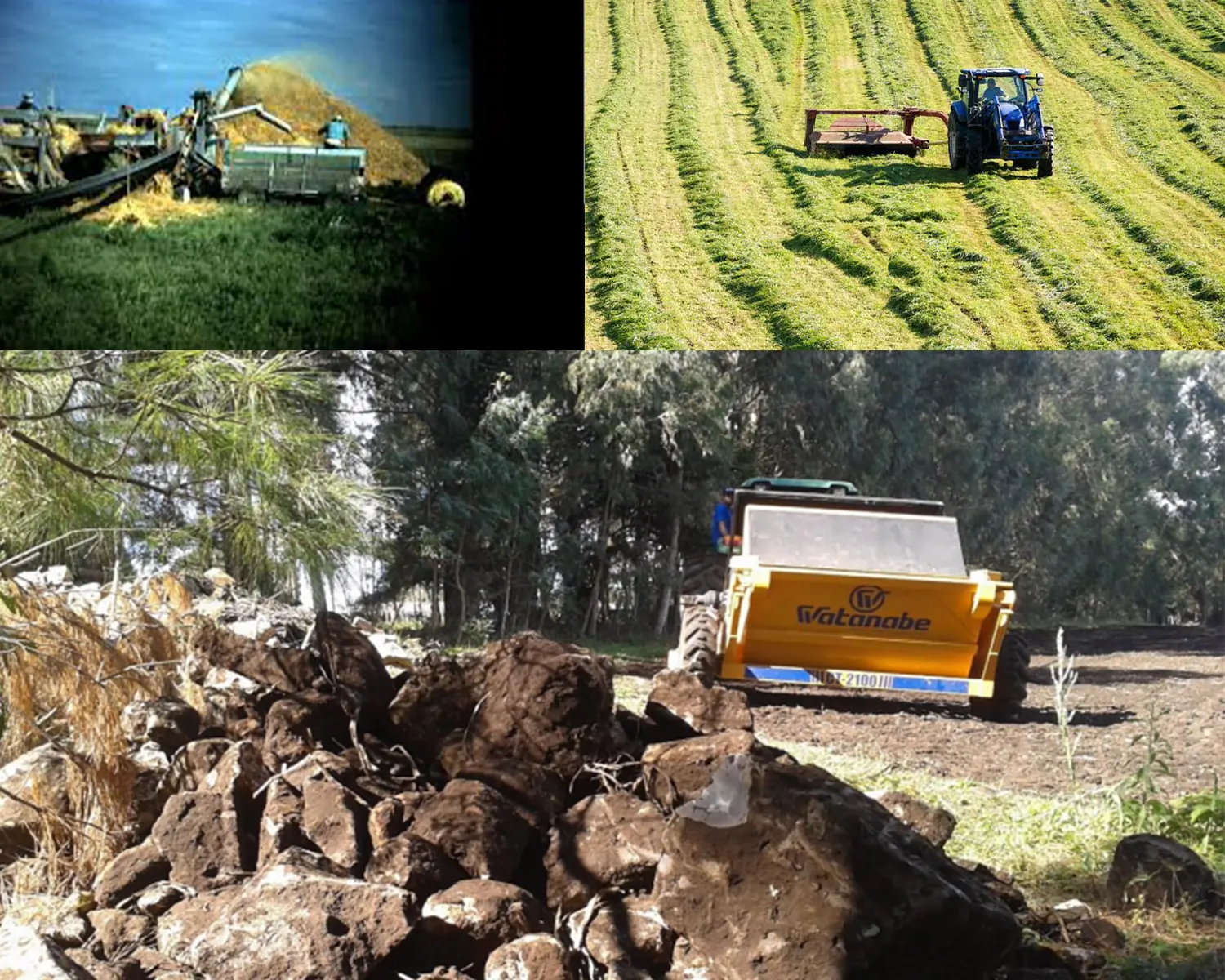
The electronic cab control is the DCW 2.2’s most practically important operating feature for Korean highland terrace work. On level fields, a fixed application rate works consistently across the full pass. On Korean highland terraces with variable gradients (typically 5–15% across different terrace sections), the material flow rate from the hopper changes slightly as the machine tilts on the slope — the electronic cab control allows the operator to correct for this in real time without stopping.
Annual Soil Amendment Calendar — DCW 2.2 and PSW-3200 Through the Year
Frequently Asked Questions
Why is 1,300 Kg of front ballast mandatory for the DCW 2.2 on Korean highland farms?
The 1,300 Kg front ballast requirement exists because the DCW 2.2 is a front-mounted machine on a tractor that is also carrying a loaded lime hopper (300–500 Kg of lime) at the front. While the front-mount configuration addresses the rear-mount slope stability problem, the front-mounted machine also adds weight ahead of the front axle — and the tractor’s own engine and front-axle components must still maintain their load-bearing capacity under the combined weight. The 1,300 Kg ballast ensures that the combined tractor + DCW 2.2 system maintains front-axle steering effectiveness on Korean highland slopes up to 18% gradient. Operating the DCW 2.2 without the full 1,300 Kg ballast — even temporarily while repositioning between fields on a public road — is not recommended: the front-axle weight balance calculation that justifies the DCW 2.2’s slope operating certification is based on the ballasted configuration. Confirm the ballast weight at each operating season’s start with a portable scale or by comparison to the known weight plates.
How often should the DCW 2.2 lime application be done on Korean highland granite soil?
Korean highland granite soils under active cropping typically acidify by 0.2–0.5 pH units per year without lime maintenance — meaning a field limed to pH 6.2 in Year 1 reaches pH 5.7–6.0 by Year 2 without re-liming. The practical recommendation is annual lime application at the maintenance rate (0.5–1.5 t/ha) every spring, supplemented by a heavier corrective application (2.0–4.0 t/ha) every 2–3 years when a soil test confirms pH has drifted below the crop-specific target. For farms on the standard potato-garlic-cabbage-potato rotation, the annual maintenance pass applies to every field in the rotation each spring, with the heavier corrective rate applied to any field that will be planted with the most pH-sensitive crop that year (garlic or cabbage for clubroot suppression). Korea Watanabe recommends soil pH testing every autumn — the October post-harvest period is the optimal time because the soil has not yet received any spring amendment, giving a true baseline reading of the field’s current pH status.
Can the DCW 2.2 also spread granular fertiliser, or is it limited to lime materials?
The DCW 2.2 is designed and certified for spreading granular and powdered lime materials — calcium carbonate, dolomitic lime, and slaked lime as described in the roller type guide above. Its two internal roller system and hopper design are optimised for the particle size and bulk density ranges of lime products. Standard granular NPK fertilisers can physically pass through the DCW 2.2’s roller system, but this application is not recommended: fertiliser granules have different densities and flow characteristics from lime, and the calibration settings developed for lime will produce inaccurate rates for fertiliser. More importantly, fertiliser and lime must not be applied simultaneously from the same machine in the same pass because simultaneous application creates localised high-pH zones around lime granules where ammonium-N fertiliser converts to ammonia gas, causing significant nitrogen loss. Korea Watanabe advises maintaining the DCW 2.2 exclusively as a lime management tool, with fertiliser applications made by separate machines at separate times.
Does the DCW 2.2 qualify for the Korean agricultural machinery subsidy in 2026?
Yes — the DCW 2.2 carries Korean agricultural machinery certification and qualifies for the MAFRA 2026 programme under the soil amendment machinery category. The subsidy rate for this category is typically 30–40% of the certified purchase price, subject to county quota availability. The DCW 2.2 is most effectively purchased as part of the Stage 2 combined application described in Korea Watanabe’s machine system planning — alongside the PSW-3200 rotavator in a Year 2 combined application following the Stage 1 THOR 2.4 + CT-2100 acquisition. The two machines are functionally inseparable for the soil pH management programme — the DCW 2.2 applies lime and the PSW-3200 incorporates it — so purchasing them together in a single January application maximises the subsidy from both machines while minimising the administrative burden of a second separate application.
How should the DCW 2.2 be stored and maintained during the Korean highland winter season?
The DCW 2.2 requires specific winter storage care because residual lime material in the hopper and roller housings is hygroscopic — it absorbs moisture from the air and can set into a hard, cement-like mass that blocks the roller mechanism by spring. After the final spreading pass of the autumn season: (1) empty the hopper completely and blow out any residual lime material with compressed air; (2) wash the interior of the hopper with clean water and allow to dry completely — do not leave lime residue in contact with the hopper steel surface over winter, as lime + moisture + cold temperature cycling corrodes the hopper lining; (3) apply anti-corrosion spray to all metal surfaces inside the hopper and on the roller mechanism; (4) store the machine in a covered, dry location with the ballast plates removed from the front hitch — storing with the ballast fitted puts continuous load on the front hitch mounting points, which accelerates fatigue in the hitch frame over multiple seasons. The annual pre-season calibration check described in this guide should be completed before the machine enters service in spring regardless of its previous season’s performance — winter storage conditions can change the roller gap setting by up to 2–3 mm through thermal cycling.
DCW 2.2 Configuration and Calibration for Your Korean Highland Farm
Farm altitude + current soil pH + planned crop rotation + tractor HP → Korea Watanabe — supplier of the full Korean highland machinery range — confirms the correct DCW 2.2 ballast configuration, lime type selection, application rate by field, electronic control settings and the combined DCW 2.2 + PSW-3200 annual calendar for your specific highland system.
Editor: Cxm