
Hazelnut (Corylus avellana) is the third most traded tree nut globally, with Turkey supplying approximately 75% of world production, Italy supplying the majority of the remainder, and Oregon/Washington providing North American supply. It is the nut that flavours Nutella and most of the world’s praline-based confectionery. It is also the crop with the most unusual underground architecture of any plant in this entire E-series guide — an architecture that creates a stone management requirement that is continuous and annual throughout the bush’s 40–50 year productive life, rather than the once-at-planting requirement of asparagus, apple, or citrus.
The reason is the stolon. Hazelnut bushes propagate themselves by sending horizontal underground runners through the top 5–20 cm of soil, generating new root crowns and stem clusters as they advance. This suckering mechanism is the hazelnut’s primary strategy for maintaining vigour and replacing aging productive stems over its productive lifetime. Stone at 5–20 cm depth does not deflect a stolon around it the way a vine root navigates limestone. It cracks it — and the crack creates an entry point for the bacterial and fungal pathogens that abbreviate the productive life of a bush that should yield for four decades. This guide covers the rock crusher for hazelnut farm application in the full technical depth that the stolon mechanism demands.
The Stolon System — Why Stone at 5–20 cm Is a 40-Year Annual Problem
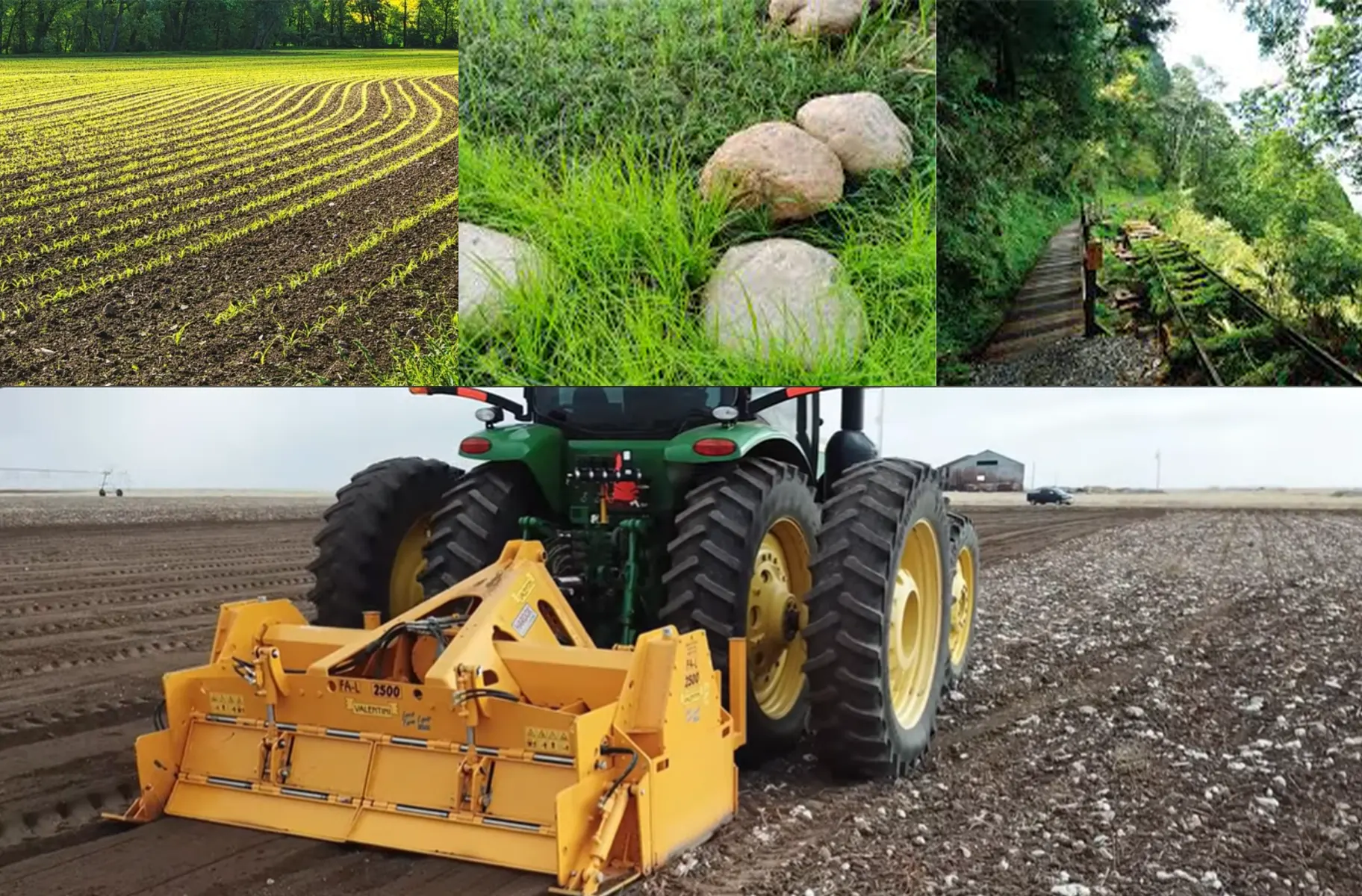
To understand why stone management for hazelnut differs from every other crop in this series, it is necessary to understand the hazelnut’s unique vegetative propagation mechanism — the sucker and stolon system that is the defining biological characteristic of Corylus avellana as a multi-stem shrub rather than a single-trunk tree.
Hazelnut Crown Anatomy and the Stolon Stone Impact
The Root Crown Architecture — What the 40-Year Hazelnut Investment Actually Involves
The hazelnut “bush” as seen above ground — a cluster of 5–12 productive stems arising from a single base — is the visible expression of an underground root crown (“stool”) structure that integrates all of the plant’s vegetative and reproductive activity. The stool generates both the productive stems that bear nuts and the stolons that maintain the crown’s vigour by replacing aging stems with vigorous new growth. Damage to the stool or to the stolon zone that feeds it translates directly to reduced productive stem count — the commercial yield unit of hazelnut production.
| Phase | Years | Stone Risk | Management | Stone clearing role |
|---|---|---|---|---|
| Establishment | 0–3 | HIGHEST — initial stolon expansion into full field radius | Pre-planting THOR clearing to 22–28 cm + CT-2100 collection | Eliminates stolon crack events during the most active crown establishment period |
| Peak production | 4–25 | ONGOING — stolons advance into new soil each year | Annual THOR 2.4 maintenance at 12–16 cm + spring BlackBird pass | Removes frost-heave residuals from stolon advance zone before spring growth flush |
| Coppice renovation | Every 8–12 yr | CRITICAL — cut-back triggers rapid stolon surge for regrowth | THOR 2.4 pass at 18–22 cm before coppicing — stolon surge into stone-free soil | Pre-coppice clearing enables full vigour regrowth; stone-impeded coppice regrowth reduces bush density by 15–30% |
| Late productive / decline | 26–50 | MANAGED — crown fully established, stolon rate slowing | Surface management (BlackBird spring pass) for harvest cleanliness; deep clearing less critical | Surface clearing for vacuum harvester cleanliness (see Section 3) remains important throughout |
The Vacuum Harvester and Stone Contamination — The Nutella Contract at Stake
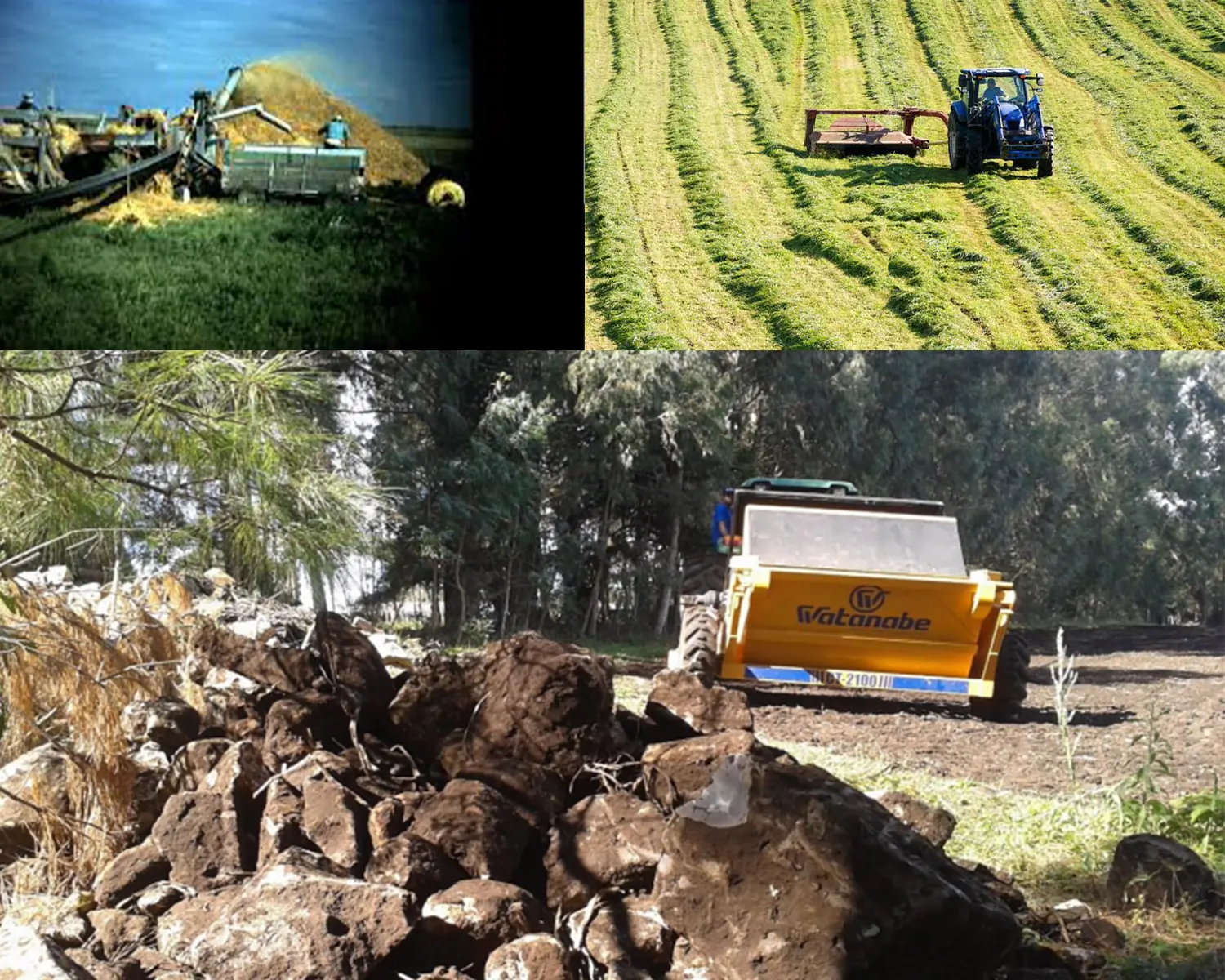
Hazelnut harvesting is unique among all the crops in this guide: the nuts fall naturally from the bush to the ground at maturity, and are collected from the orchard floor — not picked from the tree. This ground-collection system creates a direct and commercially devastating stone contamination pathway that has no equivalent in any other crop in this series.
Turkey — Pontic Mountains, 75% of World Supply, and the Steepest Orchards in This Guide
Turkey’s hazelnut production region extends along the southern Black Sea coast from Sinop in the west to Artvin in the east — a continuous band of steep, forested mountain slopes that receives 800–1,200 mm of annual rainfall. The Pontic Mountains (Karadeniz Dağları) rise abruptly from the coast to 2,000–3,000 m within 50 km, creating the most topographically challenging hazelnut growing environment in the world. The combination of steep slopes, high rainfall, and complex geology produces the specific stone profile that makes Turkish hazelnut orchards the most demanding in the global industry for stone management purposes.
Italy Langhe IGP and Oregon EFB — Two Contrasting Stone Management Scenarios
| Parameter | Italy Langhe (Piedmont) | Italy Lazio (Viterbo) | Oregon / Washington (USA) |
|---|---|---|---|
| Geology | Pliocene marine sediment (silty sandstone/marl, Mohs 3–5) | Etruscan volcanic tuff (Mohs 4–6) — same volcanic origin as Sicily citrus (E-13) | Willamette Valley alluvial silt + Columbia River basalt margins (Mohs 5–7) |
| Stone density (5–20 cm) | Moderate (8–15%) — calcareous nodules in silty matrix | Variable (10–22%) — volcanic lapilli and tuff fragments | Low in valley (2–5%), high at basalt margins (15–30%) |
| Quality designation | Nocciola del Piemonte IGP — DOP pending. Ferrero primary contract source. | Nocciola di Tornareccio (traditional, non-IGP) | No designation — commodity + local specialty markets |
| Primary disease risk | Xanthomonas bacterial blight via stolon wounds + Gleosporium | Same bacterial blight + Phytophthora on volcanic slope drainage issues | Eastern Filbert Blight (EFB — Anisogramma anomala) — devastating in Oregon; stone bark wounds = primary entry |
| Clearing machine | THOR 2.4 — silty sandstone at moderate speed | THOR 2.4 — volcanic tuff, similar to Spain Axarquía | Valley: THOR 2.4. Basalt margins: THOR 3.0 |
| Clearing depth (stolon zone) | 22–28 cm | 22–28 cm | 18–25 cm (valley) / 22–30 cm (basalt margin) |
Hazelnut Stone Management System — Annual Programme and Coppice Renovation Protocol
Frequently Asked Questions
Rock crusher for hazelnut farm — does stone clearing need to be repeated annually, or is the pre-planting clearing sufficient for the full 40-year bush life?
Both primary clearing and annual maintenance are required, but at significantly different scale and cost. The pre-planting primary clearing (THOR 2.4 or 3.0 at 22–30 cm) removes the initial stone population from the stolon expansion zone and is the most intensive operation of the programme. Annual maintenance clearing (THOR 2.4 at 12–16 cm in spring) is required throughout the bush’s productive life because: (a) frost heave and rainfall-driven stone movement delivers new stone to the 5–20 cm zone annually in Turkish and Italian limestone climates; (b) the hazelnut crown continues expanding laterally, advancing its stolon front into previously un-cleared peripheral soil beyond the area cleared at establishment. The annual maintenance clearing cost is approximately 25–35% of the original primary clearing cost per hectare — much less intensive because it addresses only the upper stolon zone and only the frost-heave residuals rather than the full stone population. For large Turkish cooperative farms that pool machinery between members, the annual maintenance programme is typically organised as a collective autumn operation after nut delivery and before winter — covering 150–400 ha per cooperative across 3–4 weeks with one machine set.
How does the Nocciola del Piemonte IGP quality system in Italy relate to stone management — does the designation require stone clearing?
The Nocciola del Piemonte IGP (Protected Geographical Indication) specification for Piedmont hazelnuts does not explicitly mandate stone clearing in its production standards — the IGP requirements focus on the permitted hazelnut varieties (primarily Tonda Gentile delle Langhe), geographic origin (Piedmont region), and post-harvest quality criteria (moisture content, defect rates). However, stone clearing is directly relevant to IGP compliance through two quality pathways. First, the IGP’s maximum defect rate specification (which covers shell fragments, pest damage, and other quality defects) is more consistently achieved on stone-cleared orchards where vacuum harvester contamination is controlled — stone-contaminated batches are more likely to fail the defect rate threshold at packing house assessment. Second, Ferrero’s own supplier specifications for Langhe hazelnut growers (Ferrero is the largest buyer of Nocciola del Piemonte IGP) include contamination thresholds that are effectively impossible to meet consistently on un-cleared surface-stone orchard ground. Ferrero’s quality specifications for Langhe hazelnuts are more stringent than the IGP requirements — stone management to meet Ferrero specifications simultaneously ensures IGP compliance and premium contract eligibility.
Is the stolon stone damage mechanism in hazelnut worse than asparagus crown damage (E-9) — both involve permanent underground structures at 5-25 cm depth?
They are different damage mechanisms with different severity and recovery characteristics. The asparagus crown (E-9) is damaged once at planting — a stone that deforms the crown at Year 0 creates a permanent dead position for 25 years. No further stone interactions occur because the asparagus crown does not expand laterally. The hazelnut stolon is damaged repeatedly — each year the advancing stolon front encounters stones it has not previously encountered, creating new crack events annually throughout the 40–50 year productive life. However, hazelnut has one recovery advantage asparagus lacks: where an asparagus crown death is absolute and permanent, a cracked hazelnut stolon does not necessarily kill the bush — it creates a disease entry point, but the bush may survive with reduced productivity if the crack does not become a systemic infection. In practical terms: asparagus stone damage is more immediately catastrophic (total crown failure at one position for 25 years), while hazelnut stone damage is more insidious (progressive productivity reduction through cumulative infection events over four decades). The financial impact is comparable at the 30-year production horizon — stone clearing prevents approximately the same proportion of total potential revenue loss in both crops.
What is the recommended clearing specification for a new hazelnut plantation on Turkish Pontic Mountain slope with mixed limestone and basalt geology?
For a new Giresun or Trabzon Province hazelnut plantation on mixed limestone-basalt slope geology, the recommended programme is: (1) Soil probing to 35 cm across the plantation area to identify the distribution of limestone (typically in the main body) and basalt dyke intrusions (typically in linear zones crossing the slope). (2) THOR 3.0 (230HP) primary clearing to 28–30 cm on the identified basalt intrusion zones at 0.8–1.2 km/h forward speed. (3) THOR 2.4 (180HP) primary clearing to 25–28 cm on the limestone body at 1.8–2.5 km/h. The two-specification approach avoids over-specifying the entire site for the most challenging zones while ensuring the basalt sections are adequately cleared. (4) CT-2100 rock picker collection of all fragmented material. (5) PSW-3200 rotavator at 20–25 cm for stolon bed preparation. (6) On slopes above 25°: all THOR and PSW-3200 passes along contour lines; CT-2100 collection on temporary level berms. The estimated programme cost for 1 ha of Turkish Pontic limestone-basalt mixed site: approximately ₺45,000–75,000 (local contractor rates) at current Turkish equipment hire pricing. Korea Watanabe can advise on machine ownership vs contract service economics for cooperatives considering equipment investment under Turkish Ministry of Agriculture machinery support programmes.
Is hazelnut stone clearing eligible for any grant or subsidy support in Turkey, Italy, or Oregon?
In Turkey, the Ministry of Agriculture and Forestry (Tarım ve Orman Bakanlığı) operates a comprehensive agricultural machinery subsidy programme (Tarımsal Makine ve Ekipman Hibe Desteği) that has historically covered soil preparation machinery for permanent crop establishment — including stone crushers and rock pickers for hazelnut orchard preparation. Turkish hazelnut growers in Giresun, Trabzon, and Ordu provinces should confirm current eligible machinery items and subsidy rates with the local Provincial Directorate of Agriculture (İl Tarım ve Orman Müdürlüğü). The Fındıkcılar Dernekleri (hazelnut growers’ associations) can advise on machinery pooling models that allow cooperatives to share the capital cost while individually accessing the subsidy programme. In Italy, EU FEASR (FEADER) Rural Development funds through the Piano Strategico della PAC 2023–2027 include productive investment measures for permanent crop establishment — Piedmont (Regione Piemonte) and Lazio administrations both have hazelnut orchard establishment programmes eligible for capital machinery co-funding. Confirm current eligible items and application windows with the Agenzia Regionale Piemontese per le Erogazioni in Agricoltura (ARPEA) in Piedmont. In Oregon, USDA Natural Resources Conservation Service (NRCS) Environmental Quality Incentives Program (EQIP) has included hazelnut orchard practices — confirm current practice codes and payment rates with the local NRCS office. Korea Watanabe provides full machine certification documentation for all markets’ grant application requirements.
Rock Crusher for Hazelnut Farm — Stolon Zone Specification and Annual Programme
Farm area + stone type (limestone / basalt / Pliocene sediment) + slope angle + existing tractor HP + coppice schedule → Korea Watanabe provides the correct rock crusher for hazelnut farm specification, stolon zone depth protocol, annual maintenance programme and 40-year ROI calculation.
Editor: Cxm