
Pasture is the world’s most extensively managed agricultural ecosystem — covering approximately 3.5 billion hectares globally, supporting 1.8 billion sheep and 1 billion cattle, and forming the productive base of the UK and Irish livestock industries, New Zealand’s entire agricultural export economy, and Australia’s pastoral sector. It is also the agricultural land use where stone management is most systematically neglected, most poorly understood in its consequences, and — when corrected — produces some of the most commercially significant improvements in farm performance per pound invested.
This guide covers the specific rock crusher for sheep and cattle pasture renovation application: the grass seed germination mechanism that makes stone the hidden yield killer in pasture reseeding, the silage and hay machinery damage chain that makes stones a direct annual cost, the livestock health consequences of wet stone-laden ground, and the machine configuration that delivers clean, stone-free pasture ground at any scale from a 3-hectare family holding to a 5,000-hectare New Zealand station.
The Seed-to-Stone Germination Gap — Why Stones Kill Pasture Reseedings
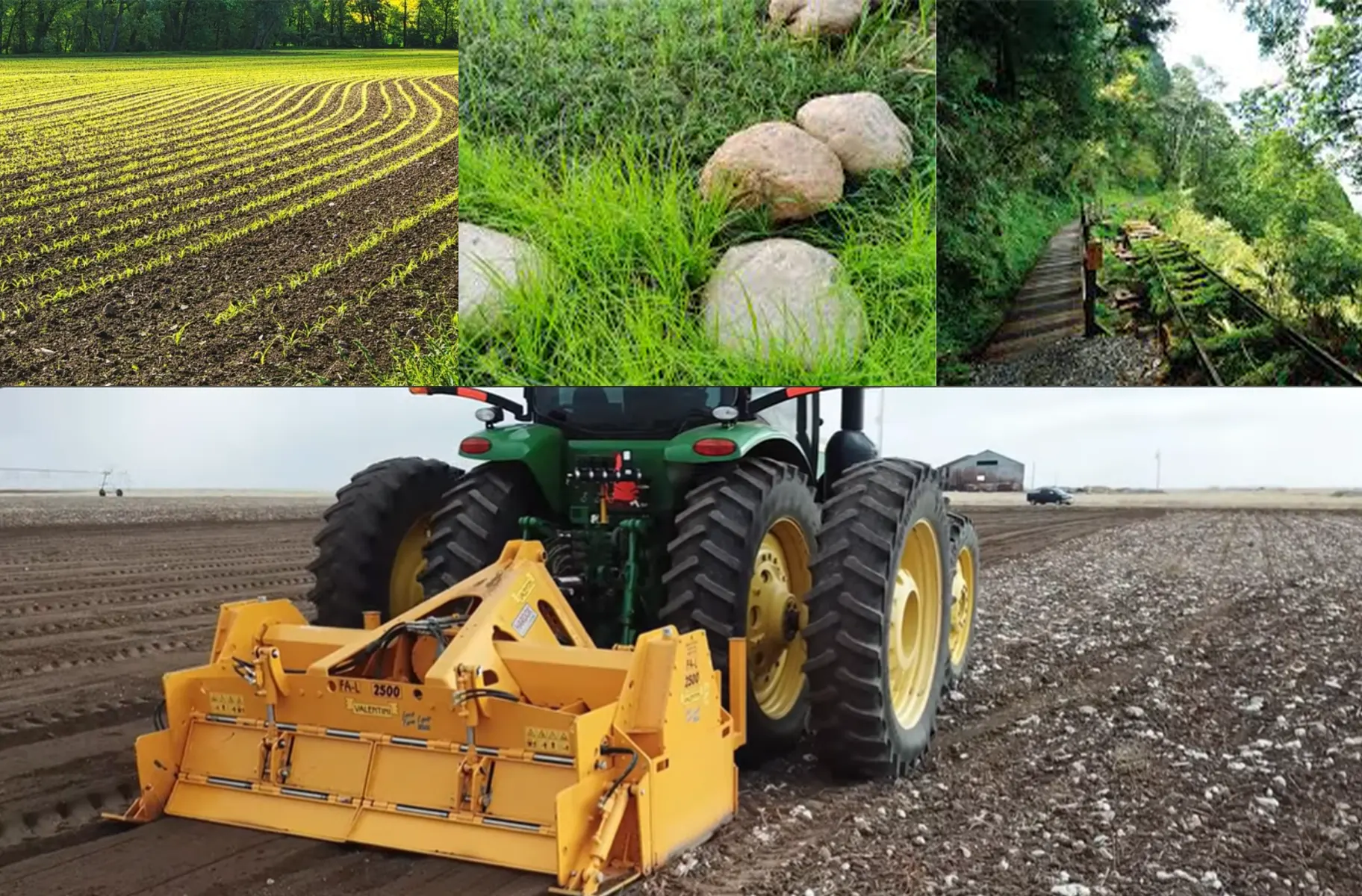
Most pasture agronomists focus on seed variety selection, seed rate, drilling date, and fertiliser application as the primary determinants of reseeding success. Stone management rarely appears in standard reseeding guidance — yet the capillary moisture mechanism by which stones reduce germination rates is well-established in soil physics and produces measurable yield consequences on every stone-laden reseed.
The Capillary Moisture Mechanism — Step by Step
Normal germination on soil: Grass seed rests directly on moist soil particles. Capillary moisture — water held in pore spaces between soil particles — transfers to the seed surface at contact. When seed moisture content reaches approximately 40-50% of dry weight, the radicle (primary root) emerges and germination begins within 5-10 days in suitable temperatures.
Germination failure on stone: Seed rests on stone surface or bridges a stone at a shallow angle. The stone surface is non-porous — it holds no capillary moisture. The gap between seed and the nearest soil particle (typically 1–4 mm when spanning a stone) breaks the capillary column. The seed receives only atmospheric moisture (dew, rain), which is insufficient for sustained imbibition. Germination rate: 0% from seeds in direct stone contact; 40–70% from seeds adjacent to stones in the transition zone.
Aggregate effect on sward establishment: On typical UK upland limestone pasture with 15–25% stone coverage by area, 15–25% of broadcast seed lands on or immediately adjacent to stone surfaces. Combined with reduced germination in stone-transition zones (another 10–15% of seed), total germination rate loss is 20–35% compared to equivalent stone-free ground. This produces the patchy, thin sward that every upland farmer recognises from difficult reseed years — blamed on weather, drilling date, or seed quality, but fundamentally caused by stone surface contact failure.
| Ground Condition | Surface Stone Coverage | Germination Rate | Sward Density Year 1 | Long-term Consequence |
|---|---|---|---|---|
| Fully cleared — THOR 2.4 + CT-2100 | <3% | 85–95% | Dense, even canopy closure by Week 8–10 | Weed suppression from canopy. 20+ year sward lifespan before renovation needed. |
| Light stone clearing — surface pass only | 5–10% | 70–82% | Patchy in stone zones. Canopy closure by Week 12–16 | Weed ingress in bare patches. Sward renovation every 12–15 years. |
| Un-cleared — typical UK upland limestone | 15–25% | 55–72% | Significant bare patches. Thistle and dock in stone zones by Season 2 | Weed control cost each year. Renovation every 8–12 years. Poor winter carrying capacity. |
| Dense stone — East Anglia flint / Irish drumlin | 25–40% | 40–58% | 30–50% bare ground. Permanent weed invasion by Season 1 | Renovation fails entirely — sward reverts to permanent weed-grass mix. Additional herbicide cycles required every 3–5 years. |
The Poaching-Stone Cycle — How Wet Ground and Livestock Accelerate Stone Rise
In UK and Irish pastoral farming, the most significant driver of stone accumulation in the 0–20 cm zone is not frost heave (as in arable or orchard systems) but the combination of winter livestock poaching and the unique physical properties of wet, stony clay-limestone soils. This mechanism operates specifically in the October–March period when cattle are grazing wet pasture, and its consequences are visible each spring as a new stone population that was not present at the start of the previous autumn.
Livestock Hoof Safety — Cattle, Sheep and the Stone Injury Comparison
| Species | Typical Weight | Hoof Contact Area | Ground Pressure (walk) | Stone Injury Type | Primary Risk Season |
|---|---|---|---|---|---|
| Horse | 450–650 Kg | 100–130 cm² (solid single) | 8–12 Kg/cm² | Sole bruise, penetration, white line — high-speed impact multiplies risk | Year-round — especially summer hard ground (see E-6) |
| Beef cattle | 550–800 Kg | 2 × 35–50 cm² (cloven) | 6–10 Kg/cm² | Digital dermatitis entry via stone skin break. Stone trapped in cleft causes prolonged lameness. White line disease on flint | Autumn–Winter: wet ground amplifies stone trap in cleft |
| Dairy cattle | 580–720 Kg | 2 × 35–50 cm² | 6–9 Kg/cm² | HIGHEST commercial impact: lame dairy cow = -15-30% milk yield. Farm profit loss exceeds stone clearing cost in first lame animal event | Any — dairy lameness is year-round; wet stone paths and gateways highest risk |
| Sheep | 50–120 Kg | 2 × 8–15 cm² (cloven small) | 3–6 Kg/cm² | Lower pressure = lower direct stone injury. Primary risk: stone trapped in interdigital space → footrot entry point → herd-level lameness spread | Autumn lambing preparation — footrot risk peaks when sheep on wet, stony ground before lambing |
Silage Mower Stone Strike — The Annual Machinery Damage Chain
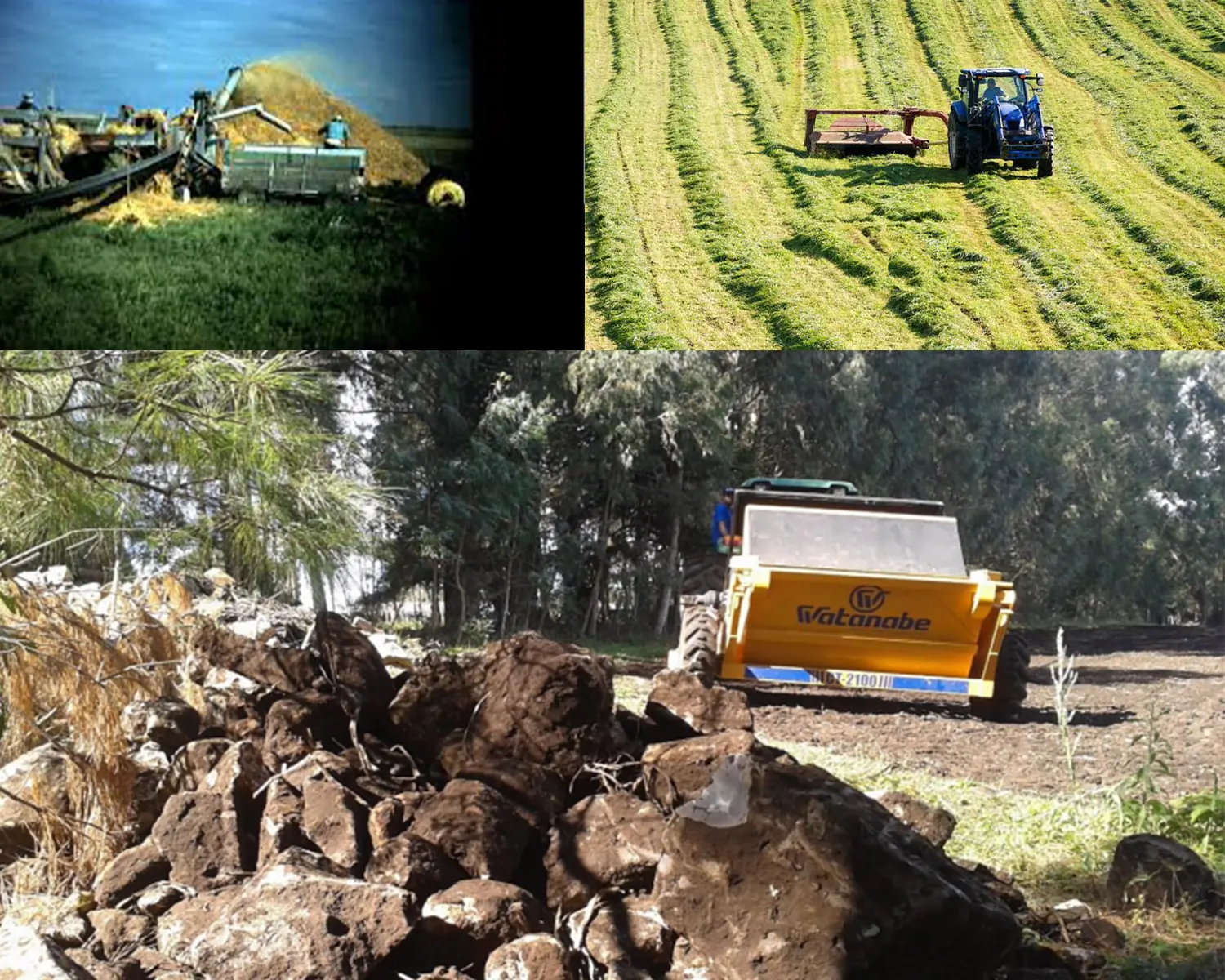
Dairy and beef farms taking silage or hay from permanent pasture face an annual stone damage cycle in their forage machinery that is structurally identical to the combine header flint strike problem described in E-4 (UK Farm Guide) — but with different equipment and a distinct escalation pathway unique to high-speed mowing operations.
UK, Ireland and Global Pastoral Markets — Geology and Regional Stone Challenges

Livestock Health — The Wet-Stone-Ground Pathogen Connection
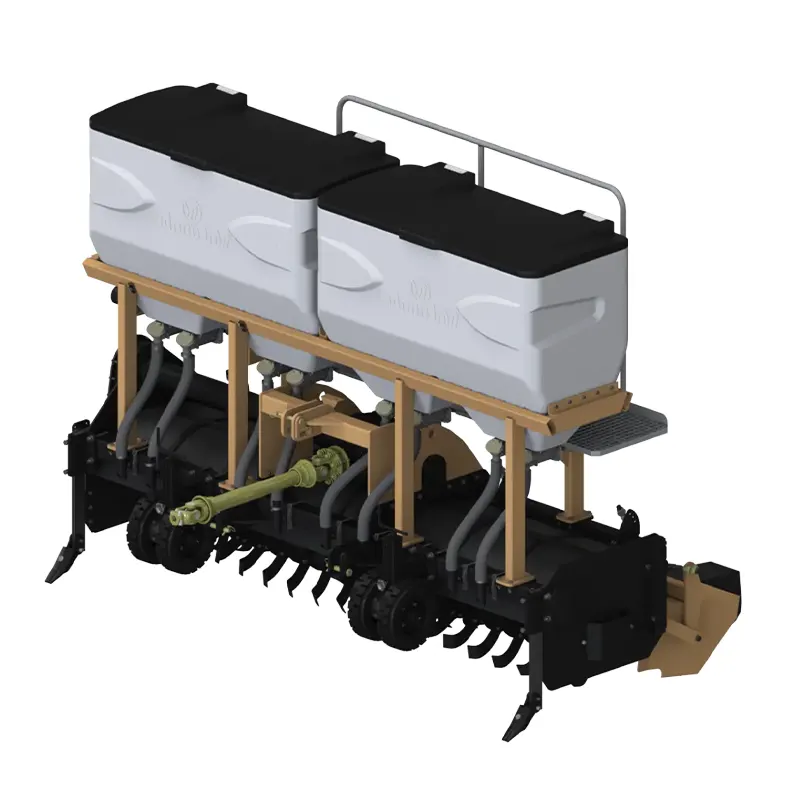
Two of the most significant livestock health problems in UK and Irish sheep and cattle farming — liver fluke (Fasciola hepatica) and interdigital footrot — are directly amplified by wet, stone-laden ground conditions. Stone clearing does not eliminate these diseases (both have complex epidemiological factors), but it materially changes the ground conditions that make outbreaks more severe and harder to control.
Liver fluke transmission requires the mud snail Galba truncatula as intermediate host — a snail that requires wet, slow-moving surface water habitat. On stone-laden upland pasture, surface stones create micro-pools and impeded drainage zones that provide ideal snail habitat at field scale. Stone-cleared pasture with improved drainage and uniform surface drainage reduces the snail habitat density on the farm, contributing to an overall reduction in fluke challenge risk. AHDB Beef and Lamb has identified surface drainage improvement (which stone clearing supports) as a practical farm-level intervention for reducing liver fluke risk alongside pharmaceutical control.
Sheep footrot (Dichelobacter nodosus) and cattle digital dermatitis require an initial skin break for bacterial entry — the bacterium cannot penetrate intact hoof tissue. Stones trapped in the interdigital cleft (the space between the two toes of cloven-hoofed animals) create micro-abrasions during normal walking that provide exactly the entry point these organisms need. On stone-cleared pasture, the incidence of stone-induced interdigital abrasion is substantially lower — and while footrot elimination requires vaccination and management beyond ground preparation, reducing the entry-point frequency measurably reduces the severity and spread rate of both diseases within a flock or herd.
The Pasture Renovation System and Environmental Payment Relevance
Frequently Asked Questions
Rock crusher for sheep pasture — does the timing of stone clearing matter relative to reseeding?
Yes — timing is critical for pasture stone clearing, and the optimal sequence differs from arable stone clearing. The ideal sequence for UK upland pasture reseeding: (1) Complete the THOR 2.4 crushing and CT-2100 collection in April, as soon as the winter grazing period ends and before the soil dries to the point where stone fragmentation efficiency drops. (2) Allow 2–3 weeks of settlement before the PSW-3200 rotavator pass — this allows any disturbed soil to consolidate and prevents the rotavator from working into soft, over-disturbed ground. (3) Reseed in late April to mid-May for spring reseeding (optimum soil temperature for perennial ryegrass: 10°C+), or August–September for autumn reseeding (the preferred UK upland window). Autumn reseeding on stone-cleared ground typically gives better establishment than spring because the lower weed competition in August–September means the young grass sward can establish without the dock and thistle pressure that spring reseeds face in bare patches. The stone clearing itself should never be done in November–February in the UK — wet soil conditions mean the machine creates deep rutting that disrupts the existing sward and subsequent seed bed preparation.
How does the stone clearing requirement for sheep pasture differ from cattle pasture — and does herd type change the specification?
The clearing depth requirement is the same for both (15–22 cm for established pasture maintenance; 22–28 cm for full reseeding renovation) — the difference is in the urgency and the seasonal timing. Sheep farms clear primarily for three reasons: reseeding success, silage/hay machinery protection, and lambing field preparation. The lambing field is typically the highest-priority clearing target — a stone-free, well-established sward in the lambing paddock reduces both ewe and lamb injury risk and provides the cleanest, most nutritious early spring grass available. On cattle farms — particularly dairy farms — the dairy’s welfare of animals regulations in the UK make lameness a compliance concern as well as a production issue, and the poaching-stone cycle described in Section 2 makes autumn clearing of the main grazing rotation a higher priority than on sheep farms. For beef suckler herds, the timing priority is grass establishment before the summer grazing season — typically spring clearing and reseeding for autumn forage. New Zealand and Australian pastoral farmers face a scale argument rather than a species argument: both sheep and cattle stations of 1,000+ ha need the BlackBird for viability of the renovation programme, regardless of the stock type.
Does stone clearing genuinely reduce grass reseeding costs — or does improved germination just mean I can reduce seed rate?
Both outcomes occur, and together they represent a more significant economic benefit than most farmers appreciate before they first clear stone from a reseed. The germination rate improvement documented on cleared ground (85–95% vs 55–72% on un-cleared upland limestone) means: (a) the same seed rate produces 20–30% more germinated plants, which can be converted into seed rate reduction of 15–25% on subsequent reseeds at equivalent sward density; or (b) the same seed rate produces a significantly denser first-year sward that closes canopy faster, suppresses weeds earlier, and reduces the need for herbicide intervention in the establishment year. At a typical ryegrass-clover mix seed rate of 20–25 Kg/ha at £4.50–6.00/Kg, a 20% seed rate reduction is worth approximately £18–30/ha — on a 50 ha reseed programme, this is a meaningful saving relative to the stone clearing cost. The longer-term benefit — extending the productive life of the sward from 8–12 years (un-cleared) to 20+ years (cleared) before renovation is needed again — is the more significant financial argument, but it is realised over a decade rather than in the first year.
Can a New Zealand or Australian farmer use the same THOR and BlackBird system as a UK upland sheep farmer?
Yes — the machine system is identical, and the operational principles are the same. The key differences are scale and stone hardness. For NZ Canterbury Plains greywacke and schist (Mohs 5–7), the THOR 3.0 (230HP) is preferred over the THOR 2.4 for its higher impact energy on harder stone — the same recommendation as UK flint (E-4) and EU quartzite. For Australian Victorian volcanic basalt and ironstone (Mohs 5–7), same specification. The BlackBird rock rake becomes the primary machine at NZ station and Australian pastoral scales (500+ ha renovation blocks) — its 9.5m working width at 5–6 ha/day makes the renovation programme commercially viable at a scale where THOR-only operation would take years rather than months. The CT-2100 rock picker’s 2.5 m³ bunker and 80 Kg maximum stone size handles the greywacke cobbles and basalt stones characteristic of both NZ and Australian pastoral landscapes effectively — the only operational difference is that the bunker fills more frequently on the first clearing pass of a Canterbury Plains alluvial fan site (typically every 0.5–1.0 ha) than on equivalent UK limestone pasture.
What is the realistic payback period for stone clearing on a UK upland sheep or beef cattle farm?
The payback period depends on which benefits are counted, but even a conservative analysis shows the investment is highly justified on most UK upland stone-ground farms. For a 50-ha upland sheep farm on limestone in the Yorkshire Dales: stone clearing cost (THOR 2.4 + CT-2100 pass) at £250–350/ha = £12,500–17,500 total. Annual benefit calculation: reseeding success improvement (20% fewer renovation cycles over 20 years = approximately £600/year in amortised seed and renovation cost savings) + silage mower blade savings (estimated £400–800/year) + footrot and lameness treatment reduction (estimated £300–600/year) = approximately £1,300–2,000/year total recurring benefit. Payback period: 7–13 years on recurring savings alone. Add the one-time benefit of the 20-year sward life extension versus 12-year un-cleared (avoiding one complete renovation cycle worth £4,000–7,000 in labour, seed, and machinery costs) and payback reduces to 5–9 years. For a dairy farm where lameness costs are higher (£50,000–90,000/year on a 200-cow herd with 15% stone-related lameness), payback can be 1–2 years. Korea Watanabe recommends requesting a farm-specific ROI calculation based on your actual stock numbers, forage area, and current machinery maintenance costs before finalising the clearing programme budget.
Rock Crusher for Pasture — Complete System for Sheep, Cattle and Large-Scale Renovation
Farm type (sheep / beef / dairy) + block area + stone type + reseeding or maintenance + existing tractor HP → Korea Watanabe provides the correct rock crusher for pasture specification, depth protocol, seasonal programme and BlackBird coverage plan for your renovation project.
Editor: Cxm