
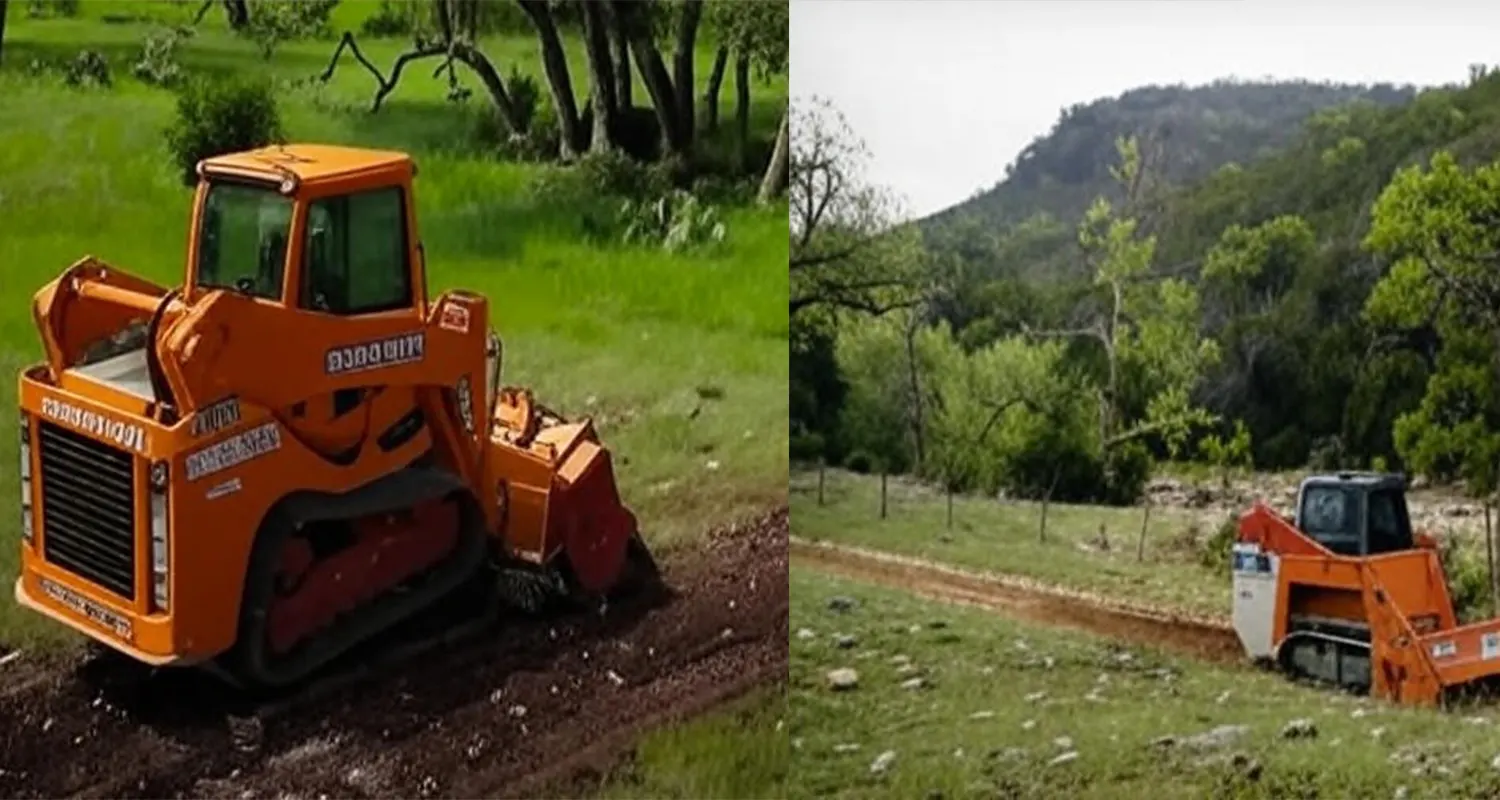
When a Premier League groundsman prepares a training pitch or a community club lays a new 3G surface, the ground beneath the turf rarely makes the news — until a player goes down clutching an ankle, or the synthetic surface shows uneven deformation three years into its projected ten-year lifespan. In both cases, investigation almost invariably finds the same culprit: stone in the root zone or sub-base that should have been removed before construction began.
The global sports surface market exceeded USD 5.3 billion in 2023 and grows at approximately 5% per year, driven by investment in both elite facilities and community sports infrastructure. Every new natural-grass pitch, hybrid pitch, or artificial surface installation begins with the same foundation requirement — a stone-free, uniform sub-base at the depth specified by the governing body for that sport. The stone crusher for sports turf preparation is the machine that creates this foundation. This guide covers the governing body standards, the player injury mechanism that those standards protect against, and the specific machine configuration that delivers compliant, consistent results on any scale from a single community football pitch to a golf course renovation.
Governing Body Standards — What Each Sport Specifies for the Root Zone
International sports governing bodies set root zone and sub-base specifications for a fundamental reason: consistent, stone-free ground produces consistent playing surfaces — and consistent playing surfaces reduce injury risk while extending the productive lifespan of the surface installation. The standards vary by sport, reflecting each discipline’s specific ball-bounce, foot-traction, and player-impact characteristics.
| Sport | Governing Body | Stone-Free Depth | Max Residual Stone Size | Key Standard Reference | Consequence of Non-Compliance |
|---|---|---|---|---|---|
| Football (Soccer) | FIFA | ≥250 mm | <20 mm | FIFA Quality Programme for Artificial Turf (2023 ed.) | Pitch fails FIFA Quality / FIFA Quality Pro certification; cannot host sanctioned competitions |
| Rugby Union | World Rugby | ≥220 mm | <20 mm | World Rugby Reg. 22 / Technical Zone specification | Not compliant for international or sanctioned club matches; player safety liability |
| Golf (greens/tees) | USGA / R&A | ≥300 mm | None permitted | USGA Specifications for Putting Greens (2018); R&A equivalent | Uneven ball roll; failed USGA certification for tournament hosting |
| Cricket | ECB / ICC | ≥280 mm | <25 mm | ECB Pitches and Outfields Regulations (current edition) | Uneven bounce; serious risk of ball deviation causing head/face injury |
| American Football | NFL / NCAA | ≥200–250 mm | <20 mm | NFL/NCAA Field Turf Specifications | Surface deformation; potential non-approval for sanctioned events |
| Field Hockey | FIH | ≥200 mm | <15 mm | FIH Global Field Hockey Sub-base Specification | Uneven ball roll on water-based surface; FIH Preferred Facility status denied |
| Athletics (track) | World Athletics | ≥300 mm | <20 mm | World Athletics Track and Field Facilities Manual | Surface settlement; Class 1 certification failure for IAAF competition |
The Player Injury Chain — How a Sub-Base Stone Becomes an ACL Injury
The connection between inadequate stone clearing and player injury is not hypothetical — it follows a specific mechanical pathway that has been documented in sports medicine literature and in numerous club-level incident reports. The pathway is counterintuitive because the stone is typically 20–25 cm below the surface, invisible to the player and the groundsman, yet the injury it causes is at the player’s knee or ankle.
The Stone-to-ACL Causal Chain — 4-Stage Injury Mechanism
Stone Clearing Depth by Sport — Bars, Standards and the Safety Margin Rule
Required Stone-Free Depth by Sport (operating depth including 30mm safety margin above standard)
Operate THOR at 32–35 cm
Operate THOR at 30–32 cm
Operate THOR at 27–30 cm
Operate THOR at 24–27 cm
Operate THOR at 22–25 cm
The 30mm safety margin above the governing body standard depth accounts for sub-base settlement after construction. Clearing to precisely the standard depth without margin means the first post-construction settlement cycle may bring residual stone fragments back within the specification zone.
Pitch Dimensions and Machine Coverage — Planning the Clearing Operation
| Sport Surface | Area | THOR 2.4 (0.85 ha/day) | THOR 3.0 (1.4 ha/day) | BlackBird Rake Add-on | Notes |
|---|---|---|---|---|---|
| 11-a-side football pitch | 0.7–0.8 ha | ~1 day | 0.5–0.6 day | Surface pass: 2–3 hrs | Most common single-pitch project |
| Rugby union pitch + in-goal | 0.9–1.0 ha | 1–1.2 days | 0.7 day | Surface: 3–4 hrs | In-goal areas have same depth requirement as field of play |
| Multi-sport complex (4 pitches) | 3.5–4.0 ha | 4–5 days | 2.5–3 days | 2–3 days parallel | Typical local authority sports centre development |
| 18-hole golf course (fairways) | 20–35 ha | 24–42 days | 15–25 days | BlackBird (9.5m) essential | BlackBird 9.5m rake covers 5–6 ha/day — transforms golf course timeline |
| Athletics track + infield | 1.5–2.0 ha | 2 days | 1.2 days | Infield: 4–5 hrs | Track curve sections require careful machine turning at 300mm depth |
| Cricket ground (full outfield) | 1.6–1.8 ha | 2–2.5 days | 1.2–1.5 days | Full outfield: 4–6 hrs | Pitch area (30m × 30m) requires separate specialist treatment at depth |
New Construction vs Pitch Renovation — Two Different Stone Clearing Protocols

The stone clearing protocol for a new sports facility construction differs significantly from the renovation of an existing pitch. The machine selection, operating depth, and sequence vary between these two contexts in ways that affect both cost and compliance outcome.
| Parameter | New Construction | Renovation / Resurfacing |
|---|---|---|
| Starting condition | Previously agricultural, undeveloped, or redevelopment land. Full stone population at all depths. | Existing turf or surface removed. Sub-base may have been cleared previously but requires verification and frost-heave residual removal. |
| Clearing depth required | Full depth + 30mm margin (up to 330mm for golf/athletics) | Probing survey first; clear to standard depth only in zones where stones are present. Often 15–20% of area is problem zones. |
| Machine sequence | THOR 2.4/3.0 → CT-2100 rock picker → DCW 2.2 pH correct → PSW-3200 rotavator → drainage installation → turf laying | BlackBird rock rake surface pass → targeted THOR 2.4 on flagged zones → CT-2100 collect → PSW-3200 re-grade → turf relay |
| Stone collection requirement | 100% permanent removal — all fragmented stone must leave the site | Problem-zone targeted removal; surface raking pass removes sub-20mm fragments |
| Compliance documentation | Full machine operating log; post-clearing probing survey (1 probe per 50 m²); photographic evidence of CT-2100 collection | Pre-renovation probing survey; targeted zone treatment records; post-work probing comparison |
| Typical project timeline | 5–10 days for a standard football pitch (clearing + drainage + turf) | 3–5 days (faster due to targeted rather than full-field treatment) |
Drainage Installation Compatibility — Why Stone Clearing Comes Before Pipe Laying
Modern sports surface drainage systems — slit drainage, molepipe drainage, and herringbone perforated pipe networks — operate at depths of 250–400 mm below the finished surface. Every drainage pipe laid into a sports sub-base that has not been stone-cleared faces the same risk: a stone adjacent to or directly below the pipe creates a differential hard point that, under seasonal frost cycles and maintenance vehicle traffic, eventually causes the pipe to deform, shift, or crack.
Drainage Pipe Installation — Stone-Cleared vs Un-Cleared Sub-Base (Cross-Section)
UK Sports Facility Market — Three Tiers, Three Business Cases
Frequently Asked Questions
Stone crusher for sports turf — what machine specification is needed for a standard football pitch?
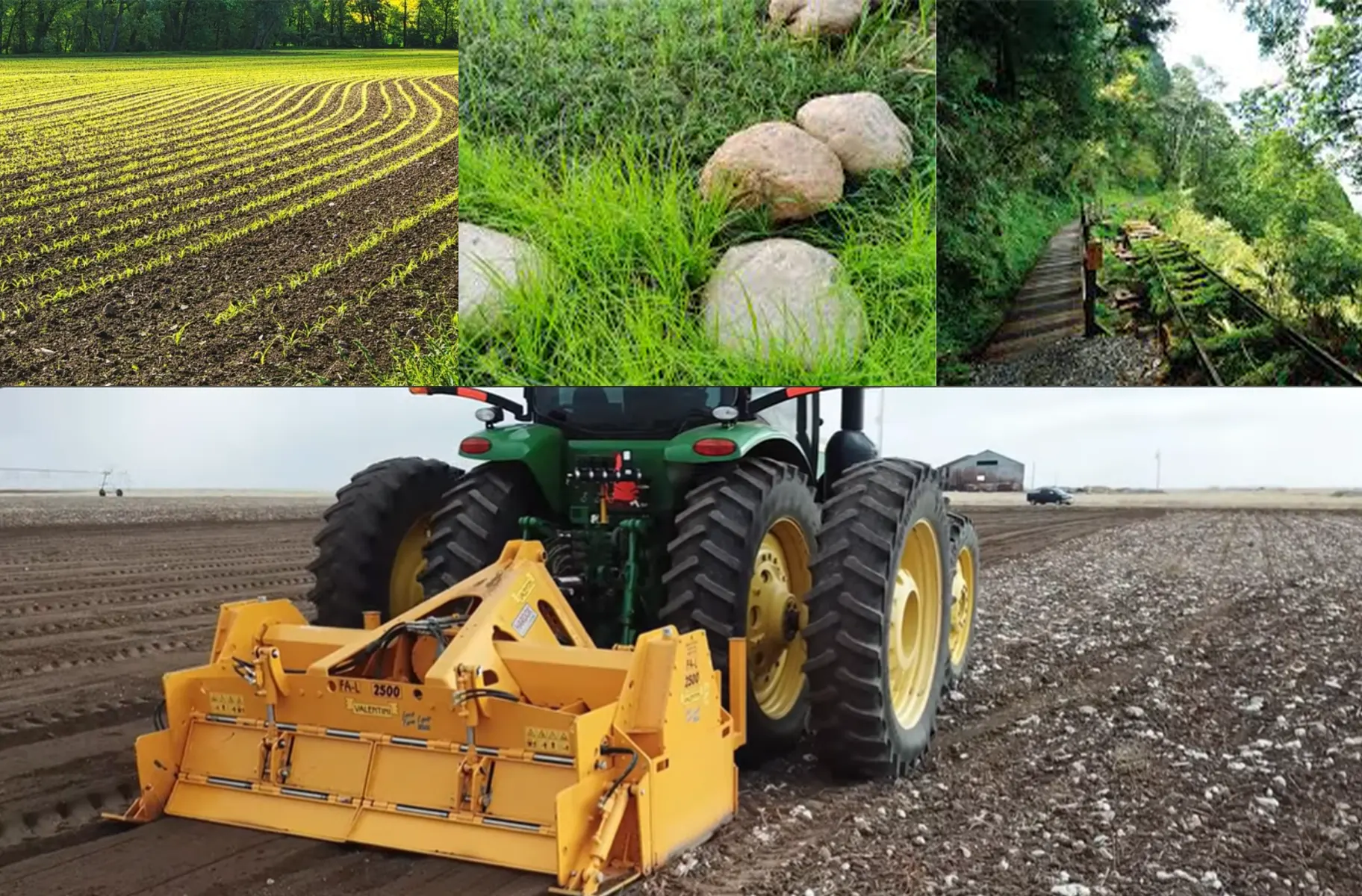
For a standard 11-a-side football pitch (approximately 0.7–0.8 ha) on typical UK clay-flint or limestone soil, the THOR 2.4 (180 HP, 2,400 mm working width, ≤30 cm operating depth) is the standard specification. At 1.5–2.0 km/h forward speed, the THOR 2.4 completes a FIFA-standard stone-free root zone clearance to 280 mm depth (250 mm standard plus 30 mm safety margin) in approximately one working day for a single pitch. The CT-2100 rock picker follows on the same day or the following day to permanently collect all fragmented stone material. For multi-pitch developments or larger sports complexes where project timeline is a constraint, the THOR 3.0 (230 HP, 3.0 m working width) reduces per-pitch time by approximately 35–40% and is the recommended choice for contractors working on projects of three or more pitches simultaneously. For UK flint (Mohs 7–8), the harder stone specification, the THOR 3.0’s greater impact energy is particularly beneficial for achieving clean fragmentation to standard depth in a single pass.
Does the FIFA Quality Programme require documentation of stone clearing during pitch construction?
The FIFA Quality Programme for Football Turf specifies the sub-base performance requirements that a pitch must meet at the time of testing — it does not mandate a specific stone clearing procedure during construction. However, the programme’s sub-base performance tests (including deformation, shock absorption, and ball roll consistency) cannot be passed if significant stones are present in the root zone, because stones cause the localised hard spots that produce test failures. In practice, professional turf installers and pitch constructors universally include stone clearing as part of the pre-installation specification because: (a) no FIFA-certified testing laboratory will certify a pitch that fails the sub-base deformation tests, and (b) most turf manufacturers’ warranties explicitly require the installer to document sub-base preparation to specification standard. The machine operating log from the stone crushing pass and the CT-2100 collection record, supported by post-clearing probing data, constitute the standard documentation package for a FIFA certification-related construction file.
Can a golf course use the same rock crusher as a football pitch, or does the 300mm USGA depth require a different machine?
The THOR 2.4 and THOR 3.0 both have operating depth capability to 30–35 cm, making them fully capable of meeting the USGA 300 mm specification for golf green and tee construction with the 30 mm safety margin. The same machine handles both football pitch (operating at 28 cm) and golf course (operating at 33 cm) preparation — the only change is the depth setting on the operating pass. The scale difference between a football pitch and a golf course is the more important operational consideration: a complete 18-hole golf course with fairways, greens, and tees covers 20–40 ha, compared to a football pitch’s 0.75 ha. For a golf course at this scale, the BlackBird rock rake (9.5m working width, 300 HP) is typically used for the main fairway areas — its 5–6 ha/day surface coverage rate dramatically reduces the project timeline compared to a 2.4m crusher working individually. The THOR 2.4 or 3.0 handles specific problem zones where deeper clearing (25–35 cm) is required, and the BlackBird handles wide-area surface stone gathering after the deep clearing passes are complete.
What is the typical cost of stone clearing for a sports pitch in the UK — and how does this compare to the cost of not clearing?
Stone clearing contractor costs for a standard UK football pitch (0.75 ha, one clearing and one collection pass) range from approximately £2,500–6,000 depending on stone density, ground conditions, and local contractor rates. For a community club investing £50,000–80,000 in a complete pitch installation including drainage and turf, this represents 4–8% of the project cost. The cost of not clearing — or of inadequate sub-base preparation — is dramatically higher: a failed drainage system that requires excavation and reinstatement costs £15,000–35,000; a surface resurfacing after premature deformation costs £20,000–50,000; a personal injury claim resulting from a pitch surface defect attributable to inadequate sub-base preparation can cost £50,000–500,000+ depending on injury severity and jurisdiction. The ratio of prevention cost to remediation cost is typically 1:10 to 1:50. Stone clearing is not a cost item in sports facility construction — it is an insurance premium against a significantly larger future liability.
Can a stone clearing contractor build a specialised sports turf business alongside agricultural clearing work?
Yes — and this is one of the most commercially attractive service extensions available to an established agricultural stone clearing contractor. The same THOR 2.4 rock crusher and CT-2100 rock picker that clears Korean highland granite or UK limestone farmland in spring and autumn can be deployed on sports facility projects during the quieter agricultural period (June–August and November–December). Sports facility construction in the UK follows a different seasonal pattern from agricultural clearing — many pitch construction projects are scheduled during summer for completion before the autumn season. This creates a complementary calendar that allows a contractor to maximise machine utilisation across two markets. The key difference for sports work is documentation: sports facility contracts require more rigorous compliance records (probing survey, operating log, collection evidence) than agricultural contracts. A contractor who invests in the documentation discipline for sports work commands a significant premium rate over contractors who cannot provide compliance evidence — typically 30–60% higher day rates for certified sports facility clearing work versus agricultural clearing in the same county.
Sports Turf Stone Clearing — Machine Specification and Compliance Documentation
Sport type + surface area + governing body certification target + stone type + existing tractor HP → Korea Watanabe provides the correct stone crusher for sports turf configuration, depth specification, operating protocol and compliance documentation template for your project.
Editor: Cxm