
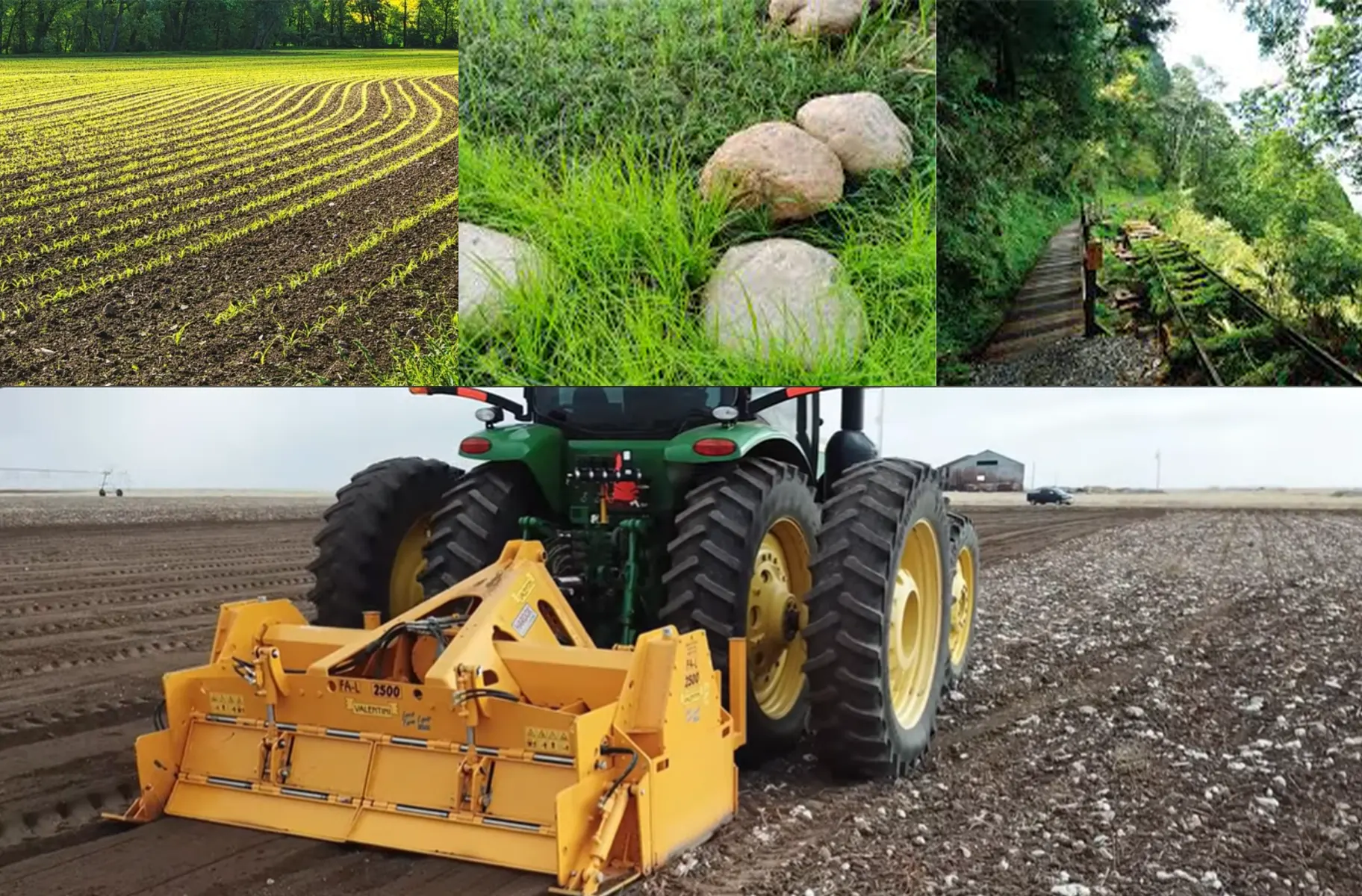
Limestone, sandstone, and flint — the same geological substrates that give Burgundy, Rioja, and Chianti their celebrated terroir character — also produce the highest stone densities of any European agricultural soil. The galets roulés of Châteauneuf-du-Pape, the galestro of Chianti Classico, and the weathered limestone of the Douro Valley are all beautiful in the bottle and devastating in the seed bed. For the grower preparing new vineyard land or renewing old blocks, embedded stone at 15–25 cm depth is the single most consistent barrier between the vine’s root system and the deep mineral-rich subsoil that differentiates premium wine.
This guide covers the specific application of a tractor rock crusher for vineyard soil preparation in Mediterranean and European wine regions — the vine root biology that makes stone clearing agronomically justified, the limestone soil profile that defines the clearing depth requirement, the inter-row width constraints unique to vineyard geometry, and the comparative specifications of the three major machine families (THOR, FAE, Seppi) that dominate this application. It closes with the EU Common Agricultural Policy (CAP) subsidy context that makes the investment economics significantly more favourable than the machine list price suggests.
Vine Root Biology — Why Perennial Crops Are More Stone-Sensitive Than Annuals
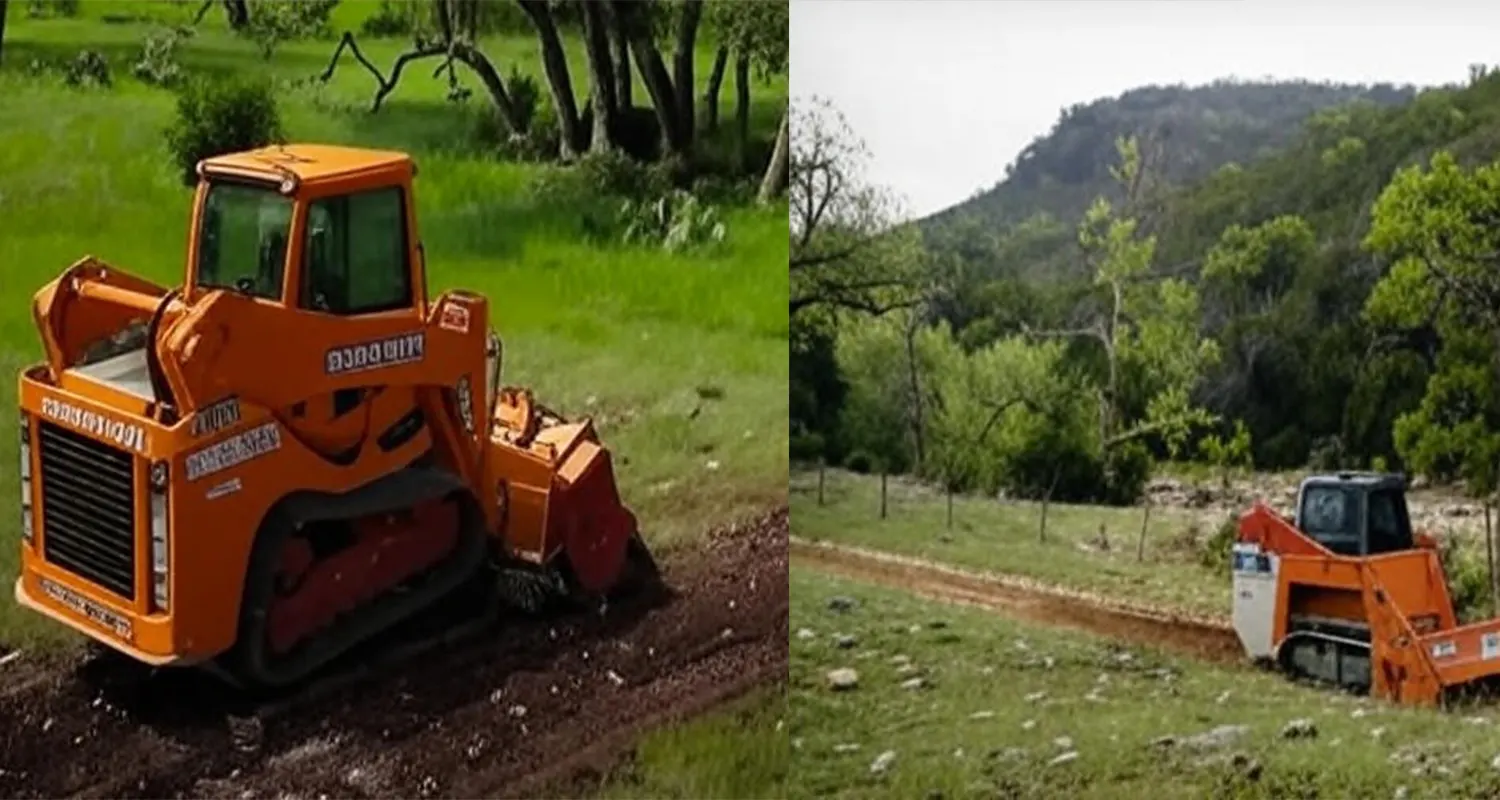
The key distinction between stone clearing for vineyard establishment and stone clearing for annual crops (potato, radish, garlic) is the permanence of the investment. An annual crop root encounters a stone in one growing season and is harvested — the damage affects that season’s quality. A vine root encounters a stone in its second or third year after planting and is redirected permanently. That permanent redirection determines where the vine’s structural root system goes for the next 30–80 years of production.
Vine Root Development — The Critical Stone-Sensitivity Window
This permanence fundamentally changes the economics of stone clearing in vineyards compared to annual crop systems. An annual crop grower recovers the stone clearing investment within one to two growing seasons through Grade 1 quality improvement. A vineyard grower investing in pre-planting stone clearing recovers the same investment over the first 3–5 years of production — but the quality and price premium that the cleared-soil vine achieves persists for the entire 30–50 year production life of that vineyard block. The stone clearing cost is paid once; the wine quality benefit is collected every vintage.
Mediterranean Limestone — The Specific Stone Profile Across Wine Regions
The stone challenge in Mediterranean vineyard soil differs fundamentally from the Korean granite scenario in three ways: rock type, depth distribution, and the relationship between stone and wine quality. Understanding these differences is essential for correct machine selection.
Mediterranean Vineyard Soil Cross-Section — Limestone Stone Distribution
Galestro (Schist-Limestone)
Hardness: Mohs 3–4 (low abrasion)
Oolitic Limestone
Hardness: Mohs 3–4, two-layer challenge
Alluvial Quartzite + Clay
Hardness: Mohs 6–7, harder quartzite—heavier machine needed
Schematic profiles based on regional geological surveys. Confirm field-specific conditions with local agronomist before finalising clearing depth specification.
| Region | Stone Type | Mohs Hardness | Primary Depth | Min. Machine HP | Key Challenge |
|---|---|---|---|---|---|
| Chianti, Tuscany (IT) | Galestro (schist-limestone) | 3–4 | 8–22 cm | 150–180 HP | Flat plate geometry — different from blocky granite |
| Burgundy, Côte d’Or (FR) | Oolitic limestone (2 layers) | 3–4 | 5–35 cm | 180 HP | Double layer requires deeper clearing pass |
| Rioja Alta (ES) | Quartzite alluvial pebbles | 6–7 | 10–28 cm | 180–230 HP | Hard quartzite wears rotor teeth rapidly — heavier machine essential |
| Champagne, Marne (FR) | Chalk / Belemnite limestone | 2–3 | Variable | 150 HP | Very soft chalk — lower HP adequate; concern is compaction not hardness |
| Douro Valley (PT) | Schist / Xisto | 3–5 | Surface–20 cm | 150–180 HP | Flat plate schist — terrace slopes 25–40° limit machine access |
| Barossa / Clare (AU) | Ironstone + Quartzite | 6–7 | 15–30 cm | 180–230 HP | High hardness requires heavier machine specification |
| East Anglia / Kent (UK) | Flint | 7–8 | 10–25 cm | 230 HP minimum | Hardest common stone in EU agriculture — heavy machine mandatory, tooth replacement cycle short |
Inter-Row Width — The Geometry Constraint No Other Crop Imposes
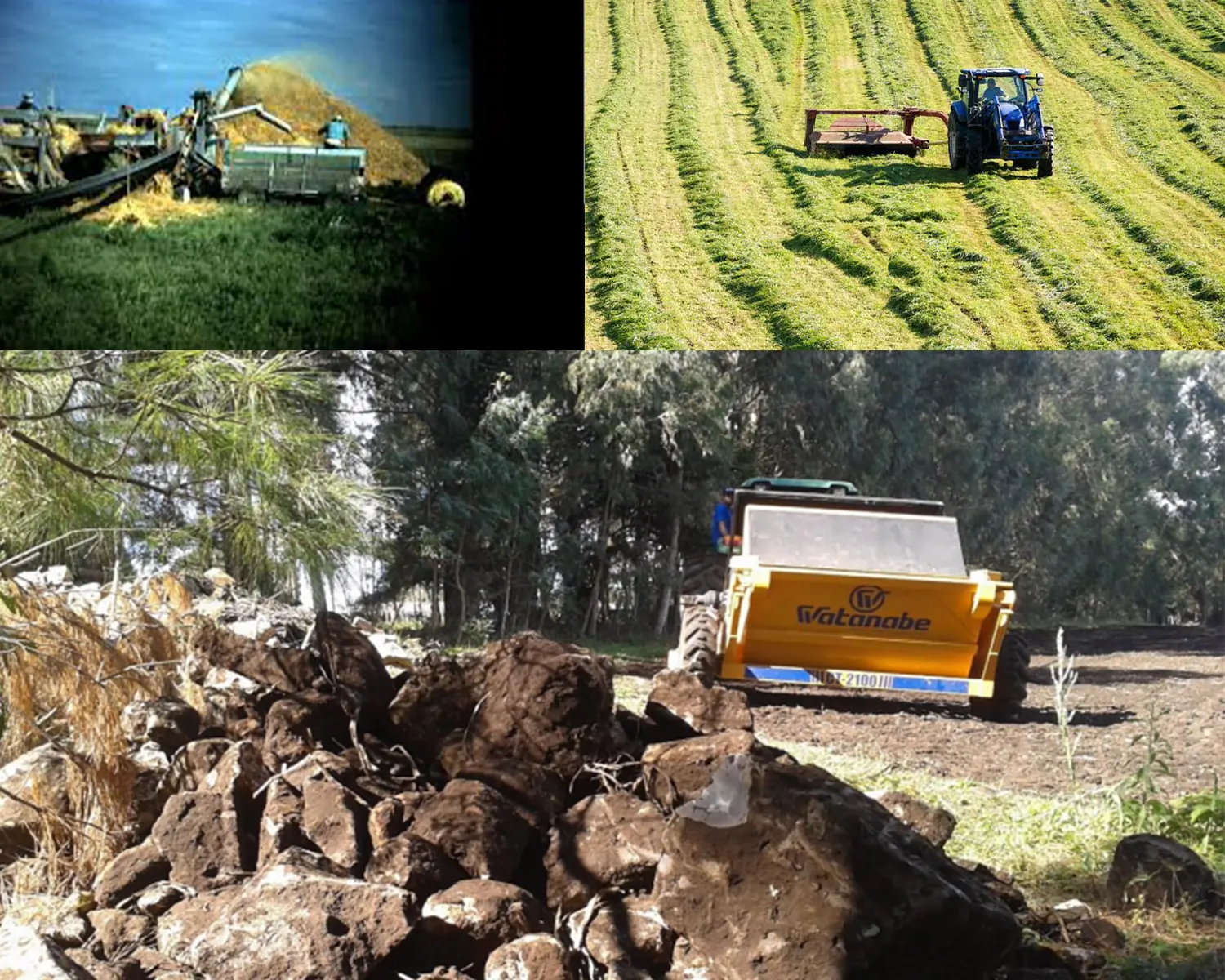
Vineyard soil preparation has a geometric constraint that no other agricultural clearing application shares: the vine row. In an established or recently planted vineyard, the rock crusher must operate within the row spacing — and the row spacing in traditional European vineyards (1.8–2.4 metres) is significantly narrower than the standard THOR 2.4’s 2,400 mm working width.
This creates a fundamental decision point that every vineyard operator must resolve before purchasing or specifying a rock crushing machine:
| Vineyard Type / Region | Typical Row Spacing | THOR 2.4 (2,400mm) Feasibility | Narrower Specialist Model | Recommendation |
|---|---|---|---|---|
| Traditional Burgundy / Bordeaux | 1.0–1.2 m | ✗ Not feasible | Specialist inter-vine model <1.0m width | Pre-planting full clearing only; specialist machine for established rows |
| Rioja, Ribera del Duero | 2.0–2.5 m | ⚠ Marginal (requires narrow tractor) | THOR 2.4 with narrowed width configuration | THOR 2.4 feasible if tractor track width ≤1.8m; confirm clearance |
| New World (Argentina, Chile, Aus.) | 2.5–3.5 m | ✅ Fully feasible | — | Standard THOR 2.4 ideal for New World row spacing |
| Pre-planting (any region) | No constraint | ✅ All models suitable | THOR 3.0 preferred for coverage speed | Pre-planting clearing is ALWAYS the preferred strategy — eliminates all inter-row constraints |
The Vineyard Stone Clearing Calendar — Working Within the Dormant Season Window
Unlike annual crops — where spring planting deadlines drive the clearing calendar — vineyard stone clearing follows the vine’s dormancy cycle. The optimal clearing window is the vine’s dormant season: after harvest and before bud break. This window is longer in Mediterranean climates than in Korean highland agriculture, but it has its own constraints.
Mediterranean Vineyard Stone Clearing Calendar
January–February operations on established vineyard blocks must avoid soil saturation — wet clay-limestone soil compaction under tractor weight damages the vine root zone more than the stones. Schedule clearing for periods of 2–3 consecutive dry days (frost-free in Mediterranean but may be frozen in Continental French/German vineyards). March operations must be completed 3–4 weeks before expected bud break for the specific vineyard elevation and microclimate.
The Wine Quality Premium Chain — Connecting Stone Clearing to Bottle Price
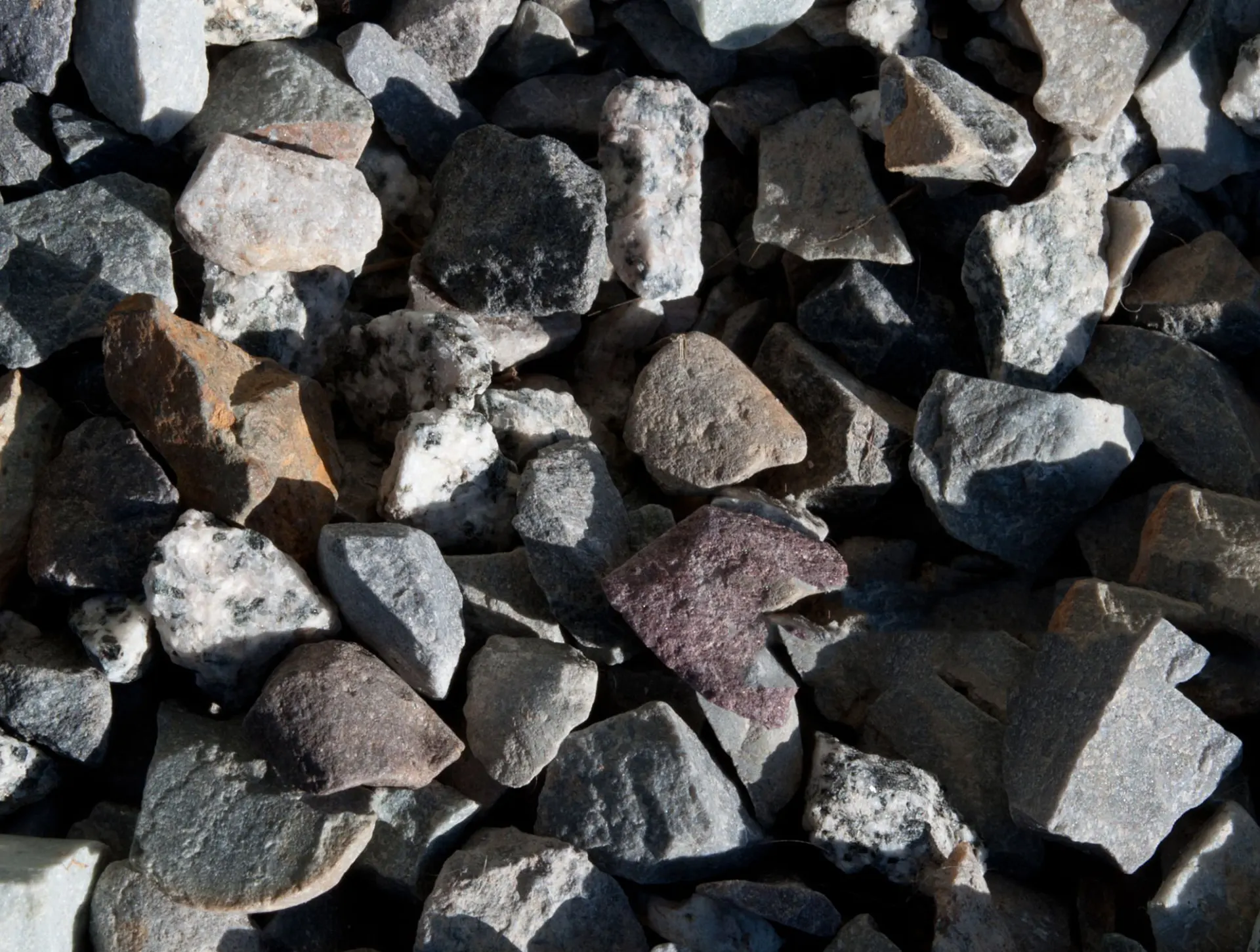
The economic case for vineyard stone clearing is fundamentally different from annual crop stone clearing because wine quality is priced in a non-linear market. A 10% Grade 1 improvement in Korean potato produces proportional revenue improvement — the price per kilogram is fixed by the buyer’s intake standard. A wine quality improvement from “good” to “premium appellation standard” can produce a 200–400% price increase per bottle for the same production volume. The quality mechanism that connects stone clearing to wine price premium is the vine’s rooting depth.
THOR vs FAE vs Seppi — Three Machine Families for Vineyard Stone Clearing

Three machine families dominate vineyard stone clearing in European and Mediterranean wine regions. A detailed comparison is essential for informed procurement — the specifications that matter for vineyard application differ from those most commonly cited in general promotional materials.
| Specification | THOR 2.4 | FAE BL/SSL-100 | Seppi M-KX |
|---|---|---|---|
| Working width | 2,400 mm | Variable (150–200cm models) | 125–200 cm models available |
| Min. tractor HP | 180 HP | 100–160 HP (narrower models) | 80–150 HP |
| Max stone size | ≤30 cm (THOR 2.4) | ≤25 cm (model dependent) | ≤20 cm (standard models) |
| Rotor diameter | 550 mm | Varies by model | Varies by model |
| PTO speed | 1,000 RPM | 1,000 RPM | 540 / 1,000 RPM |
| Machine weight | 2,300 Kg | 1,100–1,800 Kg | 800–1,400 Kg |
| Vineyard suitability (standard row spacing) | Pre-planting / wide rows only | Narrow models for inter-row | Wide narrow-row model range |
| Stone collection system | CT-2100 rock picker (separate) | Separate (third party) | Separate (third party) |
| Primary market | East Asia + export | Global (Europe dominant) | Italy / Europe |
| Best vineyard scenario | Pre-planting large blocks (1 ha+) with new-world row spacing or Korean highland crops | Versatile — established narrow-row European vineyards | Inter-row maintenance clearing in existing Italian vineyards |
EU Common Agricultural Policy — Vineyard Stone Clearing Subsidy Pathways
European vineyard operators have access to stone clearing investment support through the EU Common Agricultural Policy (CAP), administered through national and regional rural development programmes. These pathways differ from the Korean MAFRA subsidy structure in important ways — the EU system is co-financed between Brussels, member state governments, and in some cases regional authorities, producing highly variable subsidy rates by member state and even by region.
| Country | Programme | Typical Support Rate | Eligible Activity |
|---|---|---|---|
| Italy | PSR (Piano di Sviluppo Rurale) | 30–50% | Machinery investment for vineyard restructuring; confirm with regional PSR office ★ |
| France | PDR (Plan de Développement Rural) | 20–40% | Investment aid varies significantly by region (Nouvelle-Aquitaine vs Bourgogne rates differ) ★ |
| Spain | PDR autonómico | 30–50% | Machinery for restructuring/replanting programmes in designated wine regions ★ |
| Germany / Austria | Land-level rural development | 20–35% | Equipment for steep-slope viticulture; confirm with Weinbauamt ★ |
★ CAP subsidy eligibility, rates and application procedures change with each programming period (current period 2023–2027). Confirm current rates with your national/regional paying agency before purchase.
Olive Grove Extension — Same Machines, Different Depth Standard
The same tractor rock crusher system that serves vineyard stone clearing also addresses one of the Mediterranean basin’s other major premium agricultural systems: olive grove soil preparation. The biology and economics are parallel to vineyards but the stone clearing depth requirement differs due to the olive tree’s root architecture.
Olive vs Vine: Root System Comparison
Olive tree (Olea europaea) develops a primarily lateral root system in the 15–35 cm zone, with deep tap roots reaching 3–5 metres under favourable conditions. Stone at 15–30 cm depth disrupts the lateral feeder root density that determines yield, olive oil quality, and the tree’s drought resilience during the critical July–September oil development period. Stone clearing depth for olive grove: 22–30 cm — shallower than vineyard anchor-root clearing but equally critical for productivity.
Machine Configuration for Olive Groves
Traditional olive row spacing (5–8 metres for mature trees) is generally compatible with the THOR 2.4’s 2,400 mm working width — no inter-row width constraint applies in most established olive orchards. For replanting with high-density modern olive systems (3.5–4 m rows), confirm machine working width vs row spacing before specifying. The full stone management system (THOR 2.4 + CT-2100 + PSW-3200) is directly applicable to new olive grove establishment on limestone soil.
Frequently Asked Questions
What is the best tractor rock crusher for vineyard stone clearing — THOR 2.4, FAE or Seppi?
The answer depends primarily on two factors: vineyard row spacing and stone type. For pre-planting preparation on any new vineyard block — where row spacing is not yet a constraint — the THOR 2.4 (180 HP, 2,400 mm working width, ≤30 cm stone capacity) provides the most complete clearing at maximum daily coverage. For working within established traditional European vineyard rows (1.0–1.5 m), narrower-width machines from FAE’s vineyard-specific range or Seppi M-KX series are more appropriate because the THOR 2.4’s 2.4-metre width exceeds the row spacing in most traditional European vineyards. For hard stone varieties (Rioja quartzite, UK flint), the THOR 2.4’s 180 HP specification with 550 mm rotor provides the impact energy needed for harder rock that smaller machines may not process effectively. The most practical approach: complete full-width clearing with the THOR 2.4 in the season before planting, then use a narrower specialist machine for any inter-row maintenance required after establishment.
How deep should vineyard stone clearing go in limestone soil — 15 cm or 30 cm?
The correct clearing depth for vineyard stone clearing in limestone soil depends on the specific regional geology, but the general principle is to clear to the depth where the vine’s structural anchor roots will develop — typically 20–30 cm in most Mediterranean limestone soils. Burgundy’s double-layer oolitic limestone requires clearing to 28–30 cm to address both the surface and secondary limestone layers that would otherwise redirect vine anchor roots at depth. Italian galestro (Chianti) is concentrated in the 8–22 cm zone; 22–25 cm clearing addresses the critical zone. Spanish Rioja quartzite pebbles are distributed through 10–28 cm, requiring 28–30 cm clearing. The important principle to avoid is under-clearing — fragmenting only the top 15 cm of a field with 25 cm stone distribution leaves the lower stone layer intact and untouched, permanently redirecting vine anchor roots at exactly the depth they should be passing through on their way to the mineral-rich subsoil.
When is the best time of year to clear stones from a vineyard — before or after harvest?
For pre-planting stone clearing on a new vineyard block, the ideal timing is January–March — the vine’s dormant season in most Mediterranean and European wine regions. This three-month window provides adequate time for the complete clearing sequence (THOR 2.4 fragmentation, CT-2100 collection, PSW-3200 preparation) without vine stress risk, and allows sufficient time for soil settlement before spring planting. Avoid clearing during or immediately after heavy rainfall — wet limestone clay soil compaction under tractor traffic is a more serious risk to the root environment than the stones themselves. For inter-row maintenance clearing in established vineyards (removing frost-heave stone accumulation), December–February is the preferred window, completing operations at least 3–4 weeks before expected bud break at the vineyard’s specific elevation. Post-harvest clearing (October–November) is also possible but note that harvest traffic compacts soil — allow 2–3 weeks after harvest machinery operation before running the rock crusher to minimise the compaction zone the crusher creates.
Does limestone stone clearing genuinely improve wine quality, or is limestone soil terroir a reason to leave stones in place?
This is the most common and most important question from vineyard operators in limestone wine regions, and it reflects a genuine and productive tension in wine science. The clarification required is this: stone clearing removes embedded subsurface stone obstacles that physically block vine root penetration — it does not remove the limestone geological substrate that defines the terroir. The soil parent material remains limestone after clearing; the fragmented stone material, when returned to the soil by the crusher rather than collected by the CT-2100, even increases the limestone-calcium contact in the root zone. What changes is whether the vine’s root system can physically reach the mineral-rich subsoil to express that terroir character. A vine whose roots are blocked at 20 cm by a stone layer is expressing far less of its limestone terroir than a vine whose roots penetrate to 100 cm through stone-free soil. The agronomic principle, confirmed by studies in both Burgundy and Barossa Valley, is that stone clearing improves wine quality by enabling fuller terroir expression — it does not reduce terroir character.
Can the THOR 2.4 handle limestone and flint in the same vineyard preparation pass, or are multiple passes required?
For limestone-dominant soils (Mohs hardness 3–4 — Italy, France, Champagne), the THOR 2.4 rock crusher completes clearing in a single pass at 1.5–2.5 km/h forward speed in most Mediterranean stone density conditions. For harder stone varieties (Spanish quartzite at Mohs 6–7, UK flint at Mohs 7–8), the first pass fragments most material but may leave larger hard stone fragments that a second, slower pass at 1.0–1.5 km/h addresses. The THOR 3.0 (230 HP, ≤40 cm stone capacity) provides the additional impact energy that eliminates the need for a second pass on hard stone — making it the more efficient choice for large pre-planting clearing jobs in Rioja quartzite or UK flint conditions. Regardless of stone type, the CT-2100 rock picker collection pass follows the crushing pass to permanently remove fragments from the field — the clearing operation is only complete once the stone material has been collected and removed, not merely fragmented.
Vineyard Stone Clearing — Machine Configuration for Your Region and Row Spacing
Vineyard area + row spacing + stone type + target clearing depth + existing tractor HP → Korea Watanabe provides the correct machine specification, EU CAP subsidy guidance and the complete pre-planting preparation system for your Mediterranean or European vineyard block.
Editor: Cxm